
News
Nigeria Deploys Nationwide Platform to Track Violence Against Women Cases

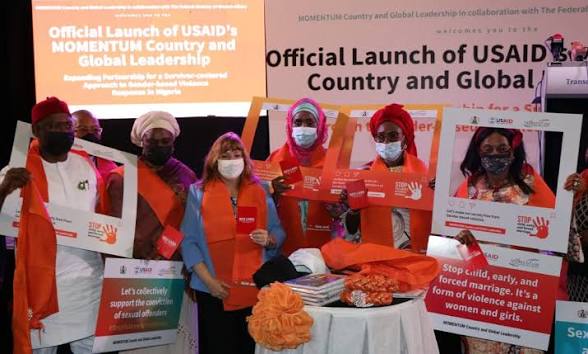
Nigeria Deploys Nationwide Platform to Track Violence Against Women Cases
…New system to provide visibility on investigations, prosecutions, conviction
By: Michael Mike
Nigeria has deployed a new nationwide reporting platform designed to track cases of violence against women from the point of reporting through investigation, prosecution and conviction, in a move aimed at strengthening accountability and access to justice for survivors.
The platform, developed by the Federal Ministry of Justice with support from the EU Support to End Sexual and Gender-Based Violence (ESGBV) Programme in Nigeria and implemented by the International Institute for Democracy and Electoral Assistance (International IDEA), is expected to address persistent gaps in case documentation, data coordination and justice-sector monitoring.
The initiative was unveiled on Monday in Abuja during the Deployment and Operationalisation of the Violence Against Women (VAW) Reporting Platform and National Validation and Capacity-Building Workshop on the VAW Reporting System.
The organisers described the platform as Nigeria’s first standardised justice-sector VAW reporting system, designed to consolidate information on cases from different states into a central database.
Speaking at the event, GBV Policy and Strategy Development Specialist, ESGBV Programme, International IDEA, Melissa Omene, said the initiative was developed to address one of the major weaknesses in Nigeria’s response to violence against women — the fragmentation of data and inadequate tracking of cases after they are reported.
“Reporting violence is only the beginning of a survivor’s journey. What happens after reporting matters just as much as the reporting itself,” Omene said.
She disclosed that an assessment involving 112 respondents from 32 institutions across the Federal Capital Territory, Benue, Kaduna and Oyo states identified gaps in data coordination, investigations, evidence management and justice-sector monitoring.
Omene said the National GBV Dashboard recorded 4,449 GBV cases in the first half of 2023, taking the nationwide number recorded since the dashboard was launched in 2020 to more than 19,000.
The figures, she said, highlighted the need for a stronger system capable of following cases beyond the initial reporting stage.
Also speaking, the Head of the Sexual and Gender-Based Violence Unit at the Federal Ministry of Justice, Yewande Gbola-Awopetu, said the success of the new platform would depend significantly on the accuracy and consistency of information supplied by designated desk officers.
“Every field you complete, every case status you update, and every follow-up you log becomes part of the evidence base,” she said.
Gbola-Awopetu disclosed that the National Human Rights Commission had recorded more than 33,000 SGBV cases between January and May, while the National Agency for the Prohibition of Trafficking in Persons (NAPTIP) documented more than 3,000 cases of violence against women in the FCT.
She said the figures reinforced the need for improved documentation and tracking of cases to determine what happens after victims report violations.
The National Consultant for the VAW Reporting System at International IDEA, Agharinma Ehiedu, said the platform would bring together information previously scattered across state-level systems into a single national database.
According to him, justice institutions would be able to access national data without having to contact individual states separately.
“You can know how many offenders you have, how many cases have been convicted, and those that are pending trial across the country,” Ehiedu said.
He added that the platform would also enable members of the public to report violations, with cases subsequently routed to relevant state desk officers.
He described the system as providing “full visibility of what is happening” to violence-against-women cases across the country.
Violence against women remains a major human rights, public health and justice challenge in Nigeria. It includes physical, sexual and psychological violence, domestic violence, harmful practices, trafficking and other forms of abuse.
One of the longstanding difficulties in addressing the problem has been the absence of a consistently integrated system for documenting cases and tracking their progression through Nigeria’s multiple justice and response institutions.
Cases can pass through the police, health facilities, social welfare structures, human rights institutions, prosecutors and courts, while information is often held separately by each institution. This can make it difficult to establish how many reported cases resulted in investigation, prosecution or conviction.
The problem is compounded by under-reporting. Survivors may choose not to report incidents because of stigma, fear of retaliation, economic dependence, lack of confidence in institutions or concerns about the consequences of pursuing cases.
Nigeria has also established legal and institutional mechanisms aimed at addressing gender-based violence. The Violence Against Persons (Prohibition) Act (VAPP) 2015 criminalises a range of harmful acts, including physical, sexual and psychological violence, while providing protections and remedies for victims and survivors. Its implementation, however, depends substantially on effective enforcement and, in states where necessary, domestication.
The country’s response also involves institutions including the Federal Ministry of Justice, Nigeria Police Force, National Human Rights Commission, NAPTIP, health and social welfare agencies, state ministries and civil society organisations.
The new VAW reporting platform is therefore expected to complement these existing structures by providing a mechanism for capturing and following cases across the justice chain.
Beyond statistics, the system could allow authorities to identify bottlenecks — including cases delayed at investigation or prosecution stages — and improve evidence-based planning and accountability.
For survivors, the ultimate test will be whether reported cases receive timely attention and whether perpetrators are brought to justice.
The ESGBV Programme and International IDEA said the deployment was intended to move Nigeria’s response beyond simply recording incidents towards ensuring that cases remain visible until appropriate justice outcomes are achieved.
The initiative also comes as Nigeria prepares for continued efforts to strengthen its institutional response to sexual and gender-based violence, with stakeholders stressing that better data is essential for effective policy, resource allocation and accountability.
Nigeria Deploys Nationwide Platform to Track Violence Against Women Cases


News
Two Notorious Terrorist Leaders Haruna Balatoni and Black Neutralised in Plateau Military Offensive Another Fatally Wounded as Six AK-47 Rifles Returned
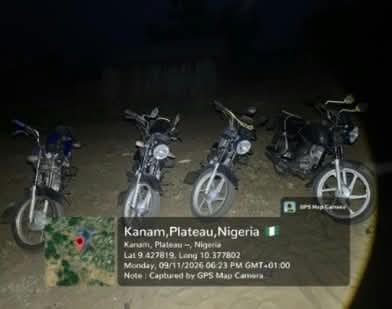
Two Notorious Terrorist Leaders Haruna Balatoni and Black Neutralised in Plateau Military Offensive Another Fatally Wounded as Six AK-47 Rifles Returned
By: Zagazola Makama
Troops of the Nigerian Army have recorded major breakthroughs in ongoing offensive operations against armed criminal networks in Plateau State, neutralising two notorious terrorist leaders, critically wounding another and recovering six AK-47 rifles previously seized from security forces.
The latest developments followed sustained military offensives at Dajin Madam in Wase Local Government Area of Plateau State on November 8, 2026.
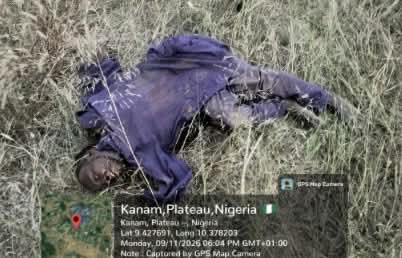
Security sources disclosed that HUMINT reports received at about 8:53 a.m. on November 9 indicated that the intensity of the military operation had resulted in the neutralisation of two suspected terrorist leaders identified as Haruna Balatoni and Black.
Another notorious figure, identified as Dogo Mai Kunkuru, was reportedly shot in the chest and left in a critical condition, with sources indicating that his chances of survival were slim.
In a significant development on November 10, the sustained military pressure reportedly compelled the terrorist network, through an intermediary identified as Ali-Kwara, to return six AK-47 rifles previously seized from security forces.
The recovered weapons are currently in military custody.
In a related operation, troops of 173 Battalion deployed at Mansur rescued a kidnapped mother and her daughter and recovered 39 cattle.
The developments represent a significant disruption of the criminal network’s leadership, weapons stockpile and capacity to sustain operations in the Wase axis.
The recovery of the six rifles is particularly important as it restores weapons previously lost to the criminal network and provides an opportunity for further intelligence exploitation.
The latest successes underscore the impact of sustained offensive pressure, intelligence-driven operations and military presence in dismantling armed groups operating across Plateau State.
The reported deaths of the terrorist leaders and the condition of Dogo Mai Kunkuru are based on preliminary HUMINT assessments and remain subject to independent military confirmation
Two Notorious Terrorist Leaders Haruna Balatoni and Black Neutralised in Plateau Military Offensive Another Fatally Wounded as Six AK-47 Rifles Returned
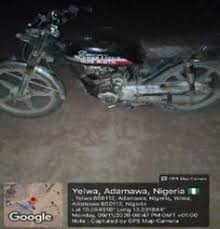
Troops Dislodge Terrorists from Hideouts in Taraba, Recover Five Motorcycles
By: Zagazola Makama
Troops of the Nigerian Army’s 114 Battalion (Reinforcement) have dislodged suspected terrorists from their hideouts during a fighting patrol in Karim Lamido Local Government Area of Taraba State.
The operation, conducted under Operation WHIRL STROKE (OPWS), commenced at about 7:30 a.m. on November 8, 2026, with troops advancing towards Komodoro village, where they made contact with suspected terrorists.
Security sources said the criminals fled upon sighting the advancing troops, prompting the patrol team to extend its operation to Mashigin Kirya village within the same local government area.
At Mashigin Kirya, the troops encountered suspected terrorists believed to have been hibernating in the general area and engaged them, forcing the armed elements to retreat.
The troops subsequently recovered five motorcycles suspected to have been used by the criminal group for mobility and logistics.
To further disrupt the fleeing terrorists, the troops conducted a fire mission using an 81mm mortar along their withdrawal route.
The operation was ongoing as troops sustained pressure on suspected criminal hideouts and movement corridors in the area.
The development point to the military’s determination to deny armed groups safe havens and restrict their freedom of movement across Taraba State.
Troops Dislodge Terrorists from Hideouts in Taraba, Recover Five Motorcycles
News
Two Fulani Herdsmen, 16 Cows Killed in Attack on Enugu Community as Joint Troops Launch Investigation
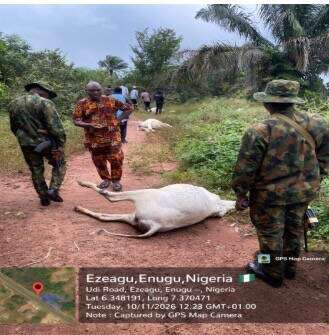
Two Fulani Herdsmen, 16 Cows Killed in Attack on Enugu Community as Joint Troops Launch Investigation
By: Zagazola Makama
Troops of the Nigerian Army, in collaboration with the Nigeria Police and Department of State Services (DSS), have launched an investigation into an attack on Fulani herdsmen in Obelagu Umuamba community, Ezeagu Local Government Area of Enugu State, which left two herders and 16 cattle dead.
The incident came to light at about 11:00 a.m. on November 10, 2026, when a joint patrol team comprising troops of the 82 Division Garrison and 103 Battalion (Reinforcement), alongside police and DSS operatives, visited the community to assess the cause and extent of damage from the recent attack by suspected hoodlums.
On arrival, the security team discovered that two Fulani herdsmen and 16 cows had been killed, while two other persons sustained injuries.
Following the discovery, the troops convened a joint peace and security meeting involving community leaders, representatives of the Fulani herders, neighbourhood watch groups and other key stakeholders.
During the meeting, security officials cautioned all parties against taking the law into their hands, warning that reprisals could escalate tensions and further threaten peaceful coexistence.
The troops subsequently recovered the corpses and handed them over to the police for further investigation.
Meanwhile, security agencies have commenced efforts to identify and apprehend those responsible for the attack, including suspected local collaborators.
The intervention is aimed at preventing retaliatory violence, restoring confidence among residents and ensuring that those responsible are brought to justice.
Authorities have urged both farming and herding communities to remain calm, cooperate with security agencies and pursue grievances through lawful channels.
Two Fulani Herdsmen, 16 Cows Killed in Attack on Enugu Community as Joint Troops Launch Investigation

Troops Intercept Abandoned Toyota Camry Loaded with 315 Sachets of Suspected Indian Hemp in Kaduna

NSCDC CG Reaffirms Personnel Welfare Priority, Pays N87.4m Insurance Benefits

How we arrested 4 suspected IPOB members who kidnapped, killed our operative –DSS witness

Roger Federer’s Shock as DNA Results Reveal Myla and Charlene Are Not His Biological Children

THE PLIGHT OF FARIDA

FAILED COUP IN BURKINA FASO: HOW TRAORÉ NARROWLY ESCAPED ASSASSINATION PLOT AMID FOREIGN INTERFERENCE CLAIMS
-
 News3 years ago
Roger Federer’s Shock as DNA Results Reveal Myla and Charlene Are Not His Biological Children
-
Opinions5 years ago
THE PLIGHT OF FARIDA
-
 News2 years ago
FAILED COUP IN BURKINA FASO: HOW TRAORÉ NARROWLY ESCAPED ASSASSINATION PLOT AMID FOREIGN INTERFERENCE CLAIMS
-
 Opinions5 years ago
POLICE CHARGE ROOMS, A MINTING PRESS
-

 News3 years ago
EYN: Rev. Billi, Distortion of History, and The Living Tamarind Tree
-

 ACADEMICS3 years ago
A History of Biu” (2015) and The Lingering Bura-Pabir Question (1)
-

 Columns3 years ago
Army University Biu: There is certain interest, but certainly not from Borno.
-

 Politics1 year ago
2027: Why Hon. Midala Balami Must Go, as Youths in Hawul and Asikira/Uba Federal Constituency Reject ₦500,000 as Sallah Gift
