
News
Nigeria Host Mid-Autumn Festival in Abuja to Further Bond

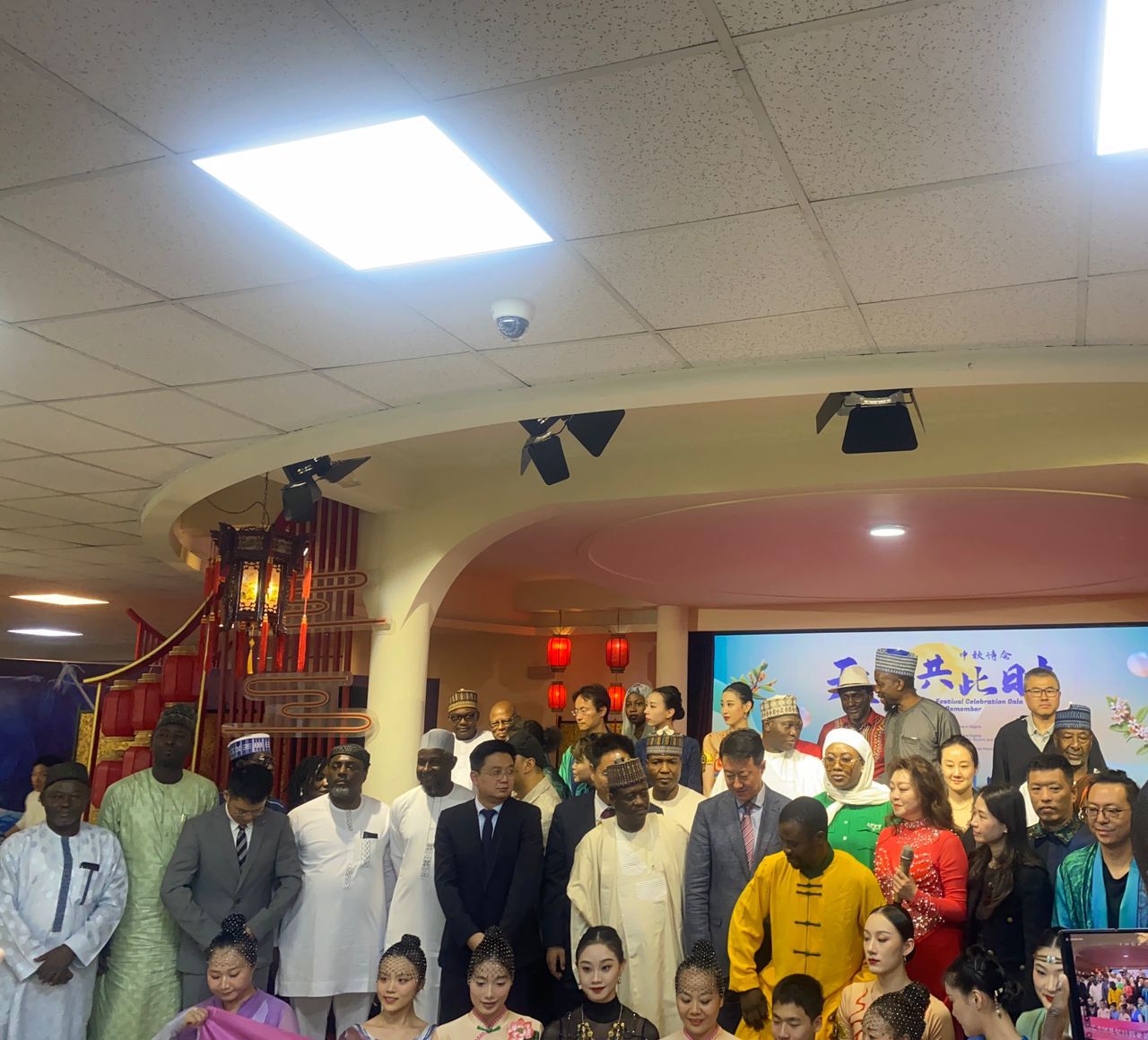
Nigeria Host Mid-Autumn Festival in Abuja to Further Bond
By: Michael Mike
Nigeria and China jointly celebrated the Mid-Autumn Festival, an age-old Chinese tradition symbolizing family reunion, harvest, and blessings in Abuja on Thursday.
The colorful cultural festival showcase also served as a platform to reaffirm the deepening friendship and cooperation between both nations.
The celebration, hosted by the Chinese Embassy in Nigeria, featured captivating performances by top artists from the Shenzhen Opera & Dance Theatre, Shantou Acrobatic Troupe, and Shenzhen XingZhe Fusion Band.
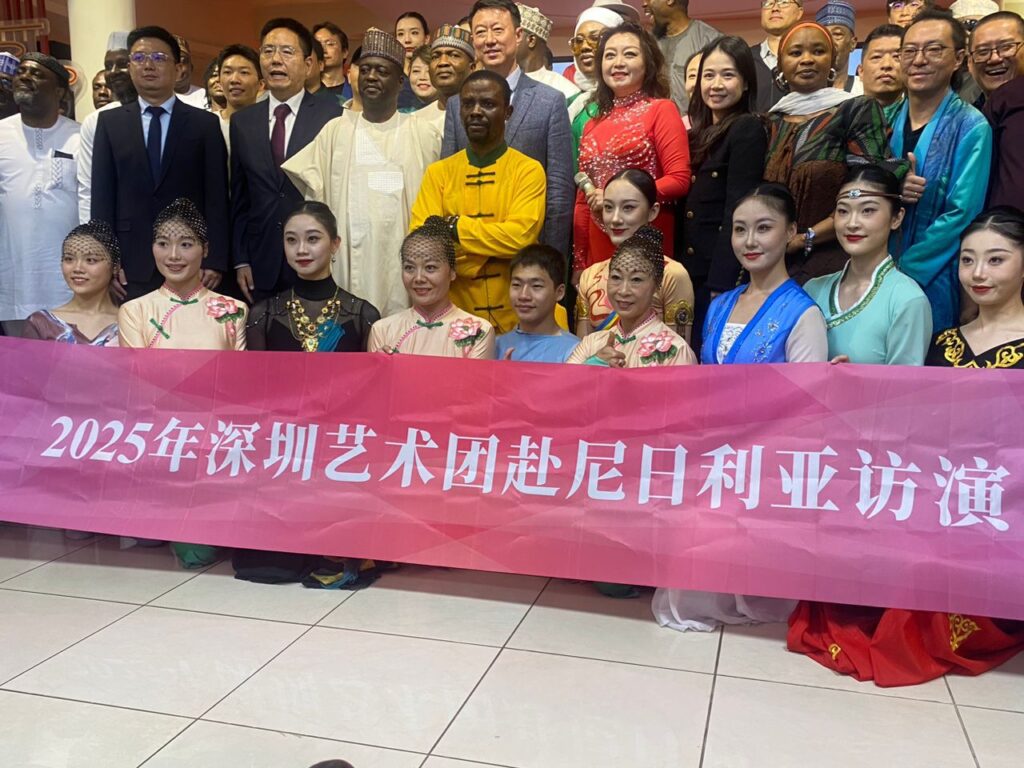
Guests were treated to a vibrant blend of dance, acrobatics, martial arts, and music inspired by Chinese poetry and folklore.
The Chinese Ambassador to Nigeria, Yu Dunhai, emphasized the cultural and symbolic significance of the Mid-Autumn Festival.
He said: “On this day, we enjoy mooncakes while admiring the full moon, sending our thoughts and best wishes to family and friends who aren’t by our side,” the envoy noted, quoting a famous Chinese poem: “The sea mirrors the rising moon bright; Miles apart, our hearts share tonight.”
Yu also highlighted the unique role of cultural exchanges in strengthening bilateral ties.
“Friendship, which derives from close contact between peoples, holds the key to sound state-to-state relations. Events like this are a heartfelt expression of our warmest wishes for the China-Nigeria friendship,” he said.
The Ambassador further introduced Shenzhen, home to the performing artists, as a shining example of China’s transformation. Once a fishing village, the city has evolved into a global innovation hub with a population of 18 million and a GDP surpassing $500 billion in 2024.
Alongside its technological growth, Shenzhen has nurtured a vibrant cultural scene that blends tradition with creativity.
Guests also explored a photo exhibition titled “The Charms of Shenzhen” at the Cultural Center’s Multi-Function Hall, offering insights into China’s modernization journey.
Representing the Nigerian government, Dr. Mukhtar Yawale Muhammad, Permanent Secretary of the Federal Ministry of Arts, Culture, Tourism, and the Creative Economy, praised the cultural showcase and reiterated Nigeria’s commitment to strengthening ties with China through cultural diplomacy.
“The theme of today’s event resonates deeply: The people of China and Nigeria, with their mutual respect and love, celebrate together the Mid-Autumn Festival, a festival symbolizing harvest, reunion, and blessings.
This is not merely a statement; it is a true reflection of the blossoming relationship between our two great nations,” Dr. Muhammad said.
He described the Mid-Autumn Festival as a shared value between both countries, noting that Nigeria also celebrates harvests, family unity, and blessings.
“This shared appreciation for life’s most precious gifts forms a powerful bridge between our peoples,” he added.
Muhammad also underscored the historical significance of the 2025 festival, pointing out that both Nigeria and China will mark their national days on October 1, a coincidence he described as “a powerful symbol of aligned aspirations for national pride, development, and progress.”
Reflecting on his recent visit to Xi’an, the historic Chinese city, he commended the depth of China’s cultural heritage, particularly its Terracotta Army, which he called “an awe-inspiring silent legion guarding the tomb of China’s first emperor.”
As the evening drew to a close, guests shared mooncakes—a traditional Mid-Autumn delicacy—while toasting to renewed friendship.
Both Ambassador Yu and Dr. Muhammad agreed that cultural and creative exchange is central to strengthening China-Nigeria ties. From shared artistic performances to tourism and creative economy partnerships, the festival underscored the role of culture in bridging distances and deepening collaboration between the two nations.
Nigeria Host Mid-Autumn Festival in Abuja to Further Bond



Group Demands Probe into Death of Nigerian Academic in South Africa
By: Michael Mike
Speak Out for Justice Advocacy Ltd/Gte (SOJA) has called for a full, independent and transparent investigation into the death of a 51-year-old Nigerian academic, Dr Ayodele Temidayo Odularu, who was reportedly found dead at her residence in South Africa’s Eastern Cape Province on August 16.
The rights advocacy organisation made the demand in a statement issued on Sunday by its Founder and Executive Director, Hameed Ajibola Jimoh, amid concerns raised by Odularu’s family over the circumstances surrounding her death.
Odularu, a Nigerian academic and researcher associated with the University of Fort Hare, was reportedly found dead at her residence, with the university subsequently holding a memorial service in her honour.
While SOJA stressed that no competent authority had publicly established the cause or manner of her death, it said the uncertainty surrounding the circumstances made a credible investigation imperative.
The organisation cautioned against prematurely describing the death as murder, an attack or an act of xenophobic violence, insisting that such conclusions must be based on evidence.
However, SOJA argued that the absence of an established cause of death should not become a reason for the case to be closed without exhaustive investigation.
“An investigation must therefore neither manufacture a crime where none occurred nor dismiss a possible crime as a natural death without proper evidence,” the organisation said.
SOJA urged the South African Police Service, prosecutorial authorities, medico-legal officials and other relevant institutions to establish the precise medical cause of death and reconstruct the circumstances leading to Odularu’s death.
It specifically called for scrutiny of events at her residence before she was found dead, the circumstances in which she was last seen alive, and any evidence of forced entry, struggle, injury, poisoning, assault or other suspicious circumstances.
The organisation also demanded the preservation and examination of potentially crucial evidence, including CCTV footage, telephone records and electronic communications, as well as a proper post-mortem examination and toxicological or other forensic analyses where necessary.
It further urged investigators to establish whether anyone who had access to Odularu, communicated with her or visited her shortly before her death could provide information relevant to the investigation.
SOJA’s intervention comes against the backdrop of recurring concerns over the safety of Nigerians and other African nationals in South Africa, but the organisation said the broader context should not be used to predetermine the cause of Odularu’s death.
According to the group, investigators must examine all reasonable possibilities, including criminality, discrimination, xenophobic hostility, interpersonal conflict, accident and medical causes.
“Dr Odularu was a Nigerian citizen, but she was also a human being living and working within the jurisdiction of South Africa. Her nationality could never lawfully reduce the protection owed to her life, dignity and physical security,” SOJA said.
The organisation cited South Africa’s constitutional protection of the right to life and human dignity, as well as its obligations under international human-rights instruments, including the African Charter on Human and Peoples’ Rights and the International Covenant on Civil and Political Rights.
It also referred to South Africa’s Inquests Act 58 of 1959, which provides for inquests into deaths apparently resulting from causes other than natural causes.
SOJA maintained that the legal framework should be allowed to operate without interference where questions arise over whether a death was natural, accidental, suicidal, homicidal or otherwise unlawfully caused.
The organisation also turned its attention to the Nigerian government, urging the Federal Ministry of Foreign Affairs and Nigeria’s diplomatic mission in South Africa to engage directly with Odularu’s family and establish the status of the investigation.
It called for appropriate consular assistance, regular communication with the family and diplomatic engagement where credible evidence eventually establishes that the death was connected to a crime, discrimination, xenophobic violence or other unlawful conduct.
“The Nigerian Government should not wait until public outrage subsides before seeking answers concerning the death of a Nigerian citizen abroad,” SOJA said.
The group also demanded that Odularu’s remains be treated with dignity and that her family be provided with appropriate information on the investigation, subject to lawful investigative restrictions.
It said any person found criminally responsible should face prosecution, while evidence of negligence or institutional failure should trigger appropriate accountability and corrective measures.
Conversely, SOJA said, if credible medical and investigative evidence establishes that the death was natural or accidental, that conclusion should be communicated on the basis of those findings.
The organisation stressed that the objective should not be to satisfy public curiosity but to establish the truth and ensure justice and accountability.
“Dr Ayodele Temidayo Odularu was not merely a statistic in an international news report. She was a daughter, sister, aunt, colleague, mentor, researcher and member of the Nigerian community whose life had value and whose death deserves a truthful account,” SOJA said.
It urged authorities to ensure that the circumstances surrounding her death do not remain unresolved, demanding “truth for the family, justice for Dr Ayodele Temidayo Odularu and accountability where wrongdoing is established.”
SOJA also called for stronger protection for Nigerians and other African nationals living and working in South Africa, stressing that nationality should never diminish the protection accorded to human life.
Group Demands Probe into Death of Nigerian Academic in South Africa

THE NIGERIA POLICE: AN INSTITUTION OF SERIOUS CONCERN
A Nine-Year Search For Truth . JUNE 2017 – JULY 2026 – AND STILL UNRESOLVED
By: Mrs Nnenna John-Anozie
Following my husband’s abduction in 2017, the police officers completely cut off every means of access to him. I could neither see him nor hear from him,and despite repeated efforts to establish his whereabouts and ensure his well being and safety, I was denied access to him. The police also failed to charge him before a court with any offence. Faced with the authorities refusal to disclose his whereabouts,their denial of access to him ,and their failure to produce him before a court ,I was left with no option but to institute an action for the enforcement of his fundamental rights at the High Court of Anambra State ,Idemili Judicial Division,Holden at Ogidi, being Suit No.HID/MISC. 47/2017, filed on 3 July 2017 before HIS LORDSHIP HON. JUSTICE .V.N.AGBATA.
On 24 July 2017,the Honourable Court presided over by His Lordship, Hon.Justice V.N. Agbata made an order directing as follows:
(a) That the Police are hereby ordered to charge my husband to court if a prima case is made against him or release him on bail.
(b) In the alternative,the Police are ordered to produce him in court on the next adjourned date of this suit and show cause why he can not be charged to court or released on bail.
Suit was adjourned to 19 September 2017 .
The Police did not comply,instead they subsequently put forward the claim that my husband had died.
Because this was never accompanied by the production of his body or any satisfactory account of his death,I returned to court and filed a motion on 20 October 2017,and prayed for an order of court compelling the police to produce his corpse for the purposes of a joint autopsy by the Government Doctor and Doctor chosen by his family,and thereafter ,for the police to release the said corpse to his family for a proper and decent burial .
On 16 April 2018, the court ordered the police to release the corpse to the members of his family for a burial since he was not charged and convicted of any offence.
Regrettably,however ,that order,too was not complied with.
Thus began a long and painful pattern: court orders were made,petitions were submitted ,investigations were initiated,and yet the fundamental question remained unanswered –
What happened to Chukwuemaka John Anozie ?
Upon realizing that nothing will come out of the matter in Anambra State,having made several efforts that proved abortive.I went to Force Headquarters Abuja and petitioned the Inspector General of Police seeking his intervention and thorough investigation to unravel the truth about my husband’s whereabouts and what happened to him?
What the Police Investigation Revealed
Following the petition to the IGP,an investigation was constituted and conducted by the X-Squad Unit at Force Headquarters .
That investigation produced findings and identified Sergeant Emeana Uzochukwu and Anthony Obiozor Ikechukwu as principal suspects in connection with the enforced disappearance of my husband.
Following the investigation,the Legal Department at Force Headquarters prepared a legal advise and charges, with the approval of the then DIG ,Force Criminal Investigation Department (FCID),Anthony Michael Ogbizi,in 2020.
Yet,despite these investigative findings,the officers identified in connection with my husband’s abduction and enforced disappearance were not charged or prosecuted.
There was another deeply troubling discovery .
A few days after my husband’s abduction,withdrawals began to be made from his bank account using his ATM card.The withdrawals continued until the account was completely depleted.
In other words,while my husband remained missing, our family properties had been taken,two vehicles had been removed from our home,a briefcase containing money ,important family documents, certificates and international passports had been taken,and money had been withdrawn from his bank account until the account was completely depleted
And for years ,even the case file containing the records of the investigation into his disappearance could not be accounted for.
It was not until July 2026, nine years after his disappearance ,that the case file was finally brought out and reportedly forwarded to the Attorney General of the Federation.
Yet,despite the investigation,the identification of suspects,the existence of court orders,preparation of charges and legal advise, no prosecution had taken place.
SEEKING JUSTICE : My Visit To The National Human Rights Commission And The End SARS Judicial Panel Proceedings in Abuja.
On 9 Oct 2020, I visited the NHRC in Abuja and met with the Chairman ,Mr Tony Ojukwu SAN. I narrated my ordeal to him and also lodged my petition with the commission.
After my visit,the End SARS protests subsequently commenced and led to the constitution of a panel of inquiry by the Federal Government to address related human rights violations.
Between 2020 and 2022, I appeared before the End SARS Judicial Panel of Inquiry in Abuja, hoping that the panel would finally provide a forum through which the truth about my husband’s disappearance could emerge.
The panel issued several orders directing the police to ensure the appearance of officers who were respondents in the proceedings and who had been implicated in my husband’s enforced disappearance .
They repeatedly failed to appear .
The proceedings were adjourned repeatedly -no fewer than twelve times over the course of two years .
The police failed to summon the officers ,and none of them appeared before the panel throughout the proceedings .
The panel also issued directives requiring my husband to be produced or an explanation to be given concerning his whereabouts. Those directives were not complied with.
The Panel further ordered Mr.Ochogwu, then CP Legal ,to personally appear and ensure the production of my husband’s case file and other documents relating to the investigation. The Panel reiterated this order on five separate occasions during the adjourned sittings, yet that order was not complied with .
Eventually,after two years of proceedings ,the panel concluded its work without resolving the central questions surrounding my husband’s disappearance .
Actions Taken After the Panel’s Closure To Continue My Quest For Justice.
With the matter still unresolved ,another petition was submitted to the Office of the Inspector General of Police on 22 November,2023 through Falana and Falana Chambers .
Following that petition,the Office of the Inspector General, directed that the matter be reopened for further investigation ,not only into my husband’s abduction and disappearance involving officers of the Nigeria Police Force ,but also into the disappearance of the case file from the Legal Department .
The matter was subsequently reassigned to Mr.Chinedu of the IGP Monitoring Team for further investigation.
Again,however,requests for relevant documents and investigative records were not complied with, and the matter once more went dormant.
I again wrote a letter through my lawyer Vincent Adodo, dated 8th April 2025, to the Inspector General of Police,requesting, pursuant to the Freedom of information Act 2011,the release of the case file and reports of several investigations concerning my husband’s disappearance ,both to me and to the Attorney General of the Federation.
The Inspector General of Police Kayode Egbetokun refused to release the requested documents.
This refusal persisted despite the fact that investigations had already been conducted ,a legal advise and charges had been prepared, and a subsequent judgment of the Federal High Court ordered the release of the relevant documents.
I was therefore left with no option but to return to court.
The Federal High Court Judgment
I subsequently instituted Suit No. FHC/ABJ/CS/865/2025 Nnenna Anozie v. Inspector General of Police, before the Federal High Court ,Abuja seeking among other reliefs,an order of Mandamus compelling the IGP to release the certified true copies of the investigation records and legal advise concerning my husband’s abduction and disappearance .
The suit was heard before Hon. Justice Binta Nyako.
In the suit , I also sought an order directing that the indicted officers be handed over to the Attorney General of the Federation for prosecution before the appropriate court..
Despite being served with the court processes and hearing notices,the police failed to appear to defend the case.
On September 24,2025 ,Hon. Justice Binta Nyako of the Federal High Court,Abuja delivered judgment in Suit No.FHC/ABJ/CS/865/2025 in my favour, granting the reliefs sought and awarding ₦2Million in compensation for the violation of my right to information .
At that point ,I believed that after eight years of struggle,the judgment would finally open the door to accountability and access to the records concerning my husband’s disappearance
I was Wrong
Despite being served with the judgment and the relevant orders ,the Inspector General of Police did not comply.
Following the continued non-compliance by the police under the then IGP Kayode Egbetokun, my lawyer caused Form 48-Notice of Consequences of Disobedience to Court Order and Form 49-Notice of Committal to the Correctional Centre to be issued and served on the IGP.
Notwithstanding the judgment of the Court,and steps taken to enforce it ,the order remained unimplemented until the removal of the then Inspector-General of police from office on 24 February 2026.
Following the appointment of the present Inspector-General of Police Olatunji Rilwan Disu, contempt proceedings were initiated in respect of the continued non-compliance with the judgment.
Then,on July 24, 2026, during subsequent court proceedings ,I was informed by my lawyer that the police had filed a Notice of Compliance stating that my husband’s case file and related documents had finally been forwarded to the Attorney-General of the Federation.
After nine years, the case file had finally moved.
But my husband is still missing and his whereabouts remain unknown.
The File may have moved ,But Justice has not.
The Police’s stated forwarding of the case file to the Attorney General of the Federation has not brought this matter to a resolution .
The Office of the Attorney General of the Federation has,to date ,taken no action on the cases file reportedly forwarded to it.
I have therefore been placed in the extraordinary position of having to pursue a case concerning my missing husband while being denied access to the very investigative records generated in that case.
And so,after nine years of petitions ,investigations, court orders,panel proceedings ,legal representations and litigation ,the questions with which this journey began remain the same:
The passage of time has not diminished the pain,it has deepened it.
Emeana Uzochukwu and Anthony Obiozor Ikechukwu owe me, my children, our families, and the Nigerian public answers about Chukwuemeka John Anozie’s whereabouts and what happened to him, and must be brought forth to provide answers.
I want my children to have answers about their father.
They have grown up without the presence of their father and without the certainty of knowing what happened to him
The Nigeria Police Force bears responsibility for accounting for the investigation into my husband’s enforced disappearance, the handling and custody of the case file, the actions and omissions of its officers following his disappearance .
The rule of law must be upheld ,and the law must take its course
Mrs Nnenna John-Anozie
THE NIGERIA POLICE: AN INSTITUTION OF SERIOUS CONCERN
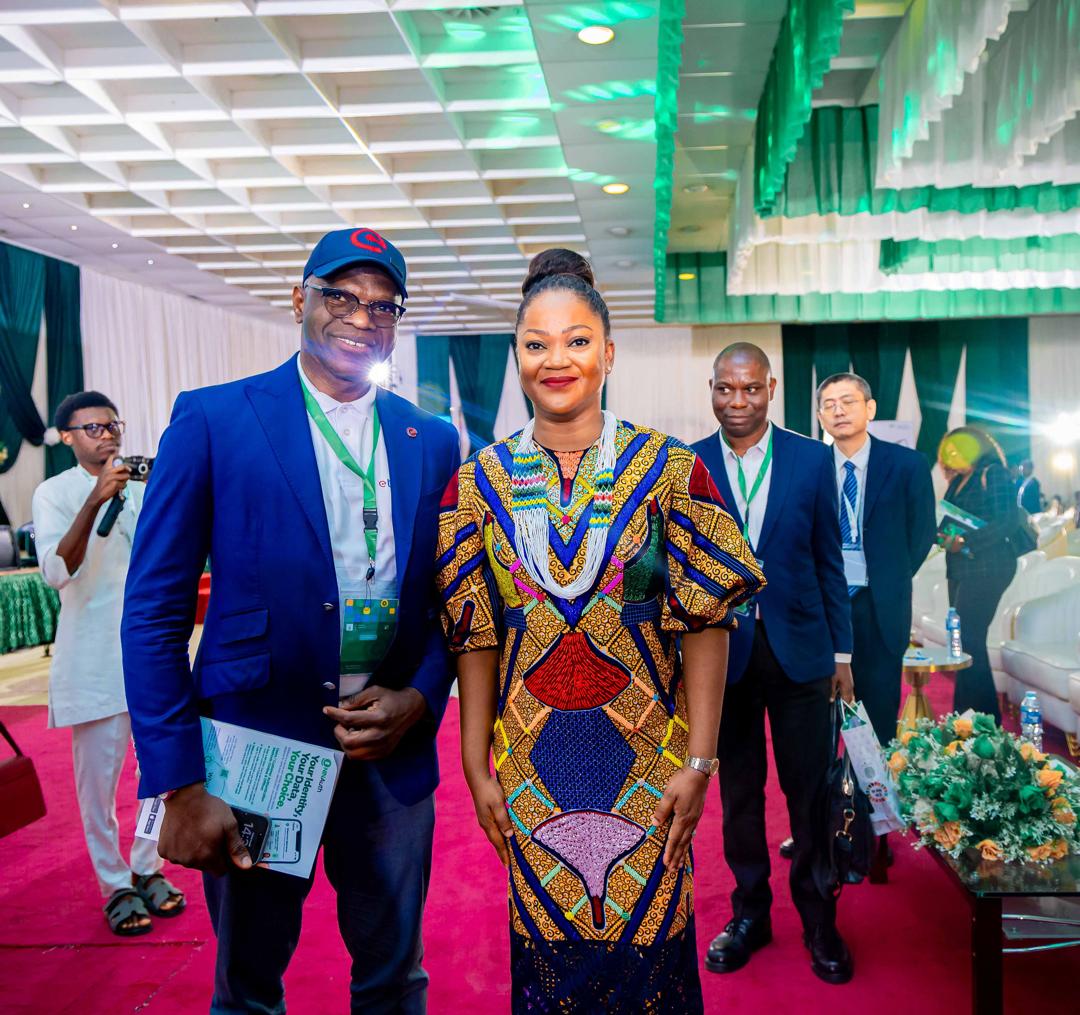
Digital Identity Becomes New Battleground for Nigeria’s Economic Transformation — eTranzact
By: Michael Mike
Nigeria’s push to build a truly digital economy is increasingly being anchored on a less visible but critical infrastructure: the ability to securely identify every participant in the digital space.
This emerged in Abuja as eTranzact International Plc reaffirmed its commitment to strengthening Nigeria’s digital identity ecosystem, warning in effect that the country’s ambitions for digital finance, secure public services and wider economic inclusion depend on trusted identity infrastructure.
The financial technology company made the commitment at the 2026 International Identity Day celebration held at the State House Banquet Hall, Abuja, where government officials, technology companies, identity solution providers and private-sector stakeholders examined the role of digital public infrastructure in Nigeria’s economic transformation.
The event, themed “Nigeria’s Digital Public Ecosystem Powering Africa’s Digital Economy,” underscored the growing importance of digital identity beyond the traditional question of identification.
At a time when banking, payments, government interventions, credit, telecommunications and other essential services are increasingly moving online, the ability to establish that an individual is who they claim to be has become fundamental to participation in the digital economy.
A stronger identity ecosystem could make it easier for citizens to access financial services, government programmes and other technology-enabled services, while providing institutions with more reliable tools for verification, compliance and protection against identity-related fraud.
It could also help bridge gaps in financial inclusion by enabling more Nigerians to establish verifiable identities needed to access bank accounts, digital payment platforms, credit and other formal financial services.
It was against this backdrop that eTranzact, which works with the National Identity Management Commission (NIMC), renewed its commitment to supporting the country’s digital public infrastructure.
The Managing Director/Chief Executive Officer of eTranzact, Niyi Toluwalope, represented by the company’s Executive Director, Government Relations and Strategic Initiatives, Abubakar Achimugu, said the company’s participation demonstrated its commitment to public-sector partnerships and technology solutions capable of advancing Nigeria’s digital transformation.
The company’s position places digital identity within the broader conversation about the infrastructure required to make Nigeria’s digital economy work at scale.
Without dependable identity verification, digital services can face challenges involving fraud, duplication, exclusion and difficulties establishing the eligibility of users and beneficiaries.
Conversely, an identity system that is secure, interoperable and accessible can provide a common foundation upon which financial institutions, government agencies and technology companies can build services.
The issue is therefore no longer simply about issuing identity credentials. It increasingly concerns how those credentials can securely connect citizens to the wider digital ecosystem.
Stakeholders at the Abuja event consequently stressed the importance of collaboration between government and private-sector technology providers in developing an ecosystem capable of supporting Nigeria’s rapidly changing digital economy.
For financial technology companies such as eTranzact, the development has direct implications for the future of digital payments and financial services, where secure customer identification is central to transactions and regulatory compliance.
For government, a stronger digital identity architecture can support more efficient delivery of public services and interventions.
For citizens, it could determine how easily they participate in an economy in which an increasing number of everyday transactions and services are being delivered digitally.
The challenge, however, is ensuring that the expansion of digital identity does not create new barriers for people who are already underserved.
Stakeholders will therefore have to balance security and verification requirements with accessibility, interoperability and inclusion if Nigeria’s digital public infrastructure is to serve the entire population.
The discussions in Abuja thus highlighted a broader reality: Nigeria’s digital transformation will not be driven by applications and payment platforms alone.
Behind the visible digital economy must be an identity infrastructure capable of establishing trust between citizens, businesses and government.
As Nigeria seeks to deepen its digital transformation and strengthen its position in Africa’s technology economy, eTranzact said sustained public-private collaboration would remain critical to building the secure and inclusive digital ecosystem required to support that ambition.
Digital Identity Becomes New Battleground for Nigeria’s Economic Transformation — eTranzact

Group Demands Probe into Death of Nigerian Academic in South Africa

THE NIGERIA POLICE: AN INSTITUTION OF SERIOUS CONCERN

Digital Identity Becomes New Battleground for Nigeria’s Economic Transformation — eTranzact

Roger Federer’s Shock as DNA Results Reveal Myla and Charlene Are Not His Biological Children

THE PLIGHT OF FARIDA

FAILED COUP IN BURKINA FASO: HOW TRAORÉ NARROWLY ESCAPED ASSASSINATION PLOT AMID FOREIGN INTERFERENCE CLAIMS
-
 News3 years ago
Roger Federer’s Shock as DNA Results Reveal Myla and Charlene Are Not His Biological Children
-
Opinions5 years ago
THE PLIGHT OF FARIDA
-
 News1 year ago
FAILED COUP IN BURKINA FASO: HOW TRAORÉ NARROWLY ESCAPED ASSASSINATION PLOT AMID FOREIGN INTERFERENCE CLAIMS
-

 News3 years ago
EYN: Rev. Billi, Distortion of History, and The Living Tamarind Tree
-
 Opinions5 years ago
POLICE CHARGE ROOMS, A MINTING PRESS
-

 ACADEMICS3 years ago
A History of Biu” (2015) and The Lingering Bura-Pabir Question (1)
-

 Columns3 years ago
Army University Biu: There is certain interest, but certainly not from Borno.
-

 Politics1 year ago
2027: Why Hon. Midala Balami Must Go, as Youths in Hawul and Asikira/Uba Federal Constituency Reject ₦500,000 as Sallah Gift
