
News
Nigeria – Measles-related admissions reach record at MSF facilities in Maiduguri


Nigeria – Measles-related admissions reach record at MSF facilities in Maiduguri
By: Our Reporter
Measles admissions to Médecins Sans Frontières (MSF) facilities in Maiduguri, Northeast Nigeria, spiked between October and December 2023, reaching record numbers.
Despite the vaccination efforts, this worrying situation calls for a rapid reinforcement of routine immunization campaigns.In 2023, MSF teams treated a total of 9,618 patients with measles in both of its healthcare facilities – Gwange Paediatric Hospital and Nilefa Kiji nutrition hospital – and in MSF-supported primary healthcare (PHC) centres in Maiduguri.
“We did not expect such a large influx of patients, particularly at the end of the year” explains Abdulwahab Mohamed, MSF medical coordinator, referring to the 3,965 patients treated from October to December, which represent almost three times more than for the same period in 2022.
“Dr. Jombo Tochukwu-Okoli, MSF Medical Activity Manager at Gwange Paediatric Hospital, attributes this alarming rise in the number of cases to an inability of public health actors “to achieve the 95% vaccination rate, required to suppress measles.
“This is notably due to the difficulties for the health workers in accessing rural communities surrounding Maiduguri”, Dr. Tochukwu-Okoli continues, as the insecurity has made vaccination campaigns a difficult endeavour.
This is not the only difficulty to achieve a higher vaccination coverage. The interruption of routine childhood vaccination during the Covid-19 pandemic has disrupted the health systems thus having a negative impact on the implementation of routine immunisations campaigns. Technical complications also lead to interruptions in the cold chain making the vaccine defective.
The measles spike coincides with an unprecedented diphtheria outbreak in Northern Nigeria and a longer-than-usual malaria season. The diphtheria outbreak, with 24,500 suspected cases and more than 600 deaths reported since it was officially declared in January 2023, is yet another strong indicator of the dramatic setback in routine immunisation programs and the lack of long-term efforts to increase vaccination coverage in the country.
In 2021, Maryam Umar’s son contracted measles. Aware of the danger the disease poses to young children, Maryam took the toddler to the MSF-run Gwange hospital in Maiduguri where he eventually died.
“I was really scared and started crying when he had measles because [I knew] of the severity of the disease” the mother of six children recalls.
Last year, when her youngest daughter contracted measles, Maryam took no chances. She immediately brought her to Gwange hospital, where MSF staff operate two wards dedicated to treating measles.
The toddler was discharged after one week of oxygen therapy.Measles is one of the most contagious viral diseases in the world. Infecting the immune cells, the virus quickly spreads all over the body and eventually affects the respiratory system. This causes a cough that can spread the virus to others.
“One infected child can spread the virus to between 9 and 12 other unvaccinated children” explains Dr. Tochukwu-Okoli.
Although there is currently no specific cure to treat measles, there are life-saving drugs that can keep patients stable and prevent complications.As the virus affects the immune system it can lead to serious complications long after measles is gone.
“This makes the virus so deadly as it leaves a child open to other, specifically diarrhoeal, diseases”. Dr. Tochukwu-Okoli is worried about the significance of a measles spike in a context where malnutrition is so prevalent, “Measles is notorious for precipitating malnutrition” because of the degenerative impact the virus has on the gastrointestinal lining.
“The diarrhoea,” Dr. Tochukwu-Okoli, continues, “makes it difficult for the child to retain and absorb nutrients in the post measles phase, and purges the child of essential micronutrients further depressing a child’s immunity”.
In the Northeast of Nigeria, where access to nutritious food is seasonally limited, diseases like measles among other factors, leads to higher levels of malnutrition and creates a vicious cycle, as the malnourished status also leads to further immune suppression. In turn this generates greater morbidity and mortality linked to measles and other diseases.
The complex security situation in Northern Nigeria, significant funding cuts by international donors for Nigeria, and the continuous neglect of public health infrastructure is alarming.
Considering the high prevalence of vaccine-preventable outbreaks, such as measles, diphtheria and meningitis, MSF is cautioning international and national stakeholders not to look away at what could be an oncoming perfect storm for a worsening of the humanitarian crisis this year, 2024.
Nigeria – Measles-related admissions reach record at MSF facilities in Maiduguri


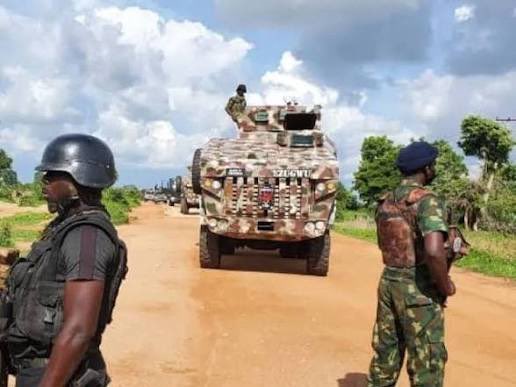
Army opens 2026 RSM Convention in Kaduna
By: Zagazola Makama
The 2026 Regimental Sergeant Majors (RSM) Convention has been declared open in Kaduna, with senior military officials and stakeholders in attendance.
The event, hosted by 1 Division of the Nigerian Army, was inaugurated on May 4 at the JN Garba Hall, Ribadu Cantonment, by the Chief of Army Staff (COAS), represented by the Commandant of the Martin Luther Agwai International Leadership and Peacekeeping Centre (MLAIPKLC), Maj.-Gen. D.G. Allu.
In attendance were the Chief of Army Administration, the General Officer Commanding (GOC) 1 Division, commanders of affiliated formations within the division’s area of responsibility, resource persons, and representatives of other security agencies, among other invited guests.
The theme of the convention is “Empowering RSMs to Drive Combat Readiness and Professional Excellence.”
The convention is expected to provide a platform for professional development, experience sharing, and strengthening leadership capacity among Regimental Sergeant Majors in the Nigerian Army.
Army opens 2026 RSM Convention in Kaduna
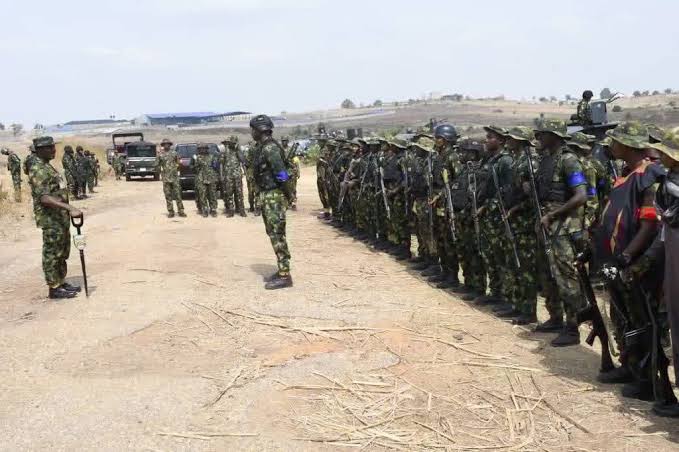
One soldier killed, another injured in ambush on troops in Imo State
By: Zagazola Makama
Troops of 34 Artillery Brigade have been ambushed by suspected terrorists while on a mission to assess a burnt vehicle in Ohaji/Egbema Local Government Area of Imo State.
Security sources said the incident occurred at about 12:53 p.m. on May 4 along the SPDC–Etekuru road, where the troops had gone to assess a burnt Hilux vehicle.
On arrival at the location, the troops came under heavy fire from the attackers.
In the encounter, one soldier was killed in action while another sustained injuries. The attackers reportedly carted away two AK-47 rifles and partially damaged a military vehicle.
Reinforcements were quickly deployed to support the troops, forcing the assailants to flee the scene.
Subsequent exploitation of the area led to the discovery of two burnt vehicles and two corpses.
The bodies were evacuated to a hospital morgue for further investigation and necessary action, while operations are ongoing to track down the attackers.
One soldier killed, another injured in ambush on troops in Imo State
News
ECOWAS Leaders Warn Democracy Must Deliver and Peace Must Be Built as West Africa Faces Rising Instability
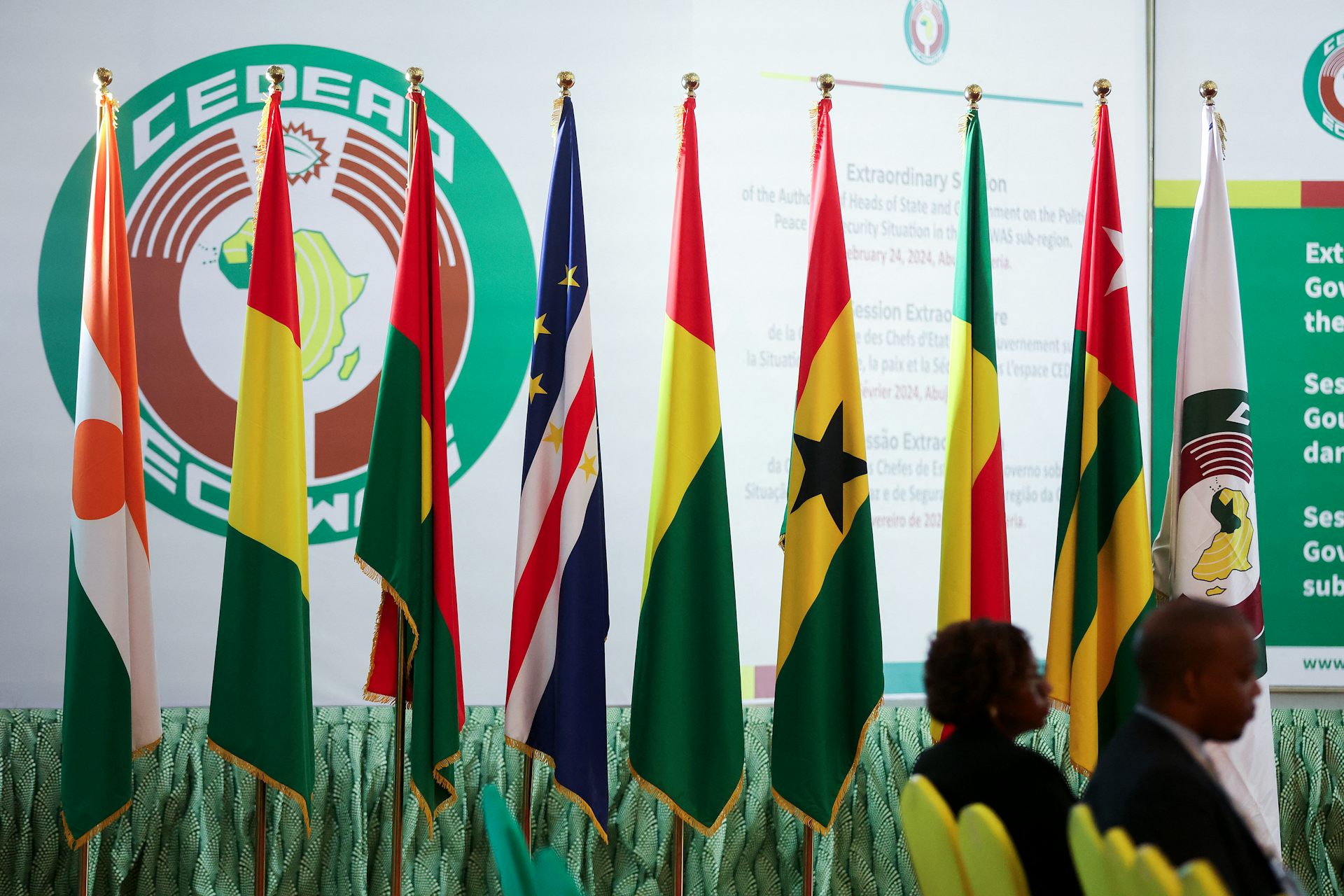
ECOWAS Leaders Warn Democracy Must Deliver and Peace Must Be Built as West Africa Faces Rising Instability
By: Michael Mike
West African leaders have issued a joint warning that democracy in the region is under growing strain and must begin to produce visible results for citizens, while also stressing that peace cannot be imposed but must be deliberately built through dialogue and cooperation.
The concerns were raised at the opening of the 2026 First Ordinary Session of the ECOWAS Parliament held on Monday in Abuja, where regional lawmakers gathered amid rising insecurity, democratic reversals, and increasing public dissatisfaction across parts of West Africa.
Speaker of Nigeria’s House of Representatives, Tajudeen Abbas, warned that the survival of democratic governance in the sub-region now depends on its ability to deliver tangible outcomes in security, economic stability, and public welfare.
He said while citizens across West Africa continue to reject military rule, their patience with democratic systems is weakening due to poor governance outcomes and rising socio-economic hardship.
Abbas noted that declining voter trust, weak institutions, and recurring unconstitutional changes of government reflect deeper structural problems that democratic systems must urgently address.
“The issue is not whether democracy remains the preferred system, but whether it is delivering sufficiently to sustain that preference,” he said, warning that governance failures could further expand the space for instability.
The Nigerian Speaker also pushed for a stronger and more empowered ECOWAS Parliament, arguing that its current advisory status limits its ability to respond effectively to regional crises.
He renewed calls for reforms including enhanced legislative authority, stronger oversight powers, and improved enforcement mechanisms for regional agreements.
According to him, previous proposals to strengthen the Parliament have yet to be fully implemented, but the present instability across the region makes such reforms more urgent.
“A Parliament with limited influence cannot adequately respond to democratic reversals, security pressures, and economic uncertainty,” Abbas said.
Abbas also defended Nigeria’s recent economic reforms, including fuel subsidy removal and exchange rate unification, describing them as difficult but necessary decisions taken within a democratic framework.
He said early results show increased fiscal inflows to subnational governments and improved capacity for infrastructure and social investment, while acknowledging that challenges persist.
He argued that Nigeria’s experience demonstrates that even tough reforms can be implemented without resorting to military intervention, warning against a growing tendency toward unconstitutional power shifts in parts of the region.
In a separate address, the Speaker of the ECOWAS Parliament, Hadja Mémounatou Ibrahima, stressed that peace in West Africa cannot be declared or imposed by authority, but must be carefully built over time.
She said the region is facing a period of heightened geopolitical uncertainty, adding that “no region is immune” to the global spread of instability and conflict.
“The message must be clear: peace cannot be decreed — it must be patiently built through dialogue, cooperation, and mutual respect,” she said, urging member states to deepen collaboration in addressing shared challenges.
Ibrahima also highlighted ongoing reforms within the regional bloc, noting that ECOWAS is undergoing a strategic reassessment of its future direction.
She announced that the upcoming ECOWAS Future Summit scheduled for 21 May in Lomé, Togo, will focus on accelerating the implementation of ECOWAS Vision 2050.
The summit is expected to explore how regional integration can be strengthened and adapted to emerging political, economic, and security realities across West Africa.
Both leaders, though speaking separately, converged on a central message: that West Africa is at a critical turning point where democratic legitimacy must be reinforced by effective governance, and peace must be actively constructed through cooperation rather than assumed.
They warned that without stronger institutions, improved governance delivery, and deeper regional collaboration, the region risks further democratic setbacks and prolonged instability.
The session continues as ECOWAS lawmakers deliberate on strategies to strengthen democratic resilience and regional integration amid mounting challenges across West Africa.
ECOWAS Leaders Warn Democracy Must Deliver and Peace Must Be Built as West Africa Faces Rising Instability

Army opens 2026 RSM Convention in Kaduna

Troops arrest five suspects in raid on criminal hideout in Imo

One soldier killed, another injured in ambush on troops in Imo State

Roger Federer’s Shock as DNA Results Reveal Myla and Charlene Are Not His Biological Children

THE PLIGHT OF FARIDA

FAILED COUP IN BURKINA FASO: HOW TRAORÉ NARROWLY ESCAPED ASSASSINATION PLOT AMID FOREIGN INTERFERENCE CLAIMS
-
 News2 years ago
Roger Federer’s Shock as DNA Results Reveal Myla and Charlene Are Not His Biological Children
-
Opinions4 years ago
THE PLIGHT OF FARIDA
-
 News1 year ago
FAILED COUP IN BURKINA FASO: HOW TRAORÉ NARROWLY ESCAPED ASSASSINATION PLOT AMID FOREIGN INTERFERENCE CLAIMS
-

 News2 years ago
EYN: Rev. Billi, Distortion of History, and The Living Tamarind Tree
-
 Opinions4 years ago
POLICE CHARGE ROOMS, A MINTING PRESS
-

 ACADEMICS2 years ago
A History of Biu” (2015) and The Lingering Bura-Pabir Question (1)
-

 Columns2 years ago
Army University Biu: There is certain interest, but certainly not from Borno.
-

 Opinions2 years ago
Tinubu,Shettima: The epidemic of economic, insecurity in Nigeria
