
News
Nigeria Model Seeks Six-Hour Deadline for Takedown of Non-Consensual Intimate Images


Nigeria Model Seeks Six-Hour Deadline for Takedown of Non-Consensual Intimate Images
By: Michael Mike
A national policy framework for tackling the non-consensual sharing of intimate images in Nigeria has proposed a six-hour deadline for technology companies to remove verified abusive content, alongside tougher legal sanctions, specialised cybercrime investigations and expanded support for victims.
The proposed measures are contained in the National Model of Response to Non-Consensual Sharing of Intimate Images, which calls for a coordinated national response to the unauthorised dissemination of intimate photographs and videos, including sexually explicit material generated or manipulated using artificial intelligence (AI).
The document recommends that Nigeria strengthen its legal framework to address the creation and distribution of intimate images without consent, clarify the responsibilities of digital platforms, and establish more accessible channels through which victims can report abuse and seek justice.
It also proposes that platforms face clearer accountability requirements, including proportionate sanctions for non-compliance, while government agencies, civil society organisations and the private sector develop coordinated mechanisms for preventing abuse and removing harmful content.
Under its recommendations for the technology industry, the model proposes a specific six-hour compliance timeframe for content removal, in line with the standards it seeks to draw from the United Nations Convention against Cybercrime.
It further recommends a memorandum of understanding between relevant government agencies, law enforcement bodies and internet service providers to establish an effective system for taking down abusive content.
The framework also proposes direct access for the Nigerian Communications Commission (NCC) to report non-consensual intimate images to internet service providers, as well as improved local-language moderation to make online platforms more responsive to reports from Nigerian users.
Beyond removing offending material, the document calls for stronger legislation to address the evolving nature of image-based abuse, particularly the use of AI to generate synthetic intimate images or manipulate existing photographs.
It recommends amending the Cybercrimes Act to strengthen the definition of the offence, clarify the criminal implications of creating AI-generated intimate material, and establish appropriate and proportionate punishments, including for repeat offenders.
The model also proposes amendments to the Violence Against Persons (Prohibition) Act and the Evidence Act to address technology-facilitated abuse and strengthen the authentication and integrity of electronic evidence.
It urges the National Assembly to consider a statutory right to identity protection in digital spaces, which would enable individuals, particularly public-facing professionals and content creators, to take legal action when their likeness is used without consent in intimate or sexualised contexts.
The document further recommends that Nigeria ratify the UN Convention against Cybercrime and use it to strengthen international cooperation among criminal justice institutions.
Victim support, legal assistance
The proposed response places considerable emphasis on the support available to victims, recommending the expansion of free, specialised helplines and victim-support services, as well as simpler online and offline reporting channels accessible to people with disabilities and speakers of Nigeria’s various languages.
It calls for increased government budgetary allocations for cybercrime and violence against women, with dedicated funding for services supporting victims of non-consensual intimate-image sharing.
The framework also proposes the establishment of a legal assistance fund specifically for victims or the formal designation of such cases as a priority under existing legal aid schemes administered by the Legal Aid Council of Nigeria.
Under the proposal, access to justice should not depend on a victim’s ability to pay for legal representation.
The document also recommends stronger referral systems connecting victims to law enforcement, legal aid and psychosocial support, alongside free and continuous psychological services.
It urges institutions, educational establishments, community organisations and religious bodies to disseminate information about available support services and strengthen public awareness of image-based abuse.
The model further calls for the creation of a forum of survivors to help identify their needs, share experiences and inform the continuous improvement of the national response.
It also recommends that compensation mechanisms recognise the reputational and economic damage victims may suffer when intimate images are circulated without their consent.
Employers and institutions are encouraged to adopt non-discriminatory policies to prevent victims from suffering adverse professional consequences because of intimate material exposed without their permission.
Stronger investigations and prosecution
On criminal justice, the document proposes a more specialised approach to investigating and prosecuting cases, including improved digital forensic capacity, better evidence management and training for investigators, prosecutors and judges.
It recommends the development of standard operating procedures for investigating and prosecuting non-consensual intimate-image sharing, distinguishing the offence from related crimes such as sextortion and obscenity.
These procedures, it says, should cover the preservation of digital evidence, the securing of electronic crime scenes and the maintenance of an unbroken chain of custody.
The framework also calls for stronger digital forensic infrastructure within the Office of the National Security Adviser and other relevant agencies, with services decentralised to improve access and efficiency.
It proposes expanding the Joint Case Team on Cybercrime’s case-management system to accommodate such cases, including a database of digital image hashes that could help identify and respond to the circulation of previously reported material.
Image-hashing technology can help platforms and relevant organisations identify matching copies of known images without requiring victims to repeatedly circulate or submit the intimate material itself.
The document recommends expanding the use of tools such as StopNCII.org across institutions and civil society organisations supporting survivors, while strengthening cooperation between these organisations and law enforcement agencies.
It also proposes a single official reporting channel for victims, including a telephone number for immediate assistance, and the creation of a database of offenders modelled on the National Sexual Offenders Database established under the Violence Against Persons (Prohibition) Act.
To improve accountability, the framework recommends collecting and publishing statistics on the prevalence of non-consensual intimate-image sharing at national, federal and local levels.
It further urges the establishment of an inter-agency working group or task force involving relevant government institutions and civil society organisations to coordinate responses.
AI-generated abuse, platform accountability
The document warns, through its proposed measures, that the national response must account for the growing technological challenges associated with intimate-image abuse.
It recommends universal invisible-watermarking standards for AI-generated content and clearer liability frameworks for creators, distributors and platforms that facilitate the production or circulation of deepfake intimate images.
AI developers are also urged to maintain adequately resourced safety teams capable of conducting human-led reviews to detect non-consensual intimate imagery and other forms of image-based sexual abuse.
The framework calls for stronger transparency from technology companies, including public reporting on content-removal procedures, average response times and the volume of verified non-consensual intimate images detected and removed.
It also recommends safety and privacy measures built into the design of digital products, alongside efforts to address systemic bias in technology development and governance.
For Nigeria’s creative and media industries, including music, film, fashion, sports and influencer sectors, the model proposes sector-specific awareness and response frameworks.
It also encourages telecommunications companies to use short codes, caller tunes and other accessible communication channels to raise awareness, particularly among people in rural communities.
The proposed measures assign responsibilities across the National Assembly, relevant ministries, the NCC, the Nigeria Data Protection Commission, the National Information Technology Development Agency, law enforcement agencies, the judiciary, civil society organisations and private-sector operators.
The framework presents the response as a shared responsibility, combining legal reform, institutional coordination, platform accountability, victim support and public education.
It recommends integrating education on consent, online safety, cyber hygiene and image-based sexual abuse into school programmes, including at primary, secondary and tertiary levels.
Media organisations, content creators, community leaders and religious institutions are also identified as important partners in sensitising the public and promoting respect for privacy.
The proposed national model ultimately seeks to move Nigeria’s response beyond the removal of abusive images towards a broader system of prevention, accountability, victim rehabilitation and access to justice.
Its recommendations, however, are proposals for strengthening the national response; their inclusion in the document does not, by itself, establish that the suggested six-hour deadline, new offences or other measures have been enacted into law.
Nigeria Model Seeks Six-Hour Deadline for Takedown of Non-Consensual Intimate Images


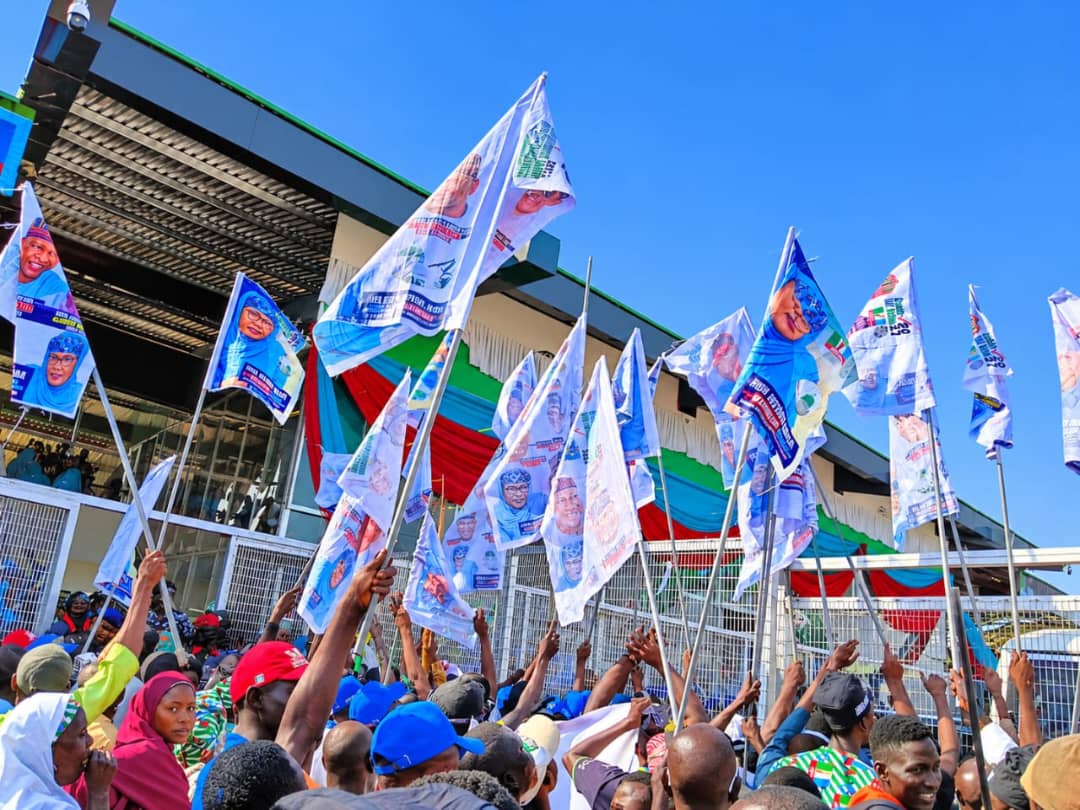
Yobe APC flag-off 2027 campaign in Damaturu
By: Yahaya Wakili
The All Progressives Congress (APC) Yobe state chapter has today officially flagged off its statewide campaign ahead of the 2027 general elections at the August 27 stadium in Damaturu, the state capital.
Addressing a massive crowd of APC supporters, the Minister of Police Affairs and Chairman of critical stakeholders in Yobe state, Senator Ibrahim Geidam, has cautioned members of the party against anti-party activities in the forthcoming general elections in the state and the country as a whole.
According to Senator Geidam, the party leadership has concrete evidence regarding those who worked tirelessly against the interest of the APC during the previous general elections in the state.
‘I have the record at my hand of those who participated in the non-success of the party in the past general elections, and I will disclose them now if possible,’ the Minister of Police Affairs added.
The highlight of the ceremony was the receiving of the large number of decampees from the PDP to APC. The defectors led by the former minister of science and technology, Dr. Abdu Bulama, and the former national chairman of the People’s Democratic Party (PDP), Ambassador Umaru Iliya Damagum.
In his remarks, Governor Mai Mala Buni CON, COMN of Yobe State, welcomed the defectors and presented them the party flags and commended them for what he described as a welcome development and solidarity to the party.
Governor Buni assured the defectors that the leadership of the All Progressives Congress (APC) in the state promised equal opportunities for the new members and called on all party supporters in the state to come out and en masse to vote for President Bola Ahmed Tinubu GCFR and all APC candidates from top to bottom.
Also speaking of the detector-general of the campaign council, Hon. Kaigama Umar Yunusari said the 2027 election is a competition between zone C and two other zones because this time around the governorship candidate is from zone C; the zone has never produced the governor or the deputy since the restoration of democracy in 1999.
Yobe APC flag-off 2027 campaign in Damaturu
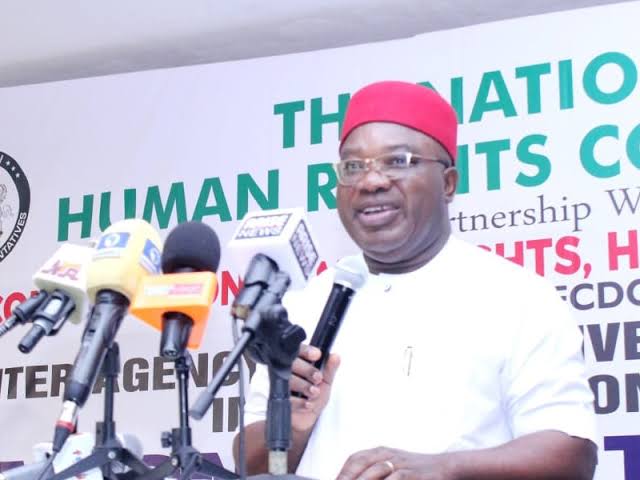
NHRC Wqrns Media Against Electoral Misinformation, Hate Speech Ahead of 2027 Polls
…Ojukwu urges ethical reporting, protection of journalists, accountability
By: Michael Mike
The National Human Rights Commission (NHRC) has warned against the spread of misinformation, disinformation, hate speech and politically manipulated narratives ahead of the 2027 general elections, saying irresponsible media reporting could threaten national peace, public safety and democratic stability.
The Executive Secretary of the Commission, Chief Tony Ojukwu, said the media must uphold accuracy, fairness, verification, balance and respect for human dignity in its coverage of the electoral process.
Ojukwu, who spoke at the 2026 NHRC Annual Media Parley, said the media’s strategic role in informing voters, scrutinising political actors, shaping public opinion and facilitating democratic engagement placed enormous responsibility on journalists, particularly as the country approaches another electoral cycle.
The parley was themed, “Ethical Journalism and the 2027 General Elections: Promoting Professionalism, Peace and Accountability.”
According to him, elections transcend political contests and the transfer of power, as they involve fundamental human rights, including freedom of expression, access to information, peaceful assembly, political participation and the right of citizens to freely determine their leaders.
He warned that the distinction between responsible and irresponsible journalism could have far-reaching consequences for national cohesion and the enjoyment of human rights.
“Our message is simple: the media must not become a vehicle for electoral division; it must remain an instrument for democratic accountability, peaceful participation and national cohesion,” he said.
The NHRC boss stressed that while freedom of expression remained fundamental to democracy, journalists must exercise the right with professional responsibility, especially in an increasingly volatile information environment where digital manipulation and politically motivated narratives could undermine public confidence in democratic institutions.
He, however, said the responsibility for a healthy media environment did not rest on journalists alone, insisting that media practitioners must also be protected from intimidation, harassment and unlawful interference in the discharge of their duties.
Ojukwu said the Commission remained committed to protecting journalists’ rights and promoting an environment that supports independent, free and responsible media practice, noting that safeguarding journalists also protects citizens’ right to information and preserves the democratic space.
He urged journalists to intensify human rights-focused reporting in the run-up to the 2027 elections, particularly on voter intimidation, political violence, discrimination, attacks on journalists, restrictions on civic participation and violations of the rights of women, children, persons with disabilities and other vulnerable groups.
The Executive Secretary also drew attention to the risks confronting journalists during election coverage, especially in volatile environments, saying their safety and security must remain a priority.
He disclosed that the NHRC, in collaboration with Konrad Adenauer Stiftung, would launch a Safety Handbook for Journalists and Media Practitioners on November 26, to provide practical guidance on navigating the risks associated with field reporting, particularly during elections.
He said the initiative was designed to equip journalists with the knowledge and guidance needed to protect themselves while carrying out their professional responsibilities.
Ojukwu expressed appreciation to journalists and media organisations for their sustained coverage of the Commission’s activities, their efforts in amplifying the voices of victims of human rights violations and their role in bringing critical human rights issues to national attention.
He described the annual parley as more than an engagement between the Commission and the media, saying it offered an opportunity to strengthen their partnership, reflect on their shared responsibilities and advance a society anchored on human rights, justice, accountability and democratic values.
The Executive Secretary expressed optimism that the deliberations would deepen collaboration between the NHRC and media practitioners and strengthen collective efforts towards peaceful, credible and accountable elections in 2027.
He welcomed the Director of the United Nations Information Centre (UNIC), Nigeria, Ronald Kayanja, who was invited as keynote speaker, alongside journalists, civil society representatives and officials of the Commission.
NHRC Wqrns Media Against Electoral Misinformation, Hate Speech Ahead of 2027 Polls

EU Releases €10m Additional Humanitarian Aid for Nigeria
By: Michael Mike
The European Union has released an additional €10 million in humanitarian assistance for Nigeria as part of a €39.5 million funding package to address urgent humanitarian needs across the Sahel and Lake Chad regions, amid persistent conflict, displacement, food insecurity and climate-related shocks.
The additional funding for Nigeria, announced by the EU Commissioner for Equality, Preparedness and Crisis Management, Hadja Lahbib, during a Senior Officials Meeting on the humanitarian situation in the Sahel and Lake Chad on November 12, is expected to strengthen emergency interventions in communities facing severe humanitarian challenges.
The EU said the funding was part of a humanitarian package announced at the latest United Nations General Assembly, bringing its total humanitarian assistance to the Sahel and Lake Chad regions to €263.5 million for 2026.

The additional €10 million allocated to Nigeria will support the scaling up of food security interventions, multi-purpose cash assistance, nutrition and healthcare services in areas with high levels of displacement.
The funding will also be deployed to improve shelter conditions, access to clean water, sanitation and hygiene services, while support for logistics and telecommunications in humanitarian hubs will be reinforced to facilitate the delivery of emergency assistance.
Nigeria continues to grapple with humanitarian challenges arising from prolonged insecurity, displacement, food shortages and environmental pressures, particularly in conflict-affected communities where access to basic services remains limited.
Across the wider Sahel and Lake Chad regions, the EU said its humanitarian funding supports frontline humanitarian partners in delivering emergency food, nutrition, healthcare, protection, water and sanitation services, as well as education in emergencies, according to the most pressing needs in individual countries.
The bloc reiterated that its humanitarian assistance is guided by humanitarian principles and allocated strictly on the basis of needs, irrespective of political, religious or other considerations.
It also renewed its call for respect for international humanitarian law and the protection of civilians and humanitarian workers operating in crisis-affected areas.
EU Releases €10m Additional Humanitarian Aid for Nigeria

Yobe APC flag-off 2027 campaign in Damaturu

EU Launches ₦152.9m Fund to Protect Women from Electoral Violence Ahead of 2027 Polls

NHRC Wqrns Media Against Electoral Misinformation, Hate Speech Ahead of 2027 Polls

Roger Federer’s Shock as DNA Results Reveal Myla and Charlene Are Not His Biological Children

THE PLIGHT OF FARIDA

FAILED COUP IN BURKINA FASO: HOW TRAORÉ NARROWLY ESCAPED ASSASSINATION PLOT AMID FOREIGN INTERFERENCE CLAIMS
-
 News3 years ago
Roger Federer’s Shock as DNA Results Reveal Myla and Charlene Are Not His Biological Children
-
Opinions5 years ago
THE PLIGHT OF FARIDA
-
 News2 years ago
FAILED COUP IN BURKINA FASO: HOW TRAORÉ NARROWLY ESCAPED ASSASSINATION PLOT AMID FOREIGN INTERFERENCE CLAIMS
-
 Opinions5 years ago
POLICE CHARGE ROOMS, A MINTING PRESS
-

 News3 years ago
EYN: Rev. Billi, Distortion of History, and The Living Tamarind Tree
-

 ACADEMICS3 years ago
A History of Biu” (2015) and The Lingering Bura-Pabir Question (1)
-

 Columns3 years ago
Army University Biu: There is certain interest, but certainly not from Borno.
-

 Politics1 year ago
2027: Why Hon. Midala Balami Must Go, as Youths in Hawul and Asikira/Uba Federal Constituency Reject ₦500,000 as Sallah Gift
