
News
Nigeria Reaffirms Commitment to Global Anti-Drug War as NDLEA Officers Graduate from U.S. DEA Academy

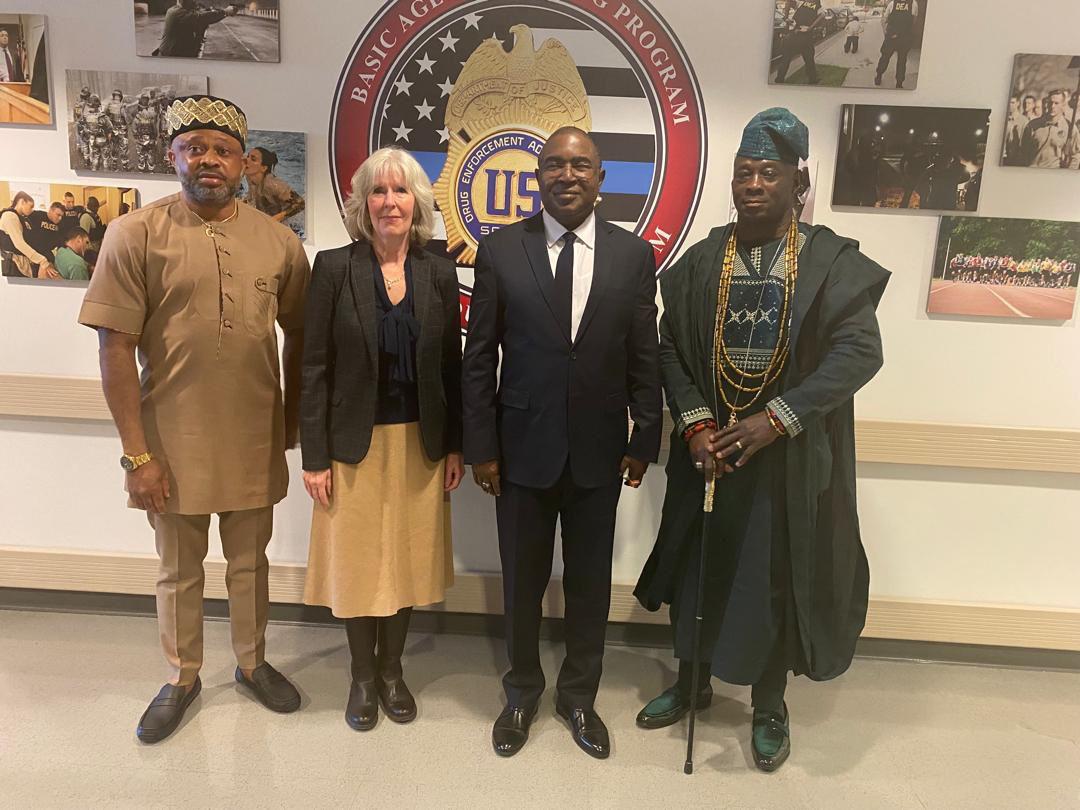
Nigeria Reaffirms Commitment to Global Anti-Drug War as NDLEA Officers Graduate from U.S. DEA Academy
By: Michael Mike
Nigeria has reaffirmed its commitment to strengthening global collaboration in the fight against illicit drug trafficking and transnational organised crime as officers of the National Drug Law Enforcement Agency (NDLEA) completed advanced training at the United States Drug Enforcement Administration (DEA) Training Academy in Quantico, Virginia.
Speaking at the graduation ceremony on Friday, NDLEA Chairman and Chief Executive Officer, Brig. Gen. Buba Marwa (Rtd), said the increasing sophistication of criminal networks across borders requires deeper international cooperation and a coordinated global offensive.
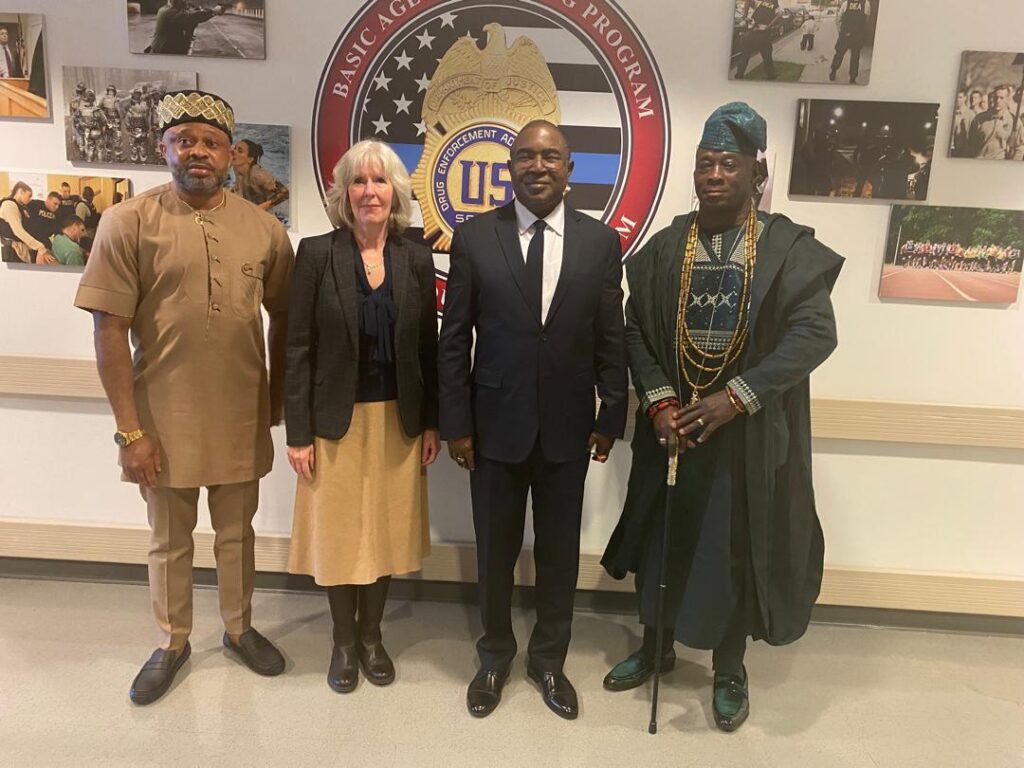
Marwa stressed that criminal syndicates no longer operate within isolated territories, making intelligence sharing, joint operations and capacity building among nations indispensable in dismantling drug cartels and organised crime groups.
The ceremony, held at the elite DEA Training Academy, brought together officers from Nigeria, Ghana and Kenya for an intensive programme designed to sharpen investigative, operational and strategic enforcement capabilities. Participants were equipped with advanced skills to combat complex drug trafficking networks and related transnational crimes.
Describing the event as deeply significant, Marwa noted that the course was dedicated to members of the Special Investigative Unit (SIU) who paid the ultimate price in the line of duty. He paid tribute to the fallen officers, describing them as heroes whose courage and sacrifice continue to inspire law enforcement agencies worldwide.
Referencing the course motto, “Different nations, shared duty, one fight,” Marwa said it captured the collective resolve of partner countries against the global drug menace. He emphasised that only a unified, intelligence-driven response can effectively confront criminal enterprises that thrive on cross-border operations.
The NDLEA boss expressed confidence that the knowledge and competencies acquired by the graduating officers would significantly enhance the operational effectiveness of their respective agencies. He charged them to apply the training with integrity, professionalism and courage upon returning home, while upholding the highest standards of service.
Marwa also conveyed Nigeria’s appreciation to the United States Department of Justice, the DEA leadership and instructors for their continued mentorship and investment in capacity development.
He said the graduation marked not the end of training but the beginning of renewed responsibility, urging the officers to protect vulnerable communities and confront criminality wherever it threatens societal stability.
Marwa expressed optimism that the partnership between the NDLEA and the DEA would continue to deepen, yielding sustained success in the shared fight against illicit drugs and organised crime.
Nigeria Reaffirms Commitment to Global Anti-Drug War as NDLEA Officers Graduate from U.S. DEA Academy


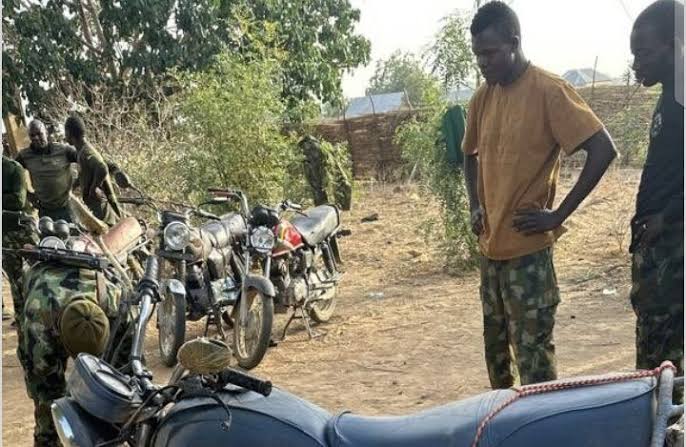
Farmer Injured in Machete Attack by Herder in Plateau
By Zagazola Makama
A farmer, Mr Charles Tuwan, has sustained machete injuries following an alleged attack by a herder during a dispute over grazing on farmland in Pankshin Local Government Area of Plateau State.
The incident occurred at about 6:53 p.m. on August 23, 2026, at Tekas Community, where troops of Sector 8, Operation ENDURING PEACE, operating under Operation HARD KNOCK, responded to a report of an assault.
Security sources said the dispute reportedly started after the farmer refused to allow the herder to graze cattle on his farmland.
On arrival at the scene, the troops found Tuwan with machete cuts sustained during the attack.
The alleged attacker, identified as Abdullahi Saleh, had reportedly fled the area with his cattle before the arrival of the troops.
The injured farmer was evacuated to Pankshin General Hospital for medical attention.
Troops are currently intensifying efforts to locate and arrest the suspect for investigation and possible prosecution.
The incident comes amid heightened tensions between farming and herding communities in parts of Plateau State, underscoring the need for early intervention in disputes over farmland and grazing to prevent isolated incidents from escalating into wider communal violence.
Farmer Injured in Machete Attack by Herder in Plateau
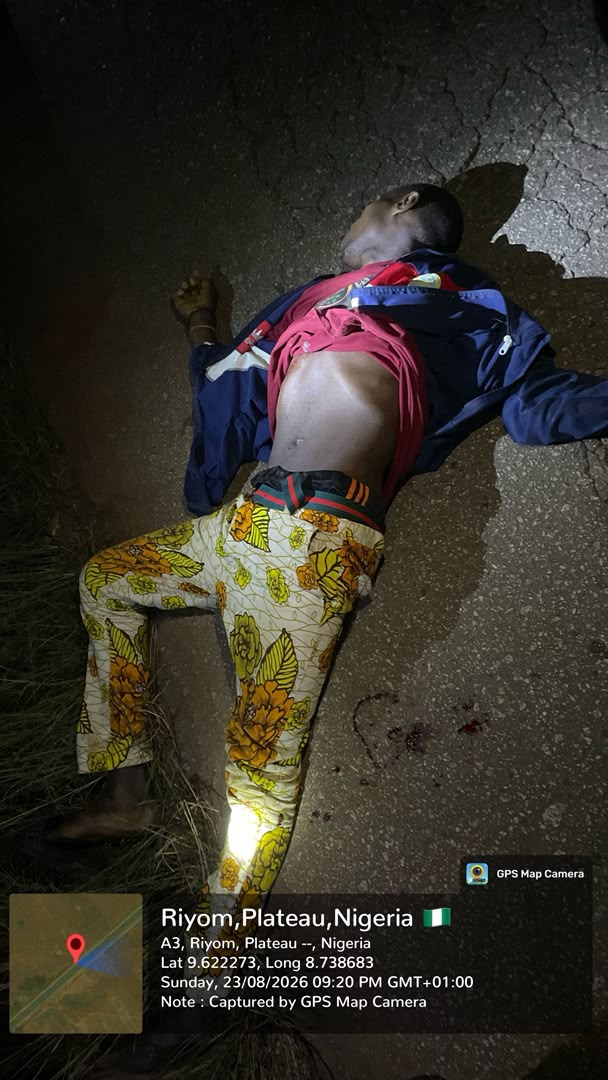
Unidentified Corpse with Gunshot Wound Found Along Road in Plateau
By Zagazola Makama
Troops of Operation ENDURING PEACE have recovered the corpse of an unidentified person bearing a gunshot wound along a roadside in Riyom Local Government Area of Plateau State.
The corpse was discovered at about 9:30 p.m. on August 23, 2026, along the Farin Lamba axis, close to the Primary Health Centre in Riyom.
Troops of Sector 6, Operation ENDURING PEACE, responded to the report and found the body with an apparent gunshot wound to the stomach.
However, security personnel observed that there were no visible traces of blood or spent ammunition casings around the scene.
The circumstances led investigators to suspect that the body may have been transported from another location and dumped at the scene.
The corpse was evacuated to the Primary Health Centre mortuary in Riyom, while the youth leader of Tahoss Community was contacted to assist in identifying the deceased.
Troops have continued to dominate the general area as investigation into the circumstances surrounding the death and possible identity of the victim continues.
Unidentified Corpse with Gunshot Wound Found Along Road in Plateau
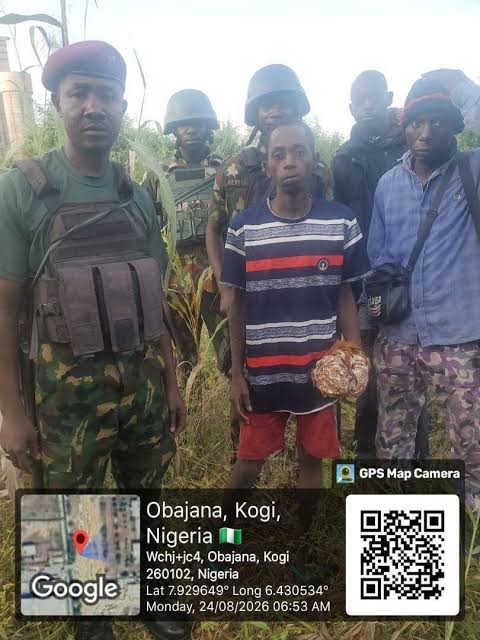
Troops Rescue Kidnap Victim, Recover AK-47 Rifle After Gun Battle in Kogi
By Zagazola Makama
Troops operating under the Joint Security operation in the 2 Division Area of Responsibility have rescued a 28-year-old kidnap victim and recovered an AK-47 rifle following a gun battle with suspected kidnappers in Kogi State.
The operation, according to security sources, took place at about 0300 hours on August 24, 2026, when troops from Patrol Base Obajana intercepted the victim, identified as Hussaini Shehu.
Preliminary questioning revealed that Shehu had allegedly been abducted from the Abaji general area of the Federal Capital Territory about five days earlier.
The rescued victim subsequently led the troops to the location where he had been held captive.
Security sources said the troops made contact with the suspected kidnappers and engaged them in a firefight, forcing the criminals to abandon an AK-47 rifle and flee into the surrounding area.
The weapon was recovered by the troops, while the victim was evacuated to the military medical centre for medical attention.
Security forces have continued operations in the area to track the fleeing kidnappers and prevent them from regrouping.
The latest operation underscores the importance of intelligence-led patrols and rapid exploitation of information obtained from rescued victims in disrupting kidnapping networks operating across the FCT-Kogi corridor.
Troops Rescue Kidnap Victim, Recover AK-47 Rifle After Gun Battle in Kogi

Farmer Injured in Machete Attack by Herder in Plateau

Unidentified Corpse with Gunshot Wound Found Along Road in Plateau

Troops Rescue Kidnap Victim, Recover AK-47 Rifle After Gun Battle in Kogi

Roger Federer’s Shock as DNA Results Reveal Myla and Charlene Are Not His Biological Children

THE PLIGHT OF FARIDA

FAILED COUP IN BURKINA FASO: HOW TRAORÉ NARROWLY ESCAPED ASSASSINATION PLOT AMID FOREIGN INTERFERENCE CLAIMS
-
 News2 years ago
Roger Federer’s Shock as DNA Results Reveal Myla and Charlene Are Not His Biological Children
-
Opinions5 years ago
THE PLIGHT OF FARIDA
-
 News1 year ago
FAILED COUP IN BURKINA FASO: HOW TRAORÉ NARROWLY ESCAPED ASSASSINATION PLOT AMID FOREIGN INTERFERENCE CLAIMS
-

 News2 years ago
EYN: Rev. Billi, Distortion of History, and The Living Tamarind Tree
-
 Opinions5 years ago
POLICE CHARGE ROOMS, A MINTING PRESS
-

 ACADEMICS2 years ago
A History of Biu” (2015) and The Lingering Bura-Pabir Question (1)
-

 Columns2 years ago
Army University Biu: There is certain interest, but certainly not from Borno.
-

 Politics1 year ago
2027: Why Hon. Midala Balami Must Go, as Youths in Hawul and Asikira/Uba Federal Constituency Reject ₦500,000 as Sallah Gift
