
News
Nigeria Targets $12bn Investment as FG Moves to Capture Share of $7tn Halal Economy

Nigeria Targets $12bn Investment as FG Moves to Capture Share of $7tn Halal Economy
By: Michael Mike
Nigeria is positioning itself to capture a significant share of the estimated $7 trillion global halal economy, with the Federal Government unveiling an ambitious strategy aimed at mobilising more than $12 billion in investment and turning the country’s vast agricultural, manufacturing and consumer potential into jobs, exports and industrial growth.
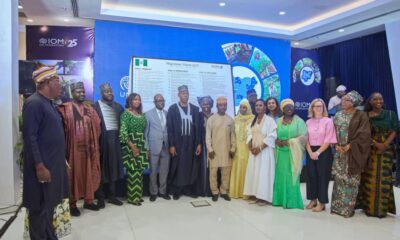
The government’s renewed push was disclosed at the Lagos Halal Leadership Reception 2026 held at Eko Hotel, Lagos, where Vice President Kashim Shettima said Nigeria could no longer afford to remain primarily a consumer of halal products while other countries captured the higher-value opportunities in production, processing, finance, logistics and global trade.
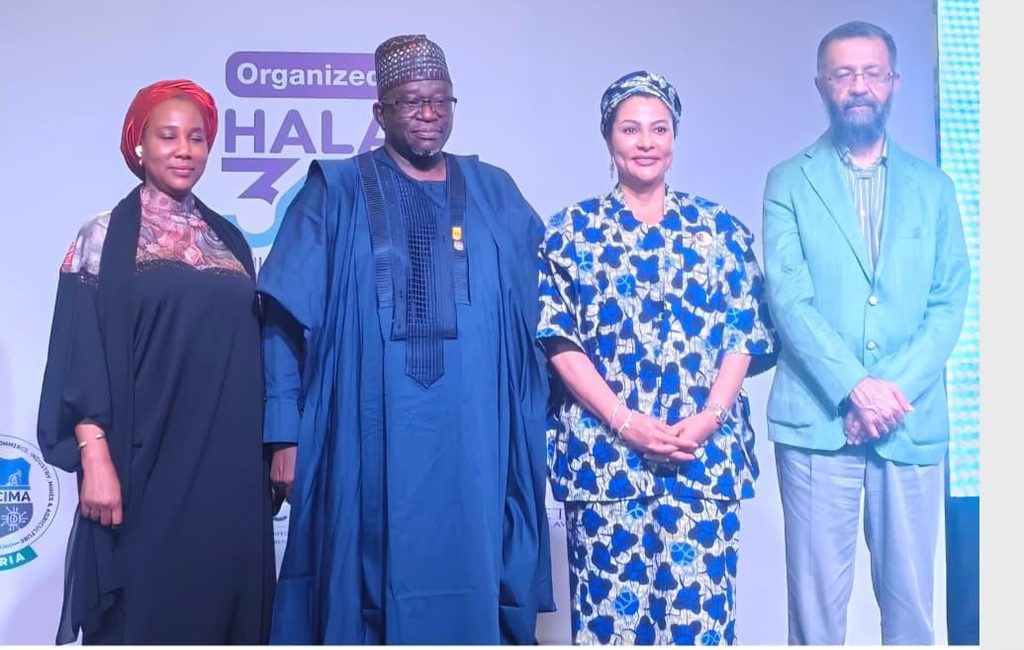
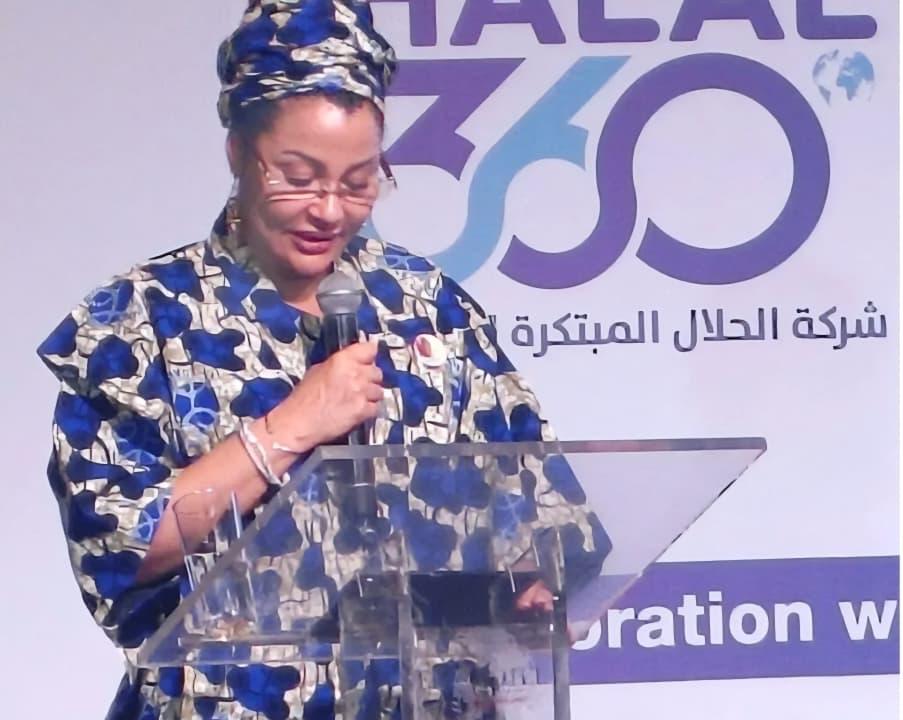
Shettima, represented by the Minister of State for Budget and Economic Planning, Dr Doris Uzoka-Anite, said the halal economy had evolved far beyond food and beverages, now encompassing Islamic finance, pharmaceuticals, cosmetics, tourism, logistics, manufacturing and digital commerce.
According to him, Nigeria has the population, natural resources, entrepreneurial capacity and strategic access to African markets required to become a major player in the rapidly expanding sector.
He said the administration of President Bola Ahmed Tinubu had identified the halal economy as an important component of its Renewed Hope Agenda, particularly in advancing economic diversification, expanding non-oil exports and creating employment.
Shettima said the Nigeria Halal Economy Strategy Implementation Committee, inaugurated on March 3, 2026, had already activated its four workstreams and consolidated its implementation programme into 13 delivery clusters, with a target of mobilising more than $12 billion in investment.
He disclosed that the initiative had also been taken to the National Economic Council, while Osun, Katsina and Kano States had expressed interest in domesticating the strategy to drive halal-related activities at the subnational level.
The Vice President said the government was also strengthening international partnerships with institutions including the Islamic Development Bank, Arab Bank for Economic Development in Africa (BADEA) and the D8 Halal Forum.
He added that proposals were being developed for a Nigerian Halal Accreditation and Verification Platform that could eventually serve as a continental model, alongside plans for a regional capacity-building centre in Nigeria in collaboration with international partners.
Shettima said the Federal Government was working towards presenting the Governance Framework, National Halal Mark, Halal Accreditation and Verification Platform and associated fees architecture to the Federal Executive Council.
But he cautioned that government policies, frameworks and international partnerships would have little economic impact unless they translated into actual businesses, investments, exports and jobs.
He therefore urged the private sector to take the lead in converting Nigeria’s halal potential into commercially viable enterprises.
The Vice President encouraged manufacturers, farmers, financial institutions, logistics companies, tourism operators and technology entrepreneurs to regard halal certification, traceability and conformity assessment as tools for penetrating international markets rather than regulatory burdens.
He also identified non-interest finance as a critical component of the strategy, pointing to Nigeria’s experience with Sukuk as evidence that alternative financing mechanisms could be deployed on a large scale to fund infrastructure and productive economic activities.
Earlier, the Managing Partner of The Metropolitan Law Firm and Coordinator of the reception, Ummahani Ahmad Amin, said the event was conceived as a policy and stakeholder engagement platform rather than a commercial gathering.
She stressed the need for stronger coordination among government agencies, regulators, investors, financial institutions, businesses and professional organisations if Nigeria was to transform its enormous halal potential into sustainable economic value.
The National President of the Nigerian Association of Chambers of Commerce, Industry, Mines and Agriculture (NACCIMA) and member of the Board of Directors of the Islamic Chamber of Commerce and Development (ICCD), Engr. Dr Jani Ibrahim, said Nigeria must move beyond repeatedly discussing the potential of the halal economy and begin implementing policies capable of attracting investment and expanding market access.
Ibrahim pledged NACCIMA’s support for efforts to position Nigerian businesses to benefit from emerging halal opportunities, insisting that halal should be viewed primarily as a trade and investment opportunity rather than merely a certification issue.
Also speaking, the Secretary General of ICCD, Sheikh Yousef Hassan Khalawi, said Nigeria had the capacity to secure a far larger share of the global halal market but needed to capture more value from its raw materials.
He cited Nigeria’s strong position in shea butter production, arguing that the country could generate substantially greater economic returns by developing domestic processing, branding and manufacturing capacity instead of exporting raw materials.
Khalawi said Nigeria’s challenge was therefore not simply to increase production, but to ensure that the value generated from its natural and agricultural resources corresponded with the country’s production capacity.
For the financial sector, the President of the Non-Interest Financial Institutions Association of Nigeria (NIFIAN) and Chairman of Arthur Group, Dr Basheer Oshodi, said Nigeria’s non-interest finance industry was ready to provide the financial architecture needed to support the halal economy.
Oshodi said the sector had developed beyond its emerging phase, pointing to Nigeria’s non-interest banking framework, Sukuk market and expanding Islamic finance ecosystem as evidence of its capacity to support manufacturing, exports, investment and financial inclusion.
He called for closer collaboration among financial regulators, standards bodies and halal institutions to build an integrated ecosystem capable of financing businesses from production through processing and ultimately into international markets.
According to him, the success of Nigeria’s halal strategy should ultimately be measured by tangible outcomes—more export-ready Nigerian companies, increased investment in manufacturing and processing, expanded access to international markets and the creation of quality jobs.
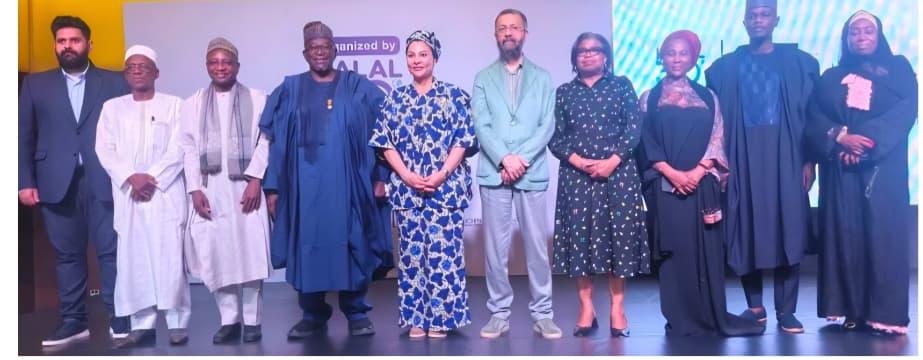
The reception, organised by Halal 360 and The Metropolitan Law Firm in partnership with ICCD, the Halal Products Development Company (HPDC), the Nigeria Halal Economy Strategy Implementation Committee Secretariat (NHESICS) and NACCIMA, brought together government officials, regulators, investors, financial institutions, manufacturers, exporters, diplomats and business leaders.
The consensus among participants was that Nigeria’s competitive advantage in the halal economy would not be secured by its huge population or abundant natural resources alone.
Rather, they said, the country must build trusted standards and certification systems, attract substantial capital, develop domestic processing and manufacturing capacity, expand international market access and create globally competitive Nigerian halal brands.
With the global halal economy expanding across multiple industries, Nigeria’s emerging strategy now faces its defining test: converting its enormous potential into bankable projects, productive investments, higher-value exports and jobs for millions of Nigerians.
Nigeria Targets $12bn Investment as FG Moves to Capture Share of $7tn Halal Economy








Borno: Biu residents commend Betara over construction of township roads
By Peter Uwumarogie
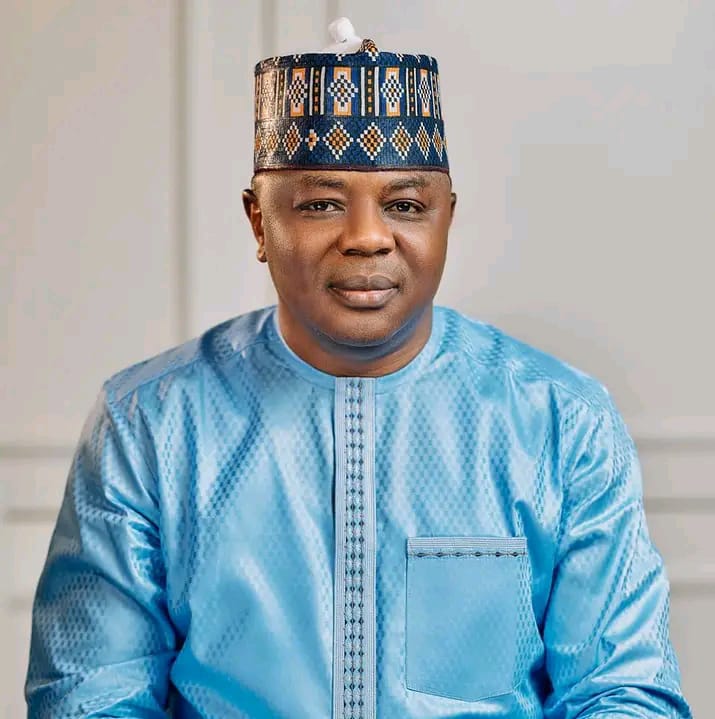
Some residents of Biu Local Government Area of Borno have commended Hon. Aliyu Betara, member representing Biu/Bayo/Shani/Kwaya Kusar Federal Constituency for constructing township roads in Biu town.
They gave the commendation in separate interviews with the News Agency of Nigeria (NAN) in Biu town on Monday.
Malam Rabiu Aliyu, a resident, said that the roads had helped mitigate flooding in his community while providing seamless access to homes.
Aliyu said that the intervention addressed the critical needs of the people as some communities within the town were not properly connected by roads until Betara’s intervention.
“This is what representation should look like; directly meeting the needs of your people.
“We commend the Federal lawmaker for helping residents see the dividends of good representation.
“He (Betara) may not be around us every time but what he has done can be seen, used, touched and felt, that’s governance,” he said.
For Suleiman Isa, another resident, the roads have not only added to the beauty of the town but reduced the cost of transportation around the town.
He said some residents could easily use bicycles from their homes to market, schools, worship centres and other locations without needing to pay to enter tricycles.
Isa said the construction of the roads had made communities within Biu town more connected and “that’s why many people now buy rechargeable bicycles and move with ease.
“The roads have really helped students as they now use bicycles to school and the good roads reduce their travel time and stress,” he said.
Mrs Esther Daniel said the roads have helped improve economic activities in her community as shops have been built along the roads where women sell their goods near their homes.
Daniel also said the project has helped improve mobility especially during the rainy season when the roads used to be flooded and largely inaccessible.
“Now even if it rained, we don’t get stuck at home; we still go and do our normal activities and return safely.
“Betara has been representing us well and we will continue to pray for him. It is not difficult to please Nigerians, just represent us well and we will support and love you.
“This is why many people love Betara because he is doing what makes life easy for his constituents,” she said.
For Hauwa Ibrahim, a resident who lives adjacent to Biu main market, Betara has shown goodwill to his people and “we are proud of him.”
Ibrahim, however, urged the Federal lawmaker to complete other roads that he had earmarked for construction so that “we too can enjoy what others are enjoying.
“Some communities along Gombe road have been marked for construction but are yet to be done.
“So in the spirit of inclusive governance, we appeal for those roads to be constructed to make it easy for residents there to access their homes and businesses,” she appealed.
Borno: Biu residents commend Betara over construction of township roads
News
Gallant Troops Overrun Terrorist Camps in Dajin Madam Forest, Neutralise Two Bandits in Plateau
Gallant Troops Overrun Terrorist Camps in Dajin Madam Forest, Neutralise Two Bandits in Plateau
By: Zagazola Makama
Gallant troops of the Nigerian Army’s 33 Artillery Brigade have launched a major offensive against terrorist and bandit hideouts in Dajin Madam Forest, straddling Kanam and Wase Local Government Areas of Plateau State, destroying several camps and neutralising two armed criminals during successive encounters.
Security sources told Zagazola Makama that the operation commenced at about 11:00 a.m. on Nov. 8, 2026, with troops advancing into the forest in a coordinated offensive against criminal elements operating within the area.
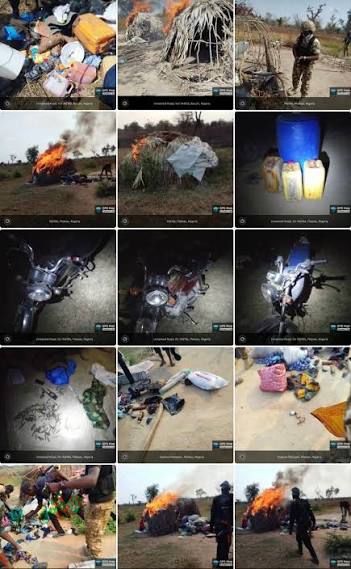
During the operation, the troops successfully cleared several terrorist camps across five identified locations within the forest, denying the criminals access to their established hideouts and support infrastructure.
The troops subsequently destroyed and burnt the terrorists’ life-support structures, including facilities believed to have sustained their presence and operations in the forest.
The offensive gathered momentum at about 3:41 p.m. when troops made contact with the armed bandits at another location within the forest.
The soldiers engaged the criminals with superior firepower, forcing them to withdraw in disarray.
Evidence of the effectiveness of the engagement was indicated by bloodstains observed along the bandits’ withdrawal routes, suggesting that some of the fleeing criminals might have sustained gunshot injuries.
Undeterred, the troops continued exploiting the general area, leading to the recovery of a significant cache of ammunition, communication equipment, mobility assets and other logistics.
Items recovered included 135 rounds of 7.62mm NATO ammunition, PKT ammunition links, two motorcycles, two drums of Premium Motor Spirit (PMS), two communication radios and four mobile phones.
The troops also recovered three woodland and desert camouflage uniforms, two Keystone camouflage uniforms and other sundry items believed to be associated with the activities of the criminal group.
In a further demonstration of sustained combat pressure, the troops made another contact with the fleeing bandits at about 6:30 p.m. during a pursuit operation.
The soldiers engaged the criminals, neutralising two bandits close to Kukawa village in Kanam Local Government Area.
Two additional motorcycles were also recovered during the encounter.
Following the successful engagements, the troops moved to a harbour position at Kukawa, where they continued to maintain their operational presence in the area.
The operation represents a significant offensive against armed criminal networks using the Dajin Madam Forest corridor as a hideout, with the destruction of their camps, recovery of ammunition and logistics, and the neutralisation of two bandits further disrupting their operational capabilities.
The sustained advance by the troops also illustrated the Nigerian Army’s determination to deny terrorists and bandits safe havens in the forests linking Kanam and Wase, while maintaining pressure on fleeing elements.
Gallant Troops Overrun Terrorist Camps in Dajin Madam Forest, Neutralise Two Bandits in Plateau
ECOWAS Inspection Team Assesses Readiness of Nigerian Standby Force in Ondo
By: Zagazola Makama
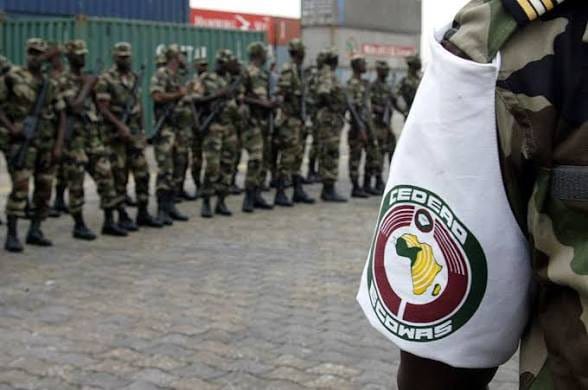
An inspection team from the ECOWAS Force Headquarters and Army Headquarters has assessed the operational readiness of Nigeria’s ECOWAS standby force at Naquora Barracks in Okitipupa Local Government Area of Ondo State.
Security sources told Zagazola Makama that the team, led by Brig.-Gen. Sheikh Sulaiman Massaquoi, visited the barracks on Nov. 7, 2026, to evaluate the troops’ preparedness for possible deployment.
The team received briefings on troop readiness, training and administrative matters, and witnessed demonstrations on roadblock operations and crowd dispersal.
Massaquoi commended the troops for their performance and urged them to sustain high standards of professionalism, discipline and physical fitness.
The inspection visit ended without any incident.
ECOWAS Inspection Team Assesses Readiness of Nigerian Standby Force in Ondo

Thousands Roar as Engr. Gubio Welcomes Residents at APC 2027 Campaign Flag-Off in Borno

Borno: Biu residents commend Betara over construction of township roads

Gallant Troops Overrun Terrorist Camps in Dajin Madam Forest, Neutralise Two Bandits in Plateau

Roger Federer’s Shock as DNA Results Reveal Myla and Charlene Are Not His Biological Children

THE PLIGHT OF FARIDA

FAILED COUP IN BURKINA FASO: HOW TRAORÉ NARROWLY ESCAPED ASSASSINATION PLOT AMID FOREIGN INTERFERENCE CLAIMS
-
 News3 years ago
Roger Federer’s Shock as DNA Results Reveal Myla and Charlene Are Not His Biological Children
-
Opinions5 years ago
THE PLIGHT OF FARIDA
-
 News2 years ago
FAILED COUP IN BURKINA FASO: HOW TRAORÉ NARROWLY ESCAPED ASSASSINATION PLOT AMID FOREIGN INTERFERENCE CLAIMS
-
 Opinions5 years ago
POLICE CHARGE ROOMS, A MINTING PRESS
-

 News3 years ago
EYN: Rev. Billi, Distortion of History, and The Living Tamarind Tree
-

 ACADEMICS3 years ago
A History of Biu” (2015) and The Lingering Bura-Pabir Question (1)
-

 Columns3 years ago
Army University Biu: There is certain interest, but certainly not from Borno.
-

 Politics1 year ago
2027: Why Hon. Midala Balami Must Go, as Youths in Hawul and Asikira/Uba Federal Constituency Reject ₦500,000 as Sallah Gift
