
News
Nigeria Tightens War on Plastic Waste, Makes Producers Responsible for End-of-Life Products

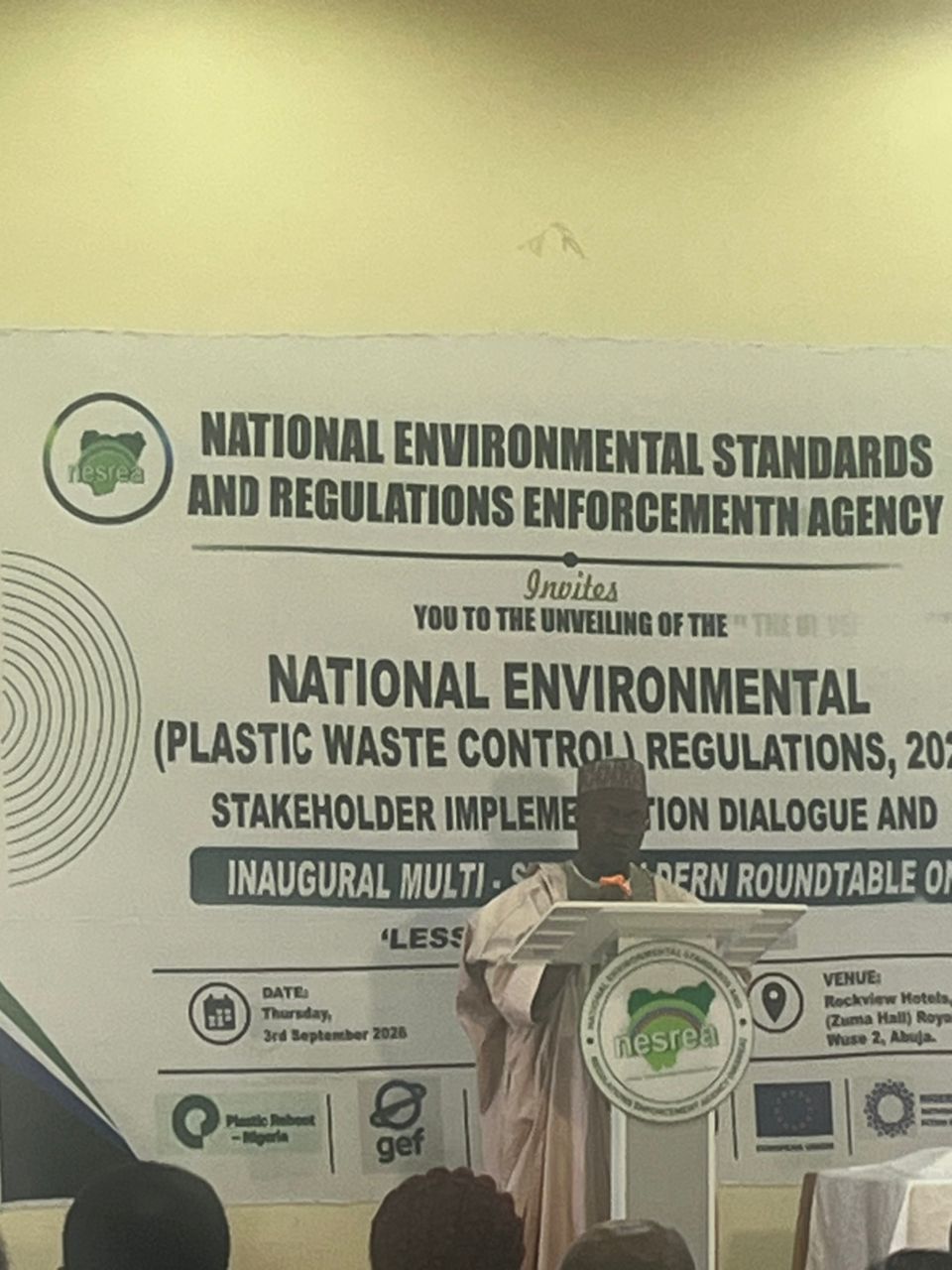
Nigeria Tightens War on Plastic Waste, Makes Producers Responsible for End-of-Life Products
…NESREA unveils 2026 regulations as country generates 2.5m tonnes of plastic waste annually
By: Michael Mike
The Federal Government has unveiled new regulations to tackle Nigeria’s growing plastic waste crisis, placing greater responsibility on producers, importers and other businesses for the recovery and proper management of plastic products after use.
The National Environmental (Plastic Waste Control) Regulations, 2026, unveiled by the National Environmental Standards and Regulations Enforcement Agency (NESREA), seek to move the country from a “make, use and throw away” system to a circular economy based on recovery, recycling and resource efficiency.
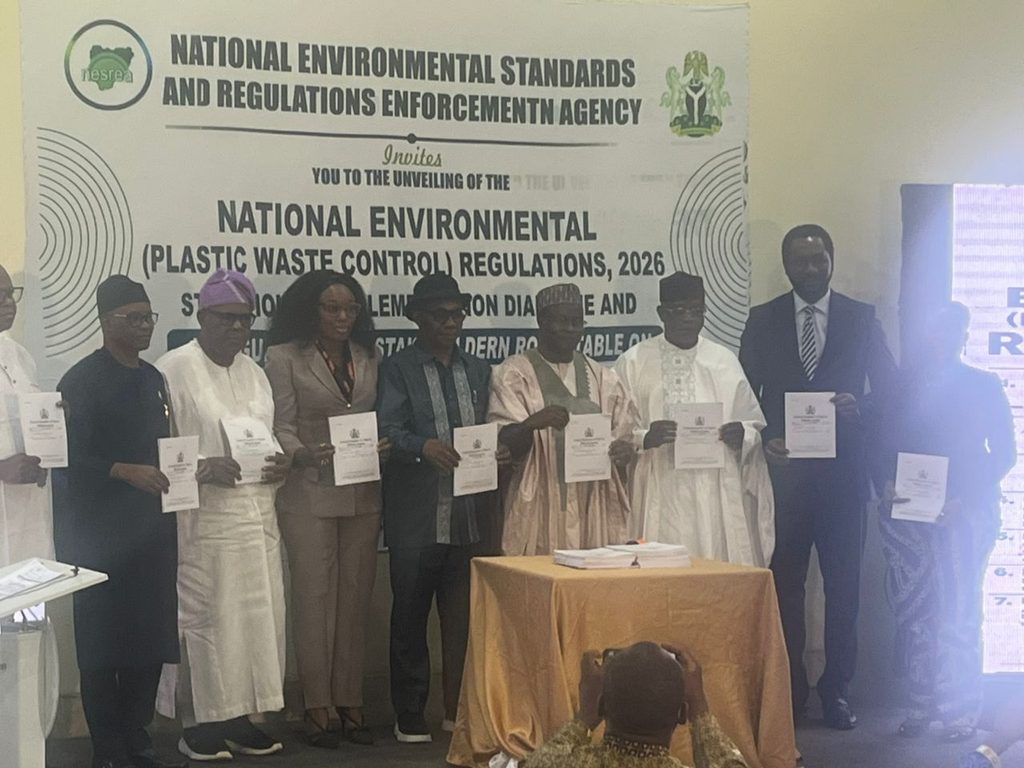
Nigeria generates an estimated 2.5 million tonnes of plastic waste annually, much of which ends up in drains, waterways and communities, contributing to environmental degradation, flooding and public health concerns.
Speaking at the Stakeholder Implementation Dialogue and inaugural multi-stakeholder roundtable on “Less Plastic in Water,” the Director-General of NESREA, Prof. Innocent Barikor, said the regulations marked a shift from policy formulation to implementation.
“Today is significant because it marks a transition from policy intention to implementation,” he said.
Barikor said the success of the regulations would ultimately be measured by cleaner communities and waterways, increased plastic recovery, stronger recycling markets and greater accountability by producers.
At the centre of the new framework is the Extended Producer Responsibility (EPR) principle, under which producers, importers and other businesses placing plastic products on the Nigerian market are expected to take responsibility for their products throughout their life cycle, including their recovery and environmentally sound management after use.
The regulations cover producers, importers, retailers, consumers, recyclers and waste managers, while introducing requirements relating to plastic shopping bags, recycled content and recycling facilities.
Certain plastic shopping bags below 80 microns in thickness are subject to regulation, while PET packaging will be required to contain at least 25 per cent recycled PET by January 2028, rising to 50 per cent thereafter.
Recycling facilities must also comply with prescribed environmental standards, while the production of plastics containing prohibited toxic substances will attract sanctions.
Businesses operating within regulated activities are required to obtain the necessary permits and registrations within the stipulated compliance period. Violations may attract financial penalties and, where applicable, imprisonment and personal liability.
The Chairman of the NESREA Governing Board, Hon. Garba Datti Muhammad, described plastic pollution as a major threat to waterways, livelihoods, communities and public health, stressing that effective implementation would require cooperation among government, industry, Producer Responsibility Organisations, recyclers, subnational authorities, development partners and citizens.
Barikor also identified the strengthening of the National Producer Registry as critical to enforcement, investment planning and measuring environmental performance.
“Data should not be viewed merely as an administrative requirement; it is the foundation upon which producer accountability, investment decisions, recovery systems and credible environmental outcomes can be built,” he said.
The government acknowledged the importance of plastics to healthcare, food preservation, agriculture, manufacturing and other sectors, stressing that the objective was not to eliminate plastic but to curb irresponsible production, consumption and disposal.
Particular attention is being paid to single-use plastics and sachet water, which millions of Nigerians rely on because of its affordability. Officials said alternatives must therefore be environmentally sustainable, affordable and accessible to vulnerable populations.
The “Less Plastic in Water” initiative is part of the Plastic Reboot Nigeria Project, a five-year programme supported by the Global Environment Facility and implemented by the United Nations Environment Programme.
The Minister of Environment, Balarabe Lawal, represented by the Permanent Secretary, Alhaji Salihu Aminu Usman, said stronger implementation of EPR could stimulate investment in recycling, expand markets for recovered materials and create jobs.
He urged stakeholders to view discarded plastics not simply as waste but as potential raw materials for new industries.
Barikor stressed that tackling plastic pollution required coordinated action, saying: “No ministry can solve the plastic problem, no agency can solve it, no company can solve it.”
He warned that the regulations would only have meaning if backed by effective enforcement.
“A regulation without enforcement is merely a wish,” he said.
The focus now shifts to implementation, including producer registration, enforcement of EPR obligations, monitoring, improved waste recovery, investment in recycling infrastructure and the development of viable alternatives to avoidable single-use plastics.
If effectively enforced, the 2026 regulations could mark a significant shift in Nigeria’s environmental policy by making producers more accountable for the full life cycle of their products while transforming plastic waste into an economic resource.
Nigeria Tightens War on Plastic Waste, Makes Producers Responsible for End-of-Life Products


District head rescued from mob attack in Jos East
By: Zagazola Makama
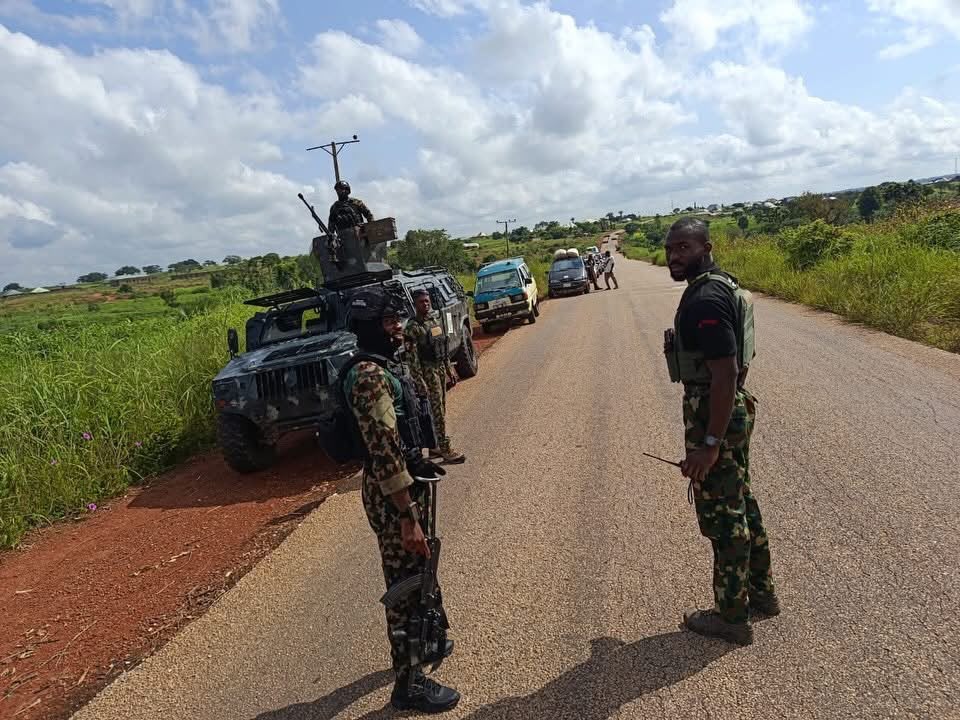
Troops of Sector 1, Sub-Sector 12, have rescued the District Head of Fursum in Jos East Local Government Area of Plateau State, Alhaji Musa Usman, from a mob attack by youths of Ninseng community.
Security sources told Zagazola Makama that the incident occurred at about 1:45 p.m. on Sept. 25, 2026, when troops responded to a report of a mob attack at the district head’s residence.
The youths reportedly attacked Usman, accusing him of allegedly supporting Fulani residents in the community.
The attack followed a reported incident in which a local was attacked and killed at an illegal mining site in Nabar Dutse community.
Troops intervened and rescued the district head, who sustained injuries during the attack.
He was subsequently evacuated to the Jos University Teaching Hospital (JUTH) for medical attention.
During the incident, the district head’s vehicle was also set ablaze by the attackers.
The troops brought the situation under control and dominated the general area to prevent further escalation and possible retaliatory attacks.
Security forces are maintaining a presence in the area while efforts continue to prevent further breakdown of law and order.
District head rescued from mob attack in Jos East

Troops rescue 14 kidnapped victims, recover arms, ammunition in Katsina
By: Zagazola Makama
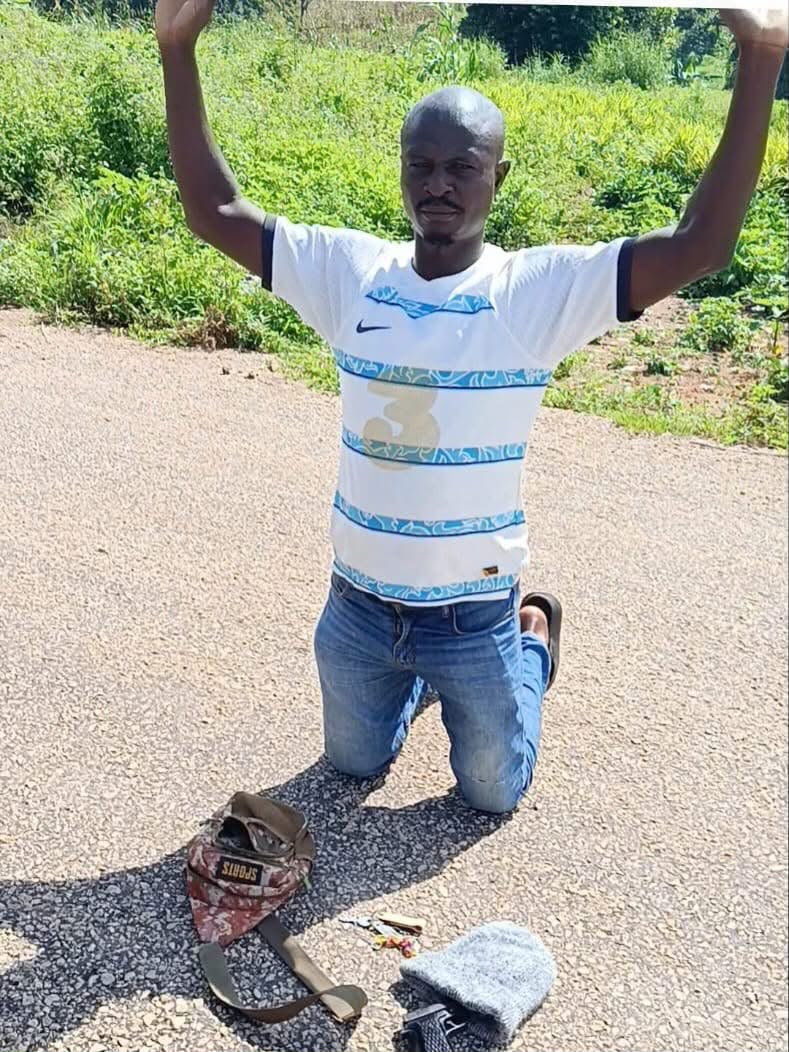
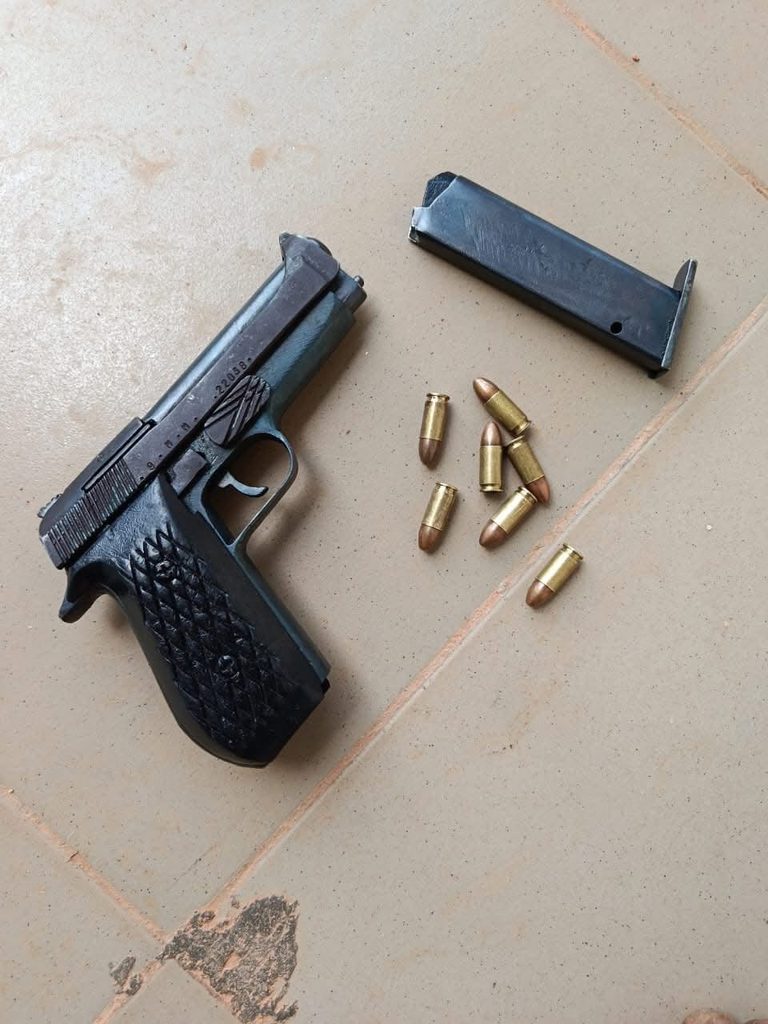
Troops of Sector 2, Operation FANSAN YAMMA, have rescued 14 kidnapped victims and recovered arms, ammunition and a motorcycle during ongoing clearance operations in Faskari Local Government Area of Katsina State.
According to security sources, the troops carried out routine security patrols along the Faskari axis on Sept. 25, 2026, when they intercepted a group of suspected terrorists.
The troops engaged the terrorists and overpowered them, forcing the group to abandon their positions and flee into the surrounding terrain.
During the subsequent clearance operation, the troops rescued 14 kidnapped victims, comprising 12 males and two females.
Preliminary investigation indicated that the victims had been abducted from Anguwan Miko and Tafoki communities, both in Faskari LGA.
The rescued victims are currently receiving medical attention and necessary support before being reunited with their families.
In a related operation within the same area, the troops also foiled an attempted attack by suspected terrorists.

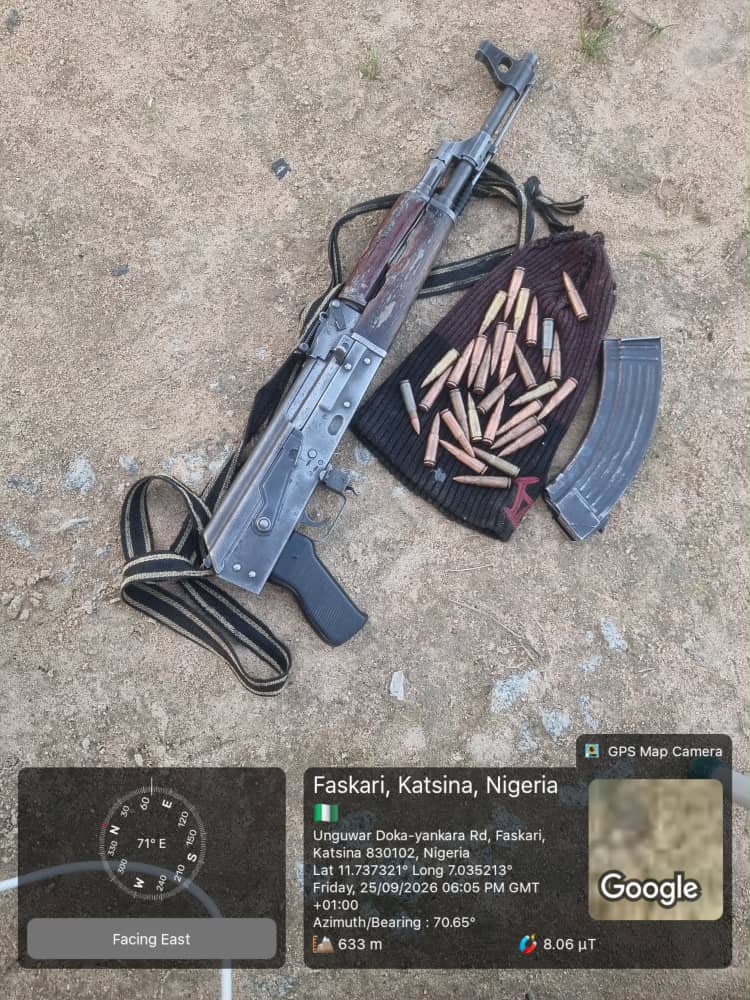
Following the engagement, the troops recovered one AK-47 rifle, some quantity of 7.62mm special ammunition and a motorcycle reportedly used by the suspects.
Troops rescue 14 kidnapped victims, recover arms, ammunition in Katsina
Troops foil attack by Fulani bandits on Gyamgyam community in Plateau
By: Zagazola Makama
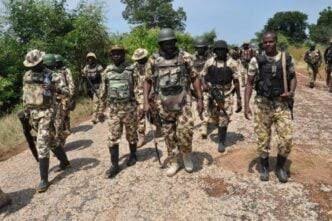
Troops of Sector 2, Operation Enduring Peace (OPEP), have foiled an attack by fulani bandits on Gyamgyam community in Garga District of Wase Local Government Area of Plateau State.
The incident occurred at about 7:45 a.m. on Sept. 25, when troops responded to reports of sporadic shootings in the community.
Upon arrival at the location, the troops discovered that the community had come under attack by some assailants.
Security sources said no casualty was recorded, as members of the community resisted the attackers and prevented them from achieving their objective.
Following the incident, the troops commenced area domination patrols around the community and adjoining locations to deter further attacks and track the movement of the assailants.
The operation is ongoing as security forces continue to maintain a presence in the area and monitor the security situation.
Troops foil attack by Fulani bandits on Gyamgyam community in Plateau

District head rescued from mob attack in Jos East

Troops rescue 14 kidnapped victims, recover arms, ammunition in Katsina

Troops foil attack by Fulani bandits on Gyamgyam community in Plateau

Roger Federer’s Shock as DNA Results Reveal Myla and Charlene Are Not His Biological Children

THE PLIGHT OF FARIDA

FAILED COUP IN BURKINA FASO: HOW TRAORÉ NARROWLY ESCAPED ASSASSINATION PLOT AMID FOREIGN INTERFERENCE CLAIMS
-
 News3 years ago
Roger Federer’s Shock as DNA Results Reveal Myla and Charlene Are Not His Biological Children
-
Opinions5 years ago
THE PLIGHT OF FARIDA
-
 News1 year ago
FAILED COUP IN BURKINA FASO: HOW TRAORÉ NARROWLY ESCAPED ASSASSINATION PLOT AMID FOREIGN INTERFERENCE CLAIMS
-

 News3 years ago
EYN: Rev. Billi, Distortion of History, and The Living Tamarind Tree
-
 Opinions5 years ago
POLICE CHARGE ROOMS, A MINTING PRESS
-

 ACADEMICS3 years ago
A History of Biu” (2015) and The Lingering Bura-Pabir Question (1)
-

 Columns3 years ago
Army University Biu: There is certain interest, but certainly not from Borno.
-

 Politics1 year ago
2027: Why Hon. Midala Balami Must Go, as Youths in Hawul and Asikira/Uba Federal Constituency Reject ₦500,000 as Sallah Gift
