
News
Nigeria To Revisit Rejected Gender Equality Bill – Lawmaker


Nigeria To Revisit Rejected Gender Equality Bill – Lawmaker
By: Michael Mike
The Nigerian Delegation to the ECOWAS Parliament has assured the regional legislature that the five discarded gender equality bills for action are still up for reconsideration by the Nigeria’s National Assembly.
Hon. Linda Ikpeazu, a lawmaker representing Nigeria at the ECOWAS Parliament said this while responding to criticisms by some members of the Parliament following Nigeria’s Presentation at the 2022 First Ordinary Session of the regional Parliament in Abuja yesterday.
The Nigerian National Assembly had on March 1, 2022 rejected constitutional bills seeking to create more inclusion of women in political and appointive positions and other gender equity issues.
This development drew serious criticisms from some Members of the ECOWAS Parliament, who had expressed their disappointment with the Nigerian lawmakers for throwing out the Gender Equity bills that were brought before the House of Representatives.
Ikpeazu while reading Nigeria’s Country report said that despite the five gender bills that were thrown out, Nigeria remains resolute to enact equitable laws that will address gender inequity.
She however, noted that more sensitization will be carried out for Members of the National Assembly to understand the bill better, adding that it will be revisited and hopefully passed into law.
“Nigeria’s commitment to implementation of ECOWAS Texts on Equality of Rights between Women and Men resonates in her ongoing constitution amendment.
“Five of the bills that were put to vote at the National Assembly were focused on gender equity- to promote more opportunities for women in governance and the society at large.
“The Gender Equity Bills underscore the following; additional seat for women in legislature; indigeneship rights for married women; citizenship by registration for non-Nigerian men married to Nigerian women; 35 percent affirmative action for women in political party administration and reserved quota for women in cabinet positions.
“Regrettably, all the bills were rejected. Despite this set back, the Nigerian National Assembly remains resolute in her vision to enact equitable laws that will address gender imbalances in our socio-political environment.
“The leadership is working hard to make sure some of the bills will be re- presented to the House and be passed.
Also Read: Gov. Wike Denies His Allaged Defecrion
“We are lawmakers and we know that for bills to be passed, we need to do more sensitisation and engagements with our colleagues.
“We have learnt our lessons and with the support of the leadership there will be a difference,” Ikpeazu said.
The Parliamentarians who slammed Nigeria for discarding the gender bills had done so probably because of the expectation that Nigeria will set the pace to meet the 35 per cent affirmation of women inclusion and gender equity.
Hon. Veronika Sessay, a Member of Parliament from Sierra Leone, said that Nigeria as the “Big brother” of Africa should set a pace for other countries to follow as they expect a positive outcome once the bills are reconsidered.
“We were expecting Nigeria to have done this so that we can follow. And let me tell you, Sierra-Leone is on the way and I am sure that in our next reports we will tell you that we have passed the gender bill.
“In as much as they have said that they are taking another commitment that they are going to do it, how soon?
“We were not happy when it was thrown away, so I am appealing to our big brothers, Nigeria, all we need is equality, development and peace, that is what is stated in our national song.
“Where there are more women you will see the change in the world. Nigeria, we expect more from you and let us see how you can pass this bill before Sierra Leone,” Sessay said.
Similarly, Hon. Kibba Barrow from the Gambia urged all Member countries to ensure passage of gender bills that will guarantee women’s rights and gender issues.
Nigeria To Revisit Rejected Gender Equality Bill – Lawmaker



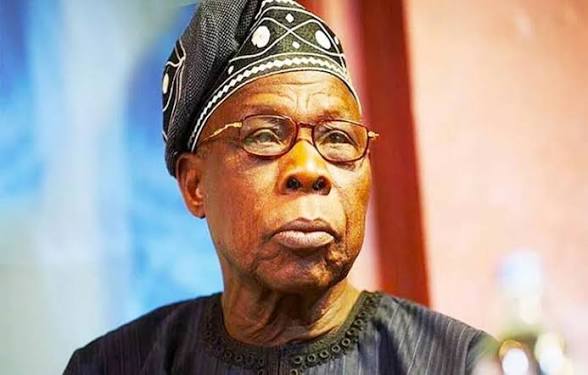
Obasanjo Unveils Bold Blueprint for Africa’s Security Overhaul, Warns Against New Scramble
By: Michael Mike
Former Nigerian President Olusegun Obasanjo has issued a sweeping and urgent call for a radical overhaul of Africa’s security architecture, warning that the continent risks deeper instability and renewed external domination unless it urgently redefines its approach to security, governance, and intelligence.
Speaking at the third Mashariki Cooperation Conference III (MCC III), Obasanjo challenged Africa’s intelligence chiefs and security leaders to abandon outdated frameworks and embrace a people-focused, technologically independent, and accountable system capable of confronting modern threats.
Delivering a hard-hitting address on “Emerging Geopolitical Dynamics and Africa’s Security Architecture,” the elder statesman argued that Africa’s persistent conflicts are not accidental but stem from “specific, identifiable failures of leadership,” compounded by what he described as intensifying external manipulation.
“We are witnessing the fracturing of the post-1945 multilateral order,” Obasanjo said, pointing to the global fallout from the Russian invasion of Ukraine and contrasting international responses to crises in regions such as Gaza and the Sahel. According to him, these inconsistencies expose a global system that applies its rules selectively—often at Africa’s expense.
A Continent Under Pressure
Obasanjo painted a stark picture of a continent caught in a renewed geopolitical contest, warning of a “new scramble for Africa.” He cited expanding foreign influence through initiatives like China’s Belt and Road Initiative, the growing footprint of Russian-linked security actors across the Sahel and the Horn of Africa, and the vacuum left by the withdrawal of Western forces from key conflict zones.
These developments, he said, have coincided with a surge in terrorism, violent extremism, and an alarming wave of military takeovers across the continent since 2020—what he described as a “coup epidemic.”
Five Pillars for a New Security Order
In response, Obasanjo outlined five concrete propositions aimed at reshaping Africa’s security framework:
• Human-centred security: Prioritising the safety and welfare of citizens over elite interests.
• Continental solidarity: Strengthening joint mechanisms such as the African Standby Force and early warning systems.
• Disrupting illicit financing: Empowering intelligence agencies to tackle financial flows that sustain insecurity.
• Technological sovereignty: Building African capacity in artificial intelligence, cyber defence, and drone warfare.
• Accountable governance: Establishing transparent leadership as the foundation of lasting security.
He stressed that without credible governance, no military or intelligence strategy can succeed.
Intelligence at the Core
Central to Obasanjo’s message was a forceful critique of Africa’s use of intelligence. He described intelligence as “indispensable to conflict prevention” but “woefully underused,” citing missed warning signs in past crises across Liberia, Sierra Leone, Burundi, the Democratic Republic of Congo, and Sudan.
He urged the creation of a truly integrated continental intelligence network, beginning with stronger regional cooperation, and insisted that effectiveness must be anchored in professionalism and civilian oversight.
“Intelligence services that operate with integrity… and are subordinate to civilian authority are not weaker—they are stronger,” he declared.
Leadership Under Scrutiny
In a rare moment of reflection, Obasanjo drew from his own involvement in major African peace efforts, including Nigeria-led interventions under ECOMOG in Liberia and Sierra Leone, and mediation roles in Burundi and Zimbabwe. He argued that successful conflict resolution has always depended on “accurate intelligence, courageous honesty, and selfless leadership.”
He also introduced his “Obasanjo 55+20 Leadership Framework,” a structured model outlining 55 measurable leadership attributes and 20 core values. At its heart, he said, lies “courageous honesty”—the willingness of leaders to confront uncomfortable truths.
A Final Warning
Addressing an audience that included Noordin Mohamed Haji and intelligence heads from across Africa, Obasanjo closed with a stark warning and a challenge.
At nearly 90, he said his decades of experience have shown both Africa’s promise and its recurring failures.
“Africa’s conflicts are not inevitable,” he said. “They are the product of leadership choices. What is required now is the will—and the courage and audacity—to choose differently.”
His message was unmistakable: without decisive reforms, Africa risks remaining a battleground for external powers; with them, it has a chance to secure its future on its own terms.
Obasanjo Unveils Bold Blueprint for Africa’s Security Overhaul, Warns Against New Scramble
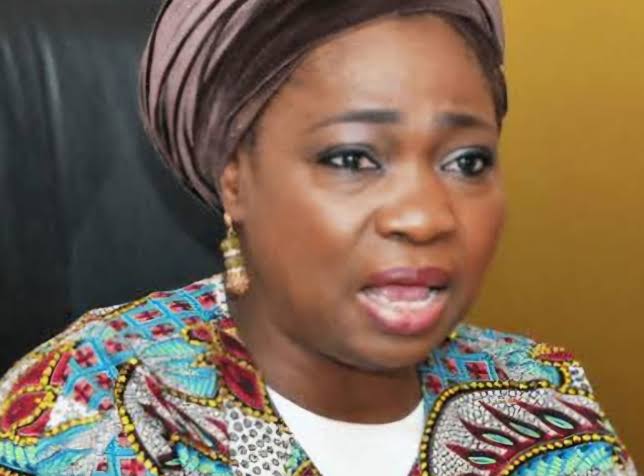
Nigeria Woos Diaspora Investors in Silicon Valley, Says “Ready for Business”
By: Michael Mike
Nigeria has intensified its push to attract diaspora-driven investments, with the Chairman/CEO of the Nigerians in Diaspora Commission (NIDCOM), Abike Dabiri-Erewa, declaring that the country is fully open and prepared for business.
Speaking in Silicon Valley, California, at a high-level pre-event dinner ahead of the African Diaspora Investment Symposium 2026 (ADIS26), Dabiri-Erewa assured global investors—particularly Nigerians in the diaspora—that Nigeria offers vast and untapped investment opportunities across sectors.
The event, hosted at Santa Clara University, brought together top African and global stakeholders under the theme: “Bridging Africa & Silicon Valley: Shaping the Future of Innovation, Investment, and Inclusive Growth.”
Dabiri-Erewa said Nigeria is deliberately positioning its diaspora as a strategic economic force, leveraging their expertise, capital, and global networks to accelerate national development.
She highlighted ongoing reforms and investment-friendly policies under the administration of Bola Ahmed Tinubu, noting that the government is creating an enabling environment for diaspora participation in critical sectors, including technology, infrastructure, and entrepreneurship.
According to her, the focus is shifting from remittances to structured, long-term investments capable of driving sustainable economic growth and innovation.
“The Nigerian diaspora remains one of our strongest assets,” she said, stressing that deeper engagement would unlock transformative opportunities for both the country and its global citizens.
The NIDCOM boss also commended Almaz Negash, founder of the African Diaspora Network, for convening the platform and fostering cross-continental partnerships.
Beyond the dinner, Dabiri-Erewa held a working session with Nigerian professionals in the United States, many of whom expressed readiness to collaborate with NIDCOM on initiatives aimed at national development.
The engagements attracted a diverse mix of African and American leaders, innovators, investors, and policymakers, reinforcing a growing consensus on the need to build stronger bridges between Africa and the global technology ecosystem.
The gathering underscored a shared commitment to moving beyond traditional remittance flows toward impactful investments that can shape Africa’s economic future.
Nigeria Woos Diaspora Investors in Silicon Valley, Says “Ready for Business”
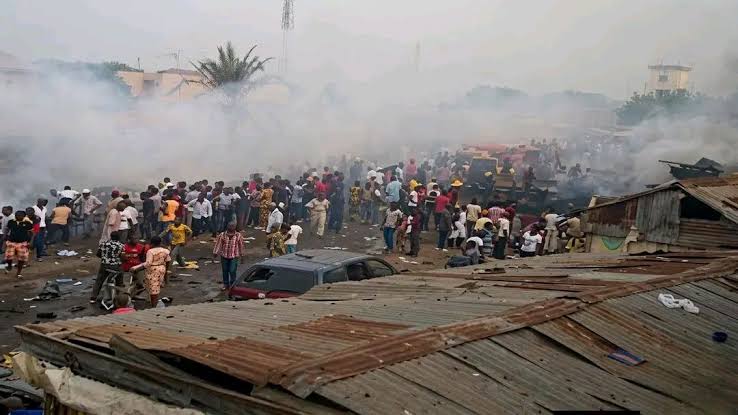
Zulum Cracks Down on Insurgent Support Networks, Backs Airstrikes on ‘Notorious’ Border Market
By: Michael Mike
Borno State Governor, Babagana Zulum, has issued a stern warning to residents against aiding or providing any form of support to Boko Haram, as intensified military operations target suspected logistics hubs in the North-East.
The warning comes in the wake of recent air operations by the Operation Hadin Kai, which struck the Jilli general area in Gubio Local Government Area on April 11, 2026.
Jilli, a border community linking Borno and Yobe states, has come under scrutiny as a suspected conduit for insurgent activities. According to the governor, the Jilli market—alongside the nearby Gazabure market—had been officially shut down by the state government five years ago due to security concerns.
“I have been properly briefed on the airstrike carried out on Jilli market,” Zulum said, describing the location as a “notorious hub” allegedly exploited by insurgents and their supply chains.
He revealed ongoing high-level consultations with the Yobe State Government and military leadership, underscoring a coordinated regional approach to tackling insurgency and preventing the resurgence of rebel strongholds along state borders.
Zulum emphasized that any decision to reopen markets or resettle communities in conflict-affected zones is taken only after thorough security assessments and in collaboration with the military and other agencies.
Reaffirming his administration’s stance, the governor said protecting civilians remains paramount, while also stressing that individuals found aiding insurgents—whether through shelter, information, or logistics—would face serious consequences.
He urged residents to remain vigilant and support security forces by sharing credible intelligence, noting that community cooperation is critical to dismantling insurgent networks and restoring lasting peace in the region.
Zulum Cracks Down on Insurgent Support Networks, Backs Airstrikes on ‘Notorious’ Border Market

Jos: Living in Conflicts and Crisis for a Quarter of a Century; Where Peace Became a Paranormal Stranger (1)

Nation mourns as brave Commanding Officer, six soldiers fall after repelling attack in Monguno

Obasanjo Unveils Bold Blueprint for Africa’s Security Overhaul, Warns Against New Scramble

Roger Federer’s Shock as DNA Results Reveal Myla and Charlene Are Not His Biological Children

THE PLIGHT OF FARIDA

FAILED COUP IN BURKINA FASO: HOW TRAORÉ NARROWLY ESCAPED ASSASSINATION PLOT AMID FOREIGN INTERFERENCE CLAIMS
-
 News2 years ago
Roger Federer’s Shock as DNA Results Reveal Myla and Charlene Are Not His Biological Children
-
Opinions4 years ago
THE PLIGHT OF FARIDA
-
 News12 months ago
FAILED COUP IN BURKINA FASO: HOW TRAORÉ NARROWLY ESCAPED ASSASSINATION PLOT AMID FOREIGN INTERFERENCE CLAIMS
-

 News2 years ago
EYN: Rev. Billi, Distortion of History, and The Living Tamarind Tree
-
 Opinions4 years ago
POLICE CHARGE ROOMS, A MINTING PRESS
-

 ACADEMICS2 years ago
A History of Biu” (2015) and The Lingering Bura-Pabir Question (1)
-

 Columns2 years ago
Army University Biu: There is certain interest, but certainly not from Borno.
-

 Opinions2 years ago
Tinubu,Shettima: The epidemic of economic, insecurity in Nigeria
