
News
Nigeria To Revisit Rejected Gender Equality Bill – Lawmaker


Nigeria To Revisit Rejected Gender Equality Bill – Lawmaker
By: Michael Mike
The Nigerian Delegation to the ECOWAS Parliament has assured the regional legislature that the five discarded gender equality bills for action are still up for reconsideration by the Nigeria’s National Assembly.
Hon. Linda Ikpeazu, a lawmaker representing Nigeria at the ECOWAS Parliament said this while responding to criticisms by some members of the Parliament following Nigeria’s Presentation at the 2022 First Ordinary Session of the regional Parliament in Abuja yesterday.
The Nigerian National Assembly had on March 1, 2022 rejected constitutional bills seeking to create more inclusion of women in political and appointive positions and other gender equity issues.
This development drew serious criticisms from some Members of the ECOWAS Parliament, who had expressed their disappointment with the Nigerian lawmakers for throwing out the Gender Equity bills that were brought before the House of Representatives.
Ikpeazu while reading Nigeria’s Country report said that despite the five gender bills that were thrown out, Nigeria remains resolute to enact equitable laws that will address gender inequity.
She however, noted that more sensitization will be carried out for Members of the National Assembly to understand the bill better, adding that it will be revisited and hopefully passed into law.
“Nigeria’s commitment to implementation of ECOWAS Texts on Equality of Rights between Women and Men resonates in her ongoing constitution amendment.
“Five of the bills that were put to vote at the National Assembly were focused on gender equity- to promote more opportunities for women in governance and the society at large.
“The Gender Equity Bills underscore the following; additional seat for women in legislature; indigeneship rights for married women; citizenship by registration for non-Nigerian men married to Nigerian women; 35 percent affirmative action for women in political party administration and reserved quota for women in cabinet positions.
“Regrettably, all the bills were rejected. Despite this set back, the Nigerian National Assembly remains resolute in her vision to enact equitable laws that will address gender imbalances in our socio-political environment.
“The leadership is working hard to make sure some of the bills will be re- presented to the House and be passed.
Also Read: Gov. Wike Denies His Allaged Defecrion
“We are lawmakers and we know that for bills to be passed, we need to do more sensitisation and engagements with our colleagues.
“We have learnt our lessons and with the support of the leadership there will be a difference,” Ikpeazu said.
The Parliamentarians who slammed Nigeria for discarding the gender bills had done so probably because of the expectation that Nigeria will set the pace to meet the 35 per cent affirmation of women inclusion and gender equity.
Hon. Veronika Sessay, a Member of Parliament from Sierra Leone, said that Nigeria as the “Big brother” of Africa should set a pace for other countries to follow as they expect a positive outcome once the bills are reconsidered.
“We were expecting Nigeria to have done this so that we can follow. And let me tell you, Sierra-Leone is on the way and I am sure that in our next reports we will tell you that we have passed the gender bill.
“In as much as they have said that they are taking another commitment that they are going to do it, how soon?
“We were not happy when it was thrown away, so I am appealing to our big brothers, Nigeria, all we need is equality, development and peace, that is what is stated in our national song.
“Where there are more women you will see the change in the world. Nigeria, we expect more from you and let us see how you can pass this bill before Sierra Leone,” Sessay said.
Similarly, Hon. Kibba Barrow from the Gambia urged all Member countries to ensure passage of gender bills that will guarantee women’s rights and gender issues.
Nigeria To Revisit Rejected Gender Equality Bill – Lawmaker



Democracy Day: Zulum gives 2 MRAPs, other logistics to Army, celebrates with IDPs
By: Michael Mike
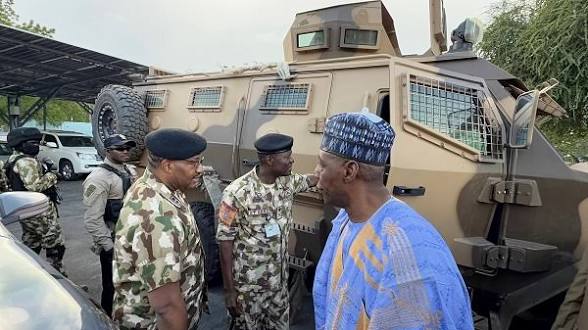
Borno State Governor, Babagana Umara Zulum, marked Democracy Day with the handover of two Mine-Resistant Ambush Protected (MRAP) vehicles and critical logistics to the Nigerian Army, after joining internally displaced persons (IDPs) for a symbolic celebration and distribution of food items to 2,500 beneficiaries.
The armoured MRAPs delivered to the Theatre Command of Operation Hadin Kai on Friday are intended to enhance troop protection against improvised explosive devices (IEDs) and ambushes which remain a persistent threat in the fight against insurgents. Additional logistics include operational Hilux vehicles and motorcycles for frontline soldiers in difficult terrains.
Zulum also marked Nigeria’s Democracy Day celebration with Internally Displaced Persons (IDPs) at the Madinatu camp where he distributed food supplies, non-food items, and cash gifts to thousands of beneficiaries.
The distribution, held at the Madinatu IDP camp, served to consolidate Zulum’s resettlement gains. Over the past seven years, Borno State Government has successfully resettled more than 2 million IDPs in their ancestral communities in a dignified and voluntary manner.
“It gladdens my heart today, the 12th of June, 2026, to celebrate June 12th, Democracy Day, here in Madinatu Camp, the only formal camp that is standing inside Maiduguri Metropolitan Council, today, to the glory of God and the benefit of mankind, for the distribution of food and non-food items. Inshallah, this camp will be closed this year. This will be our last distribution exercise in this camp, or the second to the last,” Zulum said.
However, Governor Zulum used the occasion to announce a timeline for the camp’s closure. The governor ordered that Madinatu camp be shut down within one month, vowing to similarly close most IDP camps across various Local Government Areas in the coming phase of his administration’s resettlement strategy.
“Democracy must translate into restoring the dignity of our people,” Zulum told the IDPs. “Living in camps is not a permanent solution. Our goal remains to return every displaced person to their ancestral homes with security and means of livelihood.”
In addition to the food items, Zulum approved N50,000 each for the 2,500 beneficiaries present at the event.
“Each of the 500 beneficiaries mentioned will receive a 25kg bag of rice and a 25kg bag of sorghum. Women will receive wrappers. I also promise to provide 50,000 naira to each beneficiary. This amount can be credited into their own individual accounts, inshallah,” Zulum said.
The exercise was attended by the APC’s State Deputy Chairman, Garba Mulima, APC State Vice Chairman (Central) Abdur Rahman Abdulkarim, Acting Chief of Staff, Dr Babagana Mallumbe, Member representing Jere at the State Assembly, Abba Kyari Kolo, commissioners and commissioner designates and several other senior government officials.
Democracy Day: Zulum gives 2 MRAPs, other logistics to Army, celebrates with IDPs
Gov. Yusuf Commends DSS Over Arrest of Suspected Gun Courier in Kano
By: Michael Mike
Kano State Governor, Abba Kabir Yusuf, has commended the Department of State Services (DSS) for the arrest of a suspected gun courier intercepted while allegedly transporting weapons believed to be destined for criminal elements in Katsina State.
The commendation was contained in a statement issued by the Governor’s spokesperson, Sunusi Bature Dawakin Tofa, on Thursday, June 12, 2026.
Governor Yusuf described the operation as a major breakthrough in the ongoing fight against banditry, terrorism and other violent crimes threatening communities across Northern Nigeria.
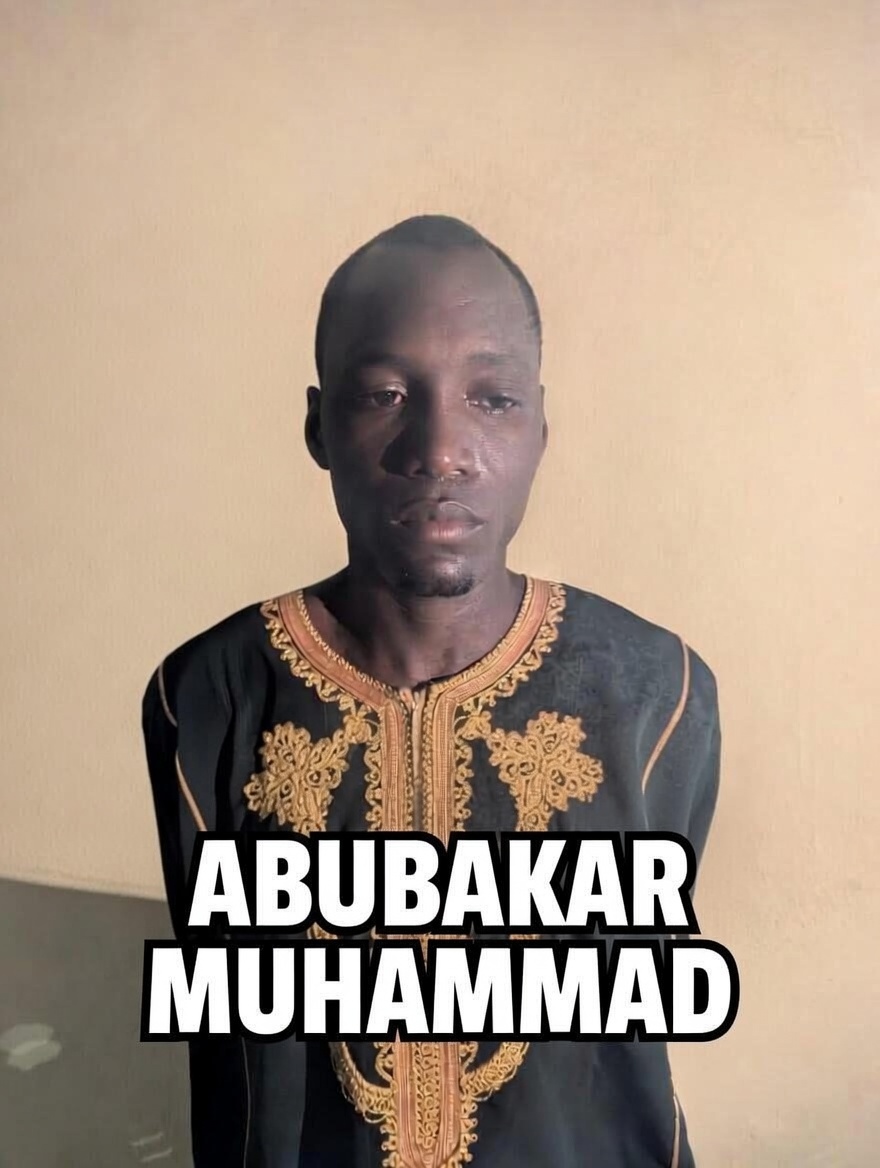
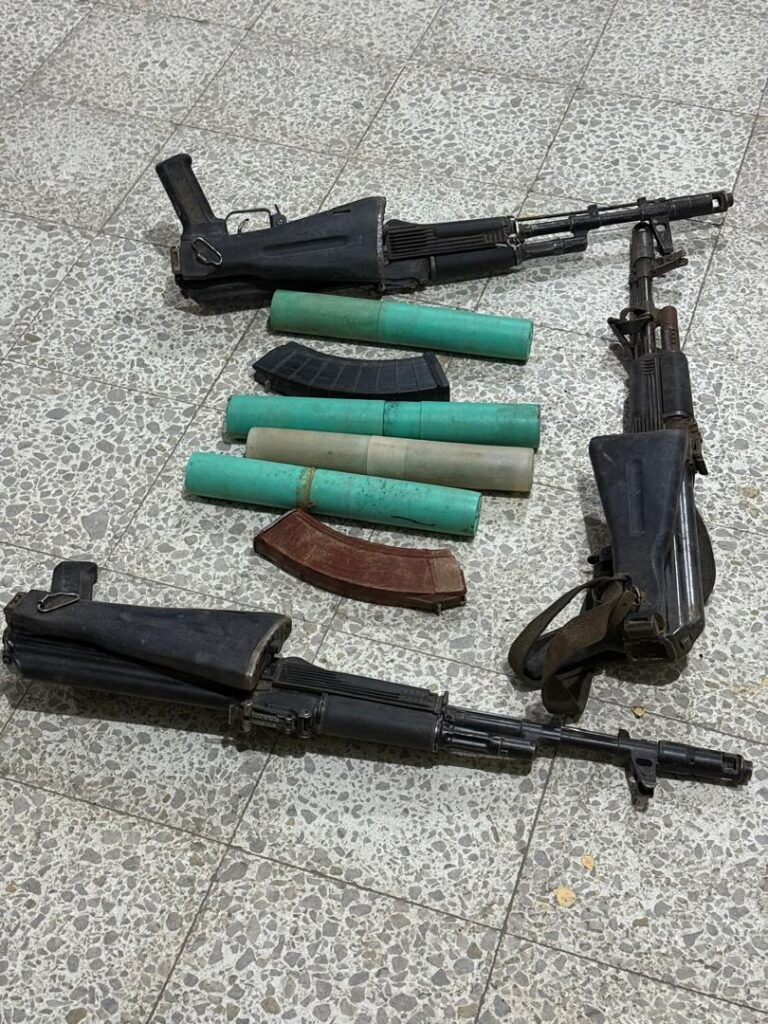
According to information provided by the DSS, the suspect, identified as Muhammad Abubakar, 30, was apprehended in Gezawa Local Government Area of Kano State while allegedly transporting four rocket-propelled grenade (RPG) tubes, three AK-47 rifles and two empty magazines to Funtua in Katsina State.
Preliminary investigations reportedly revealed that the suspect collected the weapons from an individual identified as Bello in the Maigatari border area of Jigawa State and was expected to receive N450,000 upon successful delivery of the arms.
Governor Yusuf praised the professionalism, vigilance and intelligence-driven approach of DSS operatives, noting that the timely interception prevented the weapons from falling into the hands of bandits and other criminal groups.
He said the operation underscored the critical role of intelligence gathering and effective collaboration among security agencies in tackling emerging security threats across the country.
The governor reaffirmed the commitment of the Kano State Government to supporting security agencies through sustained cooperation, logistics assistance and policies aimed at strengthening public safety throughout the state.
He also urged residents to remain vigilant and continue providing credible information to security agencies to aid efforts to combat crime and maintain peace.
Governor Yusuf expressed confidence that ongoing investigations would lead to the arrest and prosecution of all individuals connected to the alleged arms trafficking network.
The statement was signed by Sunusi Bature Dawakin Tofa, Director General, Media and Publicity, Government House, Kano.
Gov. Yusuf Commends DSS Over Arrest of Suspected Gun Courier in Kano
June 12: Credible Elections Are a Fundamental Human Right, Not a Privilege – NHRC
By: Michael Mike
As Nigeria marks Democracy Day, the Executive Secretary of the National Human Rights Commission, Chief Tony Ojukwu (OFR, SAN), has declared that credible elections are a fundamental human right that must be guaranteed to every citizen, rather than a privilege granted by those in power.
In a statement commemorating the significance of June 12, Ojukwu said the annulled 1993 presidential election remains the strongest evidence that Nigeria is capable of conducting free, fair, and transparent elections when democratic institutions respect the will of the people.
According to him, the electoral framework introduced by Humphrey Nwosu, particularly the Option A4 and Modified Open Ballot systems, demonstrated that electoral credibility is achievable when election management bodies operate with integrity, transparency, and strict adherence to the law.
The NHRC boss emphasized that the right of citizens to participate in governance through genuine elections is guaranteed under Nigeria’s Constitution and regional human rights instruments, stressing that electoral misconduct amounts to a direct assault on fundamental freedoms.
He noted that practices such as voter suppression, vote buying, electoral violence, and manipulation of election results should not be viewed merely as administrative shortcomings but as serious violations of civil and political rights.
Ojukwu expressed concern that more than three decades after the June 12 election, many of the challenges that undermine electoral credibility continue to persist, weakening public confidence in democratic institutions and diminishing citizens’ faith in the electoral process.
“Whenever elections lose their integrity, the rights to freedom of expression, association, participation, and peaceful assembly are also placed at risk,” he said.
The human rights advocate called on the Independent National Electoral Commission (INEC), political parties, security agencies, the judiciary, civil society organizations, and the media to remain committed to neutrality, transparency, and accountability in the conduct of elections.
He assured Nigerians that the Commission would intensify its monitoring of electoral processes across the country, document violations, and pursue appropriate remedies for victims in line with its statutory mandate.
Ojukwu also urged the National Assembly to strengthen legal safeguards that protect the independence of electoral institutions and improve citizens’ access to electoral justice.
He maintained that institutionalizing electoral integrity remains critical to deepening democracy and safeguarding the right of every Nigerian to freely choose their leaders, adding that the NHRC is prepared to collaborate with government and other stakeholders to ensure that credible elections become a permanent feature of the nation’s democratic culture.
The statement, signed by Director of Corporate Affairs and External Linkages, Fatimah Agwai Mohammed, underscored the Commission’s commitment to advancing democratic governance through the protection and promotion of electoral rights.
June 12: Credible Elections Are a Fundamental Human Right, Not a Privilege – NHRC

DEMOCRACY AND THE COURAGE TO BELIEVE

Army Distributes Fertiliser to Farmers in Jigawa Under Civil-Military Cooperation Programme

Troops Arrest Suspect Over Killing of More Than 50 Cattle in Edo

Roger Federer’s Shock as DNA Results Reveal Myla and Charlene Are Not His Biological Children

THE PLIGHT OF FARIDA

FAILED COUP IN BURKINA FASO: HOW TRAORÉ NARROWLY ESCAPED ASSASSINATION PLOT AMID FOREIGN INTERFERENCE CLAIMS
-
 News2 years ago
Roger Federer’s Shock as DNA Results Reveal Myla and Charlene Are Not His Biological Children
-
Opinions4 years ago
THE PLIGHT OF FARIDA
-
 News1 year ago
FAILED COUP IN BURKINA FASO: HOW TRAORÉ NARROWLY ESCAPED ASSASSINATION PLOT AMID FOREIGN INTERFERENCE CLAIMS
-

 News2 years ago
EYN: Rev. Billi, Distortion of History, and The Living Tamarind Tree
-
 Opinions4 years ago
POLICE CHARGE ROOMS, A MINTING PRESS
-

 ACADEMICS2 years ago
A History of Biu” (2015) and The Lingering Bura-Pabir Question (1)
-

 Columns2 years ago
Army University Biu: There is certain interest, but certainly not from Borno.
-

 Politics1 year ago
2027: Why Hon. Midala Balami Must Go, as Youths in Hawul and Asikira/Uba Federal Constituency Reject ₦500,000 as Sallah Gift
