
National News
Nigeria, UNIDO, and Partners Unite to Drive Mercury-Free Gold Mining Revolution

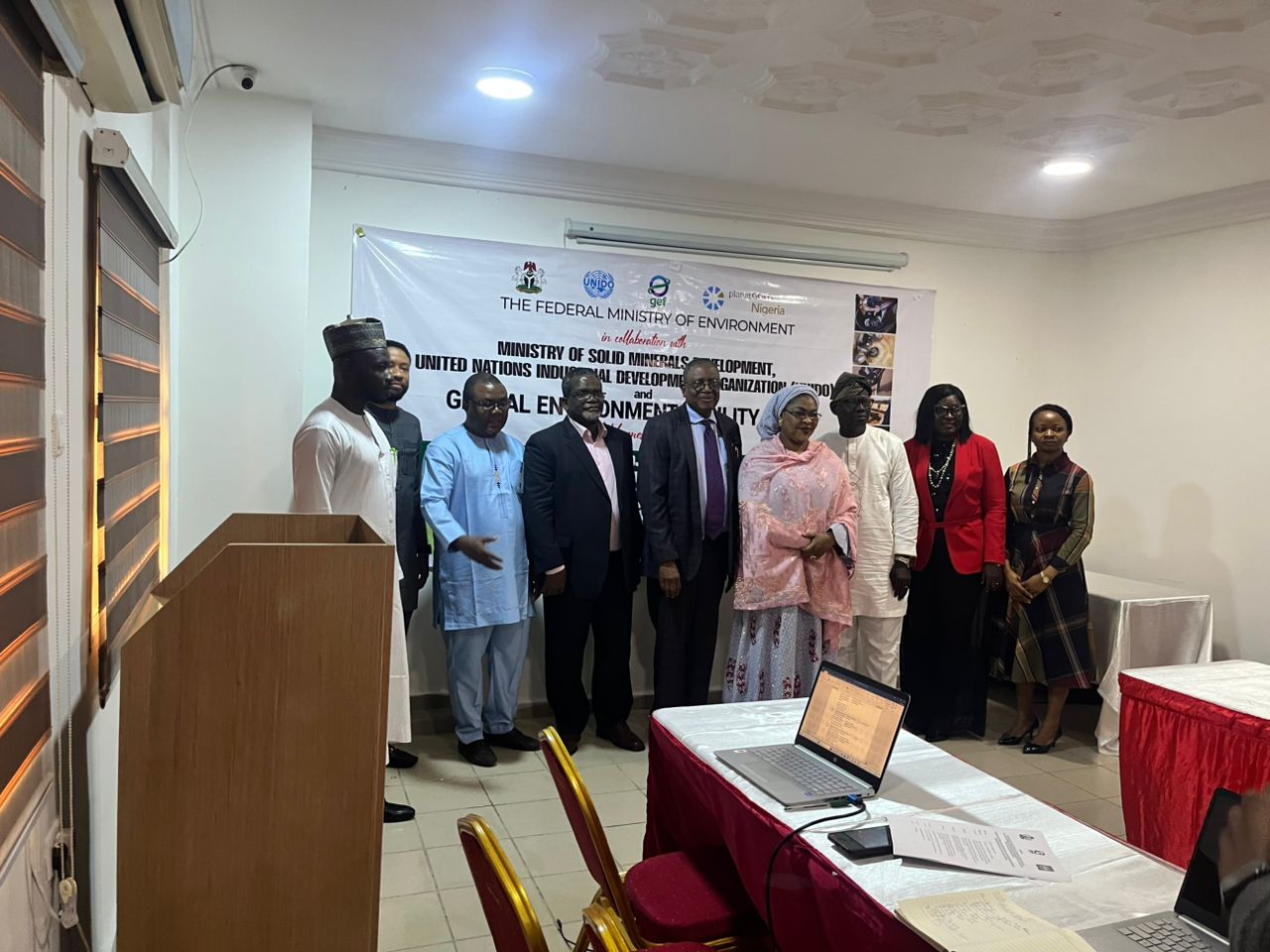
Nigeria, UNIDO, and Partners Unite to Drive Mercury-Free Gold Mining Revolution
By: Michael Mike
The Federal Ministry of Environment, the Ministry of Solid Minerals Development, the Basel Convention Coordinating Centre for Africa, and the United Nations Industrial Development Organization (UNIDO) have jointly launched the Project Steering Committee of the GEF-GOLD+ Initiative in Nigeria.
The project, “Enhancing Formalization of Mercury-Free Gold in Nigeria,” marks a major milestone in the country’s commitment to eliminate mercury use in artisanal and small-scale gold mining, promote cleaner technologies, protect public health, and foster sustainable economic growth.
In her inaugural address, Mrs. Bahidja Abubakar (representing the Permanent Secretary, Alhaji Mahmood Adam Kambari) highlighted Nigeria’s dedication to the global fight against mercury pollution through the Minamata Convention. She emphasized that Nigeria has already laid a strong foundation with its National Action Plan (NAP), and that the new GEF-GOLD+ Project builds upon this progress to fully eliminate mercury use in artisanal and small-scale gold mining (ASGM).
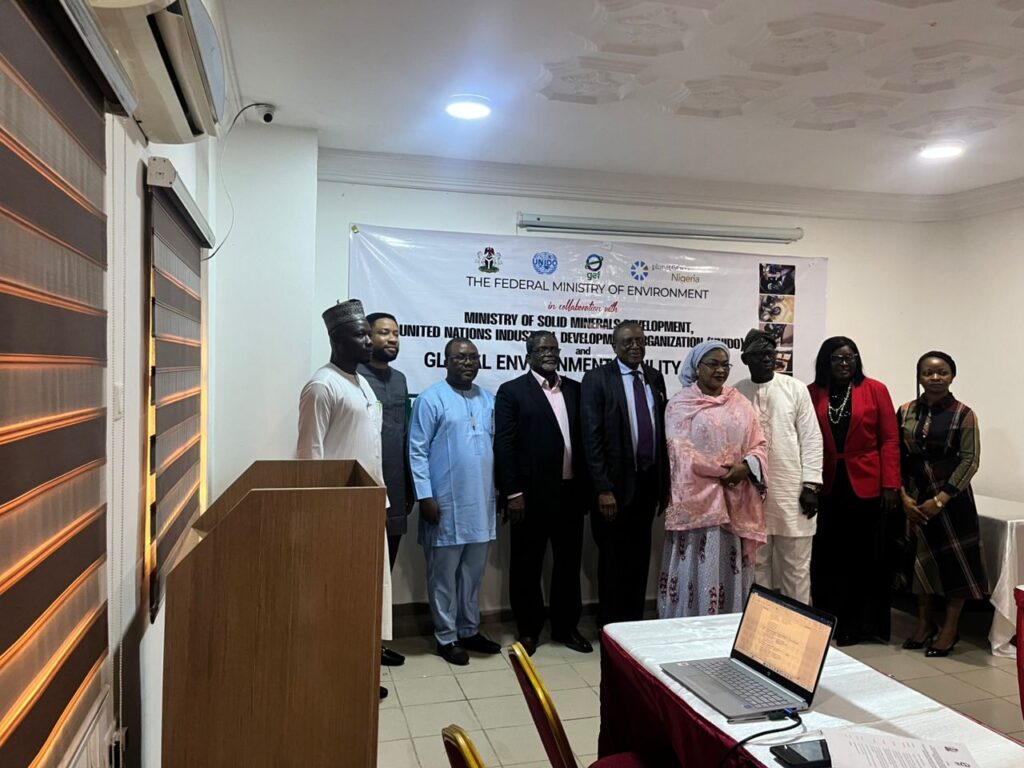
“It is with immense satisfaction and a profound sense of responsibility that I stand before you today to formally inaugurate the Project Steering Committee for the GEF-GOLD Plus Nigeria Project, Enhancing the Formalisation of Mercury-Free Gold in Nigeria. You will recall that Nigeria, as a signatory and party to the Minamata Convention on Mercury, has demonstrated its commitment by developing a National Action Plan for the reduction and eventual elimination of mercury use in artisanal and small-scale gold mining between 2017 and 2020. This initiative was undertaken to implement Article 7 of the Minamata Convention concerning the use of mercury in ASGM.”
She also highlighted the grave environmental and health threats posed by mercury pollution, noting that emissions from small-scale mining contribute significantly to global contamination.
“The issue of mercury pollution, particularly within the artisanal and small-scale gold mining sector, presents a significant and pressing challenge to our environment and the health and well-being of our citizens. It is noteworthy that mercury pollution from ASGM contributes approximately 37% of global mercury emissions.”
Mrs. Abubakar outlined the GEF-GOLD+ Project’s strategic approach, emphasizing formalization, access to finance, and the adoption of mercury-free technologies to transform Nigeria’s gold mining landscape.
“The GEF-GOLD Plus Nigeria Project is strategically designed to address this challenge comprehensively through a multi-faceted approach encompassing the promotion of formalisation, improved access to financial resources, and facilitation of the adoption of sustainable mercury-free technologies within the mining sector.”
She further explained the role of the newly inaugurated Project Steering Committee (PSC) in providing leadership, technical guidance, and oversight throughout the project.
“The Project Steering Committee will bear the crucial responsibility of providing strategic guidance and actionable recommendations to effectively support the project’s overarching objectives. Furthermore, the PSC will play a vital role in contributing to informed decision-making processes by offering expert advice, pertinent insights and diverse perspectives, while facilitating seamless communication and robust collaboration among all relevant stakeholders.”
In closing, Mrs. Abubakar called on all PSC members to dedicate themselves fully to the project’s goals.
“I earnestly urge all distinguished members of this PSC to approach this important task with unwavering dedication, utmost diligence, and a strong spirit of collaboration and mutual respect. Your collective contributions will undoubtedly shape the future trajectory of gold mining in Nigeria and contribute significantly to a healthier, more sustainable and more prosperous environment for all.”
The Director and UNIDO Representative to Nigeria and ECOWAS, Ambassador Philbert Johnson, reaffirmed UNIDO’s collaboration with the Nigerian government and partners to ensure successful implementation of mercury-free gold mining practices.
“UNIDO is committed to partner with the Federal Minister of Environment, the Minister of Solid Minerals Development, and the Basel Convention Coordinating Centre for Africa, in advancing the implementation of Nigeria’s National Action on Liquor, developed under the Minamata Convention. This project marks a significant milestone in Nigeria’s ongoing efforts to promote a cleaner, safer, more sustainable, and more small-scale gold mining sector.”
He emphasized that the GEF-GOLD+ Project is a key step toward eliminating mercury use in artisanal and small-scale gold mining, addressing both environmental and health hazards caused by unsafe mining practices.
“The JF-GOO Plus Project, titled Enhancing Formalization of Mercury-Free Gold in Nigeria, represents a vital opportunity to address one of the most pressing environmental and public health challenges associated with the use of mercury in artisanal mining. The adoption of poor mining practices and the use of mercury in gold recovery processes has generated serious environmental contamination that could lead to liver and kidney diseases.”
The project’s multifaceted approach formalization, financing, cleaner technologies, and traceable supply chains was also highlighted.
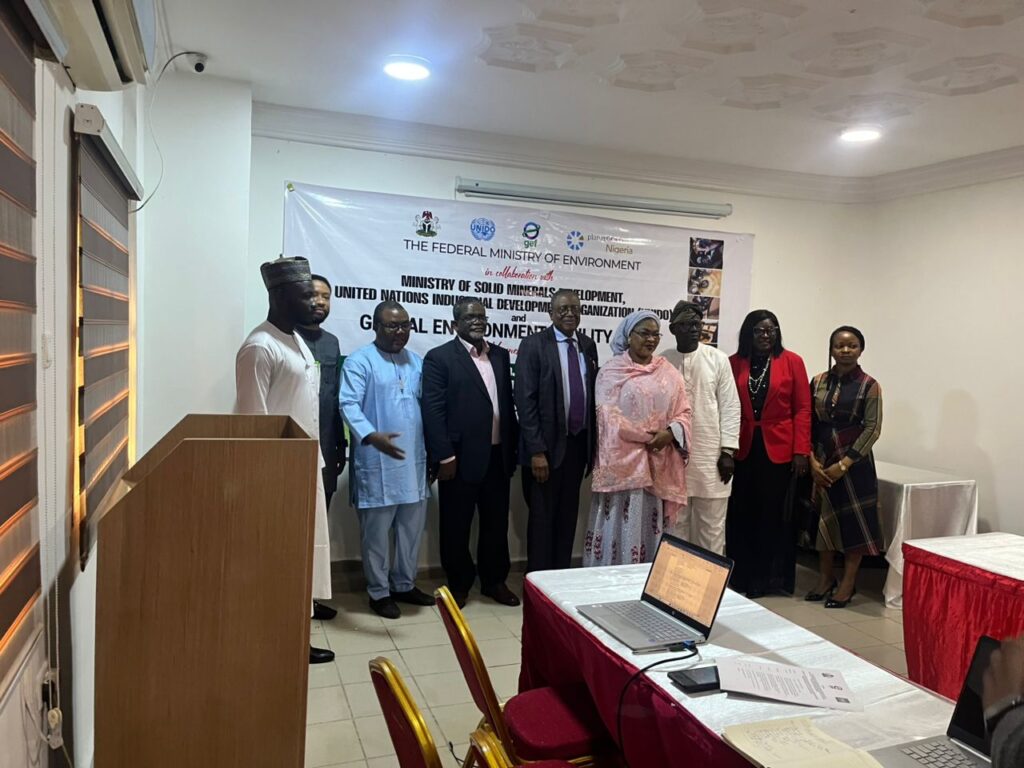
“By promoting formalization, improving access to finance, introducing mercury-free technologies, and strengthening traceability in gold supply chains, this project will help protect human health, safeguard ecosystems, and foster inclusive economic growth. As the Project Steering Committee is inaugurated today, UNIDO wishes to reaffirm its full support for the successful implementation of the project activities. We are confident that through collaborative effort, innovation, and shared commitment, Nigeria will make significant progress towards achieving a mercury-free artisanal gold mining sector.”
UNIDO placed the project within the framework of its Country Partnership Programme with Nigeria (2024–2028), linking it to Sustainable Development Goals and long-term national priorities.
“These projects we are discussing today will therefore be delivered within the framework of the PCP. The programme for country partnership has six major components industrial policy and strategic governance; startups and MSME development; special economic zones and clusters; value chain development in agriculture and minerals; sustainable energy and environmental management; and trade capacity building. The project also contributes directly to Sustainable Development Goals 9, 12, and 13 on industry, responsible consumption and production, and climate action, respectively.”
On behalf of Eng Dr Mrs B Abubakar, Director Pollution Control and Environmental Health, Federal Ministry of Environment, Mrs Omotunde Adeola emphasized the inauguration of the PSC as a critical moment in Nigeria’s commitment to addressing mercury pollution.
“It is with considerable pleasure that I extend a warm welcome to you all to this inaugural meeting and the inauguration of the Project Steering Committee for the GEF Gold Plus Nigeria project, Enhancing the Formalization of Mercury-Free Gold in Nigeria. Ladies and gentlemen, today marks a significant milestone in our collective endeavor to address the critical issue of mercury utilization within the artisanal and small-scale gold mining sector in Nigeria. The Pollution Control and Environmental Health Department of the Federal Ministry of Environment recognizes the imperative need to mitigate the environmental and public health hazards associated with mercury, and we are resolute and committed to fostering sustainable solutions.”
She stressed that the project’s outcomes will extend beyond the pilot states, contributing to Nigeria’s broader sustainable development agenda.
“This project, with a strategic focus on formalization, enhanced access to finance, and the adoption of mercury-free technologies, is of paramount importance not only for the participating states of Niger, Kaduna, Zamfara, and Kebbi, but ultimately for the sustainable development of our entire nation.”
Mrs. Adeola also highlighted the importance of collaboration and expertise in driving project success.
“We have assembled a diverse and highly capable group of individuals and organizations, each possessing unique and valuable expertise and perspectives. Your insightful contributions will be instrumental in guiding the project towards the successful realization of its objective. I am confident that through robust collaborative efforts, we can create a sustainable and environmentally responsible gold mining sector in Nigeria.”
Ahmed Bah Ibrahim, in his presentation on enhancing formalization and mercury-free gold in Nigeria, noted that mercury (“Makery”) is a global pollutant heavily used in artisanal small-scale gold mining. The project aims to formalize this sector to reduce mercury emissions, prevent environmental contamination, and maximize economic benefits.
“Formalizing the sector is therefore crucial for maximizing its economic benefits, implementing modern environmental standards, and fundamentally reducing and eliminating Makery use. This aligns with the global commitment to sustainable development and responsible mining practice.”
He highlighted alignment with Nigeria’s obligations under the Minamata Convention.
“The Minamata Convention on Makery is a global treaty where so many countries are party to, including Nigeria. The objective of this treaty is to protect human health and the environment from anthropogenic emissions and releases of Makery… Nigeria became a party to the Convention on 1 February 2018, and we have gone a long way in implementing the Convention by implementing so many projects.”
Ahmed outlined the project’s objectives and components, emphasizing a holistic, multi-sectoral approach.
“The project objective is to reduce the use of mercury in the ASBM sector in participating states through a holistic multisectoral integrated formalization approach. The project aims to increase access to finance and adoption of sustainable mercury-free technologies in the accessible gold supply chain.”
He also explained the implementation structure and partnerships.
“The four executing agencies, with the support of this committee, will be responsible for overseeing the project implementation and will also offer strategic guidance and recommendations to support the project’s objectives. The project reporting format is biannual, and reports are also submitted to the global Planet Gold platform.”
Finally, Ahmed addressed the project’s global and national scope and timeline.
“The project aims to support countries in meeting their commitments under the Minamata Convention with a concrete target of directly reducing 123 tons of mining emissions or releases from the ASBM sector. The project duration is five years, but it is already two years behind schedule there might be room for the project to apply for an extension.”
Nigeria, UNIDO, and Partners Unite to Drive Mercury-Free Gold Mining Revolution



FG Declares October 1 Public Holiday as Nigeria Mark’s 66th Independence Anniversary
By: Michael Mike
The Federal Government has declared Thursday, October 1, 2026, a public holiday to commemorate Nigeria’s 66th Independence Anniversary.
The Minister of Interior, Dr. Olubunmi Tunji-Ojo, announced the declaration on behalf of the Federal Government in a statement issued on Wednesday by the Permanent Secretary of the Ministry, Dr. Magdalene Ajani.
The minister congratulated Nigerians at home and abroad, urging citizens to use the anniversary to reflect on the nation’s journey since independence and renew their commitment to building a more united, peaceful and prosperous country.
Tunji-Ojo emphasised the importance of peace and stability to national development, calling on Nigerians to emulate the patriotism and love for country demonstrated by the nation’s founding fathers.
He said Nigeria’s diversity remains a major strength and expressed optimism that a better and more prosperous nation is achievable through collective determination.
“As we celebrate 66 years of our independence, we should always remember that there is hope for our country and our diversity is our strength, and our collective determination remains the foundation upon which a stronger and more prosperous nation will be built,” the minister said.
The minister also reaffirmed the Federal Government’s commitment to the Renewed Hope Agenda of President Bola Ahmed Tinubu, stating that the administration would continue working towards a better Nigeria for all citizens.
He urged Nigerians to make the Independence anniversary an opportunity to demonstrate unity, patriotism, peaceful coexistence and mutual respect, while honouring the sacrifices of the country’s past heroes.
Tunji-Ojo further assured citizens that the Federal Government remains committed to strengthening national security, improving public safety and creating an environment where Nigerians can live, work and pursue their legitimate aspirations with confidence.
Nigeria gained independence from British colonial rule on October 1, 1960, and will mark its 66th Independence Anniversary on Thursday.
The minister wished Nigerians a happy 66th Independence Anniversary.
FG Declares October 1 Public Holiday as Nigeria Mark’s 66th Independence Anniversary

AT 3RD AFRICA MINERALS STRATEGY GROUP HIGH-LEVEL ROUNDTABLE
President Tinubu Rallies Aggressive Alliance To Guard Africa’s Mineral Wealth
** *Charges continent to stop exporting wealth, start profiting from its own resources
** *Says Africa’s future being fashioned from minerals must have room for continent’s ambition
By: Our Reporter
President Bola Ahmed Tinubu has called for a fresh continental push to end the historical exploitation of Africa’s critical mineral resources, urging African nations to unite and halt the export of raw materials.
Accordingly, he demanded an aggressive alliance among African countries to ensure the continent transitions from a mere supplier of raw minerals to a hub for local processing, manufacturing, and value addition.
The Nigerian leader made the call on Monday in New York, United States, during the AMSG High-Level Roundtable on Critical Minerals Development in Africa held on the sidelines of the ongoing 81st Session of the United Nations General Assembly (UNGA).
Convened and chaired by President Tinubu, his deputy, Vice President Kashim Shettima, alongside AMSG Chairman and Nigeria’s Minister of Solid Minerals, Dr. Dele Alake, the high-level dialogue, themed, “From Resources to Wealth: Continental Cooperation for Mineral Value Addition, Data Sovereignty, Innovative Financing and Critical Minerals Security,” focuses on transforming the continent’s mineral wealth into sustainable economic growth.
In his address delivered by Senator Shettima at the Roundtable, the President told African leaders and other stakeholders that the continent cannot claim to be wealthy while its children wallow in poverty amid mines that enrich the world.
“For generations, Africa has furnished the materials of prosperity elsewhere. Our duty is to ensure that the future being fashioned from African minerals has room for African ambition,” he declared.
President Tinubu regretted that mineral-rich communities lack infrastructure, jobs, and a stake in their own wealth at a time when global demand for clean energy, AI, and advanced manufacturing has made Africa’s critical minerals—like cobalt, copper, lithium, and rare earth elements—indispensable to global supply chains and economic security.
The answer to such deprivation, he observed, “must be processing, refining, batteries, components, African technologies and competitive skills,” noting that “the worth of a mine must be counted in the lives it improves.
“Jobs, industries, infrastructure, technology transfer, African enterprise participation and prosperity retained across generations must measure our progress from resources to wealth,” he maintained.
The Nigerian leader warned, however, that no African country can achieve this alone, adding that competing through lower royalties, weaker local content, and excessive concessions will only weaken the continent’s negotiating power.
“Fragmentation leaves us exporting raw materials and buying finished goods at a premium. Cooperation gives our markets scale, our industries integration, our financing reach and our negotiations authority,” he said.
Back home, the President noted that Nigeria must require local value addition for new mining licenses, strengthen geological data and investor access, organize artisanal miners into cooperatives, combat illegal mining, and improve regulatory accountability
“Revenue rose from approximately ₦6 billion in 2023 to over ₦38 billion in 2024 and between ₦68.1 billion and ₦70 billion in 2025. Major foreign investment commitments and large-scale lithium processing capacity developed and commissioned in Nasarawa State demonstrate the possibilities,” he added.
He drew attention to his administration’s mining policy direction, which stipulates that minerals extracted in Nigeria must sustain Nigerian industries, workers, skills, and communities, saying ongoing reforms indicate that “firm terms can attract serious capital.”
Offering other African nations the Nigerian experience for adaptation across the continent, President Tinubu called for “reliable partnerships grounded in mutual benefit, shared responsibility, sovereign equality and respect for our priorities, with fair market access, industrial investment and technology partnerships that build African capabilities.”
He implored member countries of the AMSG to speak with one voice to promote Africa’s collective interest, insisting that reliability must never mean dependency, and partnership must never demand inequality.
On the Continental Integration and Economic Assurance Declaration adopted and signed at the Roundtable, the President said it must establish a predictable, investment-ready environment for Africa’s Strategic Mineral Corridors, harmonised policies, responsible investment and shared infrastructure.
He stated that the Declaration’s authority must survive the signing ceremony through a binding programme with timelines, financing, implementation and public accountability, even as he urged African nations to specify national and regional contributions; development finance institutions and sovereign investors to propose financing platforms.
Declaring the Roundtable open, the Nigerian leader spearheaded an aggressive alliance to retain the continent’s mineral wealth, saying, “Africa’s power resides in its people, markets and ingenuity. No outsider will organise our continent or place our industrial interests above their own. We must integrate our markets, mobilise African capital and negotiate with one voice wherever our interests converge.
“Our industrial growth can strengthen global prosperity, the energy transition and secure supply chains. Minerals confer no automatic prosperity; vision, investment and industry must earn it. Political will must turn mineral promise into enduring African wealth.”
Earlier, Chairman of the AMSG and Nigeria’s Minister of Minister of Solid Minerals, Mr. Dele Alake, said the group is proposing a Continental Integration and Economic Assurance Declaration (CIEAD) as a landmark continental framework designed to establish a unified architecture for Africa’s critical and solid minerals value chains.
He said the strength of the gathering reflected the journey and progress made in Africa’s solid minerals sector as manifested in the growth of the Africa Minerals Stategy Group (AMSG).
Alake urged African countries that have yet to join the group to do so in the bid to ensure synergy of efforts, ideas and resources needed for Africa’s natural resources.
He observed that Africa’s minerals ambitions cannot be realised by policy implementation alone as fully integrated partnership designed across financial transactions and infrastructure development as the way forward.
On his part, Kenya’s Minister of Blue Economy and Maritime Affairs, Mr. Hassan Ali Joho, underscored the importance of domestic resource mobilisation as a catalyst for solid mineral development in Africa and beyond.
He added that for members of the AMSG to achieve holistic transformation, members must stay transparent, competitive and work towards greater alignment of licensing procedure while respecting the sovereignty of member states of the group.
There were also contributions from representatives of the governments of Liberia, Chad and Tanzania, among other stakeholders.
AT 3RD AFRICA MINERALS STRATEGY GROUP HIGH-LEVEL ROUNDTABLE
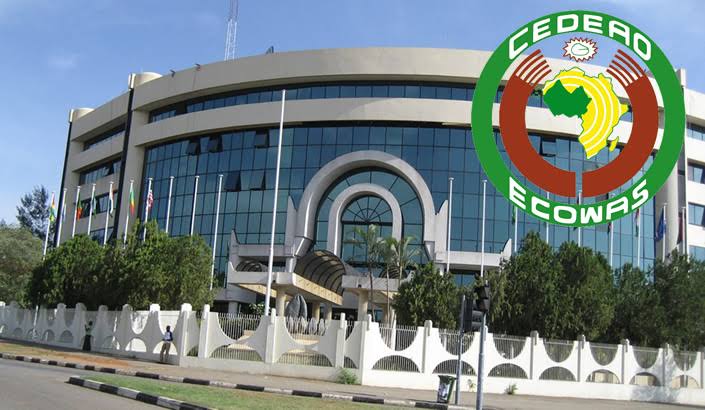
ECOWAS Court Turns to Media as Enforcement Gap Threatens Impact of Regional Justice
…Abuja workshop seeks to strengthen judicial reporting and public accountability over Member States’ compliance with court decisions
By: Michael Mike
The ECOWAS Community Court of Justice is seeking to strengthen the role of journalists in holding Member States accountable for implementing its judgments, as concerns persist over the enforcement of decisions issued by the regional judicial institution.
The President of the Court, Hon. Justice Ricardo Claudio Monteiro Gonçalves, made the call at the opening of a three-day training workshop for journalists from ECOWAS Member States, urging participants to use their media platforms to draw attention to governments’ obligations under regional treaties.
He said the Court’s existing enforcement mechanism places responsibility for executing its judgments on Member States, but described the level of compliance as below expectation.
“Let me also urge you to use your media platforms to engage Member States on the need to faithfully implement the decisions of the Court in accordance with their treaty obligations,” Gonçalves said.
His remarks placed the spotlight on a central challenge facing regional justice: ensuring that judicial decisions translate into practical outcomes for individuals and communities.
The ECOWAS Community Court of Justice serves as a regional judicial institution within the Economic Community of West African States, with jurisdiction that includes human rights cases involving Member States.
Its judgments can address allegations of human rights violations and provide remedies to applicants. However, enforcement depends on mechanisms involving national authorities rather than the Court independently executing its own decisions.
Under Article 24 of the Court’s Supplementary Protocol, judgments are enforced through a writ of execution submitted by the Chief Registrar to the relevant Member State, where execution proceeds according to domestic civil procedure rules.
The Court has also explained in its jurisprudence that Member States have obligations to comply with its judgments, while its own authority to directly enforce those decisions is limited.
This arrangement makes cooperation between the regional institution and national authorities an important part of the enforcement process. Differences in domestic procedures, institutional capacity and the implementation of regional legal instruments can affect how judgments are carried out.
The Court has identified enforcement as an area requiring stronger coordination with national institutions. In 2026, it held bilateral engagements with national authorities in countries including Guinea, Sierra Leone and Nigeria to discuss compliance, institutional cooperation and practical enforcement challenges.
These engagements form part of broader efforts to improve the implementation of decisions across the region.
Gonçalves said limited public understanding of the Court’s mandate, procedures, jurisdiction and judgments was partly linked to gaps in media coverage.
He stressed that journalists need a sound understanding of the institution’s composition, structure and legal responsibilities to communicate its work accurately.
The president said the workshop was designed to improve judicial reporting and establish a network of journalists across the ECOWAS region who would report regularly on the Court’s activities.
“This training is, therefore, very important for the Community Court of Justice,” he said.
He expressed confidence that contributions from the Court’s Registry and Research Departments, alongside technical experts in journalism and judicial reporting, would help achieve the initiative’s objectives.
The workshop is expected to strengthen participants’ ability to explain court proceedings, interpret judgments and communicate the implications of regional judicial decisions to the public.
The media training comes amid continuing institutional efforts to improve compliance with ECOWAS Court judgments through closer engagement with national enforcement authorities.
In February 2026, the Court convened a meeting with Nigerian authorities on the status of enforcement of its decisions. Similar engagements in Sierra Leone and Guinea focused on cooperation, identifying implementation challenges and strengthening coordination between the Court and national institutions.
A further regional meeting of Competent National Authorities was scheduled in Cotonou, Benin, in June 2026, as part of efforts to develop a collaborative framework for enforcement.
The initiatives reflect the importance of national institutions in carrying out regional judgments and the need for more consistent procedures across jurisdictions.
Against this background, the Court’s engagement with journalists introduces a public communication dimension to its compliance efforts, encouraging media professionals to explain the obligations arising from judgments and report on implementation.
The training brought together journalists drawn primarily from national broadcast media organisations across 12 ECOWAS Member States.
The participating countries are Benin, Cabo Verde, Côte d’Ivoire, Ghana, Guinea-Bissau, Guinea, Liberia, Sierra Leone, Senegal, The Gambia, Togo and Nigeria.
The initiative forms part of the Court’s Annual Cascade Workplan and is aligned with its Strategic Plan 2026–2030.
In particular, it supports Strategic Goal 4, which focuses on transparency, stakeholder engagement and strategic accountability, as well as Strategic Objective 4.2, which seeks to strengthen platforms for regular engagement with stakeholders.
Through the training, the Court aims to expand public awareness of its work and encourage sustained reporting on its judgments and activities.
For the participating journalists, the task extends beyond covering courtroom proceedings to explaining what decisions mean, which institutions are responsible for implementation and what progress is being made in giving effect to the Court’s rulings.
ECOWAS Court Turns to Media as Enforcement Gap Threatens Impact of Regional Justice
…Abuja workshop seeks to strengthen judicial reporting and public accountability over Member States’ compliance with court decisions
By: Michael Mike
The ECOWAS Community Court of Justice is seeking to strengthen the role of journalists in holding Member States accountable for implementing its judgments, as concerns persist over the enforcement of decisions issued by the regional judicial institution.
The President of the Court, Hon. Justice Ricardo Claudio Monteiro Gonçalves, made the call at the opening of a three-day training workshop for journalists from ECOWAS Member States, urging participants to use their media platforms to draw attention to governments’ obligations under regional treaties.
He said the Court’s existing enforcement mechanism places responsibility for executing its judgments on Member States, but described the level of compliance as below expectation.
“Let me also urge you to use your media platforms to engage Member States on the need to faithfully implement the decisions of the Court in accordance with their treaty obligations,” Gonçalves said.
His remarks placed the spotlight on a central challenge facing regional justice: ensuring that judicial decisions translate into practical outcomes for individuals and communities.
The ECOWAS Community Court of Justice serves as a regional judicial institution within the Economic Community of West African States, with jurisdiction that includes human rights cases involving Member States.
Its judgments can address allegations of human rights violations and provide remedies to applicants. However, enforcement depends on mechanisms involving national authorities rather than the Court independently executing its own decisions.
Under Article 24 of the Court’s Supplementary Protocol, judgments are enforced through a writ of execution submitted by the Chief Registrar to the relevant Member State, where execution proceeds according to domestic civil procedure rules.
The Court has also explained in its jurisprudence that Member States have obligations to comply with its judgments, while its own authority to directly enforce those decisions is limited.
This arrangement makes cooperation between the regional institution and national authorities an important part of the enforcement process. Differences in domestic procedures, institutional capacity and the implementation of regional legal instruments can affect how judgments are carried out.
The Court has identified enforcement as an area requiring stronger coordination with national institutions. In 2026, it held bilateral engagements with national authorities in countries including Guinea, Sierra Leone and Nigeria to discuss compliance, institutional cooperation and practical enforcement challenges.
These engagements form part of broader efforts to improve the implementation of decisions across the region.
Gonçalves said limited public understanding of the Court’s mandate, procedures, jurisdiction and judgments was partly linked to gaps in media coverage.
He stressed that journalists need a sound understanding of the institution’s composition, structure and legal responsibilities to communicate its work accurately.
The president said the workshop was designed to improve judicial reporting and establish a network of journalists across the ECOWAS region who would report regularly on the Court’s activities.
“This training is, therefore, very important for the Community Court of Justice,” he said.
He expressed confidence that contributions from the Court’s Registry and Research Departments, alongside technical experts in journalism and judicial reporting, would help achieve the initiative’s objectives.
The workshop is expected to strengthen participants’ ability to explain court proceedings, interpret judgments and communicate the implications of regional judicial decisions to the public.
The media training comes amid continuing institutional efforts to improve compliance with ECOWAS Court judgments through closer engagement with national enforcement authorities.
In February 2026, the Court convened a meeting with Nigerian authorities on the status of enforcement of its decisions. Similar engagements in Sierra Leone and Guinea focused on cooperation, identifying implementation challenges and strengthening coordination between the Court and national institutions.
A further regional meeting of Competent National Authorities was scheduled in Cotonou, Benin, in June 2026, as part of efforts to develop a collaborative framework for enforcement.
The initiatives reflect the importance of national institutions in carrying out regional judgments and the need for more consistent procedures across jurisdictions.
Against this background, the Court’s engagement with journalists introduces a public communication dimension to its compliance efforts, encouraging media professionals to explain the obligations arising from judgments and report on implementation.
The training brought together journalists drawn primarily from national broadcast media organisations across 12 ECOWAS Member States.
The participating countries are Benin, Cabo Verde, Côte d’Ivoire, Ghana, Guinea-Bissau, Guinea, Liberia, Sierra Leone, Senegal, The Gambia, Togo and Nigeria.
The initiative forms part of the Court’s Annual Cascade Workplan and is aligned with its Strategic Plan 2026–2030.
In particular, it supports Strategic Goal 4, which focuses on transparency, stakeholder engagement and strategic accountability, as well as Strategic Objective 4.2, which seeks to strengthen platforms for regular engagement with stakeholders.
Through the training, the Court aims to expand public awareness of its work and encourage sustained reporting on its judgments and activities.
For the participating journalists, the task extends beyond covering courtroom proceedings to explaining what decisions mean, which institutions are responsible for implementation and what progress is being made in giving effect to the Court’s rulings.
ECOWAS Court Turns to Media as Enforcement Gap Threatens Impact of Regional Justice

Gombe assures corps members of safety, improved welfare

2027: Should Atiku Withdraw from the Race and Find Peace, or Continue and Live with Regrets?

Military Pensions Board Begins Payment of New Pension Rates, Arrears to Veterans

Roger Federer’s Shock as DNA Results Reveal Myla and Charlene Are Not His Biological Children

THE PLIGHT OF FARIDA

FAILED COUP IN BURKINA FASO: HOW TRAORÉ NARROWLY ESCAPED ASSASSINATION PLOT AMID FOREIGN INTERFERENCE CLAIMS
-
 News3 years ago
Roger Federer’s Shock as DNA Results Reveal Myla and Charlene Are Not His Biological Children
-
Opinions5 years ago
THE PLIGHT OF FARIDA
-
 News1 year ago
FAILED COUP IN BURKINA FASO: HOW TRAORÉ NARROWLY ESCAPED ASSASSINATION PLOT AMID FOREIGN INTERFERENCE CLAIMS
-

 News3 years ago
EYN: Rev. Billi, Distortion of History, and The Living Tamarind Tree
-
 Opinions5 years ago
POLICE CHARGE ROOMS, A MINTING PRESS
-

 ACADEMICS3 years ago
A History of Biu” (2015) and The Lingering Bura-Pabir Question (1)
-

 Columns3 years ago
Army University Biu: There is certain interest, but certainly not from Borno.
-

 Politics1 year ago
2027: Why Hon. Midala Balami Must Go, as Youths in Hawul and Asikira/Uba Federal Constituency Reject ₦500,000 as Sallah Gift
