
National News
Nigerian Tax Acts 2025: Benefits Beyond The Rhetorics – Joseph Tegbe


Nigerian Tax Acts 2025: Benefits Beyond The Rhetorics – Joseph Tegbe
By: Michael Mike
Nigeria’s ongoing tax reforms have been widely mischaracterised as revenue tricks, mostly through epistemic closure and motivated reasoning, solely focusing on revenue figures, tax rates, and who pays what.
These debates often miss the larger and far more consequential point of the reforms which are primarily about fixing a broken fiscal architecture, and laying the foundations for a modern, well-oiled economy.
What is at stake transcends mere improvement of fiscal space. Rather, it is about whether Nigeria can finally operate like a serious state that is capable of planning, delivering public goods, enforcing rules fairly, and sustaining growth without perpetual crisis management.
As a former Senior Partner and Head of Advisory Services at KPMG in Africa who supported reforms across various levels of Government, both national and subnational levels across Africa, during my career and with benefit of hindsight, I can boldly say that Nigeria’s fiscal failure has never been the absence of wealth. It has been the absence of structure.
For decades, the country ran a structurally weak fiscal system that was over-dependent on volatile oil rents, administrativelyanemic and fragmented, detached from the productive economy and largely disconnected from citizens. This produced a paradoxical state: rich in resources, poor in capacity.
Specifically, taxes were not embedded as a civic obligation or economic stabiliser. Rather, they were episodic, selectivelyenforced, and concentrated on a monolithic formal sector. The informal economy which forms the critical mass of economic activity remained largely outside the system, not by design but by institutional failure.
The result was predictable: weak fiscal planning, chronic deficits, poor service delivery, and a state forced to govern by borrowing rather than by policy. This is the structural dysfunction that the current reforms seek to correct. Thus, the efforts of President Bola Ahmed Tinubu, GCFR; Mr. Wale Edun, the Honorable Minister of Finance and the NRS Chairman, Dr. Zach Adedeji must be commended. They are placing Nigeria on a strong pedestal for growth and development.
At their core, the new tax laws are about rebuilding fiscal order.
Firstly, they seek to reconnect the economy to the state. Nogovernment can plan effectively when it has no reliable map of economic activity. Broadening the tax net is therefore less about extraction and more about visibility and coordination.
Secondly, the reforms aim to standardise and modernise fiscal administration. A system built on manual processes, weak data, and discretionary enforcement cannot support a 21st-century economy that Nigeria desires to attain. Digital compliance, harmonised frameworks, and clearer rules are structural upgrades.
Thirdly, they are about predictability. Investors, businesses, and households do not fear taxes as much as they fear uncertainty. A transparent, rules-based tax system reduces discretion, rent-seeking, and arbitrariness which are long-standing deterrents to investment in Nigeria.
Finally, the reforms are designed to rebalance the fiscal social contract, becoming a tool for accountability. When everyone participates, albeit modestly, the relationship between citizens and the government improves.
Previous fiscal regimes suffered from conceptual ineptitude. They treated taxation as an afterthought, subordinate to oil receipts. When oil prices were high, discipline evaporated. When prices fell, emergency measures replaced strategy.
Prosperous nations have walked this reform road before.These are nations often referenced by “Selectively Empirical Commentators” who want Nigeria to get to their levels but suffer deliberate amnesia when reforms are mentioned. In their numerous rhetorics, the methodologically dishonest analysts often cherry-pick statistics to sustain an oppositional narrative while bypassing deeper and analytical realities of the referenced nations.
South Korea, emerging from war and poverty, deliberately built a strong fiscal state by formalising its economy and enforcing compliance before growth accelerated.
Singapore anchored its development on disciplined taxation, institutional integrity, and strict enforcement, long before it became wealthy.
Even closer to home, Rwanda’s post-conflict recovery was driven not by aid alone, but by a deliberate decision to build a credible tax and public finance system as the backbone of state rebuilding.
In every case, tax reform was not popular but it was foundational. Consistent with the experiences of the nations mentioned above, modern tax policy reforms are no longer blunt instrument for raising funds. Across these nations, other advanced and emerging economies alike, tax reforms are increasingly used to promote economic sustainability and improve fiscal architecture.
The Nigerian Tax Acts 2025 follow this well-tested global direction. By simplifying rules, improving administration, and broadening participation in a measured way, the Tax Acts seek to create a more predictable fiscal environment. This predictability is essential for businesses making long-term investment decisions and for households planning their economic futures.
A defining feature of a credible tax reform is the protection of those least able to absorb economic shocks. In many jurisdictions, tax systems are deliberately structured to shield low-income earners and small businesses, recognizing their central role in employment, innovation, and social stability.
Globally, this is achieved through higher tax-free thresholds, simplified compliance regimes, and targeted reliefs for small enterprises. These measures ensure that taxation does not discourage entrepreneurship or push informal activity further into the shadows.
The Nigerian Tax Acts 2025 reflect these principles. By taking away the tax burden on small income earners and small businesses, the reforms aim to preserve livelihoods, encourage formal participation, and allow enterprises to grow organically. Economies grow when small businesses are given the space to survive, adapt, and scale. For example, those who earned N300,000 in 2024 paid taxes at 7% while the new Acts provide for 0% tax rate for those earning up to N800,000.
As the saying goes in tax policy, one does not tax the seed, one nurtures it to blossom. This maxim lies at the heart of the Tax Reform Acts.
Another clear signal of the intent behind the reforms is the deliberate protection of critical sectors such as healthcare, education, and agriculture through the expansion of zerorated VAT items.
Around the world, governments recognize that these sectors are foundational to longterm development. Healthcare and education underpin human capital, while agriculture supports food security, rural employment, and price stability. As a result, many jurisdictions either exempt or zero-rate essential goods and services within these sectors to keep them affordable.
By extending the list of zerorated VAT items to include the critical sectors listed above, the Nigeria tax reforms aim to reduce cost pressures on businesses operating within these critical sectors as well as support access to essential materialsneeded for the wellbeing of Nigerians.
Perhaps, the most forward-looking aspect of the Tax Reform Acts is the emphasis on digitalization and technologydriven tax administration. Across the globe, tax authorities are embracing digital tools to improve compliance, enhance transparency, and reduce administrative burdens for taxpayers.
Innovative solutions such as einvoicing have become standard features of efficient tax systems globally. Einvoicing, has helped many countries improve VAT compliance, reduce fraud, and generate reliable, realtime data for fiscal planning.
Nigeria’s move in this direction signals a commitment to modern governance. A digital tax system is not only more efficient; it is fairer and more transparent. It lowers the cost of compliance, improves accuracy, and builds trust between taxpayers and the government. Over time, it also strengthens the quality of economic data available to policymakers, supporting more effective fiscal and monetary decisionmaking.
Conclusion: A Reform for the Long Term
The Tax Reform Acts are best understood as part of Nigeria’s longterm economic strategy. They are designed to stabilize the fiscal environment, support production, protect critical sectors, and modernize tax administration in line with global standards.
As with all meaningful reforms, their success will depend on careful, transparent, consultative and collaborative implementation. Government remains committed to ongoing engagement with stakeholders to ensure that the transition is orderly and that the objectives of the reforms are fully realized. This requirement sits at the core of the responsibilities of the National Tax Policy Implementation Committee (NTPIC). As earlier stated by President Nola Tinubu, these tax reforms will be implemented with human face and full consideration of the Nigerian citizenry.
Ultimately, strong tax systems are not built overnight, nor are their benefits immediately visible. But over time, they form the backbone of stable economies, credible institutions, and shared prosperity.
Joseph Tegbe, FCA, FCIT is the Chairman of the National Tax Policy Implementation Committee (NTPIC), and the Director-General and Global Liaison, Nigeria-China Strategic Partnership (NCSP).
Nigerian Tax Acts 2025: Benefits Beyond The Rhetorics – Joseph Tegbe


National News
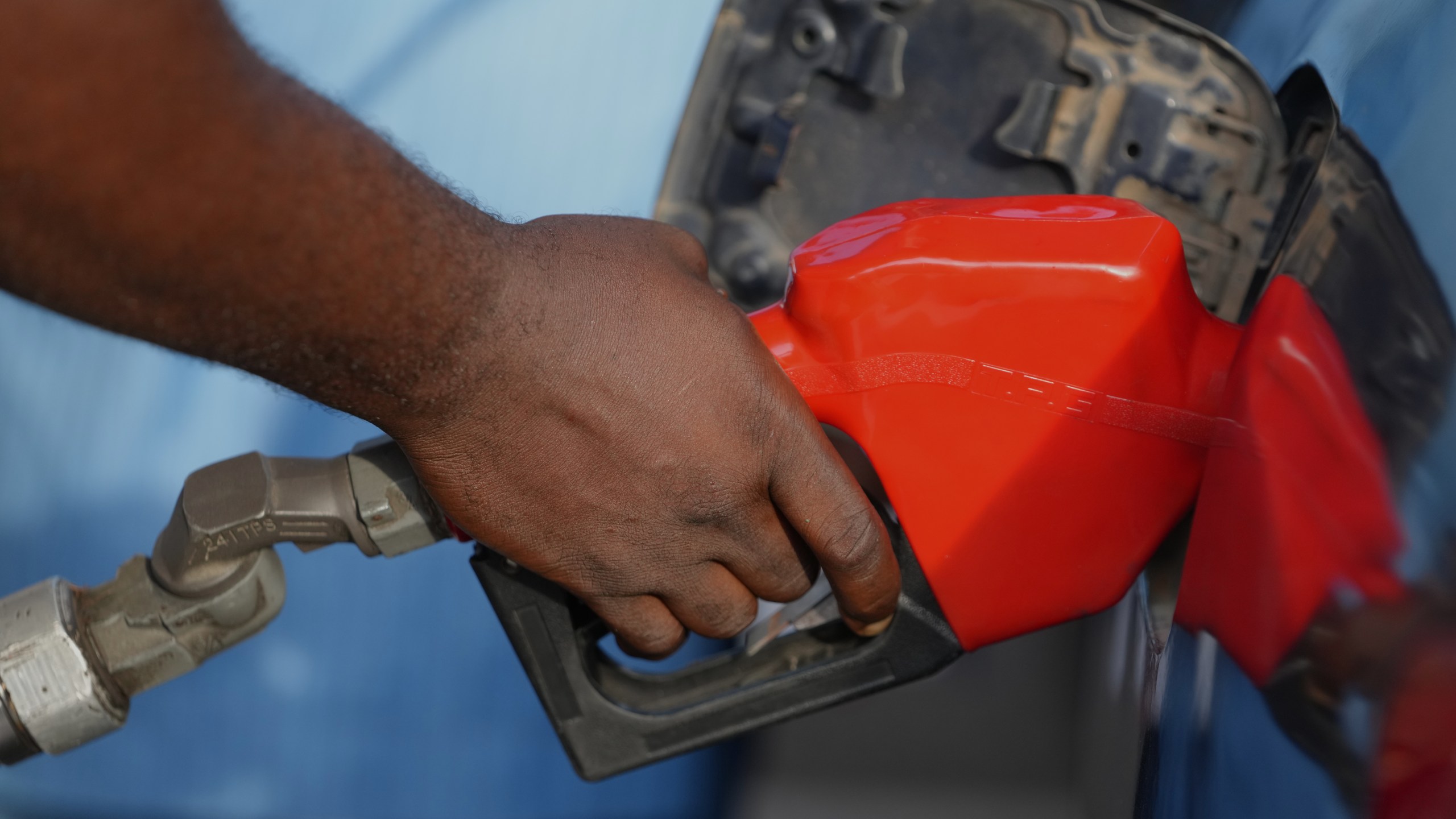
Fuel Crisis: ActionAid Urges FG to Deploy Emergency Measures as Global Conflict Deepens Hardship
Fuel Crisis: ActionAid Urges FG to Deploy Emergency Measures as Global Conflict Deepens Hardship
By: Michael Mike
ActionAid Nigeria has called on the Federal Government to urgently roll out emergency economic relief measures as the ongoing conflict involving Iran, Israel and the United States continues to disrupt global oil markets and worsen the economic hardship faced by Nigerians.
The organisation raised the alarm in a statement issued in Abuja on Sunday, warning that the crisis, which has persisted for more than a month, is already pushing millions of Nigerians deeper into poverty through rising fuel prices, transport fares and food costs.
According to the group, the absence of a clear and coordinated response from the Federal Government to cushion the effects of the global energy shock is deeply troubling.
While noting that global crude oil prices have surged from an average of about seventy-five to eighty dollars per barrel before the escalation of the conflict to roughly one hundred dollars per barrel due to supply disruptions in the Middle East, the organisation said Nigeria should be benefiting from the price increase.
It explained that with Nigeria’s daily crude oil production currently averaging between 1.3 million and 1.5 million barrels per day, the country is earning significantly more revenue from oil exports, yet these gains have not translated into relief for citizens struggling with soaring fuel costs.
The organisation said petrol prices are currently selling between N1,200 and N1,400 per litre across many parts of the country, while diesel prices remain persistently high.
It noted that the impact is being felt across all sectors of the economy, with transport fares surging, food prices rising and the cost of essential goods and services climbing beyond the reach of many households.
Speaking on the situation, the Country Director of ActionAid Nigeria, Andrew Mamedu, said the hardship faced by Nigerians reflects both the global crisis and long-standing domestic policy failures.
“It is unacceptable that Nigerians continue to suffer the consequences of global oil price increases while the country fails to translate its oil wealth into protection for its people,” he said.
Mamedu added that other countries facing similar shocks have implemented proactive measures to shield their citizens.
He cited examples of governments in Asia introducing price stabilisation policies, public transport support schemes and financial assistance to households in order to mitigate the effects of rising energy costs.
He noted that countries such as Thailand have deployed mechanisms such as the Oil Fuel Fund to cap fuel prices, while Indonesia has used subsidy compensation and public funds to reduce the impact of global price increases on citizens.
According to him, Nigeria must demonstrate similar urgency by implementing strong social protection measures.
The organisation said rapid community engagements conducted across several states indicate that many households are already adopting distress coping strategies, including skipping meals, withdrawing children from school due to transportation costs and borrowing money to survive.
It also warned that small and medium-sized enterprises are scaling down operations or shutting down completely due to rising diesel and logistics costs, while informal workers are experiencing declining incomes.
To address the situation, ActionAid Nigeria urged the Federal Government, in collaboration with state and local authorities, to deploy a coordinated emergency response that includes targeted cash transfers to vulnerable households and informal businesses.
The organisation also called for the temporary reintroduction of fuel subsidies for petrol and diesel, financial support for public transport systems to curb fare increases and the suspension or reduction of taxes and port charges contributing to high fuel prices.
Other recommendations include expanding the crude-for-naira framework to stabilise domestic fuel supply, protecting food distribution and health logistics from rising transportation costs and enforcing fuel consumption reduction measures across public institutions.
In addition, the group urged private sector employers to provide welfare support for workers, including transport assistance, flexible work arrangements and cost-of-living adjustments.
It also called on state and local governments to strengthen community-level safety nets, monitor market practices to prevent exploitation and ensure that relief measures reach vulnerable populations quickly.
“The global crisis may be beyond Nigeria’s control, but the government’s response is not,” the organisation said.
“One month into this crisis, continued inaction is unacceptable. Immediate and decisive steps must be taken to protect Nigerians from further hardship.”
Fuel Crisis: ActionAid Urges FG to Deploy Emergency Measures as Global Conflict Deepens Hardship
National News
Easter: Church Targets Spiritual Renewal, Community Impact with Power-Packed Programme
Easter: Church Targets Spiritual Renewal, Community Impact with Power-Packed Programme
By: Michael Mike
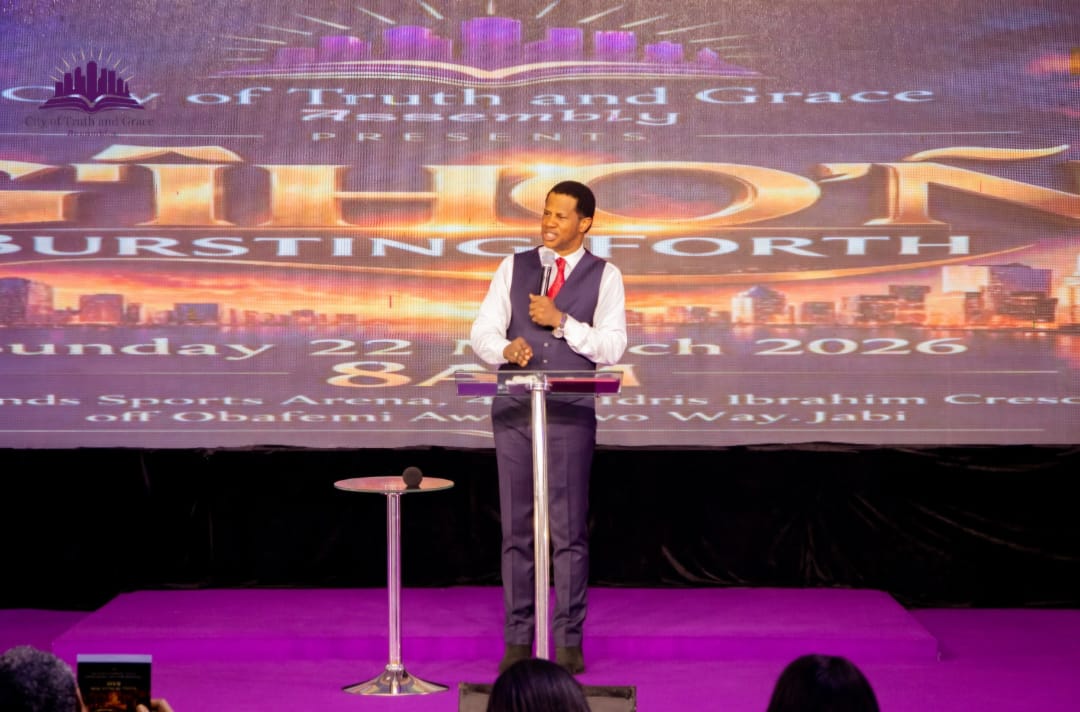
As Christians prepare for the Easter season, the City of Truth and Grace Assembly has positioned its 2026 celebration as more than a routine observance, unveiling a spiritually driven programme aimed at fostering personal transformation and strengthening community bonds.
Themed “The Power of Resurrection,” the church said the initiative is designed to rekindle faith, inspire hope, and provide a platform for collective spiritual engagement at a time when many people are seeking renewal amid prevailing social and economic pressures.
The programme, to be hosted by Dipo Fisho, will begin on Good Friday with a family-focused prayer session which organisers describe as a strategic gathering to address both personal and societal challenges through intercession.
According to the church, the prayer session will emphasise unity, healing, and divine direction for families and the wider community.
The Easter activities will culminate on Easter Sunday with a special worship service centred on the message of resurrection, renewal, and spiritual rebirth.
Organisers explained that the programme goes beyond worship services, incorporating moments of fellowship such as a love feast aimed at strengthening relationships among church members and welcoming first-time attendees while reinforcing the central Easter message of love, sacrifice, and redemption.
“This is not just a celebration; it is a call to experience transformation and new beginnings,” the church said, adding that the programme has been carefully curated to deliver both spiritual inspiration and emotional impact.
The event will take place at The Grounds Sport Arena, with activities scheduled for 5:00 p.m. on Good Friday and 8:00 a.m. on Easter Sunday.
With expectations of a large turnout, the church said the programme—also tagged “The Power of Resurrection”—is open to people of all backgrounds and is intended to inspire faith, unity, and a renewed sense of purpose.
Residents across the city have been encouraged to participate, as organisers project the gathering as a significant Easter convergence focused on renewal, hope, and shared spiritual experience.
Easter: Church Targets Spiritual Renewal, Community Impact with Power-Packed Programme
National News
Germany, Agrofood Fair Drive Investment and Technology for Nigeria’s Food Processing Sector
Germany, Agrofood Fair Drive Investment and Technology for Nigeria’s Food Processing Sector
By: Michael Mike
Stakeholders from government, industry and the diplomatic community have intensified efforts to mobilise investment and modern technology to strengthen Nigeria’s food processing and packaging sector, as the 11th edition of Agrofood Nigeria concluded in Lagos.
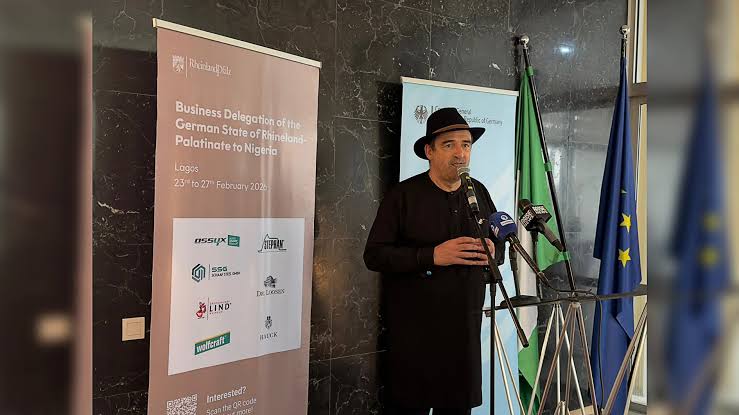
The push was highlighted during a networking event hosted by the German Consulate General Lagos, where Nigerian agribusiness stakeholders, German exhibitors and members of the German diplomatic and business community discussed opportunities to deepen collaboration across Nigeria’s agri-food value chain.
Speaking at a press briefing, the German Consul General in Lagos, Daniel Krull, said strengthening agriculture and food processing is central to Nigeria’s long-term economic growth and food security.
Krull noted that improving the country’s food processing capacity would not only reduce post-harvest losses but also stimulate industrial growth, create jobs and enhance Nigeria’s ability to meet domestic food demand.
He pointed to Germany’s global strength in food processing technology as evidence of how innovation can transform agricultural output into competitive products.
According to him, Germany remains Europe’s largest exporter of coffee despite not cultivating the crop domestically, a feat made possible through advanced processing technology and value-addition capabilities that tailor products to consumer needs.
“Agriculture and food processing are key to addressing food insecurity and unlocking economic potential. Technology and innovation will play a decisive role in enabling Nigeria to fully harness these opportunities,” Krull said.
The annual exhibition, organised by German trade fair company fairtrade Messe GmbH, brings together players across the entire food value chain—from food production and ingredient manufacturing to processing equipment, packaging technologies and finished product distribution.
Managing Director of fairtrade Messe, Paul März, described the event as a vital marketplace where businesses across Nigeria and West Africa connect with global technology providers.
“It is a meeting point and market place where industry meets once a year for Nigeria and West African countries to come to Lagos to discuss products with exhibitors,” he said.
Now in its 11th year in Nigeria, the exhibition featured 137 companies from 17 countries presenting equipment and technological solutions aimed at strengthening food production, processing and packaging.
Since 2017, the fair has also hosted an official German Pavilion supported by the German Government, providing a platform for German manufacturers to showcase advanced machinery designed to improve Nigeria’s food processing capacity.
Organisers said the initiative is aimed at boosting Nigeria’s food self-sufficiency by introducing technologies that reduce dependence on imported food products while encouraging domestic production and industrialisation.
März said the exhibition has already contributed to noticeable improvements in Nigeria’s food processing ecosystem, particularly in the area of packaging and the development of new supply chains.
However, he stressed that significant gaps remain, especially in packaging technology needed to extend shelf life and meet international export standards.
According to him, several companies participating in the fair have already sold machines for sachet packaging, milk powder processing, PET bottling and recycling to Nigerian businesses.
“With its long-term approach, Agrofood will continue to hold yearly in Nigeria to provide even more solutions to existing problems such as food safety, recycling and processing,” he said.
Krull also highlighted Germany’s broader economic engagement with Nigeria, revealing that Germany currently maintains a development portfolio of about €570 million in the country.
He explained that beyond trade exhibitions, the German government supports Nigerian businesses through technical advisory services, vocational education and training programmes as well as financing opportunities for small and medium-scale enterprises.
These include credit facilities and financial support windows facilitated through the German Desk at Access Bank, which provides funding options for businesses seeking to invest in food processing technology.
German companies already operating in Nigeria are also investing heavily in workforce training to ensure local staff can operate and maintain advanced industrial equipment, thereby strengthening technology transfer.
While acknowledging challenges confronting Nigeria’s agri-food sector—including insecurity, financing constraints, regulatory issues and energy shortages—Krull stressed that such obstacles should not deter stakeholders from taking decisive action.
He said Nigeria possesses the natural resources, entrepreneurial capacity and market potential needed to achieve significant growth in the food processing sector if investment, technology and policy support are effectively aligned.
By connecting entrepreneurs, investors and technology providers, he added, initiatives like Agrofood Nigeria could play a pivotal role in accelerating the transformation of Nigeria’s agricultural economy.
Germany, Agrofood Fair Drive Investment and Technology for Nigeria’s Food Processing Sector

Suspected cultists kill 12 in attack on Jos community, Plateau govt imposes curfew

Troops arrest suspected kidnapper in Damboa LGA of Borno

Troops arrest 58 illegal miners in Edo state

Roger Federer’s Shock as DNA Results Reveal Myla and Charlene Are Not His Biological Children

THE PLIGHT OF FARIDA

FAILED COUP IN BURKINA FASO: HOW TRAORÉ NARROWLY ESCAPED ASSASSINATION PLOT AMID FOREIGN INTERFERENCE CLAIMS
-
 News2 years ago
Roger Federer’s Shock as DNA Results Reveal Myla and Charlene Are Not His Biological Children
-
Opinions4 years ago
THE PLIGHT OF FARIDA
-
 News11 months ago
FAILED COUP IN BURKINA FASO: HOW TRAORÉ NARROWLY ESCAPED ASSASSINATION PLOT AMID FOREIGN INTERFERENCE CLAIMS
-

 News2 years ago
EYN: Rev. Billi, Distortion of History, and The Living Tamarind Tree
-
 Opinions4 years ago
POLICE CHARGE ROOMS, A MINTING PRESS
-

 ACADEMICS2 years ago
A History of Biu” (2015) and The Lingering Bura-Pabir Question (1)
-

 Columns2 years ago
Army University Biu: There is certain interest, but certainly not from Borno.
-

 Opinions2 years ago
Tinubu,Shettima: The epidemic of economic, insecurity in Nigeria
