Connect with us

News

Nigeria’s diversity not a burden but a gift that must be safeguarded – Marwa

Published

on

Nigeria’s diversity not a burden but a gift that must be safeguarded – Marwa
By: Michael Mike

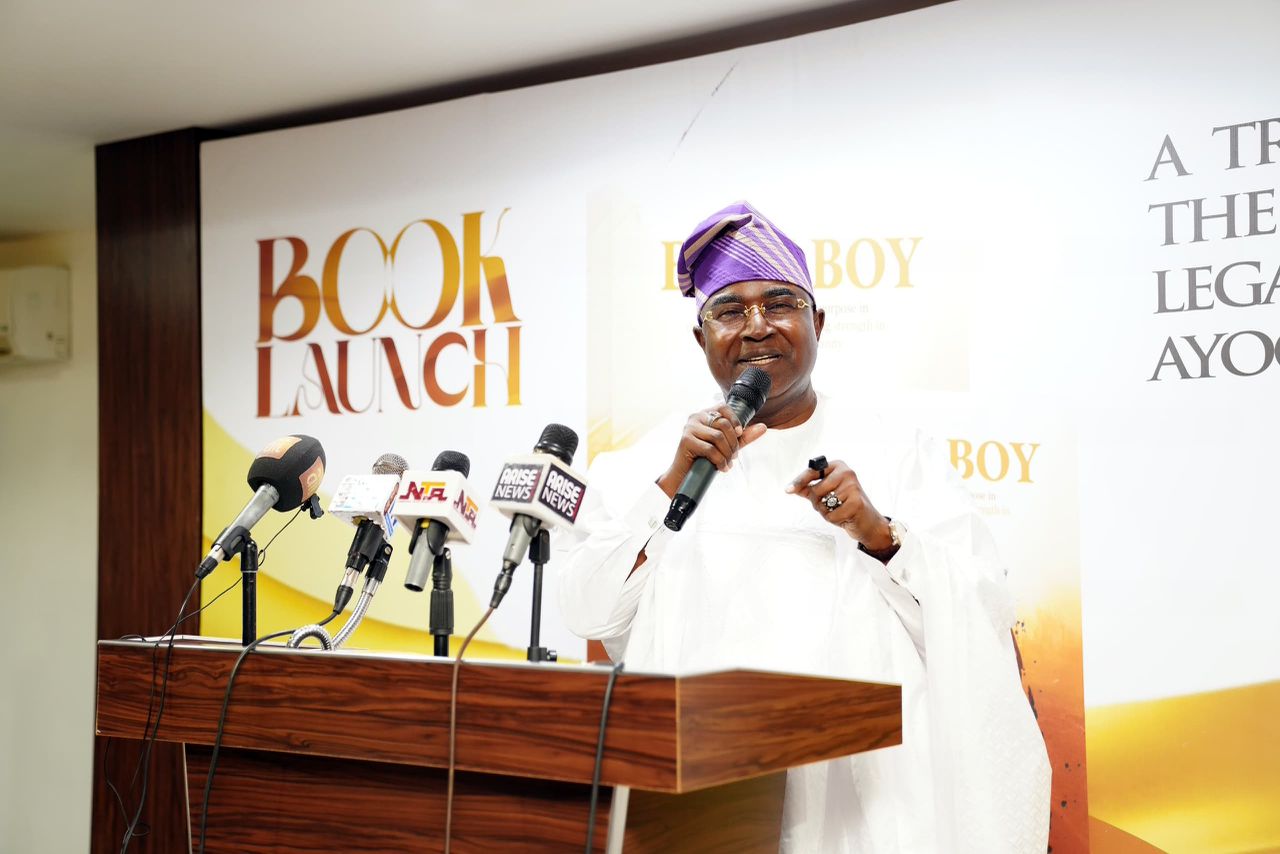
Chairman/Chief Executive Officer of the National Drug Law Enforcement Agency (NDLEA) Brig Gen Mohamed Buba Marwa (rtd) has urged Nigerians to always remember that the country’s diversity is not a burden but a gift and a trust that must be safeguarded by all.

Marwa gave the charge while delivering the keynote address at the public presentation of a book: Buni Boy, written by late legal luminary Niyi Ayoola-Daniels in Abuja on Saturday 29thNovember 2025.

According to him, “Today holds a special significance for me due to the profound and compelling nature of this gathering. What moves me most is not only the book itself but also the life of its author and what that life represents. It speaks to the unity and strength woven through our diversity as Nigerians. To many people, the author’s narrative may seem distant, almost unreal, as if drawn from another world. Yet those of us who grew up in the 1960s know it as lived truth.

“The experience captured in the narrative mirrors the country we once walked through with unguarded hearts.

“The story stirs my memories and reminds me of a time when life was plain in its blessings and people showed more kindness in their daily dealings.

“This evening, I am not here to retell the story, for it stands strong on its own. Instead, I will reflect on its core theme, to remind Nigerians of this era that our diversity is not a burden but a gift and a trust we must safeguard.

“I have long been an advocate of unity in diversity and of the strength that rises from it. Hence, today’s occasion provides me an opportunity to further amplify the message. The Nigeria of my youth understood its own diversity, even in the troubled days of the 1960s when the civil war raged through this country. I recall my teenage years at the Nigeria Military School, NMS Zaria, where the pupils came from diverse ethnic backgrounds.

“It was never a school for northern boys alone. No, not a school for Hausa, Fulani, Kanuri, Tiv or Idoma. It was a school for all ethnic groups in Nigeria. Whether you speak Hausa, Yoruba or Igbo, we regarded ourselves as kin. Our teachers reflected the same broad mix. For instance, from 1966 to 1970, the Commandant of the NMS was a Yoruba officer, Col. T. B. Ogundeko, of blessed memory. We didn’t see him as a Yoruba man. We saw a Nigerian, a man with whom we have a shared identity.

“Before attending NMS, however, I had my primary education across four cities: Zaria, Enugu, Abeokuta, and Lagos. This was the result of my father’s mobile life as a soldier. Living in different sociocultural settings taught me early that people of other tongues and traditions are still my own. That truth has stayed with me ever since.

“The Nigerian Army, where I served for over 30 years, is built on a foundation of unity, and the ideal of one Nigeria shapes its work. That experience only strengthened my conviction. As an officer, I served across the country and built bonds that cut through the artificial barriers created by our sociocultural differences. In the army, intermarriage and close fellowship pushed us to look past ethnic lines and stand together as one.

“On a personal note, my life has taught me that the diversity of this country enriches us. It sharpens our understanding of one another. It strengthens the fabric of our shared existence. It unites far more than it divides, whatever the voices of doubt may say today.

“In my private and professional life, I have always embraced the full breadth of Nigeria’s diversity. My friends come from every corner of the country. I have worked with people of every ethnicity. The people around me, even today, reflect the wide spectrum of our multiethnic nation. The chieftaincy titles I hold, more than 30 in number, show that same reach. Even my own family reflects our national mix.

“Wherever I stand in this country, whether among the Ogoni, or Bachama, among Igbo or Idoma, anywhere at all, I am at home.”

Marwa recalled that as Military Administrator of Lagos state, the Yoruba people showed him great love and supported his administration despite their hostility to the government at the federal level then. He said the support he received from Lagos encouraged him to conduct a free and fair election that brought his successor to office.

He said: “Even though the Head of State then Gen. Abdulsalami Abubakar did not interfere in my conduct of the governorship election, the military hierarchy did. After seeing the then Senator Bola Tinubu’s strong campaign and popularity, the military hierarchy instructed me to prevent him from emerging governor because of his pro-democracy activism in NADECO against the military government then but I chose to conduct a free and fair election that produced the most popular candidate as governor of Lagos state. The rest today is history.”

Marwa said Nigeria may have its peculiar challenges because of how poorly its diversity has been managed over the years, “but these difficulties cannot justify any idea of tearing the nation apart”, adding that “our challenges should instead push us to repair the fault lines and pursue greater inclusion.”
Speaking on the book, Marwa commended the widow of the author, Mrs Leticia Ayoola-Daniels for keeping her late husband’s memory alive. “Barrister Niyi Ayoola-Daniels is no longer with us, but his legacy lives on. The Buni Yadi Foundation keeps his ideals alive. I must say that the real-life story told in the book resonates deeply with me. This is not only because I once served as the military governor of the old Borno, where Buni Yadi was then located, but also because I have met the family of the noble Alkali, the judge whose sense of duty anchors the book and shaped the author’s life. It is also because the transformation of an eighteen-year-old boy in the 1960s and the wisdom of a judge who held firmly to justice reflect the very heart of the Nigerian spirit.”

Nigeria’s diversity not a burden but a gift that must be safeguarded – Marwa

Continue Reading
Click to comment

Leave a Reply

Your email address will not be published. Required fields are marked *

News

ECOWAS Court Raises Alarm Over Gender Violence, Low Compliance With Judgments

Published

on

ECOWAS Court Raises Alarm Over Gender Violence, Low Compliance With Judgments

By: Michael Mike

The President of the ECOWAS Court of Justice, Claudio Monteiro Gonçalves, has called for stronger regional action to combat gender-based violence and ensure justice for women and girls across West Africa, warning that many victims still suffer in silence.

Gonçalves, who was represented by the Acting Deputy Registrar of the ECOWAS Court of Justice, Mrs. Marie Sanie, made the call in Abuja during the court’s celebration of International Women’s Day, organised by the CCJ Women Forum under the theme “Rights, Justice, Action for All Women and Girls,” with a sub-theme urging stakeholders to “Break the Silence: End Gender-Based Violence Now.”

He said the protection of women’s rights remains central to the court’s mandate of advancing the rule of law and safeguarding fundamental human rights across the Economic Community of West African States.

According to him, the court has, through its judgments, played a significant role in challenging discrimination, addressing sexual and gender-based violence and providing remedies for victims across the region.

“These groundbreaking decisions have not only delivered justice to individuals but have also set important legal precedents that reinforce the dignity and protection of women and girls throughout the region,” he said.

Among the landmark rulings highlighted by the court president was the 2008 case of Hadijatou Mani Koraou v Republic of Niger, which addressed slavery practices in Niger, and the 2017 case of Dorothy Chioma Njemanze & 3 Ors v Federal Republic of Nigeria that condemned discrimination and degrading treatment against women.

Other notable cases cited include WARDC & IHRDA (Mary Sunday) v Federal Republic of Nigeria on domestic violence, WAVES & 1 Or v Republic of Sierra Leone on discrimination based on pregnancy, Adama Vandi v Republic of Sierra Leone on rape and the failure to provide effective remedy for victims, and Forum Against Harmful Practices (FAHP) & 2 Ors v Republic of Sierra Leone concerning female genital mutilation.

Gonçalves stressed that gender-based violence remains a major obstacle to equality, justice and sustainable development across the region.

“Too often, survivors suffer in silence due to stigma, fear or lack of support to seek justice. Today we affirm that silence must end and justice must be translated into action,” he said.

The court president also expressed concern over the low level of compliance with the court’s rulings by member states, revealing that only about 20 per cent of its judgments have been fully implemented.

He warned that the low enforcement rate could undermine the authority and credibility of the regional court if not addressed urgently.

To tackle the challenge, he said the court recently carried out bilateral engagement missions to several member states, including Sierra Leone, Nigeria and Guinea-Conakry, as part of activities marking the 50th anniversary of the Economic Community of West African States.

The missions, he explained, were aimed at encouraging governments to implement the court’s decisions and fulfil their treaty obligations.

Gonçalves also noted that the court regularly conducts awareness and outreach missions across member states to educate citizens on how to access the court and seek redress for human rights violations.

He emphasised that justice would only be fully realised when citizens are aware of their rights and governments ensure that court judgments are respected and implemented.

While celebrating the achievements of women working within the ECOWAS Court, he acknowledged that challenges remain, particularly in ensuring greater representation of women in leadership positions and creating supportive work environments that promote work-life balance.

Despite the challenges, he reaffirmed the court’s commitment to strengthening legal protections for women and girls in the region.

“As we celebrate the achievements of women today, we reaffirm our commitment to delivering justice, advancing the rule of law and building a region where every woman and girl can live in safety and dignity,” he said.

Meanwhile, the Patron of the ECJ Women Forum, Justice Dupe Atoki, has called for stronger commitment to protecting the rights of women and girls, stressing that legal protections must go beyond promises to ensure real justice and equality.

Atoki made the call during the celebration of International Women’s Day at the ECOWAS Court of Justice in Abuja, where officials, diplomats and legal practitioners gathered to discuss the role of justice systems in safeguarding women’s rights across West Africa.

Speaking on the global theme for this year’s commemoration, the judge said the theme serves as both a reminder and a call to responsibility for governments, institutions and society at large.

She emphasised that the rights of women and girls should never be treated as privileges granted at convenience but as fundamental human rights that must be respected, protected and fulfilled.

According to her, although progress has been made globally in advancing gender equality, many women and girls still face barriers that limit their opportunities, silence their voices and restrict their participation in social, political and economic life.

“The emphasis on rights reminds us that the rights of women and girls are not privileges to be granted at convenience, but fundamental human rights that must be respected, protected and fulfilled,” she said.

Atoki noted that justice systems have a critical responsibility in addressing discrimination, violence and exclusion against women, adding that courts and legal institutions must remain accessible, impartial and responsive to the realities women face.

She said effective justice mechanisms are essential in ensuring that laws protecting women are properly enforced and that perpetrators of abuse are held accountable.

“The call for justice highlights the vital role of laws, institutions and courts in safeguarding equality and dignity. Justice must be accessible, impartial and responsive to the realities faced by women and girls,” she stated.

Atoki also stressed that achieving gender equality requires more than commitments and declarations, noting that deliberate action is necessary to dismantle structural barriers that hinder the progress of women and girls.

According to her, governments and institutions must translate policy commitments into practical measures that create safe and supportive environments for women to thrive.

“The call for action reminds us that commitments alone are not enough. Real progress requires deliberate steps through policies, institutions and collective effort to dismantle structural barriers and create environments where women and girls can thrive,” she said.

She urged stakeholders across the region to renew their commitment to advancing women’s rights, strengthening access to justice and ensuring that gender equality becomes a lived reality rather than a distant aspiration.

Atoki concluded by calling on governments, civil society organisations and legal institutions to work together to ensure that the promise of rights, justice and action is realised for all women and girls across the West African region.

ECOWAS Court Raises Alarm Over Gender Violence, Low Compliance With Judgments

Continue Reading

News

NHRC Takes Rights Campaign to Grassroots, Holds Women’s Day Town Hall in Abuja Community

Published

on

NHRC Takes Rights Campaign to Grassroots, Holds Women’s Day Town Hall in Abuja Community

By: Michael Mike

The National Human Rights Commission (NHRC) has intensified advocacy for the protection of women and girls by organising a community town hall meeting in Bwari as part of activities marking the 2026 International Women’s Day.

The sensitisation programme brought together traditional rulers, youth leaders, women groups and other community stakeholders to discuss the need for stronger action against discrimination and violence affecting women.

Executive Secretary of the Commission, Tony Ojukwu, said the annual commemoration of International Women’s Day provides an important opportunity to celebrate the achievements of women while drawing attention to the obstacles that still limit their full participation in society.

Ojukwu, who was represented at the event by the Director of the Commission’s Women and Children Department, Ngozi Okorie stressed that the theme of the 2026 celebration, “Rights. Justice. Action. For All Women and Girls,” calls for practical and sustained efforts to remove barriers confronting women in many communities.

He noted that despite growing awareness of gender equality, women and girls continue to face gender-based violence, discrimination, limited access to justice and socio-economic inequalities.

According to him, addressing these challenges requires the collective commitment of government institutions, community leaders and citizens.

“The rights of women and girls are fundamental human rights. Protecting them demands deliberate and sustained action from all stakeholders,” he said.

The NHRC boss reaffirmed the Commission’s determination to promote and safeguard the rights of all Nigerians, particularly vulnerable groups such as women and children.

He explained that the Bwari town hall meeting was designed to deepen public awareness of human rights and provide a platform for dialogue on practical measures that could strengthen the protection of women and girls at the grassroots.

Traditional rulers who attended the forum commended the Commission for bringing the conversation on human rights closer to local communities.

The Esu of Bwari, represented by Mai Anguwa of FCDA Quarters, Zakwoi Ibrahim, described the initiative as timely, noting that such engagements would help educate residents about their rights and responsibilities.

Also speaking, Youth President of Bwari Area Council, Comrade Dr Awoyi Bwari, praised the NHRC for organising the programme, saying it would boost awareness on human rights issues among both men and women in the community.

Representatives of women’s organisations, including faith-based groups and market associations, also participated in the meeting and pledged their support for efforts aimed at promoting and protecting the rights and welfare of women and girls.

NHRC Takes Rights Campaign to Grassroots, Holds Women’s Day Town Hall in Abuja Community

Continue Reading

News

Interior, Information Ministries Forge Stronger Partnership, Spotlight Key Reforms in Passport, Security, Identity Services

Published

on

Interior, Information Ministries Forge Stronger Partnership, Spotlight Key Reforms in Passport, Security, Identity Services

By: Michael Mike

The Ministry of Interior has strengthened its collaboration with the Federal Ministry of Information and National Orientation to improve public awareness of key government reforms in passport services, border security, identity management, and national safety.

The engagement took place during a high-level visit by the Minister of Information and National Orientation, Mohammed Idris, to the Ministry of Interior, where he was received by the Minister of Interior, Olubunmi Tunji-Ojo.

Tunji-Ojo while welcoming the delegation, highlighted the critical need for coordinated communication to ensure Nigerians are fully informed about government achievements under the Renewed Hope Agenda.

Tunji-Ojo noted that the Ministry of Interior oversees key agencies, including the Nigerian Immigration Service, Federal Fire Service, Nigerian Security and Civil Defence Corps, Nigerian Correctional Service, and the National Identity Management Commission. He described the last two and a half years as a period of transformative reforms across these agencies, resulting in significant improvements in service delivery, security, and citizen engagement.

Among the Ministry’s notable achievements, Tunji-Ojo highlighted the rapid clearance of over 204,000 pending passport applications, the introduction of contactless passport renewals for Nigerians abroad, and the establishment of Nigeria’s first centralised passport personalisation centre in Abuja. He also pointed to advanced border management technologies, including the deployment of Advanced Passenger Information (API) and Passenger Name Record (PNR) systems, and the introduction of electronic immigration gates at major airports.

In the area of identity management, Tunji-Ojo announced that over 130 million Nigerians have been enrolled in the National Identity Database, while the launch of the ECOWAS National Biometric Identity Card now facilitates regional travel within West Africa without passports. The Minister further highlighted correctional reforms, skills development for inmates, the construction of a National Fire Academy, and deployment of Mining Marshals to protect critical mining sites.

Tunji-Ojo emphasized that these reforms require strong public communication and urged the Ministry of Information to collaborate on a coordinated strategy to ensure accurate and timely dissemination of information to Nigerians and the international community.

In his response, Idris commended the Ministry of Interior for the remarkable reforms, stressing that consistent government messaging on security and development initiatives would boost Nigeria’s international image and attract foreign investment. He also announced that Nigeria would host the World Public Relations Forum later this year in partnership with the Nigerian Institute of Public Relations (NIPR), a move expected to bring global communication experts to the country.

Both Ministers agreed to deepen collaboration in strategic communication to ensure that government achievements and reforms under the Renewed Hope Agenda are widely publicized and accessible to Nigerians. Tunji-Ojo reaffirmed the Ministry’s commitment to sustaining reforms that translate into tangible benefits for citizens.

The partnership signals a renewed focus on transparency, institutional reform, and enhanced citizen engagement, positioning Nigeria to showcase its progress on governance, security, and development to both domestic and international audiences.

Interior, Information Ministries Forge Stronger Partnership, Spotlight Key Reforms in Passport, Security, Identity Services

Continue Reading

Trending

Verified by MonsterInsights