
News
Nigeria’s North Poised for Transformation as New Analysis Shows Investing in Girls Could Yield Massive Returns


Nigeria’s North Poised for Transformation as New Analysis Shows Investing in Girls Could Yield Massive Returns
By: Michael Mike
A groundbreaking new policy brief has revealed that investing in adolescent girls in Northern Nigeria could deliver life-changing gains for young women and multibillion-dollar returns for the country.
The latest findings support what experts have long argued: that educating girls is not just a social imperative but one of the highest-yielding economic investments Nigeria can make.
According to the new analysis, scaling up proven programmes in Kano and Kaduna States with an investment of US$ 114 million over four years would reach 1.1 million adolescent girls and generates 3.9 million additional years of schooling averts 327,000 child marriages, prevents 383,000 adolescent pregnancies, saves 3,651 adolescent mothers’ lives, reduces 35,675 under-five deaths and delivers an astonishing 21-to-1 return on investment, valued at $2.5 billion
Policymakers are calling the findings a “wake-up call” for national and state governments and an opportunity Nigeria cannot afford to miss.
Despite progress in some parts of the country, millions of Nigerian girls especially in the North still face interrupted education. More than 7.6 million girls are out of school, half of them in the Northwest and Northeast. And while the national secondary school completion rate hovers at 34%, it is just 28% in the Northwest.
The consequences are immediate and generational. Girls without schooling face earlier marriage (median age 16.6 with no education vs. 21.7 for those completing secondary school), higher risk of intimate partner violence, reduced decision-making power Increased risk of maternal complications and death, a greater likelihood of having stunted or malnourished children
Unfortunately, these outcomes reverberate through communities, reinforcing cycles of poverty, poor health, and limited opportunity.
But fortunately, Northern Nigeria is not starting from scratch. The Centre for Girls’ Education (CGE) in Kaduna has spent over a decade pioneering targeted, evidence-backed models that are now informing national policy.
The Executive Director of the Centre for Girls’ Education (CGE), Habiba Mohammed, delivered an urgent call for Nigeria to expand opportunities for every girl—whether in school, out of school, married, young, or facing barriers to further education.
She said educating girls is the foundation for safer communities, stronger families, and a more prosperous nation.
Speaking to policymakers, development partners, teachers, and community members, Mohammed outlined CGE’s comprehensive approach to supporting girls aged 4 to 24, emphasizing that the organization “works with girls at every stage” from preschoolers to married adolescents, from girls seeking vocational skills to those aiming for careers in STEM.
CGE’s model blends literacy, numeracy, life skills, vocational training, and mentorship in safe spaces across communities and schools.
She said: “We train teachers to become mentors. This gives us ripple effects indirect beneficiaries who carry forward the skills and knowledge.”
The organisation works hand-in-hand with community leaders, religious leaders, parents, husbands of married adolescents, school heads, and government officials, ensuring interventions align with local realities.
CGE also collaborates closely with local government education authorities to secure school placements for girls returning to the classroom and to ensure smooth transitions from one level of schooling to the next.
“We don’t want a situation where girls drop out. When girls learn, the possibility of them being retained in school is very high,” she said.
Mohammed highlighted the story of Sakina, a CGE beneficiary who used her voice to spark policy change.
During an advocacy visit supported by the Malala Fund, Sakina told the former governor of Kaduna State:
“I have achieved something, but I have sisters out there who need the same opportunity. School fees are stopping many girls.”
Her plea moved the governor to scrap school fees for all children girls and boys from primary through senior secondary school. The reform became reality, opening classrooms to thousands of learners.
“The voice of the girl was powerful,” Mohammed said. “When we get the right stakeholders, no girl will be left behind.”At CGE, girls are not passive recipients they are activists.
“We believe in the slogan: nothing for us without us,” Mohammed said. “We train our girls to use their voices to speak to policymakers.”
Girls supported by CGE appear on radio and TV, advocate in Hausa and English, and speak publicly about why they want education and why it is a fundamental right.
Addressing the barriers faced by married adolescents, Mohammed shared her own story of completing university while raising three children:
“I was eight months pregnant with my first child when I started university… and before I graduated, I had three children. It did not stop me.”
She stressed that married girls can thrive academically if given supportive environments including child care options, mentorship, and encouragement from family members.
“Our mothers-in-law, co-wives, and extended families can help us continue,” she said. “The issue is understanding not control.”
According to her, girls trained in CGE safe spaces develop the life skills to navigate complex family dynamics. “When you see them, everybody wants to be like them.”
Security threats from community clashes to insurgency remain a challenge. While CGE cannot enforce security, Mohammed said community partnerships are critical.
“Our focal persons inform us immediately if there is a conflict. The safety of mentors, staff, and girls is a priority.”
Communities themselves provide protection and ensure that programmes continue when conditions are safe.
Mohammed urged state governments to develop concrete policies that allow girls who married early or became pregnant to return to school seamlessly.
“Every girl who wants to go back to school should find the door open,” she said.
She pointed to CGE research showing that transition from primary to secondary school was once only 4% in programme communities. But after just one year of life skills intervention, 82% of girls re-enrolled.
“This shows what can happen when girls gain confidence and support,” she said. “Now it is the responsibility of government to create space for every girl.”
“Issues of early marriage will be history. Issues of girls not going to school will be history. Issues of gender-based violence, Boko Haram, kidnapping all will be history in Nigeria. The only thing we need is to educate the girl child.”
Mohammed emphasized that the goal is not to position education against marriage, but to ensure that girls enter both on their own terms, prepared, informed, and empowered.
“Marriage does not stop education, and education does not stop marriage”
Mohammed challenged the widespread belief that schooling and marriage are mutually exclusive for girls in Northern Nigeria. Instead, she argued that girls should marry “at an appropriate age, when she is ready”and that readiness is most often achieved when they complete secondary education.
“For us, it is not the age, it is the maturity,” she said. “If a girl is able to marry after completion of secondary school, she is ready.”
“A girl who is able to go through a life skills component… will understand that she has a voice. She can use her voice,” she said.
According to her, stigma loses its power when girls develop self-confidence and resilience. “Even if it is there, it will not stop her from achieving her goals.”
CGE’s life skills curriculum includes lessons on self-esteem, communication, goal setting, and managing emotional and psychological challenges such as trauma from gender based violence.
Mohammed also discussed CGE’s innovative approach to literacy, supported by the Jolie-Phoenix phonics component, which transforms learning into an interactive, fun experience.
“It is a fun way of learning. The participants learn between songs,” she explained.
She noted that the approach has yielded success, particularly for girls who previously struggled with literacy, stating that phonics-based lessons enable girls to read and write, adding that local -language numeracy makes mathematics easier to grasp, being able to read signs in hospitals, on the road, or at school motivates girls to stay in school; peer learning allows fast learners to support slower learners, strengthening community bonds and accelerating progress.
Mohammed said: “In Hausa, they want to see the end of that education,” describing the sense of achievement girls feel when they can read independently.
She noted that effective teacher training is absolutely critical and that “no teacher is untrainable.”
From her experience recruiting mentors from public schools, she recounted how educators who initially struggled quickly transformed with the right training:
CGE’s life skills curriculum also includes modules to support survivors of rape, domestic abuse, and other forms of gender-based violence. These sessions help girls rebuild emotional strength and regain control of their lives.
“They can be able to do better with their emotions,” habiba explained. “They can be able to help themselves out of the situation they found themselves in.”
She appeal for collaboration among government agencies, civil society, donors, teachers, traditional leaders, and parents.
“If we put our hands and heads together, not working in silos… we will be able to reach where we want to go about girls’ education,” she said.
CGE’s model continues to demonstrate that when girls are nurtured academically, emotionally, and socially, they thrive regardless of the stigma or barriers around them.
Nigeria’s North Poised for Transformation as New Analysis Shows Investing in Girls Could Yield Massive Returns


Farmer Injured in Machete Attack Allegedly by Herdsmen in Plateau
By Zagazola Makama
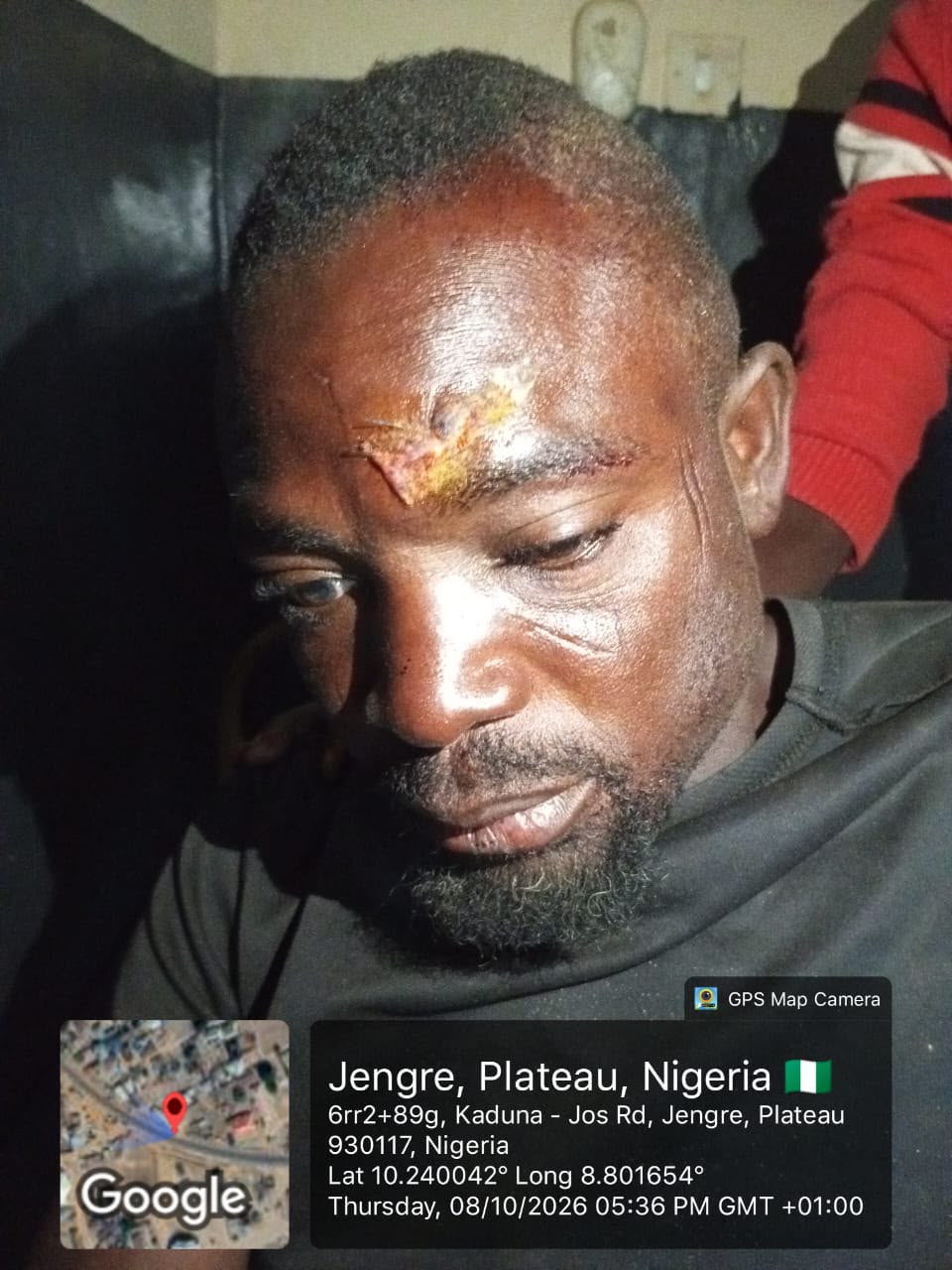
A farmer, identified as Babangida Atah, has been injured in a machete attack allegedly carried out by Fulani herders at Rafi Katako village in Bassa Local Government Area of Plateau State.
Security sources said the incident occurred at about 1 p.m. on Thursday, Oct. 8, when troops of Sector 1, Operation Enduring Peace (OPEP), deployed in Jengre, responded to a report of an assault on the farmer at his farm.
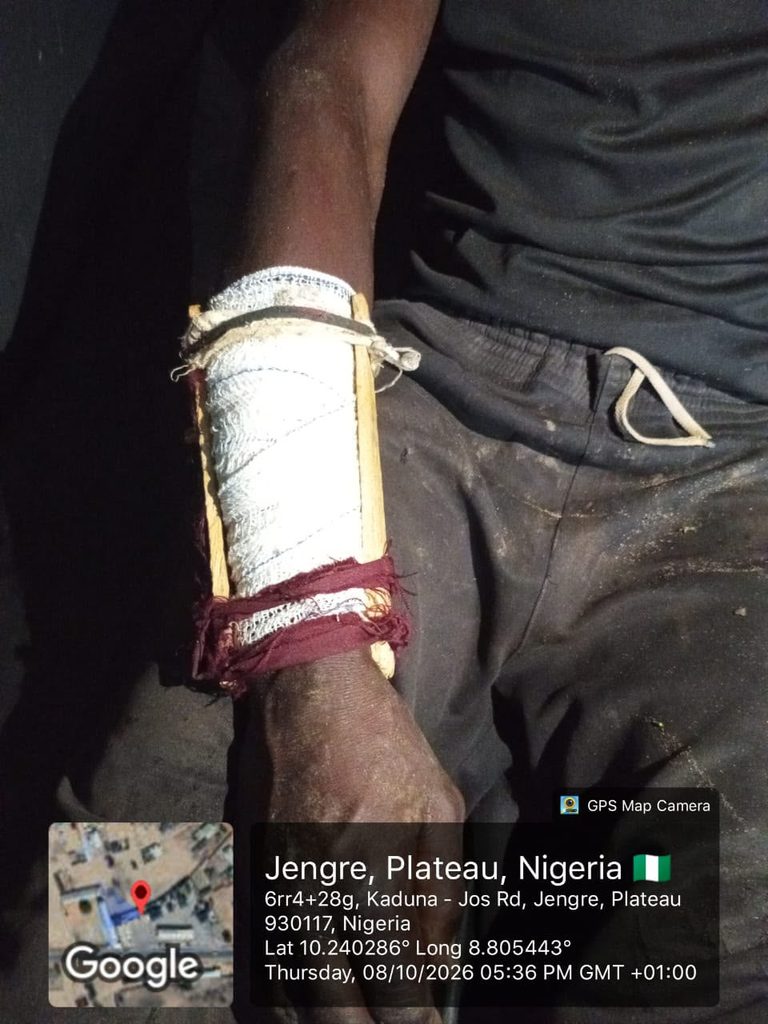
The sources said the troops, upon arrival at the scene, found Atah with machete wounds, while the suspected attackers had fled before their arrival.
The victim was evacuated to a nearby hospital for medical attention.
Security personnel have commenced efforts to track down and apprehend the fleeing suspects for further investigation and necessary legal action.
Further details are expected as efforts to identify and arrest those responsible continue.
Farmer Injured in Machete Attack Allegedly by Herdsmen in Plateau

Suspected Fulani bandits Kill Man, Block Road in Plateau Community
By Zagazola Makama
Suspected Fulani bandits members have reportedly killed a man identified as Zubairu Danirai after blocking the Manja–Mpili road in Mangu Local Government Area of Plateau State.
Security sources said the incident occurred at about 4:30 p.m. on Thursday, Oct. 8, when troops of Sector 8, Operation Enduring Peace (OPEP), deployed at Manja, responded to a report of the roadblock and killing of a native returning from the market.
The sources said the troops, upon arriving at the scene, made contact with the suspected assailants, who fled into the surrounding mountains following an exchange of fire.
The troops subsequently searched the area and discovered the victim’s body.
A manhunt has been launched to track down the fleeing suspects, while security personnel continue efforts to prevent further attacks and restore safety along the affected route.
The incident adds to security concerns in parts of Mangu Local Government Area, where attacks on residents and road users have heightened fears over the safety of local communities.
Further details are expected as investigations continue.
Suspected Fulani bandits Kill Man, Block Road in Plateau Community
NHRC seeks death penalty moratorium as 3,000 inmates languish on death row
…Commission urges governors to commute sentences, calls for review of mandatory capital punishment laws
By: Michael Mike
The National Human Rights Commission (NHRC) has called on the Federal Government to declare an official moratorium on executions and state governors to commute eligible death sentences to life imprisonment, amid concerns that more than 3,000 inmates remain on death row across Nigeria.
The commission said Nigeria was approaching 10 consecutive years without a state execution, a development it described as meeting the international standard for a de facto moratorium, despite the continued imposition of death sentences and the prolonged detention of condemned inmates.
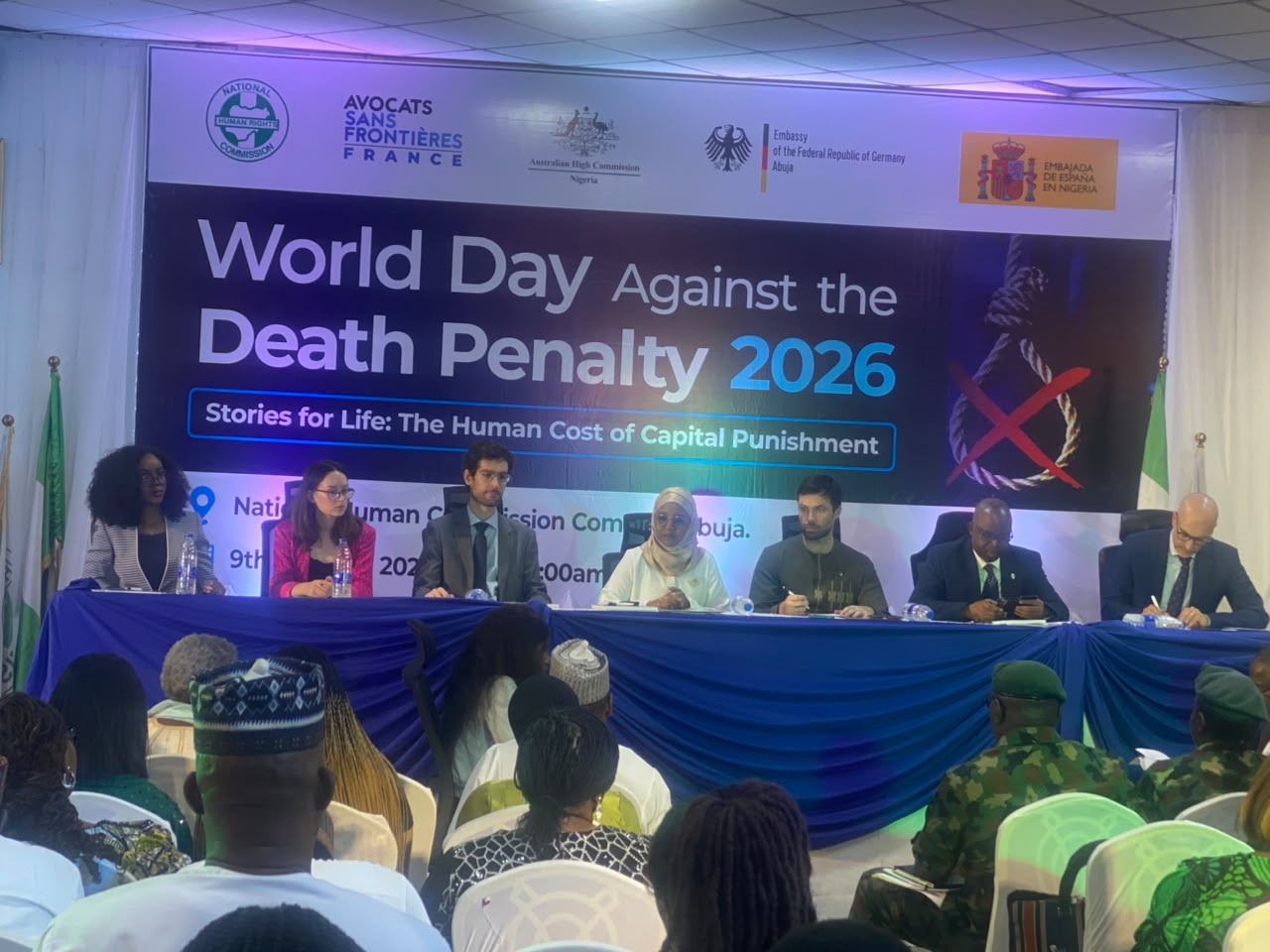
The Executive Secretary of the NHRC, Chief Tony Ojukwu, made the call on Friday in Abuja during the commemoration of the 2026 World Day Against the Death Penalty at the commission’s headquarters.
Ojukwu urged the Federal Government to formalise the suspension of executions, while calling on state governors to exercise their constitutional prerogative of mercy to commute death sentences, particularly in cases where inmates had exhausted their appeals but remained on death row.
He also advocated a review of laws prescribing mandatory death sentences, arguing that judges should have the discretion to consider mitigating circumstances and systemic vulnerabilities before determining appropriate punishment.
Although capital punishment remains constitutionally valid in Nigeria, the NHRC chief stressed that its administration must be consistent with the country’s human rights obligations and the fundamental principles of fair trial and due process.
He expressed concern that inadequate access to pro bono legal representation, forced confessions and delays in bringing suspects to trial continued to undermine procedural justice, raising questions about the fairness of proceedings in capital cases.
According to him, the protection of human rights requires more than the existence of legal provisions, insisting that the justice system must guarantee fair hearings and ensure that the death penalty is restricted to the most serious crimes in line with applicable international standards.
The commission outlined three immediate policy measures: an official moratorium on executions, the commutation of eligible death sentences to life imprisonment, and a comprehensive review of laws prescribing mandatory capital punishment.
Ojukwu’s appeal places renewed focus on the position of condemned inmates who have exhausted their legal options but remain in custody, as well as the wider implications of prolonged confinement on the administration of criminal justice.
A formal moratorium, the commission argued, would provide an immediate policy framework for suspending executions while the country considers broader reforms to its capital punishment regime.
The proposed review of mandatory death penalty provisions would also allow courts to take individual circumstances into account when sentencing offenders, rather than being compelled by law to impose the same punishment regardless of relevant mitigating factors.
The commemoration was organised by the NHRC in partnership with Avocats Sans Frontières (ASF) France, the Australian High Commission and the Embassy of Germany, with support from the Royal Norwegian Embassy.
Ojukwu expressed hope that deliberations at the event would produce a joint call-to-action communiqué to advance sustainable reforms in Nigeria’s justice sector.
The commission’s position comes amid continuing debates over capital punishment, the protection of the rights of accused persons and the need to strengthen safeguards against miscarriages of justice.
NHRC seeks death penalty moratorium as 3,000 inmates languish on death row

Farmer Injured in Machete Attack Allegedly by Herdsmen in Plateau

Suspected Fulani bandits Kill Man, Block Road in Plateau Community

NHRC seeks death penalty moratorium as 3,000 inmates languish on death row

Roger Federer’s Shock as DNA Results Reveal Myla and Charlene Are Not His Biological Children

THE PLIGHT OF FARIDA

FAILED COUP IN BURKINA FASO: HOW TRAORÉ NARROWLY ESCAPED ASSASSINATION PLOT AMID FOREIGN INTERFERENCE CLAIMS
-
 News3 years ago
Roger Federer’s Shock as DNA Results Reveal Myla and Charlene Are Not His Biological Children
-
Opinions5 years ago
THE PLIGHT OF FARIDA
-
 News1 year ago
FAILED COUP IN BURKINA FASO: HOW TRAORÉ NARROWLY ESCAPED ASSASSINATION PLOT AMID FOREIGN INTERFERENCE CLAIMS
-

 News3 years ago
EYN: Rev. Billi, Distortion of History, and The Living Tamarind Tree
-
 Opinions5 years ago
POLICE CHARGE ROOMS, A MINTING PRESS
-

 ACADEMICS3 years ago
A History of Biu” (2015) and The Lingering Bura-Pabir Question (1)
-

 Columns3 years ago
Army University Biu: There is certain interest, but certainly not from Borno.
-

 Politics1 year ago
2027: Why Hon. Midala Balami Must Go, as Youths in Hawul and Asikira/Uba Federal Constituency Reject ₦500,000 as Sallah Gift
