
News
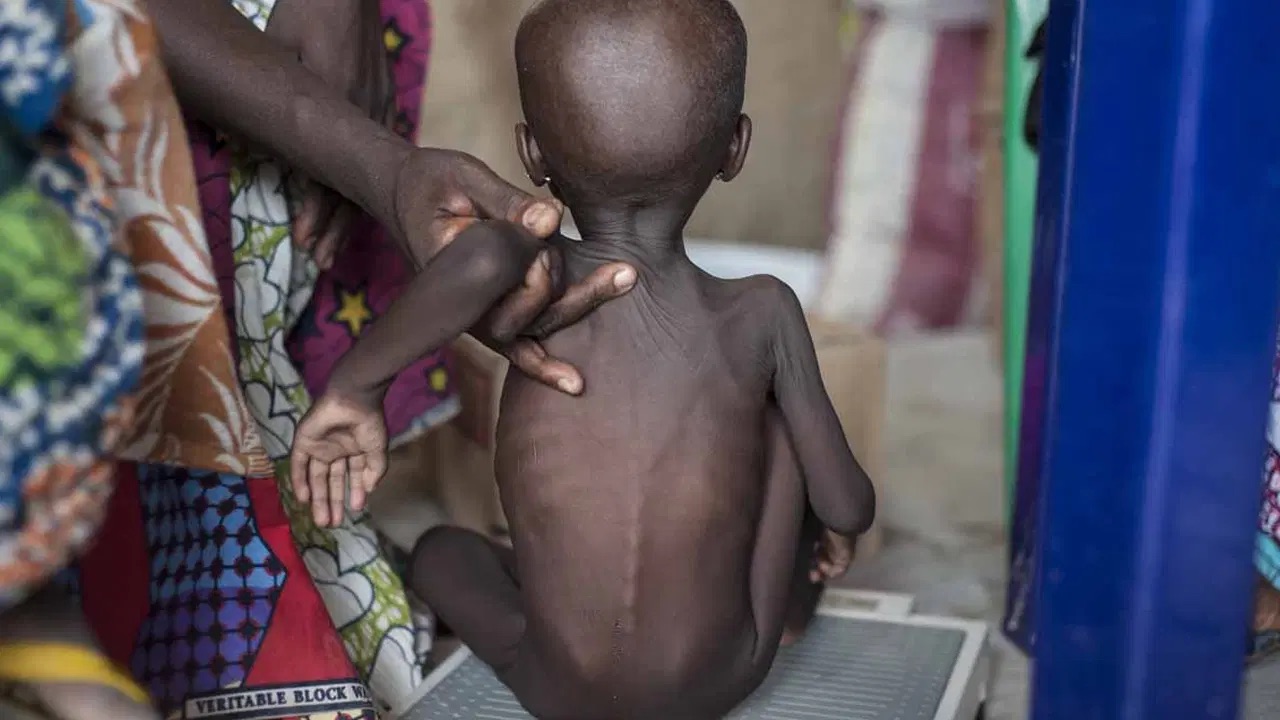
Nigeria’s Nutrition Accountability Gap Persists as Child Stunting Hits 40%

Nigeria’s Nutrition Accountability Gap Persists as Child Stunting Hits 40%
By: Michael Mike
Nigeria’s failure to translate nutrition policies and funding commitments into measurable results has come under scrutiny, with the Athena Centre for Policy and Leadership calling for performance-based financing, stronger legislative oversight and tougher accountability measures to address child malnutrition.
The centre said on Wednesday that under-five stunting in Nigeria stood at 40 per cent, against a national target of 18 per cent that has expired, highlighting the gap between policy commitments and implementation.
Speaking at a policy webinar in Abuja, the Director of the Olikoye Ransome-Kuti Institute for Health and Social Equity, Dr Danjuma Iyaji, said Nigeria had developed systems for measuring nutrition outcomes without establishing adequate mechanisms to hold public officials accountable for poor performance.
“Nigeria has built the measurement architecture of nutrition accountability without building its consequence architecture,” Iyaji said.
The webinar, organised by the Athena Centre through its institute, was titled From Measurement to Consequence: Fixing Nigeria’s Nutrition Accountability Gap. It examined findings from the centre’s policy paper, Political Incentives and Nutrition Neglect: Why State Governments Fail to Improve Child Nutrition.
The discussion brought together officials from the Office of the Vice President, the National Primary Health Care Development Agency (NPHCDA) and the House of Representatives Committee on Nutrition and Food Security to examine why government commitments were not consistently translating into improved nutrition outcomes.
According to the centre, only nine of Nigeria’s 36 states had formally established State Councils on Nutrition as of April 2026, while the existence of such councils did not necessarily demonstrate that they were functioning effectively.
To address the gaps, the centre proposed linking supplementary funding tranches to independently verified readiness, conducting annual state performance assessments, establishing an escalation framework for persistent non-performance and holding annual legislative hearings at the state level.
However, participants stressed that accountability measures must not deprive vulnerable children of essential nutrition services because their state governments failed to meet administrative or performance requirements.
The Senior Special Assistant to the President on Nutrition and Public Health, Uju Rochas-Anwukah, endorsed the diagnosis, identifying three major breaks in the accountability chain: commitments not translating into fund releases, releases failing to translate into service delivery, and inadequate understanding of nutrition priorities among subnational leaders.
“A stunted child is a lost asset that no bridge can build,” she said.
Rochas-Anwukah cautioned that readiness-based financing must not disadvantage states with the greatest nutrition needs but weaker implementation capacity. She also clarified that the terms governing the Child Nutrition Fund rested with UNICEF and its partners, rather than her office.
She called for a pathway through which less-prepared states could strengthen their capacity to qualify for support without leaving children in those states behind.
The presidential aide also urged the passage of the proposed National Food and Nutrition Bill, arguing that a stronger legal framework would help sustain accountability beyond individual administrations.
The Director of Nutrition at NPHCDA, Dr Adebiyi Olatunde, said accountability must extend beyond state-level indicators to primary healthcare facilities, where the availability of therapeutic foods and micronutrients directly affects children’s access to treatment and preventive services.
She warned that state-level figures could conceal serious deficiencies in individual communities and health facilities.
“At times we have data for a state, and the issue may be in only two particular wards,” Olatunde said.
She advocated collecting and analysing data down to ward and facility levels to identify localised failures. She also called for a root-cause assessment before sanctions or other escalation measures were imposed, to establish whether poor performance resulted from funding shortages, supply-chain problems or weaknesses in implementation.
The Research Lead for the House of Representatives Committee on Nutrition and Food Security, Abel Okechukwu, described conditional financing as “workable and urgently needed”, but argued that the approach should combine protected funding for essential services with incentives for improved performance.
He proposed allocating 70 per cent of funding as a protected lifeline for interventions such as micronutrient provision and school feeding, while reserving 30 per cent as a performance incentive linked to functional nutrition councils, approved costed plans and published expenditure records.
“Conditional financing should not punish the child,” Okechukwu said.
He also called for stronger legislative scrutiny, arguing that oversight hearings must be supported by reliable data and adequate preparation rather than conducted as ceremonial exercises.
According to him, effective hearings require standardised reporting templates and the submission of reports at least 21 days before proceedings.
Okechukwu said the committee intended to intensify joint oversight in 2026 and 2027. He also proposed inserting a provision in the Appropriation Act to link federal grants to evidence that state governments had exercised appropriate oversight of nutrition programmes.
The discussions refined several of the centre’s recommendations, particularly the need to protect essential nutrition funding, provide weaker states with a route to meeting readiness requirements, assess performance below the state level and make root-cause reviews the starting point for addressing persistent failures.
However, whether the existing Child Nutrition Fund arrangements permit the proposed financing conditions remains unresolved, according to the centre’s policy paper.
As follow-up measures, the Athena Centre said it would engage partners in the Child Nutrition Fund on financing conditions, present the proposed escalation framework to the Nigeria Governors’ Forum and take its legislative recommendations to State Houses of Assembly.
It also plans to circulate a policy note incorporating the panellists’ recommendations before publication and reassess the four proposed reforms in July 2027.
In her closing remarks, the webinar moderator and researcher at the institute, Ijeoma Achebe, said the discussion had strengthened the paper’s diagnosis of the challenges undermining nutrition outcomes.
“The gap is not simply about a lack of policies,” she said. “It is the distance between commitments and delivery.”
Nigeria’s Nutrition Accountability Gap Persists as Child Stunting Hits 40%



Gara-Gombe alleges threat to life, family, petitions IGP
The Peoples Democratic Party (PDP) 2027 Campaign Director of Media and Publicity, Ahmed Gara-Gombe, has petitioned the Inspector-General of Police over the alleged presence of suspected security operatives in plain clothes around his family residences in Gombe State.
Gara-Gombe disclosed this in a press statement issued to journalists in Gombe by his media aide, Mr Azubuike Nathaniel.
He said that the suspected operatives had been sighted around two family residences in the state which included the house his mother lives and another occupied by members of his immediate family.
He said the development had raised concerns about the safety of his family and himself which prompted him to petition the Inspector-General of Police as well as notify relevant security agencies in Gombe State.
The PDP chieftain said the party’s 2027 Campaign Council was aware of the development, noting that its legal and security committees were consulting on the matter and would advise the council on the appropriate course of action.
Gara-Gombe further stated that he might “reinforce his personal security arrangements if the situation warranted it”.
He, however, dismissed suggestions that he should avoid visiting Gombe State due to the security concerns, insisting that he would not be intimidated or prevented from exercising his political rights.
“Nobody will stop me from coming to Gombe. I will come. Some people have advised me not to come, but nobody will stop me from visiting my state,” he declared.
He called on the relevant security agencies to investigate the alleged surveillance and take necessary measures to guarantee the safety of his family and prevent any breach of peace.
Gara-Gombe reaffirmed his commitment to participating in legitimate political activities in Gombe State, stressing that security concerns would not hinder him from exercising his political rights.
Gara-Gombe alleges threat to life, family, petitions IGP
Troops Destroy Suspected Terrorist Hideout, Recover Motorcycle in Zamfara
By: Zagazola Makama
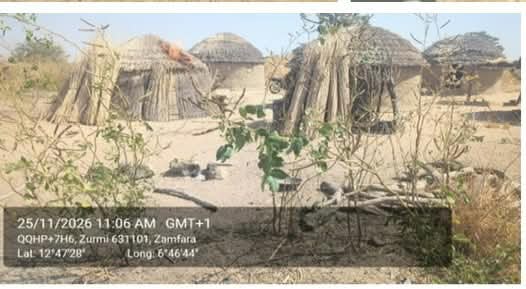
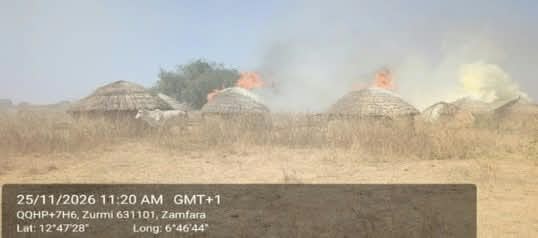
Troops of 1 Brigade, Joint Task Force, Operation Fasan Yamma (OPFY), have destroyed a suspected terrorist hideout in Zurmi Local Government Area of Zamfara State.
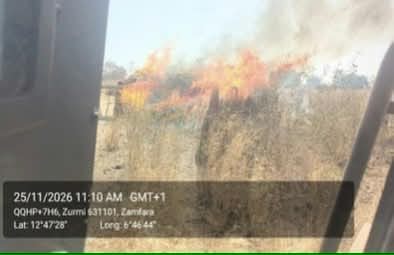
Security sources told Zagazola Makama that the operation was conducted at about 7:30 a.m. on Nov. 25, 2026, when troops discovered and destroyed the hideout.
The troops also recovered one motorcycle during the operation.
The recovery is expected to support ongoing efforts to disrupt the movement and activities of armed groups operating in the area.
Troops Destroy Suspected Terrorist Hideout, Recover Motorcycle in Zamfara
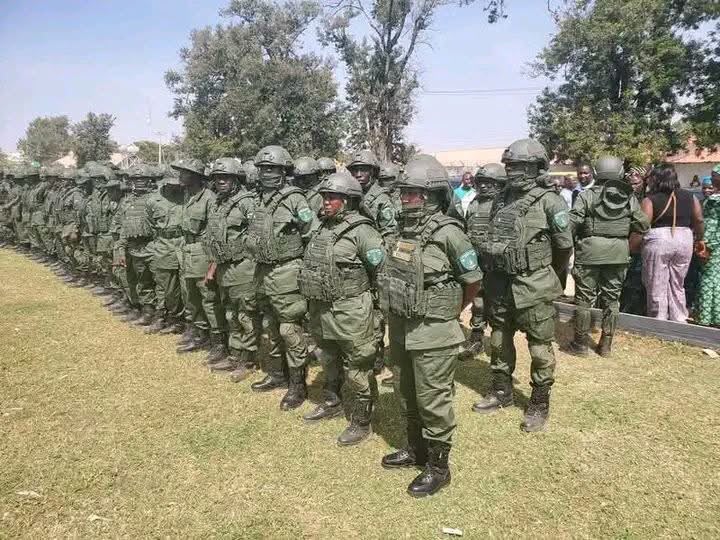
Tinubu fulfils forest guard promise as 2,000 graduate in Plateau, Zamfara – NCYP
By: Michael Mike
The Northern Christian Youth Professionals (NCYP) has commended President Bola Tinubu for fulfilling his campaign promise to establish Forest Guards, following the graduation of 2,000 personnel in Plateau and Zamfara States.
The group described the development as evidence of Tinubu’s commitment to translating campaign promises into concrete action, describing him as a “talk-and-do” leader.
In a statement on Saturday signed by NCYP National Chairman, Isaac Abrak, the group said the graduation and passing-out parades of 1,000 Forest Guards each in Plateau and Zamfara marked another step towards implementing the security commitments contained in the President’s Renewed Hope Manifesto.
It recalled that the establishment of Forest Guards was captured on page nine of the manifesto, which outlined plans to reclaim and secure Nigeria’s forests from terrorists, bandits, kidnappers and other violent criminal groups.
The group said the initiative was particularly important because criminal groups had continued to exploit forest hideouts to launch attacks on vulnerable communities.
“As one of the leading advocates for the establishment of Forest Guards, NCYP has consistently championed the initiative, recognising that securing Nigeria’s forests is fundamental to addressing the country’s security challenges,” the statement said.
It expressed optimism that deploying the newly trained personnel would strengthen the country’s capacity to deny criminal elements access to forest hideouts.
The organisation urged the graduates to discharge their responsibilities with courage, discipline, professionalism and patriotism, stressing that their assignment extended beyond protecting forests to safeguarding families, communities, farmlands and livelihoods.
NCYP, however, called on Tinubu to extend the initiative to Oyo State, where it said the President had also made a commitment to establish Forest Guards.
It also urged governors of other states yet to establish their Forest Guard units to collaborate with the Federal Government and take concrete steps towards implementing the programme.
The group maintained that establishing Forest Guard units across all states, including the Federal Capital Territory (FCT), would improve security coverage and deny terrorists, bandits and other criminal elements safe havens.
It also commended the governors of Plateau and Zamfara for collaborating with the Federal Government towards the successful establishment of the units in their respective states.
Reaffirming its confidence in the President’s commitment to the initiative, NCYP cited his 2026 Independence Day address, in which he said the next phase of the administration’s reforms would focus on translating economic adjustments into tangible improvements in Nigerians’ lives.
“We have made the difficult decisions, corrected the course of our economy and laid the foundations for lasting prosperity. The next phase is to translate these reforms into tangible improvements in the lives of Nigerians,” Tinubu was quoted as saying.
Tinubu fulfils forest guard promise as 2,000 graduate in Plateau, Zamfara – NCYP

Gara-Gombe alleges threat to life, family, petitions IGP

Campaign Train: Zulum Storms Mafa, Dikwa, Gamboru Ngala to Rousing Reception

Troops Destroy Suspected Terrorist Hideout, Recover Motorcycle in Zamfara

Roger Federer’s Shock as DNA Results Reveal Myla and Charlene Are Not His Biological Children

THE PLIGHT OF FARIDA

FAILED COUP IN BURKINA FASO: HOW TRAORÉ NARROWLY ESCAPED ASSASSINATION PLOT AMID FOREIGN INTERFERENCE CLAIMS
-
 News3 years ago
Roger Federer’s Shock as DNA Results Reveal Myla and Charlene Are Not His Biological Children
-
Opinions5 years ago
THE PLIGHT OF FARIDA
-
 News2 years ago
FAILED COUP IN BURKINA FASO: HOW TRAORÉ NARROWLY ESCAPED ASSASSINATION PLOT AMID FOREIGN INTERFERENCE CLAIMS
-
 Opinions5 years ago
POLICE CHARGE ROOMS, A MINTING PRESS
-

 News3 years ago
EYN: Rev. Billi, Distortion of History, and The Living Tamarind Tree
-

 ACADEMICS3 years ago
A History of Biu” (2015) and The Lingering Bura-Pabir Question (1)
-

 Columns3 years ago
Army University Biu: There is certain interest, but certainly not from Borno.
-

 Politics1 year ago
2027: Why Hon. Midala Balami Must Go, as Youths in Hawul and Asikira/Uba Federal Constituency Reject ₦500,000 as Sallah Gift
