
News
Nigeria’s Pioneer Female Train Driver Receives ‘Friendship Envoy Award’ In China


Nigeria’s Pioneer Female Train Driver Receives ‘Friendship Envoy Award’ In China
By: Michael Mike
Nigeria’s pioneer female train driver, Issah Abiola has received the prestigious Friendship Envoy Award at the second Orchid Award Ceremony held in Beijing, China.
The award, hosted by the China Foreign Language Bureau, recognises international individuals and institutions that promote global cultural exchange and mutual understanding.

Abiola, who is widely known by her Chinese name Bai Yang, was recognised for her outstanding contributions to China-Nigeria cultural ties, having grown from an office assistant at China Civil Engineering Construction Corporation (CCECC) to becoming Nigeria’s first female train driver and a national symbol of resilience and cross-cultural collaboration.
Established as a major international cultural award by China, the Orchid Award aligns with the Global Civilization Initiative proposed by President Xi Jinping. It celebrates those advancing common human values, intercultural dialogue, and the vision of a shared future for humanity.

Abiola’s journey with CCECC began in 2008, according to the construction firm. Driven by a desire to bridge communication gaps between Chinese and Nigerian colleagues, she taught herself Mandarin. Her efforts quickly elevated her role from administrative support to a critical liaison during the construction of the Abuja-Kaduna Railway and Abuja Metro project.
In 2013, she became the only woman selected for train driver training. After rigorous study and field practice, she made history on July 12, 2018, by driving Nigeria’s first passenger train operated by a woman. Since then, she has driven over 2,000 trips, safely transporting more than one million passengers.
Abiola, beyond the tracks, has served as a cultural ambassador for Chinese projects in Nigeria, promoting Chinese engineering, culture, and bilateral goodwill through public outreach, educational programmes, and extensive media engagement. Her story has received global media coverage, becoming a model of people-to-people cooperation under China’s Belt and Road Initiative.

According to a statement by CCECC at the weekend, the Orchid Award is the latest recognition in a series of honours for Abiola, including the China-Nigeria Friendship Contribution Award from the Chinese Embassy in Nigeria and commendations from former Nigerian President Muhammadu Buhari.
CCECC described Abiola’s story as a powerful testament to the long-standing friendship and cooperation between China and Nigeria. The company highlighted her role in mentoring a new generation of local female train drivers and her current work as a certified trainer, helping to transfer Chinese rail expertise to local personnel.
The company also noted that the Abuja Metro project, where Abiola is based, created nearly 5,000 jobs for Nigerians, with 98% local employment and a growing share of Nigerian leadership.
Her ongoing role in Chinese cultural events and technical training, both in Nigeria and China, underscores her dedication to deeper China-Africa collaboration. From language education to cultural performances and mentorship, Abiola continues to inspire a new generation, embodying the ideals of partnership, resilience, and shared growth.
CCECC reaffirmed its commitment to “teaching people how to fish” in Africa through technology transfer, local talent development, and cultural integration. Abiola’s recognition, the company said, symbolises both her personal achievements and the broader success of people-centred cooperation under China-Africa relations.
Speaking on the award, Abiola said: “This Orchid award means a lots to me, it is not only a friendship award but also a symbol of recognition from both China and Nigeria. I feel valued, excited and honour.”
She advised: “To every Nigerian woman dreaming of becoming a train driver—go for it! Don’t let stereotypes or societal limits hold you back. This profession, like many others, is not just for men. With determination, hard work, and the right training, you can excel in this field. Believe in yourself, break barriers, and inspire others.”
Nigeria’s Pioneer Female Train Driver Receives ‘Friendship Envoy Award’ In China


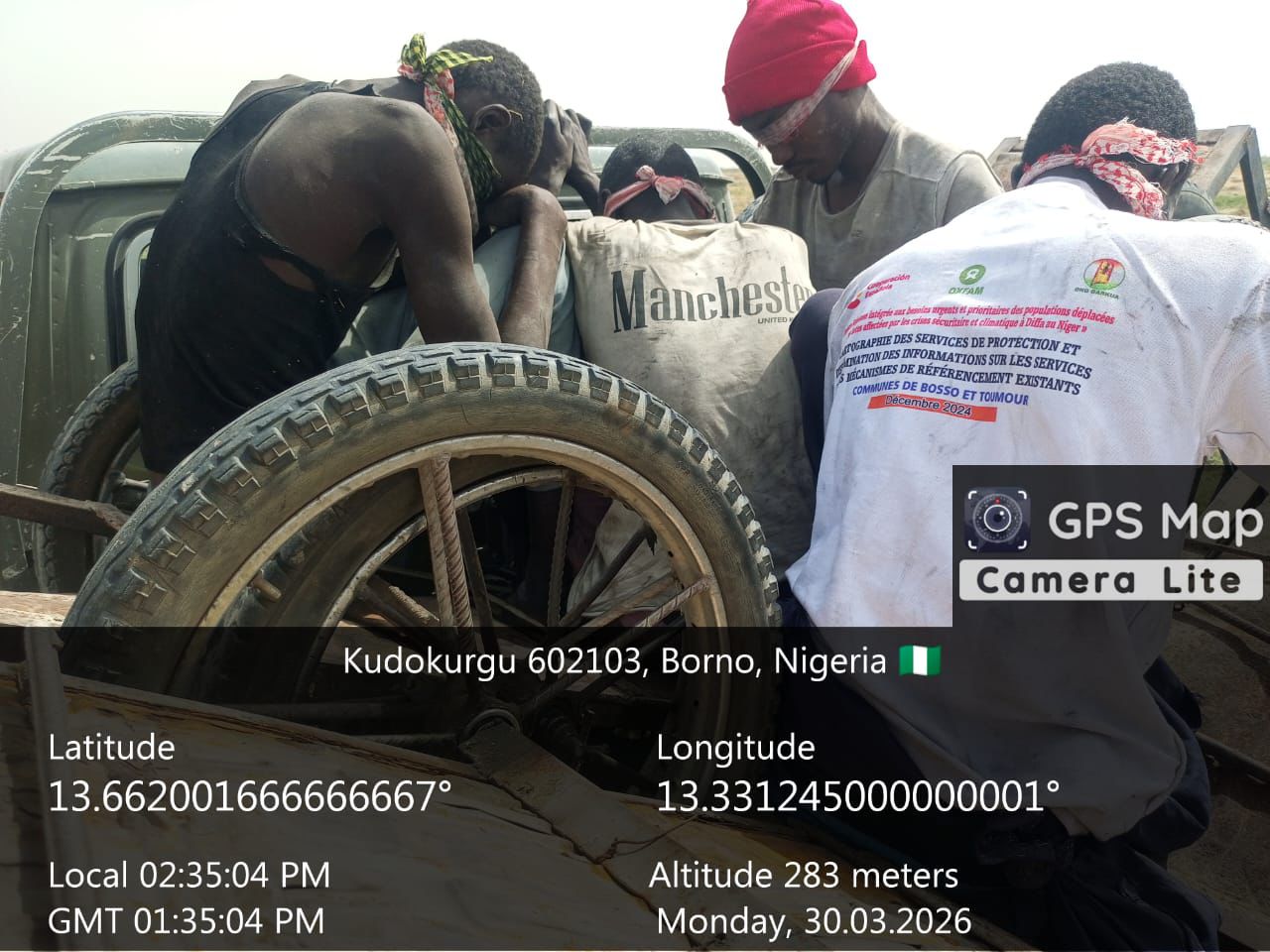
Troops intercept 11 youths with donkeys during patrol in Borno
By: Zagazola Makama
Troops of 68 Battalion have intercepted 11 youths during a routine patrol in Mallam Fatori area of Abadam Local Government Area of Borno State.
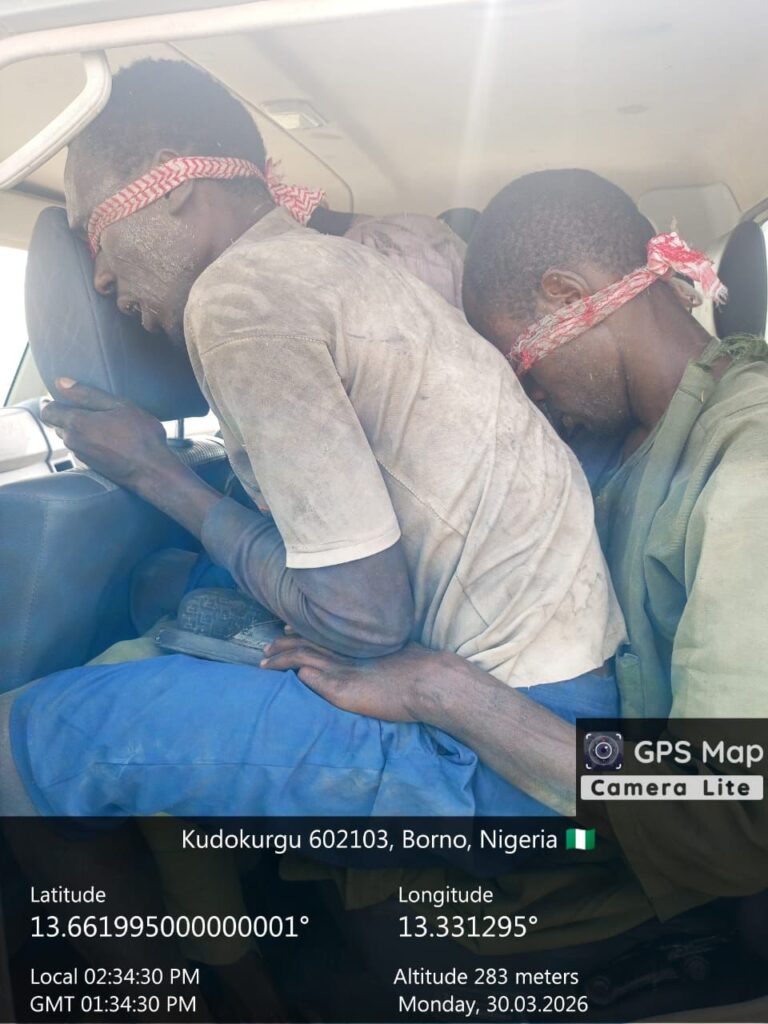
Security sources said the interception occurred along the Bulagana–Cheisa axis on April 2 during ongoing clearance operations in the area.
According to the sources, the individuals were found moving in the area with 12 donkeys when they were stopped and briefly interrogated by troops.
The sources added that the youths were later handed over, alongside the animals, to relevant authorities in a neighbouring country for further necessary action.
The military said the patrol was part of sustained efforts to maintain security dominance and prevent exploitation of border communities by criminal elements.
Troops intercept 11 youths with donkeys during patrol in Borno
Troops recover ammunition, logistics items in Kwara patrol operation
By: Zagazola Makama
Troops of the Nigerian Army under the 22 Brigade have recovered ammunition and other logistics items during a fighting patrol in Ifelodun Local Government Area of Kwara State.
A security source disclosed that the operation was conducted at about 4:00 p.m. on April 2 at Daban Lema, where troops of the brigade, operating from the Patrol Base, encountered signs of suspected terrorist activities in a deserted location.
According to the source, the troops immediately carried out exploitation of the area, leading to the recovery of four rounds of 7.62mm special ammunition and one empty PKT ammunition belt link.
Other items recovered include four mobile phones, two head warmers, two small solar panels, and assorted repair tools believed to have been used by the suspected terrorists.
The source added that the recovery indicates the presence and movement of suspected criminal elements within the area, noting that troops have intensified surveillance and patrols to deny them freedom of action.
Troops recover ammunition, logistics items in Kwara patrol operation
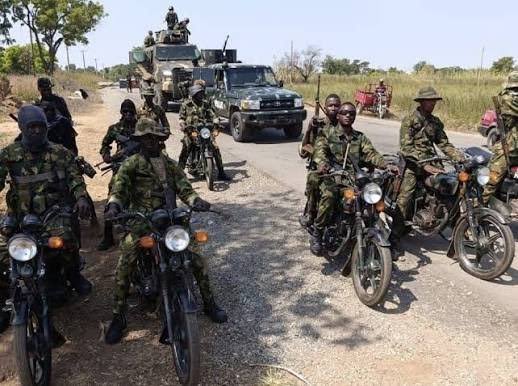
Troops foil attack by Criminal Youths, rescue victims, arrest suspects in plateau
By: Zagazola Makama
Troops of Sector 1, Operation Enduring Peace (OPEP), have foiled an attack on residents at Dutse Uku in Jos North Local Government Area of Plateau State.
A security source said the troops responded swiftly to a report of sporadic gunshots in the area at about 11:50 p.m. on April 2.
According to the source, upon arrival at the scene, the suspected criminals fled, abandoning their operation due to the prompt intervention of the troops.
He said the troops rescued two victims who sustained gunshot wounds during the incident and immediately evacuated them to a hospital for medical attention.
The source further disclosed that two suspects, dressed in black attire, were arrested at the scene.
Items recovered from the suspects include a cutlass and a knife.
He added that the suspects are currently in military custody and undergoing preliminary investigation, while efforts are ongoing to track down other fleeing members of the group.
Zagazola report that despite heightened security, there has been report of pocket of attacks in some communities.
The source reassured residents of the military’s commitment to protecting lives and property and urged the public to continue providing timely information to security agencies.
Troops foil attack by Criminal Youths, rescue victims, arrest suspects in plateau

Troops intercept suspected Boko Haram logistics convoy conveying 13 persons in Borno

Troops intercept 11 youths with donkeys during patrol in Borno

Troops, CJTF arrest three suspected Boko Haram logistics suppliers in Borno

Roger Federer’s Shock as DNA Results Reveal Myla and Charlene Are Not His Biological Children

THE PLIGHT OF FARIDA

FAILED COUP IN BURKINA FASO: HOW TRAORÉ NARROWLY ESCAPED ASSASSINATION PLOT AMID FOREIGN INTERFERENCE CLAIMS
-
 News2 years ago
Roger Federer’s Shock as DNA Results Reveal Myla and Charlene Are Not His Biological Children
-
Opinions4 years ago
THE PLIGHT OF FARIDA
-
 News12 months ago
FAILED COUP IN BURKINA FASO: HOW TRAORÉ NARROWLY ESCAPED ASSASSINATION PLOT AMID FOREIGN INTERFERENCE CLAIMS
-

 News2 years ago
EYN: Rev. Billi, Distortion of History, and The Living Tamarind Tree
-
 Opinions4 years ago
POLICE CHARGE ROOMS, A MINTING PRESS
-

 ACADEMICS2 years ago
A History of Biu” (2015) and The Lingering Bura-Pabir Question (1)
-

 Columns2 years ago
Army University Biu: There is certain interest, but certainly not from Borno.
-

 Opinions2 years ago
Tinubu,Shettima: The epidemic of economic, insecurity in Nigeria
