
News
Nigeria’s Pioneer Female Train Driver Receives ‘Friendship Envoy Award’ In China


Nigeria’s Pioneer Female Train Driver Receives ‘Friendship Envoy Award’ In China
By: Michael Mike
Nigeria’s pioneer female train driver, Issah Abiola has received the prestigious Friendship Envoy Award at the second Orchid Award Ceremony held in Beijing, China.
The award, hosted by the China Foreign Language Bureau, recognises international individuals and institutions that promote global cultural exchange and mutual understanding.

Abiola, who is widely known by her Chinese name Bai Yang, was recognised for her outstanding contributions to China-Nigeria cultural ties, having grown from an office assistant at China Civil Engineering Construction Corporation (CCECC) to becoming Nigeria’s first female train driver and a national symbol of resilience and cross-cultural collaboration.
Established as a major international cultural award by China, the Orchid Award aligns with the Global Civilization Initiative proposed by President Xi Jinping. It celebrates those advancing common human values, intercultural dialogue, and the vision of a shared future for humanity.

Abiola’s journey with CCECC began in 2008, according to the construction firm. Driven by a desire to bridge communication gaps between Chinese and Nigerian colleagues, she taught herself Mandarin. Her efforts quickly elevated her role from administrative support to a critical liaison during the construction of the Abuja-Kaduna Railway and Abuja Metro project.
In 2013, she became the only woman selected for train driver training. After rigorous study and field practice, she made history on July 12, 2018, by driving Nigeria’s first passenger train operated by a woman. Since then, she has driven over 2,000 trips, safely transporting more than one million passengers.
Abiola, beyond the tracks, has served as a cultural ambassador for Chinese projects in Nigeria, promoting Chinese engineering, culture, and bilateral goodwill through public outreach, educational programmes, and extensive media engagement. Her story has received global media coverage, becoming a model of people-to-people cooperation under China’s Belt and Road Initiative.

According to a statement by CCECC at the weekend, the Orchid Award is the latest recognition in a series of honours for Abiola, including the China-Nigeria Friendship Contribution Award from the Chinese Embassy in Nigeria and commendations from former Nigerian President Muhammadu Buhari.
CCECC described Abiola’s story as a powerful testament to the long-standing friendship and cooperation between China and Nigeria. The company highlighted her role in mentoring a new generation of local female train drivers and her current work as a certified trainer, helping to transfer Chinese rail expertise to local personnel.
The company also noted that the Abuja Metro project, where Abiola is based, created nearly 5,000 jobs for Nigerians, with 98% local employment and a growing share of Nigerian leadership.
Her ongoing role in Chinese cultural events and technical training, both in Nigeria and China, underscores her dedication to deeper China-Africa collaboration. From language education to cultural performances and mentorship, Abiola continues to inspire a new generation, embodying the ideals of partnership, resilience, and shared growth.
CCECC reaffirmed its commitment to “teaching people how to fish” in Africa through technology transfer, local talent development, and cultural integration. Abiola’s recognition, the company said, symbolises both her personal achievements and the broader success of people-centred cooperation under China-Africa relations.
Speaking on the award, Abiola said: “This Orchid award means a lots to me, it is not only a friendship award but also a symbol of recognition from both China and Nigeria. I feel valued, excited and honour.”
She advised: “To every Nigerian woman dreaming of becoming a train driver—go for it! Don’t let stereotypes or societal limits hold you back. This profession, like many others, is not just for men. With determination, hard work, and the right training, you can excel in this field. Believe in yourself, break barriers, and inspire others.”
Nigeria’s Pioneer Female Train Driver Receives ‘Friendship Envoy Award’ In China


GOC 3 Division Engages Irigwe Youths, Urges Dialogue to Sustain Peace in Plateau
By: Zagazola Makama
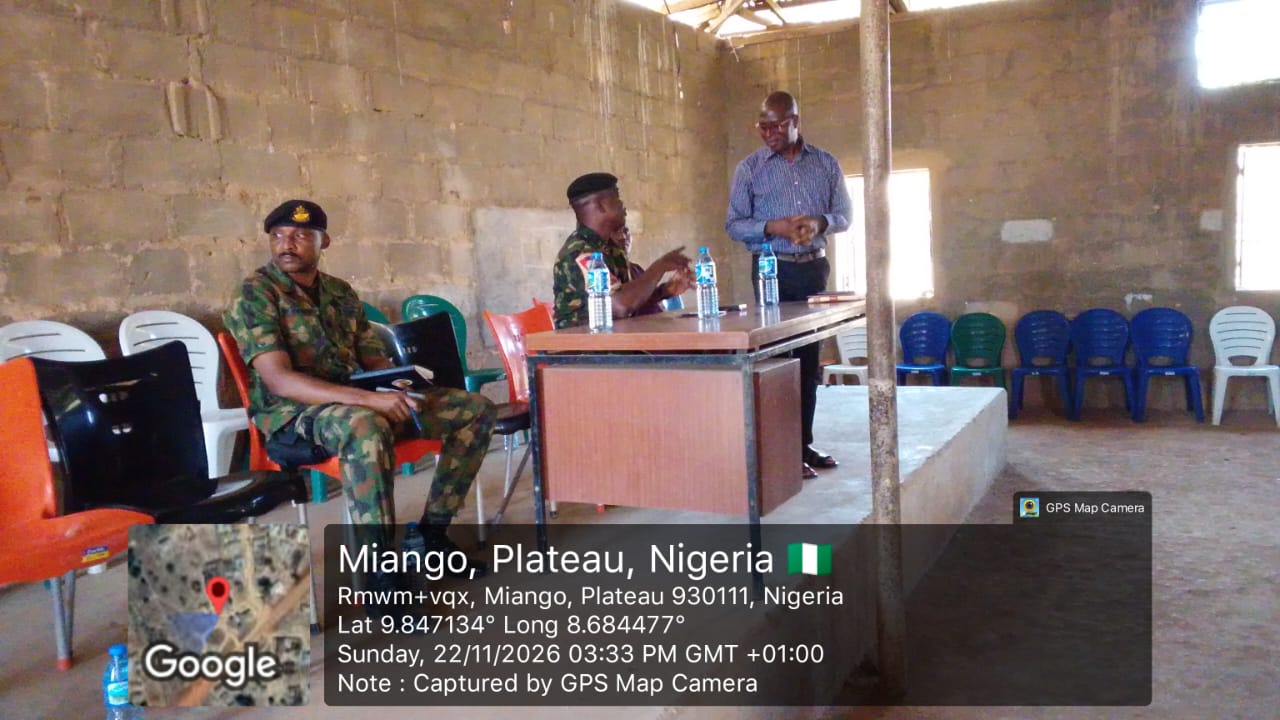
The General Officer Commanding (GOC) 3 Division Nigerian Army and Commander of Operation Enduring Peace (OPEP), Maj.-Gen. W.M. Dangana, has engaged Irigwe youths in Miango, Bassa Local Government Area of Plateau State, as part of efforts to address security concerns and strengthen peaceful coexistence in the area.
The engagement, held at about 3:20 p.m. on November 22, 2026, at the ECWA Community Hall in Miango, provided an opportunity for the military leadership and the youths to discuss critical security challenges affecting the community and possible measures to address them.
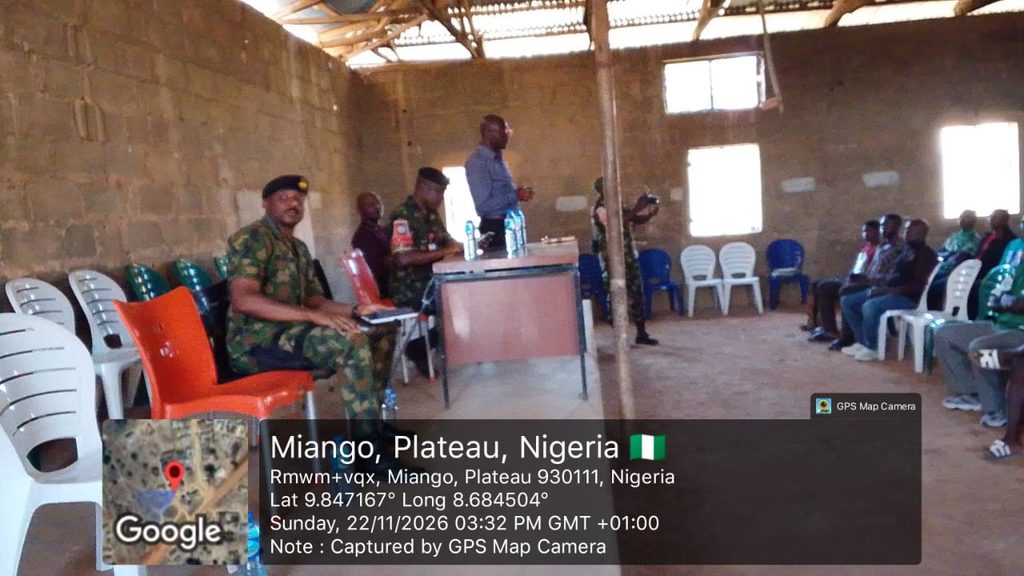
During the meeting, Maj.-Gen. Dangana emphasised the importance of dialogue, mutual understanding and peaceful resolution of disputes in addressing grievances and preventing further escalation of tensions.
He stressed that sustained peace could only be achieved through cooperation between communities, security agencies and other relevant stakeholders.
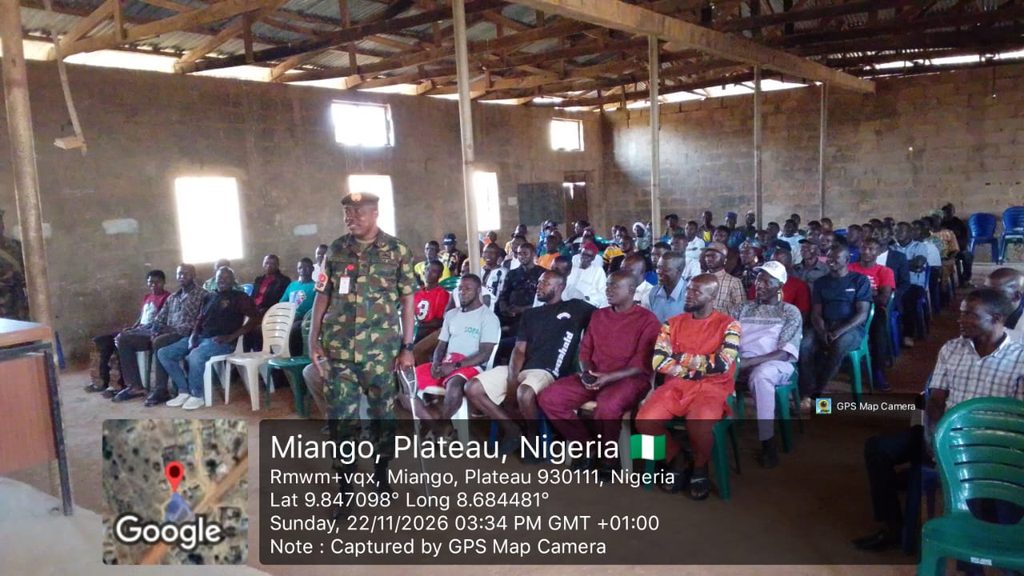
The GOC urged the youths to embrace peaceful means of resolving disagreements rather than resorting to actions capable of undermining security and stability in their communities.
The engagement forms part of ongoing efforts by Operation Enduring Peace to strengthen community relations, build confidence and promote collaborative approaches to addressing security challenges across Plateau State.
GOC 3 Division Engages Irigwe Youths, Urges Dialogue to Sustain Peace in Plateau
Troops Foil Attack on Man by Angry Youths in Plateau, Victim Sustains Machete Injuries
By: Zagazola Makama
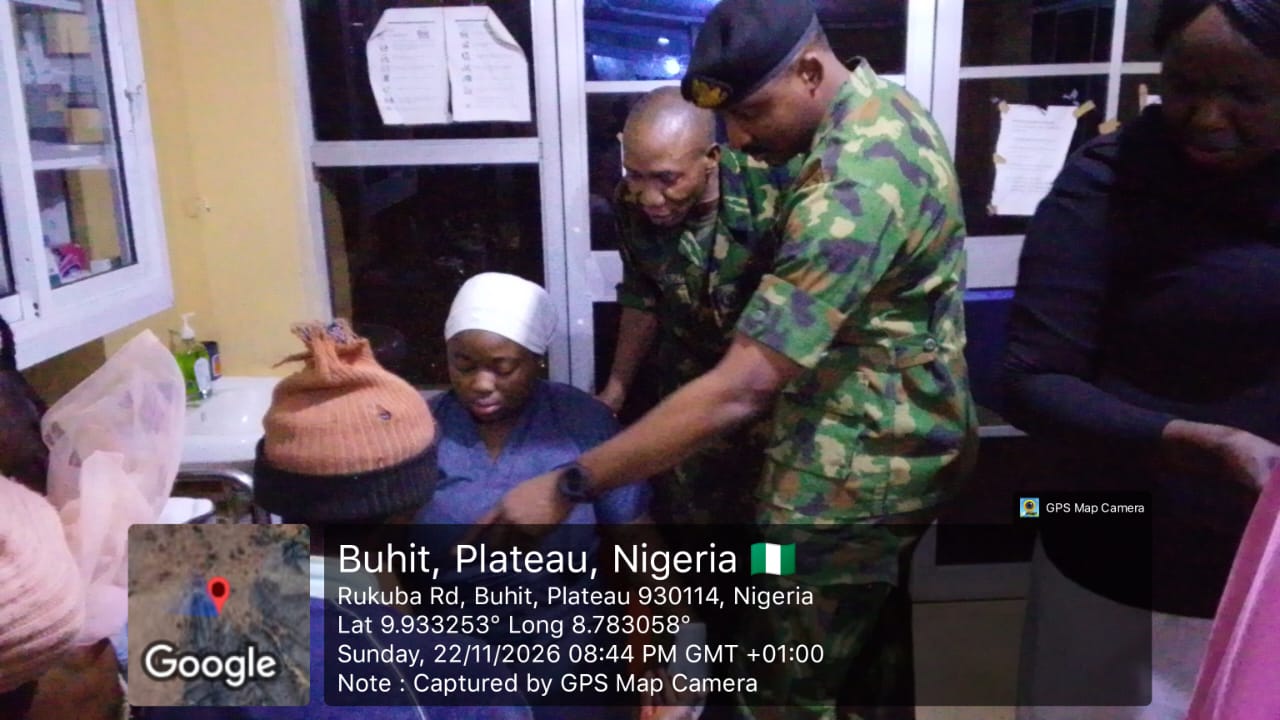
Troops of Operation Enduring Peace (OPEP) have responded to an assault on a 35-year-old man, Nuhu Alhassan, by suspected angry youths in Bagama Village, Katumei area of Bassa Local Government Area of Plateau State.
Security sources said the incident occurred at about 6:30 p.m. on November 22, 2026, when troops deployed at DTV under Sector 3 of OPEP received a report that Alhassan was being attacked by some youths in the community.
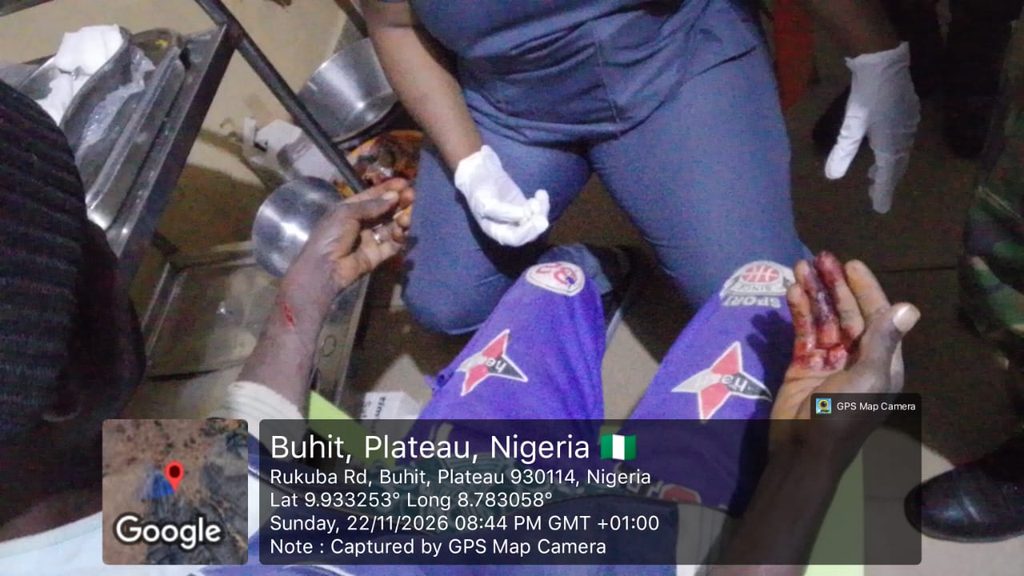
The troops swiftly mobilised to the scene, forcing the attackers to flee on sighting their arrival.
However, the victim sustained machete cuts to his hand during the assault and was evacuated to the 3 Division Medical Services and Hospital (3 DMSH) for medical attention.
The sources said efforts were ongoing to apprehend the fleeing suspects and establish the circumstances surrounding the attack.
Operation Enduring Peace continues to sustain security operations across Plateau State to protect lives and property and prevent the escalation of communal tensions.
Troops Foil Attack on Man by Angry Youths in Plateau, Victim Sustains Machete Injuries
UNAIDS Warns Funding Cuts Threaten Decades of HIV Gains, Nigeria Among Most Exposed
By: Michael Mike
Global progress in combating HIV/AIDS is under serious threat from declining international funding, shrinking prevention programmes and the closure of community-based services, with Nigeria among countries heavily dependent on external support to sustain its HIV response.
The Joint United Nations Programme on HIV/AIDS (UNAIDS) warned that funding cuts and growing restrictions on civil society organisations could reverse decades of progress against the epidemic, exposing millions to new infections and preventable deaths.
In a new report, Ending AIDS Starts with Access, released to mark its 30th anniversary, UNAIDS said the world was increasingly at risk of a resurgence of HIV as critical prevention services, outreach programmes and health systems came under pressure from shrinking resources.
The agency said resources available for HIV programmes in low- and middle-income countries fell by more than $1 billion in 2025, leaving an annual funding gap of $4.3 billion needed to keep the world on track towards ending AIDS as a public health threat by 2030.
Nigeria emerged among the countries facing particularly severe financing vulnerabilities, with external resources accounting for approximately 98 per cent of its HIV funding, according to the report.
The report said the funding crisis was already undermining access to preventive medicines, condoms, testing, treatment support and community-based services, warning that the consequences could extend beyond the immediate period of financial disruption.
UNAIDS Executive Director, Winnie Byanyima, said the world was heading towards a preventable crisis by dismantling programmes that had helped significantly reduce HIV infections and deaths.
“We know what happens when HIV prevention collapses. People become infected, treatment needs rise, costs soar and lives are lost,” she warned.
Byanyima said the closure of clinics, loss of outreach workers and denial of access to preventive services could translate into new infections, particularly among vulnerable populations.
The warning comes amid a sharp deterioration in HIV prevention coverage, with the report documenting declining access to pre-exposure prophylaxis (PrEP), condoms and voluntary medical male circumcision, despite the availability of increasingly effective prevention tools.
UNAIDS said approximately 446,000 fewer people accessed oral PrEP in 2025 than the previous year across reporting countries, while condom distribution declined from three billion in 2024 to 2.7 billion in 2025.
Voluntary medical male circumcision, another proven HIV prevention intervention, also recorded a 53 per cent decline in procedures across priority countries within the same period.
Access to PrEP among key populations reportedly dropped by 59 per cent among sex workers, 58 per cent among people who inject drugs, 23 per cent among transgender people, and 17 per cent among gay men and other men who have sex with men.
Against an estimated 20 million people requiring PrEP by 2030, only 2.6 million had access in 2025, underscoring the widening gap between available prevention technologies and those able to benefit from them.
Byanyima said the situation was particularly troubling because scientific advances had created opportunities to significantly reduce new infections, including long-acting HIV prevention medicines.
“HIV infections do not happen because prevention tools do not exist. They happen when people cannot access those tools,” she said, describing the funding cuts as unacceptable at a time when breakthrough innovations could protect millions.
The report also highlighted the weakening of community-led HIV services, with civil society organisations facing funding withdrawals, operational restrictions and shrinking civic space in several countries.
A study cited by UNAIDS found that more than three-quarters of surveyed civil society organisations experienced service disruptions, while over 80 per cent were operating at less than half their capacity by the end of 2025.
Byanyima said community organisations remained critical to reaching people often excluded from formal healthcare systems, warning that their disappearance would erode trust, limit access to services and cost lives.
She said community clinics and outreach workers were often the bridge between health systems and people most vulnerable to HIV, stressing that their contributions could not be treated as optional in national responses.
The funding crisis is further compounded by mounting fiscal pressures in developing countries, where debt obligations and limited public resources make it difficult to replace lost donor support.
UNAIDS said data from 55 countries showed increased domestic HIV spending in response to the crisis, but many governments lacked the fiscal capacity to absorb international funding losses quickly enough to prevent disruptions.
In sub-Saharan Africa, the financing challenge is particularly acute. Western and Central Africa rely on external sources for about 90 per cent of HIV treatment financing, while donor dependence accounts for approximately 98 per cent of HIV resources in Nigeria, 94 per cent in Mozambique and 80 per cent in Uganda.
External funding also accounts for virtually all reported HIV prevention expenditure in Eritrea and Zambia, 98 per cent in Nigeria, 94 per cent in Mozambique and Namibia, 93 per cent in Ethiopia, 88 per cent in Uganda and 86 per cent in Malawi.
UNAIDS warned that the full consequences of the funding disruptions might not yet be reflected in current HIV statistics because of the time lag between the withdrawal of services and the resulting infections, treatment interruptions, illness and deaths.
Already, fewer HIV tests are being conducted, laboratory services are weakening, treatment initiation is declining and support systems helping patients remain on treatment are being dismantled.
Declining viral-load and CD4 testing, the agency said, could compromise the ability of health workers to detect treatment failure, identify advanced HIV disease and intervene before patients develop life-threatening complications.
The report estimated that 3.4 million people globally were living with advanced HIV disease in 2025, representing about eight per cent of the total population living with HIV.
It cited a recent review which found that one in eight people presenting with advanced HIV disease died within a year, with most deaths occurring within the first three months.
A study across six countries also recorded a 35 per cent decline in CD4 testing between 2024 and 2025, while other analyses showed viral-load testing reductions ranging from 16 to 68 per cent.
The decline in diagnostic and monitoring services, UNAIDS said, threatened early detection of advanced disease and access to interventions including tuberculosis screening, cryptococcal meningitis screening and prompt treatment optimisation.
Despite the setbacks, UNAIDS said the 2030 target of ending AIDS as a public health threat remained achievable if governments urgently strengthen domestic financing, protect community services and remove barriers to access.
It estimated that achieving the target could prevent 3.2 million new HIV infections and avert 1.3 million AIDS-related deaths by the end of the decade.
The agency called for HIV programmes to be prioritised within national health systems, with services integrated into inclusive, rights-based healthcare frameworks and efforts intensified to tackle stigma, discrimination and exclusion.
It stressed that communities, people living with HIV, women, young people and key populations must be at the centre of the response, particularly in reaching those most likely to be left behind by conventional health services.
UNAIDS said the challenge was no longer simply the absence of scientific solutions but the failure to ensure that life-saving prevention, testing, treatment and support reached the people who needed them.
The agency warned that without urgent action to restore funding, sustain prevention programmes and protect community-led services, the world risks reversing decades of progress and turning a preventable HIV resurgence into a devastating public health crisis.
UNAIDS Warns Funding Cuts Threaten Decades of HIV Gains, Nigeria Among Most Exposed

GOC 3 Division Engages Irigwe Youths, Urges Dialogue to Sustain Peace in Plateau

Troops Foil Attack on Man by Angry Youths in Plateau, Victim Sustains Machete Injuries

2027: THE SILENT WAR FOR POWER! How Political Tensions, Opposition Campaigns, and the Bamayi Syndrome Could Shape Tinubu’s and Shettima’s Fate

Roger Federer’s Shock as DNA Results Reveal Myla and Charlene Are Not His Biological Children

THE PLIGHT OF FARIDA

FAILED COUP IN BURKINA FASO: HOW TRAORÉ NARROWLY ESCAPED ASSASSINATION PLOT AMID FOREIGN INTERFERENCE CLAIMS
-
 News3 years ago
Roger Federer’s Shock as DNA Results Reveal Myla and Charlene Are Not His Biological Children
-
Opinions5 years ago
THE PLIGHT OF FARIDA
-
 News2 years ago
FAILED COUP IN BURKINA FASO: HOW TRAORÉ NARROWLY ESCAPED ASSASSINATION PLOT AMID FOREIGN INTERFERENCE CLAIMS
-
 Opinions5 years ago
POLICE CHARGE ROOMS, A MINTING PRESS
-

 News3 years ago
EYN: Rev. Billi, Distortion of History, and The Living Tamarind Tree
-

 ACADEMICS3 years ago
A History of Biu” (2015) and The Lingering Bura-Pabir Question (1)
-

 Columns3 years ago
Army University Biu: There is certain interest, but certainly not from Borno.
-

 Politics1 year ago
2027: Why Hon. Midala Balami Must Go, as Youths in Hawul and Asikira/Uba Federal Constituency Reject ₦500,000 as Sallah Gift
