
News
Nigeria’s Skills Crisis Deepens as Government, Experts Push Urgent Overhaul of Technical Education

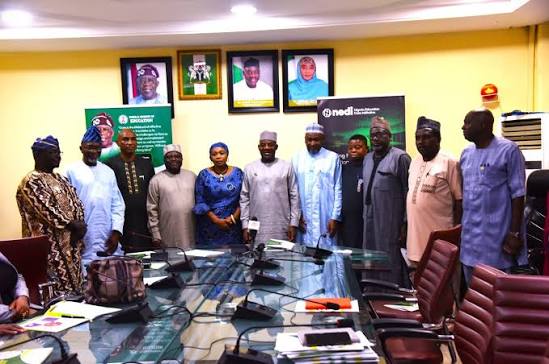
Nigeria’s Skills Crisis Deepens as Government, Experts Push Urgent Overhaul of Technical Education
By: Michael Mike
Growing concerns over Nigeria’s widening skills gap took centre stage in Abuja on Wednesday, as education stakeholders warned that the country risks undermining its industrial ambitions without a radical overhaul of its technical training system.
At a high-level session of the BEAR III Programme convened by United Nations Educational, Scientific and Cultural Organisation (UNESCO), the Federal Ministry of Education Nigeria acknowledged that current training models are failing to keep pace with the rapidly evolving demands of industry—particularly in agro-processing, a sector seen as critical to job creation and economic diversification.
Director of Technology and Science Education, Mrs. Patricia Ogungbemi,, delivered a blunt assessment: Nigeria is producing graduates who are increasingly disconnected from the realities of modern workplaces.
While investments in infrastructure and technology have grown, she warned that the human capacity needed to drive those systems remains weak.
“There is a dangerous mismatch between what is taught and what is required,” she said. “Machines are evolving, industries are advancing, but the workforce is not keeping up at the same speed.”
Ogungbemi pointed to emerging trends such as automation, smart packaging, and sustainable production systems, noting that many Technical and Vocational Education and Training (TVET) institutions have yet to integrate these realities into their curricula.
She described the ongoing Labour Market Analysis (LMA) as a critical diagnostic tool, but stressed that data alone would not solve the problem without decisive policy action and sustained funding.
“What we are confronting is not just a training issue—it is a structural challenge that affects productivity, competitiveness, and national growth,” she added.
The warning comes amid rising youth unemployment and growing frustration among employers who say graduates often lack practical, job-ready skills.
Stakeholders at the event argued that unless Nigeria urgently retools its education system to prioritise hands-on, industry-driven learning, sectors like agro-processing—despite their vast potential—may struggle to absorb the millions entering the labour market each year.
Kano State Commissioner for Education, Ali Makoda, reinforced the urgency, describing work-based learning as a “non-negotiable pathway” to addressing the crisis.
According to him, states are beginning to recognise that traditional classroom models alone cannot solve unemployment challenges.
“We must embed learning within the workplace,” he said. “The future of education is not just in classrooms, but in factories, farms, and production lines.”
Makoda said Kano State is scaling up partnerships with industry players to ensure students gain real-world experience before graduation, aligning training with both national development goals and global standards.
Despite these commitments, participants acknowledged persistent obstacles, including underfunded institutions, outdated equipment, and weak collaboration between academia and industry.
They also stressed the need for stronger private sector involvement, arguing that employers must play a more active role in shaping curricula and offering apprenticeship opportunities.
With support from international partners, including the Government of the Republic of Korea, the BEAR III initiative is expected to drive reforms in skills development, particularly in agriculture-linked industries.
However, observers said the success of such programmes will ultimately depend on Nigeria’s willingness to translate policy discussions into concrete, system-wide change.
As deliberations continue, one message remains clear: without a skilled workforce aligned to industry needs, Nigeria’s economic aspirations may remain out of reach.
Nigeria’s Skills Crisis Deepens as Government, Experts Push Urgent Overhaul of Technical Education



Kidnapped Plateau resident regains freedom after security pressure
By: Zagazola Makama
A resident of Rafiki Village in Bassa Local Government Area of Plateau State, Mr Patrick Gazu, has regained his freedom after being abducted by suspected kidnappers.
Gazu was released by his abductors following sustained pressure from troops of Sector 3, Operation Enduring Peace and other security agencies involved in the rescue operation.
He was reportedly kidnapped at about 11:57 p.m. on Sept. 30, 2025, at his residence in Rafiki Village.
Security sources said the victim has since been reunited with his family and is currently safe.
The sources added that security agencies have commenced a manhunt for the perpetrators, with efforts ongoing to track down and apprehend the criminals.
The successful release underscores the continued efforts by security forces and other agencies to rescue victims of kidnapping and disrupt criminal activities across Plateau State.
Kidnapped Plateau resident regains freedom after security pressure

Troops repel terrorist activity along Kwanar Isa–Shinkafi road in Sokoto
By: Zagazola Makama
Troops of the Nigerian Army have repelled terrorist activity along the Kwanar Isa–Shinkafi road in Isa Local Government Area of Sokoto State.
The incident occurred at about 10:35 a.m. on Sept. 29, when troops of 26 Battalion, Forward Operating Base Isa, responded to reports of terrorist activity along the road.
The troops engaged the terrorists, forcing them to withdraw from the area.
Following the encounter, the troops maintained patrols and dominated the area to prevent the terrorists from regrouping and threatening motorists and communities along the route.
Security operations remain ongoing in the area as troops continue efforts to deny criminal elements freedom of movement and strengthen security across the axis.
Troops repel terrorist activity along Kwanar Isa–Shinkafi road in Sokoto

OPWS troops repel terrorist attack, recover rustled cows in Taraba
By: Zagazola Makama
Troops of Operation WHIRL STROKE (OPWS) have repelled a suspected terrorist attack on Gwamagira settlement in Karim Lamido Local Government Area of Taraba State, recovering rustled cattle abandoned by the attackers.
The incident occurred at about 7:30 a.m. on Sept. 30, when troops of 114 Battalion (Rangers) at Andami responded to reports of suspected terrorists riding motorcycles attacking the community.
The troops engaged the attackers, forcing them to retreat and abandon the rustled cattle.
However, the troops discovered that the terrorists had killed one civilian and abducted three others during the attack.
The recovered cattle were subsequently returned to their owners, while troops launched efforts to rescue the abducted victims and apprehend the perpetrators.
Security operations are ongoing in the area as troops continue to search for the victims and pursue the fleeing attackers.
OPWS troops repel terrorist attack, recover rustled cows in Taraba

Troops storm suspected IPOB-linked camp across treacherous waters in Anambra, recover arms, explosives materials

Kidnapped Plateau resident regains freedom after security pressure

Troops arrest suspected ISWAP member, recover ₦396,200 in Yobe

Roger Federer’s Shock as DNA Results Reveal Myla and Charlene Are Not His Biological Children

THE PLIGHT OF FARIDA

FAILED COUP IN BURKINA FASO: HOW TRAORÉ NARROWLY ESCAPED ASSASSINATION PLOT AMID FOREIGN INTERFERENCE CLAIMS
-
 News3 years ago
Roger Federer’s Shock as DNA Results Reveal Myla and Charlene Are Not His Biological Children
-
Opinions5 years ago
THE PLIGHT OF FARIDA
-
 News1 year ago
FAILED COUP IN BURKINA FASO: HOW TRAORÉ NARROWLY ESCAPED ASSASSINATION PLOT AMID FOREIGN INTERFERENCE CLAIMS
-

 News3 years ago
EYN: Rev. Billi, Distortion of History, and The Living Tamarind Tree
-
 Opinions5 years ago
POLICE CHARGE ROOMS, A MINTING PRESS
-

 ACADEMICS3 years ago
A History of Biu” (2015) and The Lingering Bura-Pabir Question (1)
-

 Columns3 years ago
Army University Biu: There is certain interest, but certainly not from Borno.
-

 Politics1 year ago
2027: Why Hon. Midala Balami Must Go, as Youths in Hawul and Asikira/Uba Federal Constituency Reject ₦500,000 as Sallah Gift
