Connect with us

News

NIPSS INDISPENSABLE IN OUR NATION’S POLICY RETOOL – VP Shettima

Published

on

NIPSS INDISPENSABLE IN OUR NATION’S POLICY RETOOL – VP Shettima
By: Our Reporter

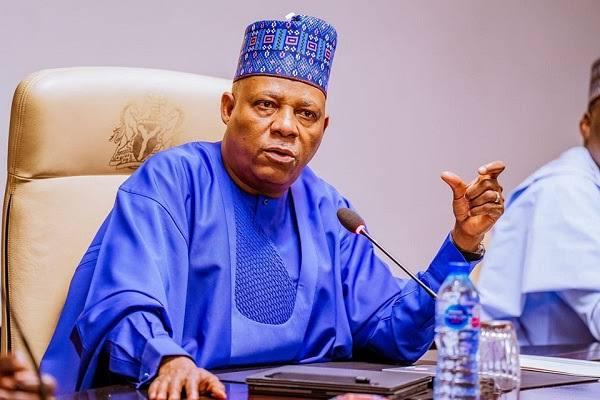
The Vice President, Sen Kashim Shettima, has assured that the Tinubu administration will reposition the National Institute for Policy and Strategic Studies (NIPSS), Kuru, for good and quality policy advice to the government.

This, he said, had become pertinent given the very crucial and indispensable role the institute would be playing in shaping and retooling government’s policies.

According to the VP, the Federal Government would make use of the beautiful recommendations brought by the institution.

Vice President Shettima gave the assurance on Tuesday when he received in audience the management team from NIPSS led by the Director General, Prof. Ayo Omotayo, at the Presidential Villa, Abuja.

He said, “We really need to recalibrate the system and see to it that all the beautiful policy recommendations by NIPSS are brought into reality, because the world is changing and the world is gradually becoming knowledge-driven.

“NIPSS is a policy think-tank for the government just as we have its equivalent in other parts of the world such as the Global Policy Institute, the Chatham House, the Adam Smith Institute, the Royal United Institute for Defence Studies in Russia, and the Hopkins Institute in the United States of America.”

VP Shettima cautioned Africa against missing the chance to fill the gap in a knowledge-driven world as she did during the agriculture and industrial revolution.

“We missed the agricultural age; Africa missed the industrial age. We are now in the knowledge-driven age. When others are talking about artificial intelligence, of bio-technology, of internet things, we are busy dwelling on farmer-herders clash and things that we ought to have overcome decades ago,” he stated.

Asking the management of the Institute to make a formal presentation of the executive summaries of all its policy recommendations to the government, Vice President Shettima said, “President Bola Ahmed Tinubu is determined to reset the national agenda. President Bola Tinubu has the courage to take far-reaching decisions.

“As much as possible, we will support you not to compromise on your quality, not to compromise on your standard, so that you should not be a dumping ground for frustrated public officers because, at a point in time, that was what NIPSS degenerated into.

“If somebody is going to be punished then he is sent to NIPSS for a year. Somebody with such a mindset can hardly absorb what you are going to teach. So, this time around, as much as possible, we will minimise political patronage and send credible people within the required age bracket, within the required professional cadre so that whatever experiences and exposure they gain can be translated into the governance structure.”

Earlier in his remarks, the Director General of NIPSS said his management team came to brief the Vice President on the operations of the institute, adding that the organisation was established in 1979 to advise government on several policy directions and train high profile policy makers in the country.

His words, “There is no problem in the country that NIPSS has no solution to. NIPSS supports the Presidency in terms of policy. It deals with all sectors of the economy.”

According to Prof Omotayo, the Vice President oversees the administration of NIPSS, approves the nominees to be trained, as well as approve the course of study for the session.

Those in the delegation were Brig Gen L Y Udaya (rtd); Prof Fumi J. Para-Mallam; Prof Dung Pam Sha; Codr S Dahun; Prof Sola Adeyanjin; Bawa Ahmed and Dr Catherine Maduagwu.

NIPSS INDISPENSABLE IN OUR NATION’S POLICY RETOOL – VP Shettima

Continue Reading
Click to comment

Leave a Reply

Your email address will not be published. Required fields are marked *

News

Plateau survivors recounts lynching as reprisals as reprisals fuel fresh killings

Published

on

Plateau survivors recounts lynching as reprisals as reprisals fuel fresh killings

By: Zagazola Makama

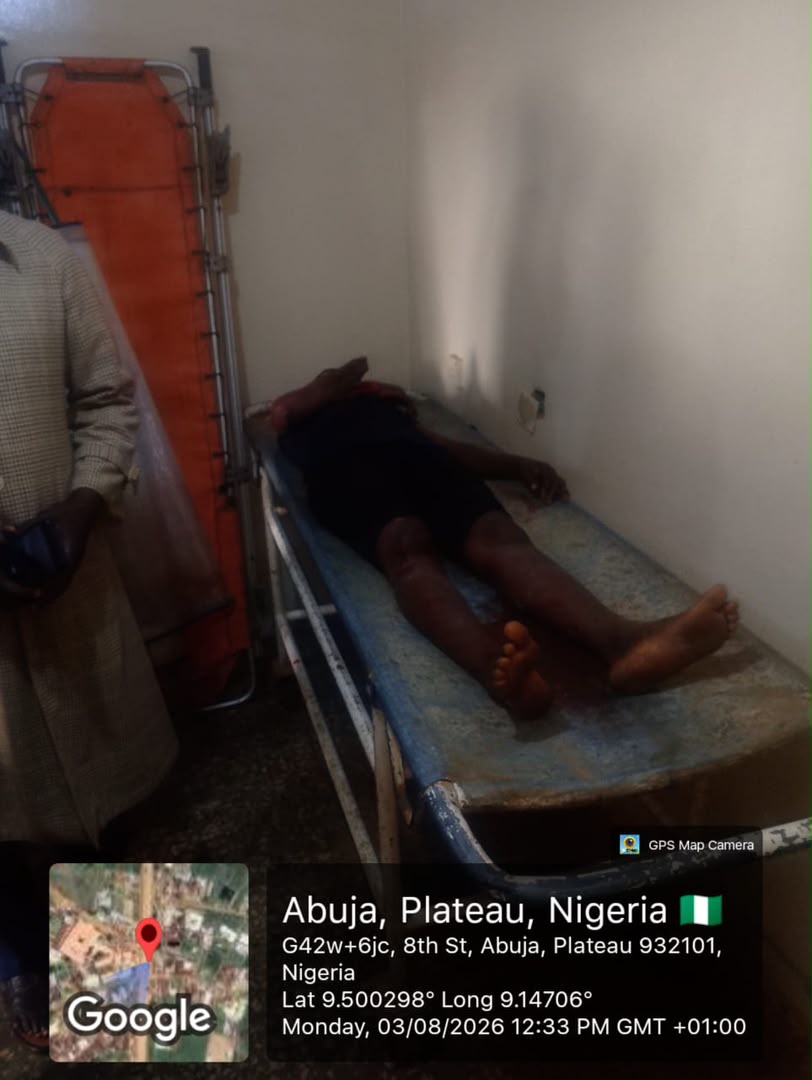
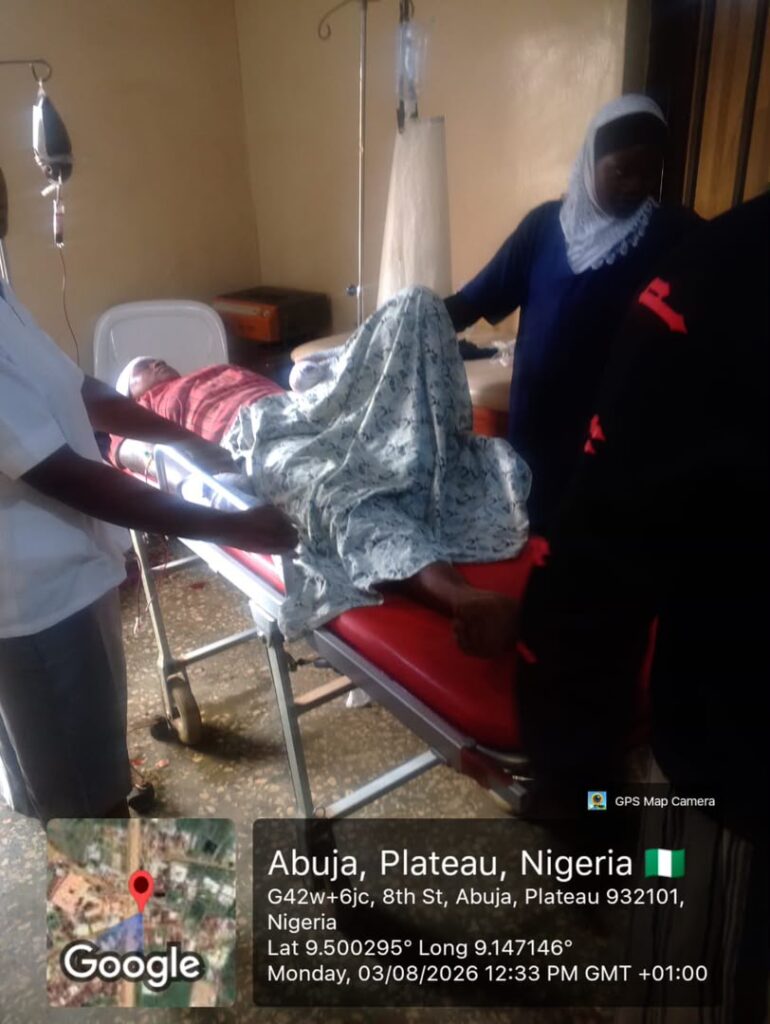
A survivor of the recent roadside killings in Barkin Ladi Local Government Area of Plateau has narrated how five commuters from Jos North were killed after their vehicle was intercepted by suspected youths along the Nding axis.

The incident occurred hours after seven persons were reportedly killed in Ratatis community, Dorowa Babuje, by suspected armed Fulani bandits.

Sources confirmed that a passenger Opel Vectra conveying civilians was stopped at a road blockade mounted by suspected Berom youths. Four passengers were reportedly killed on the spot, while a fifth later died from injuries.
All the victims were identified as Hausa residents of Gangare in Jos North. They were said to be traders travelling to Pankshin for their businesses.

Abdulalim Ibrahim, one of the survivors, said the attackers demanded to know their identities before opening fire.

“We were heading to the market in Pankshin when we were stopped by the protesters and asked who we were. The driver tried to calm them and told them we were all one. But the protesters rejected. Suddenly, there was gunfire. One person sitting at the back seat was shot inside the car while four others were dragged out by the youths,” he said.

They dragged others out of the vehicle and began shooting at them. I immediately told the driver to drive off with speed and leave the scene. When we arrived in Mangu, we contacted our parents and family friends. We were advised to go to the nearest security outfit, where soldiers were attached to provide security for us.

When we later saw the victims, they had been brutally killed. Some were burnt, while others were mutilated. They were later evacuated to Barkin Ladi, where prayers were offered for them.

Muazu Saidu, Co-survivor, said Everything he said is true. We were all in that vehicle. The victims were innocent businessmen. One of them, Baba Karami Zakari, had just welcomed a newborn child. All of them have families.”

He stated that the victims included Uwaisu, Jubril, Zakari, Shamsu and Zubairu. They were businessmen. One of them, Baba Karami Zakari, just had a newborn child. They all had families,” he said.

Religious leaders have also appealed for calm. The Regional Chairman of the Church of Christ in Nations (COCIN) in Barkin Ladi, Rev. Ezekiel Dachomo, called on youths and community members to exercise restraint and avoid escalating tensions. Rev Dachomo also avoid speaking about the killing of the five traders whose only crimes was being caught in retaliatory or identity-driven violence.

The Commissioner of Police (COMPOL), Plateau State Police Command, visited key black spots across Jos North and held consultations with stakeholders, including the palace of Ujah Anaguta, Chairman of the Jos North Traditional Rulers Council. The police assured the royal father of their commitment to maintaining law and order and urged him to ensure stability within his domain. The COMPOL also engaged leadership of the Jos Central Mosque, the Executive Chairman of Jos North LGA, and other community leaders to prevent any breakdown of law and order.

Gov. Caleb Mutfwang strongly condemned the Dorowa Babuje killings, through the Commissioner for Information, Mrs Joyce Ramnap, describing them as “barbaric and senseless,” and directed security agencies to intensify operations to crack down on attackers.

However, his official statement did not specifically acknowledge the five commuters killed in the reprisal. Both incidents involved civilians. Both involved families. Yet public response has not appeared equally forceful.

When governments appear to condemn one set of killings more loudly than another, it reinforces the narrative that some lives matter more than others. In a state already fractured along ethnic and land-based fault lines, perception quickly becomes fuel. In Plateau, violence no longer erupts in isolation. It unfolds in patterns, attack, retaliation, silence, and then another burial.

Plateau’s crisis is no longer a simple farmer-herder conflict. It has mutated into two parallel but interconnected threats: Armed Fulani bandits who raid rural communities, burn homes and kill farmers to Local Militia-style who attack civilians based on identity and carry out targeted killing under the guise of community protection. Both are unlawful. Both are criminal. Both are banditry and both thrive in the absence of swift and visible justice.

The latest killings mirror previous incidents in Plateau where civilians were attacked following broader communal violence. Yet years of the same pattern of recurring violence, from Rukuba Road in 2021 to Mangu in 2025 and now Barkin Ladi in 2026, have produced more funerals than convictions. Victims and families continue to ask a simple question: who has been punished?

On Plateau roads, language, name, or perceived ethnic affiliation can determine survival. Innocent traders travelling to markets, students heading to weddings, worshippers returning from religious events, all become symbolic targets in a war they did not start.

When perpetrators are not publicly prosecuted, deterrence collapses. When local militia continue to carry out targeted killings without consequence, impunity becomes normalised. When reprisals are not unequivocally condemned, they are quietly rationalised. This is how identity becomes a death sentence.

Government inaction or even the perception of partiality does not calm such a situation. It complicates it. It hardens narratives. It emboldens extremists on all sides. Peace cannot be selective. Justice cannot be ethnic. Condemnation cannot be conditional.

If Plateau is to escape this recurring nightmare, the state must confront both armed bandits in the forests and militia from within its communities with equal firmness. Anything less will only deepen the crisis.

Plateau survivors recounts lynching as reprisals as reprisals fuel fresh killings

Continue Reading

News

APC Leaders, Govs Recommit To Advancing President Tinubu’s Renewed Hope Agenda

Published

on

APC Leaders, Govs Recommit To Advancing President Tinubu’s Renewed Hope Agenda

We’re shifting from stabilisation to acceleration in 2026, Says VP Shettima

Urges reconciliation, unity among party leaders to move Nigeria forward

By: Our Reporter

State governors on the platform of the governing All Progressives Congress (APC) and other leaders of the party have recommitted to boosting grassroots mobilisation in order to promote and advance the Renewed Hope Agenda of the administration of President Bola Ahmed Tinubu.

This is just as the Vice President, Senator Kashim Shettima, has said the Tinubu administration has shifted focus from stabilisation in 2025 to acceleration in 2026, with the N58.18 trillion 2026 budget anchoring the new phase.

The governors and other party leaders made the recommitment on Tuesday in Abuja during the PGF Renewed Hope Ambassadors Summit 2026 held at the State House Conference Centre of the Presidential Villa.

Senator Shettima who represented President Tinubu at the Summit told the party leaders, governors under the aegis of Progressive Governors’ Forum (PGF), and the Renewed Hope Ambassadors that the moment calls for reflection on the administration’s reforms, the sacrifices made and the responsibilities to translate vision into measurable impact for Nigerians.

“As we advance into 2026, our focus shifts from stabilisation to acceleration. The N58.18 trn budget shall anchor this new phase. A record capital expenditure, the largest allocation to national security in the history of our country and prudent revenue projections, we are scaling growth while strengthening resilience,” he said.

The Vice President noted that the administration’s landmark tax reforms were “introduced to protect the vulnerable, encourage enterprise and entrench transparency in public finance.”

He cited the recent executive order affecting remittances to the federation account, saying it “is designed to safeguard federation revenues, eliminate duplicative structures, curb waste and ensure that resources are responsibly managed for maximal national benefits.”

VP Shettima pointed out that from the onset, the Tinubu administration chose the path of honesty and discipline, confronting deep-seated structural distortions, even as he said the decision has “restored fiscal credibility, stabilised the economy and set the foundation for long term economic growth.

“Today, we are seeing clear signs that our reforms have began to yield results. Inflationary pressures are moderating, fuel prices are easing, our currency is strong and stable,” he stated.

Noting that the economy is picking up under President Tinubu, the Vice President said out of “the seven major investment decisions made in 2025 in Africa, five were drawn in Nigeria,” a development he said shows “the strength, viability and the promise of the Nigerian economy.”

He however observed that no reform can succeed without public understanding and participation, just as he identified the communication gap as “the strategic importance of the Renewed Hope Ambassadors.”

Reminding them of their function duty, the VP said, “This platform shall serve as the avenue for civic engagement. Ambassadors must explain why tough decisions had to be made and how they lead to jobs, security, enterprise, opportunities and a more stable future.

“They must counter misinformation with facts, replace rumour with evidence and ensure that Nigerians from across the country have access to the truth. They must also serve as the channel for feedback, bringing community concerns and lived experiences back to government.”

Senator Shettima tasked the Renewed Hope Ambassadors on wider outreach, saying they must “move beyond conference centres to the wards, markets, and campuses, across the country.

“This mission is about presence, truth and trust. Elections are not conducted on social media platforms, they conducted by Nigerians who will… This summit affirms our commitment to a shared future of promise and peace for all Nigerians. Together we will continue translating reforms into opportunities, policy into impact and sacrifice into renewed hope,” he added

Citing the situation in Benue State as an instance, the Vice President further stressed the need for reconciliation and unity among party leaders, urging them to mend fences and move their state forward.

“I want to use this special forum to make appeal to the SGF and Governor Alia to mend fences and move the state forward,” he stated.

Earlier, National Chairman of the APC, Prof. Nentawe Yilwatda, regretted that despite significant infrastructure projects delivered by the Tinubu administration and state governments, the party’s achievements had not been visible due to poor communication.

“Good governance without communication is invisible. I’ve visited many states. I’ve seen beautiful projects, beautiful things being done, but they’re invisible and not communicated,” he lamented.

Yilwatda stressed the need for effective communication, which he said is critical to translating governance achievements into political capital, explaining that it was the reason forestablishing the Renewed Hope Ambassadors structure.

In his address, Chairman of the Progressive Governors Forum and Director-General of the Renewed Hope Ambassadors, Governor Hope Uzodinma of Imo State, said stakeholders are on the ground to trigger a process that will unify the APC structure into a stronger and more united political family.

He assured that through the summit, stakeholders have chosen Nigeria’s long-term stability over short-term applause, necessitating patriotic and accurate communication of the current administration’s socio-economic development efforts thereby earning citizens’ trust at the grassroots.

“Lack of citizen understanding creates perception gaps,” he said, noting, for instance, that food prices have drastically reduced in the markets, while Nigeria has moved away from chronic oil and gas underproduction, citing the Dangote Refinery and other indigenous firms.

Also, Secretary to Government of the Federation, Senator George Akume, advised authorities to allow members of the public to “add value” to what the party is doing across the nation.

For his part, Minister of Budget and Economic Planning, Atiku Bagudu, said the Renewed Hope Agenda is a message that is unifying the nation.

The Minister of Finance and Coordinating Minister of the Economy, Wale Edun, on behalf of members of the Federal Executive Council, expressed heartfelt appreciation to President Tinubu for choosing them as part of his team.

Looking forward to the upcoming second term, he said they are delighted to continue working tirelessly to ensure that the next chapter of the reforms under the Renewed Hope Agenda are even more transformative, thereby creating more jobs and attracting more investments into the nation’s economy

APC Leaders, Govs Recommit To Advancing President Tinubu’s Renewed Hope Agenda

Continue Reading

News

Experts Urge Evidence-Based Energy Reforms as Nigeria’s Transition Debate Intensifies

Published

on

Experts Urge Evidence-Based Energy Reforms as Nigeria’s Transition Debate Intensifies

By: Michael Mike

Energy policy experts have called for stronger data-driven decision making in Nigeria’s energy transition process, warning that ambitious climate targets must be balanced with economic realities, job security, and the country’s persistent energy access challenges.

The call was made during a national policy dialogue where researchers presented findings on the economic, environmental, and political implications of different energy transition pathways for Nigeria.

At the event, the Stakeholders Research Workshop on Supporting Just Transition in Nigeria, organized on Tuesday in Abuja by the Ministry of Environment and Society for Planet and Prosperity (SPP), analysts said the study was designed to help guide policymaking by providing empirical insights into how various decarbonisation strategies could impact growth, employment, and emissions.

President of the Society for Planet and Prosperity, Professor Chukwumerije Okereke, said Nigeria’s existing commitments under its Nationally Determined Contributions (NDCs) and Energy Transition Plan (ETP) are ambitious but require stronger technical validation before full implementation.

He noted that current projections suggesting up to 85 percent adoption of electric vehicles by 2060 and large-scale solar electricity generation of about 150 gigawatts may be difficult to achieve under current infrastructure and investment conditions.

“Policy targets are not enough on their own,” Okereke said. “What matters is how these targets will be achieved and what the economic and social consequences will be.”

He added that the research explores multiple transition scenarios, including gas-centered development, renewable-focused expansion, and hybrid energy strategies combining both gas and renewable technologies.

According to him, a balanced transition pathway may be more realistic for Nigeria, allowing the country to gradually reduce emissions while still leveraging its vast natural gas resources to support industrial growth and electricity access.

Researchers also emphasized that Nigeria’s transition strategy must address energy poverty, noting that millions of households still lack reliable electricity supply. They said distributed renewable energy systems, particularly solar mini-grids, could play a crucial role in expanding electricity access to rural and underserved communities.

Energy economists involved in the study explained that their analysis combined energy modelling with macroeconomic projections to assess how different policy choices would influence GDP growth, employment creation, and carbon emissions.

Senior Research Fellow, ODI Global, Dr. Timothy Kelsall said the research does not attempt to predict future outcomes but instead evaluates possible consequences of policy decisions.

“We are not predicting the future,” Kelsall said. “We are showing policymakers what could happen under different scenarios so they can make informed decisions.”

He explained that the study models three major transition pathways — gas-focused transition, renewable-dominated transition, and hybrid energy development — noting that each pathway would create different economic and political impacts across sectors.

Analysts also stressed that energy transition policies must consider Nigeria’s political economy realities, as policy reforms often create winners and losers across industries and interest groups.

Experts warned that abrupt policy changes could trigger economic disruptions, particularly in regions and sectors heavily dependent on fossil fuel revenues. Instead, they recommended a gradual transition supported by investment incentives, industrial development policies, and workforce reskilling programs.

The research also examined the use of savings from fuel subsidy reforms, noting that simply removing subsidies without clear reinvestment strategies would not automatically translate into development gains.

Stakeholders said subsidy savings could be redirected toward renewable energy infrastructure, social protection programs, and industrial development initiatives that support economic diversification.

While Nigeria continues to depend heavily on oil and gas exports for foreign exchange earnings, analysts said diversification efforts remain critical for long-term economic stability.

However, they stressed that natural gas could play a transitional role in supporting electricity generation and industrial expansion while renewable energy capacity continues to grow.

Researchers urged stronger collaboration between government institutions, private sector investors, and civil society organisations to ensure successful implementation of transition policies.

As Nigeria navigates its climate and energy future, experts say the country must pursue a pragmatic energy strategy that balances environmental protection with economic growth and improved access to reliable electricity for its growing population.

Experts Urge Evidence-Based Energy Reforms as Nigeria’s Transition Debate Intensifies

Continue Reading

Trending

Verified by MonsterInsights