
News
NIS: Interior Minister accused of meddling in CGIS work


NIS: Interior Minister accused of meddling in CGIS work
By: Our Reporter
Some officers and men of the Nigerian Immigration Services have decry unwantom interference in the official work of the Comptroller General of the Immigration Services, CGIS, stating that the continued political meddling and unconstitutional reelings of promotion of certain officers with impunity will soon sink the service into muddy waters unless urgent intervention is taken by the authorities.
According to reports filtering from the service, since the assumption of office, the current Minister of Interior being the supervising Minister, Olubunmi Tunji-Ojo, has caused serious irregularities using special promotions in elevating juniors over their seniors; thus, causing discord, insubordination and gross indiscipline in the service.
The Minister interferes into the day to day running of the NIS to the point of fully taking charge of officer’s postings both foreign and local and thereby reducing the CGIS to a mere rubber stamp.
“The secretary of the Board CIVIL DEFENCE, CORRECTIONAL, FIRE AND IMMIGRATION SERVICES BOARD Mr Jaafar Ahmed being a retired Comptroller General of Correctional Service that is expected to have a better understanding in regiment often choose to maintain culpability.
“The serving and retired officers are aggrieved, morale is low, staff welfare is zero and renumeration of NIS is extremely poor. The charade being painted by the Minister to public domain is contrary to what is happening in the service, officers are dying in silence.” An impeccable source from the service told newsmen in Abuja.
It was gathered that, Immigration Officers serving at various foreign missions abroad are also suffering due to non-payment of statutory allowances.
“The Officers got their 2024 first quarter allocation (January to March) in September while the returning Officers passages were grossly shortchanged.
” The figures paid are unrealistic contrary to the laid down chart that is often used in the computation of the said passages used by MDAs in foreign missions. All these periods, no formal communication between the NIS leadership and their officers abroad, most of the officers have become beggars and borrowers.” Another source revealed.
Seniority has been destroyed by the present leadership. Senior Assistant Comptroller Generals that are supposed to oversee Directorates at Headquarters are posted out while their juniors are meant to oversee Directorates.
“This impunity goes under special promotion in that in 2023
ADESHOKAN ADEOLA was not due but was specially promoted from the rank of Comptroller of Immigration to Assistant Comptroller General. BASHIR AMINU was barely one year on his rank as Assistant Comptroller, was given special promotion to Deputy Comptroller.
” In 2024, Olaiya Titilayo Opeyemi was mysteriously catapulted from the rank of Deputy Comptroller to Assistant Comptroller General. Nene Orupabo was given special promotion in January 2024 to Deputy Comptroller and in October 2024 another special promotion to the rank of Comptroller. Bagari Dauda Mohammed was also a recipient of the scandalous special promotion from Comptroller to Assistant Comptroller General.
” All these officers were not due for next respective ranks when they were promoted. Officers and men of NIS are calling on concerned authorities like SGF, ICPC, Head of Service and National Assembly to come to their aid to address these issues before the service completely sink.” Our source said.
NIS: Interior Minister accused of meddling in CGIS work


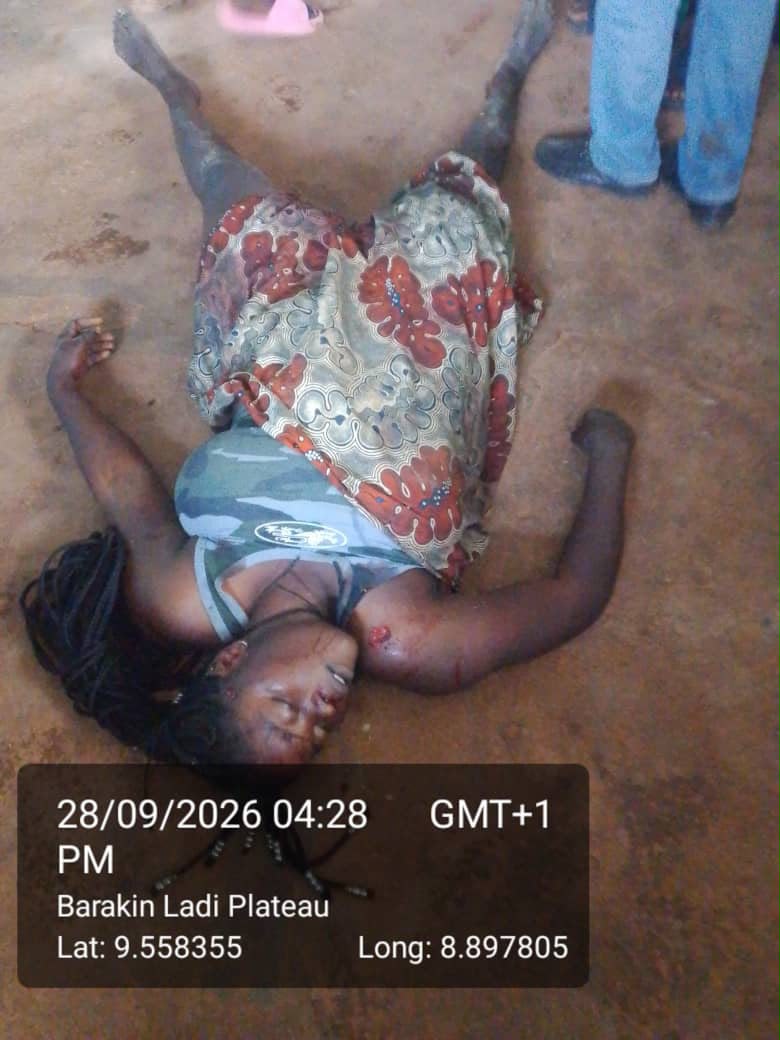
Two women killed, another injured in suspected armed Fulani attack in Barkin Ladi
By: Zagazola Makama
Two women were reportedly killed while another sustained gunshot wounds in an isolated attack allegedly carried out by suspected Fulani bandits along a road in Rakung village, Barkin Ladi Local Government Area of Plateau State.
Security sources told Zagazola Makama that the incident occurred at about 3:50 p.m. on Sept. 28, 2026, when troops of Sector 4, Operation Enduring Peace, responded to a report of an attack on three local women.
The sources said troops deployed to the location and discovered that two of the victims had been shot dead, while the third victim, identified as Mrs. Umbulet Philip, sustained gunshot wounds.
The bodies of the two deceased victims and the injured woman were evacuated to the General Hospital, Barkin Ladi, for medical attention and further procedures.
Following the attack, the troops activated a manhunt for the assailants and commenced efforts to track down those responsible.
The latest incident adds to the growing security concerns in parts of Barkin Ladi, where attacks on civilians and retaliatory violence have continued to heighten tensions between communities.
Two women killed, another injured in suspected armed Fulani attack in Barkin Ladi

DSS secures death sentence against kidnap suspect over killing of three persons in Sokoto
By: Zagazola Makama
The Department of State Services (DSS) has secured a death sentence against Ibrahim Usman, also known as Dan Iyali, over his alleged involvement in the kidnapping and killing of three persons in Sokoto State in 2023.
Usman was prosecuted before the High Court of Justice of Sokoto State, Sokoto Judicial Division, alongside other suspects who are currently at large.
The charges brought against him included criminal conspiracy, kidnapping, culpable homicide punishable with death, and voluntarily causing grievous hurt without provocation.
The case was linked to an incident in September 2023 in which three persons were allegedly kidnapped and killed in Sokoto State.
Following the prosecution, the court found Usman liable on the charges and imposed the death penalty.
The development underscores the ongoing efforts by security and justice authorities to prosecute individuals accused of involvement in kidnapping, violent crime and other serious offences across the country.
The DSS has continued to pursue cases involving suspected terrorists, kidnappers and other criminal elements through the judicial process.
DSS secures death sentence against kidnap suspect over killing of three persons in Sokoto
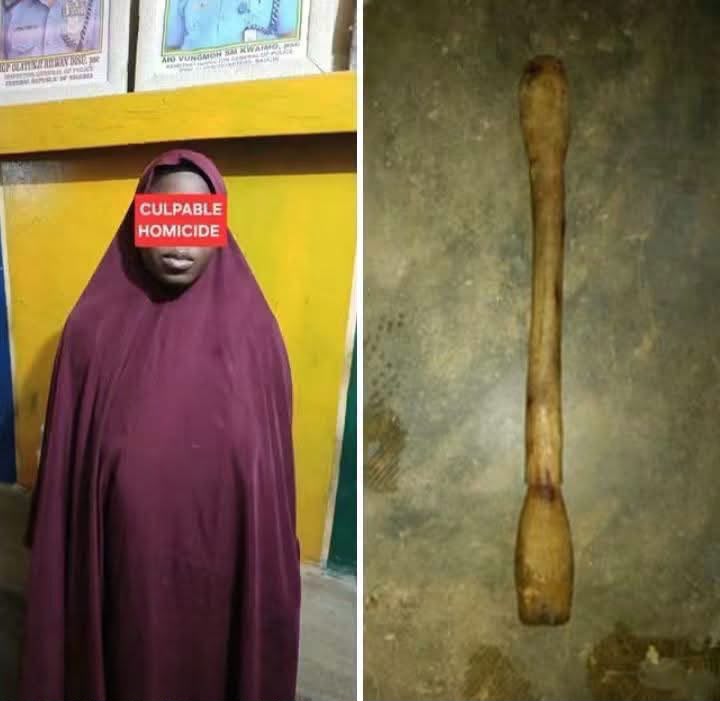
35-year-old woman allegedly k!lls her co-wife with pestle in Bauchi
By: Our Reporter
The Bauchi State Police Command has arrested a 35-year-old woman, Hauwa’u Haruna for the alleged m8rder of her co-wife, Jamila Adamu.
The spokesperson for the command, SP Nafiu Habib, who disclosed this in a statement on Monday, September 28, 2026 said the incident occurred during a domestic dispute at Tafawa Balewa Housing Estate on Sunday.
According to the PPRO, Hauwa’u, allegedly acting under hallucinations, armed herself with a pestle and struck Jamila on the forehead.
Upon receiving information about the domestic incident, detectives attached to the C-Division immediately mobilised to the scene.
The victim was rushed to the Specialist Hospital, Bauchi, where she was certified d3ad by a medical doctor.
Police arrested the suspect and recovered the pestle used in the commission of the offence.
35-year-old woman allegedly k!lls her co-wife with pestle in Bauchi

Gubio 2027: The Next Governor of Borno Is Signalled by Solidarity Visits and Campaign Support

Two women killed, another injured in suspected armed Fulani attack in Barkin Ladi

Troops intercept six cattle over alleged farm destruction in Jos South

Roger Federer’s Shock as DNA Results Reveal Myla and Charlene Are Not His Biological Children

THE PLIGHT OF FARIDA

FAILED COUP IN BURKINA FASO: HOW TRAORÉ NARROWLY ESCAPED ASSASSINATION PLOT AMID FOREIGN INTERFERENCE CLAIMS
-
 News3 years ago
Roger Federer’s Shock as DNA Results Reveal Myla and Charlene Are Not His Biological Children
-
Opinions5 years ago
THE PLIGHT OF FARIDA
-
 News1 year ago
FAILED COUP IN BURKINA FASO: HOW TRAORÉ NARROWLY ESCAPED ASSASSINATION PLOT AMID FOREIGN INTERFERENCE CLAIMS
-

 News3 years ago
EYN: Rev. Billi, Distortion of History, and The Living Tamarind Tree
-
 Opinions5 years ago
POLICE CHARGE ROOMS, A MINTING PRESS
-

 ACADEMICS3 years ago
A History of Biu” (2015) and The Lingering Bura-Pabir Question (1)
-

 Columns3 years ago
Army University Biu: There is certain interest, but certainly not from Borno.
-

 Politics1 year ago
2027: Why Hon. Midala Balami Must Go, as Youths in Hawul and Asikira/Uba Federal Constituency Reject ₦500,000 as Sallah Gift
