
News
NSIA, UK’s Asset Green to Launch $496 Million Dairy Mega-Project in Nigeria

NSIA, UK’s Asset Green to Launch $496 Million Dairy Mega-Project in Nigeria
By: Michael Mike
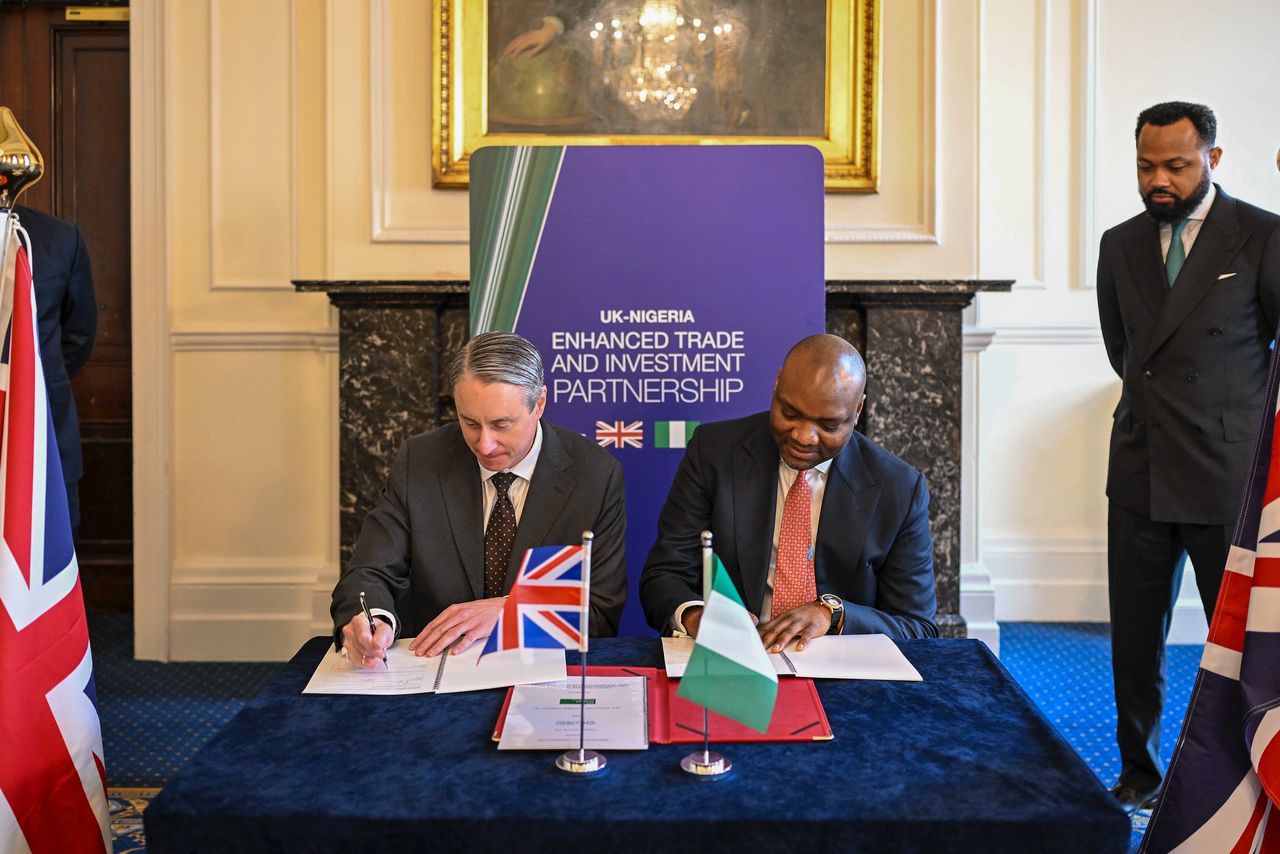
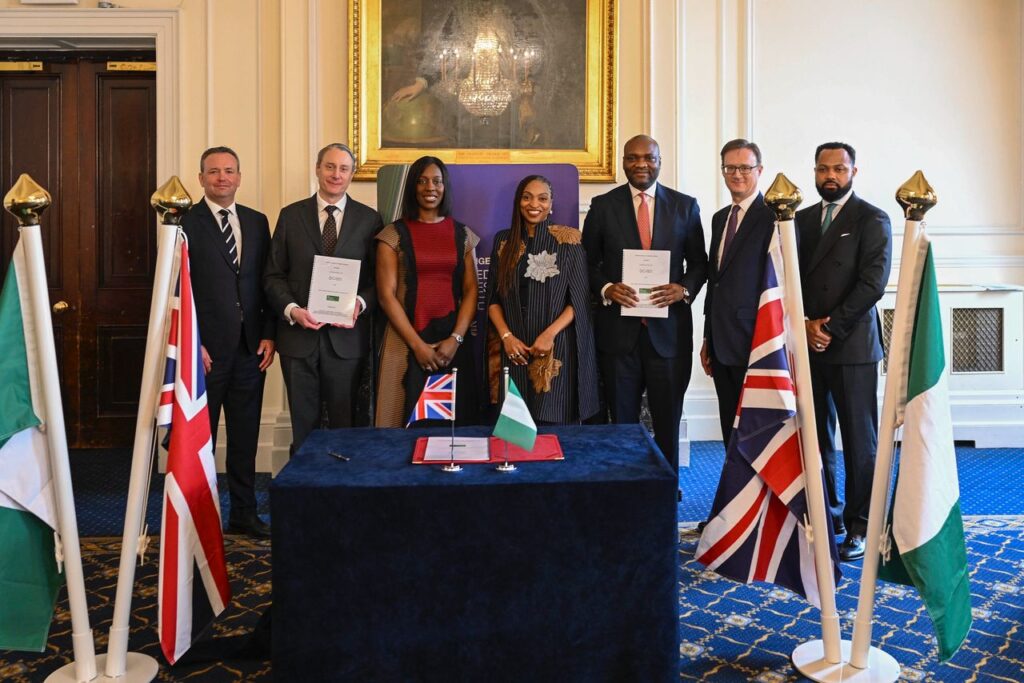
The Nigeria Sovereign Investment Authority (NSIA) has signed a landmark Memorandum of Understanding with UK-based Asset Green Ltd to develop a US$496 million integrated dairy livestock production and processing platform, a project set to modernize Nigeria’s dairy sector, boost food security, and create thousands of jobs.
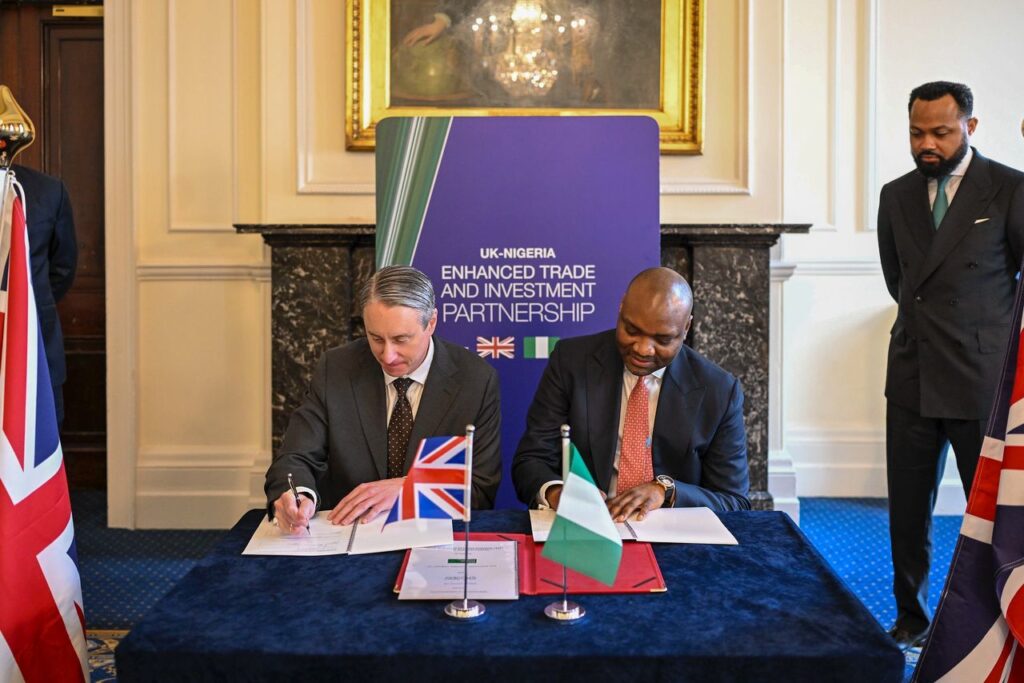
The MoU, signed in London ahead of the State Visit, laid out the framework for collaboration and project development, paving the way for a formal shareholders’ agreement.
The initiative, one of the largest integrated dairy investments ever undertaken in Nigeria, will combine 20,000 hectares of climate-smart, regenerative crop and forage production with a 10,000-milking-cow dairy operation and a state-of-the-art processing plant capable of producing fresh milk, milk powders, butter, cream, and up to 15,000 metric tonnes of infant formula annually.
Designed to reduce Nigeria’s reliance on imported milk powder, the platform will integrate up to 10,000 rural households into the supply chain through inclusive out-grower schemes and is projected to generate over US$620 million annually, while creating approximately 2,500 direct and 5,000 indirect jobs nationwide.
British Deputy High Commissioner Jonny Baxter praised the partnership, noting, “Over a decade ago, the UK provided pivotal support to Nigeria in establishing the NSIA, offering legal and financial expertise that helped lay the foundation for its successful launch and strengthening its governance and credibility. That early institutional investment has paid dividends, helping to build a resilient Nigerian institution capable of creating jobs and driving transformational, long-term development.
“The NSIA and Asset Green partnership is a powerful example of how that groundwork continues to deliver impact—a full-circle moment that reflects the long-term economic cooperation between the UK and Nigeria and the shared commitment to deepening sustainable, private-sector-driven growth.”
NSIA Managing Director & CEO Aminu Umar-Sadiq described the project as transformative, saying, “NSIA is pleased to partner with Asset Green on this transformative investment. With a project size of almost US$500 million, this is one of the most ambitious initiatives aimed at strengthening Nigeria’s food and nutrition security in a generation. By combining climate-smart farming, advanced processing capacity, and inclusive out-grower participation, we are laying the foundation for a modern, competitive dairy sector that reduces import dependence, creates meaningful jobs, and delivers long-term value for Nigerians.”
Asset Green Ltd Director and Agrium Capital Ltd CEO Rod Bassett emphasized the strategic importance of the investment, noting, “This partnership between NSIA and Asset Green is the business and investment innovation required to unlock the potential of the agriculture sector in Nigeria, with the development of such a future (dairy) food system. The foundation of the approach is one of collaborating with NSIA and their shared vision and purpose to establish a platform to catalyse the development of such a national strategic priority. We are incredibly proud to partner with Nigeria’s premier investment institution. The development of greenfield projects have consistently played a major role in our history, establishing industries or nurturing young businesses that are able to deliver catalytic transformation. This US$500 million greenfield investment in Nigeria’s dairy industry allows for the development of advanced and necessary infrastructure spanning the full production and supply system to enhance local production, reduce the reliance on the huge imports of dairy goods into Nigeria, deliver environmental services, and strengthen national food sovereignty and nutritional resilience.”
The partnership signals a major milestone in Nigeria’s agricultural modernization, leveraging private-sector investment, inclusive farming practices, and advanced processing to create a resilient, competitive dairy industry while strengthening national food and nutrition security.
NSIA, UK’s Asset Green to Launch $496 Million Dairy Mega-Project in Nigeria


UN Women Disowns GADA Fundraising for Women Candidates, Warns Against Misuse of Logo
By: Michael Mike
UN Women Nigeria has disassociated itself from fundraising materials circulated by Gender & Development Action (GADA) in connection with preparations for Nigeria’s forthcoming general elections, saying it neither authorised nor supports the initiative.
The organisation, in a statement issued in Abuja yesterday, said it became aware of materials associated with GADA that used the UN Women name and the branding and logo of the Women Political Participation (WPP) Working Group while soliciting financial contributions for individual female political candidates.
UN Women Nigeria said it was concerned that the use of its name and WPP Working Group branding alongside the fundraising appeals could create the misleading impression that the United Nations agency or the working group endorsed, sponsored or supported the fundraising initiative and the candidates involved.
“As part of the United Nations system, UN Women is bound by the principles of impartiality, independence and political neutrality,” it said, stressing that the UN and its entities do not endorse, campaign for, support or oppose political parties or individual candidates.
The organisation clarified that neither UN Women nor the WPP Working Group had authorised the use of its name, logo, branding or visual identity for fundraising intended to benefit individual political candidates or electoral campaigns.
It also stated categorically that it does not endorse any political candidate or party, nor does it solicit, sponsor or facilitate fundraising for political candidates or electoral campaigns.
According to the statement, the WPP Working Group similarly does not authorise the use of its branding for political fundraising, while GADA’s fundraising activities in question were neither endorsed, sponsored nor supported by UN Women or the working group.
UN Women Nigeria said it had formally communicated its concerns to GADA and requested the organisation to cease and desist from using the UN Women name, logo, branding or WPP-associated visual identity in connection with political fundraising.
It further requested GADA to remove the relevant materials from its online and offline platforms and issue a clarification stating that neither UN Women nor the WPP Working Group endorsed, sponsored or supported the fundraising initiative.
The agency, however, said it valued its partnerships with organisations working to promote women’s political participation in Nigeria, including GADA and other civil society organisations.
It stressed that such partnerships must operate within the principles of impartiality, independence and political neutrality governing the work of the United Nations.
UN Women said its commitment to women’s political participation remained strong, explaining that its programmes were designed to promote women’s leadership and equal representation in governance through non-partisan and inclusive initiatives that support women across political affiliations.
It added that its work did not constitute an endorsement or support for any individual candidate, political party or electoral campaign.
The organisation said it would continue to work with the government, civil society, women leaders, political stakeholders and other partners to create an enabling environment for all women, regardless of political affiliation, to participate meaningfully and equally in political and public life.
It therefore urged stakeholders to ensure that the UN Women name, logo and WPP Working Group branding were not used in any manner that could imply UN endorsement of political fundraising or electoral campaigning.
UN Women Disowns GADA Fundraising for Women Candidates, Warns Against Misuse of Logo
News
NSCDC Rescues 15 Trafficked Children, Recovers Stolen Rifles, Busts Telecom Vandalism Syndicate
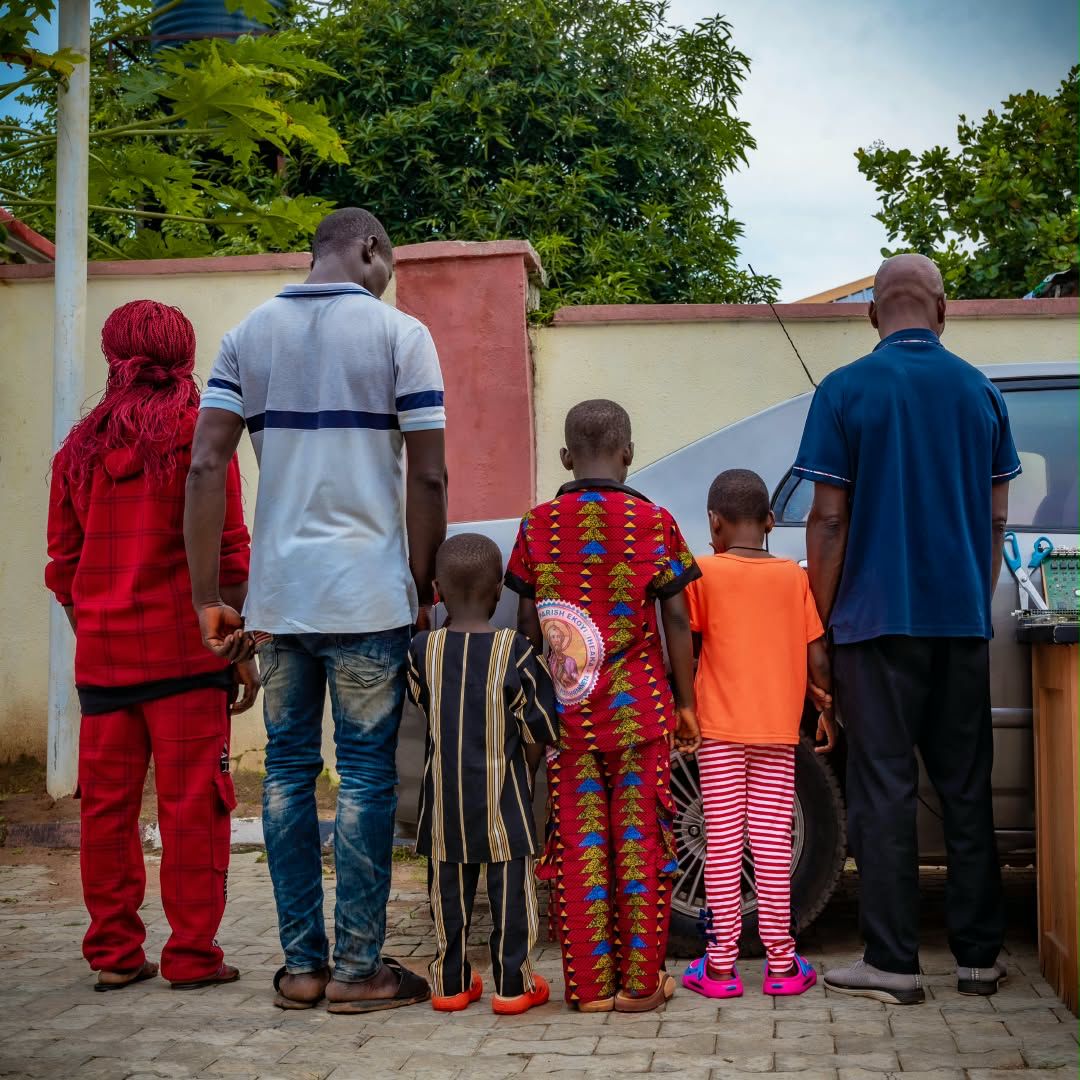
NSCDC Rescues 15 Trafficked Children, Recovers Stolen Rifles, Busts Telecom Vandalism Syndicate
By: Michael Mike
The Nigeria Security and Civil Defence Corps (NSCDC) has rescued 15 trafficked children, recovered three stolen service rifles and dismantled an inter-state syndicate involved in the vandalism and theft of telecommunications infrastructure across Delta and Kano States.
The breakthroughs were recorded by the Commandant General’s Special Intelligence Squad (CG’s SIS) in a series of intelligence-led operations targeting child trafficking, illegal arms diversion, internal corruption and critical infrastructure vandalism.
The National Public Relations Officer of the Corps, Assistant Commandant of Corps Babawale Afolabi, disclosed this in a statement issued on Friday.
He said the operations were conducted in line with the zero-tolerance policy of the Commandant General, Prof. Ahmed Audi, towards crime, corruption and the destruction of national assets.
On child trafficking, Afolabi said the squad commenced investigation following a petition over missing children in Kokona Local Government Area of Nasarawa State.
Investigations, he said, uncovered a syndicate allegedly led by one Anderson Archibong, who posed as an official of an organisation operating a purported “Back to School Project” under the National Council of Child Rights Advocate.
According to him, Archibong allegedly exploited low-income parents before trafficking their children to buyers across the country.
He said 16 children were fraudulently taken in January 2026 and allegedly sold for ₦2 million each.
“Through intelligence-led operations across transit routes, 15 of the 16 children were successfully rescued in Anambra, Imo, Enugu and other eastern transit corridors,” he said.
Afolabi added that three alleged buyers—Joy Julius, Ngozi and Eze Lazarus—were arrested and had confessed to their involvement, while efforts were ongoing to locate the remaining child.
In a separate investigation into illegal arms diversion, CG’s SIS operatives traced a missing AK-47 rifle to a serving NSCDC officer attached to the CG’s Crack Squad.
The officer, CAII Igah Ameh James, was allegedly found to have stolen an assigned AK-47 rifle, with breach number 02028, abandoned his duty post and transported the weapon to Otukpo, Benue State.
Investigators established that James allegedly sold the rifle to a middleman, Abakpa Simon Anthony, for ₦700,000, while Anthony subsequently sold it to an alleged illicit arms buyer, Sunday Akor, also known as IBB, for ₦800,000.
The rifle and two empty magazines were recovered following the arrest of the suspects.
The Corps also uncovered another arms diversion case at its Adamawa State Command following an armoury inventory audit.
Afolabi said the investigation led to the arrest of ASCI Peter Ardo, a former Head of Armoury, and CCA Boniface Lawyer.
He said investigations revealed that between 2018 and 2024, Ardo allegedly removed two unserviceable G3 service rifles, with breach numbers 10S838 and 69112944, from the armoury and sold them to Lawyer for ₦210,000 and ₦220,000 respectively.
The weapons were subsequently resold to a civilian, while Ardo allegedly altered physical inventory registers to conceal the removals and evade detection during routine checks.
Both officers, he said, were in custody after allegedly making full confessions.
Meanwhile, the CG’s SIS has also dismantled a network allegedly responsible for vandalising telecommunications infrastructure in Delta and Kano States.
Afolabi said operatives arrested Henry Dennis while allegedly vandalising an IHS telecommunications tower site in Uvwie Local Government Area of Delta State, where 12 vandalised telecom panels were recovered.
Further investigation reportedly exposed a wider network allegedly involving a scrap-market owner and financier, Yusuf Musa, who is accused of financing the theft operations and facilitating the resale of stolen telecommunications components.
The Corps said financial tracing uncovered suspicious transactions conducted through digital payment platforms, while efforts were underway to obtain search and arrest warrants for other members of the syndicate who remained at large.
The Commandant General commended the CG’s SIS for what he described as its tactical coordination and operational efficiency.
The NSCDC said internal administrative and disciplinary proceedings against implicated personnel had been concluded, while its Directorate of Legal Services had been directed to commence prosecution of the arrested suspects before courts of competent jurisdiction.
The Corps reaffirmed its commitment to protecting vulnerable citizens, safeguarding critical national infrastructure and maintaining integrity and accountability within its ranks.
NSCDC Rescues 15 Trafficked Children, Recovers Stolen Rifles, Busts Telecom Vandalism Syndicate

Troops rescue two abducted victims, recover terrorists’ motorcycles in Katsina
By Zagazola Makama
Troops of Sector 2, Operation FANSAN YAMMA, have rescued two abducted victims and recovered two motorcycles belonging to terrorists during a counter-terrorism operation in Sabuwa Local Government Area of Katsina State.
The troops, deployed for counter-terrorism and anti-banditry operations in the state, encountered an armed terrorist group while conducting routine security operations in the area.
The troops engaged the terrorists with superior firepower, forcing them to flee in disarray into the surrounding terrain.
During a subsequent search and clearance operation along the terrorists’ escape route, the troops rescued two male victims who had earlier been abducted along the Dandume–Damari axis.
The troops also recovered two motorcycles reportedly used by the terrorists to conduct their criminal activities.
The rescued victims are currently receiving necessary care and assessment before being reunited with their families.
Troops have maintained a heightened state of vigilance in the general area to safeguard local communities and prevent further attacks and criminal activities along critical transit corridors.
The operation forms part of the ongoing efforts by Operation FANSAN YAMMA to disrupt terrorist and bandit networks and restore lasting peace across the North-West.
Troops rescue two abducted victims, recover terrorists’ motorcycles in Katsina

UN Women Disowns GADA Fundraising for Women Candidates, Warns Against Misuse of Logo

APC received 5000 decampees in Yobe

Borno APC candidate, Gubio attacked by ISWAP as security forces repel deadly ambush

Roger Federer’s Shock as DNA Results Reveal Myla and Charlene Are Not His Biological Children

THE PLIGHT OF FARIDA

FAILED COUP IN BURKINA FASO: HOW TRAORÉ NARROWLY ESCAPED ASSASSINATION PLOT AMID FOREIGN INTERFERENCE CLAIMS
-
 News2 years ago
Roger Federer’s Shock as DNA Results Reveal Myla and Charlene Are Not His Biological Children
-
Opinions5 years ago
THE PLIGHT OF FARIDA
-
 News1 year ago
FAILED COUP IN BURKINA FASO: HOW TRAORÉ NARROWLY ESCAPED ASSASSINATION PLOT AMID FOREIGN INTERFERENCE CLAIMS
-

 News2 years ago
EYN: Rev. Billi, Distortion of History, and The Living Tamarind Tree
-
 Opinions5 years ago
POLICE CHARGE ROOMS, A MINTING PRESS
-

 ACADEMICS3 years ago
A History of Biu” (2015) and The Lingering Bura-Pabir Question (1)
-

 Columns3 years ago
Army University Biu: There is certain interest, but certainly not from Borno.
-

 Politics1 year ago
2027: Why Hon. Midala Balami Must Go, as Youths in Hawul and Asikira/Uba Federal Constituency Reject ₦500,000 as Sallah Gift
