
News
Nyame and Maigari: Lessons on the complexities of political relationships

Nyame and Maigari: Lessons on the complexities of political relationships
By Rikwense Muri
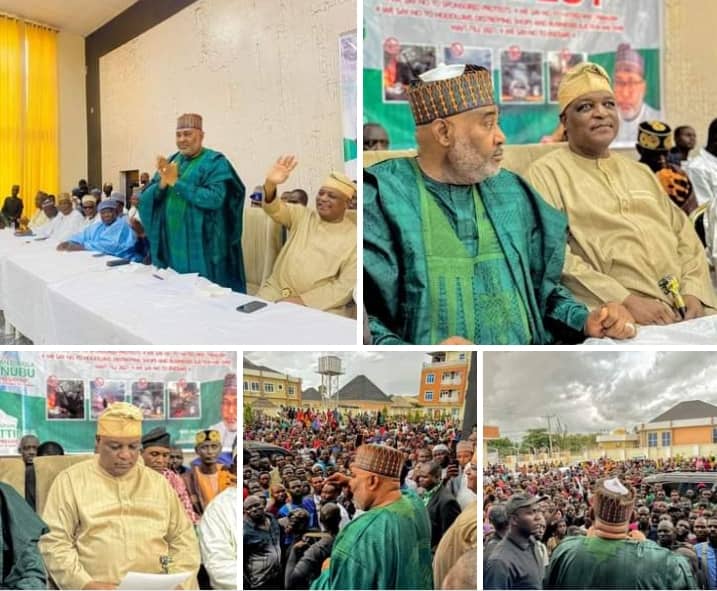
The political landscape in Nigeria has always been an interesting, albeit complicated, terrain. In the state of Taraba, the dynamics were further exemplified by the relationship between His Excellency Rev Jolly Nyame, the former Executive Governor of Taraba State, and his former Deputy Governor, His Excellency Barr Uba Maigari. Their partnership was marred by personal and political differences, leading to a fallout that ultimately resulted in Maigari’s impeachment and disgrace out of office. However, the lessons learned from their tumultuous relationship have become an impactful case study in political mentorship, resilience, and the power of reconciliation.
Rev Jolly Nyame was elected as the Executive Governor of Taraba State in 1999 and served two terms in office. During his tenure, he was known for his commitment to the development of the state and his unwavering dedication to public service. Barr Uba Maigari, on the other hand, was his Deputy Governor, handpicked by Nyame to serve as his second in command. Their alliance was initially seen as a formidable force for the progress of Taraba State, with the hopes of a harmonious working relationship. However, as their time in office progressed, differences began to surface, leading to a rupture in their once amicable partnership.
The rift between Nyame and Maigari escalated, leading to the latter’s impeachment and subsequent ousting from the position of Deputy Governor. In the aftermath of the political turmoil, Maigari found himself ostracized and out of favor in Taraba State. However, rather than succumbing to defeat, he chose to seek political relevance and mentorship outside of the state. He displayed resilience and determination in the face of adversity, recognizing the need to reestablish himself in the political arena. Today he is the only Honourable Minister in the cabinet of President Bola Tinubu, the rallying point of APC in Taraba State and one of those Rev Jolly Nyame look up to as political leaders in Taraba State.
Maigari’s journey to political redemption serves as a powerful lesson in the importance of adaptability and the ability to cultivate new alliances. He recognized the significance of aligning himself with influential figures and sought mentorship and guidance from leaders with a broader political influence. It was through this strategic maneuvering that he was able to regain his relevance and ultimately secure a ministerial position, solidifying his status as a dependable ally to Rev Jolly Nyame.
The lessons from the lives of Rev Jolly Nyame and Barr Uba Maigari are profound, highlighting the significance of forgiveness, reconciliation, and the ability to overcome personal and political differences for the greater good. Their rekindled alliance serves as a testament to the transformative power of humility and the willingness to set aside grievances in pursuit of a common goal. It also underscores the importance of seeking mentorship and guidance from experienced leaders, demonstrating the impact of aligning oneself with influential figures in the political sphere.
In conclusion, the lives of Rev Jolly Nyame and Barr Uba Maigari offer valuable insights into the complexities of political relationships and the resilience required to navigate the intricate web of governance. Their journey from conflict to reconciliation and renewed partnership exemplifies the enduring value of forgiveness, mentorship, and the power of political redemption. As a result, their story will continue to serve as a compelling case study for aspiring politicians and leaders in Nigeria and beyond.


Troops Arrest Suspected Military Impostor in Katsina
By Zagazola Makama
Troops of 17 Brigade have arrested a suspected military impostor during a fighting patrol in Malumfashi Local Government Area.
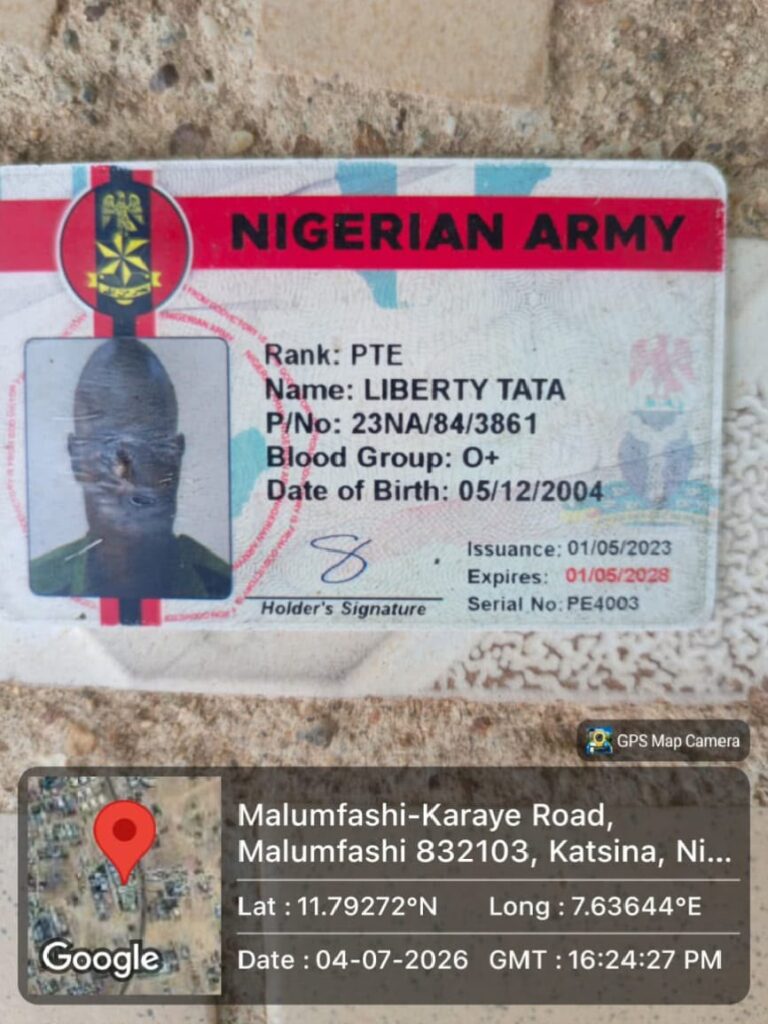
Security sources told Zagazola Makama that the suspect was apprehended at about 1:30 p.m. on July 4 by troops deployed at the Forward Operating Base (FOB) Malumfashi while conducting routine patrols within Malumfashi town.

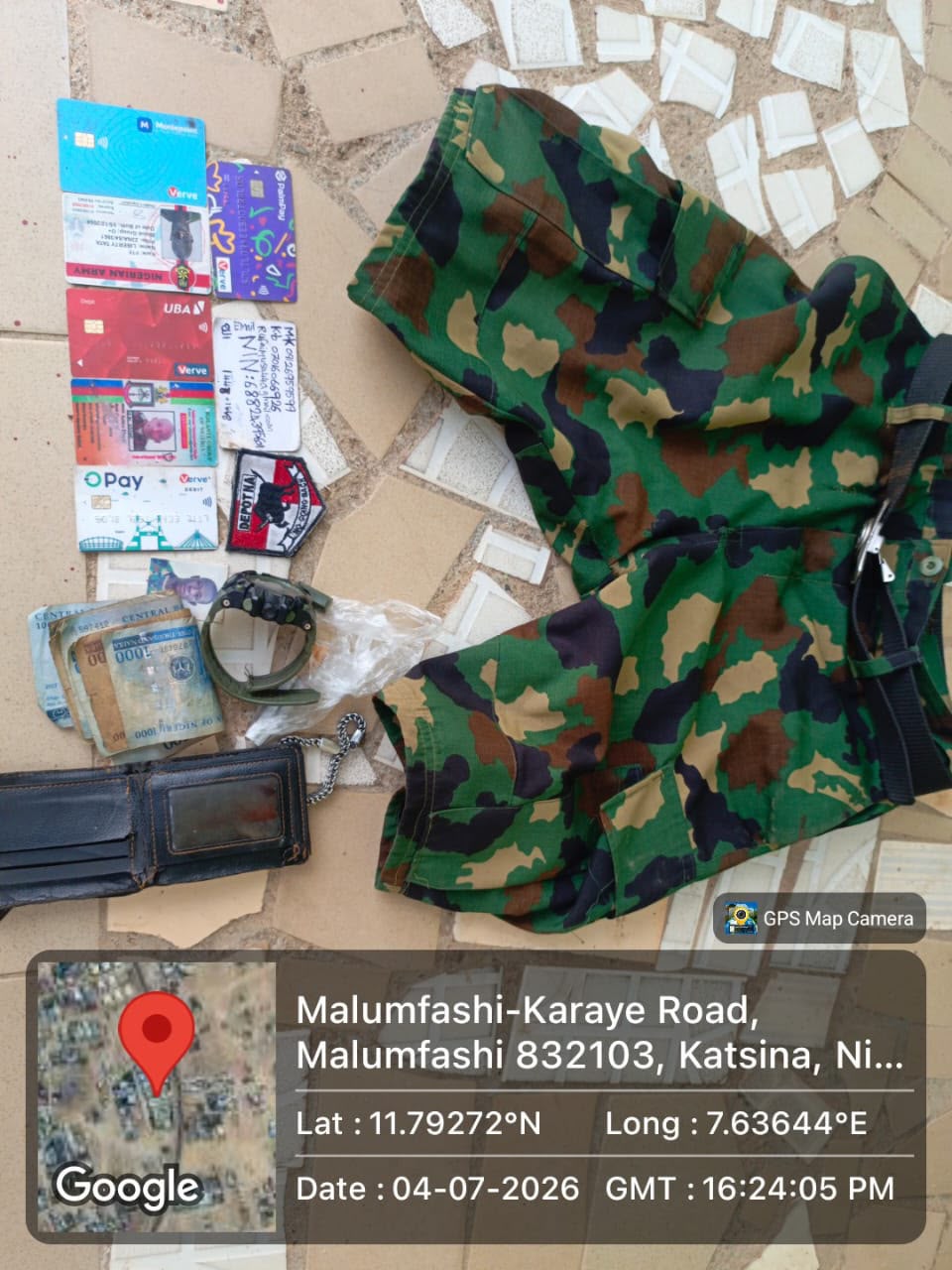
According to the sources, the suspect was intercepted while wearing a woodland camouflage three-quarter short, raising suspicion among the troops.
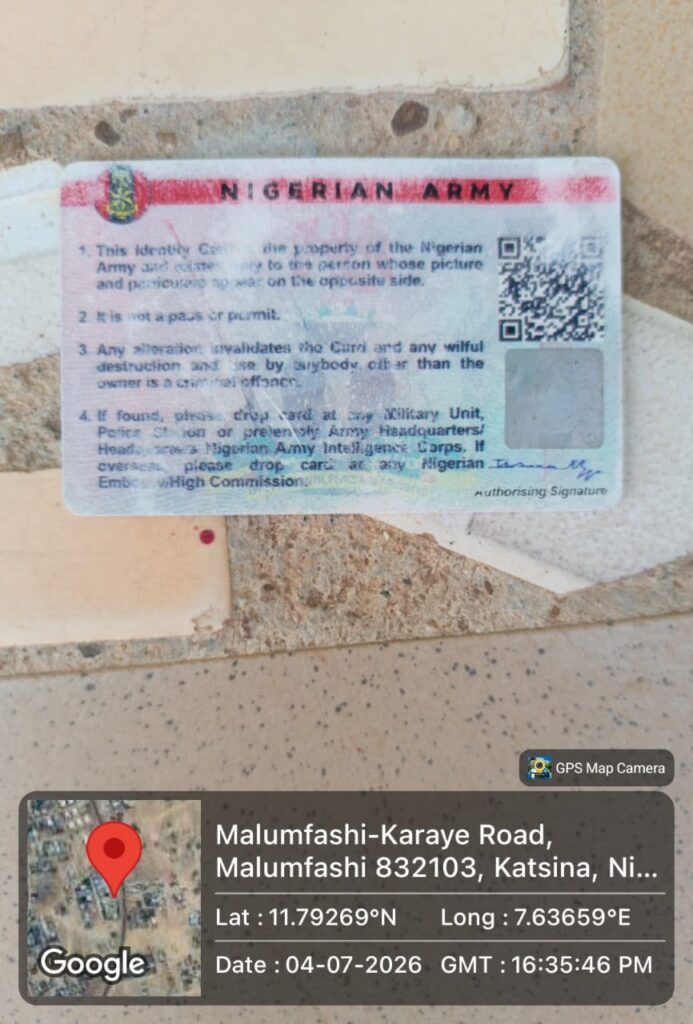
A search conducted on the suspect led to the recovery of a fake Nigerian Army identity card, four Automated Teller Machine (ATM) cards, one woodland camouflage three-quarter short, a wristwatch and the sum of ₦17,000.
The suspect and the recovered exhibits are currently in military custody pending further investigation.
Military sources said the arrest forms part of ongoing efforts to curb impersonation of security personnel and other criminal activities within the area.
Troops Arrest Suspected Military Impostor in Katsina
Troops Recover 50 Rustled Cattle, Repel Suspected Rustlers in Kaduna
By Zagazola Makama
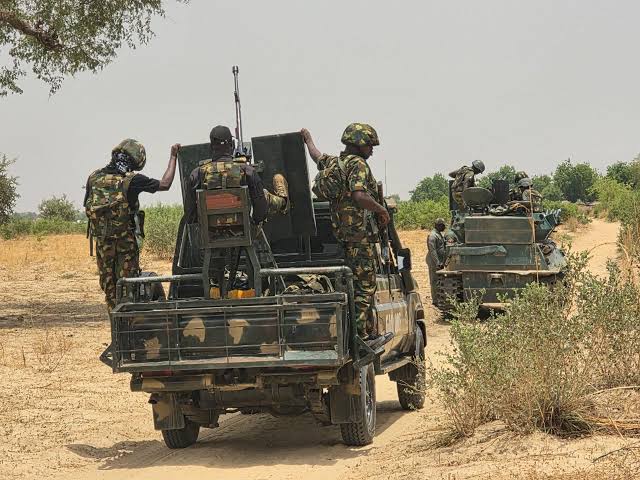
Troops deployed at the Forward Operating Base (FOB) Kankomi have recovered 50 rustled cattle after repelling suspected cattle rustlers during an ambush operation in Chikun Local Government Area.
Security sources told Zagazola Makama that the troops responded to a distress call at about 9:55 a.m. on July 4 over the activities of suspected rustlers at Ungwan Gontu community.
According to the sources, the troops swiftly laid an ambush and made contact with the fleeing suspects, forcing them to abandon the stolen livestock and escape into the surrounding area.
During the operation, the troops recovered 50 rustled cattle, which were subsequently identified and handed over to their rightful owner.
Military sources said efforts are ongoing to track down the fleeing suspects as security operations continue to combat cattle rustling and other criminal activities across Kaduna State.
Troops Recover 50 Rustled Cattle, Repel Suspected Rustlers in Kaduna
Troops Arrest Suspected Terrorist in Kogi, Suspect Confesses to Group Membership
By Zagazola Makama
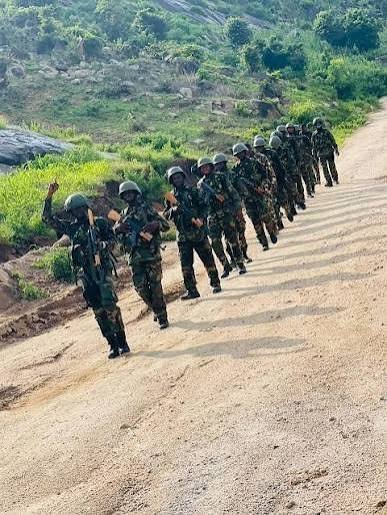
Troops of 12 Brigade, in collaboration with Office of the National Security Adviser (ONSA) Hybrid Forces, have arrested a suspected terrorist during an operation in Lokoja Local Government Area.
Security sources told Zagazola Makama that the troops responded at about 1:00 p.m. on July 4 to reports of a confrontation between local residents and a suspected terrorist at a Ruga settlement behind Obajana community.
According to the sources, the troops swiftly intervened and arrested one suspect at the scene.
During preliminary interrogation, the suspect reportedly confessed to being a member of a terrorist group led by an individual identified as Haruna, which allegedly operates within the Okene general area.
The suspect is currently in military custody and is undergoing further investigation to establish the extent of his involvement and identify other members of the group.
Military sources said the arrest forms part of ongoing security operations aimed at dismantling terrorist and criminal networks across Kogi State.
Troops Arrest Suspected Terrorist in Kogi, Suspect Confesses to Group Membership

Troops Arrest Suspected Military Impostor in Katsina

Troops Recover 50 Rustled Cattle, Repel Suspected Rustlers in Kaduna

Troops Arrest Suspected Terrorist in Kogi, Suspect Confesses to Group Membership

Roger Federer’s Shock as DNA Results Reveal Myla and Charlene Are Not His Biological Children

THE PLIGHT OF FARIDA

FAILED COUP IN BURKINA FASO: HOW TRAORÉ NARROWLY ESCAPED ASSASSINATION PLOT AMID FOREIGN INTERFERENCE CLAIMS
-
 News2 years ago
Roger Federer’s Shock as DNA Results Reveal Myla and Charlene Are Not His Biological Children
-
Opinions4 years ago
THE PLIGHT OF FARIDA
-
 News1 year ago
FAILED COUP IN BURKINA FASO: HOW TRAORÉ NARROWLY ESCAPED ASSASSINATION PLOT AMID FOREIGN INTERFERENCE CLAIMS
-

 News2 years ago
EYN: Rev. Billi, Distortion of History, and The Living Tamarind Tree
-
 Opinions5 years ago
POLICE CHARGE ROOMS, A MINTING PRESS
-

 ACADEMICS2 years ago
A History of Biu” (2015) and The Lingering Bura-Pabir Question (1)
-

 Columns2 years ago
Army University Biu: There is certain interest, but certainly not from Borno.
-

 Politics1 year ago
2027: Why Hon. Midala Balami Must Go, as Youths in Hawul and Asikira/Uba Federal Constituency Reject ₦500,000 as Sallah Gift
