
News
Obaseki’s Claims on Orhionmwon Land Grabbing are Misleading and Self-Serving

Obaseki’s Claims on Orhionmwon Land Grabbing are Misleading and Self-Serving
By Augustine Osayande PhD
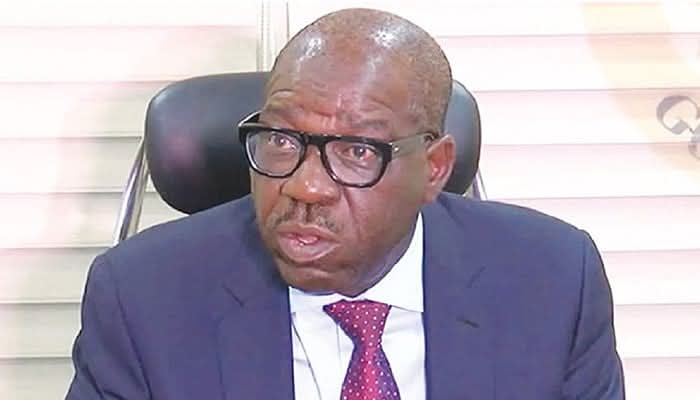
Former Governor Godwin Obaseki’s recent comments accusing Pastor Osagie Ize-Iyamu and Hon. Dennis Idahosa of “harassing investors” in Orhionmwon and Ovia are yet another attempt to distort facts and evade accountability. His claims of land grabbing are not only unsubstantiated—they follow a familiar pattern in which he manufactures political villains to divert attention from the controversies and community grievances that defined his administration.
For a political officeholder who openly claims Oredo Local Government as his home base, Obaseki’s decision to allocate more than 250,000 hectares of land in Orhionmwon Local Government Area to Saro Oil Palm Limited—without due regard for the ownership rights and interests of the host communities—is deeply troubling. The people of Orhionmwon are not tenants of the state government, and they cannot be pushed aside simply because a governor wishes to curry favour with select investors. This unilateral style of governance, where critical community interests are sacrificed at the altar of executive discretion, is precisely what Edo people rejected at the polls.
For me, one of the most troubling episodes of the Obaseki years remains the ordeal faced by the Ologbo-Nugu community in Orhionmwon Local Government Area—a story that never received the level of attention it deserved. While Obaseki was still governor, the people of this small rural community were forced to issue a desperate Save-Our-Soul (SOS) message over what they described as the forceful takeover of their ancestral land by an agricultural firm.
Let me be clear: the community never opposed investment or industrial development. In fact, like many rural communities in Edo State, they welcomed meaningful projects that could create jobs and improve livelihoods. But what they could not accept—and rightly so—was the manner in which Barnsley Nigeria Limited (BNL), operators of SARO Farms, went about asserting total control over their land. Instead of being partners in development, the community members felt bulldozed, ignored, and pushed aside.
I remember the images of their protest—their placards telling their story better than any official statement. “SARO, leave 250 hectares for us to farm or quit our land.” “Stop deceiving us.” “SARO, stop oppressing us. This is the only land we have.” These were not political slogans; they were cries for survival from people whose only source of livelihood was at stake.
The community wasn’t being unreasonable. They demanded something simple, fair, and already promised: that 250 hectares of their land be left for them to farm. That was the agreement. That was the governor’s directive. Yet, even this modest allocation was allegedly denied them, leaving them with no space to grow food crops, no way to sustain themselves, and no explanation.
The testimony that struck me the most came from the Odionwere of Ologbo-Nugu, Pa Aduwa Osaigbovo, a 96-year-old custodian of the community. Imagine a man of that age, who should be spending his days in peace, forced to lead a protest because his people were being displaced. In his gentle but pained voice, he described the actions of SARO Farms as “crude and barbaric”—not words he would use lightly.
He lamented that the company ignored the governor’s instruction to leave part of the land for the community. And he reminded the state, in a way that only someone with nearly a century of lived experience can that food scarcity is real, and that denying people farmland is condemning them to hardship.
What happened in Ologbo-Nugu is not just a community’s struggle—it is a stark reminder of what happens when development is done without humanity, without consultation, and without respect for the people whose lives are directly affected.
It is also part of why many Edo people remain skeptical when they hear politicians speak about “investor protection.” True development does not come at the cost of dispossessing ordinary people. True investment uplifts—it does not erase communities.
Ologbo-Nugu’s cry for help still echoes today, and until their grievances are addressed, it will remain a symbol of what went wrong under a government that often chose investors over the very people it was elected to serve.
Obaseki’s long-standing habit of personalising governance and portraying dissenting voices as enemies has never served the state well. Edo people do not desire leadership driven by threats, bitterness, and self-righteousness. They expect responsibility, transparency, engagement, and respect for lawful processes—values that were too often sidelined during his eight years in power.
Throughout his tenure, Obaseki routinely blamed others—political godfathers, party members, traditional rulers, labour unions, civil society, and virtually anyone who dared to question his opaque land deals or his confrontational style of administration. His latest attempt to accuse Ize-Iyamu and Idahosa of wrongdoing is simply an extension of this defensive posture. Communities in Orhionmwon, Ovia, and other affected areas have, for years, expressed dissatisfaction with land allocations issued without adequate consultation or compensation.
These legitimate grievances cannot be swept aside by pointing fingers at political opponents.
The allegations against Ize-Iyamu and Idahosa remain without evidence. Both men have consistently championed transparency, accountability, and genuine community involvement in land administration—principles that stand in stark contrast to the secrecy that characterised many of Obaseki’s investment agreements. If the former governor has credible proof that they engaged in land grabbing or investor harassment, he should present it publicly. Otherwise, his claims amount to nothing more than an attempt to shield his past decisions from the scrutiny they deserve.
Even more revealing is Obaseki’s suggestion that these political actors were “bitter because they couldn’t get access” to him during his tenure. This remark confirms what many Edo people suspected: that governance under Obaseki had become centralised, closed-off, and dependent on personal relationships rather than institutional processes. Public office is not a private estate, and no elected official is entitled to gatekeep the functions of the state.
If investors have genuine concerns, they should direct them through proper administrative channels, not hide behind the name of a former governor to generate unnecessary tension or manipulate public perception.
Obaseki’s threat that Governor Monday Okpebholo “will regret” ongoing inquiries into land matters is equally alarming. Edo people voted overwhelmingly for transparency, reform, and a full review of previous land allocations. No amount of political posturing, intimidation, or emotional blackmail will halt the push for clarity and accountability. The new administration is duty-bound to investigate all contentious land deals and ensure that community rights are upheld.
The truth is simple: investment thrives when communities are respected, agreements are clear, and government decisions are transparent. The real enemy of investor confidence is secrecy, not oversight. It is opaque decision-making—not due process—that discourages credible investors and fuels resentment among host communities.
Obaseki’s attempt to cast himself as the protector of investors does not align with the lived reality of the communities most affected by his policies. Edo State has now entered a new era—one committed to fairness, openness, community engagement, and shared prosperity.
In the end, Obaseki’s latest outburst deserves just one response: dismissal. Edo people have moved on, and no attempt to rewrite history or shift blame will change the record of his administration or obstruct the work of the current government.
Augustine Osayande, PhD contributed this piece from Abuja via austinelande@yahoo.com
Obaseki’s Claims on Orhionmwon Land Grabbing are Misleading and Self-Serving


2027: Constituents declare support for Tinubu, Goje’s re-election
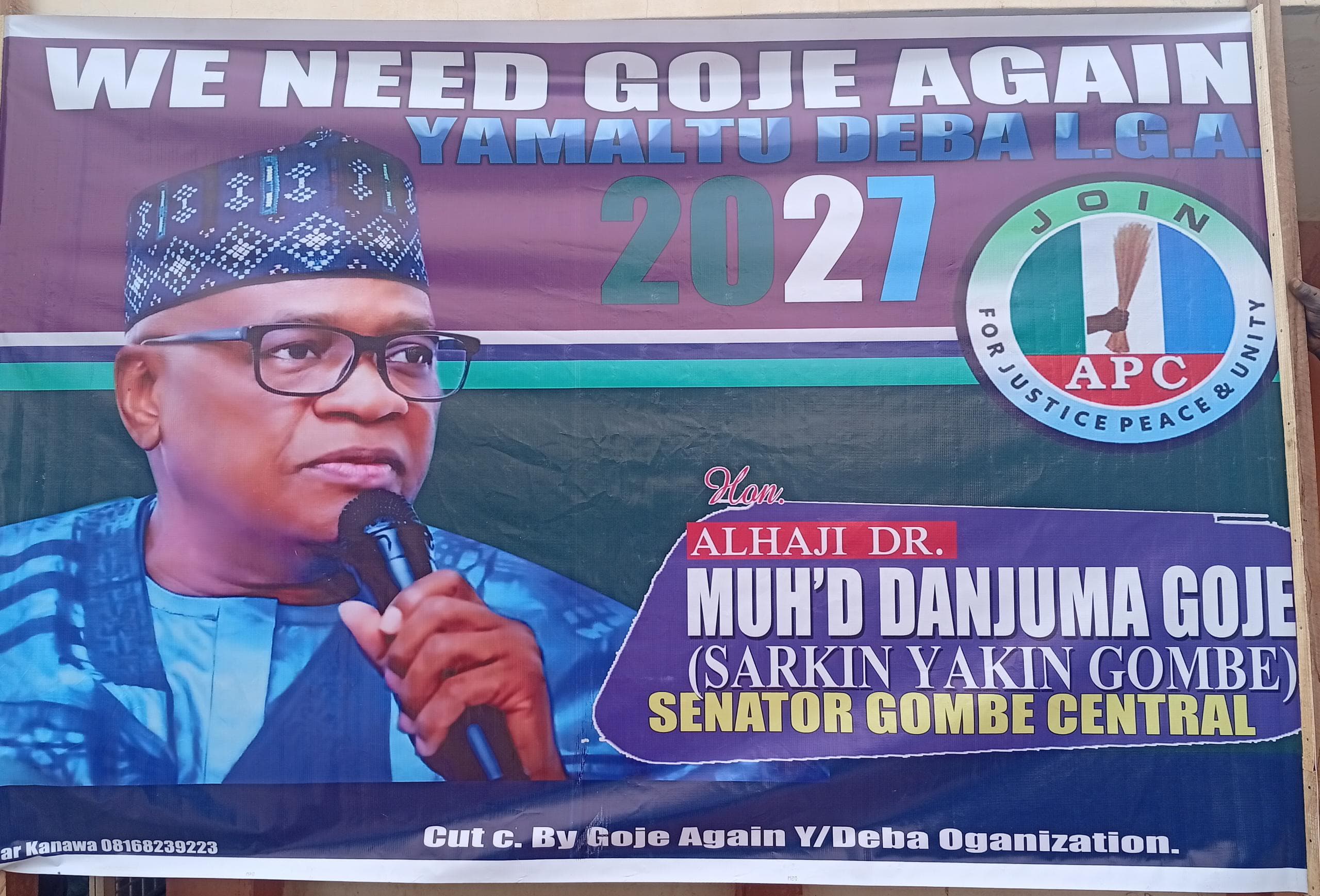
Yamaltu/Deba constituents have declared support for President Bola Tinubu and Senator Danjuma Goje’s re-election ahead of the 2027 General Elections.
Dr Newton Moses, declared the support in a statement read on behalf of the people of Yamaltu/Deba Local Government Area of Gombe State on Friday in Gombe.
Moses said voting for experienced leaders in 2027 remained key to addressing Nigeria’s challenges and delivering dividends of democracy to Nigerians.
He said the group’s decision to support Tinubu and Goje was guided by patriotism, and a sincere desire to see competent, and result-driven leadership that would benefit their constituents and the country.
He said that Goje’s leadership in the past 16 years at the Senate has benefitted the constituents and given effective representation to the people of Akko and Yamaltu/Deba LGAs that make up the district.
He dismissed allegations that the people of Yamaltu/Deba have been marginalised and were demanding the seat to be zoned to Yamaltu/Deba and not Akko where Goje is from.
He said that the constitution did not impose any zoning limitation or tenure restriction on membership in the National Assembly, hence urged those seeking the seat to test their popularity through election.
“We are not part of that group saying Goje should not return to the senate in 2027; that is not the voice of the grassroots from Yamaltu Deba.
“ Goje has, over the years, built invaluable networks and acquired the experience necessary to effectively advocate for the interests of his constituency and contribute meaningfully to national development.
“ By returning Goje to the Senate, Gombe Central stands to gain even more.
“ His established influence will ensure greater access to federal opportunities, increased developmental projects, and stronger representation in critical national decisions,” he said.
The group further advised President Tinubu to stay away from those working to tarnish the good name of Goje, stating that Goje’s influence in Gombe was important for the success of the All Progressives Congress in 2027.
Moses said at a time when Nigeria is focused on economic recovery, institutional strengthening, and inclusive growth under Tinubu, it was imperative that proven leaders like Goje to continue contributing his expertise toward national progress.
2027: Constituents declare support for Tinubu, Goje’s re-election
Hope in the Hard Times: Ashlee Momoh Foundation Spreads Easter Joy to Military Widows
By Comrade Philip O. Ikodor
The Ashlee Momoh Foundation (AMF), a non-profit organization dedicated to supporting the families of fallen officers, marked the Easter season with a heartwarming outreach to military widows at different locations in Abuja and Nasarawa state, respectively on April 2nd, 2026. This thoughtful initiative was designed to bring joy, hope, and support to the widows of our fallen Military Officers, who have made immense sacrifices for their country.

“Easter is the season of renewal, hope, and the triumph of light over darkness,” Princess Ashlee said. “It reminds us that even after the longest winter, spring arrives and even after the deepest sorrow, there is the possibility of a new dawn.” The outreach was designed to show support and encouragement to the military widows, and to felicitate with them on the occasion of Easter.
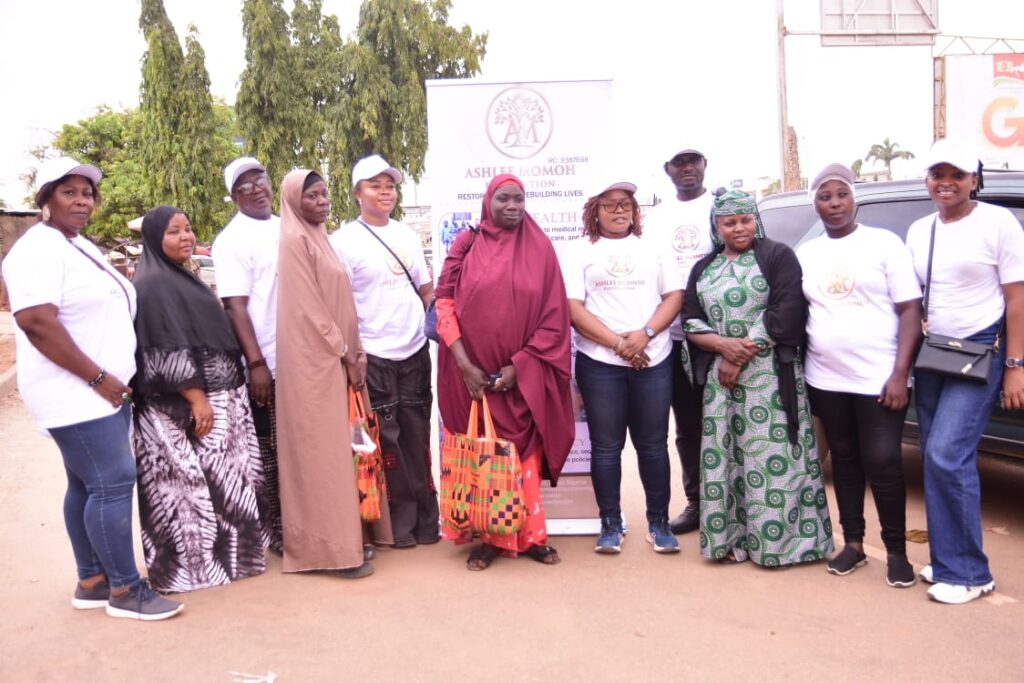
Princess Ashlee Momoh reassured the widows that while their loved ones are no longer physically present, their legacy lives on, and AMF is committed to standing with them, supporting them, and celebrating their strength. “Today, we celebrate you, our heroes’ widows, and the sacrifices you’ve made,” she said.
The event was filled with moments of joy and fulfilment, as beneficiaries received gift items, cash gifts, and scholarship opportunities. The Foundation also announced enlistment for skill acquisition and empowerment programs, aimed at equipping the widows with the tools they need to rebuild their lives.

The outreach was a testament to AMF’s unwavering commitment to supporting the families of fallen officers, and its dedication to making a positive impact in the lives of those who have made immense sacrifices for their country. As one beneficiary put it, “This Easter, we’ve received more than just gifts – we’ve received hope, love, and a sense of belonging.”

The Ashlee Momoh Foundation’s Easter outreach was a powerful reminder that even in the darkest moments, there is always hope, and that together, we can overcome any challenge.
Hope in the Hard Times: Ashlee Momoh Foundation Spreads Easter Joy to Military Widows

Six die, 12 injured in Kwara road crash
By: Zagazola Makama
Six persons have been confirmed dead and 12 others injured in a fatal road traffic accident along the Okolowo–Jebba expressway in Kwara State.
Police sources said the accident occurred at about 6:00 a.m. on April 2 near Danjuma Bakery area, involving a Toyota Hummer bus and a stationary truck.
According to the sources, the bus with registration number BTR-161-XA was conveying 18 passengers from Lagos State to Katsina State when it rammed into a parked truck with registration number BUU-495-ZD.
The truck was reportedly driven by Kamarudeen Abdullahi, said to be from Jos North Local Government Area of Plateau State.
The impact of the collision resulted in the death of six passengers on the spot, while 12 others sustained varying degrees of injuries.
The injured victims were rushed to the University of Ilorin Teaching Hospital, Oke-Oyi, for medical attention, while the remains of the deceased were deposited in the hospital morgue for autopsy.
Police said investigation had commenced to determine the circumstances surrounding the crash.
Six die, 12 injured in Kwara road crash

2027: Constituents declare support for Tinubu, Goje’s re-election

Hope in the Hard Times: Ashlee Momoh Foundation Spreads Easter Joy to Military Widows

Police arrest newly recruited suspected ISWAP member in Kwara

Roger Federer’s Shock as DNA Results Reveal Myla and Charlene Are Not His Biological Children

THE PLIGHT OF FARIDA

FAILED COUP IN BURKINA FASO: HOW TRAORÉ NARROWLY ESCAPED ASSASSINATION PLOT AMID FOREIGN INTERFERENCE CLAIMS
-
 News2 years ago
Roger Federer’s Shock as DNA Results Reveal Myla and Charlene Are Not His Biological Children
-
Opinions4 years ago
THE PLIGHT OF FARIDA
-
 News12 months ago
FAILED COUP IN BURKINA FASO: HOW TRAORÉ NARROWLY ESCAPED ASSASSINATION PLOT AMID FOREIGN INTERFERENCE CLAIMS
-

 News2 years ago
EYN: Rev. Billi, Distortion of History, and The Living Tamarind Tree
-
 Opinions4 years ago
POLICE CHARGE ROOMS, A MINTING PRESS
-

 ACADEMICS2 years ago
A History of Biu” (2015) and The Lingering Bura-Pabir Question (1)
-

 Columns2 years ago
Army University Biu: There is certain interest, but certainly not from Borno.
-

 Opinions2 years ago
Tinubu,Shettima: The epidemic of economic, insecurity in Nigeria
