
News
Officials of NCS Accused of Violations of Extant Laws in Auctioning Process


Officials of NCS Accused of Violations of Extant Laws in Auctioning Process
By: Michael Mike
The President of the Association of Licensed Auctioneers of Nigeria, Musa Kurra, has accused officials of the Nigeria Customs Service of engaging in widespread impunity and violating extant laws in disposal of seized goods and containers.
Kurra made the allegation in a statement on Friday, where he described some of the actions of Customs officers in conducting direct allocations of seized items to politically connected companies and individuals as “the reckless disregard for due process”
The allegation was made against the backdrop of leaked documents which exposed direct allocation and sales of impounded containers to some firms by the NCS.
The allocation letters titled: “Direct Auction Allocation of Containers” were signed by HH Hadison, Comptroller, Special Duties, between April and July 2025.
The letters, which bear the seal of the Nigeria Customs Service Committee on Direct Disposal of General Goods, were issued to multiple private companies approving the allocation of 40-foot containers containing vehicles, prefabricated houses, construction slabs, tiles, hospital equipment, and cartons of goods, at auction fees ranging from N1m to N2m.
A review of at least five separate letters suggests a pattern of manual approvals allegedly linked to insiders within the agency.
Each letter followed a similar format, bearing the same signatory, HH Hadison, fwc, psc(+), Comptroller, Special Duties, and written on the Customs’ letterhead and watermark with the “RESTRICTED” mark.
One of the letters, dated 31 July 2025 and addressed to a company with the code MSMU8098517, approved the release of four containers reportedly containing luxury vehicles, including Lexus RX330s, Lexus ES330s, and a Toyota Highlander, at the Tin Can Island Port, Lagos. The vehicles were auctioned at a combined fee of N2m.
Another document dated 15 June 2025 approved the disposal of a container marked TCKU0400440, described as a “prefabricated house,” at N2m, while a separate letter from May 2025 allocated a container of “construction slabs” under similar conditions.
Two earlier letters dated 11 and 17 April 2025, respectively, allocated several containers containing “used hospital equipment,” “cartons of drinks,” “Versace bond cement,” “pallets of tiles,” and “packages of steel,” to unnamed companies, also for N1m to N2m each.
In each of the approvals directive was beneficiaries to make payments within five working days and evacuate the containers within 10 working days or risk forfeiture.
The letters also warned that allocations “transferred or sold to third parties shall be at the buyer’s risk.”
One of the letters titled, ‘Direct auction allocation of containers’ read in part, “I am directed to inform you that the Comptroller-General of Customs has allocated the listed containers to your company.
“This approval is in line with the provisions of the Nigeria Customs Service Act 2023, section 119, via direct auction sale. The containers shall be released to the beneficiary subject to the following conditions which are designed to ensure transparency and integrity throughout this direct auction allorati process
“Evidence of payment of the Auction Fee and 7.5 per cent VAT of the Auction Fee, all to be made at any duty-collecting bank. You are to pay the following charges in addition to the above.
“Payment of 25 per cent of the auction fee being terminal charges. Payment of 25 per cent of the auction fee, including shipping charges.
“You are to provide evidence of payment within 5 working days upon receipt of this auction allocation letter; otherwise, the allocation will be forfeited. All containers disposed of must be evacuated from the premises within 10 working days after payment or time forfeiture. Furthermore, you are to note the following caveats; Applications for the replacement of allocated containers would not be entertained.
“Any allocation letter transferred or sold by the allottee to a third party shall be at the buyer’s risk.
“Please accept the assurances of the highest esteem and regard of the Comptroller-General of Customs.”
Kurra while alleging an underhand tactics in the auctioning, said the recurring pattern of N2m per container suggests a fixed-fee arrangement inconsistent with the valuation process typically applied during legitimate auctions.
He said: “I don’t know why people choose not to respect the law anymore. The impunity with which the Service is carrying out things now is better imagined,” Kurra said. “I don’t understand what kind of country we are.”
He explained that the Bureau of Public Procurement, which was established by law as the regulatory body overseeing procurement matters, also has oversight responsibility in auction processes since auctions involve public assets and financial transactions.
“You see, there is an agency called the Bureau for Public Procurement. The BPP happens to be the regulatory body in charge of anything that has to do with procurement. An auction has to do with procurement,” he said. “BPP’s Act was promulgated by the National Assembly and assented to by the President.”
Kurra, you hike referencing the Proceeds of Crime (Recovery and Management) Act, which he said clearly outlines how confiscated or forfeited assets should be managed and disposed of by any law enforcement agency, explained that: “Under the Proceeds of Crime (Recovery and Management) Act 2022, all forfeited or seized assets by law enforcement agencies, including Customs, are to be disposed of through transparent processes, either by public auction or sale, supervised by the relevant oversight bodies. The Act prohibits direct allocation or sale of seized items to individuals or organisations outside approved channels, with violations attracting criminal sanctions.
“The POCA Act takes care of everything that concerns dealing with forfeited items. Anything that is a proceed of crime must be valued by a qualified valuer before auctioneers are invited to sell the property,” he explained. “But Customs has been flouting these provisions without remorse.”
According to him, the so-called “direct auction allocations” being carried out by the Nigeria Customs Service are illegal and not backed by any law.
“If they follow due process, we don’t have issues with them,” he said. “But when they flagrantly abuse powers that don’t belong to them, that’s where the problem lies. There is no law anywhere in this country that gives them the right to do what they are doing.”
Kurra alleged that Customs officers have been allocating seized cars and containers at ridiculous prices to cronies and companies linked to senior officials.
“What is happening is that Customs officers are issuing cars and seizing items at lower amounts without any publicised auctioning,” he said. “There was a time the Service allocated 380 vehicles to one company for N3.8 million. Among those vehicles were Prados, Hiluxes, and Benzes, each going for N10,000. This is robbery.”
He also cited another instance where 53 vehicles were allegedly allocated to a single company for N530,000, translating to about N10,000 per vehicle.
“Even a bicycle now cannot sell for N10,000, not to talk of a Prado or a Hilux,” Kurra said. “When we traced some of these deals, we discovered that the companies involved belong to Customs officers and their families.”
The auctioneers’ president called on the Federal Government to urgently intervene, warning that unchecked corruption and illegality within the Customs Service are denying Nigeria significant revenue.
“If the government is serious, they need to checkmate these people,” he said. “The president needs money to work for the people, but instead of generating it lawfully through Customs and other agencies, some individuals are enriching themselves.”
Kurra argued that the current situation leaves Customs as both the seizing authority, the valuer, and the auctioneer, a process he described as lawless and self-serving.
“In the case of Customs, they seize, they value, they auction, all by themselves. So, who is regulating them? Nobody,” he lamented. “There is a law guiding these things, but they ignore it. It’s time the government steps in to restore sanity
End


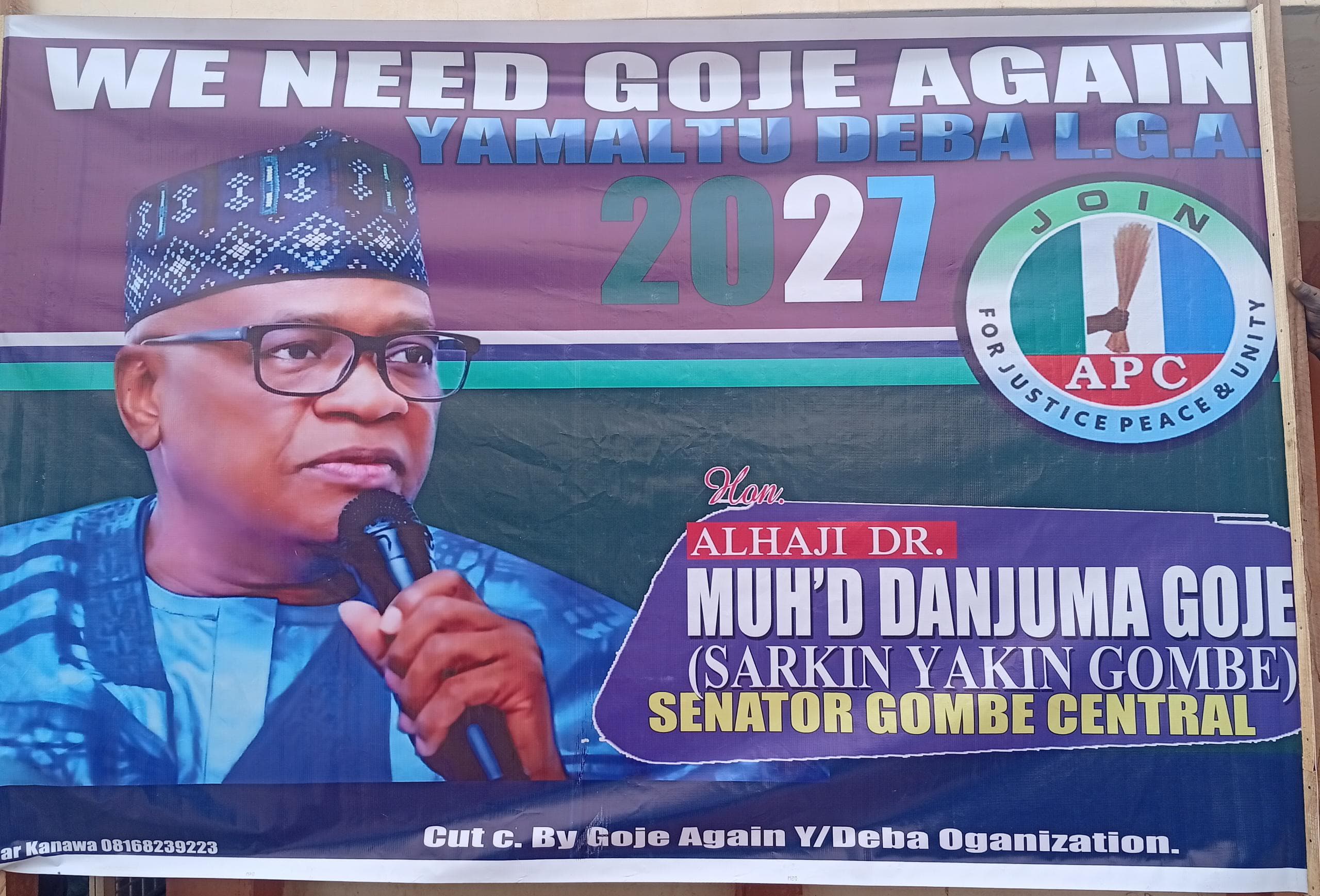
2027: Constituents declare support for Tinubu, Goje’s re-election
Yamaltu/Deba constituents have declared support for President Bola Tinubu and Senator Danjuma Goje’s re-election ahead of the 2027 General Elections.
Dr Newton Moses, declared the support in a statement read on behalf of the people of Yamaltu/Deba Local Government Area of Gombe State on Friday in Gombe.
Moses said voting for experienced leaders in 2027 remained key to addressing Nigeria’s challenges and delivering dividends of democracy to Nigerians.
He said the group’s decision to support Tinubu and Goje was guided by patriotism, and a sincere desire to see competent, and result-driven leadership that would benefit their constituents and the country.
He said that Goje’s leadership in the past 16 years at the Senate has benefitted the constituents and given effective representation to the people of Akko and Yamaltu/Deba LGAs that make up the district.
He dismissed allegations that the people of Yamaltu/Deba have been marginalised and were demanding the seat to be zoned to Yamaltu/Deba and not Akko where Goje is from.
He said that the constitution did not impose any zoning limitation or tenure restriction on membership in the National Assembly, hence urged those seeking the seat to test their popularity through election.
“We are not part of that group saying Goje should not return to the senate in 2027; that is not the voice of the grassroots from Yamaltu Deba.
“ Goje has, over the years, built invaluable networks and acquired the experience necessary to effectively advocate for the interests of his constituency and contribute meaningfully to national development.
“ By returning Goje to the Senate, Gombe Central stands to gain even more.
“ His established influence will ensure greater access to federal opportunities, increased developmental projects, and stronger representation in critical national decisions,” he said.
The group further advised President Tinubu to stay away from those working to tarnish the good name of Goje, stating that Goje’s influence in Gombe was important for the success of the All Progressives Congress in 2027.
Moses said at a time when Nigeria is focused on economic recovery, institutional strengthening, and inclusive growth under Tinubu, it was imperative that proven leaders like Goje to continue contributing his expertise toward national progress.
2027: Constituents declare support for Tinubu, Goje’s re-election
Hope in the Hard Times: Ashlee Momoh Foundation Spreads Easter Joy to Military Widows
By Comrade Philip O. Ikodor
The Ashlee Momoh Foundation (AMF), a non-profit organization dedicated to supporting the families of fallen officers, marked the Easter season with a heartwarming outreach to military widows at different locations in Abuja and Nasarawa state, respectively on April 2nd, 2026. This thoughtful initiative was designed to bring joy, hope, and support to the widows of our fallen Military Officers, who have made immense sacrifices for their country.

“Easter is the season of renewal, hope, and the triumph of light over darkness,” Princess Ashlee said. “It reminds us that even after the longest winter, spring arrives and even after the deepest sorrow, there is the possibility of a new dawn.” The outreach was designed to show support and encouragement to the military widows, and to felicitate with them on the occasion of Easter.
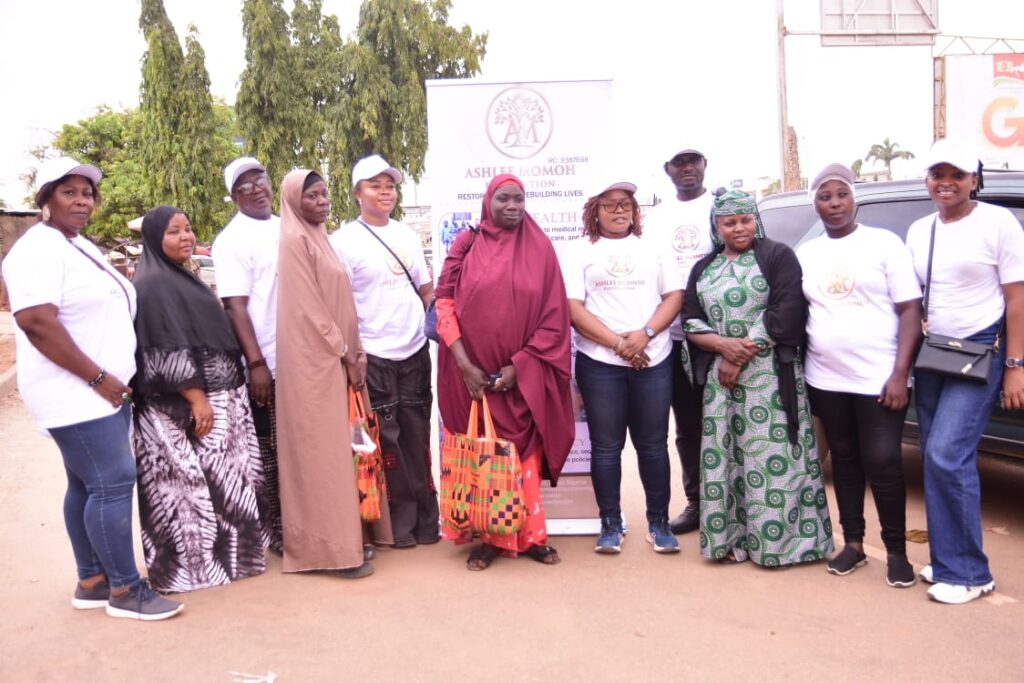
Princess Ashlee Momoh reassured the widows that while their loved ones are no longer physically present, their legacy lives on, and AMF is committed to standing with them, supporting them, and celebrating their strength. “Today, we celebrate you, our heroes’ widows, and the sacrifices you’ve made,” she said.
The event was filled with moments of joy and fulfilment, as beneficiaries received gift items, cash gifts, and scholarship opportunities. The Foundation also announced enlistment for skill acquisition and empowerment programs, aimed at equipping the widows with the tools they need to rebuild their lives.

The outreach was a testament to AMF’s unwavering commitment to supporting the families of fallen officers, and its dedication to making a positive impact in the lives of those who have made immense sacrifices for their country. As one beneficiary put it, “This Easter, we’ve received more than just gifts – we’ve received hope, love, and a sense of belonging.”

The Ashlee Momoh Foundation’s Easter outreach was a powerful reminder that even in the darkest moments, there is always hope, and that together, we can overcome any challenge.
Hope in the Hard Times: Ashlee Momoh Foundation Spreads Easter Joy to Military Widows
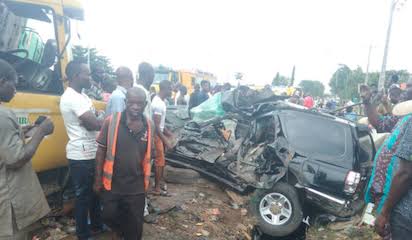
Six die, 12 injured in Kwara road crash
By: Zagazola Makama
Six persons have been confirmed dead and 12 others injured in a fatal road traffic accident along the Okolowo–Jebba expressway in Kwara State.
Police sources said the accident occurred at about 6:00 a.m. on April 2 near Danjuma Bakery area, involving a Toyota Hummer bus and a stationary truck.
According to the sources, the bus with registration number BTR-161-XA was conveying 18 passengers from Lagos State to Katsina State when it rammed into a parked truck with registration number BUU-495-ZD.
The truck was reportedly driven by Kamarudeen Abdullahi, said to be from Jos North Local Government Area of Plateau State.
The impact of the collision resulted in the death of six passengers on the spot, while 12 others sustained varying degrees of injuries.
The injured victims were rushed to the University of Ilorin Teaching Hospital, Oke-Oyi, for medical attention, while the remains of the deceased were deposited in the hospital morgue for autopsy.
Police said investigation had commenced to determine the circumstances surrounding the crash.
Six die, 12 injured in Kwara road crash

2027: Constituents declare support for Tinubu, Goje’s re-election

Hope in the Hard Times: Ashlee Momoh Foundation Spreads Easter Joy to Military Widows

Police arrest newly recruited suspected ISWAP member in Kwara

Roger Federer’s Shock as DNA Results Reveal Myla and Charlene Are Not His Biological Children

THE PLIGHT OF FARIDA

FAILED COUP IN BURKINA FASO: HOW TRAORÉ NARROWLY ESCAPED ASSASSINATION PLOT AMID FOREIGN INTERFERENCE CLAIMS
-
 News2 years ago
Roger Federer’s Shock as DNA Results Reveal Myla and Charlene Are Not His Biological Children
-
Opinions4 years ago
THE PLIGHT OF FARIDA
-
 News12 months ago
FAILED COUP IN BURKINA FASO: HOW TRAORÉ NARROWLY ESCAPED ASSASSINATION PLOT AMID FOREIGN INTERFERENCE CLAIMS
-

 News2 years ago
EYN: Rev. Billi, Distortion of History, and The Living Tamarind Tree
-
 Opinions4 years ago
POLICE CHARGE ROOMS, A MINTING PRESS
-

 ACADEMICS2 years ago
A History of Biu” (2015) and The Lingering Bura-Pabir Question (1)
-

 Columns2 years ago
Army University Biu: There is certain interest, but certainly not from Borno.
-

 Opinions2 years ago
Tinubu,Shettima: The epidemic of economic, insecurity in Nigeria
