
News
Officials of NCS Accused of Violations of Extant Laws in Auctioning Process

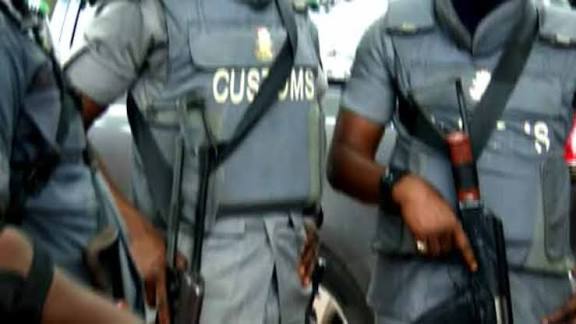
Officials of NCS Accused of Violations of Extant Laws in Auctioning Process
By: Michael Mike
The President of the Association of Licensed Auctioneers of Nigeria, Musa Kurra, has accused officials of the Nigeria Customs Service of engaging in widespread impunity and violating extant laws in disposal of seized goods and containers.
Kurra made the allegation in a statement on Friday, where he described some of the actions of Customs officers in conducting direct allocations of seized items to politically connected companies and individuals as “the reckless disregard for due process”
The allegation was made against the backdrop of leaked documents which exposed direct allocation and sales of impounded containers to some firms by the NCS.
The allocation letters titled: “Direct Auction Allocation of Containers” were signed by HH Hadison, Comptroller, Special Duties, between April and July 2025.
The letters, which bear the seal of the Nigeria Customs Service Committee on Direct Disposal of General Goods, were issued to multiple private companies approving the allocation of 40-foot containers containing vehicles, prefabricated houses, construction slabs, tiles, hospital equipment, and cartons of goods, at auction fees ranging from N1m to N2m.
A review of at least five separate letters suggests a pattern of manual approvals allegedly linked to insiders within the agency.
Each letter followed a similar format, bearing the same signatory, HH Hadison, fwc, psc(+), Comptroller, Special Duties, and written on the Customs’ letterhead and watermark with the “RESTRICTED” mark.
One of the letters, dated 31 July 2025 and addressed to a company with the code MSMU8098517, approved the release of four containers reportedly containing luxury vehicles, including Lexus RX330s, Lexus ES330s, and a Toyota Highlander, at the Tin Can Island Port, Lagos. The vehicles were auctioned at a combined fee of N2m.
Another document dated 15 June 2025 approved the disposal of a container marked TCKU0400440, described as a “prefabricated house,” at N2m, while a separate letter from May 2025 allocated a container of “construction slabs” under similar conditions.
Two earlier letters dated 11 and 17 April 2025, respectively, allocated several containers containing “used hospital equipment,” “cartons of drinks,” “Versace bond cement,” “pallets of tiles,” and “packages of steel,” to unnamed companies, also for N1m to N2m each.
In each of the approvals directive was beneficiaries to make payments within five working days and evacuate the containers within 10 working days or risk forfeiture.
The letters also warned that allocations “transferred or sold to third parties shall be at the buyer’s risk.”
One of the letters titled, ‘Direct auction allocation of containers’ read in part, “I am directed to inform you that the Comptroller-General of Customs has allocated the listed containers to your company.
“This approval is in line with the provisions of the Nigeria Customs Service Act 2023, section 119, via direct auction sale. The containers shall be released to the beneficiary subject to the following conditions which are designed to ensure transparency and integrity throughout this direct auction allorati process
“Evidence of payment of the Auction Fee and 7.5 per cent VAT of the Auction Fee, all to be made at any duty-collecting bank. You are to pay the following charges in addition to the above.
“Payment of 25 per cent of the auction fee being terminal charges. Payment of 25 per cent of the auction fee, including shipping charges.
“You are to provide evidence of payment within 5 working days upon receipt of this auction allocation letter; otherwise, the allocation will be forfeited. All containers disposed of must be evacuated from the premises within 10 working days after payment or time forfeiture. Furthermore, you are to note the following caveats; Applications for the replacement of allocated containers would not be entertained.
“Any allocation letter transferred or sold by the allottee to a third party shall be at the buyer’s risk.
“Please accept the assurances of the highest esteem and regard of the Comptroller-General of Customs.”
Kurra while alleging an underhand tactics in the auctioning, said the recurring pattern of N2m per container suggests a fixed-fee arrangement inconsistent with the valuation process typically applied during legitimate auctions.
He said: “I don’t know why people choose not to respect the law anymore. The impunity with which the Service is carrying out things now is better imagined,” Kurra said. “I don’t understand what kind of country we are.”
He explained that the Bureau of Public Procurement, which was established by law as the regulatory body overseeing procurement matters, also has oversight responsibility in auction processes since auctions involve public assets and financial transactions.
“You see, there is an agency called the Bureau for Public Procurement. The BPP happens to be the regulatory body in charge of anything that has to do with procurement. An auction has to do with procurement,” he said. “BPP’s Act was promulgated by the National Assembly and assented to by the President.”
Kurra, you hike referencing the Proceeds of Crime (Recovery and Management) Act, which he said clearly outlines how confiscated or forfeited assets should be managed and disposed of by any law enforcement agency, explained that: “Under the Proceeds of Crime (Recovery and Management) Act 2022, all forfeited or seized assets by law enforcement agencies, including Customs, are to be disposed of through transparent processes, either by public auction or sale, supervised by the relevant oversight bodies. The Act prohibits direct allocation or sale of seized items to individuals or organisations outside approved channels, with violations attracting criminal sanctions.
“The POCA Act takes care of everything that concerns dealing with forfeited items. Anything that is a proceed of crime must be valued by a qualified valuer before auctioneers are invited to sell the property,” he explained. “But Customs has been flouting these provisions without remorse.”
According to him, the so-called “direct auction allocations” being carried out by the Nigeria Customs Service are illegal and not backed by any law.
“If they follow due process, we don’t have issues with them,” he said. “But when they flagrantly abuse powers that don’t belong to them, that’s where the problem lies. There is no law anywhere in this country that gives them the right to do what they are doing.”
Kurra alleged that Customs officers have been allocating seized cars and containers at ridiculous prices to cronies and companies linked to senior officials.
“What is happening is that Customs officers are issuing cars and seizing items at lower amounts without any publicised auctioning,” he said. “There was a time the Service allocated 380 vehicles to one company for N3.8 million. Among those vehicles were Prados, Hiluxes, and Benzes, each going for N10,000. This is robbery.”
He also cited another instance where 53 vehicles were allegedly allocated to a single company for N530,000, translating to about N10,000 per vehicle.
“Even a bicycle now cannot sell for N10,000, not to talk of a Prado or a Hilux,” Kurra said. “When we traced some of these deals, we discovered that the companies involved belong to Customs officers and their families.”
The auctioneers’ president called on the Federal Government to urgently intervene, warning that unchecked corruption and illegality within the Customs Service are denying Nigeria significant revenue.
“If the government is serious, they need to checkmate these people,” he said. “The president needs money to work for the people, but instead of generating it lawfully through Customs and other agencies, some individuals are enriching themselves.”
Kurra argued that the current situation leaves Customs as both the seizing authority, the valuer, and the auctioneer, a process he described as lawless and self-serving.
“In the case of Customs, they seize, they value, they auction, all by themselves. So, who is regulating them? Nobody,” he lamented. “There is a law guiding these things, but they ignore it. It’s time the government steps in to restore sanity
End



Borno: Kwaya Kusar stakeholders seek investment in grains processing
Farmers and some stakeholders in Kwaya Kusar community have urged governments at all levels and industrialists to establish grain processing factories in their community.
They stated that having such facilities would help prevent post-harvest losses, create jobs, stabilise food prices and create wealth for the state and country.
They made the call in separate interviews with our Correspondent in Kwaya Kusar town of Borno State on Monday.
They said processing maize, wheat and local grains into staple foods like flour, semolina, and livestock feeds would further strengthen national food security while transforming the agricultural value chain.
Alhaji Abdullahi Gidado, the Secretary of Kwaya Kusar Grains Market said that the area has enough grains to feed any industry established in the area.
Gidado said that grains from the market were taken to other parts of the country on a weekly basis throughout the year.
He said that over 15, 000 bags leave the market weekly during dry season while over 40, 000 bags were being taken out of the market weekly immediately after harvest.
He said that with such a factory, more youths would be employed while farmers would get better value for their efforts.
“We want the government and other industrialists to take advantage of our strength in grain cultivation to set up mini factories to process our grains into staple foods.
“The more we take these grains out without processing it, the more we lose; from post harvest losses to rains spoiling our grains during the rainy season.
“We take over 30 to 40 trucks of assorted grains from this market weekly and each truck carries 400 bags; after harvest, the number reaches over 100 trucks weekly,” he said.
Also, Malam Hassan Musa, the Chairman of All Farmers Association of Nigeria, AFAN, Kwaya Kusar Local Government corroborated Gidado’s call to establish mini flour milling factories to reduce post-harvest losses.
Musa said farmers within the five local government areas of Biu, Kwaya Kusar, Hawul, Bayo and Shani all in Borno South have the capacity to produce grains that would feed any factories.
“Today, we (farmers) no longer get good returns on investment because we take out our produce raw to feed industries in other parts of the country.
“If we cultivate and process the grains here, the prices of these staple foods will drop and post harvest losses will greatly reduce,” he said.
For Malam Yusuf Abu, a grain dealer at the market said that over 7,000 jobs have been created because of the market as youths engage in grading, loading, transportation and many other areas.
Abu said “we will gain more if we process and take finished products out than taking our raw grains to feed flour mill industries elsewhere.
Borno: Kwaya Kusar stakeholders seek investment in grains processing
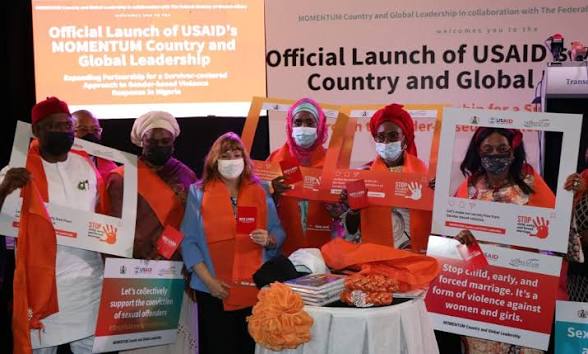
Nigeria Deploys Nationwide Platform to Track Violence Against Women Cases
…New system to provide visibility on investigations, prosecutions, conviction
By: Michael Mike
Nigeria has deployed a new nationwide reporting platform designed to track cases of violence against women from the point of reporting through investigation, prosecution and conviction, in a move aimed at strengthening accountability and access to justice for survivors.
The platform, developed by the Federal Ministry of Justice with support from the EU Support to End Sexual and Gender-Based Violence (ESGBV) Programme in Nigeria and implemented by the International Institute for Democracy and Electoral Assistance (International IDEA), is expected to address persistent gaps in case documentation, data coordination and justice-sector monitoring.
The initiative was unveiled on Monday in Abuja during the Deployment and Operationalisation of the Violence Against Women (VAW) Reporting Platform and National Validation and Capacity-Building Workshop on the VAW Reporting System.
The organisers described the platform as Nigeria’s first standardised justice-sector VAW reporting system, designed to consolidate information on cases from different states into a central database.
Speaking at the event, GBV Policy and Strategy Development Specialist, ESGBV Programme, International IDEA, Melissa Omene, said the initiative was developed to address one of the major weaknesses in Nigeria’s response to violence against women — the fragmentation of data and inadequate tracking of cases after they are reported.
“Reporting violence is only the beginning of a survivor’s journey. What happens after reporting matters just as much as the reporting itself,” Omene said.
She disclosed that an assessment involving 112 respondents from 32 institutions across the Federal Capital Territory, Benue, Kaduna and Oyo states identified gaps in data coordination, investigations, evidence management and justice-sector monitoring.
Omene said the National GBV Dashboard recorded 4,449 GBV cases in the first half of 2023, taking the nationwide number recorded since the dashboard was launched in 2020 to more than 19,000.
The figures, she said, highlighted the need for a stronger system capable of following cases beyond the initial reporting stage.
Also speaking, the Head of the Sexual and Gender-Based Violence Unit at the Federal Ministry of Justice, Yewande Gbola-Awopetu, said the success of the new platform would depend significantly on the accuracy and consistency of information supplied by designated desk officers.
“Every field you complete, every case status you update, and every follow-up you log becomes part of the evidence base,” she said.
Gbola-Awopetu disclosed that the National Human Rights Commission had recorded more than 33,000 SGBV cases between January and May, while the National Agency for the Prohibition of Trafficking in Persons (NAPTIP) documented more than 3,000 cases of violence against women in the FCT.
She said the figures reinforced the need for improved documentation and tracking of cases to determine what happens after victims report violations.
The National Consultant for the VAW Reporting System at International IDEA, Agharinma Ehiedu, said the platform would bring together information previously scattered across state-level systems into a single national database.
According to him, justice institutions would be able to access national data without having to contact individual states separately.
“You can know how many offenders you have, how many cases have been convicted, and those that are pending trial across the country,” Ehiedu said.
He added that the platform would also enable members of the public to report violations, with cases subsequently routed to relevant state desk officers.
He described the system as providing “full visibility of what is happening” to violence-against-women cases across the country.
Violence against women remains a major human rights, public health and justice challenge in Nigeria. It includes physical, sexual and psychological violence, domestic violence, harmful practices, trafficking and other forms of abuse.
One of the longstanding difficulties in addressing the problem has been the absence of a consistently integrated system for documenting cases and tracking their progression through Nigeria’s multiple justice and response institutions.
Cases can pass through the police, health facilities, social welfare structures, human rights institutions, prosecutors and courts, while information is often held separately by each institution. This can make it difficult to establish how many reported cases resulted in investigation, prosecution or conviction.
The problem is compounded by under-reporting. Survivors may choose not to report incidents because of stigma, fear of retaliation, economic dependence, lack of confidence in institutions or concerns about the consequences of pursuing cases.
Nigeria has also established legal and institutional mechanisms aimed at addressing gender-based violence. The Violence Against Persons (Prohibition) Act (VAPP) 2015 criminalises a range of harmful acts, including physical, sexual and psychological violence, while providing protections and remedies for victims and survivors. Its implementation, however, depends substantially on effective enforcement and, in states where necessary, domestication.
The country’s response also involves institutions including the Federal Ministry of Justice, Nigeria Police Force, National Human Rights Commission, NAPTIP, health and social welfare agencies, state ministries and civil society organisations.
The new VAW reporting platform is therefore expected to complement these existing structures by providing a mechanism for capturing and following cases across the justice chain.
Beyond statistics, the system could allow authorities to identify bottlenecks — including cases delayed at investigation or prosecution stages — and improve evidence-based planning and accountability.
For survivors, the ultimate test will be whether reported cases receive timely attention and whether perpetrators are brought to justice.
The ESGBV Programme and International IDEA said the deployment was intended to move Nigeria’s response beyond simply recording incidents towards ensuring that cases remain visible until appropriate justice outcomes are achieved.
The initiative also comes as Nigeria prepares for continued efforts to strengthen its institutional response to sexual and gender-based violence, with stakeholders stressing that better data is essential for effective policy, resource allocation and accountability.
Nigeria Deploys Nationwide Platform to Track Violence Against Women Cases
News
Several Killed, 45 Fulani Shelters Destroyed, Crops Razed In Targeted attack by suspected Mwaghavul miltia in Plateau Community
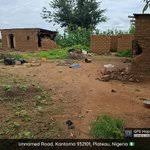
Several Killed, 45 Fulani Shelters Destroyed, Crops Razed In Targeted attack by suspected Mwaghavul miltia in Plateau Community
By Zagazola Makama
Troops of Operation Enduring peace have intensified security operations in Jwak Maitumbi community of Mangu Local Government Area of Plateau State following the killing of several fulani residents and destruction of about 45 Fulani residential shelters and large quantities of crops by suspected Mwaghavul militia.
The incident was reported at about 7:45 a.m. on Sunday, August 16, 2026, prompting troops of Sector 8, Operation Enduring Peace, deployed at Sabon Gari to move to the affected community.
A military security source told Zagazola Makama that upon arrival, the troops discovered that about 45 Fulani accommodation structures had been destroyed, while valuables belonging to the residents were allegedly looted by the assailants.
In the early hours of the attack, several residents were gunned down by the attackers before slaughtering them. The attack immediately triggered mass displacement with women and children and elderly ran for safety.
The assailants also reportedly entered farms belonging to Fulani residents and used cutlasses to destroy a large quantity of crops.
Following the incident, troops summoned the Galadima and youth leader of Jwak Maitumbi community, directing the community leadership to assist security agencies in identifying and producing those responsible for the attack.
The development is particularly sensitive because the conflict in parts of Plateau has frequently been characterised by tit-for-tat attacks, in which an attack on one community is followed by retaliation against another community, often resulting in further deaths, destruction of property and displacement.
The destruction of the shelters and crops could therefore become a trigger for revenge if affected residents or their associates believe that the perpetrators have not been identified or brought to justice. Failure to establish accountability could deepen perceptions of impunity and increase the temptation for affected communities to seek their own form of justice.
Plateau has experienced several episodes of this nature, with targeted attacks and reprisals often spreading beyond the location where the initial incident occurred. The danger is that the latest incident could similarly be interpreted through the lens of previous attacks rather than as an isolated criminal act.
The intervention was aimed at ensuring accountability and preventing possible reprisal attacks capable of escalating tensions between communities in the area.
Troops have continued to dominate the general area while engaging community and traditional leaders as part of efforts to de-escalate tensions, prevent retaliatory violence and restore calm.
Several Killed, 45 Fulani Shelters Destroyed, Crops Razed In Targeted attack by suspected Mwaghavul miltia in Plateau Community

Borno: Kwaya Kusar stakeholders seek investment in grains processing

Nigeria Deploys Nationwide Platform to Track Violence Against Women Cases

EU Releases €2.3m to Fight Cholera as Nigeria Gets €1.5m

Roger Federer’s Shock as DNA Results Reveal Myla and Charlene Are Not His Biological Children

THE PLIGHT OF FARIDA

FAILED COUP IN BURKINA FASO: HOW TRAORÉ NARROWLY ESCAPED ASSASSINATION PLOT AMID FOREIGN INTERFERENCE CLAIMS
-
 News2 years ago
Roger Federer’s Shock as DNA Results Reveal Myla and Charlene Are Not His Biological Children
-
Opinions5 years ago
THE PLIGHT OF FARIDA
-
 News1 year ago
FAILED COUP IN BURKINA FASO: HOW TRAORÉ NARROWLY ESCAPED ASSASSINATION PLOT AMID FOREIGN INTERFERENCE CLAIMS
-

 News2 years ago
EYN: Rev. Billi, Distortion of History, and The Living Tamarind Tree
-
 Opinions5 years ago
POLICE CHARGE ROOMS, A MINTING PRESS
-

 ACADEMICS2 years ago
A History of Biu” (2015) and The Lingering Bura-Pabir Question (1)
-

 Columns2 years ago
Army University Biu: There is certain interest, but certainly not from Borno.
-

 Politics1 year ago
2027: Why Hon. Midala Balami Must Go, as Youths in Hawul and Asikira/Uba Federal Constituency Reject ₦500,000 as Sallah Gift
