
News
Ogwashi-Uku Palace Attack Trial: Gunshot Victim Identifies Mike Nwaukoni As Ringleader As Multiple Witnesses Place Defendants At Scene With Weapons


Ogwashi-Uku Palace Attack Trial: Gunshot Victim Identifies Mike Nwaukoni As Ringleader As Multiple Witnesses Place Defendants At Scene With Weapons
Ogwashi-Uku Palace Attack Trial: Gunshot Victim Identifies Nwaukoni As Ringleader As Multiple Witnesses Place Defendants At Scene With Weapons
Fresh revelations emerged at the Federal High Court, Asaba, as the trial over the October 12, 2023 terrorist-style attack on the Palace of the Obi of Ogwashi-Uku resumed, with witnesses giving direct, consistent, and corroborated testimony identifying Mr Mike Nwaukoni as the principal actor who led an armed mob to the palace, resulting in gunfire, injuries, and destruction of property.
On Tuesday, January 13, the court heard the gripping testimony of PW2, Mr Lawrence Obasi, an Otulu vigilante who sustained gunshot injuries that left his right arm paralysed for months.
PW2 told the court that he was officially deployed alongside the police to protect the palace on the day of the attack, having undergone formal vigilante training by the police two years earlier. According to him, Mike Nwaukoni personally led a large mob armed with dangerous weapons to the palace gate at Ogbe-Nti.
He testified that despite clear warnings and instructions from the Divisional Police Officer and the police commander at the scene, the mob—acting on Nwaukoni’s direct encouragement—attempted to forcibly break into the palace.
“He told them to break the gate and said he had money to take care of anything that happened,” the witness told the court.
Moments later, gunshots rang out.
PW2 narrated how armed supporters opened fire, damaging police and vigilante vehicles and hitting him with live ammunition as he sought cover inside one of the vehicles. He positively identified Elue Adigwe and Francis Okolie as being present at the scene and fully armed.
His account directly corroborated the earlier testimony of PW1, the police commander who had testified last year that Mike Nwaukoni personally led the armed crowd, stressing that no police officer accompanied the mob and that it was not a lawful procession but an armed attack.
The police commander had also told the court that Nwaukoni had invited him and the DPO to his residence days before his testimony in what observers concluded was an attempt to obstruct justice by getting him to stop his testimony scheduled for the next week.
THIRD WITNESS CONFIRMS IDENTITIES, WEAPONS, AND HISTORY OF VIOLENCE
On Wednesday, PW3, Mr Emeka Nwaolisa, a palace vigilante, took the stand and reinforced the prosecution’s case, confirming the identity of the same defendants, their presence at the palace gate, and the use of offensive weapons during the attack.
PW3 testified that he was stationed at the locked palace gate when over 200 persons marched toward the palace, among them Mike Nwaukoni, Elue Adigwe, Francis Okolie, and others. He stated that on Nwaukoni’s orders, gunfire erupted as the mob attempted to force entry, leading to chaos and injuries.
During cross-examination, PW3 also revealed that Eugene Ojo Izediunor had previously boasted at a public drinking spot that he used money to “settle” his way out of an earlier case, a conversation witnessed by multiple persons.
He further told the court that the defendants had a long-standing history of orchestrated violence and unrest aimed at destabilising the community and undermining the traditional institution.
SPIN FAILS TO DENT CORE FACTS
While defence counsels consisting of four senior advocates attempted to divert attention to procedural arguments and minor inconsistencies, the central facts remained unshaken:
• Multiple eyewitnesses independently identified the same defendants
• Weapons were present and used
• Gunshots were fired
• A vigilante suffered gunshot injuries
• Vehicles were damaged
• The palace came under armed siege
The court admitted two statements made by PW3 as exhibits and adjourned the matter to April 21 and 22, 2026, with the trial set to continue.
The five defendants—Mike Nwaukoni, Elue Adigwe, Francis Okolie, Eugene Ojo Izediunor, and John Nwona—were all present in court.
As proceedings continue, the testimony so far paints a clear, consistent, and deeply troubling picture of a coordinated armed assault on a traditional institution, now firmly laid before the court under oath.


News
Beyond farmer-herder clashes: how armed groups, criminality and misinformation are tearing Mangu apart
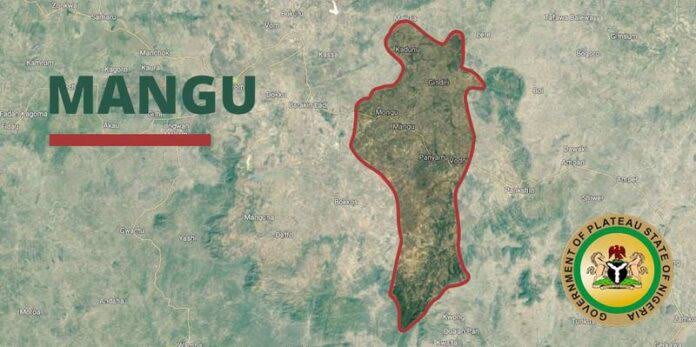
Beyond farmer-herder clashes: how armed groups, criminality and misinformation are tearing Mangu apart
By: Zagazola Makama
Plateau State is witnessing a dangerous transformation of communal violence into a self-sustaining security crisis in which attacks, reprisals, cattle rustling, arson, misinformation and political narratives are feeding one another.
The most revealing way to understand the renewed violence in Plateau State may not be to ask who started the latest attack. The more important question is: why does every attack now appear capable of producing another attack?
Because what is unfolding across parts of Mangu, Barkin Ladi and adjoining communities in September 2026 increasingly resembles a conflict system in which violence has acquired its own momentum. The violence in Mangu and adjoining parts of Plateau is no longer adequately explained by the familiar language of a “farmer-herder clash.”
What is emerging from the incidents recorded in September 2026 is something considerably more complex: a cycle in which an attack creates a grievance, the grievance produces retaliation, the retaliation creates another grievance, and the resulting violence is then interpreted through competing ethnic and religious narratives.
The result is a conflict in which the original cause of an incident can quickly become irrelevant. What matters to the next attacker is what happened to his community yesterday.
This is precisely what makes the present situation so dangerous.
Security sources operating in the affected areas have provided accounts of incidents involving both Fulani and Mwaghavul communities. The accounts should not be interpreted as establishing collective responsibility for either population. But when the individual incidents are placed chronologically beside one another, a disturbing pattern becomes visible.
And within the September incidents documented by Zagazola Makama, a significant number of attacks against Fulani herders, their livestock and settlements have been attributed by security sources to suspected Mwaghavul militia members. At the same time, the Leadership Mwaghavul community and their representatives have also reported killings and attacks allegedly committed by armed Fulani elements. Both facts should not be ignored simply because it is politically uncomfortable.
What led to the renewed escalation began when three young herders and 36 cattle were killed while 12 were wounded by Mwaghavul militia on Sept. 12 at Alohom in the Sabon Gari District of Mangu. The three young Fulani herders, Garzali Shuibu, 18; Bashiru Yakubu, 14; and Salim Abubakar, 15, were killed in an attack while tending cattle. The incident was reported by only a few Nigerian media outlets. Surviving herders alleged that suspected Mwaghavul militia from the Alohom, Gaude and Mangu Halle areas were responsible.
This incident was critical to the subsequent sequence that later preceded in the month, as security sources immediately warned that it could trigger reprisals.
On Sept. 13, less than 24 hours after the Alohom killings, gunmen suspected by security sources of being Fulani bandits attacked a commercial bus at Dungus Kuru T-junction, near Science School in Jos South. Six passengers were killed and two others injured. MACBAN and other Fulani leaders immediately issued a press release rejecting Zagazola claims, but Zagazola specifically noted the timing, less than 24 hours after the killing of the three Fulani herders and the destruction of their cattle in Mangu.
On Sept. 14, the following afternoon, suspected Fulani militia reportedly attacked Vodni community in Mangu. Two people were killed and five children sustained gunshot wounds.
Troops arrived after the attackers had fled and found the victims inside a house. The wounded children were evacuated to Mangu General Hospital. This occurred less than 48 hours after Alohom.
On Sept. 14, on the same day, a Christian, Markus Musa, was reportedly killed between Rimi and Kaduno communities while travelling by motorcycle to attend a CAN meeting. Security sources attributed the attack to suspected Fulani bandits. His younger brother, Arum Musa, escaped. Shortly after the attack, angry youths stormed a Fulani hamlet and set it on fire. This added another layer of grievance to an already deteriorating environment.
On Sept. 16, troops at Manja Forest, Mangu, responded to reports of a suspected Fulani militia reprisal attack. The intervention forced the attackers to retreat into the surrounding bush. No casualty was initially reported as the troops’ intervention prevented another attack.
On Sept. 17, the next day, troops received intelligence about suspected Mwaghavul militias moving towards Manja community. The attackers opened fire after sighting troops. Soldiers engaged them and forced them to withdraw into the forest. During the withdrawal, the attackers reportedly set some houses on the outskirts of the community ablaze.
So within roughly 48 hours, Manja experienced two separate attempted attacks, one attributed to suspected Fulani militias and another involving suspected Mwaghavul militias moving toward the community.
On Sept. 18, gunmen suspected to be Mwaghavul militia attacked Yan Gwari Market in Mangu. Three people were reportedly killed: Nanker Andrew, Delshak Jacob and Jessica Thomas, while five others were reported injured. Another victim, Abdullahi, a Muslim, was shot along the withdrawal route of the attackers. The survivor said those who attacked him were local militia groups dressed in black. The attackers reportedly withdrew through the Water Board axis.
On Sept. 19, troops responded to sporadic firing between Kikyau and Alohom. They reportedly encountered armed Fulani herders with cattle attempting to cross a river. Troops engaged them and forced them to withdraw. During the subsequent exploitation, troops observed what appeared to be deliberate destruction of farmland around Alohom. Eight sheep, two lambs and one calf were recovered after reportedly being abandoned by the fleeing group. MACBAN leaders from adjoining communities were summoned as part of the investigation.
On Sept. 20, suspected Mwaghavul militia reportedly attacked herders at Maitumbi village. Several livestock were reportedly killed and others injured. The exact number was still being verified when Zagazola published the report. The report explicitly described the incident as part of continuing tit-for-tat attacks. Sept. 20, barely an hour and a half after the Maitumbi incident, another attack was reported at Kantoma. Suspected Mwaghavul militia reportedly attacked a Fulani cattle harbour.
Security sources reported: 4 cattle killed, 17 cattle wounded, 11 rounds of 7.62×51mm NATO ammunition recovered, 122 empty 7.62×39mm cases recovered, and one locally fabricated sword recovered. Troops subsequently launched clearance and manhunt operations around Jwak Maitumbi and adjoining communities.
On Sept. 20, later that evening, troops responded to sporadic gunshots around Jwerk Kargung. Security sources said suspected Fulani militias were attempting a reprisal attack. Troops deployed from Mangu Halle, together with Operation Rainbow and Keystone personnel, intervened and forced the attackers into the bush.
This gives us an important same-day chain: 2:00 a.m. Maitumbi: suspected Mwaghavul attack on herders/livestock. At 3:35 a.m. in Kantoma, again suspected Mwaghavul attack on cattle harbour. At 8:35 p.m. in Jwerk Kargung, suspected Fulani reprisal attack was attempted, but troops intervened.
Next day, Sept. 21, a 32-year-old man, Fwangmun Karimu, was reportedly killed at Sabon Gari in a reprisal attack. Security sources attributed the attack to suspected Fulani militias who allegedly infiltrated from the Mangu Halle axis. Heavy rainfall was reportedly used to conceal their movement.
Again, on Sept. 22, three men from Kikyau were killed along the Gyambwas–Kikyau road. They were identified as: Gambo Fumyil, Zugumna Bamaiyi, and Samson Dapo.
Zagazola reported that the men had reportedly moved past troops enforcing the curfew at Gyambwas before proceeding toward Kikyau, when they were subsequently ambushed by suspected Fulani bandits.
Sept. 22, only about an hour after the Gyambwas–Kikyau killings, troops encountered youths resisting curfew enforcement at Chichim. Local vigilantes reportedly admitted firing the shots after seeing what they considered suspicious movement. Troops dispersed the youths and warned the vigilantes against taking the law into their own hands.
On Sept. 24, a 36-year-old Alpha Joel was killed during an attack by suspected Fulani bandits at Dindiyes Village, Panyam District, Mangu. The report placed the attack at about 3 a.m. The incident occurred as the area was already under intense security pressure following the preceding reprisals.
Same day, Sept. 24, Mwaghavul militiamen attacked a Fulani herder, killed him and stole 42 livestock while tending cattle at Bankansarki, around Sagas, Kongon Langai District.
On Sept. 25, a major reprisal attack was then reported at Kassa, along the Barkin Ladi–Mangu axis. Zagazola reported that three locals were killed in what was described as a reprisal following the killing of a Fulani herder and the alleged rustling of 30 livestock and 10 sheep.
On Sept. 26, two people were killed at Kantoma.
They were identified as: Ibrahim Namchin, from Kikyau, and Kenneth Ishaku, from Kantoma. Zagazola described the incident as a suspected Fulani reprisal attack. Troops recovered: two empty 7.62mm cartridge cases and one motorcycle. The attackers had fled before troops arrived.
Same day, Sept. 26, at about 10:21 a.m., less than two hours after the reported killing of the two Kantoma/Kikyau men, six houses belonging to Fulani residents were reportedly burnt by Mwaghavul militiamen in reprisal to the attack. Troops arrived to find the houses already burning. No immediate casualty was reported from the arson.
Again, Sept. 26, about 8:10 p.m., suspected armed Mwaghavul youths attacked the Lawet community in Pushit District of Mangu Local Government Area of Plateau State, killing a herder and his 12 cattle and injuring another 12, while several others were reportedly rustled.
The September incidents present a clear anatomy of a tit-for-tat conflict in the Plateau. The distinction between perpetrator and victim becomes increasingly blurred because a community that was victimised yesterday can become the perpetrator tomorrow. Both communities continue to suffer unquantifiable losses.
The existing record is not one-sided. Mwaghavul organisations have reported their own casualties. The Mwaghavul Development Association, for example, reported several attacks carried out by Fulani militants in Kikyau, Larkas, Ntul and Kinat in September, including the killing of Geoffrey Gumut and Katbam Titus.
There have also been attacks attributed to suspected Fulani elements, including the reported killing of three locals along the Gyambwas–Kikyau axis and other incidents supplied in security reports.
Therefore, it would be analytically wrong to always describe every Mwaghavul casualty as evidence of a coordinated Fulani campaign to carry out genocide against peace-loving Christians in order to grab their lands.
What is happening is only establishing something that deserves serious investigation: armed actors operating from within the conflict environment, both from the Fulani and Mwaghavul sides, appear capable of repeatedly targeting members of the opposing community and its economic assets. Both groups carry out this attrition in connivance with their communities, and that is the point at which a communal dispute continues to acquire the characteristics of organised violence.
The most dangerous element of the Plateau crisis may not be the first gunshot. It may be what happens after it. A killing produces a story. The story produces anger. Anger produces mobilization and funeral charges. Mobilisation produces another attack. The second attack produces another story. And the cycle continues.
Another dimension of the crisis is information warfare. Fake news peddlers and crisis entrepreneurs continue to benefit from the crises while presenting the crises as one-sided to the international community; the facts on the ground continue to speak otherwise. These crisis actors know clearly that terror always strives by creating fear. They therefore always capitalise on the existing situation to create panic. For example, they will immediately issue a threat alert in the community where they already know that their own militiamen have carried out an attack. They will not report the attack; instead, they will issue a warning that the community may come under attack, urging the security agencies to take the bullet on their behalf.
According to multiple security sources involved in managing the conflict, these competing groups frequently approach security agencies with narratives that place responsibility on the opposing community before the facts have been established. This is a serious operational problem. If a security agency receives an unverified report that “Fulani are attacking,” it may mobilise against Fulani suspects. If the information is false, the security response itself can become a new grievance.
The same applies in reverse. This is why the first duty of a professional security organisation in a communal conflict is not to believe the loudest narrative. It is to establish what happened.
One of the most revealing accounts from the soldiers is the description of incidents initially blamed on Fulani attackers which, after investigation, allegedly turned out to involve ordinary criminality or disputes unrelated to communal conflict. One of the most prevailing attacks is happening around mining sites by locals, where they attack each other because of mineral resources.
Another example cited in the conversation involved attackers who reportedly entered a residence, killed a man and his wife, attempted to kill the children and fled. The initial assumption was reportedly that Fulani attackers were responsible. But subsequent intelligence allegedly pointed in another direction, including the possibility of a dispute over money shared during cow-rustling activities. Angry youths from the community later apprehended the youths and almost lynched them.
In Plateau, criminals continue to exploit communal tension by committing heinous atrocities due to the availability of weapons, thereby deliberately allowing suspicion among the two communities. While the murderer gets away, the community retaliates, killing themselves. Then the original criminal objective disappears beneath an avalanche of ethnic anger. That is how local criminality in Plateau has become communal warfare.
Therefore, the security environment cannot be understood from social-media narratives alone.
The religious narrative that has consistently become a weapon to justify what was going on has proven to be false. Several attempts by locals and foreign actors to frame the Plateau conflict entirely as a religious confrontation have been exposed to be FAKE, as the available evidence points to a more complicated picture. Religion undoubtedly influences identity and perception in Plateau, but the whole crisis involves cattle rustling, land disputes, criminality, revenge attacks, territorial claims, political mobilisation and competition over access to resources.
But crisis entrepreneurs continue to reduce all of this to “Christian persecution or genocide,” thereby obscuring the actual perpetrators and motives behind individual attacks and this violence aimed at coercing populations becomes particularly significant when it is connected to religious objectives.
The Federal Government, Plateau State Government and security agencies must rise up to the occasion and stop treating these issues with kid gloves. They should establish a joint incident-review mechanism that documents attacks, identifies perpetrators, maps recurring corridors and tracks reprisals. The security agencies should also identify communities at the highest risk of retaliatory violence and maintain visible, unpredictable patrol patterns around them.
The government does not need to decide whether Fulani or Mwaghavul people are collectively right. It needs to determine who committed which crime. If a Mwaghavul militia member kills a Fulani herder, he should be arrested. If a Fulani gunman kills a Mwaghavul farmer, he should be arrested. If somebody rustles cattle, he should face the law. If somebody burns a house, he should face the law. If somebody fabricates information to provoke an attack, he should face the law.
If somebody circulates manipulated images to incite violence, that should also attract legal consequences. The identity of the victim must never determine the identity of the perpetrator.
Traditional and community leaders should be required to publicly and consistently reject attacks carried out in their name. The immediate requirement is not another political declaration. It is an independent, evidence-driven security and criminal investigation framework covering all incidents in the state.
One of the most combustible issues in Mangu and other parts of these conflict-prone areas are competing claims of ownership of land and belonging. “Our land” versus the law. One side says: “Our land.” The other says: “We have lived here for generations.” Some of the Fulani have lived in the area for over 300 years and have no other place to call their home. Land disputes require documentation, traditional authority where legally relevant, statutory law and judicial processes. They cannot be settled by armed men.
If a community believes another population has occupied land unlawfully, the remedy is not expulsion through violence, attack or social media ranting. The best thing to do is to challenge it through the competent court of law.
Likewise, if pastoralists believe they have established legitimate residence or grazing rights, those rights must be tested through the appropriate legal and administrative processes.
The moment armed groups begin determining who belongs somewhere, the gun has replaced the law. And sometimes these issues are pushed by illegal mining, tree cutting, erosion and competition over natural resources, which can intensify disputes that are subsequently interpreted through ethnic identity.
A conflict may therefore appear ethnic on the surface while being driven underneath by access to land, water, pasture, forests, minerals and economic opportunity. This is why Plateau requires more than soldiers. It requires land administration, environmental enforcement, livestock management, mining regulation, community mediation and functioning local justice mechanisms.
Conclusion: the mask that must fall
The central lesson from the soldiers’ accounts and the September incident trail is not that one ethnic group is inherently violent. It is more uncomfortable than that. The conflict is being sustained by armed actors on different sides, criminal opportunists, retaliatory logic, disputed land and resource claims, weak accountability and competing information narratives.
Zagazola Makama is a Counter-Insurgency Expert and Security Analyst in the Lake Chad Region.
Beyond farmer-herder clashes: how armed groups, criminality and misinformation are tearing Mangu apart

VP Shettima: Security Council Exclusion Of Africa Subverts Global Governance Legitimacy
** *Meets Amina Mohammed as Nigeria rallies behind UN reform
By: Our Reporter
Vice President Kashim Shettima has said Africa’s continued exclusion from permanent membership of the United Nations (UN) Security Council undermines the fairness and legitimacy of the global governance system.
He reaffirmed Nigeria’s support for urgent reform of the United Nations, noting that the nation would remain a dependable partner in efforts to rebuild trust among nations, defend international law and address hunger, violence and exclusion.
VP Shettima stated this during a meeting with United Nations Deputy Secretary-General, Hajiya Amina Mohammed, on the sidelines of the 81st United Nations General Assembly in New York.
He commended the UN Secretary-General, António Guterres, for his consistent support for a more representative Security Council, particularly his declaration that a 21st-century Council without permanent African representation is “unjust and indefensible.
“A continent cannot be summoned to bear the burdens of the international order and then denied an equal hand in directing it,” the VP said.
Senator Shettima maintained that Nigeria would continue to support reforms that make international institutions more representative, responsive and credible, stressing that global decisions must better reflect contemporary geopolitical and demographic realities.
He also praised Guterres for defending international law and human dignity amid widening global conflicts and rising geopolitical tensions.
“You have remained a voice of reason as individual states drift from the obligations they assumed under the United Nations Charter and the rules of international law. You have insisted that sovereignty carries duties, that might confers no licence to injure, and that the worth of a human life cannot vary with the flag above it,” he said.
The Vice President warned that diplomacy must not lose sight of the human consequences of war and instability.
“The mother searching for her child, the family driven from home and the hungry child awaiting food must never become abstractions in the language of states,” he added.
VP Shettima also commended UN Deputy Secretary-General, Amina J. Mohammed, for her contributions to multilateral diplomacy and sustainable development, describing her service as a source of pride to Nigeria.
“Nigeria will remain a willing ally in the work of restoring trust among nations and dignity to lives diminished by hunger, violence and exclusion. We owe our children a world in which conscience has authority and the law has meaning,” he said.
The Vice President added that the credibility of the international system would eventually depend on its ability to respond fairly to human suffering and provide all regions with a meaningful voice in global decision-making.
“Civilisation endures only when the suffering of a stranger becomes a claim on our conscience,” he said.
Earlier, the United Nations Deputy Secretary-General, Hajiya Amina Mohammed, expressed profound gratitude to Nigeria and the administration of President Bola Ahmed Tinubu for the support to the UN as an institution and to her office as the deputy scribe of the global body.
Her words: “It’s deep honour to have your esteemed delegation here to come and surprise me. I am truly honoured and grateful.
“I want to thank through you, the President of the Federal Republic of Nigeria President Bola Ahmed Tinubu, and you for embracing me wholeheartedly not just as the DSG but as a daughter of the soil. He has been an incredible support to me, and he has also supported this institution.”
The Vice President was accompanied on the visit by Governors Abdulrahman AbdulRazaq of Kwara State, Hyacinth Alia of Benue, Siminalayi Fubara of Rivers, and Dauda Lawal of Zamfara; Minister of Foreign Affairs, Amb Bianca Odumegwu-Ojukwu, and Nigeria’s Permanent Representative to the UN, Amb. Jimoh Ibrahim, among other top officials.
VP Shettima: Security Council Exclusion Of Africa Subverts Global Governance Legitimacy
Troops raid terrorists’ enclave, neutralise fighter, recover AK-47 in Sokoto
By: Zagazola Makama
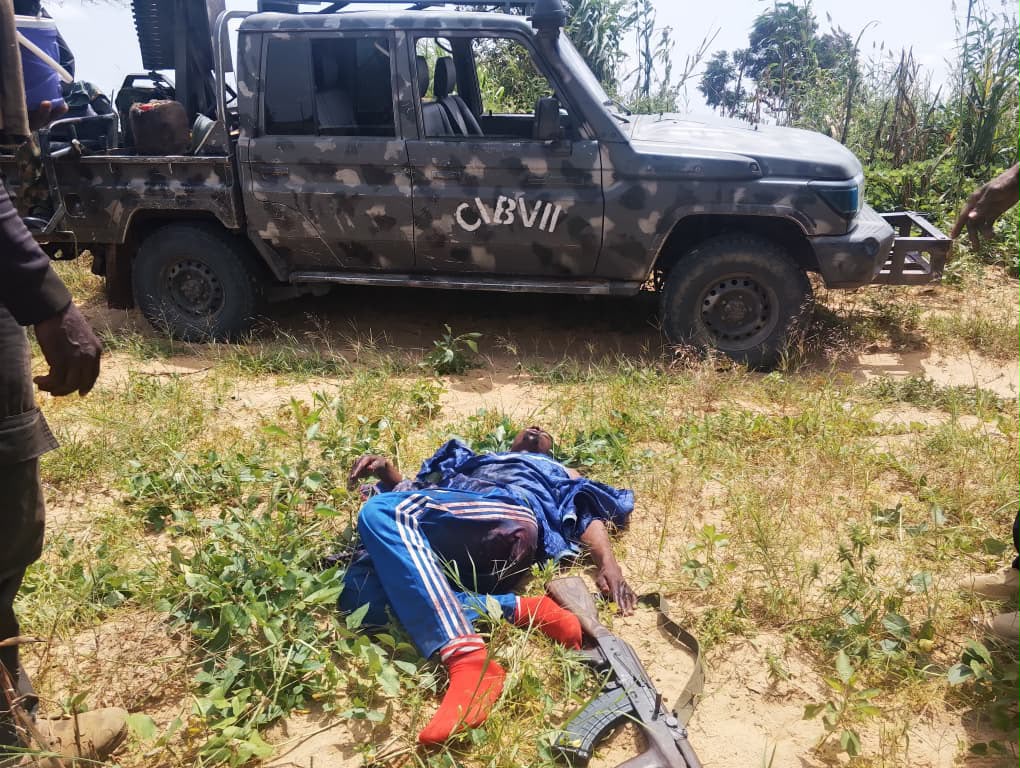
Troops of Sector 2, Operation FANSAN YAMMA, have neutralised a terrorist during a raid on a suspected terrorist hideout in Gudu Local Government Area of Sokoto State.
Security sources told Zagazola Makama that the operation was conducted following credible intelligence on the presence of terrorists around Karani village.
The troops advanced towards the suspected terrorist camp and, upon making contact with the hostile elements, engaged them with firepower, neutralising one terrorist while others fled into the surrounding forest.
During the exploitation of the camp, the troops recovered one AK-47 rifle loaded with live ammunition, one operational motorcycle, military camouflage uniforms, maintenance tools and other logistical supplies.
Following the encounter, the troops conducted clearance operations across the surrounding forest axis to dominate the area and deny the fleeing terrorists freedom of movement.
The recovered weapons and equipment have been taken into custody as troops continue operations to track fleeing members of the group and dismantle their networks in the area.
Troops raid terrorists’ enclave, neutralise fighter, recover AK-47 in Sokoto

Beyond farmer-herder clashes: how armed groups, criminality and misinformation are tearing Mangu apart

VP Shettima: Security Council Exclusion Of Africa Subverts Global Governance Legitimacy

The British Massacres and Lugard’s Punitive Expeditions in Nigerian History

Roger Federer’s Shock as DNA Results Reveal Myla and Charlene Are Not His Biological Children

THE PLIGHT OF FARIDA

FAILED COUP IN BURKINA FASO: HOW TRAORÉ NARROWLY ESCAPED ASSASSINATION PLOT AMID FOREIGN INTERFERENCE CLAIMS
-
 News3 years ago
Roger Federer’s Shock as DNA Results Reveal Myla and Charlene Are Not His Biological Children
-
Opinions5 years ago
THE PLIGHT OF FARIDA
-
 News1 year ago
FAILED COUP IN BURKINA FASO: HOW TRAORÉ NARROWLY ESCAPED ASSASSINATION PLOT AMID FOREIGN INTERFERENCE CLAIMS
-

 News3 years ago
EYN: Rev. Billi, Distortion of History, and The Living Tamarind Tree
-
 Opinions5 years ago
POLICE CHARGE ROOMS, A MINTING PRESS
-

 ACADEMICS3 years ago
A History of Biu” (2015) and The Lingering Bura-Pabir Question (1)
-

 Columns3 years ago
Army University Biu: There is certain interest, but certainly not from Borno.
-

 Politics1 year ago
2027: Why Hon. Midala Balami Must Go, as Youths in Hawul and Asikira/Uba Federal Constituency Reject ₦500,000 as Sallah Gift
