
News
Okpebholo’s Probe Committee and the Imperative of Transparency in Edo State,

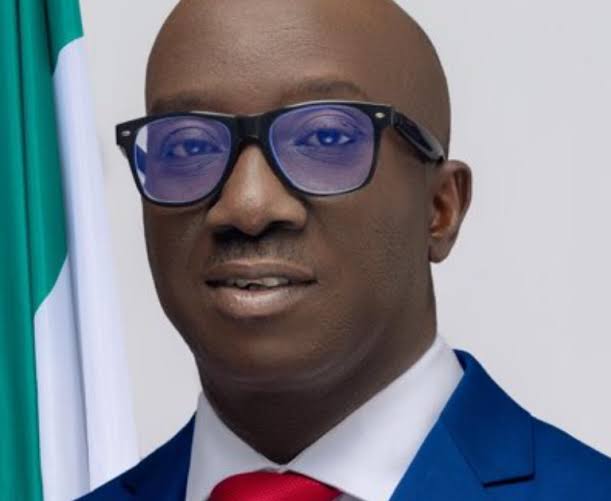
Okpebholo’s Probe Committee and the Imperative of Transparency in Edo State,
By Augustine Osayande
In the ever-evolving discourse on governance and accountability, Edo State finds itself at a critical juncture. It is within this context that I seek to engage stakeholders and citizens alike on the necessity of transparency and responsible leadership.
Let me first extend my heartfelt congratulations to Senator Monday Okpebholo on his inauguration as the sixth democratically elected Governor of Edo State. His leadership represents not only a new administration but also a fresh opportunity to set a standard for integrity and progress.
The announcement of a 14-member State Assets Verification Committee by Governor Okpebholo signals an important step in addressing the pressing issues of governance. The committee’s mandate to audit the assets and liabilities of the previous administration, led by Governor Godwin Obaseki, is both timely and essential.
The committee’s inauguration on November 26, 2024, at the Festival Hall, Government House, Benin City, will mark the beginning of what promises to be a transformative process.
The committee is chaired by Dr. Ernest Afolabi Umakhihe, a figure whose expertise and credibility lend weight to the process, and deputized by Anslem Ojezua, a seasoned professional with deep roots in the state’s political and social fabric.
The committee’s membership reads as a roll call of Edo State’s best minds, including:
Prince Kassim Afegbua, Hon. Patrick Ikhariale, Mr. Taiwo Akerele, Hon. Patrick Idiake, Hon. Rasaq Bello-Osagie, Mr. Fredrick Unopah, Frank Osumuede Edebor Esq (Secretary), Mrs. Abdallah Eugenia, Hon. Patrick Obahiagbon, Pharm. Kenny Okojie, Mrs. Lyndsey Tes-Sorae, and Hon. Abass Braimoh.
These individuals represent a diverse cross-section of expertise, integrity, and commitment, ensuring the committee’s ability to deliver on its mandate.
Governor Okpebholo’s decision to establish this committee underscores his administration’s commitment to transparency and accountability.
In a statement issued by Fred Itua, Chief Press Secretary to the Governor, the committee is described as vital for fostering robust governance processes and addressing gaps left by the previous administration. The Governor has emphasized that the limited records provided by the Obaseki administration make this verification process both urgent and necessary.
This initiative represents a decisive break from past practices. It sets a new standard for governance in Edo State, prioritizing the interests of its people above political convenience or administrative inertia. Central to this committee’s work is the alarming debt profile of Edo State. Under the previous administration, the state’s debt reportedly soared from ₦43 billion in 2016 to over ₦500 billion in 2024.
This staggering increase raises serious questions about financial management, transparency, and the effectiveness of previous developmental initiatives.
Who authorized the ₦30 billion loan for the Benin City Storm Water Drainage Project, which remains incomplete? What became of the ₦14.7 billion World Bank loan for Edo State? How were the ₦11 billion agricultural development loan and other funds utilized? Why was the ₦2.32 billion loan for Edo City Transport Service poorly accounted for? What happened to the ₦34 billion African Development Bank loan for critical water projects like the Ojirami Dam and Ugboha Water Works?
The absence of tangible developmental outcomes despite massive borrowing has eroded public trust and cast a shadow over the state’s financial future. These questions are not merely about assigning blame—they are a call for justice and a demand for lessons to prevent such fiscal mismanagement in the future.
The probe committee’s work must mark the beginning of a new era of accountability in Edo State. By thoroughly investigating the state’s financial history, identifying the individuals and processes responsible for mismanagement, and implementing reforms, the government can lay the groundwork for a sustainable and development-focused administration.
Accountability is not just a moral imperative—it is a practical necessity. Naming and shaming those who recklessly incurred debt or misappropriated funds serves as both a deterrent for future leaders and a reassurance to the public that governance is being taken seriously.
This initiative also presents an opportunity to establish a robust framework for fiscal responsibility:
Preventing reckless borrowing through stricter approval processes and oversight mechanisms. Ensuring proper project implementation and monitoring to avoid abandoned projects and wasted resources. Establishing penalties for financial mismanagement to deter future violations. Such measures will not only address past failings but also create a foundation for sustainable development and financial stability.
The people of Edo State are watching closely. They expect this probe to set a precedent for future administrations, demonstrating that public office is a trust to be honored, not a privilege to be exploited. The journey ahead is challenging, but it is also an opportunity to redefine governance in Edo State.
Governor Okpebholo’s leadership, combined with the efforts of the Assets Verification Committee, can usher in an era of transparency, integrity, and accountability. This is a moment for Edo State to rise above past shortcomings and chart a path toward a brighter, more prosperous future.
To achieve these goals, collective effort is essential. Stakeholders, citizens, and public servants must work together to support the committee’s efforts and hold the government accountable for delivering on its promises. Transparency and accountability are not the responsibility of government alone—they are a collective mandate that requires active participation and vigilance from all.
Let this probe committee’s work be the starting point of a transformative journey for Edo State. Together, we can rebuild trust, restore integrity, and ensure that governance truly serves the people. The people of Edo deserve nothing less.
■ Augustine Osayande, PhD contributed this piece from Abuja via austinelande@yahoo.com


Military
Mutiny: Presidential Guard Tightens Security Around Niger Presidency Amid Reports of Military Protest
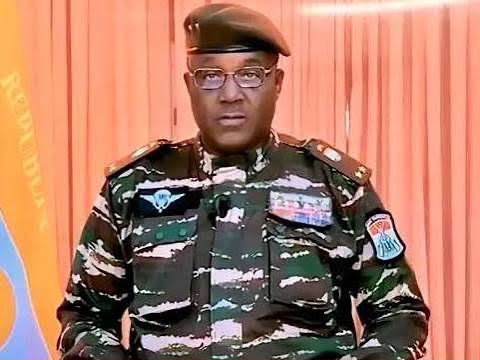
Mutiny: Presidential Guard Tightens Security Around Niger Presidency Amid Reports of Military Protest
By Zagazola Makama
Security was significantly reinforced around Niger’s Presidential Palace in Niamey following reports of unrest involving elements of the country’s armed forces, security sources told Zagazola Makama.
According to multiple security sources, the heightened deployment of the Presidential Guard, supported by armoured vehicles around the Presidential Palace on the night of July 3 and into July 4, followed what was described as a limited protest by personnel of an armoured unit within the Niger Armed Forces (FAN).
The sources said some soldiers reportedly declined deployment to frontline positions in northern Tillabéri Region, particularly around Inatès and Chinagodrar, citing inadequate heavy equipment and insufficient operational resources to confront the growing security threats in the area.
The protest was described by one source as a “small mutiny,” although there has been no official confirmation from the Nigerien authorities.
Security sources said the development triggered concern within the country’s leadership, prompting the reinforcement of security around the Presidential Palace and temporary restrictions on movement in the surrounding area as a precautionary measure.
The Tillabéri Region remains one of Niger’s most volatile security zones, with recurrent attacks by armed extremist groups, including factions linked to the so-called Islamic State in the Greater Sahara (ISGS).
As of the time of filing this report, the Nigerien government and military authorities had not issued any official statement regarding the reported protest or the increased security presence around the Presidency.
The situation remains under close observation.
Mutiny: Presidential Guard Tightens Security Around Niger Presidency Amid Reports of Military Protest
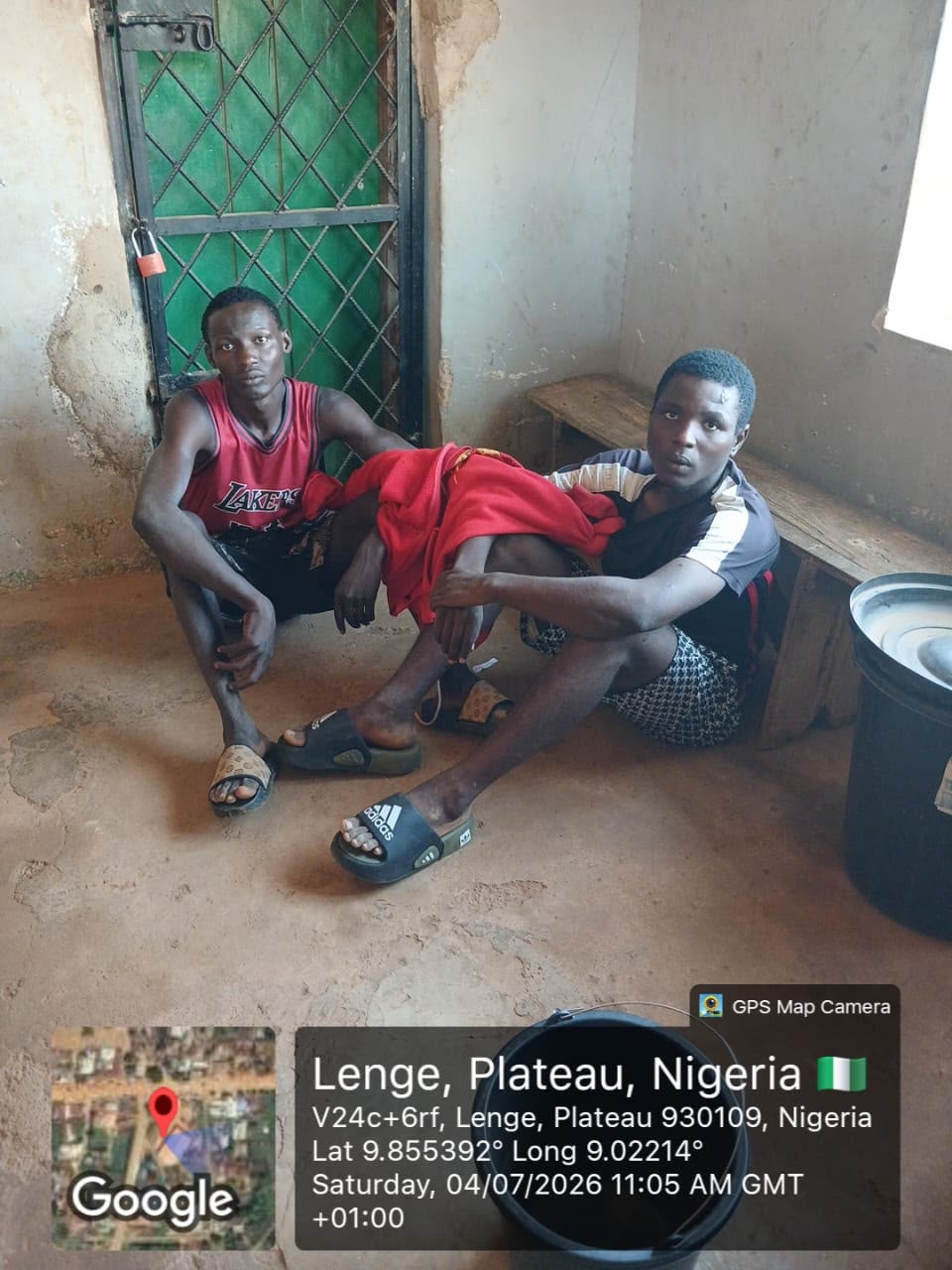
Two suspected criminals arrested during patrol in Plateau
By: Zagazola Makama
Troops of Sector 1 under Operation Enduring Peace have arrested two suspected criminals during a routine patrol in Jos East Local Government Area of Plateau.
Security sources disclosed that the suspects, identified as Azi Ezekiel, 21, and Ajiji Emmanuel, 19, were apprehended at about 10:30 a.m. on Saturday along the road leading to Forbur Village.
The sources said the suspects were intercepted by troops of Sector 1, Sub-Sector 12, while conducting a routine patrol in the area.
According to the sources, the two suspects have been handed over to the Keystone Police Station in Forbur for further investigation and possible prosecution.
The arrest forms part of ongoing security operations aimed at combating criminal activities and enhancing safety across Plateau State.
Two suspected criminals arrested during patrol in Plateau
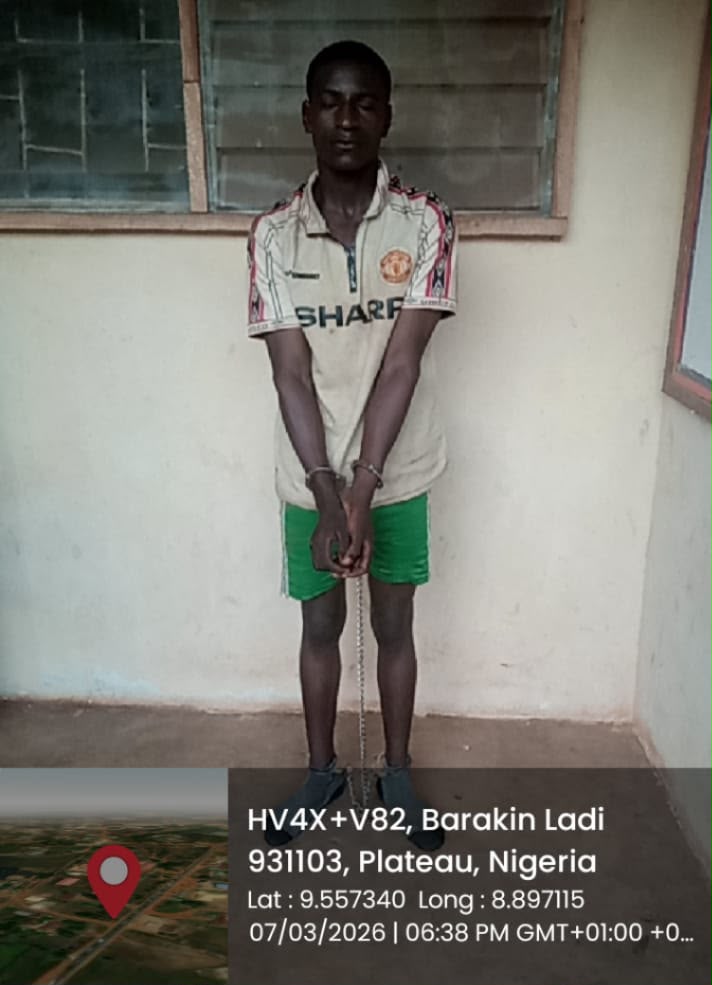
Troops arrest suspected kidnapper in Plateau community
By: Zagazola Makama
Troops of Sector 4 of Operation Enduring Peace have arrested a suspected kidnapper during a security operation in Barkin Ladi Local Government Area of Plateau.
Security sources said the suspect, identified as Mohamdu Surajo, 29, was arrested at about 6:45 p.m. on Friday at Sabon Layi Village following sustained security operations in the area.
The sources disclosed that the suspect is currently in military custody and is undergoing preliminary interrogation to aid ongoing investigations.
They added that the arrest is part of continued efforts by security forces to dismantle criminal networks and enhance security across Plateau State.
Troops arrest suspected kidnapper in Plateau community

President Tinubu Flags Off the Construction of Dikwa–Gamboru Ngala, Bama–Banki International Road Projects

Mutiny: Presidential Guard Tightens Security Around Niger Presidency Amid Reports of Military Protest

Troops Arrest Two Suspected Berom Militia Linked to NIPSS Attack as Security Sources Say Investigation Supports Earlier Leads

Roger Federer’s Shock as DNA Results Reveal Myla and Charlene Are Not His Biological Children

THE PLIGHT OF FARIDA

FAILED COUP IN BURKINA FASO: HOW TRAORÉ NARROWLY ESCAPED ASSASSINATION PLOT AMID FOREIGN INTERFERENCE CLAIMS
-
 News2 years ago
Roger Federer’s Shock as DNA Results Reveal Myla and Charlene Are Not His Biological Children
-
Opinions4 years ago
THE PLIGHT OF FARIDA
-
 News1 year ago
FAILED COUP IN BURKINA FASO: HOW TRAORÉ NARROWLY ESCAPED ASSASSINATION PLOT AMID FOREIGN INTERFERENCE CLAIMS
-

 News2 years ago
EYN: Rev. Billi, Distortion of History, and The Living Tamarind Tree
-
 Opinions5 years ago
POLICE CHARGE ROOMS, A MINTING PRESS
-

 ACADEMICS2 years ago
A History of Biu” (2015) and The Lingering Bura-Pabir Question (1)
-

 Columns2 years ago
Army University Biu: There is certain interest, but certainly not from Borno.
-

 Politics1 year ago
2027: Why Hon. Midala Balami Must Go, as Youths in Hawul and Asikira/Uba Federal Constituency Reject ₦500,000 as Sallah Gift
