
Education
Oriental Energy Hands Over Facilities to Community Primary School in Akwa Ibom

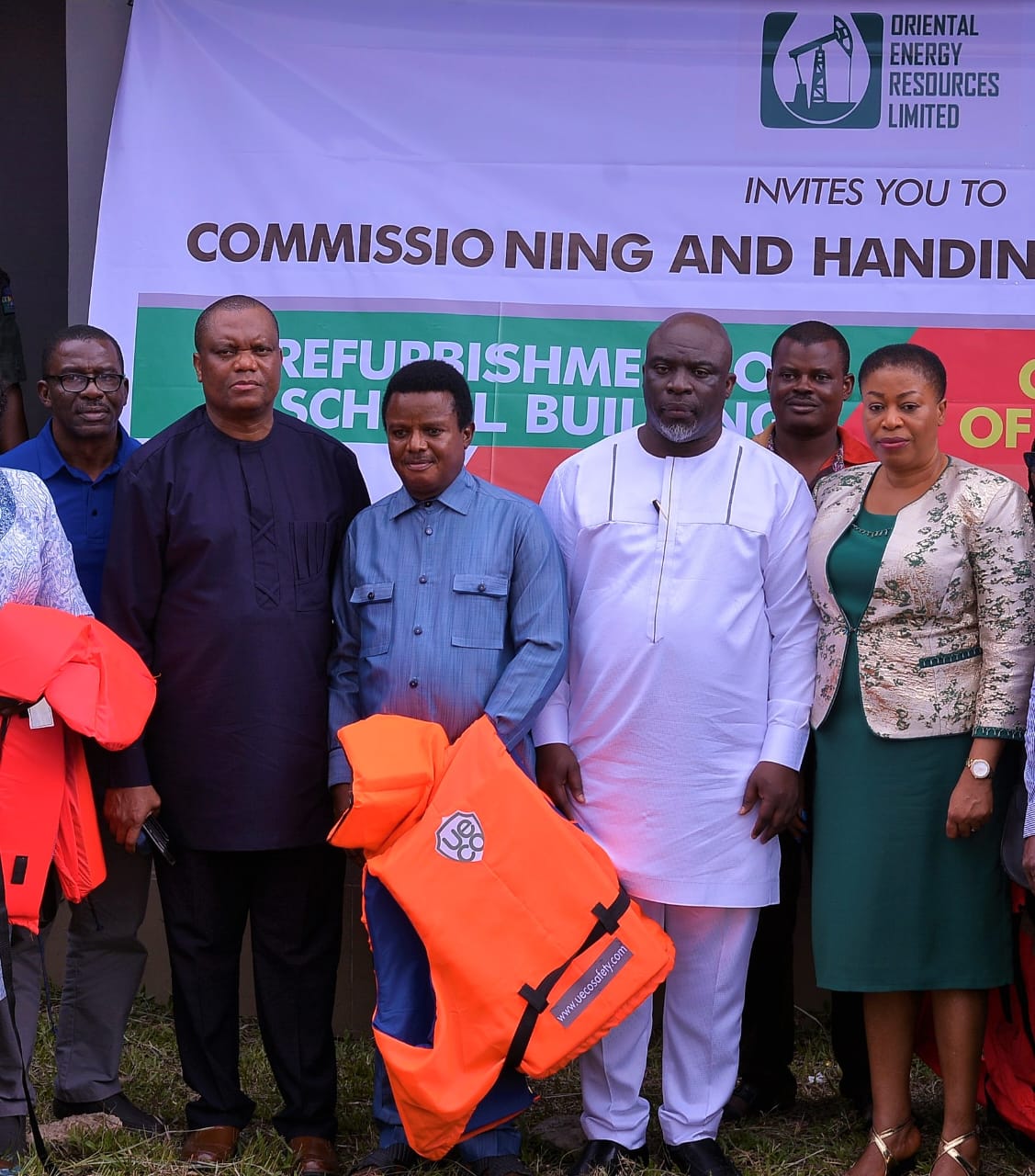
Oriental Energy Hands Over Facilities to Community Primary School in Akwa Ibom
By: Michael Mike
The Indigenous crude oil production company, Oriental Energy Resources Limited has completed and handed over new and upgraded essential teaching and learning facilities to Community Primary School, Ibuot Utan in Effiat, Mbo Local Government Area of Akwa Ibom State.
The event took place on Thursday, 18 August 2022, demonstrating the company’s commitment to education and human capital development in the state, especially in Effiat community.
A press statement on Sunday by the company, said prior to the project by Oriental Energy, the Community Primary School, with more than 60 children and a total of four classrooms barely had seats in the crumbling classrooms, no restroom, and no uniforms nor shoes for most of the children, adding that Ibuot Utan is a small village within the island of Effiat which is relatively isolated from the mainland part of Mbo local government area.
According to the statement, the restoration and provision of new facilities by Oriental Energy is part of its wider initiative of building safe schools to support inclusive and quality education across communities. This is in line with the United Nations’ Sustainable Development Goal (SDG) 4, as well as evidence of implementation of the Community Assisted Project component of Oriental Energy’s Project Specific Memorandum of Understanding (MoU) with Effiat community.
The statement said in addition, the infrastructure development project was awarded to a contractor who is a native of Effiat. For the same school, another Effiat contractor will be awarded a contract for the renovation of the Teachers’ Quarters, thus making Oriental Energy a shining model of compliance with Nigeria’s Local Content Guidelines of the Nigerian Oil and Gas Content Development Act of 2010.
A Primary 2 class teacher, Ruth Paul Etim, who grew up in the Ibuot Utan village and had been teaching for over five years at the school was delighted with the development. She said: “I am so happy. We didn’t even have a toilet at all. Now we have 3 new lavatories and new buildings with 4 classrooms and blackboards. We now have so many chairs and desks. More than enough for our children. Can you see how happy they are?”
For Board Member of the Akwa Ibom State Universal Basic Education Board (SUBEB), Sir John Udoh on behalf of its Chairman said that Oriental Energy is identified as a pacesetter in educational development in Mbo and the state at large. “This is one sure way the company has proven that education is serious business. Investing in education, especially at this basic level, is an investment in economic development and prosperity of the state.”
The Permanent Secretary of the State Ministry of Education, Rose Bassey, who represented the Commissioner of Education, Mrs Idongesit Etiebet at the handover ceremony, said the administration led by Governor Emmanuel Udom placed emphasis on education and in turn, the ministry always welcomed collaborations that made education a success in Akwa Ibom. The ministry described Oriental Energy as public-spirited and proactive about prioritising CSR. “I’m so happy with what the organisation has done in the education sector. Even gone beyond this to tertiary level scholarships and training young people in technical skills.”
The handover will now ensure the school management, Effiat community and SUBEB take full ownership of the facilities.
In addition to the Community Primary School project, Oriental Energy’s imprints in Effiat include the participation of thousands of the community people at the annual 5-day free medical outreach for the people of Mbo. It also includes a 5-day capacity building workshop on Sustainable Community Development Planning and Management which had 10 people from Effiat out of 26 participants in July 2022.
Likewise, the community’s young people were among 250 undergraduates from various LGAs in Akwa Ibom State awarded fully funded scholarships for the 2021/2022 academic session. Also, 7 Effiat young persons were among 15 beneficiaries who have begun a one-year Technical Skills Acquisition Program in Ibeno, Akwa Ibom State. Oriental Energy bears the full cost of the training including monthly stipends, personal protection equipment, accommodation, provisions and other essential needs.
As such, Community Leader, Barr. Asuquo Okpo advised youths in Effiat to shun vandalism and support growth on the small island. “This project started 10 years ago but it was disrupted. There would have been so much more development here. Oriental Energy has been a faithful partner.”
Also present was Engr. Emmanuel Inyang, Director of Petroleum Development from the Ministry of Power and Petroleum Development on behalf of the Commissioner, Dr John James Etim. The Commissioner said, “Oriental Energy has proven to be a responsible corporate citizen and a partner to the state. Their social investment in the education sector is incomparable. Handing over the school project to the Community Primary School will enhance human capacity development in the community.” He added that for His Excellency the Executive Governor of Akwa Ibom State, the improvement of education remained essential for creating intellectual and high-capacity manpower.
In the same vein, the Commissioner for Labour and Manpower Planning, represented by the Permanent Secretary, Mr Sunday Umana urged the community and pupils of the school to take ownership of the project and safeguard them from vandalism in order to serve the purpose they are meant.
The Managing Director of Oriental Energy Resources Limited, Mustafa Indimi, represented by the General Manager for Operations, Mr Augustine Ekeigwe, said the company is focused on creating positive sustainable footprints through projects and programmes that would improve the quality of life of people in various communities in Mbo LGA.
“Effiat community has benefited from our social investment interventions since inception. We consider the communities in our areas of operation as critical stakeholders in our business. And will continue to do so through proactive engagement and strategic social investment,” the MD said.
The core areas of Oriental Energy’s social investment interventions are community health, education and human capital development, enterprise development and support, and capacity building for sustainable development.
Since the commencement of its commercial production, the company has become one of Nigeria’s thriving indigenous companies with full local content capacity. Oriental Energy now leads other marginal field operators with its responsible operations and interventions



A Time To Read, Reflect, and Learn
By: Our Reporter
As predicted by many, during his two-week leave, Vice President Kashim Shettima, by custom, takes time for study and reflection.
Leadership is sustained by the willingness to keep learning. Sometimes, stepping away from the daily rush creates the space to examine ideas more carefully and return to responsibility with greater clarity.

For the Vice President, the period is also an opportunity to deepen the knowledge required for continued service to Nigeria.

Learning does not end when responsibility begins. In many ways, greater responsibility makes learning even more necessary.
A Time To Read, Reflect, and Learn
Nigeria’s Education Crisis Now About System Capacity, Not School Enrolment – Report
By: Michael Mike
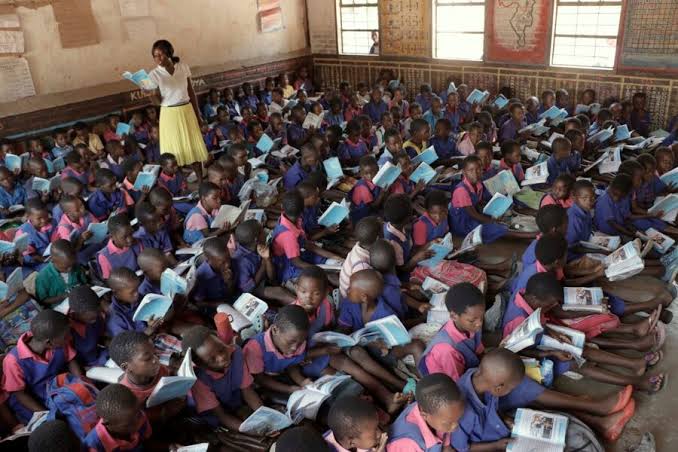
Nigeria’s education challenge has shifted from getting children into school to building an education system capable of delivering quality learning, according to a new policy report by the Athena Centre for Policy and Leadership.
The report, Nigeria’s Education Capacity Crisis: Closing the Gap Between Enrolment Growth and System Capacity, authored by Professor Temitayo Shenkoya and Anita Olatunde, argued that while the country has made remarkable progress in expanding access to education, inadequate investment in classrooms, teachers, infrastructure and governance has left the system overwhelmed and unable to translate rising enrolment into improved learning outcomes.
The publication, released on Wednesday in Abuja, described the situation as a structural capacity crisis rather than a temporary funding challenge, warning that without far-reaching institutional reforms, Nigeria risks undermining its human capital development and long-term economic competitiveness.
According to the report, 40.1 million pupils and students were enrolled in Nigeria’s public basic and secondary education system during the 2024/2025 academic session across 107,042 public schools.
However, the rapid increase in enrolment has far outpaced investments needed to sustain quality education.
The report revealed that an average classroom accommodates about 60 students, while roughly 66 students share a single toilet, highlighting severe overcrowding and poor sanitation in many public schools.
It also noted that Nigeria devoted only 0.3 per cent of its Gross Domestic Product (GDP) to public education in 2025, a figure significantly lower than allocations recorded in several comparable African countries.
The authors argued that the country’s education system is constrained less by enrolment than by weak governance structures, fragmented planning, inadequate teacher deployment, poor instructional quality, weak institutional coordination and limited use of education data for policy decisions.
“Nigeria’s education challenge is no longer defined solely by access; it is increasingly one of system capacity,” the report stated.
Rather than focusing exclusively on expanding school access, the report urged governments at all levels to prioritise strengthening institutional capacity, improving accountability mechanisms and adopting evidence-based planning to enhance learning outcomes.
Central to its recommendations is the development and effective deployment of the Digital Nigeria Education Management Information System (DNEMIS), which it said should serve as the backbone for planning, monitoring and evaluating education performance nationwide.
Among other recommendations, the report called for the establishment of integrated State Education Management Information Systems linked to the national platform, sustained multi-year investments in classrooms, teachers and digital infrastructure, evidence-based teacher deployment, improved instructional quality and stronger school leadership.
It also advocated annual infrastructure and learning-performance scorecards to monitor progress, targeted interventions for vulnerable learners and improved coordination among the Federal Ministry of Education, state governments, State Universal Basic Education Boards (SUBEBs), Teaching Service Commissions (TESCOMs) and Local Government Education Authorities.
The report stressed that future education spending should be guided by verified data and measurable learning outcomes rather than enrolment figures alone.
Drawing lessons from Botswana, South Africa and Namibia, the authors argued that countries achieving better educational outcomes have done so by building institutions capable of continuous planning, performance monitoring and accountability.
According to the report, the true measure of success should no longer be the number of children enrolled in school or classrooms constructed, but the ability of governments to use reliable evidence to improve teaching quality, strengthen school leadership and ensure meaningful learning for every child.
The publication concluded that addressing Nigeria’s education capacity deficit is not only an education sector priority but also a national development imperative with direct implications for economic growth, workforce productivity and global competitiveness.
Nigeria’s Education Crisis Now About System Capacity, Not School Enrolment – Report
Education
Drama at Ogun Student Election as Umpire Allegedly Swallows Ballot Papers, Police Intervene
Drama at Ogun Student Election as Umpire Allegedly Swallows Ballot Papers, Police Intervene
By Zagazola Makama
Drama unfolded during the Joint Campus Ogun State Council election held at the Nigeria Labour Congress (NLC) Secretariat in Leme, Abeokuta, after an electoral umpire allegedly swallowed some ballot papers during vote counting.
Police sources said the election, which commenced at about 8:00 a.m., was briefly delayed following a two-hour recess to resolve disputes over the number of accredited institutions.
The sources disclosed that stakeholders later reached a consensus recognising 13 institutions, after which the election proceeded.
According to the sources, tension escalated during the counting of votes when one of the electoral umpires, whose identity is yet to be confirmed, allegedly chewed some ballot papers as participants demanded the announcement of results.
They added that the umpire later fainted, prompting the Divisional Police Officer (DPO) to evacuate him in a Department of State Services (DSS) vehicle for safety and urgent medical attention.
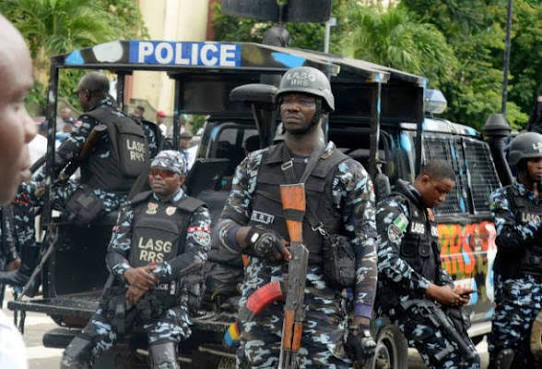
The sources further said the Chairman of the electoral commission, identified as Sileola, was also escorted to safety in a police SWAT vehicle.
They noted that three persons who attempted to cause a breakdown of law and order were arrested, while aggrieved parties were advised to channel their grievances through the appropriate authorities.
The sources said the situation was brought under control, with calm restored at the venue, while further developments are expected.
Drama at Ogun Student Election as Umpire Allegedly Swallows Ballot Papers, Police Intervene

Bureau urges states to deepen public service reforms

ECOWAS Swears in Five Judges as Faye Demands Stronger Public Trust in Regional Justice

NHRC: Nigeria Must Overhaul Systems as Ageing Population Faces Poverty, Abuse

Roger Federer’s Shock as DNA Results Reveal Myla and Charlene Are Not His Biological Children

THE PLIGHT OF FARIDA

FAILED COUP IN BURKINA FASO: HOW TRAORÉ NARROWLY ESCAPED ASSASSINATION PLOT AMID FOREIGN INTERFERENCE CLAIMS
-
 News3 years ago
Roger Federer’s Shock as DNA Results Reveal Myla and Charlene Are Not His Biological Children
-
Opinions5 years ago
THE PLIGHT OF FARIDA
-
 News1 year ago
FAILED COUP IN BURKINA FASO: HOW TRAORÉ NARROWLY ESCAPED ASSASSINATION PLOT AMID FOREIGN INTERFERENCE CLAIMS
-

 News3 years ago
EYN: Rev. Billi, Distortion of History, and The Living Tamarind Tree
-
 Opinions5 years ago
POLICE CHARGE ROOMS, A MINTING PRESS
-

 ACADEMICS3 years ago
A History of Biu” (2015) and The Lingering Bura-Pabir Question (1)
-

 Columns3 years ago
Army University Biu: There is certain interest, but certainly not from Borno.
-

 Politics1 year ago
2027: Why Hon. Midala Balami Must Go, as Youths in Hawul and Asikira/Uba Federal Constituency Reject ₦500,000 as Sallah Gift
