
News
Oscar Awards: VP Shettima Rallies Support For “Mai Martaba”

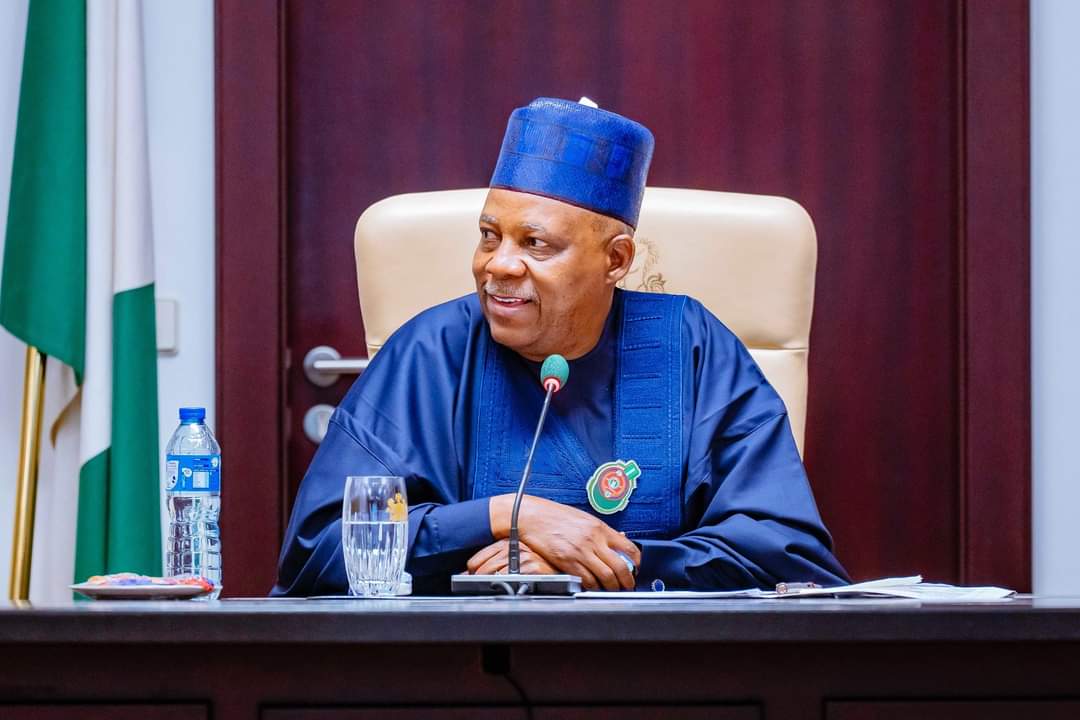
Oscar Awards: VP Shettima Rallies Support For “Mai Martaba”
*** Says creative fund access is open to all
By: Our Reporter
Vice President Kashim Shettima has pledged the federal government’s support for Nigeria’s Oscar campaign with access to the $618 million Investment in Digital and Creative Enterprises Programme (iDICE) as Nigeria positions “Mai Martaba” to clinch the nation’s Academy Award.
Specifically, the Vice President revealed that creators will have access to the $618 million iDICE project aimed at boosting investment in digital and creative industries.
Speaking during a meeting with the film’s team led by the Minister of Arts, Culture, Tourism, and Creative Economy, Barrister Hannatu Musawa, at the Presidential Villa Abuja on Thursday, VP Shettima noted delightfully that “it’s a good day to be a Nigerian.”
“We will make sure that the kaleidoscope that represents all the colours in our nation is carried along. Let’s fuse into one and support this project. There is more that binds than divides us. Within the ethnic groups, you don’t know where the boundaries end. We are essentially one people,” the Vice President stated, emphasizing national unity through the film industry.
He charged the Minister of Arts, Culture, Tourism, and Creative Economy to “lead the campaign to mobilise all resources to ensure Nigeria’s success at the Oscars.”
“By the end of the century, Nigeria will be the most populous nation on earth. There is beauty in numbers. I want to reiterate my unflinching support for us to get the Oscars,” the VP added.
“Mai Martaba,” directed by Prince Daniel, has been officially selected as Nigeria’s entry for the 2025 Academy Awards’ Best International Feature Film category. The film explores themes of power, love, and female leadership in an ancient African kingdom.
Speaking earlier, the Minister of Arts, Culture, Tourism, and Creative Economy, Hannatu Musawa, said investors were already committed to building the Creative Industry.
“We’re working with investors who have already committed to building the creative industry. We have just concluded agreements with South Korea, UK, Japan, China, and France to sign co-production agreements.
“We hopefully will have a media city, which is going to be a one-stop shop for nine sectors across the whole industry. The whole world is interested in Nigeria – not because of our oil, but because of our talent, content, and creativity.”
Addressing funding challenges, Musawa noted: “The fact is that many in the industry do not have infrastructure to be able to do the kind of first-class movies they require. Every single Nigerian, no matter what part of the country they come from, even if it’s a rural setting, has the ability to create content on their phone, to empower themselves for decent job futures.”
On his part, Prince Daniel noted the industry’s remarkable growth, saying, “We found something very interesting in the creative industry.
“Broadcasting contributes more to GDP than oil does combined, reaching 12.3%. The creative industry and broadcasting in April 2020 did more than oil and mining combined. We’ve created over 500 jobs and created work for almost 100 people overall. We’re excited because we want to go for the next Oscars,” he added.
Discussing the campaign’s important needs, Daniel said, “For every country aspiring for an Oscar, federal government backing is crucial, not only because it is capital-intensive but also because it requires high-level lobbying and diplomacy. Look at South Africa’s ‘Tsotsi’ Oscar win in 2006 – it opened up their entire industry. Today, there’s no part of Africa catching up to South Africa.”
Also, Chairperson of Nigerian Official Selection Committee (NOSC) for the Oscars, Stephanie Linus, emphasised that it is a wonderful feat that is not just about international recognition.
“This isn’t just about international recognition. We need to start building our presence on the global stage now, not in one or two years. The Oscars represent the biggest platform for celebrating cinema,” she stated.
Oscar Awards: VP Shettima Rallies Support For “Mai Martaba”


Military
Mutiny: Presidential Guard Tightens Security Around Niger Presidency Amid Reports of Military Protest
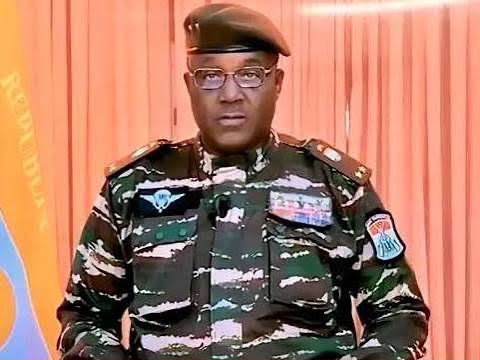
Mutiny: Presidential Guard Tightens Security Around Niger Presidency Amid Reports of Military Protest
By Zagazola Makama
Security was significantly reinforced around Niger’s Presidential Palace in Niamey following reports of unrest involving elements of the country’s armed forces, security sources told Zagazola Makama.
According to multiple security sources, the heightened deployment of the Presidential Guard, supported by armoured vehicles around the Presidential Palace on the night of July 3 and into July 4, followed what was described as a limited protest by personnel of an armoured unit within the Niger Armed Forces (FAN).
The sources said some soldiers reportedly declined deployment to frontline positions in northern Tillabéri Region, particularly around Inatès and Chinagodrar, citing inadequate heavy equipment and insufficient operational resources to confront the growing security threats in the area.
The protest was described by one source as a “small mutiny,” although there has been no official confirmation from the Nigerien authorities.
Security sources said the development triggered concern within the country’s leadership, prompting the reinforcement of security around the Presidential Palace and temporary restrictions on movement in the surrounding area as a precautionary measure.
The Tillabéri Region remains one of Niger’s most volatile security zones, with recurrent attacks by armed extremist groups, including factions linked to the so-called Islamic State in the Greater Sahara (ISGS).
As of the time of filing this report, the Nigerien government and military authorities had not issued any official statement regarding the reported protest or the increased security presence around the Presidency.
The situation remains under close observation.
Mutiny: Presidential Guard Tightens Security Around Niger Presidency Amid Reports of Military Protest
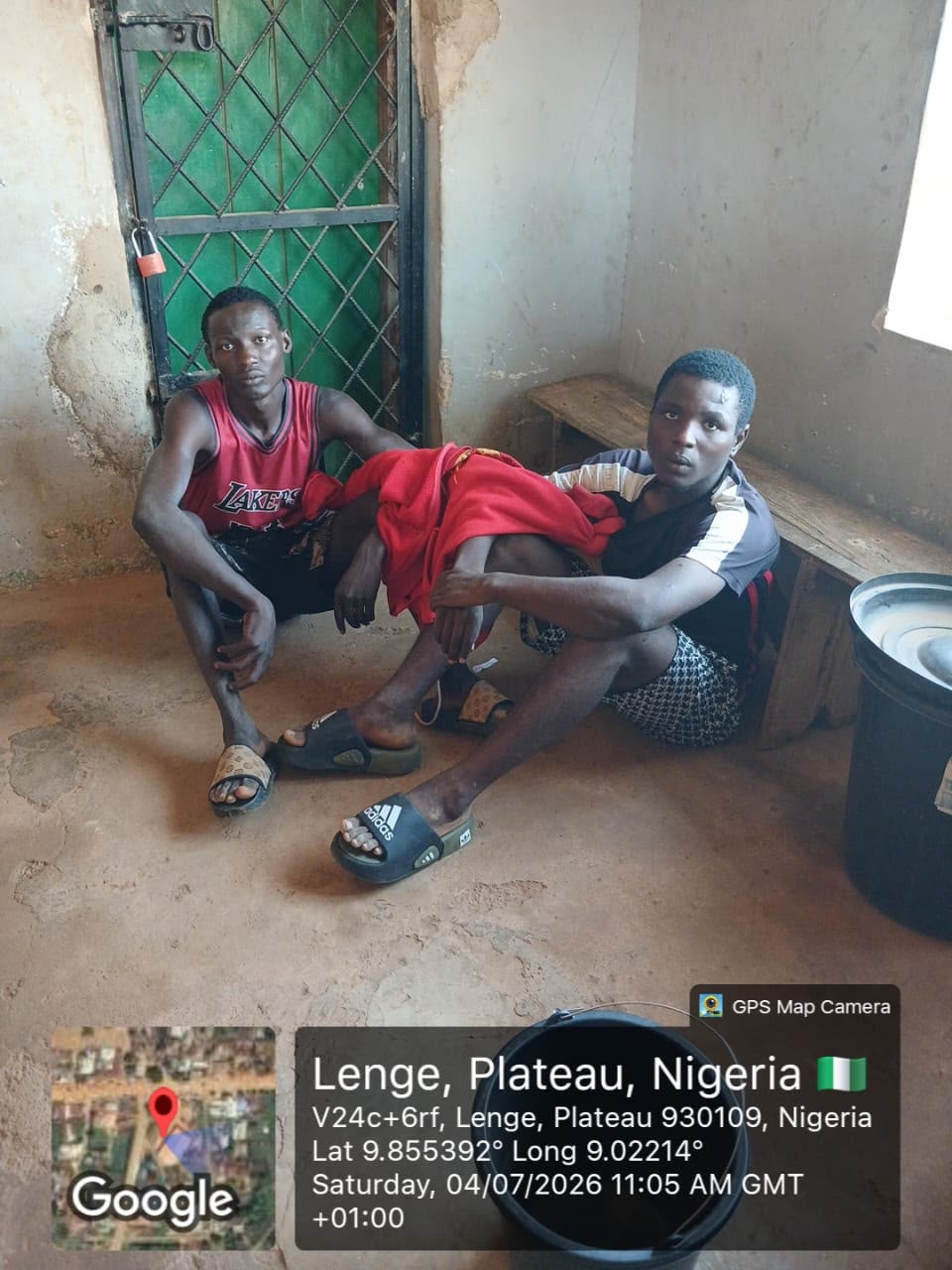
Two suspected criminals arrested during patrol in Plateau
By: Zagazola Makama
Troops of Sector 1 under Operation Enduring Peace have arrested two suspected criminals during a routine patrol in Jos East Local Government Area of Plateau.
Security sources disclosed that the suspects, identified as Azi Ezekiel, 21, and Ajiji Emmanuel, 19, were apprehended at about 10:30 a.m. on Saturday along the road leading to Forbur Village.
The sources said the suspects were intercepted by troops of Sector 1, Sub-Sector 12, while conducting a routine patrol in the area.
According to the sources, the two suspects have been handed over to the Keystone Police Station in Forbur for further investigation and possible prosecution.
The arrest forms part of ongoing security operations aimed at combating criminal activities and enhancing safety across Plateau State.
Two suspected criminals arrested during patrol in Plateau
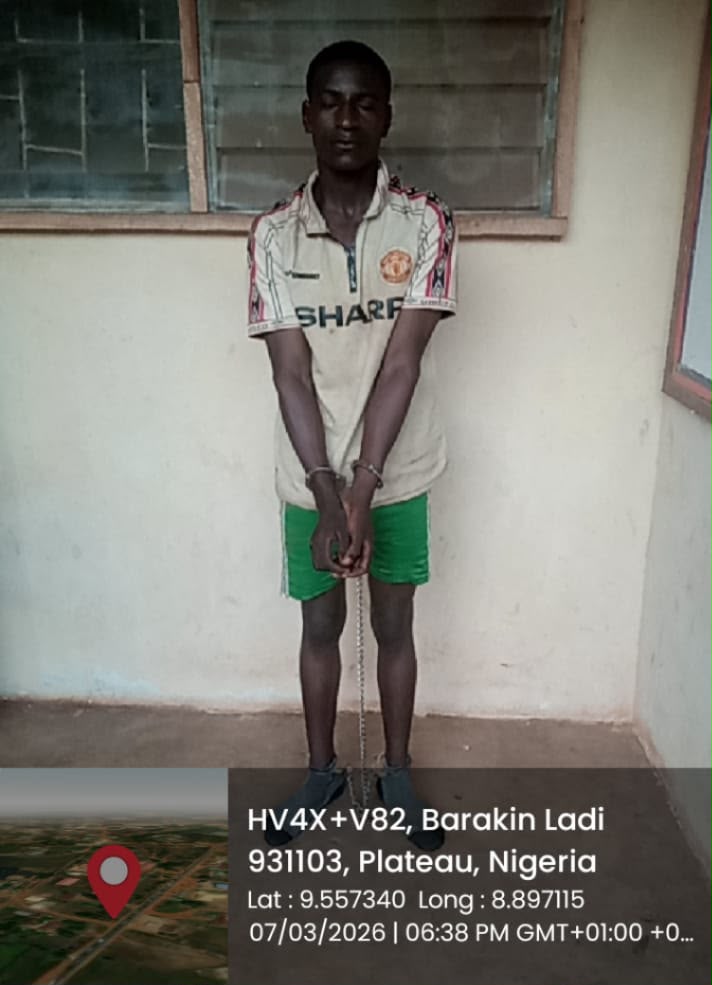
Troops arrest suspected kidnapper in Plateau community
By: Zagazola Makama
Troops of Sector 4 of Operation Enduring Peace have arrested a suspected kidnapper during a security operation in Barkin Ladi Local Government Area of Plateau.
Security sources said the suspect, identified as Mohamdu Surajo, 29, was arrested at about 6:45 p.m. on Friday at Sabon Layi Village following sustained security operations in the area.
The sources disclosed that the suspect is currently in military custody and is undergoing preliminary interrogation to aid ongoing investigations.
They added that the arrest is part of continued efforts by security forces to dismantle criminal networks and enhance security across Plateau State.
Troops arrest suspected kidnapper in Plateau community

President Tinubu Flags Off the Construction of Dikwa–Gamboru Ngala, Bama–Banki International Road Projects

Mutiny: Presidential Guard Tightens Security Around Niger Presidency Amid Reports of Military Protest

Troops Arrest Two Suspected Berom Militia Linked to NIPSS Attack as Security Sources Say Investigation Supports Earlier Leads

Roger Federer’s Shock as DNA Results Reveal Myla and Charlene Are Not His Biological Children

THE PLIGHT OF FARIDA

FAILED COUP IN BURKINA FASO: HOW TRAORÉ NARROWLY ESCAPED ASSASSINATION PLOT AMID FOREIGN INTERFERENCE CLAIMS
-
 News2 years ago
Roger Federer’s Shock as DNA Results Reveal Myla and Charlene Are Not His Biological Children
-
Opinions4 years ago
THE PLIGHT OF FARIDA
-
 News1 year ago
FAILED COUP IN BURKINA FASO: HOW TRAORÉ NARROWLY ESCAPED ASSASSINATION PLOT AMID FOREIGN INTERFERENCE CLAIMS
-

 News2 years ago
EYN: Rev. Billi, Distortion of History, and The Living Tamarind Tree
-
 Opinions5 years ago
POLICE CHARGE ROOMS, A MINTING PRESS
-

 ACADEMICS2 years ago
A History of Biu” (2015) and The Lingering Bura-Pabir Question (1)
-

 Columns2 years ago
Army University Biu: There is certain interest, but certainly not from Borno.
-

 Politics1 year ago
2027: Why Hon. Midala Balami Must Go, as Youths in Hawul and Asikira/Uba Federal Constituency Reject ₦500,000 as Sallah Gift
