
News
Outrage as ActionAid Raises Alarm Over School Bullying, Child Protection Failures


Outrage as ActionAid Raises Alarm Over School Bullying, Child Protection Failures
By: Michael Mike
Fresh concerns over the safety of schoolchildren in Nigeria have emerged following allegations of violence and bullying at Igbinedion Education Centre, prompting strong condemnation from ActionAid Nigeria, which warned of a deepening crisis in the country’s child protection system.
The organisation described the incident as a serious breach of children’s rights, saying it exposes widespread institutional weaknesses that allow abuse to persist within school environments.
Speaking in Abuja, ActionAid Nigeria’s Country Director, Andrew Mamedu, said the case reflects more than isolated misconduct, pointing instead to systemic failures in monitoring, reporting, and accountability across the education sector.
He stressed that every child is entitled to protection from violence, in line with provisions of the Child Rights Act, warning that when abuse goes undetected or unresolved, it signals a breakdown in the duty of care expected from schools and relevant authorities.
According to him, the incident highlights the inability of existing safeguarding systems to identify early warning signs or prevent escalation, raising questions about the effectiveness of oversight mechanisms in schools.
ActionAid noted that the situation at the school is only a reflection of a broader, largely hidden problem of bullying and school-related gender-based violence across Nigeria. It said many cases remain unreported due to fear, stigma, and the absence of trusted channels for victims to seek help.
The organisation also expressed concern over the circulation of videos linked to the incident, reportedly shared by students, describing it as evidence of failing internal reporting systems and a growing reliance on social media as a last resort for exposing abuse.
It criticised what it called a reactive approach to child protection, where authorities often respond only after incidents gain public attention, rather than through proactive monitoring and enforcement.
Calling for urgent reforms, ActionAid urged the Federal Ministry of Education and other regulatory bodies, including the Universal Basic Education Commission and the National Human Rights Commission, to strengthen implementation of safeguarding policies and establish effective reporting and tracking systems across schools.
The group also called on schools to introduce confidential reporting mechanisms, enforce strict disciplinary measures, and provide continuous training for staff on child protection, conflict management, and trauma-informed care.
Law enforcement agencies, particularly the Nigeria Police Force, were urged to ensure thorough investigation and prosecution of offenders, while parents were encouraged to support their children in speaking out against abuse.
ActionAid warned that unless urgent and coordinated steps are taken, cases of school-based violence could continue to escalate, putting the safety and wellbeing of Nigerian children at serious risk.
Outrage as ActionAid Raises Alarm Over School Bullying, Child Protection Failures



Troops neutralise three terrorists after ambush on Miyanti-Banki route
By: Zagazola Makama
Troops of the 151 Task Force Battalion have neutralised three terrorists following an ambush on the Maiduguri-Miyanti-Banki Junction route in Borno State.
The incident occurred at about 8:30 a.m. on Sept. 1, when the troops, while conducting route-scanning operations along the major road, came under attack by terrorist elements.

According to sources, the terrorists initiated the attack with a concealed improvised explosive device (IED), followed by heavy volume of fire.
The troops fought through the ambush and subsequently launched an immediate exploitation operation against the attackers.
During the encounter, three terrorists were neutralised, while troops recovered one AK-47 rifle, one AK-47 magazine, 14 rounds of 7.62mm special ammunition and one concealed IED.
On the side of the troops, one soldier sustained injuries during the engagement and was evacuated to 21 Specialised Brigade Hospital, Maiduguri, where he is reportedly stable and receiving medical attention.

The attack also resulted in damage to the windscreen of one of the troops’ gun trucks.
The latest incident underscores the continued threat posed by terrorist elements along major routes in Borno State, particularly through the use of IEDs and ambush tactics against military patrols.
The military said the general security situation across the theatre remained calm but unpredictable, while troops’ morale and fighting efficiency remained satisfactory.
Troops continue to maintain offensive and route-clearance operations to disrupt terrorist activities and ensure the safety of civilians and motorists across the theatre.
Troops neutralise three terrorists after ambush on Miyanti-Banki route
Governor Lawal woos investors, highlights Zamfara’s economic opportunities at CEO Forum
Lagos, Sept. 1, 2026 — Zamfara State Governor, Dauda Lawal, has called for stronger collaboration between government, businesses and investors to unlock private capital and drive inclusive economic growth in the state.
Lawal made the call while delivering a Special Policy Address at the 2026 CEO Forum organised by the Global Compact Network Nigeria in Lagos.
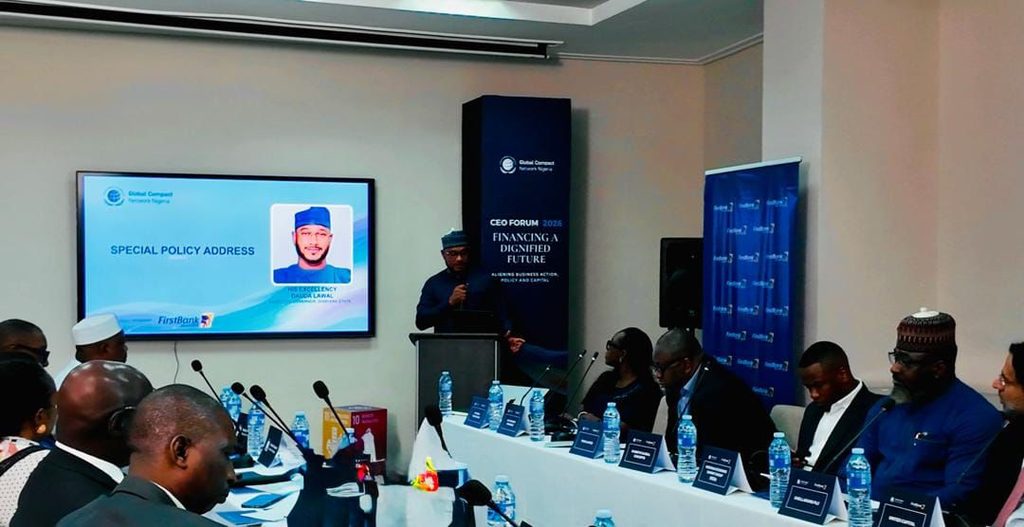
The forum, held under the theme “Financing a Dignified Future: Aligning Business Action, Policy and Capital,” brought together chief executives, senior government officials, industry leaders, diplomats, trade commissioners and international development partners.
Participants were drawn from key sectors of the economy, including oil and gas, energy, manufacturing, construction and infrastructure.

The governor spoke on the growing competition among states for increasingly selective private capital and the factors that could transform an economic opportunity into an investable proposition.
He explained how his administration was working to bridge the gap between available economic opportunities and investment, with emphasis on building investor confidence while ensuring that investments deliver meaningful outcomes for the people of Zamfara.
According to him, attracting investment requires more than identifying economic opportunities, but also creating the conditions, policies and partnerships capable of giving investors confidence to commit capital.
The forum provided a platform for business leaders, government officials and investors to examine ways of aligning business strategies, public policies and capital deployment to unlock productive investment.
Discussions also focused on identifying businesses, sectors and projects with strong potential but facing difficulties in accessing financing, as well as measures to make such opportunities more attractive to investors.
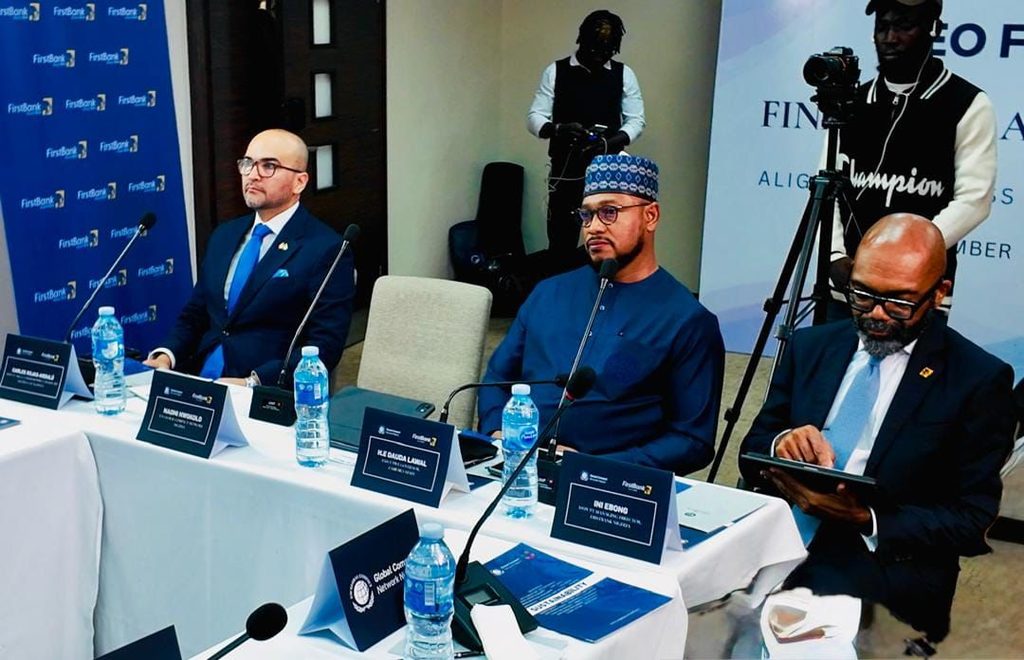
The organisers also introduced the concept of the “Dignity Dividend,” examining how investment-led growth could translate into better jobs, stronger businesses, increased productivity, local value creation and broader economic participation.
Another key component of the forum was the identification of actionable commitments and partnerships that participating institutions could advance over the next six to 12 months.
Notable speakers at the event included chief executives of First Bank Group, Access Bank, Flour Mills of Nigeria Plc, Nigeria Economic Summit Group, Nigerian Exchange Group, Chellarams Plc, SecureID Group and Greenwich Merchant Bank Plc, among others.
The organisers said the session would culminate in a live showcase of the Business Value and Sustainability Platform (BVSP), described as a standing coalition of business, capital and policy actors designed to sustain the dialogue.
The platform is also expected to contribute to shaping Nigeria’s private-sector engagement during the United Nations General Assembly High-Level Week.
The governor’s participation in the forum comes as Zamfara seeks to strengthen its economic base, attract productive investment and create opportunities that can support sustainable livelihoods and wider participation in the state’s economy.
Governor Lawal woos investors, highlights Zamfara’s economic opportunities at CEO Forum

Buni declares open a two-day workshop for 150 media assistants in Yobe
By: Yahaya Wakili
Yobe State Governor. Mai Mala Buni, CON, COMNCOMN, has described the media assistants as an important link between the government, political leadership, and the people.
The governor revealed this today in Kano while declaring a two-day strategic communication workshop for over 150 media and photography aides serving in his administration.

Ably represented by the secretary of the state government, Dr. Ammed Goje. Governor Buni urged the media aides to communicate government policies and programs accurately and responsibly.
The governor charged them to uphold truth, credibility, and professionalism in public communication and also warned them against misinformation and reckless use of digital platforms capable of undermining peace and public confidence.

He further also cautioned them against using communication platforms for insults, misinformation, character assassination, ethnic profiling, religious incitement, and the deliberate spread of falsehoods. Governor Buni maintained that government achievements should be communicated based on verifiable evidence rather than manufactured claims.
“Engage in facts, defend government with evidence, correct misinformation with civility, and disagree without insulting to help protect the peace, unity, and social cohesion of Yobe State. Speaking earlier, the Commissioner for Home Affairs, Information, and Culture, Hon. Abdullahi Bego, commended Governor Mai Mala Buni, COMNCOMN, for investing in the continuous capacity development of his media aides.
Bego further described the workshop as the second major capacity-building exercise organized by the governor’s media team within one year.
The commissioner maintained that the initiative reflected the administration’s commitment to strengthening professional communication.
He called on the participants to acquire relevant digital skills and use social media strategically and responsibly to communicate government programs and engage citizens.
Buni declares open a two-day workshop for 150 media assistants in Yobe.

Troops neutralise three terrorists after ambush on Miyanti-Banki route
Governor Lawal woos investors, highlights Zamfara’s economic opportunities at CEO Forum

Buni declares open a two-day workshop for 150 media assistants in Yobe

Roger Federer’s Shock as DNA Results Reveal Myla and Charlene Are Not His Biological Children

THE PLIGHT OF FARIDA

FAILED COUP IN BURKINA FASO: HOW TRAORÉ NARROWLY ESCAPED ASSASSINATION PLOT AMID FOREIGN INTERFERENCE CLAIMS
-
 News2 years ago
Roger Federer’s Shock as DNA Results Reveal Myla and Charlene Are Not His Biological Children
-
Opinions5 years ago
THE PLIGHT OF FARIDA
-
 News1 year ago
FAILED COUP IN BURKINA FASO: HOW TRAORÉ NARROWLY ESCAPED ASSASSINATION PLOT AMID FOREIGN INTERFERENCE CLAIMS
-

 News2 years ago
EYN: Rev. Billi, Distortion of History, and The Living Tamarind Tree
-
 Opinions5 years ago
POLICE CHARGE ROOMS, A MINTING PRESS
-

 ACADEMICS3 years ago
A History of Biu” (2015) and The Lingering Bura-Pabir Question (1)
-

 Columns3 years ago
Army University Biu: There is certain interest, but certainly not from Borno.
-

 Politics1 year ago
2027: Why Hon. Midala Balami Must Go, as Youths in Hawul and Asikira/Uba Federal Constituency Reject ₦500,000 as Sallah Gift
