
Military
Over 1,106 Boko Haram, ISWAP terrorists neutralised under outgoing Theatre Commander Abdulsalam


Over 1,106 Boko Haram, ISWAP terrorists neutralised under outgoing Theatre Commander Abdulsalam
By Zagazola Makama
The outgoing Theatre Commander, Joint Task Force North East, Operation HADIN KAI (OPHK), Maj.-Gen. Abdulsalam Abubakar, says troops neutralised more than 1,106 Boko Haram and ISWAP terrorists during his tenure, including several high-profile commanders operating across the North-East.
Abubakar disclosed this during his farewell and introduction engagement with humanitarian partners, representatives of the Borno State Government and members of the press in Maiduguri.
The outgoing commander, who served as the 15th Theatre Commander of OPHK, said the operational successes were recorded through sustained kinetic and non-kinetic operations aimed at degrading terrorist networks and facilitating the restoration of normal socio-economic activities across the region.
He said among the notable terrorist leaders neutralised by troops were Abu Bilal Al-Muniki, also known as Abu Mainok; Malam Jidda, Amir of Ngorgore and Malumti villages; Abu Modu; Modu Dogo; Munzir of Dogon Chukun; Abu Aisha, Qaid of Tumbun Mota; and Abul Kaka, among others.
According to him, the elimination of the terrorist commanders and their fighters significantly disrupted elements of the Boko Haram and ISWAP networks and contributed to sustained pressure on the insurgents across the Theatre of Operations.
“The mandate given to Operation HADIN KAI when I assumed command was clear: to facilitate the restoration of normalcy in the North East so that socio-economic activities can thrive,” Abubakar said.
He explained that the military’s understanding of normalcy went beyond battlefield successes, noting that it was reflected in the restoration of essential services, reopening of markets and schools, resumption of farming activities and the return of displaced families to their ancestral communities.
Abubakar said the Theatre’s operations also resulted in the recovery of more than 475 assorted weapons and 24,409 rounds of ammunition of various calibres.
He added that troops discovered and safely detonated no fewer than 295 improvised explosive devices (IEDs) between April 2025 and September 2026, preventing the explosives from being used against troops and civilians.
The outgoing Theatre Commander said security forces also intensified operations against the financial and logistics networks sustaining terrorism in the region.
According to him, more than ₦300 million linked to terrorist financiers was intercepted, while at least 758 suspected terrorist logistics collaborators were arrested during the period.
He said the combination of sustained military offensives and non-kinetic engagements had further weakened terrorist formations, resulting in an unprecedented wave of surrenders.
Abubakar said over 969 JAS/ISWAP fighters and their family members surrendered within the last one year, attributing the development to sustained kinetic pressure and efforts to provide those willing to abandon terrorism with a dignified pathway out of the conflict.
The commander said the Theatre also rescued 638 civilians from terrorist enclaves, while troops successfully rescued all 46 students during an attempted abduction at the Federal Government Girls College, Monguno.
He noted that the operational gains had translated into broader improvements in security and the gradual restoration of civilian life in communities previously devastated by the insurgency.
According to him, more than 7,000 displaced families have returned to their ancestral communities, with returned communities now existing in every Local Government Area of Borno State.
He also highlighted the voluntary, safe and dignified repatriation of more than 3,000 Nigerian citizens from the Republic of Cameroon, carried out through collaboration between the Borno State Government, the Federal Ministry of Humanitarian Affairs and Poverty Reduction, and the United Nations High Commissioner for Refugees.
Abubakar described the exercise as a demonstration of what sustained cooperation among the military, government institutions and humanitarian partners could achieve in restoring stability to conflict-affected communities.
He said other indicators of improving normalcy included the return of the National Youth Service Corps orientation programme to Maiduguri after more than 13 years, while WAEC and NECO examinations are now being conducted in communities such as Banki and Gwoza.
Trade routes that were previously disrupted by the insurgency have also reopened, while local markets in several communities have resumed activities, he added.
The outgoing commander further said the Theatre was strengthened structurally and technologically during the period, including the operationalisation of Sector 4 to close an operational gap between Southern Borno and Northern Adamawa.
He said the induction of Nigerian Army Aviation helicopters and the Nigerian Army Remotely Piloted Aircraft System Regiment had enhanced the precision and effectiveness of air-supported operations.
According to him, the Military Command and Control Centre has also been strengthened to link frontline surveillance cameras, providing commanders with improved situational awareness and supporting quicker operational responses across the Theatre.
Abubakar said the achievements recorded during his tenure were products of collective efforts involving troops, other security agencies, the Borno State Government, humanitarian organisations, traditional and community leaders, the media and other stakeholders.
He urged the partners to sustain the cooperation and support necessary to consolidate the gains recorded in the fight against terrorism and the restoration of stability in the North-East.
Maj.-Gen. Abubakar is handing over the command of the North East Joint Task Force, Operation HADIN KAI, to Maj.-Gen. Ibikunle Ajose, who takes over as the new Theatre Commander.
The change of command comes as Operation HADIN KAI continues sustained operations against the remaining Boko Haram and ISWAP elements across the North-East, while supporting efforts to stabilise liberated communities and enable the continued return and resettlement of displaced populations.
Over 1,106 Boko Haram, ISWAP terrorists neutralised under outgoing Theatre Commander Abdulsalam



Troops Safely Dispose of Unexploded Ordnance Discovered on Farm in Borno
By: Zagazola Makama
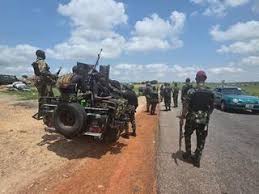
Troops of the 25 Brigade, Sector 2, have safely disposed of an unexploded ordnance (UXO) discovered by a farmer on the outskirts of Damboa town in Borno State.
Security sources told Zagazola Makama that the suspected explosive device was discovered at about 3:30 p.m. on Nov. 13, 2026, while the farmer was working on his farmland.
The farmer immediately alerted troops of the 25 Brigade, who were conducting a farm patrol in the area.
Following the report, an Explosive Ordnance Disposal (EOD) team was deployed to the scene and confirmed the item to be an unexploded ordnance.
The team subsequently carried out a safe disposal operation at about 7:45 a.m. on Nov. 14, 2026.
No casualty was recorded during the operation.
The military urged residents, particularly farmers, to remain vigilant and promptly report suspicious objects or suspected explosive devices to security agencies rather than attempting to handle or move them.
Troops Safely Dispose of Unexploded Ordnance Discovered on Farm in Borno
Army, Vigilantes Rescue Four Kidnap Victims in Kogi
By: Zagazola Makama
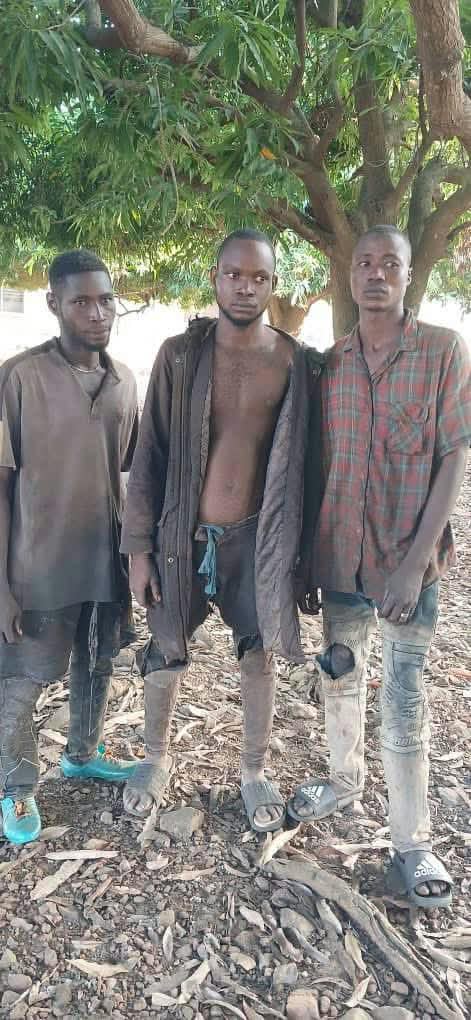
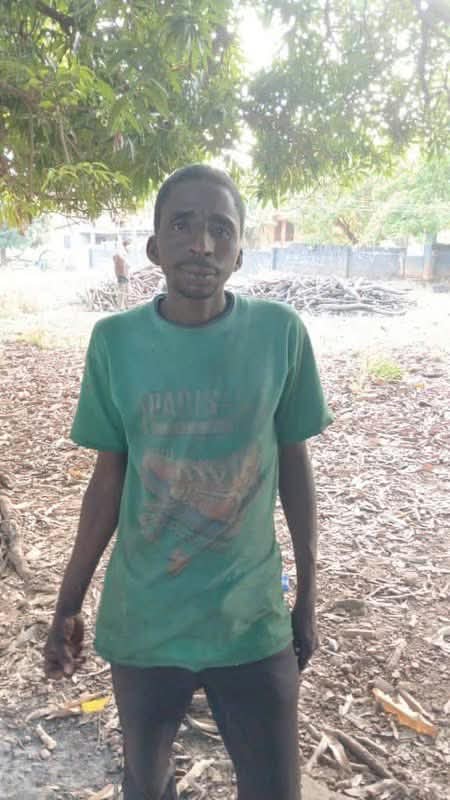
Troops of the Nigerian Army, in collaboration with the Kogi State Vigilante Service and local vigilantes, have rescued four kidnapped persons following a swift security operation in Ejiba community, Yagba West Local Government Area of Kogi State.
The victims, comprising three residents of the community and one Hausa man, were reportedly abducted by gunmen while working on their farm on Thursday, November 12, 2026.
A security source confirmed that the abduction was promptly reported to security operatives, who mobilised alongside local vigilante groups and launched a rescue operation.
The coordinated response reportedly led to the successful rescue of all four victims shortly after the incident.
The source said the operation demonstrated the importance of timely intelligence sharing and collaboration between conventional security forces and community-based security structures in tackling kidnapping and other criminal activities.
The rescue is expected to reassure residents of Ejiba and neighbouring communities, particularly farmers who have continued to face security concerns while accessing their farmlands.
Troops said they will sustain patrols and surveillance across Yagba West to prevent further attacks and ensure the safety of residents.
Army, Vigilantes Rescue Four Kidnap Victims in Kogi
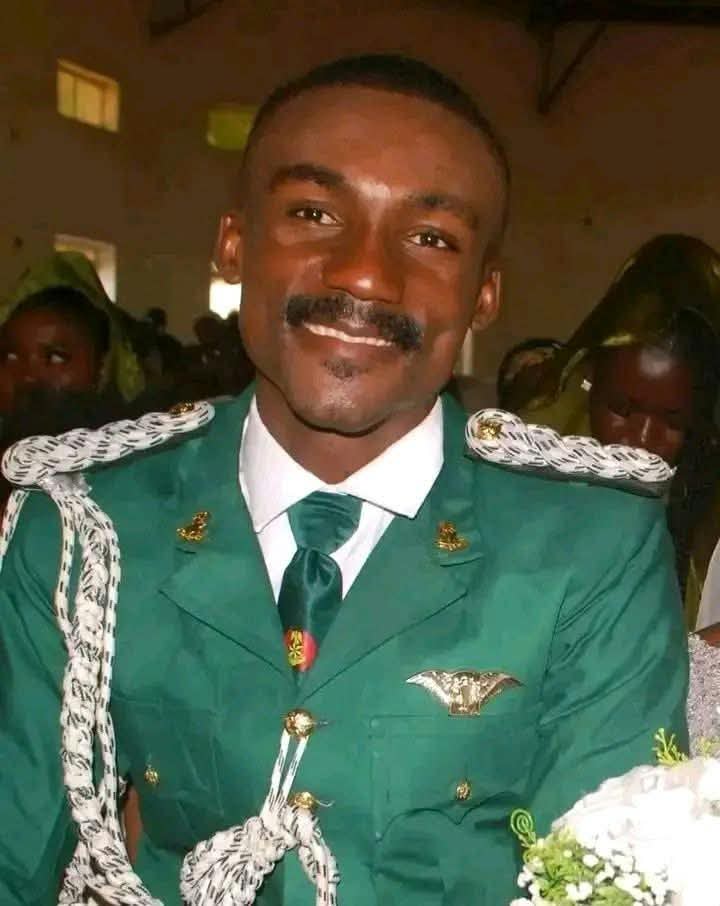
Why Would the Military Ignore a Soldier Celebrating Convicted Terrorist Nnamdi Kanu?
By: Zagazola Makama
There is something profoundly disturbing about the argument being advanced by those demanding the intervention of Tarok military generals over the detention of Gabriel Lamdip, popularly known as the “Push Up King.”
The attempt to turn this matter into an ethnic solidarity campaign, while conveniently ignoring the gravity of the alleged conduct, is both misplaced and deeply troubling. The question is not whether Lamdip is Tarok, whether he enjoys the support of influential military officers or whether his family deserves compassion.
The real question is simple: Can a serving soldier publicly demonstrate solidarity with a separatist figure associated with violence against Nigerian security personnel and expect the military to look the other way?
Absolutely not!
Let us stop hiding behind sentiment and confront the issue squarely. A serving soldier is not an ordinary civilian. He wears the uniform of the Nigerian Armed Forces, carries the responsibility of defending the Constitution and has sworn allegiance to the Federal Republic of Nigeria. His conduct, particularly on matters touching national security, separatist agitation and threats to national unity, must reflect the discipline and loyalty expected of a member of the military.
If the video in question shows Lamdip performing push-ups in apparent solidarity with Nnamdi Kanu, the leader of the proscribed Indigenous People of Biafra (IPOB), then the matter deserves serious institutional attention. The explanation that Kanu shares a birthday with the soldier’s son does not automatically erase the implications of such an act.
Since when did a child’s birthday become a convenient excuse for a serving soldier to publicly associate himself with a figure whose movement has been linked by the Nigerian government to deadly attacks against members of the nation’s security forces?
This is not about denying anyone the right to hold personal opinions. It is about the special obligations that come with wearing a military uniform. The Armed Forces are not a social club where personnel can freely blur the line between personal admiration, political activism and institutional loyalty.
And those rushing to condemn the Army for investigating this matter should first remember the blood of Nigerian security personnel shed in the violence associated with IPOB and its armed wing, the Eastern Security Network (ESN).
The record is grim.
On May 3, 2022, Master Warrant Officer Audu Linus and Private Gloria Mathew were abducted while travelling in Imo State. They were brutally murdered and beheaded. In a statement issued the following day, the Presidency attributed the killings to IPOB and condemned the gruesome crime.
On July 13, 2021, an attack on troops at the Iggah/Asaba checkpoint in Uzo-Uwani Local Government Area of Enugu State reportedly left two soldiers dead. The Nigerian Army attributed the attack to IPOB and its Eastern Security Network.
In November 2021, two police inspectors, identified as Akubo and Adamu, were abducted and murdered. Their bodies were reportedly decapitated, while footage of the killings was circulated. The Federal Government attributed the operation to IPOB members.
On May 30, 2024, armed men attacked a military checkpoint in Abia State. The Nigerian Army blamed IPOB for the attack, which reportedly killed five soldiers. Six civilians also died in the violence, according to an account cited in the UK government’s country report.
The figures announced by the Federal Government are equally alarming. In October 2021, the then Attorney-General of the Federation, Abubakar Malami, disclosed that a government committee had attributed 175 security personnel deaths between October 2020 and June 2021 to IPOB and ESN. The figure comprised 128 police officers, 37 military personnel and 10 other security operatives.
The committee also attributed 164 attacks on police stations and security formations to the group.
These were official government figures, and they paint a disturbing picture of the scale of violence confronting security institutions during that period.
Beyond attacks on security personnel, communities in the South-East have also endured killings, abductions, intimidation, attacks on public infrastructure and the violent enforcement of sit-at-home orders. Ordinary citizens, traders, transport operators, civil servants and other residents have paid a heavy price for the activities of armed groups operating under separatist banners. So, what exactly are the critics asking the Nigerian Army to do? Look away? Pretend that nothing happened.
The Army is not a private association belonging to any ethnic group. It is a national institution. Its loyalty is to Nigeria, not to ethnic pressure groups, political sympathisers or individuals who believe that connections and influence should place someone beyond scrutiny.
If Lamdip has done nothing wrong, he should have nothing to fear from a fair and transparent investigation. But if the evidence establishes a breach of military regulations, he must face the appropriate consequences under the law.
Why Would the Military Ignore a Soldier Celebrating Convicted Terrorist Nnamdi Kanu?

Yobe APC flag-off 2027 campaign in Damaturu

EU Launches ₦152.9m Fund to Protect Women from Electoral Violence Ahead of 2027 Polls

NHRC Wqrns Media Against Electoral Misinformation, Hate Speech Ahead of 2027 Polls

Roger Federer’s Shock as DNA Results Reveal Myla and Charlene Are Not His Biological Children

THE PLIGHT OF FARIDA

FAILED COUP IN BURKINA FASO: HOW TRAORÉ NARROWLY ESCAPED ASSASSINATION PLOT AMID FOREIGN INTERFERENCE CLAIMS
-
 News3 years ago
Roger Federer’s Shock as DNA Results Reveal Myla and Charlene Are Not His Biological Children
-
Opinions5 years ago
THE PLIGHT OF FARIDA
-
 News2 years ago
FAILED COUP IN BURKINA FASO: HOW TRAORÉ NARROWLY ESCAPED ASSASSINATION PLOT AMID FOREIGN INTERFERENCE CLAIMS
-
 Opinions5 years ago
POLICE CHARGE ROOMS, A MINTING PRESS
-

 News3 years ago
EYN: Rev. Billi, Distortion of History, and The Living Tamarind Tree
-

 ACADEMICS3 years ago
A History of Biu” (2015) and The Lingering Bura-Pabir Question (1)
-

 Columns3 years ago
Army University Biu: There is certain interest, but certainly not from Borno.
-

 Politics1 year ago
2027: Why Hon. Midala Balami Must Go, as Youths in Hawul and Asikira/Uba Federal Constituency Reject ₦500,000 as Sallah Gift
