
National News
Over 90% of Nigeria’s Inmates are State Offenders, Between 30-50% Shouldn’t Have Been Jailed – Tunji-Ojo

Over 90% of Nigeria’s Inmates are State Offenders, Between 30-50% Shouldn’t Have Been Jailed – Tunji-Ojo
Reveals How FG freed over 4,000 inmates in one day, cut recidivism from 13,000 to 1,000
By: Michael Mike
The Federal Government has disclosed that 93 per cent of inmates in Nigeria’s custodial facilities are being held for state offences, with only seven per cent facing federal offences, even as it revealed that between 30 and 50 per cent of inmates may be serving time for offences that do not warrant imprisonment.
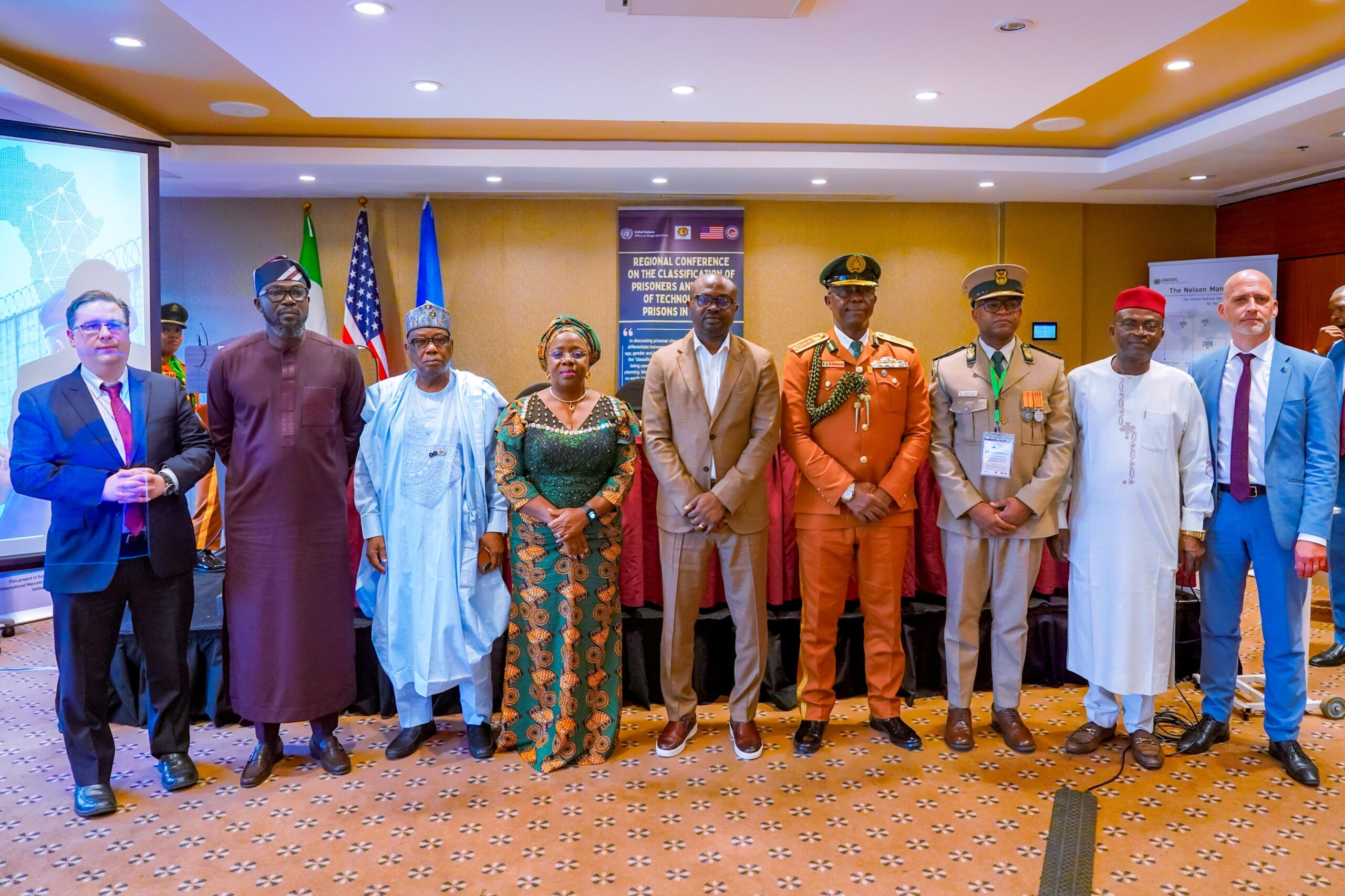
The Minister of Interior, Dr Olubunmi Tunji-Ojo, made the disclosure on Wednesday in Abuja at the Regional Conference on the Classification of Prisoners and the Use of Technology in Prisons in Africa.
The conference was jointly organised by the United Nations Office on Drugs and Crime (UNODC) and the African Correctional Services Association (ACSA).
Tunji-Ojo said the figures had exposed the need for a fundamental rethink of the way Nigeria and other African countries classify offenders and deploy imprisonment as a response to crime.
“93% of our inmates in Nigeria are state offenders. Only 7% are federal offenders. And of this 93%, I want to tell you before this president came on board, a lot of them were for minor offences that had no need for incarceration,” the minister said.
He said the Federal Government, upon his assumption of office, undertook an audit of inmates incarcerated over minor fines and compensation orders, a process that resulted in the release of more than 4,000 inmates.
“When I became minister, I called my permanent secretary, I called the Controller General of the Correctional Service, and I said, listen, give me the data, the record of people who are in correctional centres for fines and compensation of less than 500,000 or something. And guess what? Over 4,000 people,” he said.
According to the minister, the continued detention of such inmates was economically irrational, as the government spent far more feeding and maintaining them than the value of the fines or compensation involved.
“I said, what is the sense in this? Because I feed them in a year with more than 10 times of the fine. So how is the government benefiting?” he asked.
Tunji-Ojo said the government subsequently cleared the affected cases, resulting in the decongestion of correctional facilities by five per cent in a single day.
“And we were able to clear that, and in one day, we decongested our correctional centre by 5% in one day. In one day,” he said.
The minister said the experience raised a broader question about the rationale behind overcrowding in correctional facilities, insisting that the number of inmates alone should not be the only measure of the crisis.
“The question is this. Is your correctional centre rightfully overcrowded? That is the question. You have to look at those particular offences. You will realise that more than 30, 40, 50 percent are offences that do not warrant incarceration,” he said.
The disclosure comes against the background of Nigeria’s long-running prison congestion crisis. Correctional facilities across the country have for years struggled with overcrowding, placing enormous pressure on feeding, healthcare, security, rehabilitation and other essential services.
A significant proportion of the inmate population comprises persons awaiting trial. In many cases, detainees spend prolonged periods in custody before their cases are concluded, with some eventually discharged for lack of evidence or after spending periods in detention that exceed the sentences they might have received if convicted.
The situation has fuelled concerns over access to justice, the presumption of innocence and the impact of poverty on the criminal justice system, particularly where suspects are unable to meet bail conditions or secure effective legal representation.
The minister’s position suggests that the problem cannot be solved simply by constructing more prisons. Rather, it requires a more rigorous classification of inmates, faster trials and greater use of non-custodial measures for minor and non-violent offences.
Beyond decongestion, Tunji-Ojo said the Federal Government had also recorded significant progress in reducing recidivism through education, skills acquisition and rehabilitation.
He disclosed that the number of inmates returning to crime had fallen sharply from about 13,000 cases annually in 2023 to approximately 1,000 last year.
The minister attributed the improvement to increased access to education and vocational training within correctional facilities.
He said 62 inmates were currently pursuing postgraduate studies, while 261 were enrolled in undergraduate programmes. Another 1,125 inmates were participating in formal education.
He further disclosed that 18 National Open University of Nigeria centres had been established within correctional facilities, while 9,582 inmates were enrolled in vocational and non-formal rehabilitation programmes.
The figures, he said, reflected a deliberate shift in the philosophy of corrections from mere confinement to rehabilitation and reintegration.
Tunji-Ojo also said Nigeria had gone three consecutive years without recording a jailbreak or an attack on a correctional facility, attributing the achievement partly to improved data management and information sharing among security agencies.
He cited the case of an escaped inmate who was rearrested after attempting to obtain a Nigerian passport.
According to him, the inmate’s biometric information triggered an alert when he approached the Nigeria Immigration Service.
“Immediately he put his finger at the level of Nigeria Immigration Service to procure a passport. Immigration saw it immediately that he was an inmate. And immediately they reached out to Correctional Service and he was arrested right there,” the minister said.
He said the incident demonstrated the importance of integrating technology and biometric data across government agencies in strengthening national security and improving correctional administration.
The Controller-General of the Nigerian Correctional Service, Sylvester Nwakuche, said the country had continued to modernise its correctional system through reforms anchored on the Nigerian Correctional Service Act, 2019.
Nwakuche said the classification of inmates had become a strategic instrument for identifying risks, protecting vulnerable prisoners, deploying resources efficiently and delivering rehabilitation programmes tailored to the needs of individual inmates.
He said the proper classification of prisoners was essential to ensuring that inmates were not managed as a homogenous group, stressing that the risks, needs and rehabilitation requirements of a convicted violent offender could not be treated in the same manner as those of a low-risk or vulnerable inmate.
The Controller-General also said the integration of technology into correctional administration would improve record management, strengthen information sharing and enhance institutional accountability.
He noted that correctional institutions across Africa faced complex security and rehabilitation challenges that could not be solved by any single institution acting alone.
“No single correctional service possesses all the solutions to today’s security and rehabilitation challenges,” Nwakuche said.
He added: “We have a unique opportunity to exchange ideas, share practical experiences and collectively develop solutions that will strengthen correctional systems across Africa.”
The Abuja conference therefore provided a platform for African correctional authorities and international partners to examine how prisoner classification and technology could be deployed to improve prison management, enhance security and promote rehabilitation.
For Nigeria, the discussions are particularly significant as the country continues to confront the challenge of overcrowded custodial centres and a criminal justice system in which many suspects remain in detention for extended periods before trial.
The latest figures have also brought renewed attention to the relationship between federal and state justice systems. Although the Nigerian Correctional Service is a federal institution, the minister said 93 per cent of inmates were being held for state offences.
This means that the Federal Government is responsible for the custody, feeding, healthcare and rehabilitation of a large population of inmates whose alleged offences fall under state jurisdiction.
The revelation is likely to intensify calls for states to take greater responsibility for the administration of criminal justice, particularly by strengthening their courts, improving prosecution, expanding legal aid and ensuring that minor offenders are not unnecessarily committed to custodial facilities.
Legal and human rights advocates have long argued that the nation’s prison congestion crisis is not simply a problem of inadequate infrastructure. They maintain that unnecessary arrests, prolonged investigations, delayed trials, inability to meet bail conditions and the overuse of imprisonment for minor offences are major drivers of overcrowding.
The Federal Government’s experience of releasing more than 4,000 inmates in a single day over fines and compensation orders of less than about N500,000 has now provided a stark illustration of the problem.
The development also highlights the economic cost of unnecessary incarceration. As Tunji-Ojo pointed out, the cost of feeding and maintaining an inmate for a year could be many times higher than the fine or compensation that led to the person’s imprisonment in the first place.
The challenge before Nigeria, therefore, is to ensure that imprisonment is used for offenders whose incarceration is necessary to protect society, while non-custodial alternatives are deployed for minor offences and low-risk offenders.
The minister’s disclosure has consequently transformed the debate over prison congestion from a question of how many more custodial facilities Nigeria needs to a more fundamental question: how many people should be in prison in the first place?
With 93 per cent of inmates reportedly held for state offences, between 30 and 50 per cent allegedly serving sentences for offences that may not warrant incarceration, more than 4,000 inmates freed in one day and recidivism reportedly falling from about 13,000 to 1,000 cases annually, the Federal Government says the future of Nigeria’s correctional system must lie in smarter classification, technology-driven administration, rehabilitation and a justice system that reserves imprisonment for those who truly need to be behind bars.
Over 90% of Nigeria’s Inmates are State Offenders, Between 30-50% Shouldn’t Have Been Jailed – Tunji-Ojo



EU Launches ₦152.9m Fund to Protect Women from Electoral Violence Ahead of 2027 Polls
…Warns against intimidation, political exclusion, says support not for campaign financing
By: Michael Mike
Team Europe has launched a €100,000 (about ₦152.9 million) Rapid Response Fund to provide emergency protection, medical, legal and psychosocial assistance to women threatened by political and election-related gender-based violence ahead of Nigeria’s 2027 general elections.
The initiative, unveiled Tuesday in Abuja, is expected to run from November 2026 to March 2027 under the European Union Support to Democratic Governance in Nigeria programme (EU-SDGN), through experienced implementing partners and qualified service providers.
The fund, launched on the eve of the 16 Days of Activism against Gender-Based Violence, is targeted at women whose participation in the electoral process is threatened, including candidates, voters, election observers, journalists and other electoral actors facing intimidation, violence or credible threats.
The intervention, according to Team Europe, comprising the European Union and its member-state missions in Nigeria, draws on lessons from the 2023 general elections and earlier electoral cycles, which exposed the vulnerability of women to politically motivated violence and intimidation.
Speaking at the launch, the Ambassador of Ireland to Nigeria, Lesley Ní Bhriain, said the effectiveness of efforts to combat violence against women would be measured by the ability of survivors to report incidents safely, access protection and care, and pursue justice without fear.
“Violence used to silence women is a means of exclusion. It has no place in democratic life,” she said.
Ní Bhriain said the initiative was designed to bridge the gap between advocacy against gender-based violence and the practical assistance required by women confronted with threats and attacks during the electoral process.
Depending on assessed needs and approved criteria, beneficiaries may receive emergency medical care, legal advice and representation, psychosocial support, temporary safe accommodation, emergency transportation and urgent digital safety assistance.
The fund may also be deployed to address credible and imminent threats before further harm occurs, officials said.
The Irish ambassador stressed that the intervention was strictly a protection and assistance mechanism, not campaign financing or support for political parties or candidates.
Requests, she said, would be evaluated based on eligibility, urgency and assessed needs, irrespective of party affiliation, political connections or public profile, while survivors would not be compelled to recount their experiences publicly, grant interviews or appear in photographs as a condition for receiving assistance.
In a joint statement, Team Europe Heads of Mission said the intervention was intended to ensure that women facing violence could access timely support without compromising their dignity or privacy.
The Chief Executive Officer of the Nigerian Women Trust Fund (NWTF), Brenda Anugwom, described the initiative as a significant shift from advocacy and documentation to providing practical, timely assistance to women confronting political violence and abuse.
She said women must not only be allowed to enter political spaces but also be able to remain, compete, lead and exercise power without fear.
“Women must not only have the right to enter political spaces, they must have the right to remain, to compete, to lead, to exercise power without fear. This is the democracy that we all yearn for,” Anugwom said.
The Head of the EU Delegation to Nigeria and ECOWAS, Gautier Mignot, said the fund was established in response to concerns raised by civil society partners and evidence of gender-based attacks against women in various electoral roles during the 2019 and 2023 elections.
Mignot said the intervention, valued at approximately €100,000, was created under the EU-funded Support to Democratic Governance in Nigeria programme to offer rapid assistance to women facing threats during the electoral period, particularly as the country approaches the 2027 polls.
He said the initiative would help women access urgent relief through established service providers and existing expertise, while ensuring that assistance was delivered under clear safeguards and accountability procedures.
The fund’s organisers said requests would be screened and referred for assessment by a dedicated review committee in line with approved eligibility procedures and available resources.
Women seeking assistance have been directed to use designated HerStoryOurStory channels through 0806 429 2526 or herstoryourstoryng@gmail.com, rather than contacting the EU Delegation or European member-state missions directly.
Team Europe also called on political parties and leaders to reject and prevent gender-based violence, while urging relevant authorities to protect those at risk, investigate reported offences and ensure access to justice.
The media was equally urged to report responsibly, respect survivors’ privacy and provide accurate information about available support.
The Heads of Mission said the fund complemented, but did not replace, the responsibility of public institutions or the need for sustained efforts to strengthen laws, protection services and accountability.
“The test is not only what we say during these 16 days, but whether women can access support when they need it,” the Heads of Mission said.
“That is our commitment as Team Europe in Nigeria: solidarity translated into practical assistance, respect for women’s choices and accountability for what we deliver.”
Also endorsing the initiative, the Executive Director of the Ene Obi Centre for Development, Ene Obi, described women participating in Nigeria’s electoral process as an “endangered species”, warning that the prevailing political atmosphere could fuel further intimidation and gender-based violence ahead of the 2027 elections.
Obi, a former Country Director of ActionAid Nigeria, expressed concern over what she described as the prevailing “body language” of the electoral environment, saying the signals suggested that violence against female voters, candidates, journalists and election workers could escalate without urgent intervention.
Recalling the experiences of women during previous general elections, she cited the killing of Salome Abuh, a Peoples Democratic Party women leader in Kogi State, who was burnt alive in her home in 2019, as well as the killing of another woman, identified as Victoria, during the 2023 election period in front of her husband and children.
“From our history, the history of general elections, you know what women have been through. The language, the body language of the election, what we are seeing, is that violence will increase,” Obi said.
She also decried structural barriers to women’s political participation, including godfatherism, the monetisation of politics and party practices that undermine female representation.
According to her, women who secure party tickets are sometimes pressured to relinquish their candidacies, further weakening their chances of representation in elected offices.
“They are an endangered species. Most of the women that have even gotten the tickets, they’ve asked them to step down. So where are we getting the representation? Because of the power of money, because of godfatherism, and because the parties are the ones that are dictating what is going on,” she said.
Obi welcomed the introduction of dedicated protection funds, saying they could strengthen the capacity of women’s rights organisations to respond to threats against women across the electoral spectrum, including voters, election personnel and female journalists.
While acknowledging the difficulty of establishing precise figures on casualties and incidents of intimidation, she said civil society groups were monitoring developments and would continue to support women facing threats.
She warned perpetrators against targeting women during the electoral process.
“There is a lot of intimidation in this election, as you may know. And so we are keeping our eyes open and we hope to support,” she said, adding, “If you touch one woman, we will come after you.”
EU Launches ₦152.9m Fund to Protect Women from Electoral Violence Ahead of 2027 Polls
National News
ECOWAS, World Bank Intensify Drive to Bridge West Africa’s Electricity Gap, Target 1,800 Communities
ECOWAS, World Bank Intensify Drive to Bridge West Africa’s Electricity Gap, Target 1,800 Communities
By: Michael Mike
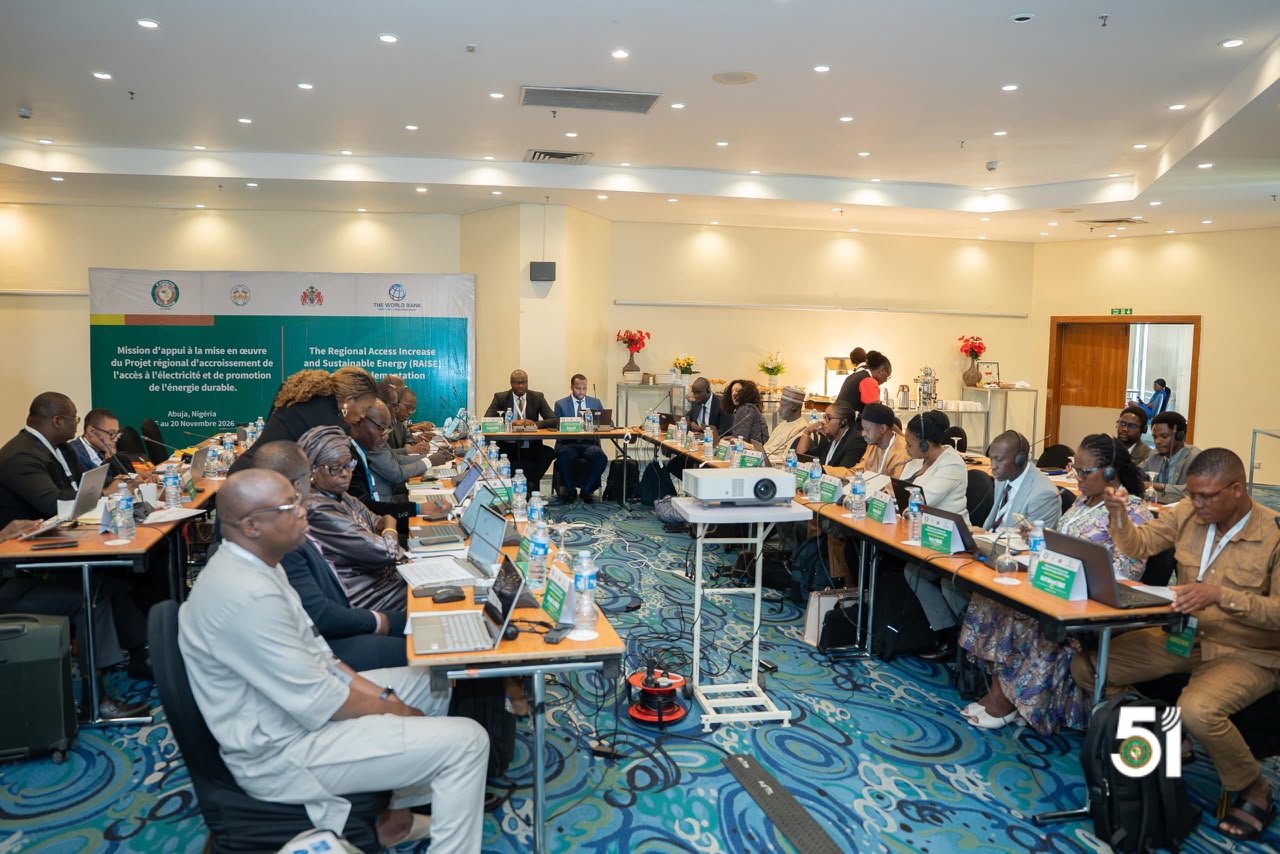
The Economic Community of West African States (ECOWAS) Commission and the World Bank have intensified efforts to address persistent electricity access deficits in West Africa, launching a five-day implementation support mission for a US$160 million regional energy project targeting underserved communities in Togo and The Gambia.
The mission, which commenced on 16 November and will run until 20 November 2026 in Abuja, Nigeria, is designed to assess implementation progress, address operational challenges and strengthen coordination among institutions responsible for delivering the Regional Access Increase and Sustainable Energy (RAISE) Project.
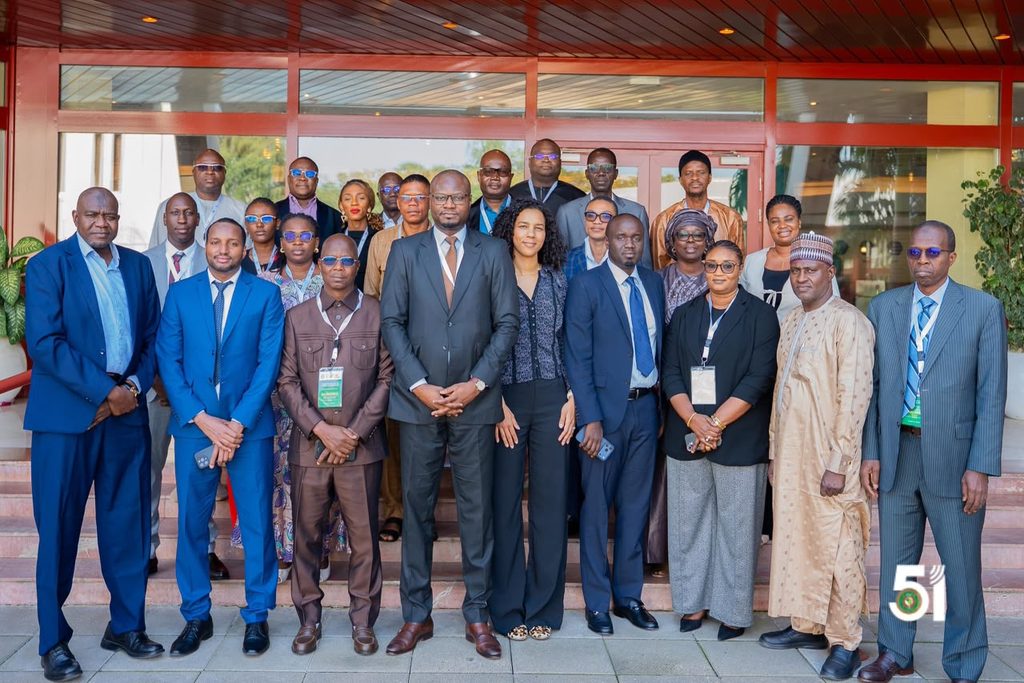
The initiative targets the electrification of 1,800 localities, the provision of 202,000 household electricity connections and the facilitation of 242 megawatts (MW) of renewable energy generation capacity.
The project is expected to expand access to reliable and sustainable electricity, particularly in rural and underserved communities where inadequate power infrastructure continues to constrain economic activities, education, healthcare delivery and other essential services.
During the five-day engagement, the ECOWAS Commission and World Bank teams will review implementation arrangements, examine progress against project objectives, identify operational bottlenecks and agree on measures to accelerate delivery.
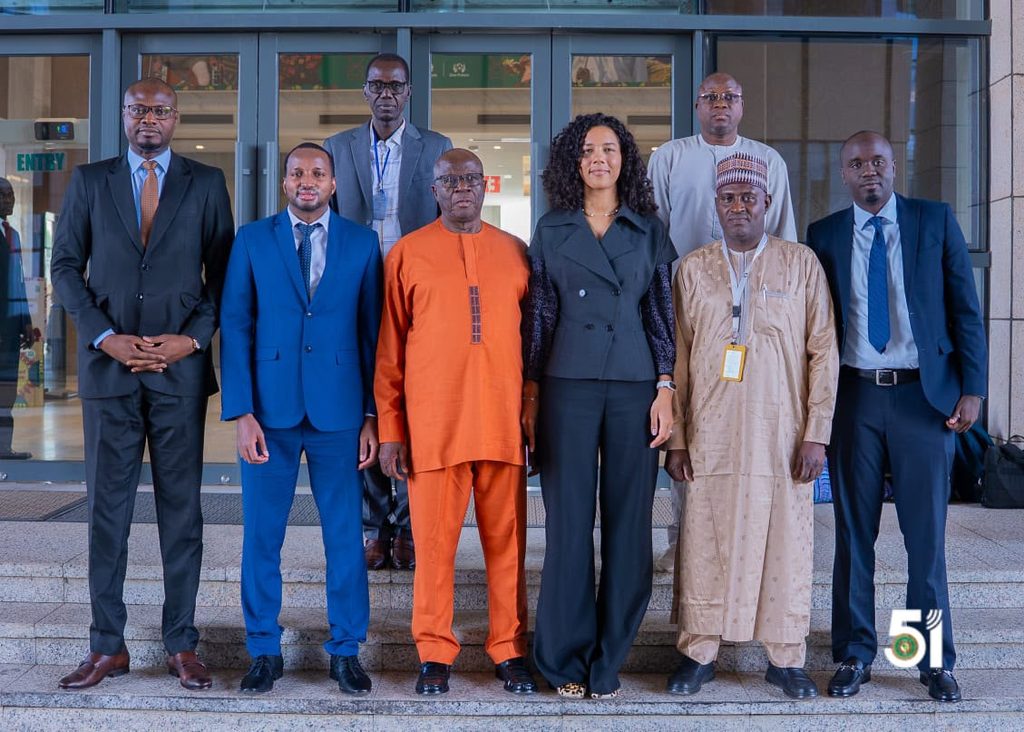
The mission commenced with a meeting between the World Bank delegation and the ECOWAS Commissioner for Infrastructure, Energy and Digitalisation, Amin Amidu, during which the Directorate of Energy and Mines briefed the Commissioner on the project’s objectives, implementation arrangements and ongoing collaboration with the World Bank.
Amidu, who assumed office on 1 September 2026, reaffirmed his commitment to monitoring the Directorate’s activities, acknowledging that inadequate electricity access remains one of the major development challenges confronting West Africa.
He noted that limited financial resources continue to constrain efforts to close the regional electricity gap, stressing the importance of sustained partnerships and strategic investments in the energy sector.
The Director of the ECOWAS Directorate of Energy and Mines, Arkadius Koumoin, underscored the importance of electricity as a fundamental driver of socioeconomic development.
He observed that the continued absence of electricity in many rural communities across West Africa remains a significant obstacle to improved livelihoods, economic opportunities and inclusive growth.
Koumoin reaffirmed ECOWAS’s commitment to coordinated regional interventions, noting that access to reliable and sustainable energy remains central to the organisation’s Vision 2050 aspiration of building a more integrated, prosperous and people-centred West Africa.
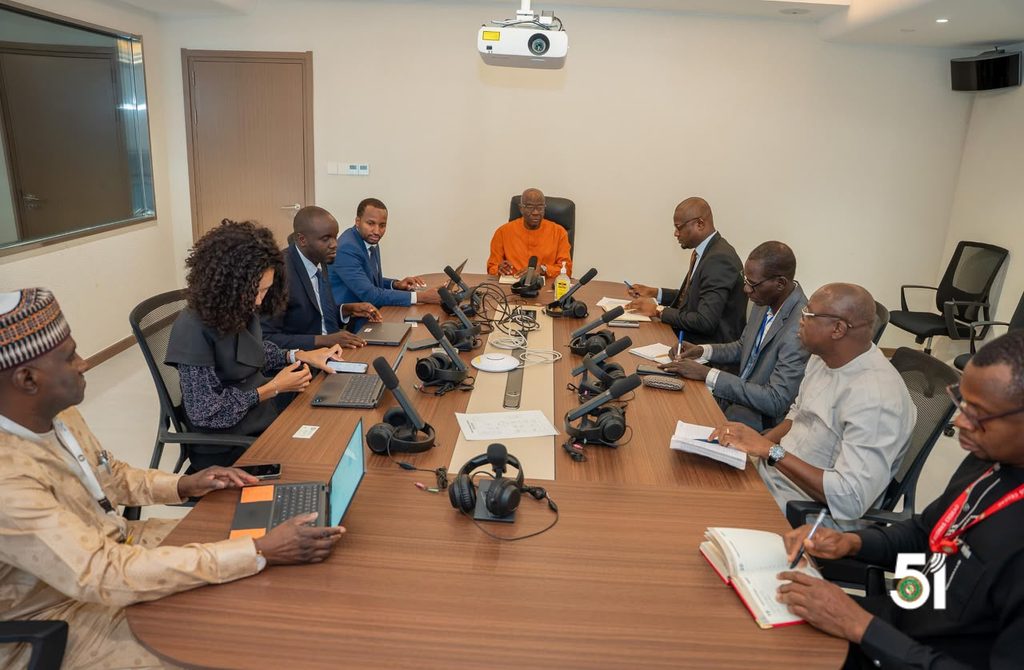
The World Bank’s Task Team Leader for the RAISE Project, Ebrima Bah, described the initiative as an important regional development intervention and commended the progress recorded so far.
He noted that the project had benefited from lessons and experiences gained from previous initiatives, providing a favourable foundation for implementation. He expressed optimism that the project could be completed within three to four years.
The mission will also examine critical implementation components, including the preparation of the 2027 Annual Work Plan and Budget, environmental and social safeguards, regional procurement activities, financial management arrangements and national procurement processes in Togo and The Gambia.
The RAISE Project became effective on 29 October 2026, following a US$10 million grant agreement signed between ECOWAS and the World Bank in July 2026 to facilitate regional coordination and implementation.
The RAISE Project comes against the backdrop of persistent electricity access challenges across West Africa, where inadequate infrastructure, high generation costs, unreliable supply and affordability constraints continue to undermine economic development.
Despite progress in expanding electricity infrastructure, significant disparities remain between urban and rural communities, with many households and businesses still lacking access to reliable power.
The electricity deficit has particularly affected rural economies, limiting opportunities for small businesses, agricultural processing, digital services and other productive activities that depend on dependable electricity.
The World Bank has identified infrastructure constraints, high electricity generation costs, affordability challenges and weaknesses in power sector institutions as major obstacles to expanding electricity access across the region.
In Togo and The Gambia, the RAISE Project is designed to address these challenges through expanded electricity distribution networks, household connections and renewable energy development.
The World Bank estimates that the initiative could generate labour income gains equivalent to approximately 11,700 jobs annually through direct and indirect economic effects, including about 9,200 in Togo and 2,500 in The Gambia.
Beyond its immediate targets in Togo and The Gambia, RAISE forms part of broader efforts to strengthen regional electricity infrastructure, improve cross-border power trade and accelerate access to affordable and sustainable energy across West Africa.
The initiative complements the West Africa Regional Electricity Market Programme (WA-REMP), a regional framework supported by the World Bank to strengthen electricity trade, improve energy security and expand access to power across the sub-region.
The programme, approved by the World Bank in January 2025 with an initial financing framework of US$1.6 billion, builds on the work of the West African Power Pool (WAPP), which is developing an interconnected electricity market to enable countries to exchange power and make more efficient use of available generation resources.
The regional integration programme builds on more than 4,000 kilometres of high-voltage transmission lines constructed to connect electricity networks across 15 West African countries, facilitating cross-border electricity trade.
The wider regional electricity agenda has also contributed to improved electricity services for more than three million people across six West African countries between 2019 and 2025.
RAISE complements these interventions by focusing on the last-mile challenge of connecting underserved communities and households to electricity while encouraging renewable energy development.
The project also aligns with the World Bank’s Mission 300 ambition to provide electricity access to 300 million people across sub-Saharan Africa by 2030.
Through these complementary initiatives, ECOWAS and the World Bank are pursuing a coordinated approach that combines regional electricity integration with investments in local distribution networks, renewable energy and household connections.
The successful implementation of RAISE is therefore expected to contribute not only to improved electricity access in Togo and The Gambia but also to ECOWAS’s broader objectives of regional integration, economic transformation and sustainable development.
ECOWAS, World Bank Intensify Drive to Bridge West Africa’s Electricity Gap, Target 1,800 Communities
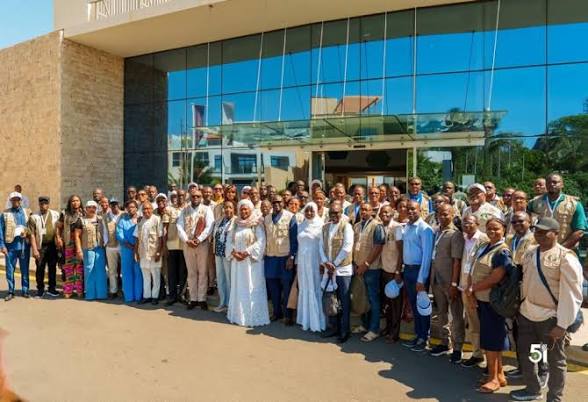
ECOWAS deploys observers across nine islands for Cabo Verde presidential election
…Says no major threat to peaceful polls as UN, AU, other international missions coordinate monitoring
By: Michael Mike
The Economic Community of West African States (ECOWAS) has deployed election observers across all nine inhabited islands of Cabo Verde to monitor the country’s presidential election held on Saturday, expressing confidence in the peaceful conduct of the electoral process.
The regional bloc said its pre-election assessment had identified no significant threat to the peaceful conduct of the poll, describing the island nation as a strong democratic example in a West African region grappling with political instability and unconstitutional changes of government.
The ECOWAS Election Observation Mission, led by former Gambian Vice-President, H.E. Fatoumatta Jallow-Tambajang, completed its pre-election engagements in Praia, the country’s capital, with activities including the deployment of observers, consultations with international partners and meetings with presidential candidates.
The deployment on November 13 was accompanied by an engagement with the United Nations Special Representative for West Africa and the Sahel, Leonardo Santos Simão, who underscored ECOWAS’s leadership in addressing political and security challenges in the region.
“No one is more important than ECOWAS in this region,” Simão said, reaffirming the importance of regional cooperation in safeguarding democratic processes and political stability.
On November 14, Jallow-Tambajang met with presidential candidate José Maria Neves and convened a meeting of heads of international election observation missions at the ECOWAS Situation Room in Praia.
The meeting brought together representatives of the African Union (AU), the Community of Portuguese Language Countries (CPLP), the ECOWAS Network of Electoral Commissions (ECONEC), the Network of Jurisdictional and Electoral Administration Bodies of the CPLP (ROJAE-CPLP) and the International Organisation of La Francophonie (OIF).
The ECOWAS Head of Mission was supported by the Commissioner for Political Affairs, Peace and Security, Francess Piagie Alghali, who is leading the technical team of the observation mission.
Presenting the mission’s pre-election assessment, Alghali said the organisation had not identified any major security concern that could undermine the peaceful conduct of the election.
“At this stage, ECOWAS sees no significant threat to the peaceful conduct of the presidential election. Cabo Verde remains a strong democratic example within the West African region,” she said.
The coordinated engagement among the international observation missions was aimed at strengthening cooperation, information-sharing and a common understanding of developments surrounding the electoral process.
During Saturday’s election, Jallow-Tambajang was scheduled to observe the opening of polls in Palmarejo, Praia, visit polling stations in Tira Chapéu, Várzea and Achadinha, and return to Palmarejo to observe the closing and counting of votes, while other ECOWAS observers monitored proceedings across the country’s nine inhabited islands.
The mission is expected to issue its preliminary statement on the electoral process on November 17.
The election is significant against the background of Cabo Verde’s reputation for political stability and peaceful democratic transitions in a region that has experienced military coups, political instability and contested transfers of power.
Cabo Verde transitioned from a one-party system to multiparty democracy in 1991, when the opposition Movement for Democracy (MpD) defeated the long-ruling African Party for the Independence of Cabo Verde (PAICV) in the country’s first multiparty elections. Since then, the two major political parties have alternated in power through elections.
The November 15 presidential election is the country’s sixth presidential contest since the introduction of multiparty democracy and features six candidates, including incumbent Neves, who is seeking a second five-year term, and former Justice Minister Joana Rosa, the country’s first female presidential candidate.
Neves won the October 2021 presidential election with approximately 51.7 per cent of the votes, defeating his main challenger, Carlos Veiga, who secured about 42.4 per cent.
Under Cabo Verde’s semi-presidential system, the president is directly elected and exercises constitutional responsibilities that include signing or vetoing legislation, while the prime minister exercises most executive powers. The presidential contest therefore also has implications for the country’s institutional balance and political relations between the presidency and government.
The ECOWAS deployment forms part of the organisation’s broader mandate to promote democratic governance, credible elections and political stability among its member states.
Through its nationwide observation, engagement with political stakeholders and coordination with other international missions, ECOWAS is supporting efforts to ensure a transparent and peaceful electoral process, with its preliminary assessment expected to provide further insights into the conduct of the vote.
ECOWAS deploys observers across nine islands for Cabo Verde presidential election

Troops Rescue 14 Kidnap Victims, Search for Five Others in Kaduna

13-Year-Old Fulani Herder Killed in Suspected Attack by Irigwe Youths in Plateau

Beyond Politics: The Imperative of Stakeholder Support for Engr. Mustapha Gubio’s Vision for a United and Educated Borno

Roger Federer’s Shock as DNA Results Reveal Myla and Charlene Are Not His Biological Children

THE PLIGHT OF FARIDA

FAILED COUP IN BURKINA FASO: HOW TRAORÉ NARROWLY ESCAPED ASSASSINATION PLOT AMID FOREIGN INTERFERENCE CLAIMS
-
 News3 years ago
Roger Federer’s Shock as DNA Results Reveal Myla and Charlene Are Not His Biological Children
-
Opinions5 years ago
THE PLIGHT OF FARIDA
-
 News2 years ago
FAILED COUP IN BURKINA FASO: HOW TRAORÉ NARROWLY ESCAPED ASSASSINATION PLOT AMID FOREIGN INTERFERENCE CLAIMS
-
 Opinions5 years ago
POLICE CHARGE ROOMS, A MINTING PRESS
-

 News3 years ago
EYN: Rev. Billi, Distortion of History, and The Living Tamarind Tree
-

 ACADEMICS3 years ago
A History of Biu” (2015) and The Lingering Bura-Pabir Question (1)
-

 Columns3 years ago
Army University Biu: There is certain interest, but certainly not from Borno.
-

 Politics1 year ago
2027: Why Hon. Midala Balami Must Go, as Youths in Hawul and Asikira/Uba Federal Constituency Reject ₦500,000 as Sallah Gift
