
National News
PANEL COMMENDS AIG BALA CIROMA, URGES HIM TO DO MORE.


PANEL COMMENDS AIG BALA CIROMA, URGES HIM TO DO MORE.
By: Our Reporter
Chairman of the ongoing investigative panel on the defunct Special Anti-Robbery Squad and other units of the Nigerian Police Force sitting in Abuja, today commended the efforts of the AIG zonal headquarters, Wuse zone 7, Abuja.
While extolling the sacrifices made by the AIG Bala Ciroma in the case of alleged threat to life of one Mohammed Dan Asabe and one Mrs Kate who were allegedly shot by the Police, justice Suleiman Galadima however reiterated that more still needs to be done in compensating the victims.
The petitioners, who narrated their ordeal, told the panel that on the 19th April 2019 while in a taxi at Banex area, Abuja, the taxi driver turned into a filling station to top up fuel in his car.
Narrating further, Mohammed said, a police officer who was at a checkpoint flagged down the taxi conveying them, but that the driver who refused to stop, later abandoned them in the taxi and fled.
Mohammed stated that they heard gun shots and afterwards saw a police officer pointing a gun to his head.
Also Read: Ritualists killed 11 year old Boy in Bauchi
Recounting their experience, Mohammed said, he later discovered that his legs were broken in three places by gun shots while a bullet also went through Mrs Kate’s left and right leg.
In his words ” we were taken to Maitama General Hospital but later referred to National hospital, where the AIG, then CP FCT, Bala Ciroma visited us on the third day”.
Mohammed further informed the panel that the AIG Bala Ciroma apologized over the incident, while promising to ensure that the officer in question will be made to face the consequences of his actions.
In addition, Mohammed told the panel that Bala Ciroma paid about N300, 000 for the surgery he underwent on his legs, and equally gave both of them feeding money of about N50, 000 each.
The victims who have lost their means of livelihood owing to the effect of injuries they sustained are however seeking compensation to the tune of about N10 million Naira to enable them move on with their lives.
Ruling on the matter, Chairman of the panel, Justice Suleiman Galadima rtd, stressed the need for a sympathetic consideration of the complainant’s situation.
The matter was adjourned to November 30th, 2021 for final hearing.
PANEL COMMENDS AIG BALA CIROMA, URGES HIM TO DO MORE.


National News
ECOWAS Issues Biometric Identity Cards to Over 260 Women Traders at Senegal–Guinea-Bissau Border

ECOWAS Issues Biometric Identity Cards to Over 260 Women Traders at Senegal–Guinea-Bissau Border
By: Michael Mike
The Economic Community of West African States (ECOWAS) has issued ECOWAS National Biometric Identity Cards (ENBIC) to more than 260 women traders in border communities between Senegal and Guinea-Bissau in a move aimed at strengthening regional integration and easing cross-border trade.
The cards were presented during a ceremony held on March 16, 2026, in the twin border communities of São Domingos and Mpack, with support from the German Agency for International Cooperation (GIZ).
The initiative, led by ECOWAS’ Directorate of Free Movement of Persons, Migration and Tourism, is designed to facilitate the movement of women engaged in cross-border economic activities while addressing administrative barriers faced by vulnerable populations who often lack awareness or access to ECOWAS travel documents.
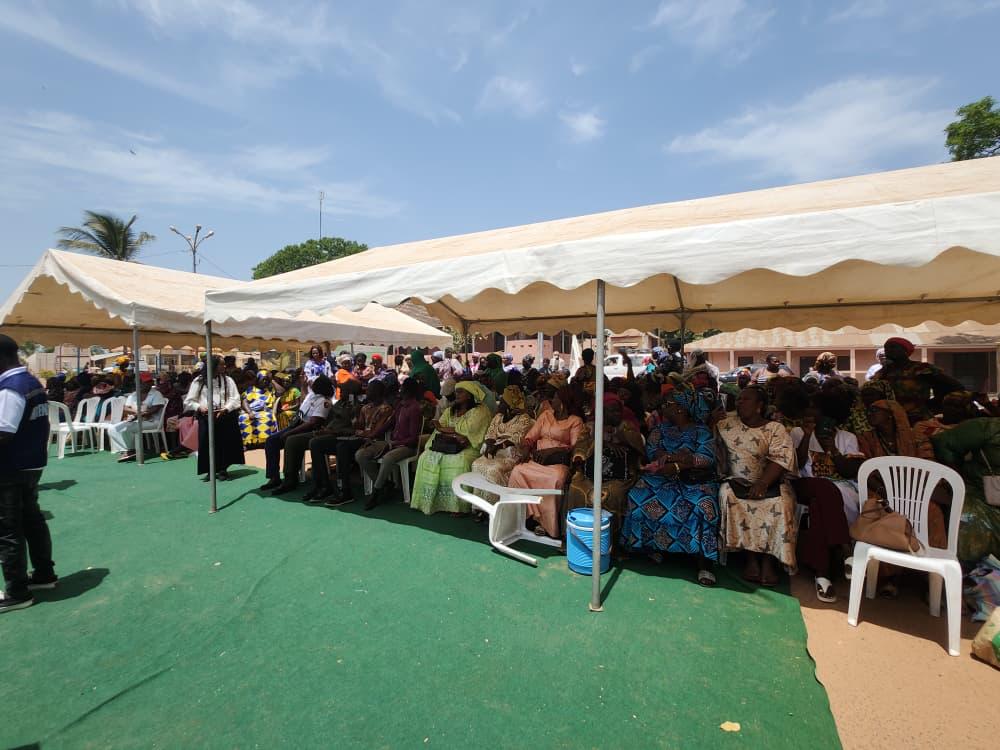
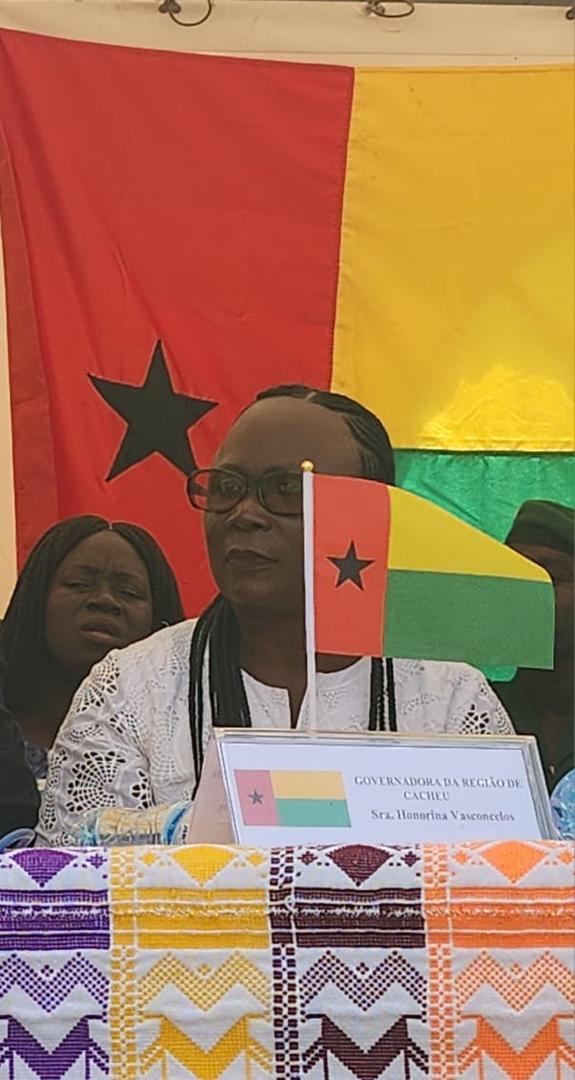
The event brought together officials from both countries, including the Governor of Cacheu in Guinea-Bissau, Honorina Vasconcelos, and the Governor of Ziguinchor in Senegal, Mor Talla Tine, alongside representatives of national boundary commissions and the ECOWAS Commission.
Speaking at the ceremony, Vasconcelos expressed appreciation to ECOWAS for selecting São Domingos as a beneficiary of the pilot phase of the initiative, describing the programme as an important step toward strengthening regional integration and facilitating free movement across the sub-region.
Also addressing participants, Tine commended the programme and stressed the importance of transforming border communities into hubs of economic opportunity while maintaining vigilance against security threats and cross-border crime. He noted that around 100 women cross the Mpack–São Domingos border daily without adequate knowledge of required travel documents, highlighting the need for broader community sensitization.
Representing ECOWAS’ Director of Free Movement of Persons, Migration and Tourism, Obinna Ajugwo said the initiative demonstrates the organisation’s commitment to translating regional integration policies into tangible benefits for citizens.
He explained that the ECOWAS National Biometric Identity Card plays a critical role in facilitating cross-border travel while enhancing security through modern identity verification systems.
In total, 262 women traders received the biometric cards, a development that was greeted with enthusiasm and appreciation by beneficiaries who rely on daily cross-border trade for their livelihoods.
ECOWAS said the programme forms part of its broader efforts to strengthen border management systems, improve migration governance and advance the free movement of persons across West Africa.
Established in 1975 in Lagos, the regional bloc continues to pursue economic integration and cooperation among its member states, with a long-term vision of building an “ECOWAS of the People: Peace and Prosperity to All by 2050.”
ECOWAS Issues Biometric Identity Cards to Over 260 Women Traders at Senegal–Guinea-Bissau Border
National News
VP Shettima, Zulum Attend Eid Prayers at Ramat Square as Worshippers Observe Sallah Peacefully in Maiduguri
VP Shettima, Zulum Attend Eid Prayers at Ramat Square as Worshippers Observe Sallah Peacefully in Maiduguri
By: Our Reporter
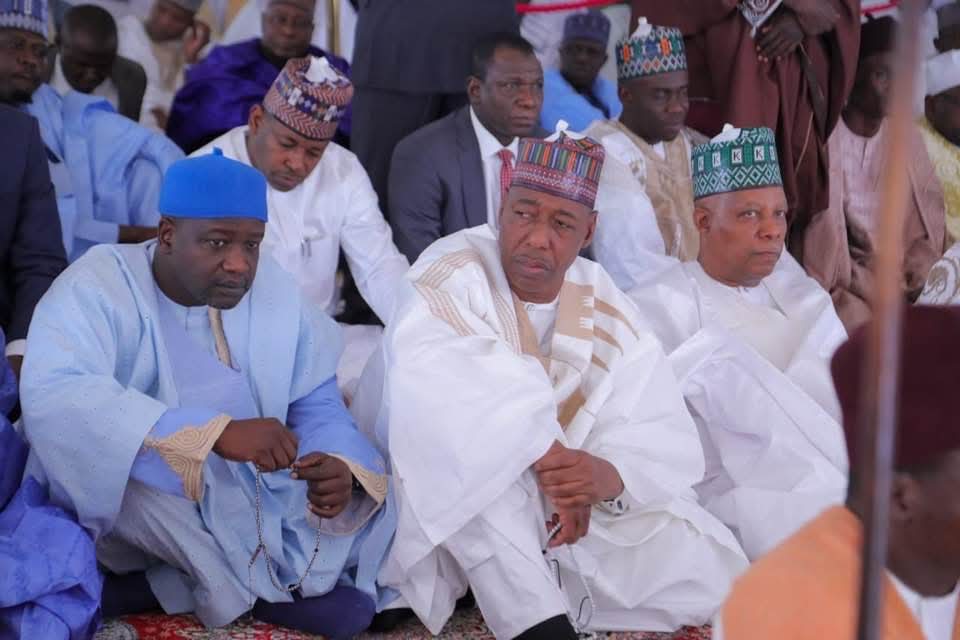
Vice President, Senator Kashim Shettima, Borno State Governor, Professor Babagana Umara Zulum, joined thousands of muslim faithful to observe the Eid prayers at Ramat Square, Maiduguri.
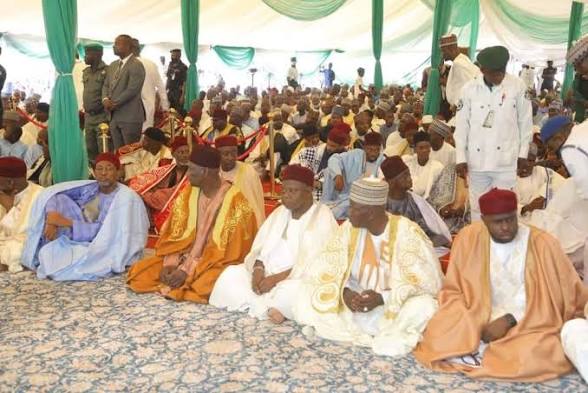
The two units prayer were observed peacefully at the main Eid ground and other prayer grounds across the state under tight security, marking the end of the month-long Ramadan fast.

In a sallah message shortly after the sermon by the Imam Idaini of Borno, Shettiima Mamman Saleh, the Vice President called for unity and peaceful coexistence in the state and the country as a whole.
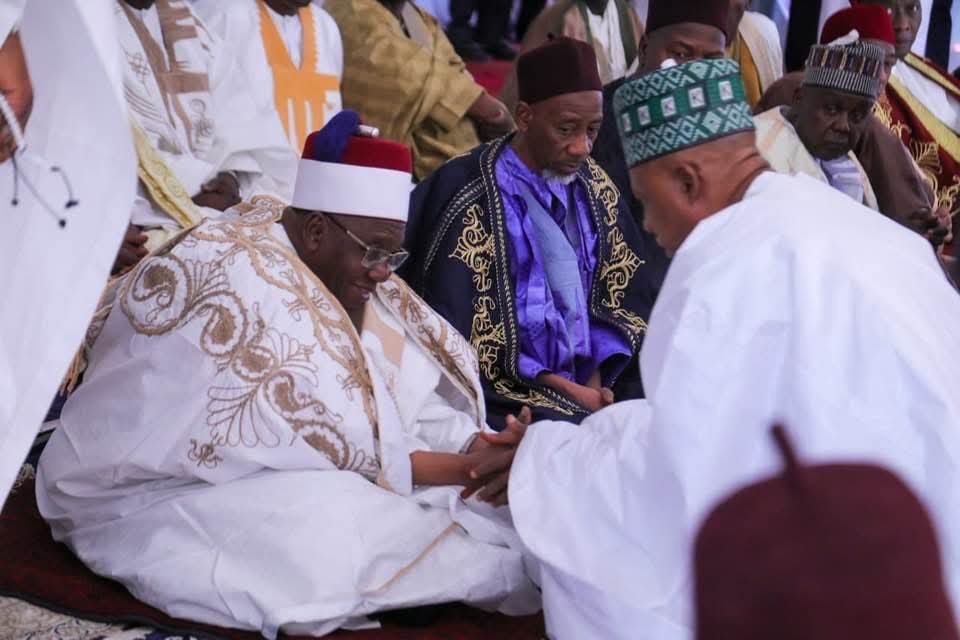
Senator Shettima assures the Federal Government Gommitment to protecting the lives and properties of the citizenry, stressing that the fight against insurgency would be tackled head-on.
The Imam Idaini admonished worshippers to imbibe the lessons learned during the holy month and encouraged Muslim faithful to give alms to the poor (zakatul fitr) and to fast six days in the month of Shawwal to receive Allah’s bounties and rewards.
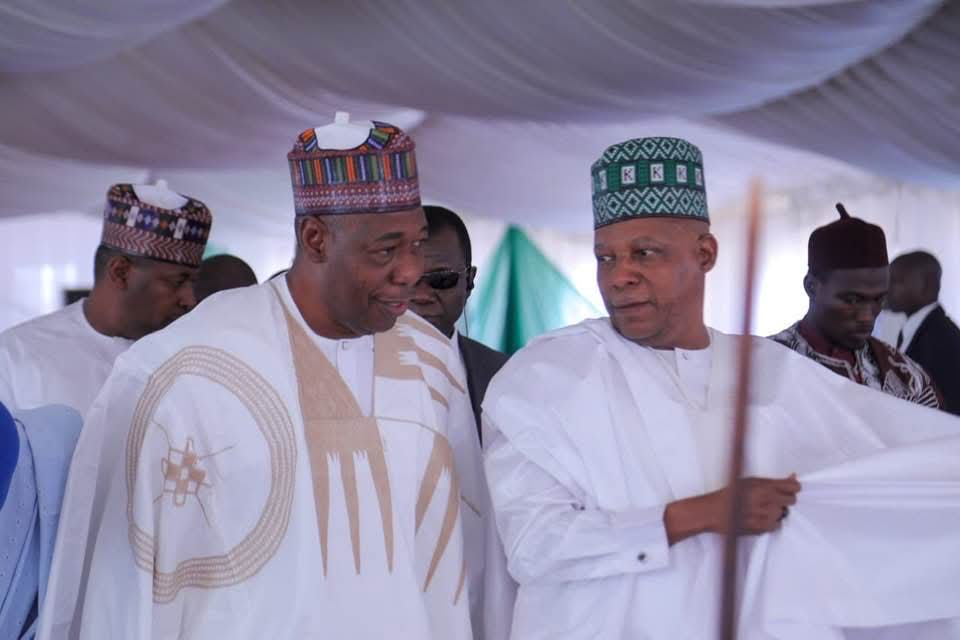
Borno State Governor, Professor Babagana Umara Zulum, in a sallah message, called on faithful to recharge their spiritual beings towards rebuilding a secure, peaceful, and prosperous Borno.
He saluted the courage, resilience, and commitment of the people to all initiatives aimed at deepening security and peace-building among the various components of society, fragmented by the Boko Haram insurgency over the years.
The Eid prayer was attended by the Shehu of Borno, Shehu Abubakar Ibn Umar Garbai Almin El-Kanemi; the Borno State Deputy Governor, Umar Usman Kadafur; the APC Deputy National Chairman, North, Senator Mohammed Ali Ndume; and Senator Kaka Shehu Lawan SAN, Minister of State for Regional Development.
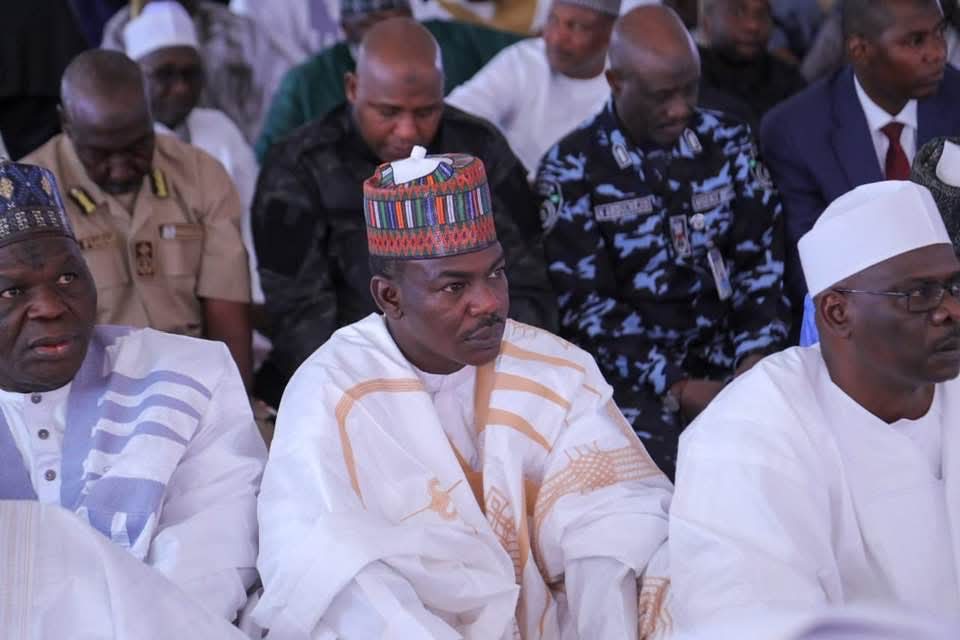
Other dignitaries include members of the House of Representatives and the Borno State House of Assembly, former deputy governors, the Secretary to the State Government, Commissioners, APC stalwarts, and other top government officials.
VP Shettima, Zulum Attend Eid Prayers at Ramat Square as Worshippers Observe Sallah Peacefully in Maiduguri
Eid-el-Fitr: IPCR Urges Nigerians to Embrace Unity, Peaceful Coexistence
By: Michael Mike
The Institute for Peace and Conflict Resolution (IPCR) has called on Nigerians to strengthen unity, tolerance and peaceful coexistence as Muslims across the country celebrate Eid-el-Fitr, marking the end of the holy month of Ramadan.
In a statement issued on Thursday in Abuja, the Director-General of the institute, Dr. Joseph Ochogwu, congratulated the Muslim Ummah in Nigeria and around the world on the successful completion of the Ramadan fast.
He said the occasion, which signifies the end of a period of fasting, reflection and spiritual devotion, provides an opportunity for citizens to renew their commitment to the values of peace, compassion and national unity.
Ochogwu urged Muslims to sustain the virtues cultivated during Ramadan—such as self-discipline, patience, charity and piety—beyond the festive period, stressing that such values are essential for building harmonious communities and strengthening the nation.
According to him, Nigerians must also rise above religious, ethnic and political differences and embrace mutual respect and peaceful coexistence as vital ingredients for national development.
“At a time when the country is confronted with complex challenges, unity of purpose and collective responsibility are crucial to overcoming divisions and building a more secure and prosperous nation,” he said.
The institute also expressed concern over recent security incidents in parts of the country, including the tragic bomb blast in Maiduguri, Borno State, which claimed several lives.
Ochogwu extended condolences to families of the victims, praying for the repose of the deceased and speedy recovery for those injured in the attack.
He reaffirmed the institute’s commitment to its mandate of promoting peacebuilding, conflict prevention and resolution across Nigeria, noting that IPCR would continue to work with government institutions, communities and other stakeholders to address the root causes of conflict.
The IPCR boss further urged citizens to remain vigilant, cooperate with security agencies and actively support peacebuilding initiatives in their communities.
“Peace is a shared responsibility, and every Nigerian has a role to play in safeguarding it,” he added.
Ochogwu also prayed that the Eid-el-Fitr celebration would usher in renewed hope, healing and unity for Nigeria while advancing peace, stability and national progress.
Eid-el-Fitr: IPCR Urges Nigerians to Embrace Unity, Peaceful Coexistence

That Phantom Rift Between VP Shettima And Gov. Zulum

Troops arrest suspected ISWAP informant in Gombi, Adamawa

Over 930, 000 persons benefit from ACReSAL Projects in Gombe

Roger Federer’s Shock as DNA Results Reveal Myla and Charlene Are Not His Biological Children

THE PLIGHT OF FARIDA

FAILED COUP IN BURKINA FASO: HOW TRAORÉ NARROWLY ESCAPED ASSASSINATION PLOT AMID FOREIGN INTERFERENCE CLAIMS
-
 News2 years ago
Roger Federer’s Shock as DNA Results Reveal Myla and Charlene Are Not His Biological Children
-
Opinions4 years ago
THE PLIGHT OF FARIDA
-
 News11 months ago
FAILED COUP IN BURKINA FASO: HOW TRAORÉ NARROWLY ESCAPED ASSASSINATION PLOT AMID FOREIGN INTERFERENCE CLAIMS
-

 News2 years ago
EYN: Rev. Billi, Distortion of History, and The Living Tamarind Tree
-
 Opinions4 years ago
POLICE CHARGE ROOMS, A MINTING PRESS
-

 ACADEMICS2 years ago
A History of Biu” (2015) and The Lingering Bura-Pabir Question (1)
-

 Columns2 years ago
Army University Biu: There is certain interest, but certainly not from Borno.
-

 Opinions2 years ago
Tinubu,Shettima: The epidemic of economic, insecurity in Nigeria
