
News
Peace Committee to Deploy Election Security Technology in Anambra Poll

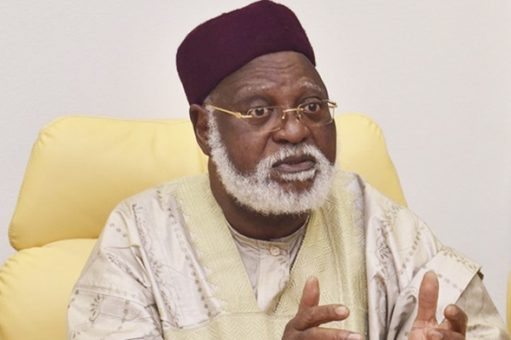
Peace Committee to Deploy Election Security Technology in Anambra Poll
By: Michael Mike
The General Abdulsalami Abubakar led National Peace Committee has announced plans to deploy the newly inaugurated Election Information technology hub in its Security and peace process in the forthcoming Anambra governorship poll.
Gubernatorial election in Anambra State has been fixed by the Independent National Electoral Commission (INEC) for 8th November 2025
The Peace committee launched the Election Security Information Hub, which is expected to provide verifiable data that the committee will be using to engage critical stakeholders in security and electoral process, on Wednesday to enhance its intervention work.
Speaking at the inauguration in Abuja, Gen. Martin Lurther (rtd) who represented the Chairman of the NPC, Gen Abdulsalami Abubakar (rtd), said there must be peace in the country for there to be credible elections.
He noted that the strength of democracy is the credibility of elections and the confidence in the process, while however stating that every election cycle has continued to throw up gaps in security management.
He revealed that the inaugurated hub, aimed to correct those identified gaps
He said: “The strength of any democracy rests on the credibility of its election and the confidence of its citizens in the process. While Nigeria’s democracy continues to deepen, each election cycle reveals persistent security challenges, gaps in coordination, intelligence sharing, and weak response systems that allow local tensions to escalate into broader conflict.
“The hub is a deliberate response to these challenges. It is a strategic platform designed to gather, analyse, and share information on security and its impact on election cycles.
“While tracking electoral offences, its process is simple, yet very profound, intended to transform early warning into coordinated, timely, and local responses by critical stakeholders.”
The hub, he said “reflects a critical evolution in Nigeria’s democratic architecture, turning commitment into coordination and pledge into practical action. It fosters collaboration among INEC, security agencies, civil society organisations, and the media, creating a unifying space for monitoring risk and strengthening collective action for peaceful elections”.
He highlighted the works of the Peace Committee since inception in 2014, which include facilitating the signing of peace accords, moral and civil commitments by political actors to conduct themselves peacefully before, during, and after elections and also intervening in other forms of violence, not related to elections, but retained the capacity to impact negatively on election outcomes.
He however added: “Yet, as we have learned, peace must be sustained by systems.
“The ESI has embodied that conviction that peace and credibility must be protected by structure, information, and cooperation.”
He also commended the European Union for its steadfast partnership under the EU-FDGN programme.
Agwai also urged ESI-hub to always verify information and share what is correct, valid, and credible, adding “Avoid sensationalism and misinterpretations that will impact on the credibility of the excellent work you have already been doing.
“Distinguished ladies and gentlemen, please note that peace and security are not products of chance. They are outcomes of vigilance, discipline, professionalism, and shared responsibility.
“The success of this hub will depend on timely information, shared institutional trust, collaboration, and collective will to act decisively on everything. As we inaugurate the Election Security Information Hub, we reaffirm a timeless truth.”
He lre-echoed the United Nations Sustainable Development Goals 16 which “democracy flourishes where peace is protected, justice is upheld, and institutions work together in good faith.”
He also warned that “credible elections are not the task of one institution alone, but the collective responsibilities of all. Together, let us continue to build a Nigeria where elections are a context of leadership, not a battleground of fear. A Nigeria where peace, accountability, and cooperation remain the pillars of our democracy.”
Stressing the importance of peace to credible elections, representative of the European Union Head of Delegation to Nigeria, Mr. Ruben Aguilera said it is all about the right of every Nigerian to be able to vote without threat or intimidation.
He said: “And I think this is important, because we are talking about the right of every citizen to be able to vote. And it’s about the right to vote without any threat, without any intimidation, without any fear. And that’s a right that should not be taken away from anyone in Nigeria or anywhere else in the world.”
He said the EU’s dream is to see a Nigeria free of conflict.
“The Nigeria we dream of as the European Union, the Nigeria we support through the National Peace Committee, but through many other engagements, is a Nigeria free of conflict. A Nigeria where people can express their feelings and their ideas without having any fear of persecution or being subject to violence”.
He said that the Electoral Security Information Hub is another tool that we want to support towards that aim.
The Election Security Information Hub, he said, is an “evidence-based platform that would allow us to track those incidents and those behind those incidents in terms of electoral offences.
“ As has been mentioned earlier, there have been no credible, inclusive elections without security. And unfortunately, as we know, there are still persistent security challenges.
“We sincerely hope that this tool will not only gather information, but it will also use that information for high-level engagements, for discussions, but also for action. We do need to take that information seriously, and whenever there are cases of insecurity, we need to act on that.
The representative of the Acting National Chairman of Independent National Electoral Commission, Mrs. Helen Ajayi, Director, Monitoring and Planning, INEC said that the commission was prepared to work closely with the hub, saying the initiative will enhance the work of the Commission.
Ajayi stressed that democracy can only thrive through collective resolve of stakeholders.
She said: “Indeed, democracy thrives not only through the casting of ballots, but also through the collective resolve of stakeholders like you, who work tirelessly to seek that integrity of the process. As we look ahead to future elections, I encourage us all to remain steadfast in fostering collaboration, deepening voter confidence, and upholding the principles of fairness, inclusivity, and peace. Together we can build an electoral culture that truly reflects the will of the people and stands as a model in our continent.
“This will enhance what INEC is already into. In preparation for every election, the Commission has a tool that it uses to manage election security- ERM, Election Risk Management.
“With this kind of hub, we can collaborate and harness everything that the Commission is already into and have a better election. “
She also disclosed that INEC has already mapped out the risk areas in the forthcoming Anambra governorship election.
“And those risk areas are not just mapped on the general scale. We’ve mapped the risk areas up to the polling units. The Commission has identified polling units where risk incidents have happened in the past and where there is a history of violence.
“And because of that, the Commission is paying close attention to those areas so that the elections in those areas will be free, fair, and credible,” she added.
In his pre-inauguration address, Fr. Atta Barkindo, Executive Director of the Kukah Centre and Head of the Secretariat of the NPC said that the hub aimed at curbing electoral violence, insecurity, and other forms of malpractice during elections in Nigeria.
The Hub which is technically assisted by the European Union support to Democratic Governance Programme in Nigeria seeks to provide a platform for information sharing, a more coordinated and data driven approach to security management.
The initiative is to be deployed for the Anambra governorship election slated for 8th November 2025.
“ The hub will serve as a repository for gathering, analysing and sharing verified data on insecurity and its impact on elections, including the tracking of electoral offences nationwide.”
He added: “ The hub intends to translate early warnings into early coordinated and lawful responses, ensuring that emerging threats are addressed proa timely rather than reactively by the relevant stakeholders.”
Barkindo stressed that the initiative is central to enhancing election security and promoting peaceful democratic processes.”
He disclosed that the initiative includes providing quarterly threat analyses which involve in-depth assessments of evolving risks to electoral peace and integrity.
He also said that the initiative includes monthly security reports-tracking trends in insecurity, emerging threats and their implications for election management.
Barkindo said there will also be state-specific reported, beginning with the Anambra off-cycle election security report, to support targeted preventive action.
He also said there will be a Mini situation monitoring room designed to monitor the peaceful conduct of elections and to evaluate stakeholders adherence to both the letter and the spirit of the peace accord.
The hub, he also said, will have interactive insecurity dashboards, offering visualised data for policy formulation, strategic planning and public awareness.
The hub he also said will provide periodic situation reports and podcasts in a timely manner for stakeholders.
Barkindo explained further that the essence of the initiative is to provide outputs that will help foster transparency, informed dialogue and joint action among election stakeholders so as to ensure that threats are not only identified but addressed through evidence-based collaboration and foresight.
Peace Committee to Deploy Election Security Technology in Anambra Poll


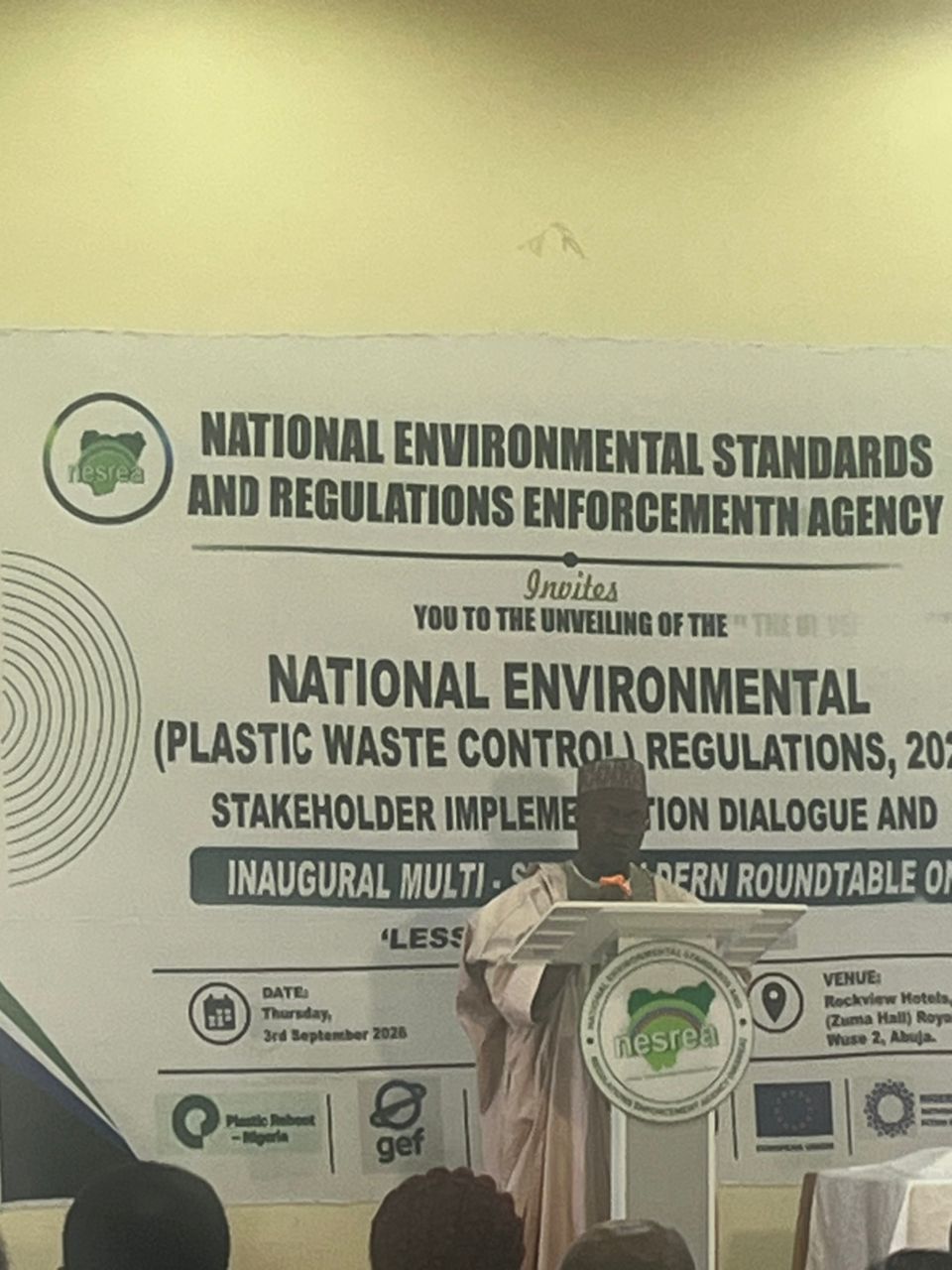
Nigeria Tightens War on Plastic Waste, Makes Producers Responsible for End-of-Life Products
…NESREA unveils 2026 regulations as country generates 2.5m tonnes of plastic waste annually
By: Michael Mike
The Federal Government has unveiled new regulations to tackle Nigeria’s growing plastic waste crisis, placing greater responsibility on producers, importers and other businesses for the recovery and proper management of plastic products after use.
The National Environmental (Plastic Waste Control) Regulations, 2026, unveiled by the National Environmental Standards and Regulations Enforcement Agency (NESREA), seek to move the country from a “make, use and throw away” system to a circular economy based on recovery, recycling and resource efficiency.
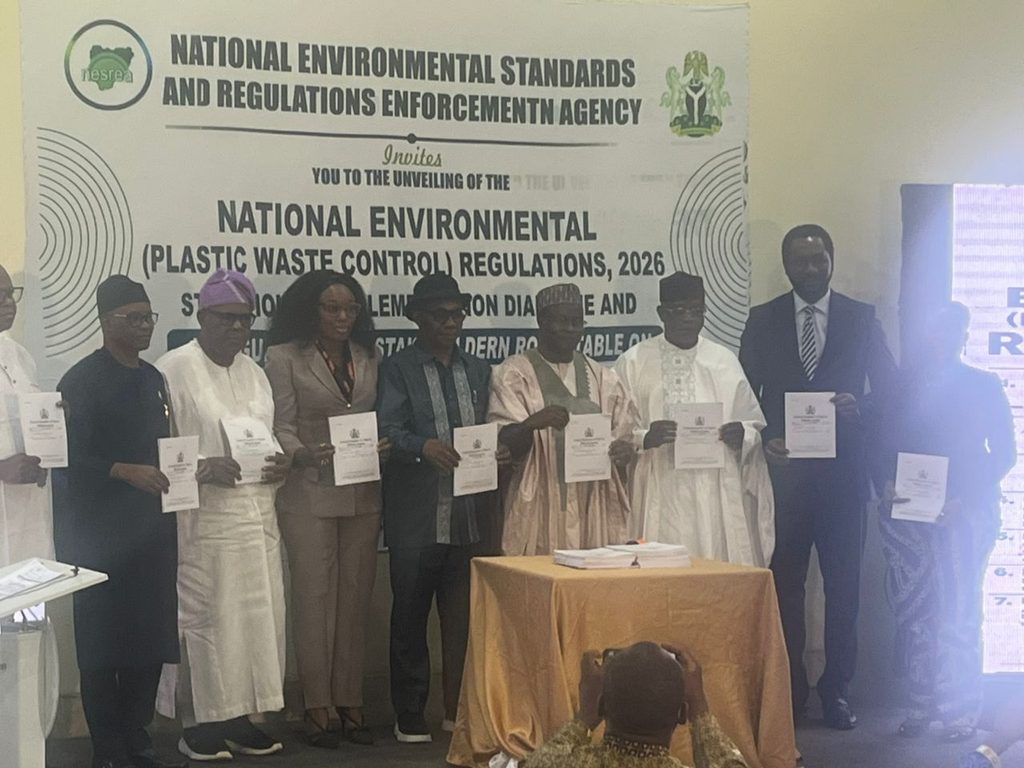
Nigeria generates an estimated 2.5 million tonnes of plastic waste annually, much of which ends up in drains, waterways and communities, contributing to environmental degradation, flooding and public health concerns.
Speaking at the Stakeholder Implementation Dialogue and inaugural multi-stakeholder roundtable on “Less Plastic in Water,” the Director-General of NESREA, Prof. Innocent Barikor, said the regulations marked a shift from policy formulation to implementation.
“Today is significant because it marks a transition from policy intention to implementation,” he said.
Barikor said the success of the regulations would ultimately be measured by cleaner communities and waterways, increased plastic recovery, stronger recycling markets and greater accountability by producers.
At the centre of the new framework is the Extended Producer Responsibility (EPR) principle, under which producers, importers and other businesses placing plastic products on the Nigerian market are expected to take responsibility for their products throughout their life cycle, including their recovery and environmentally sound management after use.
The regulations cover producers, importers, retailers, consumers, recyclers and waste managers, while introducing requirements relating to plastic shopping bags, recycled content and recycling facilities.
Certain plastic shopping bags below 80 microns in thickness are subject to regulation, while PET packaging will be required to contain at least 25 per cent recycled PET by January 2028, rising to 50 per cent thereafter.
Recycling facilities must also comply with prescribed environmental standards, while the production of plastics containing prohibited toxic substances will attract sanctions.
Businesses operating within regulated activities are required to obtain the necessary permits and registrations within the stipulated compliance period. Violations may attract financial penalties and, where applicable, imprisonment and personal liability.
The Chairman of the NESREA Governing Board, Hon. Garba Datti Muhammad, described plastic pollution as a major threat to waterways, livelihoods, communities and public health, stressing that effective implementation would require cooperation among government, industry, Producer Responsibility Organisations, recyclers, subnational authorities, development partners and citizens.
Barikor also identified the strengthening of the National Producer Registry as critical to enforcement, investment planning and measuring environmental performance.
“Data should not be viewed merely as an administrative requirement; it is the foundation upon which producer accountability, investment decisions, recovery systems and credible environmental outcomes can be built,” he said.
The government acknowledged the importance of plastics to healthcare, food preservation, agriculture, manufacturing and other sectors, stressing that the objective was not to eliminate plastic but to curb irresponsible production, consumption and disposal.
Particular attention is being paid to single-use plastics and sachet water, which millions of Nigerians rely on because of its affordability. Officials said alternatives must therefore be environmentally sustainable, affordable and accessible to vulnerable populations.
The “Less Plastic in Water” initiative is part of the Plastic Reboot Nigeria Project, a five-year programme supported by the Global Environment Facility and implemented by the United Nations Environment Programme.
The Minister of Environment, Balarabe Lawal, represented by the Permanent Secretary, Alhaji Salihu Aminu Usman, said stronger implementation of EPR could stimulate investment in recycling, expand markets for recovered materials and create jobs.
He urged stakeholders to view discarded plastics not simply as waste but as potential raw materials for new industries.
Barikor stressed that tackling plastic pollution required coordinated action, saying: “No ministry can solve the plastic problem, no agency can solve it, no company can solve it.”
He warned that the regulations would only have meaning if backed by effective enforcement.
“A regulation without enforcement is merely a wish,” he said.
The focus now shifts to implementation, including producer registration, enforcement of EPR obligations, monitoring, improved waste recovery, investment in recycling infrastructure and the development of viable alternatives to avoidable single-use plastics.
If effectively enforced, the 2026 regulations could mark a significant shift in Nigeria’s environmental policy by making producers more accountable for the full life cycle of their products while transforming plastic waste into an economic resource.
Nigeria Tightens War on Plastic Waste, Makes Producers Responsible for End-of-Life Products
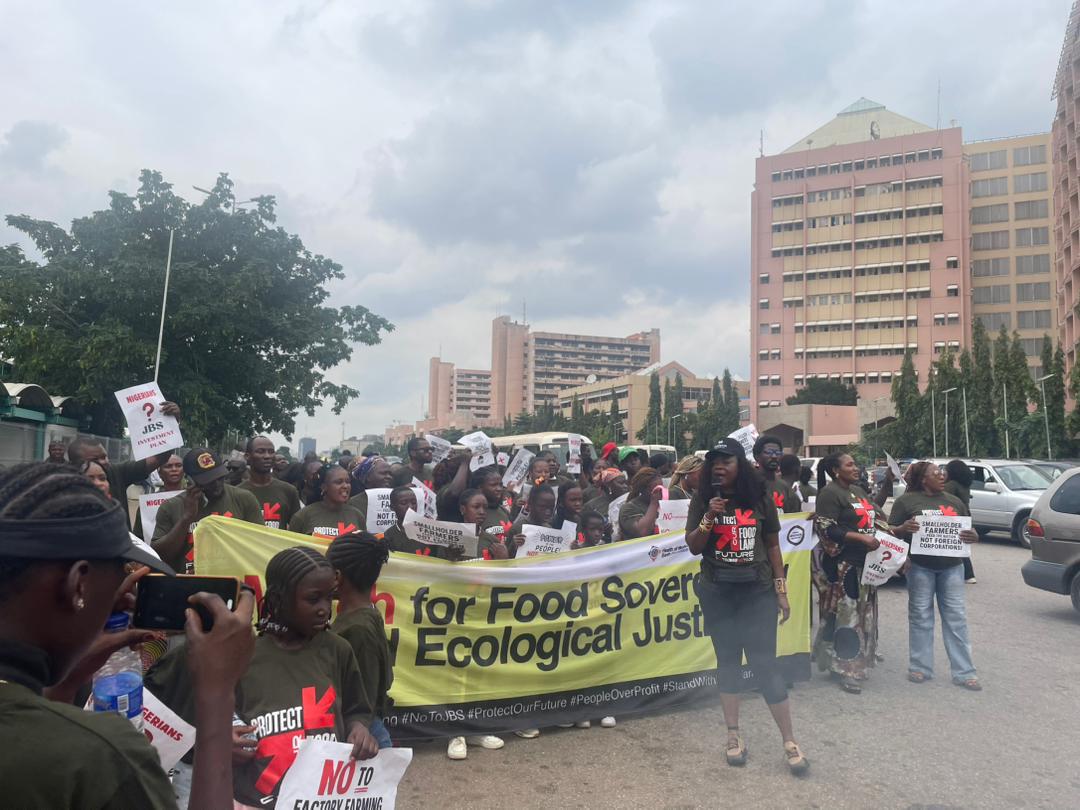
Group Demands Transparency, EIAs Over JBS’ $2.5bn Nigeria Investment
By: Michael Mike
The Environmental Rights Action/Friends of the Earth Nigeria (ERA/FoEN) has demanded full disclosure of the agreement between the Federal Government and global meat-processing giant JBS over its proposed $2.5 billion investment in Nigeria, warning that the project must not proceed without rigorous environmental and multi-sectoral scrutiny.
The environmental rights organisation said it was not opposed to foreign investment, job creation or industrial development, but insisted that the proposed JBS project must be subjected to transparent negotiations, independent environmental assessments and effective regulatory oversight to ensure that Nigerians and host communities do not bear the cost of the investment.
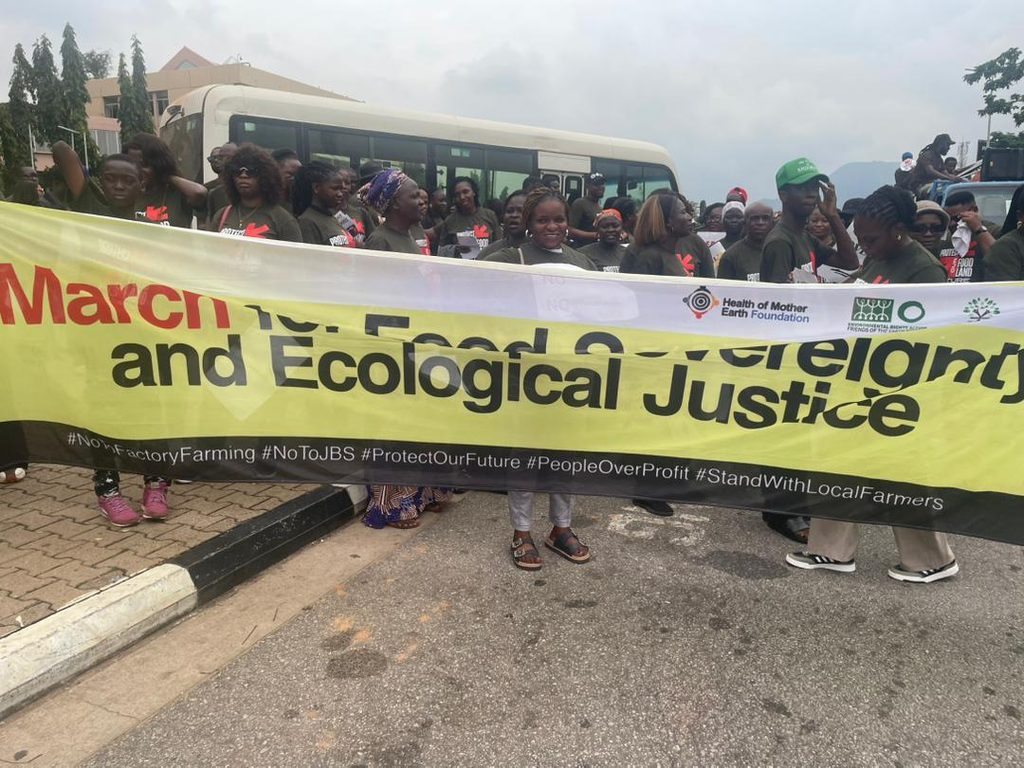
Deputy Executive Director of ERA/FoEN, Mariam Bassey-Olson, said the controversy surrounding the proposed investment should not be framed as a choice between development and opposition to foreign capital.
She said the critical issue was the nature of the investment, its terms, the resources it would require and its potential consequences for Nigeria’s farmers, communities, environment and food system.
“When people hear a company is coming to Nigeria and is bringing $2.5 billion, our first reaction is fantastic jobs, investment, infrastructure and development. But before we celebrate the numbers, we need to pause and ask a fundamental question: what exactly is this investment?” she said.
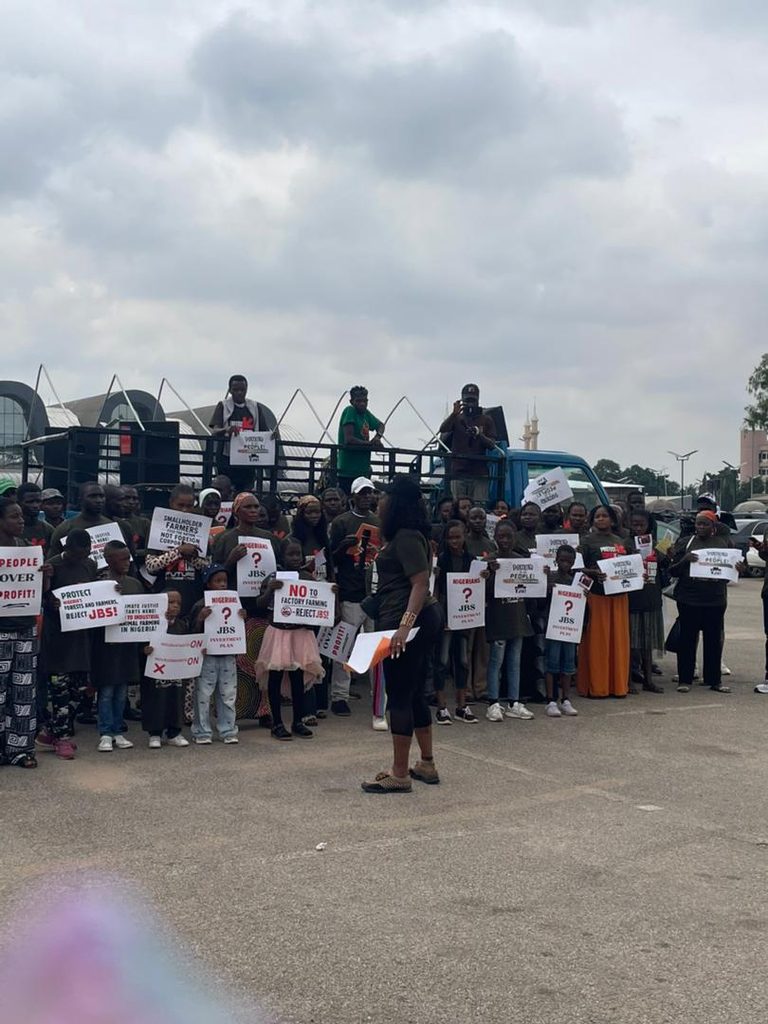
The proposed project reportedly involves the establishment of six facilities — three poultry, two beef and one pork processing plants — a scale ERA/FoEN said demands comprehensive scrutiny because of its potential implications for land ownership, livestock production, water resources, biodiversity, agriculture, local markets and food security.
Bassey-Olson said the debate was fundamentally about Nigeria’s control over its food system and whether local farmers and communities would retain meaningful economic opportunities as large-scale industrial production expands.
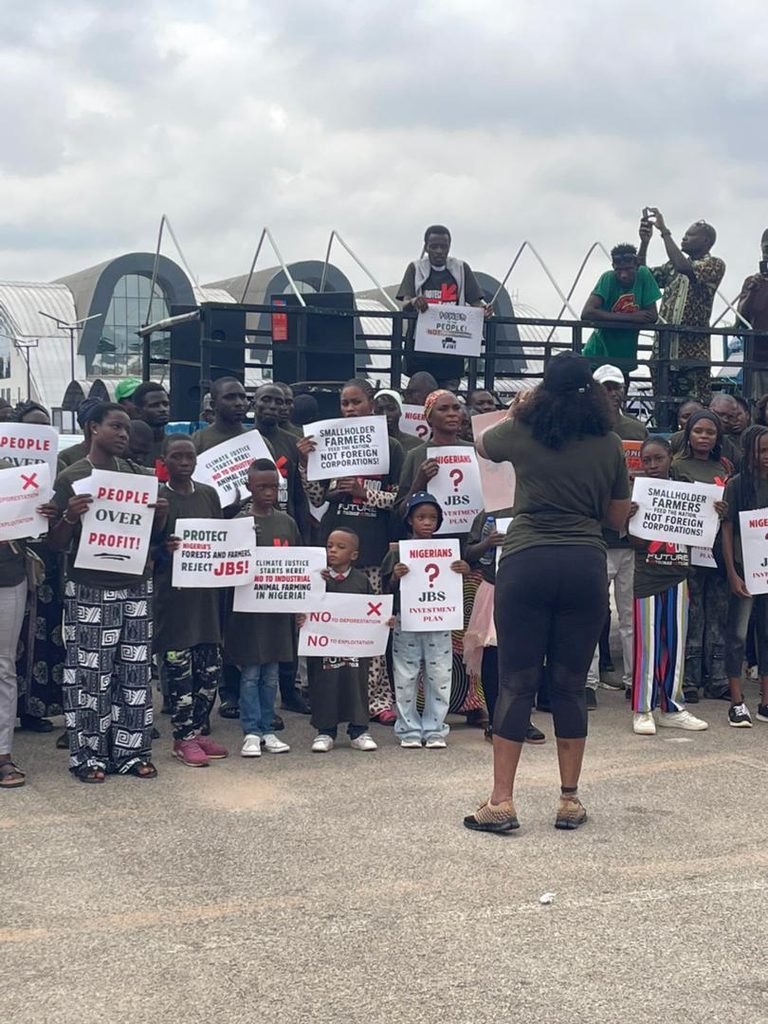
“This is about our land, our livestock, our people, our communities, our biodiversity, our farmers, our feed, our water, our markets, our food security and our food sovereignty,” she said.
She stressed that ERA/FoEN was not opposed to investment, arguing that foreign capital could support development when governed by policies that prioritise public interest.
“We are not against investment. We are not anti-investment. We are saying investment must have a people’s face. Investment must protect public interests,” she said.
The organisation consequently demanded the immediate publication of the agreement or Memorandum of Understanding between JBS and the Nigerian government, saying the public should be able to examine the conditions attached to a project of such magnitude.
Bassey-Olson said ERA/FoEN had sought details of the proposed investment since 2024 but that the agreement had remained outside the public domain.
“We want to know the terms of this investment. What does it mean for our people? What lands have been allocated? Have Environmental Impact Assessments (EIAs) been done? What will happen to our water? What will happen to the economy? Where will the land be sourced from?” she asked.
She argued that making the agreement public would not undermine the investment but would instead strengthen confidence in the government’s handling of the project.
“If you have something and you are coming to help the people as you claim, you should be very open in sharing whatever you have with the people,” she said.
The organisation also raised concerns over the possible regional consequences of a large-scale industrial meat operation in Nigeria, arguing that pollution, emissions, wastewater management and other environmental impacts could affect communities and ecosystems beyond the immediate project locations.
Bassey-Olson urged the African Union and other regional institutions to pay attention to major investments of this nature, warning that decisions taken by Nigeria could influence investment and environmental standards across Africa.
“If something is normalised in Nigeria, other countries will pick up and say, since Nigeria is our big brother, we should do it,” she said.
She further questioned the implications of JBS’ reported changes to previous climate commitments, insisting that Nigeria should assess the company’s environmental record and commitments before approving operations on such a large scale.
“If a company can backtrack, what does that mean for Nigeria?” she asked, stressing that enforceable environmental safeguards should take precedence over corporate assurances.
Also speaking, Joyce Brown, Director of Programmes at the Health and Modern Health Foundation, said concerns over the investment were informed partly by reports and controversies surrounding JBS’ environmental and socioeconomic record in some countries where it operates.
Brown said Nigeria should learn from experiences elsewhere and establish strong regulatory mechanisms capable of ensuring that the proposed investment generates broad-based economic benefits without imposing disproportionate costs on local communities, farmers or the environment.
“We want a situation where there are policies in place, there are structures in place that ensure that these sorts of investments are beneficial to the people,” she said.
She expressed particular concern over the absence, to the organisation’s knowledge, of evidence that Environmental Impact Assessments had already been conducted for the proposed facilities.
“So far, there is no evidence of any EIA conducted already,” Brown said.
She acknowledged reports that land had already been allocated in Niger State, but insisted that comprehensive environmental assessments should precede construction and large-scale operations.
According to her, EIAs would enable regulators and affected communities to identify potential impacts on land, water, ecosystems and livelihoods and establish appropriate mitigation measures before irreversible damage occurs.
Brown also demanded publication of the government-JBS agreement, saying experts in agriculture, environment, health and other relevant fields should be given access to the document for independent assessment.
“The agreement that JBS has signed with the Nigerian government is not in the public domain. This is something that should be available for experts across the various sectors to review, to ensure that we are not at the receiving end of any negative implications such a large-scale investment can have,” she said.
She maintained that the campaign was a demand for due diligence rather than a rejection of foreign capital, urging the government to examine JBS’ international track record and incorporate lessons from other jurisdictions into Nigeria’s regulatory framework.
Brown further called for a coordinated review involving all ministries, departments and agencies whose mandates could be affected by the project.
She questioned whether the approval process had adequately involved the ministries responsible for agriculture, environment, health and other relevant sectors, given that the project would extend beyond livestock production.
“This is something that different ministries and departments of Nigeria should come together to review before it is endorsed,” she said.
Brown also expressed concern that the process appeared to be driven largely by the Ministry of Livestock Development, arguing that the scale of the proposed investment warranted broader government participation.
“We do not know if the Ministry of Agriculture, the Ministry of Environment, the Ministry of Health and other relevant agencies are involved in the approval for JBS to start operations in Nigeria,” she said.
ERA/FoEN and its partners, while leading a parade on the National Assembly, called on the legislative house to exercise legislative oversight over the investment, insisting that the project should be examined against its implications for land, water resources, public health, agriculture, food security and the livelihoods of host communities.
“This is an investment that will take large expanses of land, that will affect water resources, that will affect the local communities and the people who live and depend on these environments, and it must be taken very seriously,” Brown said.
Group Demands Transparency, EIAs Over JBS’ $2.5bn Nigeria Investment
Ughelli North: Egbo Responds To Transparency Call, Showcases Projects Across Council
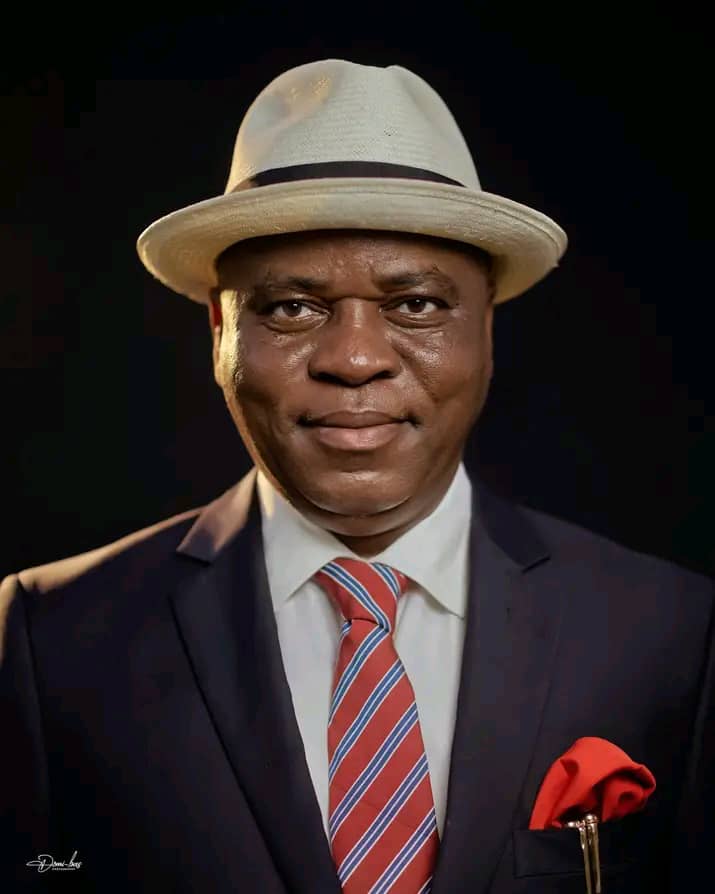
The Executive Chairman of Ughelli North Local Government Area, Olorogun (Barr.) Jaro Movudu Egbo, KSC, has responded to the transparency demands raised by the New Order Movement (NOM), highlighting a number of infrastructure and development projects executed or ongoing under his administration across the local government.
NOM had called on the council chairman to provide greater transparency and accountability on the utilisation of funds allocated to Ughelli North in 2026, particularly against the backdrop of the local government’s reported ₦18.29 billion budget.
The group had also demanded a detailed account of allocations received by the council, an update on projects being executed and greater engagement with stakeholders, insisting that residents deserved to see tangible benefits from public resources.
Responding to the concerns, Egbo pointed to what his administration described as “visible and measurable” achievements in infrastructure, healthcare, security, education, electricity, environmental sanitation and staff welfare.
According to him, the interventions are being implemented in line with the M.O.R.E. Agenda of Delta State Governor, Rt. Hon. Sheriff Oborevwori.
One of the major projects highlighted by the chairman is the ongoing construction of an ultra-modern Ughelli North Local Government Secretariat Complex, designed to improve administrative efficiency and provide a conducive working environment for council workers.
He also noted that the construction of a modern gatehouse for the secretariat was nearing completion, while the Legislative Assembly Complex had been rehabilitated with executive furniture, modern cooling systems and dedicated electricity supply.
In the health sector, Egbo’s administration highlighted the ongoing construction of the Tobore Oborevwori Cottage Hospital and Maternal Health Centre, which is expected to include doctors’ and nurses’ quarters.
The council said the facility was part of efforts to improve access to quality healthcare services within the local government.
The administration also cited the development of organised multi-storey market stalls for traders and the construction of the Ughelli Court dual-court complex as part of its interventions to support commerce and strengthen access to justice.
On road infrastructure, the council disclosed that rehabilitation of the long-neglected Post Office Road was ongoing, involving concrete and asphalt overlay as well as improved drainage around the Ughelli High Court.
The chairman also highlighted interventions in the power sector, saying three 11/33 KVA transformers had been procured and installed in strategic communities to improve electricity supply.
Power was also restored to the council secretariat through extensive electrical rewiring, while solar energy systems, including daytime solar panels and solar-powered streetlights, were deployed, according to the council.
On security, Egbo said collaboration with security agencies had helped improve safety along previously troubled sections of the East-West Highway.
The council stated that security operations around the Ogor, Evwreni and Ohoror axis had significantly reduced incidents of kidnapping and armed robbery along the Evwreni-Uwheru and Uvwiamuge-Agbarho corridors.
The administration further disclosed that it donated a fully equipped patrol vehicle to the Police Mobile Force and constructed a new police post to strengthen security operations.
In education, the council said more than 300 school desks, uniforms, textbooks and writing materials had been distributed to pupils in public primary schools.
It added that the administration had partnered with the Delta State Universal Basic Education Board (SUBEB) to support teacher retraining and classroom rehabilitation.
On environmental sanitation, the council said it carried out extensive desilting and clearing of drainage channels along the East-West Road in Agbarho to reduce flooding, while also reviving the monthly environmental sanitation exercise.
The administration further pointed to improvements in staff welfare, including the settlement of outstanding financial claims and regular welfare incentives for members of the Nigeria Union of Local Government Employees (NULGE).
Several key offices within the council secretariat have also been renovated and furnished, while the council expanded its operational fleet with official vehicles for principal officers, a Toyota Hilux for the Chief Security Officer and an 18-seater bus for the council’s Press Unit.
Assembly Committee, Auditor-General Commend Council
Egbo further stated that the council’s financial records had been subjected to scrutiny by the Delta State House of Assembly Public Accounts Committee and the Auditor-General for Local Governments in the state.
According to him, following the scrutiny of the council’s accounts and financial activities, both the Public Accounts Committee and the Auditor-General for Local Governments commended the council for what they described as prudence and transparency in the management of its finances.
He said the commendations from the statutory oversight bodies further demonstrated his administration’s commitment to accountability and responsible management of public resources.
Egbo said the council had nothing to hide and remained prepared to subject its financial records and activities to appropriate oversight in accordance with the law.
Egbo Alleges NDC-Sponsored Negative Campaign
Egbo also alleged that the New Order Movement’s campaign against his administration was politically motivated, describing it as a negative campaign allegedly sponsored by Omoragbege, the National Democratic Congress (NDC) senatorial candidate for Delta Central.
According to Egbo, the objective of the alleged campaign was to discredit his administration and weaken the political standing of the All Progressives Congress (APC) in Ughelli North ahead of the next general election.
He alleged that those behind the campaign believe that sustained attacks on his administration would erode public support for the APC and create an advantage for the NDC at the polls.
The council chairman, however, said he would not be distracted by what he described as politically motivated attacks, insisting that his administration would continue to focus on projects and programmes capable of improving the lives of residents.
He maintained that the achievements recorded by his administration were visible across various sectors and should speak for themselves, rather than being overshadowed by political campaigns.
The projects and interventions listed by the administration constitute its response to concerns over development and the utilisation of public resources in Ughelli North, with Egbo maintaining that his administration has continued to channel resources into projects and services with direct impact on residents.
Meanwhile, he reaffirmed his commitment to consolidating the achievements recorded so far through sustained investment in infrastructure, healthcare, education, security, youth empowerment and economic development.
Egbo pledged to continue providing transparent, responsive and people-centred governance, with the objective of positioning Ughelli North as a model of grassroots development in Delta State.
Ughelli North: Egbo Responds To Transparency Call, Showcases Projects Across Council

Nigeria Tightens War on Plastic Waste, Makes Producers Responsible for End-of-Life Products

Group Demands Transparency, EIAs Over JBS’ $2.5bn Nigeria Investment

Ughelli North: Egbo Responds To Transparency Call, Showcases Projects Across Council

Roger Federer’s Shock as DNA Results Reveal Myla and Charlene Are Not His Biological Children

THE PLIGHT OF FARIDA

FAILED COUP IN BURKINA FASO: HOW TRAORÉ NARROWLY ESCAPED ASSASSINATION PLOT AMID FOREIGN INTERFERENCE CLAIMS
-
 News2 years ago
Roger Federer’s Shock as DNA Results Reveal Myla and Charlene Are Not His Biological Children
-
Opinions5 years ago
THE PLIGHT OF FARIDA
-
 News1 year ago
FAILED COUP IN BURKINA FASO: HOW TRAORÉ NARROWLY ESCAPED ASSASSINATION PLOT AMID FOREIGN INTERFERENCE CLAIMS
-

 News2 years ago
EYN: Rev. Billi, Distortion of History, and The Living Tamarind Tree
-
 Opinions5 years ago
POLICE CHARGE ROOMS, A MINTING PRESS
-

 ACADEMICS3 years ago
A History of Biu” (2015) and The Lingering Bura-Pabir Question (1)
-

 Columns3 years ago
Army University Biu: There is certain interest, but certainly not from Borno.
-

 Politics1 year ago
2027: Why Hon. Midala Balami Must Go, as Youths in Hawul and Asikira/Uba Federal Constituency Reject ₦500,000 as Sallah Gift
