
News
Peaceful demonstrations recorded in three Northern States after reports on Iran Leader’s Killing

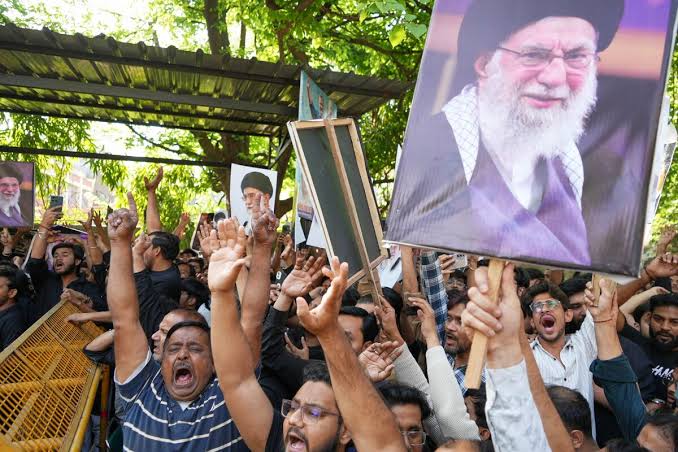
Peaceful demonstrations recorded in three Northern States after reports on Iran Leader’s Killing
By: Zagazola Makama
Peaceful demonstrations were recorded in three northern states on Saturday as members of the Islamic Movement of Nigeria (IMN) and other Shi’ite groups staged processions in reaction to recent developments in Iran.
Zagazola report that the marches took place in Kano, Kaduna and Katsina states, with no incidents of violence recorded.
In Kano State, participants converged at Fagge Friday Mosque in Fagge Local Government Area at about 3:00 p.m. and proceeded in a procession to Mambayyah House in Dala LGA.
Demonstrators carried placards expressing solidarity with Iran and condemning actions by the United States and Israel in the ongoing Middle East crisis.
Joint security presence was visible along the route to ensure traffic control and prevent a breakdown of law and order. The procession ended at about 5:00 p.m., with participants dispersing peacefully.
Similarly, in Kaduna State, Shi’ite members marched from Ahmadu Bello Way to Leventis Roundabout at about 11:30 a.m., before disengaging at Tudun Wada Junction around 2:00 p.m.
The protest was described as orderly, with security personnel deployed at strategic points to monitor activities and safeguard public spaces.
In Katsina State, members of the Islamic Shi’ite sect staged a brief procession from IBB Way near Green House to the Central Mosque, Katsina, at about 4:00 p.m. The activity was peaceful and closely monitored by intelligence and security teams.
Across the three states, authorities confirmed that no violence, vandalism or confrontation was reported, and normalcy returned shortly after the demonstrations ended.
Sources noted that while the protests remained calm, developments in the Middle East have triggered emotional reactions in several countries, sometimes resulting in attacks on diplomatic missions and other symbolic assets.
Sources further advised heightened vigilance around critical national infrastructure and diplomatic facilities, particularly embassies and foreign missions, to guard against potential spillover or opportunistic threats.
They stressed the need for proactive intelligence gathering, visible patrols and community engagement to ensure that lawful expressions of solidarity do not degenerate into security breaches.
So far, the peaceful conduct of the demonstrations in northern Nigeria has been viewed as a positive sign, reflecting effective monitoring and restraint by both organisers and security agencies.
Monitoring of the situation continues.
Peaceful demonstrations recorded in three Northern States after reports on Iran Leader’s Killing


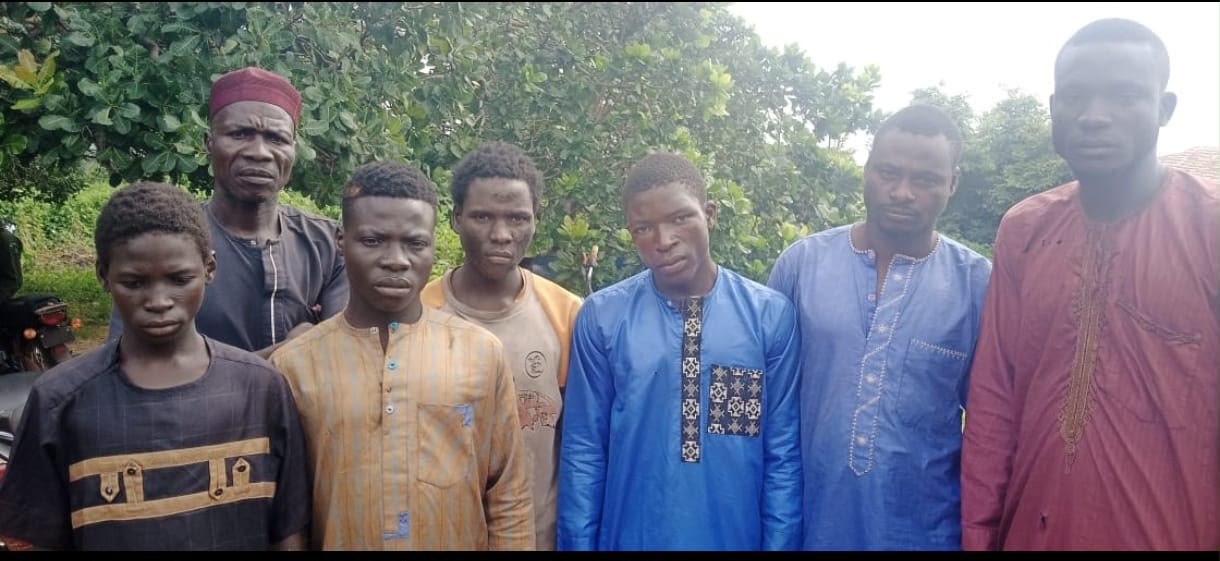
DSS, Forest Guards Neutralise Three Bandits, Rescue Nine Kidnap Victims in Kwara
By Zagazola Makama
The Department of State Services (DSS), in a coordinated intelligence-led operation with the Kwara State Forest Guards, local hunters and vigilante groups, has neutralised three suspected bandits and rescued nine kidnapped victims during a gun battle in Ekiti Local Government Area of Kwara State.
Intelligence sources told Zagazola Makama that the operation was carried out in the Obbo Aiyegunle, Ejiu Ora and Osi axis of Ekiti LGA, a forested area bordering Kwara and Ekiti states, following credible intelligence on the activities of armed kidnappers operating within the corridor.
The sources disclosed that the armed gang, believed to comprise more than 10 members, had assembled several victims abducted from different locations, including farmers kidnapped from their farmlands in Kwara and victims earlier seized in neighbouring Ekiti State, before security operatives stormed the hideout.
On sighting the advancing security team, the bandits engaged the operatives in a fierce gun battle but were overwhelmed by superior firepower. Three of the suspects were neutralised, while the remaining members of the gang fled into the surrounding forest with varying degrees of injuries, abandoning their captives.
All nine victims were rescued alive during the operation. One of the rescued victims sustained severe head injuries after he was reportedly attacked with a machete by the kidnappers while resisting abduction and is receiving medical attention.
Confirming the development, the Chief Press Secretary to the Chairman of Ekiti Local Government Area, Prince Dada Sunday, said the successful operation followed actionable intelligence gathered by security agencies.
He commended the DSS, Forest Guards, hunters and vigilante operatives for their swift response, noting that their intervention prevented the victims from being moved deeper into the forest.
One of the rescued victims, Umaru Muazu of Obbo Aiyegunle, narrated how he and his son were abducted by armed men while on their farm.
“They came from nowhere and pointed a gun at my head. Four of them took me and my son. They also seized my friend’s motorcycle before forcing us into the bush,” he said.
Another rescued farmer, Ibrahim Danga, said the victims had been held in captivity before the security team launched the rescue operation.
A member of the Kwara State Forest Guards, Owolabi Adebayo, who participated in the operation, said the mission was based on credible intelligence.
“We neutralised three of them and rescued nine victims. They were heavily armed and possessed different types of firearms. However, we need more operational equipment, including body armour, binoculars, night vision goggles, walkie-talkies and adequate ammunition to effectively confront these criminal elements,” he said.
Security sources said efforts are ongoing to track and apprehend the fleeing members of the gang, while surveillance has been intensified across the forest corridor to prevent the regrouping of criminal elements operating along the Kwara–Ekiti border.
DSS, Forest Guards Neutralise Three Bandits, Rescue Nine Kidnap Victims in Kwara

“Sustain the heritage of your emirate,” Buni tells the Ngazargamu council
By: Yahaya Wakili
Governor Mai Mala Buni of Yobe State has told the people of the Ngazargamu Emirate Council that the emirate is renowned for commerce and education; therefore, it is their collective responsibility to sustain and improve this great heritage.
Governor Buni stated this fact when the new emir of Ngazargamu and his subjects paid him a thank-you visit at the Government House, Damaturu.
He informed the people about development. He emphasized that a peaceful atmosphere is essential for achieving development and progress. under a peaceful atmosphere and beyond.
Governor Mai Mala Buni charged the people of the emirate to unite and support the new emir, Alhaji Mahmud Ibn Mustapha, for a successful reign of office that would benefit all the people of the emirate and Yobe State at large.
Speaking earlier on behalf of the emirate, the Waziri of the Ngazargamu emirate, Alhaji Baba Kankare, thanked Governor Buni for approving the people’s choice as the new emir.
He said, “Your Excellency, you gave us our choice, the people’s will. We appreciate you very much. Thank you, sir,” Alhaji Kankare said.
“Sustain the heritage of your emirate,” Buni tells the Ngazargamu council
Crime
Oriire Kidnap: FG Arraigns Ansaru Commanders, Mahmuda, Abu Baraa and The Three New Suspects Arrested By DSS On Fresh Charges of Terrorism, Murder of Teachers

Oriire Kidnap: FG Arraigns Ansaru Commanders, Mahmuda, Abu Baraa and The Three New Suspects Arrested By DSS On Fresh Charges of Terrorism, Murder of Teachers
By: Zagazola Makama
The Federal government, on Wednesday, arraigned two commanders of the Ansaru terrorist organization captured by the Department of State Services (DSS),
and their three foot soldiers, for terrorism, kidnapping and murder of two teachers of schools in Orire LGA of Oyo State.
The five suspects were arraigned before Justice Salim Ibrahin of the federal high Court, Abuja.
In August 2025, DSS operatives captured Mahmuda top commander, Abubakar Abba Mahmuda Abu Bara’a and his deputy, Abubakar Abbas aka Mallam Mahmuda Al-Nigeri.
According to security sources, after the capture, Ansaru made two attempts- one in December 2025, and another in February 2026, to free their commanders. However, the attempts were reportedly foiled by DSS intelligence to the state security council, after which the secret police continued to update intelligence on the group’s activities.
On May 15, 2026, several armed men belonging to Ansaru terror group stormed some schools in Oriire LGA of Oyo State, kidnapping 46 people made up of 39 students and seven teachers. Apparently, to mount pressure on government to release their two captured commanders in DSS’ custody, the terrorists killed two of the teachers.
On July 10, 2026, however, security forces from the DSS and the military, police and other security agencies, stormed the forest where the terrorists were holding the abductees, freeing the hostages.
During the rescue operation, DSS operatives captured three more members of the Ansaru terror organization- Abdulrazak Umar, Yunusa Musa, and Shamsu Adamu Sani.
On July 23, the three men pleaded guilty to concealing information regarding the Oriire school kidnapping and for membership in the proscribed Darul Salam/Ansaru group. They were promptly handed life imprisonment.
Relatedly, a Federal High Court in Abuja, last week, sentenced Mahmud Usman (Abu Bara’a) and his deputy Mahmud al-Nigeri, to life imprisonment after they both pleaded guilty to some charges in the 32-count charge of belonging to a terrorist organization, among other charges.
After the sentencing, feelers from the DSS suggested that the secret police was dissatisfied with the judgement and was going to appeal.
However, in a fresh twist, the DSS, on Wednesday, changed strategy, opting to arraign the terrorist commanders and three of their foot soldiers on fresh charges of terrorism, kidnapping and murder of persons in Oriire LGA.
Justice Salim adjourned the matter to September 24 for the commencement of trial. He ordered that the five suspects remain in the custody of the DSS.
Oriire Kidnap: FG Arraigns Ansaru Commanders, Mahmuda, Abu Baraa and The Three New Suspects Arrested By DSS On Fresh Charges of Terrorism, Murder of Teachers

DSS, Forest Guards Neutralise Three Bandits, Rescue Nine Kidnap Victims in Kwara

“Sustain the heritage of your emirate,” Buni tells the Ngazargamu council

VP Shettima: We Must Praise President Tinubu For Establishing Regional Development Commissions

Roger Federer’s Shock as DNA Results Reveal Myla and Charlene Are Not His Biological Children

THE PLIGHT OF FARIDA

FAILED COUP IN BURKINA FASO: HOW TRAORÉ NARROWLY ESCAPED ASSASSINATION PLOT AMID FOREIGN INTERFERENCE CLAIMS
-
 News2 years ago
Roger Federer’s Shock as DNA Results Reveal Myla and Charlene Are Not His Biological Children
-
Opinions4 years ago
THE PLIGHT OF FARIDA
-
 News1 year ago
FAILED COUP IN BURKINA FASO: HOW TRAORÉ NARROWLY ESCAPED ASSASSINATION PLOT AMID FOREIGN INTERFERENCE CLAIMS
-

 News2 years ago
EYN: Rev. Billi, Distortion of History, and The Living Tamarind Tree
-
 Opinions5 years ago
POLICE CHARGE ROOMS, A MINTING PRESS
-

 ACADEMICS2 years ago
A History of Biu” (2015) and The Lingering Bura-Pabir Question (1)
-

 Columns2 years ago
Army University Biu: There is certain interest, but certainly not from Borno.
-

 Politics1 year ago
2027: Why Hon. Midala Balami Must Go, as Youths in Hawul and Asikira/Uba Federal Constituency Reject ₦500,000 as Sallah Gift
