
News
PEP Donates Books to Nigeria’s Chinese Corner to Foster Cultural Exchange

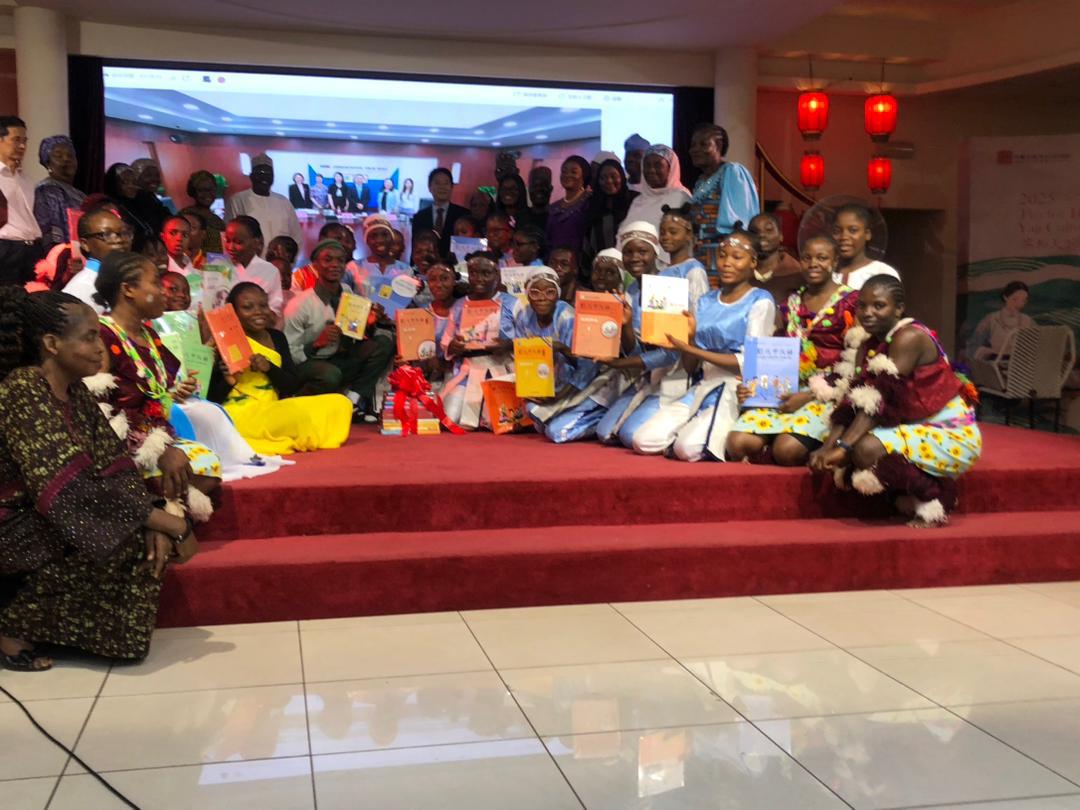
PEP Donates Books to Nigeria’s Chinese Corner to Foster Cultural Exchange
By: Michael Mike
People’s Education Press (PEP), has donated 15 sets of Chinese language teaching and cultural materials to support Chinese language education in Nigeria.
The donation which is aimed at enhancinv mutual understanding and strengthen cultural exchange between the two countries, was presented on Thursday to the Chinese Corner initiative,
Speaking at the book donation ceremony in Abuja, Counselor Yang Jianxing of the Chinese Embassy described the gesture as “a vivid reflection of the friendly bond between China and Nigeria.
He noted that the high-quality textbooks and cultural books will help Nigerian students better understand Chinese language and culture.
“High-quality Chinese language textbooks and Chinese cultural books are a shortcut for Nigerian young students to quickly master Chinese and understand Chinese culture,” Yang said.
Launched in 2013, the Chinese Corner project now has 13 centers across Nigeria, with plans to open two more. The program offers Nigerian high school students opportunities to learn Mandarin and immerse themselves in Chinese traditions.
Many participants have gone on to study at Confucius Institutes or contribute to China-Nigeria cooperation projects.
Yang thanked PEP for their support, describing the donated materials as “seeds of friendship” between the two nations. “These seeds will take root, germinate, and grow eventually becoming towering trees that connect the hearts of Chinese and Nigerian youth,” he added.
Looking ahead to 2026 designated the “China-Africa Year of People-to-People Exchanges” the Chinese Embassy expressed its intention to deepen educational cooperation further.
Plans include introducing customized Chinese language materials and possibly launching China-Nigeria educational TV programs.
“May the path of educational cooperation between China and Nigeria become broader and broader,”
“May China-Nigeria friendship last forever.” Said Counselor Yang
The director Secretary of FCT Secondary Education Board Dr Muhammed Sani Ladan emphasized the significance of the collaboration between the FCT Secondary Education Board and China through the People’s Education Press (PEP), describing the donation as a product of a meaningful and ongoing relationship.
He recalled the visit of the executive of PEP from Beijing noting that diplomatic courtesy visit lead to impactful educational support and resources sharing .
The director stated that “Some months ago the executives of the People’s Education Press came all the way from Beijing and it gave birth to this philanthropic donation we are about to witness today.”
Dr. Ladan pointed out that the book donation is not just a gift, but a tool for empowerment and long-term knowledge transmission .
Tapping from a Chinese proverb Dr Ladan stated
“In those books we are going to learn how to catch fish rather than being given a fish.”
He further reinforced the belief that education is transformative
“Education is life, is wealth, and is freedom.”
The Director conveyed deep appreciation to the Chinese Embassy and reaffirmed Nigeria’s commitment to sustained cultural and educational ties.
“You have genuinely given us life and you have fulfilled the Chinese principles of shared prosperity for humanity.”
He concluded by assuring continued support in advancing bilateral relations as “a win-win cooperation.”
End


News
WAHO, AfDB Hand Over 10 Ambulances, Medical Equipment to The Gambia in $3.4m Health System Boost
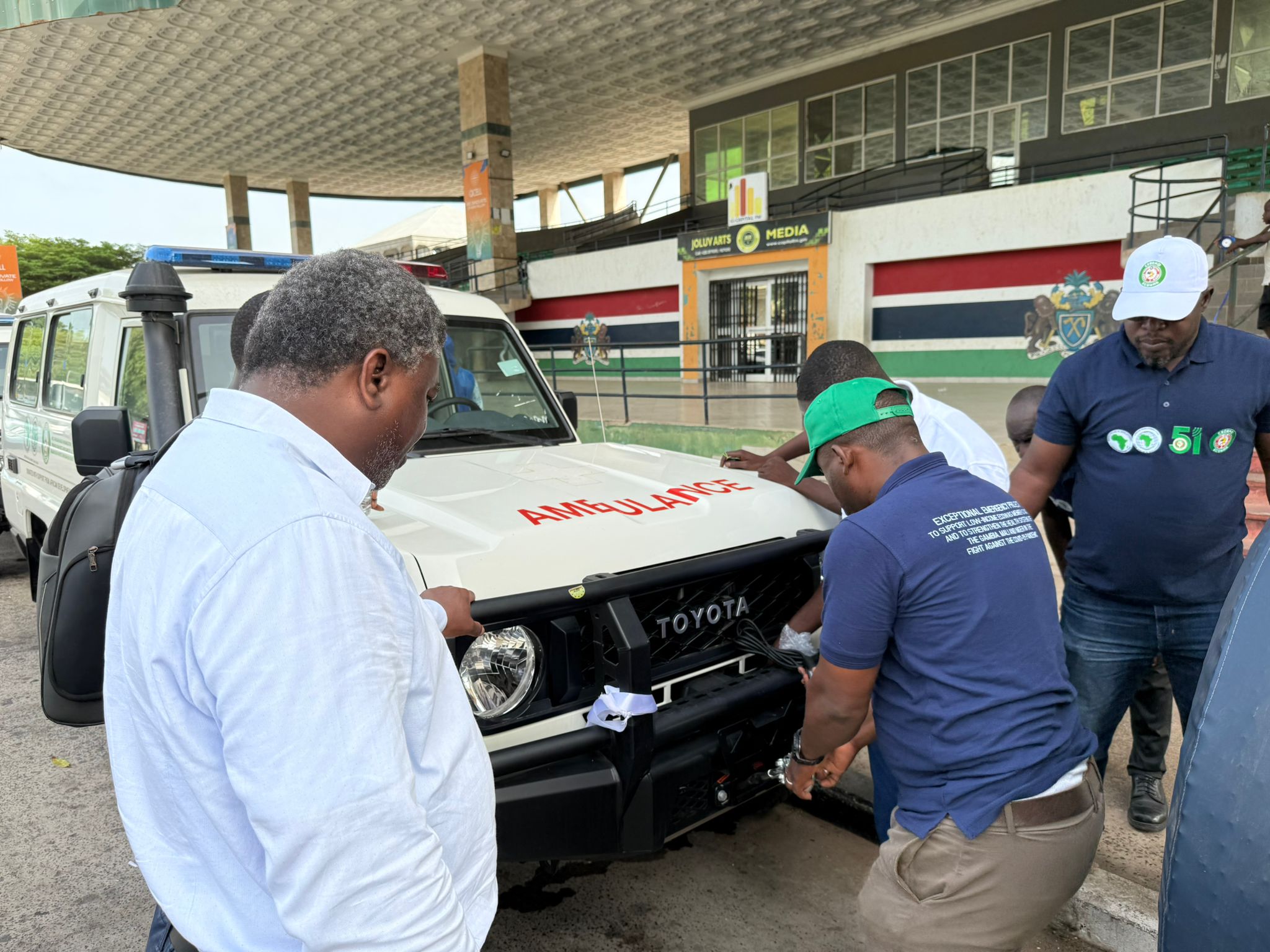
WAHO, AfDB Hand Over 10 Ambulances, Medical Equipment to The Gambia in $3.4m Health System Boost
By: Michael Mike
The Gambia – The Economic Community of West African States (ECOWAS), through the West African Health Organization (WAHO), on Friday handed over 10 fully equipped four-wheel-drive ambulances and critical medical equipment to The Gambia in a major effort to strengthen the country’s emergency response capacity and bolster regional health security.
The intervention, financed by the African Development Bank (AfDB) under the COVID-19 Exceptional Emergency Project for Low-Income ECOWAS Member States, represents an investment of approximately $3.4 million in The Gambia out of the project’s overall $22.3 million regional budget.
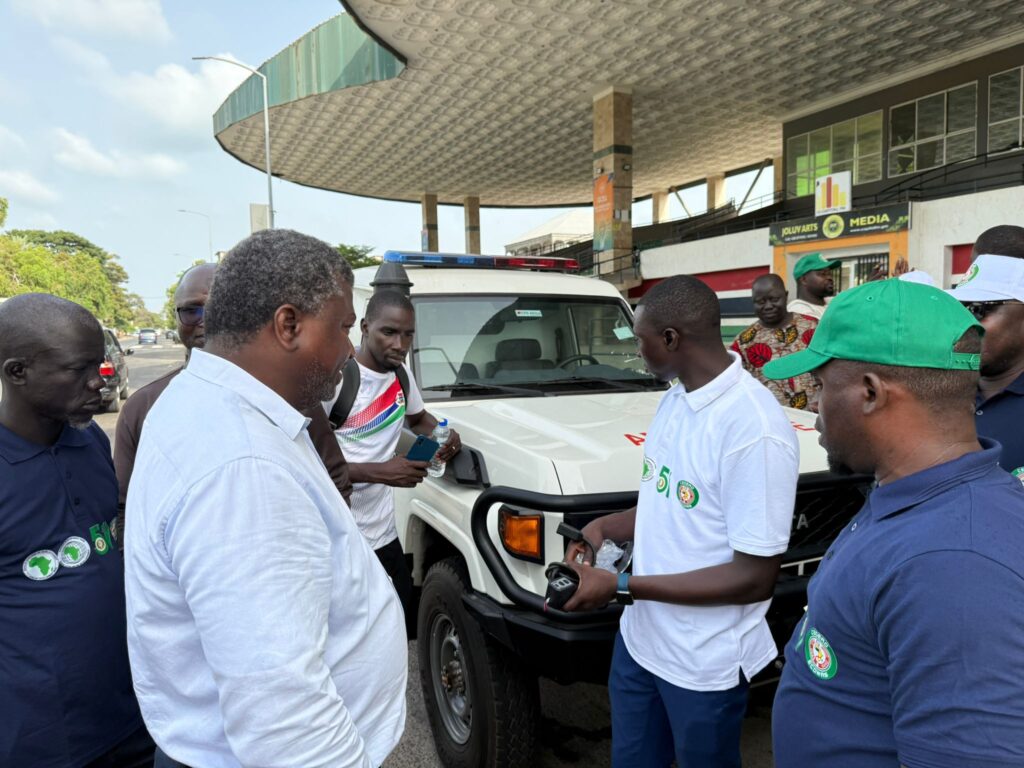
The medical equipment includes oxygen concentrators, haemodialysis machines, X-ray machines, anaesthetic machines, patient monitors, diagnostic tools, biomedical engineering equipment and other critical supplies aimed at improving emergency, diagnostic and specialised healthcare services.
Speaking at the handover ceremony in Banjul, President of the ECOWAS Commission, Dr. Omar Alieu Touray, described the intervention as a landmark demonstration of regional solidarity, stressing that the investment extends beyond the COVID-19 pandemic to building resilient health systems capable of responding to future public health emergencies.
Touray, a Gambian, said returning home to witness the delivery of the project carried deep personal significance.
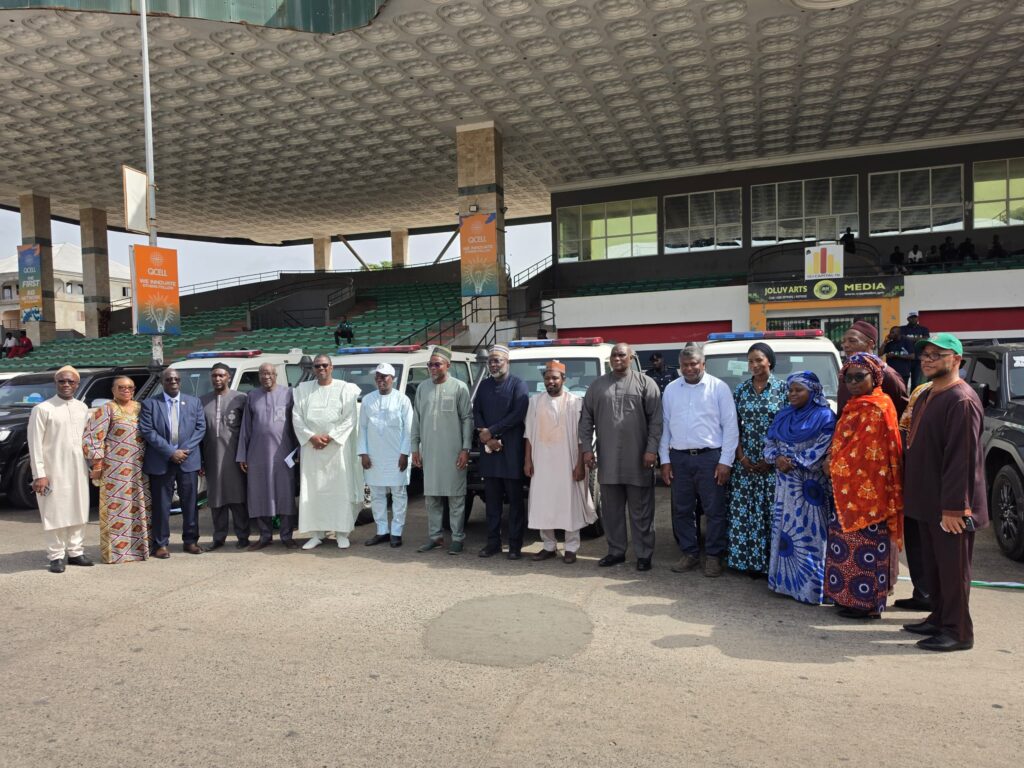
“It is with immense pride, profound emotion and a deep sense of honour that I stand before you today in my own home country. To return to my homeland and witness the tangible fruits of our regional cooperation is deeply humbling and inspiring,” he said.
He explained that WAHO, as a specialised institution of ECOWAS, was funded through the ECOWAS Community Levy paid by citizens across the region, adding that the project reflected what West African countries could achieve through collective action.
“When the COVID-19 pandemic struck, it exposed the vulnerabilities of our health systems, but it also ignited our collective resolve. We learned that we are indeed better and stronger together,” Touray stated.
According to him, the project has trained 1,427 health professionals, equipped 55 points of entry across participating countries and supplied thousands of sets of personal protective equipment.
He disclosed that The Gambia recorded a 100 per cent physical completion rate for all project interventions, while 852 health workers and stakeholders were trained between 2024 and 2025 in Integrated Disease Surveillance and Response (IDSR), Incident Management Systems, Infection Prevention and Control, among other critical areas.
The ECOWAS Commission President said the newly donated ambulances and equipment would significantly improve emergency medical services and expand access to life-saving healthcare, particularly for vulnerable communities.
“As we receive these materials today, let us remember that they represent more than just tools. They represent hope, resilience and our shared commitment to protecting the lives and dignity of every West African,” he said.
Receiving the equipment on behalf of President Adama Barrow, the Vice President of The Gambia, Mohammed Jallow described the donation as a direct response to critical gaps in healthcare delivery, especially in rural communities where transporting critically ill patients to health facilities remains a major challenge.
He said the ambulances would serve as “vehicles of hope” and improve responses to road traffic accidents, obstetric emergencies and infectious disease outbreaks.
The Vice President commended WAHO, the African Development Bank and the Government of Germany for their continued support to The Gambia’s health sector, noting that the intervention demonstrated the tangible benefits of regional cooperation.
“This support represents a significant investment in our health system and demonstrates that, through collective action, ECOWAS member states and their partners can deliver results that directly improve the lives of ordinary citizens,” he said.
He charged the Ministry of Health and healthcare workers to ensure proper maintenance and accountability in the management of the newly acquired assets.
“Please ensure that spare parts are available, maintenance schedules are strictly followed, and that these vehicles and medical equipment remain fully operational at all times,” he urged.
Earlier, The Gambia’s Minister of Health, Dr. Ahmadou Samateh. praised WAHO for what he described as years of unwavering support to the country’s health sector through capacity building, technical assistance and training programmes.
He noted that hardly a month passed without WAHO sponsoring Gambian health professionals for training within and outside the country, describing the organisation as one of the country’s most dependable health development partners.
The minister said the donation was unprecedented in the country’s history.
“To the best of my knowledge, we have never received such a donation of ambulances from any institution in this quantity at one time,” he said.
The ceremony, which also coincided with WAHO’s anniversary celebration, was attended by the Director-General of WAHO, Dr. Melchior Aïssi, representatives of the African Development Bank, the German Government, senior ECOWAS officials, members of the Gambian Cabinet, development partners and senior government officials.
The intervention is expected to strengthen The Gambia’s emergency medical response system while reinforcing ECOWAS’ broader strategy of building resilient regional health systems capable of responding to future disease outbreaks and other public health emergencies.
WAHO, AfDB Hand Over 10 Ambulances, Medical Equipment to The Gambia in $3.4m Health System Boost
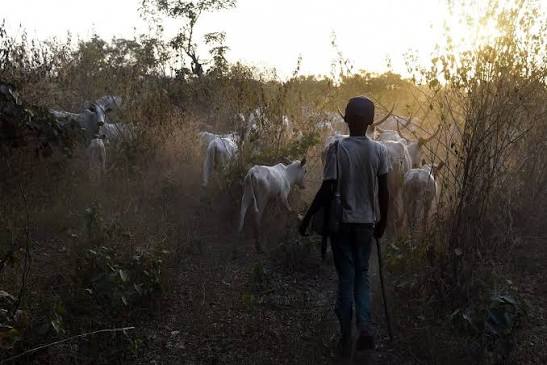
Farmer killed by Fulani bandits in fresh Plateau attack as cycle of violence deepens
By Zagazola Makama
A farmer has been killed in a fresh attack by yet-to-be-identified gunmen in Butura Gida village, Bokkos Local Government Area of Plateau State, in the latest incident pointing to the persistent cycle of violence between farming and herding communities.
Security sources told Zagazola Makama that the attack occurred at about 7:47 p.m. on Tuesday, July 8, prompting troops of Sector 5 of Operation Enduring peace to mobilise to the community after receiving a distress call.
On arrival, the troops found the victim’s lifeless body. The attackers had fled the scene before security personnel arrived, and no contact was made.
A manhunt has since been launched to identify and apprehend those responsible for the killing.
The latest incident came less than 24 hours after a 13-year-old herder, Mustapha Abdul Kadir, was found dead alongside four cattle in Mangu Local Government Area in what authorities suspected was an attack by armed militia.
Earlier the same day, two residents were also killed in Torok community in Riyom Local Government Area in an attack blamed on suspected Fulani bandits.
The succession of attacks illustrates the entrenched and increasingly vicious pattern of retaliatory violence that has continued to plague Plateau State.
Killings of farmers are often followed by attacks on herders, while attacks on herders frequently trigger reprisals against farming communities, creating a dangerous cycle that has claimed hundreds of lives and destroyed livelihoods over the years.
Despite sustained military deployments, peace meetings and community engagements, mistrust between the two groups remains deep, with criminal elements exploiting the fragile security situation to perpetrate violence.
Zagazola warn that unless perpetrators on all sides are brought to justice and local grievances addressed, the state risks remaining trapped in an endless cycle of revenge attacks.
Farmer killed by Fulani bandits in fresh Plateau attack as cycle of violence deepens
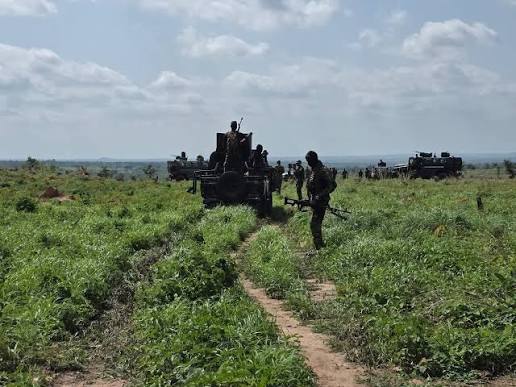
Fulani bandits kill two in fresh attack on Plateau community
By Zagazola Makama
Suspected Fulani bandits have killed two residents in a fresh attack on Torok community in Riyom Local Government Area of Plateau State, security sources told Zagazola Makama.
The attack occurred at about 7:00 p.m. on Tuesday, July 8, prompting troops of Sector 6 of Operation Enduring Peace to swiftly respond after receiving a distress report.
Sources said the assailants attacked unsuspecting locals before fleeing the area.
On arrival, troops discovered the bodies of two victims who had been killed during the assault. The remains were recovered and subsequently handed over to members of the community for burial.
Security sources said troops have launched a manhunt for the attackers, with efforts ongoing to track and apprehend those responsible for the killings.
The latest incident adds to the renewed wave of violence in Plateau State, particularly in Riyom and neighbouring local government areas, where recurring attacks and reprisals involving armed groups have continued to claim lives and heighten tensions despite sustained security operations. Troops have intensified patrols and confidence-building engagements to forestall further attacks and maintain peace in the area.
Fulani bandits kill two in fresh attack on Plateau community

WAHO, AfDB Hand Over 10 Ambulances, Medical Equipment to The Gambia in $3.4m Health System Boost

Farmer killed by Fulani bandits in fresh Plateau attack as cycle of violence deepens

Fulani bandits kill two in fresh attack on Plateau community

Roger Federer’s Shock as DNA Results Reveal Myla and Charlene Are Not His Biological Children

THE PLIGHT OF FARIDA

FAILED COUP IN BURKINA FASO: HOW TRAORÉ NARROWLY ESCAPED ASSASSINATION PLOT AMID FOREIGN INTERFERENCE CLAIMS
-
 News2 years ago
Roger Federer’s Shock as DNA Results Reveal Myla and Charlene Are Not His Biological Children
-
Opinions4 years ago
THE PLIGHT OF FARIDA
-
 News1 year ago
FAILED COUP IN BURKINA FASO: HOW TRAORÉ NARROWLY ESCAPED ASSASSINATION PLOT AMID FOREIGN INTERFERENCE CLAIMS
-

 News2 years ago
EYN: Rev. Billi, Distortion of History, and The Living Tamarind Tree
-
 Opinions5 years ago
POLICE CHARGE ROOMS, A MINTING PRESS
-

 ACADEMICS2 years ago
A History of Biu” (2015) and The Lingering Bura-Pabir Question (1)
-

 Columns2 years ago
Army University Biu: There is certain interest, but certainly not from Borno.
-

 Politics1 year ago
2027: Why Hon. Midala Balami Must Go, as Youths in Hawul and Asikira/Uba Federal Constituency Reject ₦500,000 as Sallah Gift
