
News
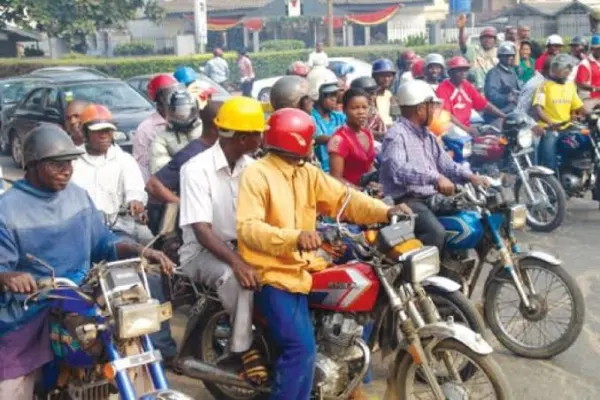
Planned Okada ban: ActionAid calls for safety net to alleviate deepening poverty

Planned Okada ban: ActionAid calls for safety net to alleviate deepening poverty
ActionAid Nigeria (AAN) has urged the Federal Government to consider an alternative safety net to buffer the impact of the planned ban ‘Okada’ on the affected population before taking such action.
This is contained in a statement by Lola Ayanda, Communications coordinator for ActionAid Nigeria in Kaduna.
The News Agency of Nigeria (NAN) reports that on July 21, the federal government said it was considering a nationwide ban on commercial motorcycles, popularly known as okada, as well as mining activities in a bid to stem the rising insecurity across the country.
Malam Abubakar Malami, Attorney-General of the Federation, made this known after a national security council meeting at the presidential villa, Abuja.
The NGO said that the ban on Okada and illegal mining activities by the Federal Government as hinted by Malami, will stem the rising insecurity across the country but it will undoubtedly further deepen the national multi-dimensional poverty index if measures are not taken to address the population involved.
As a way out, the NGO urged the government to encourage investments and job creation to engage those that will lose their livelihoods.
“ActionAid Nigeria agrees that placing a ban on the use of motorcycles and mining activities may cut the supply of logistics and source of funds for the purchase of arms to the terrorists, but while this is being contemplated in the national interest to combat insecurity, there must be well thought-out alternatives to lessen the effects of the attendant loss of livelihoods on the people that will be affected.”
The NGO noted that the ban must be implemented in a way that it must be implemented in a way that will not further worsen the country’s dire economic situation.”
According to the NGO, the number of people using Okada represents a significant segment of the population whose condition will be worsened as a result of food inflation, rising unemployment, the rising cost of living among other economic challenges, and other issues that are responsible for why more people are falling into the poverty net.
The AAN also emphasized the need for government to invest in the agriculture value-chain, especially girl child education.
It also urged the government to prioritise the healthcare of its citizenry and enhance economic opportunities while embracing technology to improve economic productivity and opportunities for the citizens.
AAN also expressed willingness to join other development partners available to work with the government at all levels to create a sustainable alternative for this population.
The News Agency of Nigeria (NAN) reports that on Sept. 15, 2021, President Muhammadu Buhari said 1.6 million poor and vulnerable households, comprising more than eight million individuals were currently benefiting from the Conditional Cash Transfer programme, while N300 billion has been disbursed to farmers.
Speaking virtually at the opening ceremony of the 14th Annual Banking and Finance Conference of Chartered Institute of Bankers of Nigeria, the President said the National Social Register of Poor and Vulnerable Nigerians had 32.6 million persons from seven million poor and vulnerable households identified.
”From this number, 1.6 million poor and vulnerable households, comprising more than eight million individuals are currently benefiting from the Conditional Cash Transfer program, which pays a bi-monthly stipend of N10, 000 per household,” he said.
Buhari said the National Social Investment Programme is the biggest in Sub-Saharan Africa and one of the largest in the world.
Planned Okada ban: ActionAid calls for safety net to alleviate deepening poverty




Two suspected criminals arrested during patrol in Plateau
By: Zagazola Makama
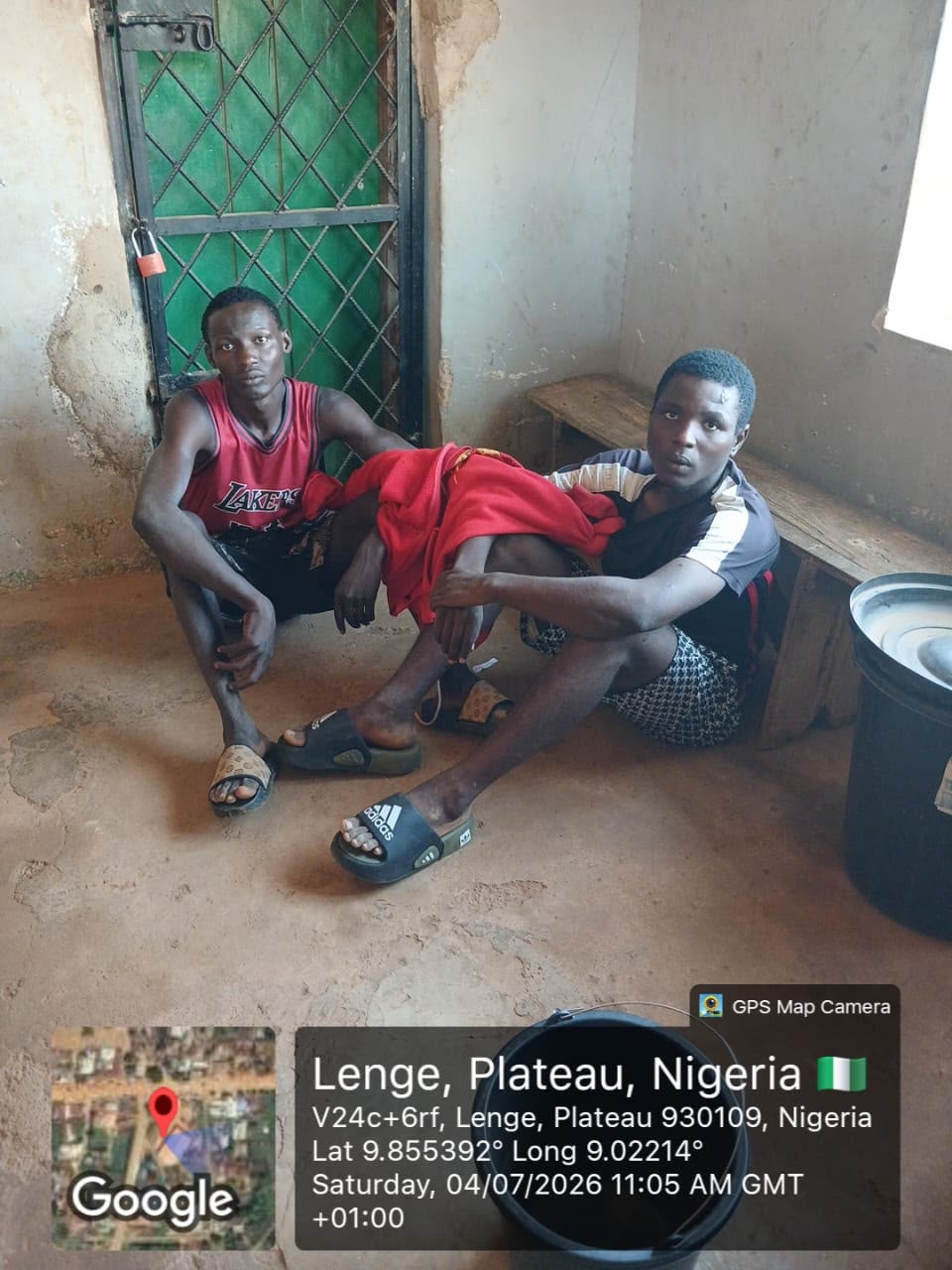
Troops of Sector 1 under Operation Enduring Peace have arrested two suspected criminals during a routine patrol in Jos East Local Government Area of Plateau.
Security sources disclosed that the suspects, identified as Azi Ezekiel, 21, and Ajiji Emmanuel, 19, were apprehended at about 10:30 a.m. on Saturday along the road leading to Forbur Village.
The sources said the suspects were intercepted by troops of Sector 1, Sub-Sector 12, while conducting a routine patrol in the area.
According to the sources, the two suspects have been handed over to the Keystone Police Station in Forbur for further investigation and possible prosecution.
The arrest forms part of ongoing security operations aimed at combating criminal activities and enhancing safety across Plateau State.
Two suspected criminals arrested during patrol in Plateau
Troops arrest suspected kidnapper in Plateau community
By: Zagazola Makama
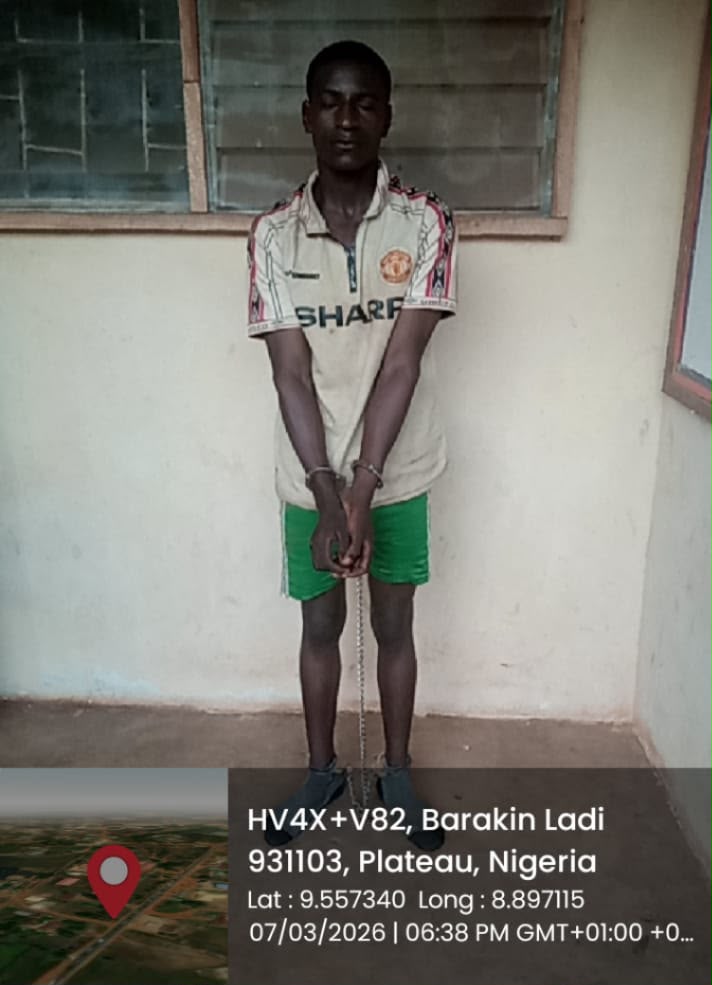
Troops of Sector 4 of Operation Enduring Peace have arrested a suspected kidnapper during a security operation in Barkin Ladi Local Government Area of Plateau.
Security sources said the suspect, identified as Mohamdu Surajo, 29, was arrested at about 6:45 p.m. on Friday at Sabon Layi Village following sustained security operations in the area.
The sources disclosed that the suspect is currently in military custody and is undergoing preliminary interrogation to aid ongoing investigations.
They added that the arrest is part of continued efforts by security forces to dismantle criminal networks and enhance security across Plateau State.
Troops arrest suspected kidnapper in Plateau community
Venezuela Solidarity Group Urges U.S. to Lift Sanctions After Deadly Earthquakes
By: Michael Mike
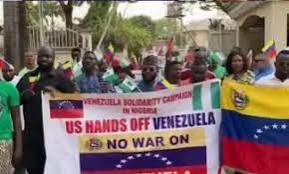
The Venezuela Solidarity Campaign in Nigeria (VSCN) has called for the immediate and unconditional lifting of United States sanctions on Venezuela, arguing that the restrictions are hampering humanitarian relief and reconstruction efforts following devastating twin earthquakes that reportedly killed more than 2,000 people and displaced over 50,000 others.
In a statement issued on Sunday and signed by its coordinator, Comrade Dimeji Macaulay, the group expressed solidarity with the Venezuelan people and the Bolivarian Government, describing the earthquakes as a humanitarian tragedy that has left widespread destruction of homes, hospitals, schools, roads and other critical infrastructure.
The organisation extended condolences to families of the victims and praised what it described as the resilience of the Venezuelan people in confronting the disaster despite years of economic hardship.
According to the VSCN, the U.S. sanctions have weakened Venezuela’s capacity to respond effectively to the emergency by limiting access to financial resources and restricting the importation of medicines, equipment, technology and other essential materials.
The group maintained that maintaining the sanctions during a humanitarian crisis amounts to collective punishment against ordinary citizens and called for their permanent removal to facilitate relief operations and long-term reconstruction.
“There can be no moral or legal justification for maintaining an economic blockade against a country struggling to save lives and rebuild after a devastating natural disaster,” the statement said, adding that every day the sanctions remain in force prolongs the suffering of the Venezuelan people.
The campaign also urged the Federal Government of Nigeria to publicly support the removal of the sanctions, strengthen diplomatic relations with Venezuela and contribute to international humanitarian efforts for victims of the disaster.
It further appealed to the African Union to reject unilateral coercive measures, describing them as violations of international law, while calling on African countries to support Venezuela’s recovery.
The group equally called on the United Nations to intensify humanitarian assistance and ensure that sanctions do not obstruct emergency relief operations or reconstruction programmes.
Beyond governments and international organisations, the VSCN appealed to trade unions, youth organisations, civil society groups and progressive political movements across Africa and the wider international community to demonstrate solidarity with Venezuela by opposing what it described as economic warfare and supporting the country’s right to determine its future without external interference.
Reaffirming its commitment to the Venezuelan cause, the organisation said it would continue campaigning until the sanctions are lifted, insisting that Venezuela’s recovery should not be hindered by external political considerations
Venezuela Solidarity Group Urges U.S. to Lift Sanctions After Deadly Earthquakes

Troops Arrest Two Suspected Berom Militia Linked to NIPSS Attack as Security Sources Say Investigation Supports Earlier Leads

Two suspected criminals arrested during patrol in Plateau

Troops arrest suspected kidnapper in Plateau community

Roger Federer’s Shock as DNA Results Reveal Myla and Charlene Are Not His Biological Children

THE PLIGHT OF FARIDA

FAILED COUP IN BURKINA FASO: HOW TRAORÉ NARROWLY ESCAPED ASSASSINATION PLOT AMID FOREIGN INTERFERENCE CLAIMS
-
 News2 years ago
Roger Federer’s Shock as DNA Results Reveal Myla and Charlene Are Not His Biological Children
-
Opinions4 years ago
THE PLIGHT OF FARIDA
-
 News1 year ago
FAILED COUP IN BURKINA FASO: HOW TRAORÉ NARROWLY ESCAPED ASSASSINATION PLOT AMID FOREIGN INTERFERENCE CLAIMS
-

 News2 years ago
EYN: Rev. Billi, Distortion of History, and The Living Tamarind Tree
-
 Opinions5 years ago
POLICE CHARGE ROOMS, A MINTING PRESS
-

 ACADEMICS2 years ago
A History of Biu” (2015) and The Lingering Bura-Pabir Question (1)
-

 Columns2 years ago
Army University Biu: There is certain interest, but certainly not from Borno.
-

 Politics1 year ago
2027: Why Hon. Midala Balami Must Go, as Youths in Hawul and Asikira/Uba Federal Constituency Reject ₦500,000 as Sallah Gift
