
News
Plateau in Crisis: Drone Allegations, Operation Rainbow and the Struggle for Peace

Plateau in Crisis: Drone Allegations, Operation Rainbow and the Struggle for Peace
Dr. Salim Musa Umar, FCIDA
The renewed violence in Mangu, Bokkos and Barkin Ladi, makes the need to reject inherited historical grievances more urgent than ever.
Killings, reprisals and counter-reprisals have brought grief, fear and mutual suspicion. Plateau crisis cannot be resolved by force alone. It needs security intervention, impartial investigations, accountability and reconciliation.
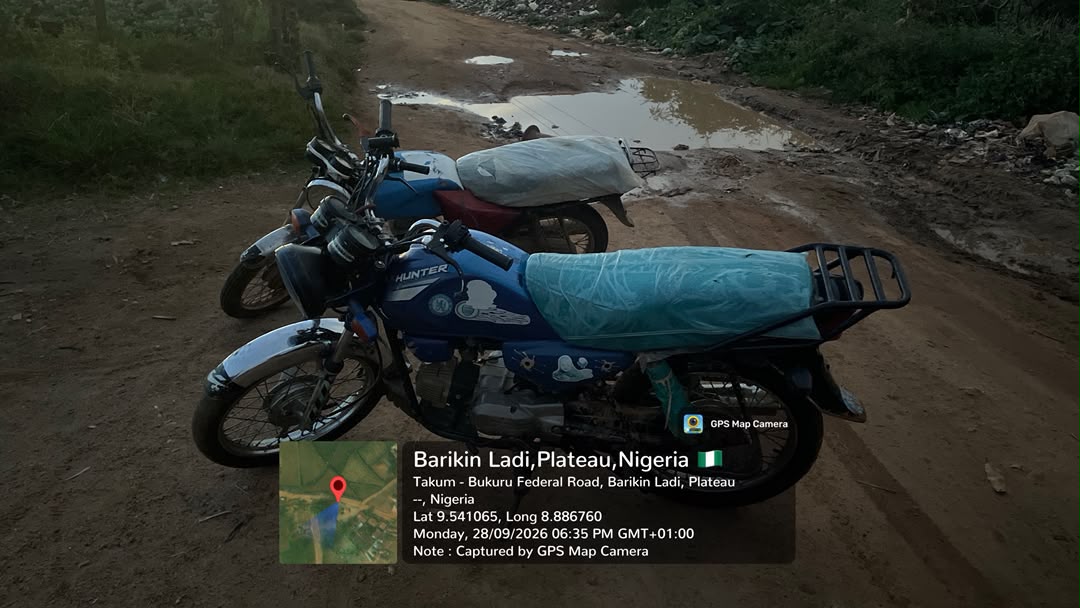
Two issues are especially dangerous: allegations that spy drones were used to monitor Fulani settlements to gather intelligence for attacks and concerns about the conduct and perceived neutrality of some Operation Rainbow operatives.

These must be confronted honestly, without ethnic prejudice, political manipulation or selective justice. Government’s first duty is to protect every innocent life, regardless of ethnicity or religion.
Spy drones
Reports that spy drones were used to monitor Fulani settlements, to identify locations, observe movements and gather intelligence that could facilitate attacks—warrant urgent independent investigation. If verified, using surveillance technology to target civilian settlements would be a deeply disturbing escalation.
Technology meant for agriculture, development, emergency response and lawful security, must never become a tool for targeting people because of ethnicity.
Authorities must establish whether such surveillance occurred, who was responsible, what information was gathered and whether it aided criminal activity.
Anyone found to have deployed technology to facilitate unlawful attacks must face the law. But allegations must not be treated as established facts before independent verification. Rumours can inflame tensions. Investigations must be evidence-based, transparent and free from ethnic or political interference.
Fulani lives matter. Berom lives matter. Mwaghavul lives matter. Every community on Plateau matters equally. No settlement should be a legitimate target because of its inhabitants’ ethnicity. Every community has a right to security, dignity and legal protection.
Operation Rainbow
Concerns about the conduct and perceived neutrality of some Operation Rainbow operatives must also be taken seriously. Operation Rainbow was established to protect lives and property, but its effectiveness depends on public confidence in its impartiality. If residents believe security interventions are uneven, or that one community’s suffering receives less attention, that perception can be as damaging as proven misconduct. It can discourage reporting threats and deepen the belief that some lives matter more than others.

Operation Rainbow must demonstrate that it is not an instrument of ethnic mobilisation or a partisan actor in communal disputes. It must protect all law-abiding residents, investigate threats impartially and respond without fear or favour. Allegations that individual operatives participated in unlawful killings, intimidation, selective enforcement or facilitation of attacks especially on the Fulanis, must be independently investigated. Where wrongdoing is established, disciplinary and criminal proceedings must follow.
The Plateau State Government should consider an independent review of complaints about Operation Rainbow in affected communities. It should examine operational records, residents’ complaints, video evidence, handling of distress calls and treatment of civilians. Fulani representatives, alongside Berom, Mwaghavul and other affected communities, should have safe opportunities to present evidence.
Operation Rainbow cannot protect one community against another. Its legitimacy must rest on protecting every law-abiding resident. A Fulani herder deserves the same protection as a Berom farmer or Mwaghavul villager.
Those responsible for murder, destruction, cattle rustling and other crimes must be held accountable.
DANGEROUS RHETORIC MUST NOT BE IGNORED
Another serious dimension of the security crisis is the growing normalisation of rhetoric that appears to encourage violence, destruction of property or the forced displacement of people.
A screenshot circulating on social media, contains comments attributed to Chris Nandi and Binkam Solomon. One of the comments appears to advocate targeting cattle as a means of compelling their owners to either “live in peace or leave the state,” while another response appears to suggest that some matters are better left unsaid on social media.
If the material is authentic, correctly attributed and presented in its proper context, it deserves the attention of the relevant security authorities.
This is not a call for retaliation, collective punishment or ethnic profiling. It is a call for a professional investigation.
The authorities should verify the accounts and establish the full context which amounts to unlawful incitement and threats to public peace.
THE BURNING OF PASTORALIST SETTLEMENTS MUST ALSO BE CONDEMNED
Equally disturbing are reports of pastoralist hamlets and settlements being set ablaze the crisis. The destruction of homes, shelters, livestock and livelihoods is not merely an act of property damage; it can force vulnerable families to flee and deepen the cycle of displacement, fear and retaliation. Where such burnings have occurred, authorities must establish who was responsible, the circumstances surrounding each incident and whether the attacks were deliberate or coordinated. No community should be collectively punished for the actions of individuals and no person should lose their home or livelihood simply because of their ethnic or occupational identity.
Drone allegations and concerns about security operatives must receive the same serious attention .
Security agencies must move beyond reactive deployments to intelligence gathering, early warning, rapid response and protection of vulnerable communities. No community should conclude it must organise its own retaliation because authorities cannot or will not protect it. The rule of law must apply equally to all.
Traditional rulers, religious leaders, elders, women, youths, civil society and government must pursue broad reconciliation that reaches villages, markets and places of worship. Leaders must condemn attacks regardless of perpetrators’ or victims’ identities. Political and public commentators must avoid statements that stigmatise whole communities.
Conclusion
Plateau needs a renewed social contract: its diverse communities share one home and one future. No community can prosper while its neighbours live in fear.
Government must strengthen preventive intelligence, protect vulnerable settlements, respond rapidly to threats and prosecute perpetrators without discrimination.
The task is not to decide which community deserves more protection. It is to ensure no community is denied protection. If drone allegations are substantiated, those responsible must face the law. If misconduct or bias by Operation Rainbow operatives is established, it must be addressed.
There must be no protected perpetrators, no abandoned victims and no ethnic exceptions to the rule of law.
Plateau stands at a crossroads: continuing suspicion, revenge and displacement or justice, mutual respect and reconciliation.
The choice must be shown in action. The time to stop the killings, investigate the abuse of surveillance technology, address concerns about security neutrality and rebuild trust is now .
Dr. Salim Musa Umar*, FCIDA, Plateau State Secretary, Jama’atu Nasril Islam (JNI) and Chairman Farmers and Herders Initiative for Peace and Development fhipd.
Plateau in Crisis: Drone Allegations, Operation Rainbow and the Struggle for Peace


Athena Graduates 13 Pioneer Fellows, Publishes Essays on Nigerian Unity
By: Michael Mike
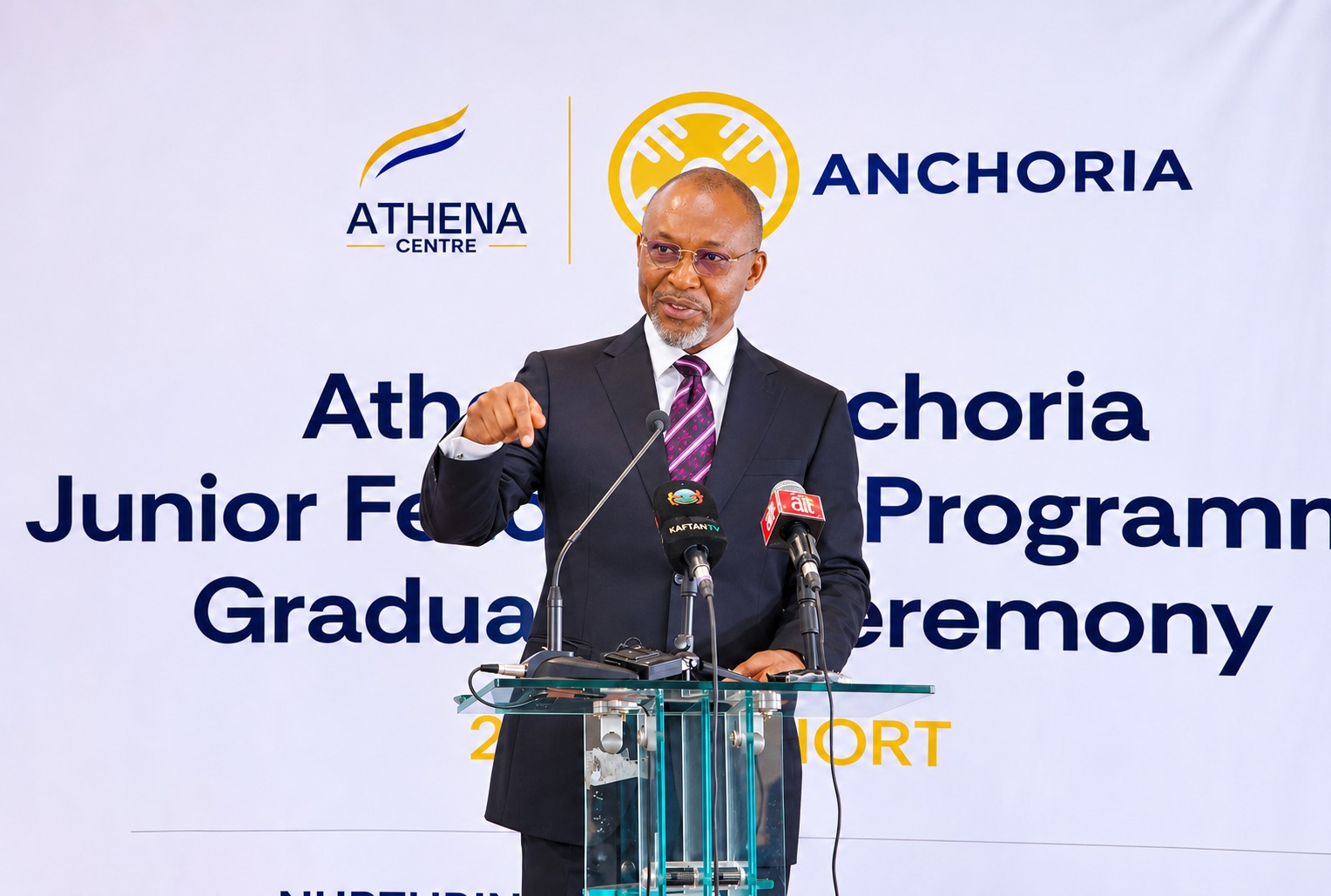
The Athena Centre for Policy and Leadership has graduated 13 pioneer fellows of its Junior Fellowship Programme, with a call on young Nigerians to take up leadership responsibilities and help build institutions capable of delivering good governance and national development.
The six-month programme, implemented in partnership with Anchoria Group, brought together young Nigerians from the six geopolitical zones, 11 states, 11 universities and 11 academic disciplines to deepen their understanding of public policy, governance, institutional development and leadership.
The graduation ceremony in Abuja also witnessed the unveiling of a collection of 13 civic essays written by the fellows, titled Though Tribe and Tongue May Differ: Young Nigerians on Belonging, Equal Citizenship and the Work of Nation-Building.
The publication, produced by Athena Press, is the first volume in an annual series, The Republic We Are Building, designed to encourage young Nigerians to examine the country’s founding ideals against the realities of governance and citizenship.
Speaking at the event, Founder and Chancellor of the Centre, Osita Chidoka, said the fellowship was established on the conviction that building strong institutions required deliberate investment in the people who would eventually lead them.
“We cannot continue to demand better institutions without deliberately investing in the people who will lead them. Institutions do not build themselves. People build them,” he said.
Chidoka said the programme deliberately brought together young Nigerians from different geographical, educational and professional backgrounds to foster mutual understanding and develop their capacity to work across the country’s differences.
“We brought together young Nigerians who might otherwise never have met, from different regions, universities, disciplines and experiences, and asked them to learn, argue and grow as one cohort.
“If we are serious about building the Republic we all dream of, learning to live, think and work across our differences has to become a habit,” he said.
He said the fellows were exposed to intensive learning, mentorship and practical engagements with experienced professionals, including BudgIT’s Seun Onigbinde, Dr Sam Amadi and Dr Dakuku Peterside.
The programme featured six months of virtual learning and mentorship, during which participants received monthly stipends, followed by a one-week residential session. Each graduate also received an HP laptop to support continued research and writing.
Anchoria Group part-funded the initiative, which combined public policy, governance, research and leadership training with financial literacy, investment and practical economic decision-making.
Chidoka said the fellows’ essays were inspired by the line in Nigeria’s National Anthem, “Though tribe and tongue may differ, in brotherhood we stand”, and explored questions of belonging, equal citizenship, identity and nation-building.
He described the National Anthem, the National Pledge and Chapter II of the Constitution as embodying what he called “the promise of the Republic”.
“They describe the Nigeria we say we want: a country founded on justice, equality, dignity, unity and opportunity.
“Every generation inherits that promise, and every generation must convert the promise into performance through the institutions it builds, the standards it enforces and the everyday experience of the citizen,” he said.
According to him, subsequent cohorts of the fellowship will use the annual publication to assess how effectively the country is translating these national ideals into tangible outcomes for its citizens.
The fellows also benefited from engagements with prominent figures in public policy and national development, including Patrick Okigbo, Founding Partner of Nextier, who discussed the promise of Nigeria and the experiences of young Nigerians within the country.
Representatives of Nextier attended the graduation and interacted with the fellows on career opportunities in policy and advisory services.
The fellows were also received by the Coordinating Minister of Health and Social Welfare, Prof. Muhammad Ali Pate, who shared his experiences of international training, returning to Nigeria and contributing to national development.
One of the fellows was subsequently invited to participate in the forthcoming Ministerial Conference on Antimicrobial Resistance.
In his valedictory address, the Overall Best Fellow, Ezekiel Adebisi, said the programme had equipped participants with the analytical skills, intellectual discipline and sense of responsibility required to contribute meaningfully to national development.
He said the fellows arrived as young professionals seeking answers but were leaving with a deeper appreciation of the complexity of governance and the responsibilities associated with knowledge.
Adebisi urged them to approach public institutions with courage, integrity and a commitment to evidence-based decision-making.
He cautioned against equating access to political power with the ability to drive meaningful institutional reforms.
“We came to learn how institutions shape nations. We leave committed to shaping institutions that serve nations,” he said.
The graduating fellows are Augustina Enuwa Abakpa, Rashida Bafashi Abubakar, Yahaya Abubakar, Ezekiel Adebisi, Afodun Muhammad Saheed, Adaobi Ayogu, Kosisochukwu Praise Bosah, Enegbuma Angelica Onagiekhuwemhe, Haruna Hassan Suleiman, Mohammed Baba Kale, Daniel Nnamani, Eunice Olasunkanmi and Shedrack Owen.
Chidoka urged the graduates to measure their success not merely by the knowledge acquired during the fellowship but by their contributions to the institutions and communities they would serve.
“The value of this Fellowship will be measured over years: in the institutions you serve, the decisions you influence and the people you, in turn, help to develop.
“Today, we celebrate what you have learnt. Tomorrow, Nigeria will judge what you do with it,” he said.
He announced that the Junior Fellows Programme would continue with new cohorts, sustaining the Centre’s effort to develop a new generation of Nigerians committed to responsible leadership and institution-building.
Athena Graduates 13 Pioneer Fellows, Publishes Essays on Nigerian Unity
Tijjani Muhammed’s promotion to Lithuania’s top division excites Mailantarki Care FC
The management and entire family of Mailantarki Care FC proudly extend heartfelt congratulations to our former star forward, Tijjani Muhammed, on helping FK Babrungas clinch the 2026 I Lyga title and secure a historic promotion to Lithuania’s elite top-tier division, the TOPLYGA.
Mr Adamu Usman Ahmed, the
General Secretary of
Mailantarki Care FC conveyed the management’s message in a press statement issued to newsmen on Saturday.
Tijjani Muhammed’s remarkable journey from sharpening his craft at Mailantarki Care FC to making a decisive, high-impact presence on the European stage is a testament to his exceptional talent, discipline, and relentless work ethic.
Playing a pivotal role in guiding FK Babrungas to the summit of Lithuanian football marks a monumental milestone in his professional career and stands as a shining example for young talents across Nigeria.
Commenting on the milestone, the club leadership led by its President Hon Khamisu Ahmed Mailantarki noted that Tijjani’s success reflects the core vision of Mailantarki Care FC of developing world-class players equipped to compete and excel at the highest levels of global football.
“We celebrate this well-deserved achievement with Tijjani. His hunger for success and dedication continue to make us immensely proud. We wish him even greater milestones, stellar performances, and countless goals as he prepares to take on the challenge of the TOPLYGA next season,” the statement read.
Tijjani Muhammed earned his pathway into European football following a scintillating, star-making performance with Mailantarki Care FC, the champions of the 2024 Dana Cup in Denmark, where he clinched both the highest goal scorer award and the tournament’s Most Valuable Player (MVP) honor.
Mailantarki Care FC remains steadfast in its mission to discover, nurture, and project homegrown talent onto the international stage, living up to its mantra.
Tijjani Muhammed’s promotion to Lithuania’s top division excites Mailantarki Care FC
Zulum Orders Suspension of Dikwa Council Secretary, Directors Found Absent on Duty
…Halts Work on Nurses’ Quarters
By: Our Reporter
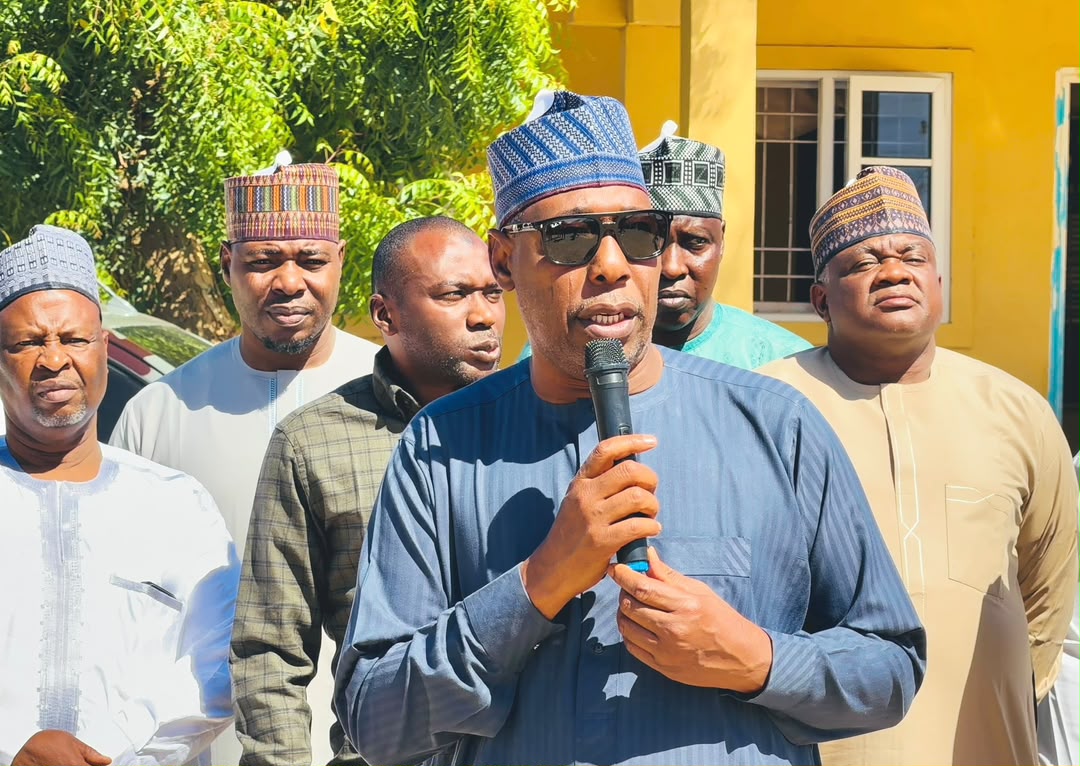
Borno State Governor, Professor Babagana Umara Zulum, has directed the immediate suspension of the secretary and some directors of Dikwa Local Government Council over alleged neglect of duty.
The Governor issued the directives on Friday during a working visit to Dikwa, where he found several senior council officials absent from their duty posts.
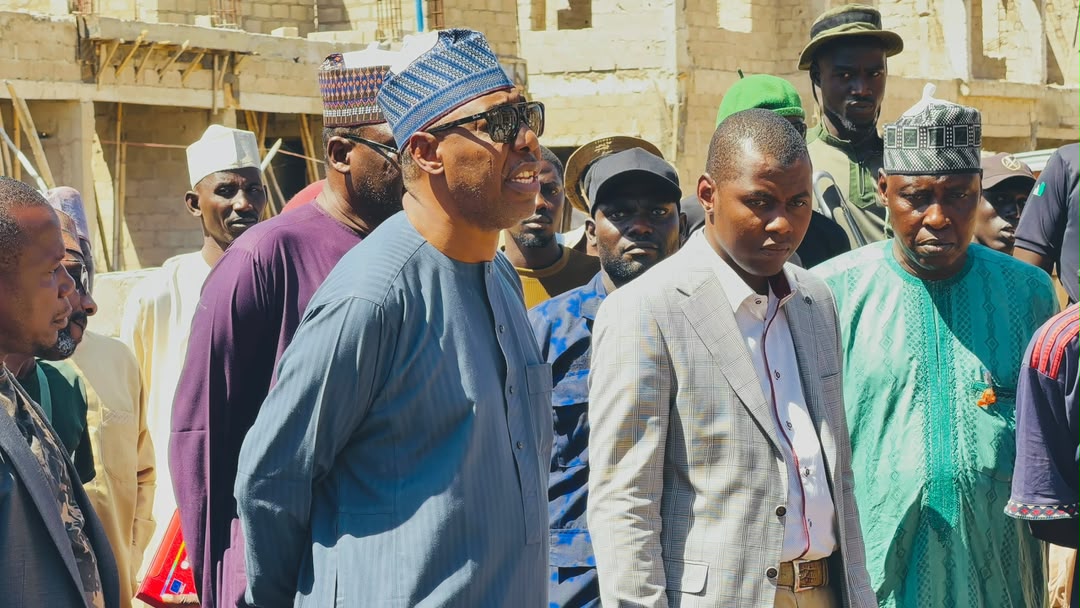
He directed the affected officials to hand over to their respective assistants immediately.
However, the Director of Primary Healthcare and the Education Secretary were exempted from suspension because both were on duty at the time of the visit.
“Residents depend on the local government for essential services. Senior officials must report for duty and carry out their responsibilities.
Those who neglect their duties will face disciplinary action,” Zulum said.
The governor directed the Borno State Local Government Service Commission to compile a list of the affected officials and begin the administrative process of filling the posts to ensure that council services continue.
…Zulum halts work on nurses’ quarters
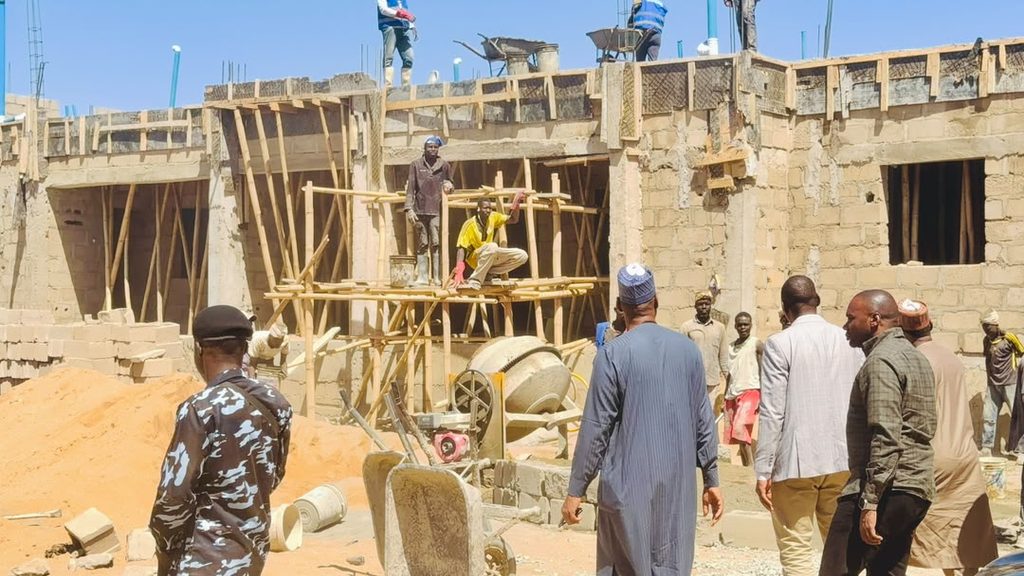
Governor Babagana Zulum also ordered the halting of construction at the nurses’ quarters after raising concerns about the quality of work.
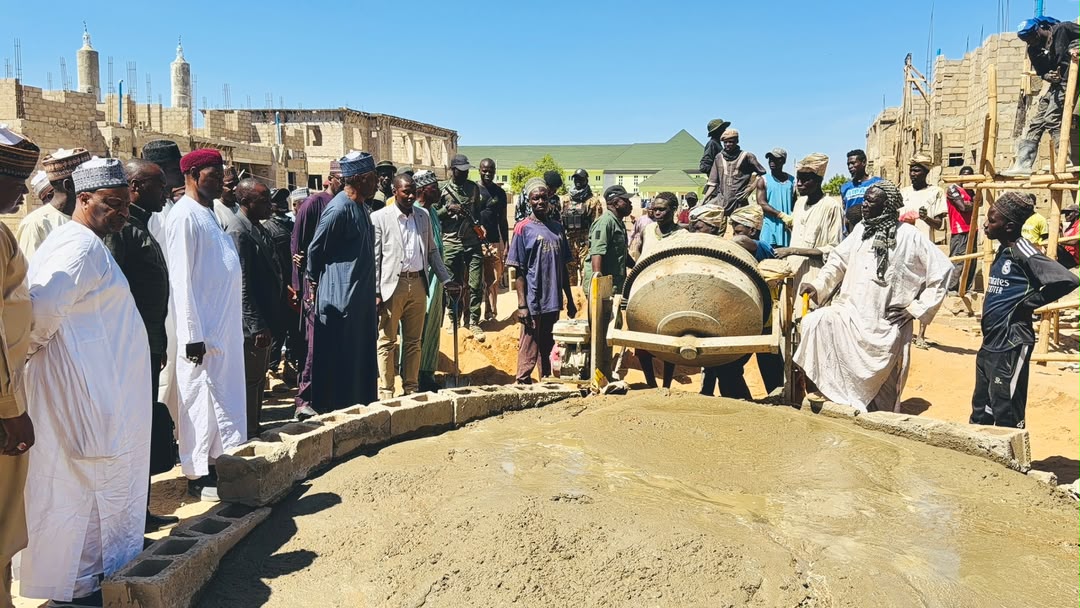
During the visit, Zulum inspected ongoing projects at Dikwa General Hospital, the nurses’ quarters and a mega primary school.
Visibly dissatisfied with the standard of construction at the nurses’ quarters, he ordered work to stop immediately pending the engagement of another contractor.
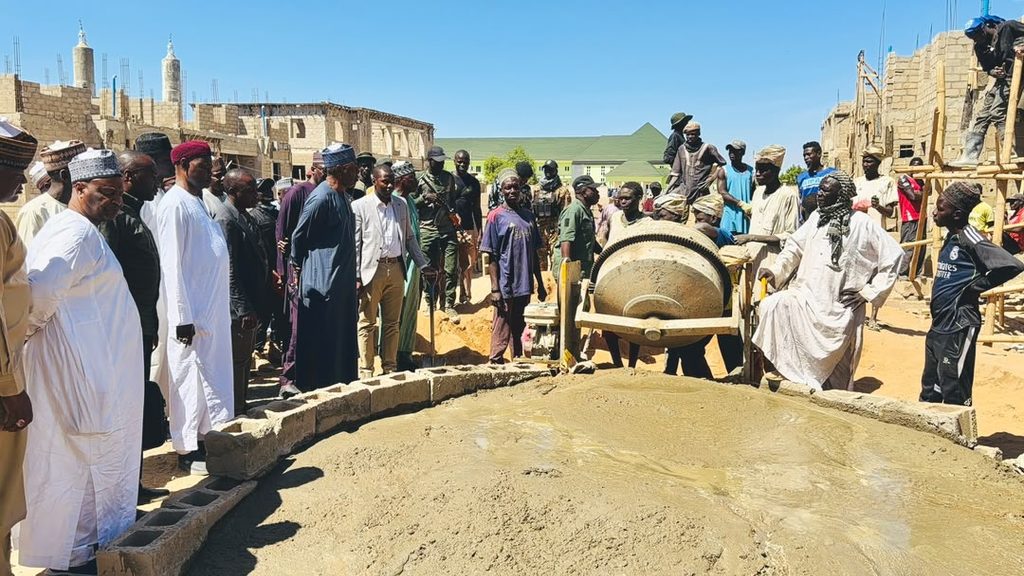
“Public funds must deliver buildings that are safe, durable and fit for use. Every contractor must meet the approved specifications. Those who fail to do so will be held accountable in accordance with the law,” Zulum stated.
Governor Zulum warned that contractors who fail to meet contractual specifications and approved standards would face immediate sanctions.
Zulum Orders Suspension of Dikwa Council Secretary, Directors Found Absent on Duty

Athena Graduates 13 Pioneer Fellows, Publishes Essays on Nigerian Unity

Tijjani Muhammed’s promotion to Lithuania’s top division excites Mailantarki Care FC

Prof. Faruk Buba is currently leading the affairs at UMTH

Roger Federer’s Shock as DNA Results Reveal Myla and Charlene Are Not His Biological Children

THE PLIGHT OF FARIDA

FAILED COUP IN BURKINA FASO: HOW TRAORÉ NARROWLY ESCAPED ASSASSINATION PLOT AMID FOREIGN INTERFERENCE CLAIMS
-
 News3 years ago
Roger Federer’s Shock as DNA Results Reveal Myla and Charlene Are Not His Biological Children
-
Opinions5 years ago
THE PLIGHT OF FARIDA
-
 News2 years ago
FAILED COUP IN BURKINA FASO: HOW TRAORÉ NARROWLY ESCAPED ASSASSINATION PLOT AMID FOREIGN INTERFERENCE CLAIMS
-
 Opinions5 years ago
POLICE CHARGE ROOMS, A MINTING PRESS
-

 News3 years ago
EYN: Rev. Billi, Distortion of History, and The Living Tamarind Tree
-

 ACADEMICS3 years ago
A History of Biu” (2015) and The Lingering Bura-Pabir Question (1)
-

 Columns3 years ago
Army University Biu: There is certain interest, but certainly not from Borno.
-

 Politics1 year ago
2027: Why Hon. Midala Balami Must Go, as Youths in Hawul and Asikira/Uba Federal Constituency Reject ₦500,000 as Sallah Gift
