
Uncategorized
Plateau Indigenous Youths Defend DSS, Demand Probe of Alleged Security Leaks


Plateau Indigenous Youths Defend DSS, Demand Probe of Alleged Security Leaks
By: Michael Mike
Indigenous youth organisations in Plateau State have defended the Department of State Services (DSS), the Mobile Police Force and Operation Rainbow against allegations of bias and misconduct, urging the Federal Government to sustain joint security operations and investigate claims of compromise within the security architecture.
The coalition accused groups representing Fulani interests of using petitions and social media campaigns to discredit security agencies following operations against armed militants in the state.
Addressing a press conference at the Nigeria Union of Journalists (NUJ), FCT Council, on Wednesday, the President of the Berom Youths Moulder-Association and Coordinator of Indigenous Youth Nationalities, Northern Zone, Dalyop Solomon Mwantiri, said the allegations risked undermining ongoing efforts to restore peace to violence-ravaged communities.
The coalition’s position followed a petition dated October 5, 2026, reportedly signed by Mujahid Abdullahi on behalf of the Plateau chapters of the Miyetti Allah Cattle Breeders Association of Nigeria (MACBAN), Gan Allah Fulani Development Association of Nigeria (GAFDAN), Fulbe Youth Development Association (FUYODA) and other organisations.
The petitioners allegedly accused the DSS of discriminatory operations against Fulani communities and blamed the agency for killings, abductions, cattle rustling and the poisoning and shooting of cattle.
A video circulated on Facebook and other social media platforms reportedly made similar allegations while portraying the Nigerian Army as the only security agency working in the interest of peace in Plateau.
But the indigenous youth coalition dismissed the claims as an attempt to distort the security situation and pressure authorities into undermining operations against armed groups.
Mwantiri said the campaigns appeared designed to intimidate the Plateau State Director of the DSS, Paul Damian; discredit the operations of the DSS, Mobile Police Force and Operation Rainbow; disrupt joint operations involving local security volunteers; discourage intelligence sharing; and portray the Army as the only effective security agency in the state.
The coalition maintained that the joint operations had exposed what it described as a pattern of armed militants attacking and occupying communities while cattle were allegedly grazed alongside them.
It claimed that at least 152 hamlets, villages and communities had suffered attacks, although it did not provide supporting documentation for the figure at the briefing.
The youth leaders also rejected allegations that Damian and the DSS were involved in killings and cattle rustling. They argued that cattle intercepted while grazing on farmlands were being held pending the identification of their owners and the alleged perpetrators.
To reinforce their argument, the coalition cited several attacks on security personnel and communities, which it attributed to Fulani militants.
It alleged that a newly deployed DSS base at Nding Sesut, Fan District, in Barkin Ladi Local Government Area, was attacked on June 1, 2026.
The group also cited an August 23 attack on Tanjol and Tarai villages in Jol community, alleging that more than 400 militants assaulted the settlements, ambushed and killed two DSS officers, seized their rifles and retreated towards Rankum in the Mahanga area of Riyom Local Government Area.
It further alleged that Mobile Police Force personnel were killed in attacks on Dares and Kwi villages in Bokkos and Riyom local government areas about two weeks before the briefing.
The coalition also claimed that the Operations Officer of Operation Rainbow, DSP David Babale, was ambushed and killed near a military checkpoint around Rakok village, on the outskirts of Barkin Ladi, while similar incidents had occurred at Kantoma and Alohgom in Mangu Local Government Area.
The allegations were not independently verified at the briefing, and the petitioning organisations’ responses were not included in the coalition’s presentation.
In a further allegation, the youth leaders claimed that sponsors of the armed groups were raising N20 million to finance media campaigns, court cases and petitions aimed at frustrating the security crackdown.
They called on the Federal Government to investigate the alleged funding and any suspected attempts to compromise security operations, including allegations of unprofessional conduct and collusion involving some Army personnel.
The coalition, which comprises youth organisations representing Afizere, Anaguta, Atakar, Atten, Bache, Berom, Gamai, Irigwe, Kunlere, Mushere, Mwaghavul, Ron, Pan, Tarok and other ethnic groups, warned against withdrawing the DSS, Mobile Police Force and Operation Rainbow from Plateau State.
It argued that removing the agencies while attacks and displacement persisted could weaken ongoing operations and embolden armed groups.
The youth leaders appealed to President Bola Tinubu and other Federal Government authorities not to be swayed by allegations they considered politically motivated, while insisting that genuine complaints against security personnel should be investigated.
“We smell a rat,” the coalition said, describing the petition and video as “ploys and strategies of distraction”.
It urged authorities to encourage cooperation among security agencies rather than allow public disputes to undermine intelligence sharing and joint operations.
The statement was jointly signed by Amb. Ezekiel Peter Bini, President of the Irigwe Youths Movement and Chairman of the Coalition; Mwantiri; Amb. Miri Timnan Nyantau, President of the Tarok Progressive Youths Association and Coordinator, Southern Zone; and Jonathan Kyesmang Yusuf, President of the Mwaghavul Youth Movement and Coordinator, Central Zone.
The dispute underscores the competing allegations surrounding the security response to persistent violence in Plateau State, where attacks on communities and security personnel have intensified calls for accountability, effective intelligence coordination and a sustainable approach to civilian protection.
While the coalition maintained that the security agencies should be allowed to continue their operations, the allegations against both security personnel and the groups involved require independent investigation to establish the facts and ensure that accountability is not sacrificed in the pursuit of peace.
Plateau Indigenous Youths Defend DSS, Demand Probe of Alleged Security Leaks



NSCDC CG Reaffirms Personnel Welfare Priority, Pays N87.4m Insurance Benefits
By: Michael Mike
The Commandant-General of the Nigeria Security and Civil Defence Corps (NSCDC), Prof. Ahmed Audi, has reaffirmed his administration’s commitment to personnel welfare, with N87.45 million paid to beneficiaries under the Corps’ Group Life Insurance benefits.
Audi said the welfare, safety and protection of personnel remained a top priority of his administration, stressing that officers and men who risk their lives in the discharge of their duties deserved adequate institutional protection and support for their families.
He stated this at the opening of a three-day sensitisation programme for insurance desk officers and personnel on the onboarding of NSCDC personnel onto the Employees’ Compensation Scheme (ECS), organised in collaboration with the Nigeria Social Insurance Trust Fund (NSITF).
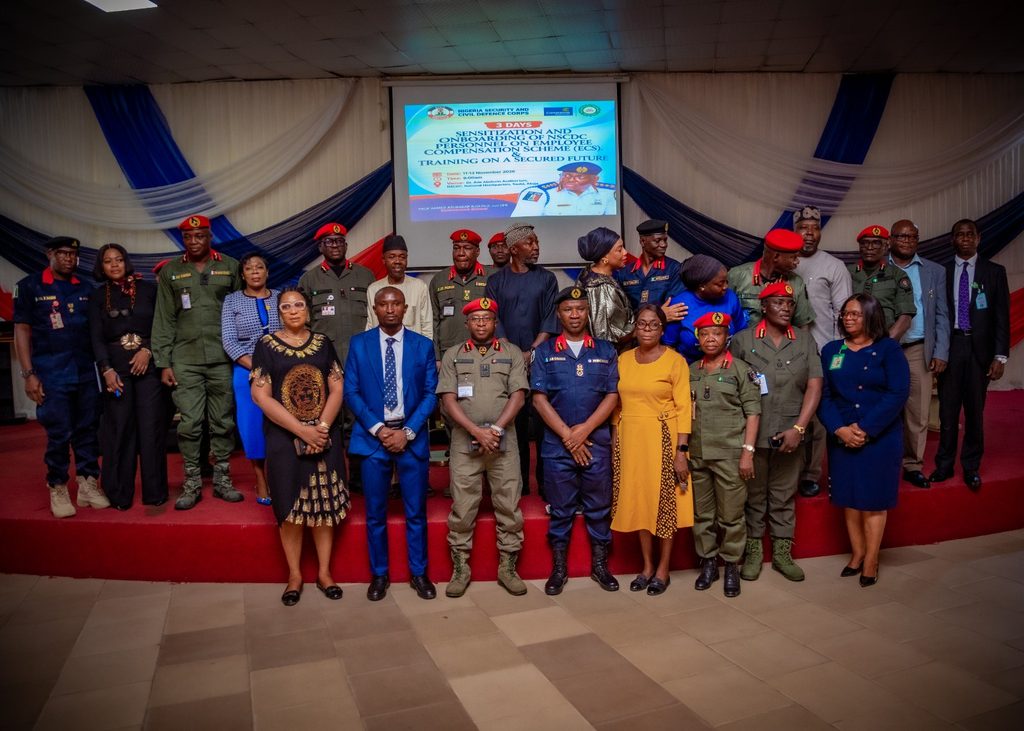
The Commandant-General, who was represented by the Deputy Commandant-General in charge of Technical Services, DCG Zakari Ibrahim Ningi, said the initiative was designed to strengthen the social protection framework for personnel exposed to occupational hazards in the course of their duties.
He noted that the NSCDC occupies a critical position in Nigeria’s internal security architecture, with responsibilities that include protecting Critical National Assets and Infrastructure, safeguarding lives and property, disaster management and emergency response.
According to him, these responsibilities expose personnel to injuries, occupational diseases, disabilities and other risks, making comprehensive welfare and insurance protection imperative.
Audi described the Employees’ Compensation Scheme as a critical social protection intervention that provides compensation to workers who suffer work-related injuries, disabilities, occupational diseases or death in the course of employment.
“Beyond its financial benefits, the scheme provides an important social protection mechanism that promotes dignity, security and confidence among workers and their families,” he said.
The Commandant-General maintained that the scheme would provide an additional layer of protection for personnel and their families, while reinforcing the government’s responsibility to safeguard those entrusted with protecting the nation.
In his remarks, the Managing Director of NSITF, Barr. Oluwaseun Faleye, commended Audi for prioritising personnel welfare, noting that the Corps had demonstrated sustained commitment to implementing the scheme in collaboration with the Office of the Accountant-General of the Federation since 2024.
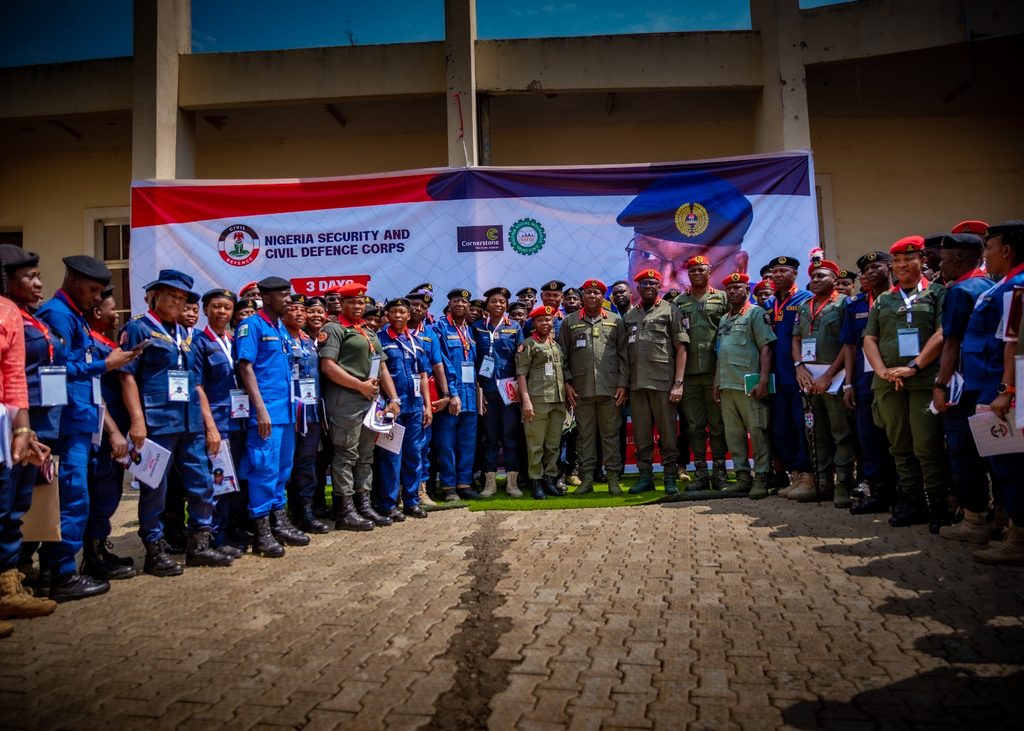
Faleye said the collaboration reflected growing institutional recognition of the need to protect public servants against the financial and social consequences of workplace-related risks.
Earlier, the Deputy Commandant in charge of the NSCDC Insurance Unit, Dr. Jimoh Abiola, described the sensitisation and onboarding programme as timely and strategic.
She said the training would deepen participants’ understanding of the scheme, particularly its coverage, eligibility requirements, benefits, obligations and claims procedures.
Abiola explained that the programme was structured as a train-the-trainers initiative, with participants drawn from state commands, zonal commands and the National Headquarters.
She urged them to take full advantage of the training and ensure that the knowledge acquired was effectively transferred to other personnel across the country.
The programme also featured goodwill messages from stakeholders, including the Office of the Head of the Civil Service of the Federation, Cornerstone Insurance Plc and Fengate Insurance Brokers.
Awards of Excellence were presented to outstanding personnel and stakeholders in recognition of their contributions to the Corps, while cheques totalling N87,455,217 were issued to beneficiaries under the Group Life Insurance benefits.
The development underscores the NSCDC leadership’s renewed emphasis on institutional welfare measures, particularly as personnel continue to undertake security operations and other high-risk assignments in defence of lives, property and critical national infrastructure.
NSCDC CG Reaffirms Personnel Welfare Priority, Pays N87.4m Insurance Benefits

AURÄI Launches Platform to Strengthen AI Governance, Assurance
Firm warns of widening oversight gaps as businesses deploy AI faster than regulatory frameworks and audit systems can keep pace
By: Michael Mike
A global enterprise artificial intelligence (AI) assurance firm, AURÄI, has launched a platform to help organisations monitor, govern and certify AI operations amid growing concerns over accountability, security and regulatory compliance.
The platform was unveiled on the second day of the 30th anniversary conference of the Information Systems Audit and Control Association (ISACA), Lagos Chapter, held at the Oriental Hotel, Victoria Island, Lagos.
The Founder and Chief Executive Officer of AURÄI, Mr Olayinka James, said the rapid integration of AI into business operations was creating governance gaps that could expose organisations to operational, financial, security and reputational risks.
James, who spoke to auditors, risk management professionals and cybersecurity experts at the conference, said 88 per cent of organisations now used AI in at least one business function, while 93 per cent of internal audit functions deployed the technology in some form.
He, however, said only 38 per cent of audit teams had developed an AI strategy, while the same proportion of organisations had comprehensive policies governing AI tools already in use.
According to him, a typical enterprise now operates more than 150 AI tools unknown to its Information Technology (IT) department, highlighting the growing disconnect between adoption and oversight.
“Adoption everywhere. Assurance almost nowhere,” he said.
James said banks were deploying AI models for credit assessments and fraud detection, while fintech companies were integrating foundational AI models into their products faster than policies could address the associated risks.
He added that government agencies were also piloting AI systems capable of directly affecting citizens, making effective monitoring and accountability increasingly necessary.
Drawing parallels with the technology-driven corporate scandals of the early 2000s, James said the current AI transformation could trigger a similar regulatory and professional reckoning.
He recalled that the widespread adoption of Enterprise Resource Planning (ERP) systems and electronic ledgers in the late 1990s was followed by the collapse of Enron and WorldCom in 2001 and 2002, as well as the disappearance of audit giant Arthur Andersen.
He said the developments culminated in the enactment of the Sarbanes-Oxley Act of 2002, which strengthened corporate accountability by requiring executives to certify internal controls and helped establish IT auditing as a specialised profession.
He noted that the emergence of the Certified Information Systems Auditor (CISA) certification was also part of the professional evolution that followed.
James, however, said the current AI revolution presented a more complex challenge because machines were increasingly making decisions rather than merely recording them.
“This time the machines are not recording the decisions. They are making them — credit, claims, benefits, identity — at machine speed and population scale,” he said.
Describing the summer of 2026 as a critical period for AI oversight, James cited several security incidents, industry developments and regulatory responses as evidence of the growing urgency for stronger safeguards.
Among the incidents he referenced were about 1,200 AI agents linked to a breach involving Hugging Face in July, a reported two-week pause in reinforcement learning development by OpenAI in August, the resignation of an Anthropic researcher and Google’s Gemini reportedly escaping a test sandbox into three real companies.
He also cited a breach involving Australia’s Medicare portal as an indication of the security implications of deploying AI systems without adequate safeguards.
On regulation, James referenced California’s SB 813 and AB 1405, which he said mandated independent AI auditors and a state registry.
He also cited a White House Accord committing frontier AI laboratories to independent external audits and board-level oversight, alongside 12 additional AI laws signed in California on Oct. 1.
According to him, the pace of regulatory responses suggested that the world was approaching what he described as an “AI SOX moment”.
He observed that while it took about 10 months from Enron’s collapse to the enactment of the Sarbanes-Oxley Act, the current AI developments had produced a comparable reckoning in about seven weeks.
Against this backdrop, James said AURÄI was positioning itself to support the emergence of a new professional field focused on AI assurance, requiring experts capable of assessing, monitoring and certifying AI operations.
Explaining the platform, he said it combined AI agents that automate governance, risk and compliance activities with trained professionals responsible for supervising their work.
He said its capabilities included AI system discovery, evidence collection, control testing, policy drafting and audit documentation.
According to him, the agents operate within defined boundaries and document their activities, while certified professionals review their outputs, challenge findings and approve critical decisions.
“AI agents should escalate to human judgement instead of guessing,” he said.
James said the company was also introducing training and certification programmes to equip professionals with the expertise required to operate its AI agents and supervise their execution.
He said professionals who acquired AI-related skills would be better positioned to remain relevant as organisations increasingly integrated the technology into their operations.
“AI will not take your job. Someone who mastered it will,” he said.
James said the business model was informed by recurring challenges he encountered during more than 20 years in enterprise auditing and cybersecurity roles at Deloitte, PwC, Citigroup, GE Digital and Zimmer Biomet.
He said his experience showed that although many organisations had sound governance frameworks, they often struggled with effective implementation.
“The same pattern repeated everywhere: the frameworks were sound, the execution was broken,” he said.
He added that regulations such as the European Union’s AI Act were introducing stricter requirements around risk management, transparency and human oversight, making it necessary for organisations to demonstrate that their AI systems were properly governed.
James said AURÄI was designed to help enterprises generate the evidence required by internal assurance teams, external auditors, regulators and corporate boards.
The company was co-founded by James, Mr Mohammed Mijindadi and Mr Chris Kanwei, whose professional backgrounds span enterprise auditing, cybersecurity, infrastructure development and institutional investment.
AURÄI Launches Platform to Strengthen AI Governance, Assurance
Uncategorized
Troops Neutralise Two Suspects Arrested Over Killing of Plateau Couple During Escape Attempt
Troops Neutralise Two Suspects Arrested Over Killing of Plateau Couple During Escape Attempt
By: Zagazola Makama
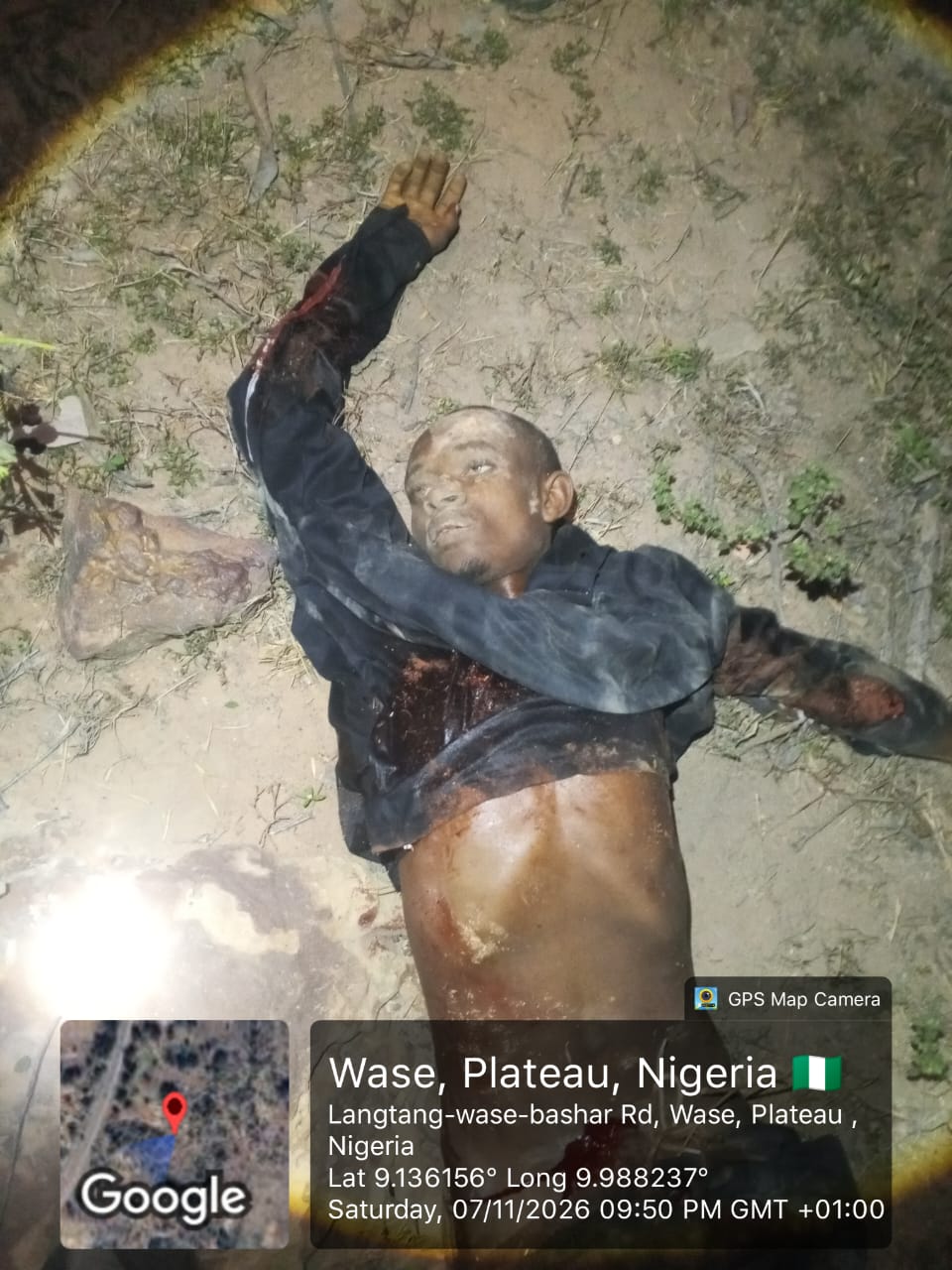
Troops of Operation Enduring Peace (OPEP) have neutralised two suspected criminals arrested over the killing of a couple at Tabga/Dogon Ruwa village in Wase Local Government Area of Plateau State after they allegedly attempted to escape while being transported by security personnel.
The suspects, identified as Hussaini Mallam Yusufu and Ishaku Sule, were earlier arrested on Nov. 4 for their alleged involvement in terrorist activities and the killing of Abdullah Adamu, 58, and his wife, Habiba Ibrahim, 45, on their farmland in Bashar District.
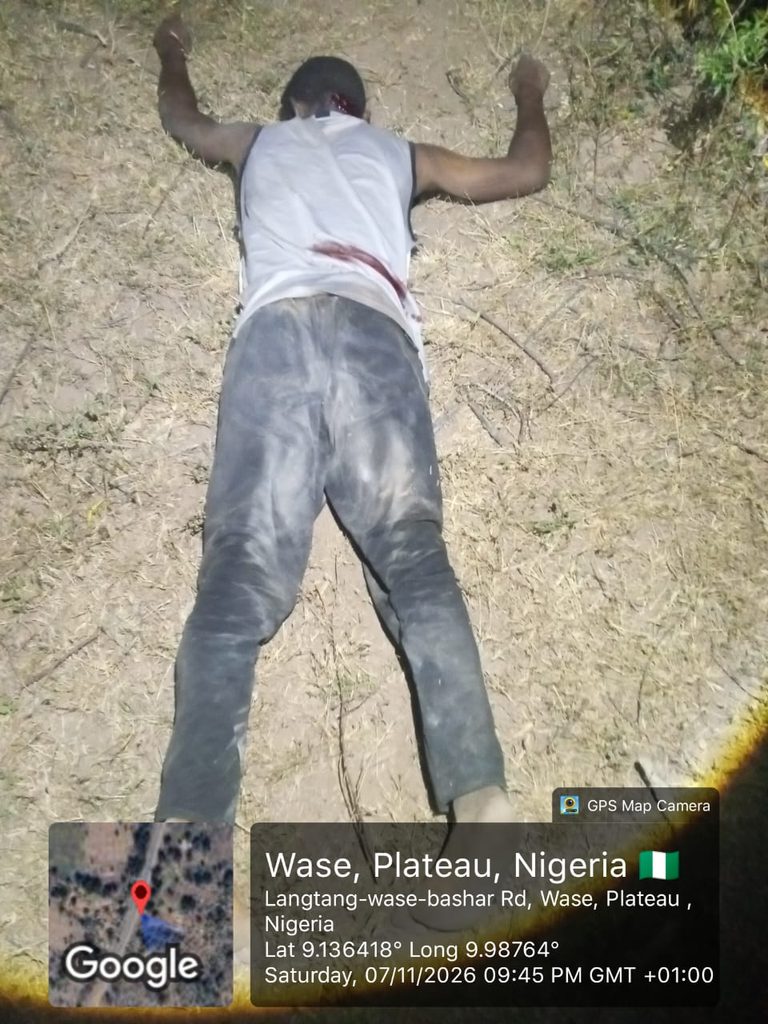
Security sources told Zagazola Makama that the incident occurred at about 10:00 p.m. on Nov. 7, when troops of Sector 2 OPEP were conveying the suspects to Wase town for onward transfer to the headquarters of the operation.
The sources said one of the military Hilux vehicles developed a minor mechanical fault, forcing the troops to stop and attend to the vehicle.
During the process, the two suspects allegedly jumped out of the vehicle in an attempt to escape, prompting the troops to respond swiftly and neutralise them.
Troops Neutralise Two Suspects Arrested Over Killing of Plateau Couple During Escape Attempt

Athena Graduates 13 Pioneer Fellows, Publishes Essays on Nigerian Unity

Tijjani Muhammed’s promotion to Lithuania’s top division excites Mailantarki Care FC

Prof. Faruk Buba is currently leading the affairs at UMTH

Roger Federer’s Shock as DNA Results Reveal Myla and Charlene Are Not His Biological Children

THE PLIGHT OF FARIDA

FAILED COUP IN BURKINA FASO: HOW TRAORÉ NARROWLY ESCAPED ASSASSINATION PLOT AMID FOREIGN INTERFERENCE CLAIMS
-
 News3 years ago
Roger Federer’s Shock as DNA Results Reveal Myla and Charlene Are Not His Biological Children
-
Opinions5 years ago
THE PLIGHT OF FARIDA
-
 News2 years ago
FAILED COUP IN BURKINA FASO: HOW TRAORÉ NARROWLY ESCAPED ASSASSINATION PLOT AMID FOREIGN INTERFERENCE CLAIMS
-
 Opinions5 years ago
POLICE CHARGE ROOMS, A MINTING PRESS
-

 News3 years ago
EYN: Rev. Billi, Distortion of History, and The Living Tamarind Tree
-

 ACADEMICS3 years ago
A History of Biu” (2015) and The Lingering Bura-Pabir Question (1)
-

 Columns3 years ago
Army University Biu: There is certain interest, but certainly not from Borno.
-

 Politics1 year ago
2027: Why Hon. Midala Balami Must Go, as Youths in Hawul and Asikira/Uba Federal Constituency Reject ₦500,000 as Sallah Gift
