
News
Plateau steps back from the brink as Nigerian Armed Forces coordinated response halts escalation

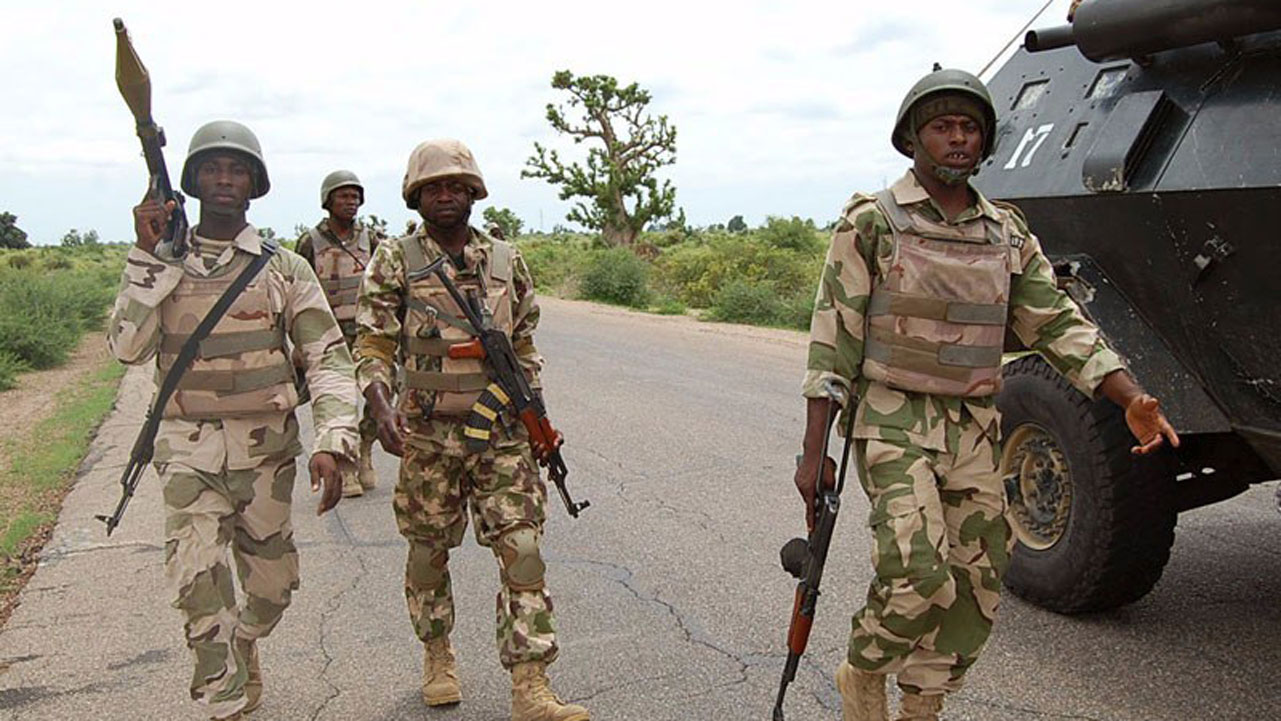
Plateau steps back from the brink as Nigerian Armed Forces coordinated response halts escalation
By: Zagazola Makama
After days of tension, anxiety and painful losses, a cautious calm is returning to parts of Plateau State after a narrowly averted escalation.
The hostilities which recently escalated along the Barkin Ladi-Riyom–Jos corridor have significantly reduced in the past few days, averting what many feared could spiral into a broader ethno-religious crisis.
Multiple sources attribute the de-escalation to proactive and coordinated interventions of the Federal Government, which directed its armed forces, alongside the Nigeria Police Force and the Department of State Services (DSS), to ensure that the situation was brought under control.
The synergy prevented Plateau from tipping into a full-blown crisis with possible regional contagion across other Northern states.
For decades, this axis has carried the weight of unresolved grievances land-use disputes, indigene-settler narratives, youth unemployment, and political rivalry. Each new killing risks reopening old wounds, and each reprisal threatens to widen the circle of suspicion.
The recent flare-ups, however, occurred within Plateau State, particularly in Barkin Ladi and Riyom, with anxiety spilling toward Jos North and Jos South. Yet, in the past few days, the feared urban ignition has not materialized.
Security presence has been reinforced along flashpoints, while high-level engagements with all warring communities have reportedly led to a cooling of ultimatums and counter-ultimatums that had earlier hardened positions.
Political, community and religious leaders in Jos, as well as elder statesmen in other parts of the country, have intensified peace engagements, urging restraint and rejecting inflammatory rhetoric capable of transforming localized disputes into full-scale ethno-religious confrontation.
Yet what unfolded in recent weeks does not fit the legal or factual threshold of genocide. Rather, it followed a tragic but familiar retaliatory pattern one group attacks, the other responds, and the cycle deepens unless decisively interrupted.
This time, it was interrupted. Security deployments were reinforced. Intelligence coordination improved. Youth leaders were engaged. Religious figures amplified calls for restraint. Political actors, mindful of the state’s fragile equilibrium, moved to cool tempers rather than inflame them, while those who inflamed the situation were cautioned.
But beyond the immediate violence, another battle was playing out the battle of narratives.
Nigeria remains vulnerable to destabilization efforts by internal conflict entrepreneurs and, potentially, external actors who exploit local grievances for strategic advantage, just as what is currently playing out in Plateau and Benue. External security elements, sometimes operating under the guise of NGOs, are also fueling resentment and making inflammatory statements that could further ignite chaos in the country.
It has been noted that these elements make exaggerated claims, use inflammatory framing, and deploy emotionally charged labels that covertly transform localized disputes into perceived existential wars.
A recurring theme among peace advocates is the danger of waiting for external rescue or framing domestic challenges as externally solvable crises. Nigerian politicians have also failed to fully discharge their responsibilities by investigating the crises and implementing concrete policies and programs that would further prevent recurrence.
Top government officials often hesitate to speak against prevailing narratives. We even saw that those who opposed certain framings, like Rabiu Kwankwaso, were tagged as supporters of the persecution of Christians.
The Nigerian media has largely refused to give the Plateau crisis balanced and sustained attention. Coverage has often focused in one direction, hardly depicting the perspectives of both sides of the conflict. Few media outlets have carried out fact-based, thorough research to unravel the real causes of the crisis in Plateau with a view to fostering peace and development in the state.
History offers sobering lessons. The insurgency of Boko Haram or the IPOB Biafra agitation began with local grievances that metastasized into protracted conflicts, partly sustained by narratives of persecution and apocalyptic struggle. Bandit networks similarly capitalized on identity-based fear, at times spreading claims of collective extinction to recruit and radicalize Fulani youths into their violent campaigns.
In parts of the Sahel, groups such as Jama’at Nasr al-Islam wal Muslimin (JNIM) have demonstrated how porous borders and grievance politics can intersect, expanding insecurity beyond its point of origin. This is what is already playing out — Nigerian bandits inviting other terrorist groups from Mali, Niger and Burkina Faso to operate in Nigeria’s Kwara, Niger, Sokoto and Kebbi corridors.
Today, Plateau was at risk of becoming an ignition point of a wider Nigerian Muslim–Christian crisis, a “soft ground” where localized clashes could be amplified into national rupture. Had urban centers been drawn in, especially after the killing of five Plateau North indigenes, the ripple effects might have extended far beyond the state’s borders.
Some will tell you that Christians are being targeted by jihadists with the aim of eliminating every Christian household in Nigeria. But how could that narrative stand when a significant percentage of households in Northern Nigeria are bound by intermarriages between Muslims and Christians? There are families where Muslims and pastors coexist within the same lineage.
Those who lived through the Boko Haram conflict know that such sweeping narratives were deeply misleading. Yet religion remains the easiest weapon for those who seek chaos.
Therefore, the suggestion that any side faces inevitable annihilation is both historically inaccurate and operationally dangerous. Such framing fuels fear, and fear fuels mobilization. Both Fulani communities and local groups in Plateau have, at different times, amplified such narratives.
Nigeria’s problems are largely local in origin. And sustainable solutions must be local. Government must take ownership of the entire situation. Outsiders do not carry our wounds, and they cannot heal them for us. History shows that external actors often pursue their own interests, not necessarily the interests of the affected country.
The darker scenario one in which reprisals escalate, youth radicalize, security forces are perceived as partisan, and politicians exploit division is not hypothetical. It is a pattern Nigeria has seen before. What prevented that pattern from fully unfolding in Plateau was early containment.
Troops of Operation Safe Haven maintained forward presence in flashpoints. Police units increased patrols. DSS monitoring curtailed incendiary mobilization. Traditional rulers convened urgent meetings. Interfaith leaders urged restraint from pulpits and podiums.
Collectively, these actions slowed the spiral.
However, calm does not mean closure. The structural drivers land administration ambiguities, grazing corridor disputes, unemployment, and political instrumentalization of identity. remain unresolved. Without deliberate reform, cycles can re-emerge.
Rejecting violence therefore requires rejecting simplistic narratives. There is no moral victory in framing complex disputes as civilizational wars. There is no strategic gain in exaggerating communal fear. And there is no national future in allowing grievance merchants to profit from division whether they are pastors, imams, community leaders or youth leaders.
Nigeria’s common enemies are those who weaponize difference for power insurgent groups, bandit networks, militias, separatist agitators, or self-serving politicians.
For now, Plateau has stepped back from the brink. The question that remains is whether Nigeria, as a whole, will use this moment not merely to breathe, but to reflect, reform and recommit to coexistence.
Because in the end, no external power will determine Nigeria’s stability.
Plateau steps back from the brink as Nigerian Armed Forces coordinated response halts escalation


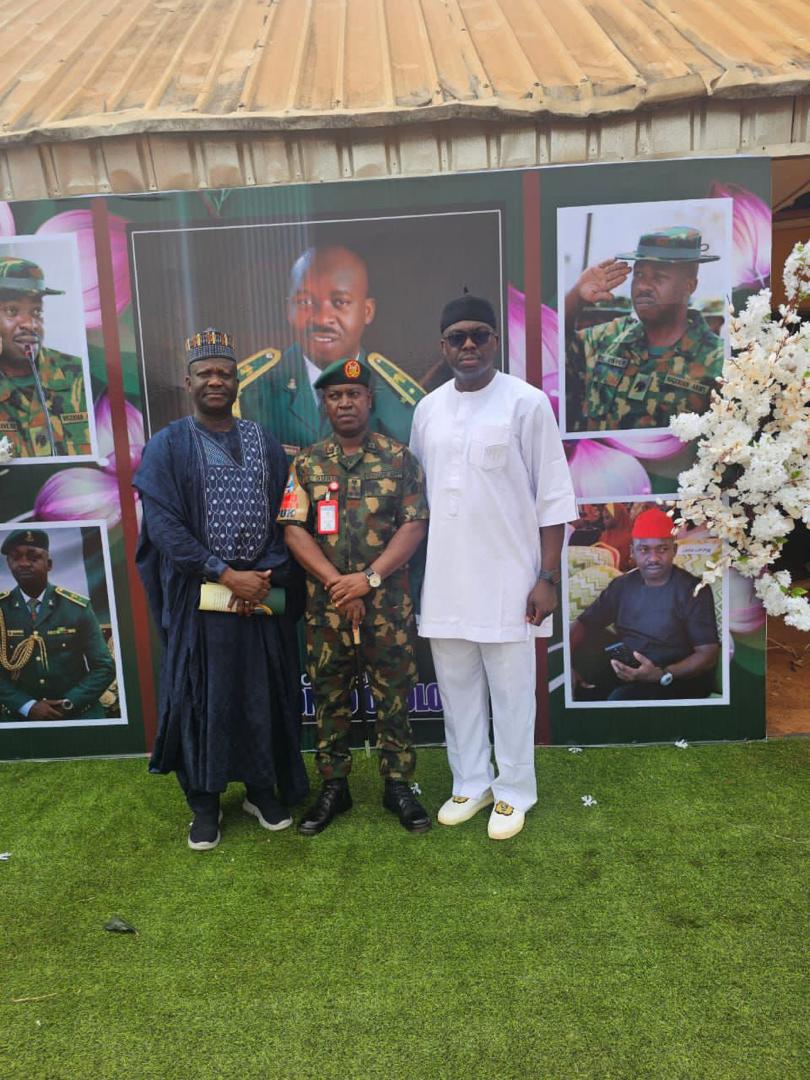
Zulum Donates ₦50m to Family of Fallen Officer, Reaffirms Support for Military Heroes
By: Michael Mike
Borno State Governor, Babagana Zulum has donated ₦50 million to the family of late Lieutenant Colonel OC Okolo, who was killed during a Boko Haram attack in Mandaragirau, Biu Local Government Area of Borno State, on February 16, 2026.
The gesture comes amid a series of similar interventions by the governor, including a recent ₦150 million donation to families of three military officers who lost their lives in separate attacks across the state.
Zulum reiterated his administration’s unwavering commitment to supporting families of fallen soldiers, describing their sacrifices as invaluable to Nigeria’s security and unity. He assured that his government would continue to identify with and assist families of personnel killed or declared missing in action in the ongoing counter-insurgency operations.
The donation was delivered at a funeral service held in Obinofia Ndiuno, Ezeagu Local Government Area of Enugu State on Firiday. The governor was represented by his Special Adviser on Security, Brigadier General Abdullahi Sabi Ishaq (Rtd), who presented the cash on behalf of the Borno State Government.
Speaking through his representative, Zulum expressed deep sorrow over the officer’s death.
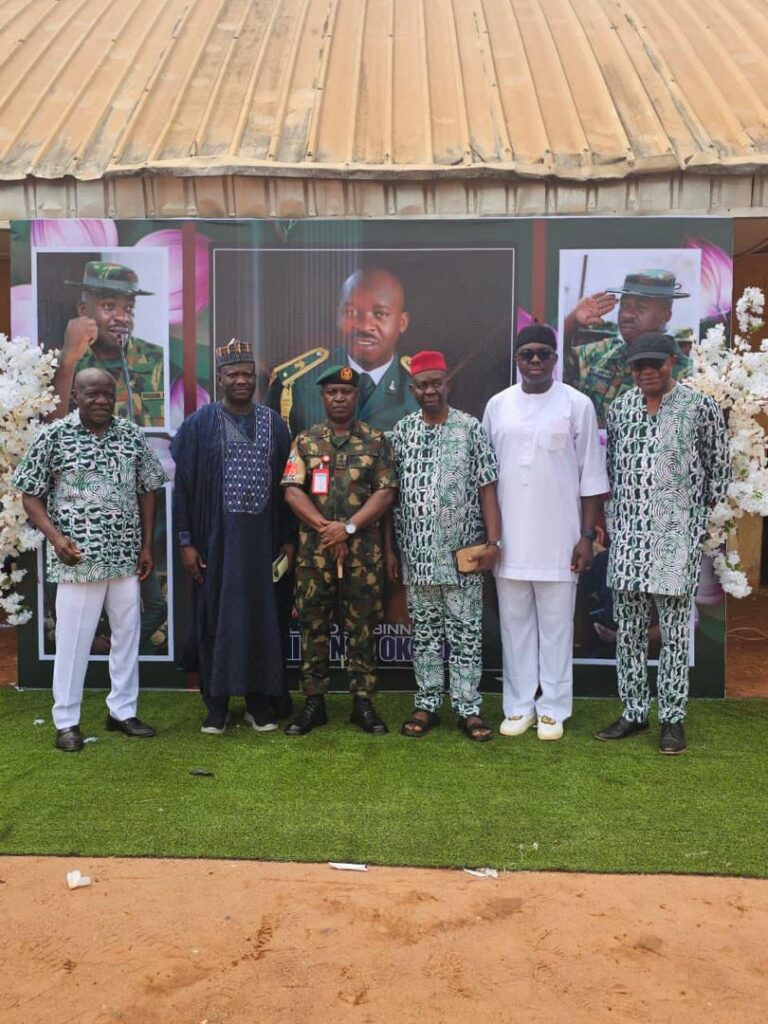
He said: “Lt. Col OC Okolo was a gallant, dedicated and committed officer of the nation whose contributions will not be forgotten,” while extending condolences to the family, friends, and colleagues of the deceased.
He also prayed for the repose of the late officer’s soul and for strength for the bereaved family.
Responding on behalf of the family, Stanley Okolo expressed profound gratitude to the governor for the support and solidarity shown during their time of grief.
@The family members were particularly touched by the cash donation and the delegation sent from Maiduguri to attend the funeral service despite the short notice,” he said.
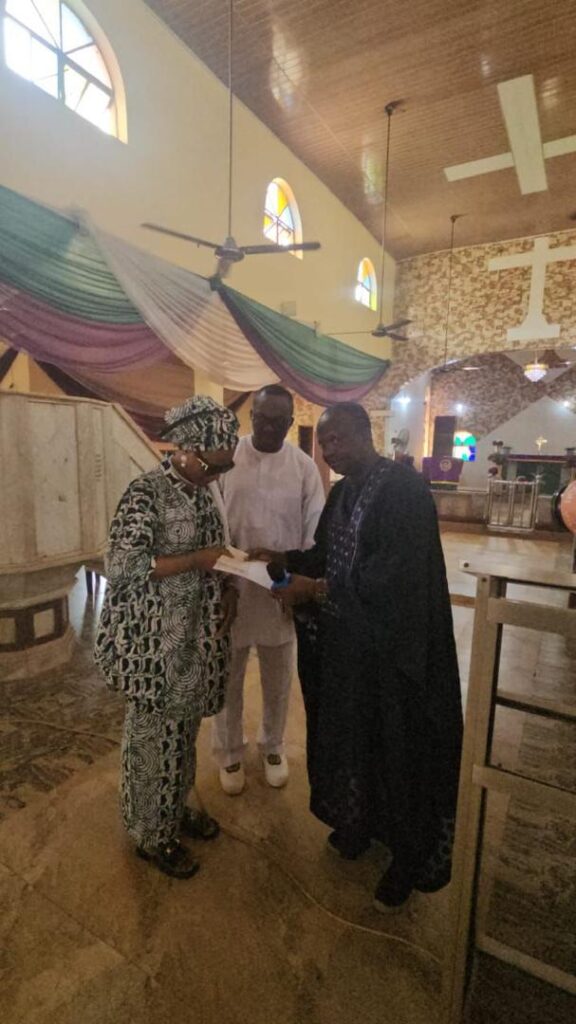
He further commended the Chief of Army Staff and the General Officer Commanding, 82 Division, for sending representatives to honour the late officer.
The funeral was attended by senior military representatives, including Brigadier General G.A. Suru, representing the Chief of Army Staff, and Brigadier General I.P. Omoke, who represented the Theatre Commander of Operation HADIN KAI, alongside members of the Nigerian Army Officers’ Wives Association (NAOWA) and the host community.
The donation underscores ongoing efforts by the Borno State Government to recognise and support the families of those who have made the ultimate sacrifice in Nigeria’s fight against insurgency.
Zulum Donates ₦50m to Family of Fallen Officer, Reaffirms Support for Military Heroes
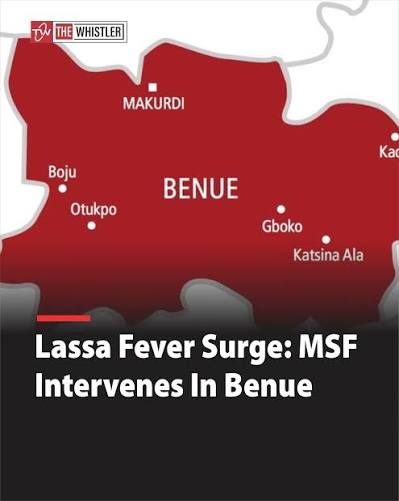
MSF Ramps Up Emergency Response as Lassa Fever Outbreak Deepens in Benue
By: Michael Mike
A worsening Lassa fever outbreak in Benue State has triggered an urgent intervention by international medical humanitarian organisation Médecins Sans Frontières (MSF), as rising infections and deaths place severe pressure on already stretched health facilities.
Working in collaboration with the Benue State Ministry of Health, MSF has deployed emergency teams to reinforce infection prevention and control (IPC) measures, following a surge in cases that has exposed critical gaps in healthcare safety systems—particularly affecting frontline workers.
Official data indicate that as of mid-March, the state recorded 410 suspected cases of Lassa fever, with 60 confirmed infections and 14 deaths. Disturbingly, 14 healthcare workers are among those infected, raising serious concerns about inadequate protective measures within treatment centres.
The situation reflects a broader national crisis. The Nigeria Centre for Disease Control and Prevention (NCDC) reports that Nigeria has recorded 167 deaths from Lassa fever in the first 13 weeks of 2026 alone, with a case fatality rate of 25.2 per cent—significantly higher than the 18.5 per cent recorded during the same period in 2025.
Benue State formally declared the outbreak on February 3, 2026, as infections escalated across communities in what is already recognised as one of Nigeria’s high-risk zones for the disease.
Lassa fever, an acute viral haemorrhagic illness endemic in Nigeria, typically peaks between November and April. It is primarily transmitted through contact with food or household items contaminated by infected rodents, but can also spread through direct contact with the bodily fluids of infected persons—making healthcare settings particularly vulnerable when safety protocols are weak.
Responding to the emergency, MSF launched a three-month intervention in March aimed at containing the outbreak and preventing further transmission. The mission was initiated at the request of state authorities, especially in light of rising infections among health workers and persistent shortages of personal protective equipment (PPE).
“Healthcare workers and patients are at significant risk when infection prevention measures are not fully in place,” said MSF Emergency Coordinator, Juniper Gordon. “Strengthening IPC and improving the organisation of care are critical to reducing transmission in health facilities.”
MSF teams are now providing hands-on support in selected facilities, focusing on strengthening clinical practices and improving patient management systems. This includes training healthcare workers on IPC protocols, reorganising triage processes, and establishing clearly defined high-risk and low-risk zones to limit cross-infection.
The organisation is also supplying essential materials, including PPE, hygiene kits, and sanitation supplies, while reinforcing waste management systems and infection control procedures. Handwashing stations are being installed across supported facilities, and surveillance efforts are being strengthened through improved data collection and monitoring.
In a move to support patient welfare, MSF is also providing food assistance to individuals in isolation centres, helping to ease the burden on affected families.
MSF said it is coordinating closely with global and national partners, including the World Health Organization, UNICEF, and the NCDC, to scale up response efforts and curb the spread of the disease.
Despite these interventions, public health experts warn that the outbreak underscores deeper systemic challenges in Nigeria’s healthcare system, particularly in infection control preparedness and rapid response capacity.
MSF Ramps Up Emergency Response as Lassa Fever Outbreak Deepens in Benue
Troops arrest 20 suspects, recover cash, electronics in Adamawa raid
By: Zagazola Makama
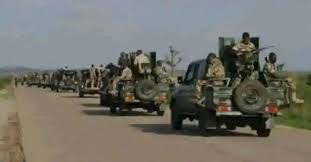
Troops of 232 Battalion (Tactical) have arrested 20 suspects and recovered cash and electronics during a raid on suspected criminal hideouts in Mubi North Local Government Area of Adamawa State.
Security sources said the operation was conducted at about 5:00 a.m. on April 10 in Agwan Rami and Agwan Mallam areas, following credible intelligence.
The sources disclosed that troops, in collaboration with local hunters, stormed the identified hideouts and apprehended the suspects.
“During the operation, 20 suspects were arrested in criminal hideouts, while others were picked up for loitering during curfew hours,” the source said.
Items recovered include seven mobile phones, eight touch lights, one ThinkPad laptop and the sum of ₦2,137,285, among other items.
The suspects are currently in custody for further investigation and necessary action.
The operation is part of ongoing efforts to curb criminal activities and enforce law and order in Adamawa State.
Troops arrest 20 suspects, recover cash, electronics in Adamawa raid

Zulum Donates ₦50m to Family of Fallen Officer, Reaffirms Support for Military Heroes

MSF Ramps Up Emergency Response as Lassa Fever Outbreak Deepens in Benue

Troops foil motorcycle snatching attempt, rescue victims in Kaduna

Roger Federer’s Shock as DNA Results Reveal Myla and Charlene Are Not His Biological Children

THE PLIGHT OF FARIDA

FAILED COUP IN BURKINA FASO: HOW TRAORÉ NARROWLY ESCAPED ASSASSINATION PLOT AMID FOREIGN INTERFERENCE CLAIMS
-
 News2 years ago
Roger Federer’s Shock as DNA Results Reveal Myla and Charlene Are Not His Biological Children
-
Opinions4 years ago
THE PLIGHT OF FARIDA
-
 News12 months ago
FAILED COUP IN BURKINA FASO: HOW TRAORÉ NARROWLY ESCAPED ASSASSINATION PLOT AMID FOREIGN INTERFERENCE CLAIMS
-

 News2 years ago
EYN: Rev. Billi, Distortion of History, and The Living Tamarind Tree
-
 Opinions4 years ago
POLICE CHARGE ROOMS, A MINTING PRESS
-

 ACADEMICS2 years ago
A History of Biu” (2015) and The Lingering Bura-Pabir Question (1)
-

 Columns2 years ago
Army University Biu: There is certain interest, but certainly not from Borno.
-

 Opinions2 years ago
Tinubu,Shettima: The epidemic of economic, insecurity in Nigeria
