
News
PLATEAU’S BLOODSHED AND THE HYPOCRISY OF SELECTIVE OUTRAGE – NO COMMUNITY IS ABOVE THE LAW

PLATEAU’S BLOODSHED AND THE HYPOCRISY OF SELECTIVE OUTRAGE – NO COMMUNITY IS ABOVE THE LAW
By: Zagazola Makama
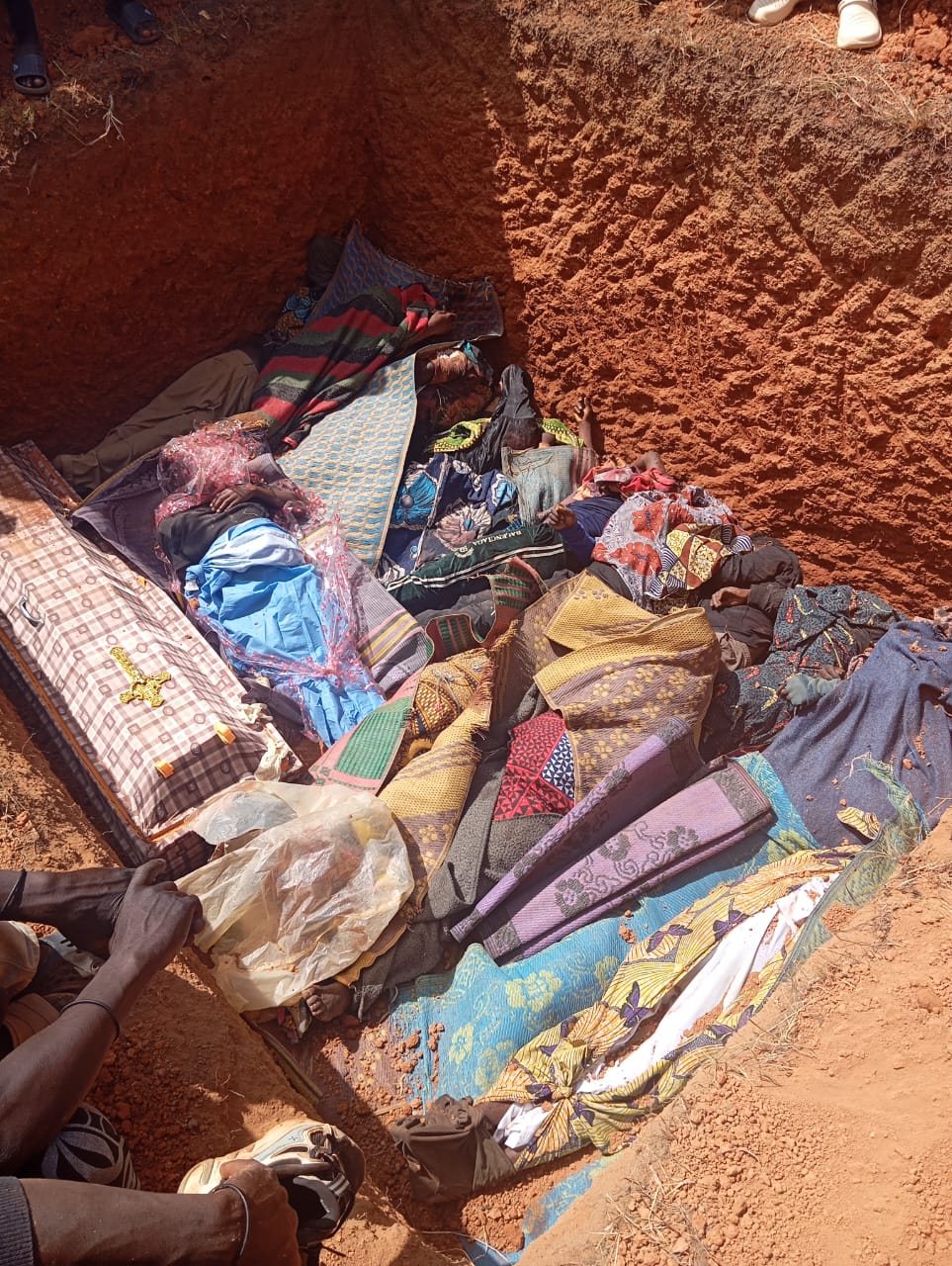
The latest killings of 17 peaceful residents in Tafi Gana, Miango District of Bassa Local Government Area, should not be treated as an isolated security incident. Neither should the tragedy be examined without considering the chain of violence, killings, cattle rustling and attacks on pastoral communities that preceded it.
What is unfolding in Plateau State is a dangerous cycle of organised terrorism, communal hostility, retaliatory violence and apparent failures of governance. It is a crisis in which armed groups are increasingly taking the law into their own hands, while political leaders, community authorities and other influential actors appear unable or unwilling to confront the criminals within their respective constituencies.
The killing of innocent residents in Tafi Gana deserves unequivocal condemnation. The victims were entitled to protection, regardless of their ethnic or religious identity. The Fulani terrorists responsible must be identified, arrested and prosecuted.
But justice cannot begin and end with the victims of the latest attack. There is a troubling pattern in the government, media and the public handling of Plateau’s security crisis, attacks against one community attract immediate condemnation, headlines, political statements and demands for action, while killings, cattle rustling and destruction of property suffered by another community often receive considerably less public attention.
The November 26 attack did not occur in a security vacuum. In the weeks and months preceding it, Fulani pastoral communities reported repeated attacks on their members, killings of herders, slaughter of cattle, mass livestock rustling and destruction of property across several local government areas by known militia groups in the state.
These incidents were documented by security agencies and appeared in the media, yet the level of public and political urgency surrounding them did not match the scale of the allegations.
On November 22, the Coalition of Fulani Registered Organisations in Plateau State publicly raised the alarm over what it described as sustained attacks against its members.
The coalition alleged that 95 Fulani people had been killed or injured between April and November 2026, while approximately 1,240 cattle had been stolen or killed.
It further alleged that more than 22 houses belonging to Fulani residents had been burnt or demolished, alongside the destruction or theft of vehicles, motorcycles, water pumps and other property.
The coalition also identified Bassa, Jos South, Jos East, Riyom, Barkin Ladi, Bokkos and Mangu as areas where its members had suffered attacks.
Early in November, Governor Mutfwang confronts the painful truth about cattle rustling and violence, Zagazola highlighted Mutfwang’s warning against cattle rustling, quoting him as saying, “You cannot rustle cows and bring death upon us. We will not accept it.” He warned that the government will not fold it arms and allow criminals to continue to cause havoc.
But despite the warnings, the scale of the reported livestock losses in November was particularly disturbing as the incidents reported illustrate the depth of the crisis.
On November 11, suspected Berom militia members reportedly attacked a herd of 44 cattle around Akawu, near Tanjol community in Riyom. Six cattle were reported dead, three slaughtered and eight injured.
On November 20, a Fulani herder, Alhaji Wada Abdullahi, was reportedly shot dead around Maraban Kantoma in Barkin Ladi by Berom Militia.
On November 21, four Fulani herders were reportedly killed in an attack on a pastoral settlement around the Mangu–Qua’an Pan axis, with more than 100 cattle rustled by same militia elements.
On November 22, suspected local militia members reportedly attacked Fulani settlements in Katul, Mangu Local Government Area, killing a herder, Abdulmumini Waje, and rustling 27 cattle. Another herder, Yakubu Ahmadu, reportedly escaped but lost 80 cattle and 40 sheep.
Around the same period, a herder identified as Musa Bappa was reportedly killed in Fusa Fursum, Jos East, while attackers escaped with livestock.
The November 23 attack at Ranwienku, Jebbu Miango, was particularly disturbing. Seventeen-year-old Abubakar Iliyasu was reportedly killed, 26 cattle were slaughtered or shot dead, more than 100 others were rustled, and another herder was reported missing.
These are not minor incidents that should disappear from public consciousness simply because the victims belong to a pastoral community. They involve human lives, livelihoods and the security of entire settlements.
The Coalition’s November 24 press conference and subsequent media reports brought some of these allegations into the national conversation.
But attacks against farming communities are equally indefensible
Objectivity also demands that the other side of the violence be confronted without hesitation.
On November 15, suspected armed Fulani bandits attacked Zuwakal village in Mangu Local Government Area, reportedly killing eight residents, including women and children, burning houses and rustling cattle.
On November 22, gunmen attacked Maket community in Qua’an Pan, killing two people, injuring another and burning three houses.
These attacks cannot be excused by citing previous killings of Fulani herders or cattle rustling. The victims in those communities were not responsible for the crimes allegedly committed against pastoralists elsewhere.
Likewise, the killing of Fulani herders cannot be justified by citing attacks attributed to armed Fulani groups.
This is precisely where the crisis has become particularly dangerous, some individuals and groups appear to have embraced collective punishment, treating entire ethnic communities as legitimate targets for the actions of particular criminals. Youths leaders, politicians and religious clergy’s have continued to use various platforms to push for attacks through rhetoric statements.
That mentality must be rejected unequivocally.
The Plateau State Government condemned the attack and said Governor Caleb Mutfwang had directed security operatives to take strategic measures to protect lives and property. It also appealed against reprisals, inflammatory statements and the circulation of unverified information. (Same statement all the time)
However, the government must go beyond statements of condemnation. Where were the preventive security measures or statements when Fulani herders were being killed and hundreds of cattle were reportedly disappearing? Where were the urgent investigations into the reported killings of pastoralists and the destruction of their settlements? Where are the arrests, prosecutions and recoveries of stolen livestock? And where is the transparent accounting of attacks against all communities?
The government cannot convincingly promise equal protection if its response appears to become most visible only after a major tragedy attracts national attention. The same standard of urgency must apply to every victim.
The dangerous politics of ethnic territorial control
One of the most disturbing dimensions of the Plateau crisis is the growing perception among sections of the affected communities that the conflict is no longer simply about individual criminal acts, but about who has the right to live, farm, graze livestock and control territory.
There are allegations and fears that some local armed elements believe that sustained attacks, cattle rustling and intimidation can eventually force Fulani pastoralists out of parts of Plateau State. On the other side, there are indications of growing anger among Fulani pastoral communities, with some individuals expressing determination to retaliate whenever their members or livestock are attacked.
Neither position is acceptable. No ethnic group has the right to forcibly remove another Nigerian community from its lawful place of residence or existence through violence. Equally, no community has the right to organise armed reprisals against innocent people because members of its own group have suffered attacks.
The danger is that criminal elements are increasingly exploiting these sentiments to mobilise ethnic solidarity, recruit sympathisers and perpetuate violence under the guise of protecting their communities. If these tendencies are not confronted with transparency, Plateau risks becoming a full blown theartre of war where every killing creates a justification for another killing, every stolen cow becomes another grievance and every reprisal produces another generation of victims. They are gradually normalization killings and criminality.
The Plateau State Government, under Governor Caleb Mutfwang, must recognise that issuing statements after attacks is not the same as providing security. The government has a constitutional responsibility to protect every resident, whether Fulani, Berom, Irigwe, Mwaghavul, Tarok or any other community.
It must demonstrate that responsibility through measurable action. The government must therefore stop treating militia groups with kid gloves and must take a more decisive interest in the situation.
If the government are serious about ending insecurity in Plateau state, they must establish an impartial investigative mechanism to examine all reported killings, cattle rustling, arson, displacement and attacks on communities in Plateau State, including the allegations raised by Fulani organisations. Arrest perpetrators on all sides: Suspected Fulani gunmen, local militia members, cattle rustlers, kidnappers and individuals involved in organised reprisals must face investigation and prosecution. No ethnic or political protection should shield anyone.
The government should establish a livestock recovery operation, investigate reported cattle thefts and identify the markets, routes and criminal networks through which stolen animals are moved and sold. Authorities should investigate those supplying weapons, funding armed groups, providing intelligence for attacks or inciting communities to violence.
Political figures, community leaders, social media influencers and other individuals who knowingly mobilise people for ethnic attacks or encourage reprisals should be investigated and dealt with in accordance with the law. While victims of attacks, irrespective of their identity, should receive appropriate assistance, while displaced families should be supported to return safely to their homes and livelihoods.
Politicians and traditional leaders must choose peace over ethnic mobilization
Plateau’s political and traditional leadership cannot continue treating security incidents as opportunities to defend ethnic constituencies.
They will never tell the truth to their own people. Today if you want to win elections in Plateau just come out and tell them that you will do anything in your power to eliminate all the fulani’s or send them packing in Plateau. A leader who condemns the killing of his own people but remains silent when another community suffers the same fate is contributing to the atmosphere of distrust.
Traditional rulers must take responsibility for identifying criminal elements within their areas of influence and cooperating with security agencies.
Political officeholders must stop protecting individuals because of their ethnic, religious or political connections. Community organisations must also understand that representing the grievances of their people does not give them a licence to defend criminals or promote collective blame.
The same applies to Fulani leadership. Those who claim to represent pastoral communities must publicly reject retaliatory violence, discourage armed mobilisation and cooperate with authorities to identify individuals involved in attacks Nobody should be allowed to hide behind the language of self-defence to justify the murder of innocent people.
The international community must pay attention to all victims
There is also a need for human rights organisations, civil society groups and international partners to broaden their engagement with the Plateau crisis.
Investigations must not be restricted to incidents involving one ethnic or religious community. The is what we only see from NGOs like equipping the persecuted. The only incidents that mattered to the NGO is the one that only affect those they described as Christians. The NGO simply focused more attention in using the plateau crises as an avenue of generating funding abroad rather than engaging in peaceful building initiatives.
The alleged killing of Fulani pastoralists, destruction of their settlements and mass cattle rustling deserve the same independent scrutiny as attacks on farming communities.
Similarly, killings attributed to suspected Fulani gunmen must be investigated without hesitation.
Human rights are universal. They cannot be distributed according to ethnicity, religion or political influence. The absence of sustained attention to some victims creates a dangerous impression that certain lives matter less than others. That perception must be corrected.
What is happening in Plateau State is no longer adequately explained by the familiar description of farmer-herder conflict. The recurring killings, organised cattle rustling, attacks on settlements, destruction of property and retaliatory operations point to a serious criminal security crisis that is being sustained by ethnic hostility, impunity and failures of accountability.
The Fulani cannot collectively be blamed for the crimes of armed Fulani gunmen. The Berom, Irigwe, Mwaghavul or any other community cannot collectively be blamed for the actions of individuals accused of militia violence.
The solution is not to drive one community out of Plateau or allow another to establish territorial dominance through violence.
Zagazola is a Counter Insurgency Expert and Security Analyst in the Lake Chad region
PLATEAU’S BLOODSHED AND THE HYPOCRISY OF SELECTIVE OUTRAGE – NO COMMUNITY IS ABOVE THE LAW


2027 Elections: NHRC, KAS Unveil Safety Handbook for Journalists
By: Michael Mike
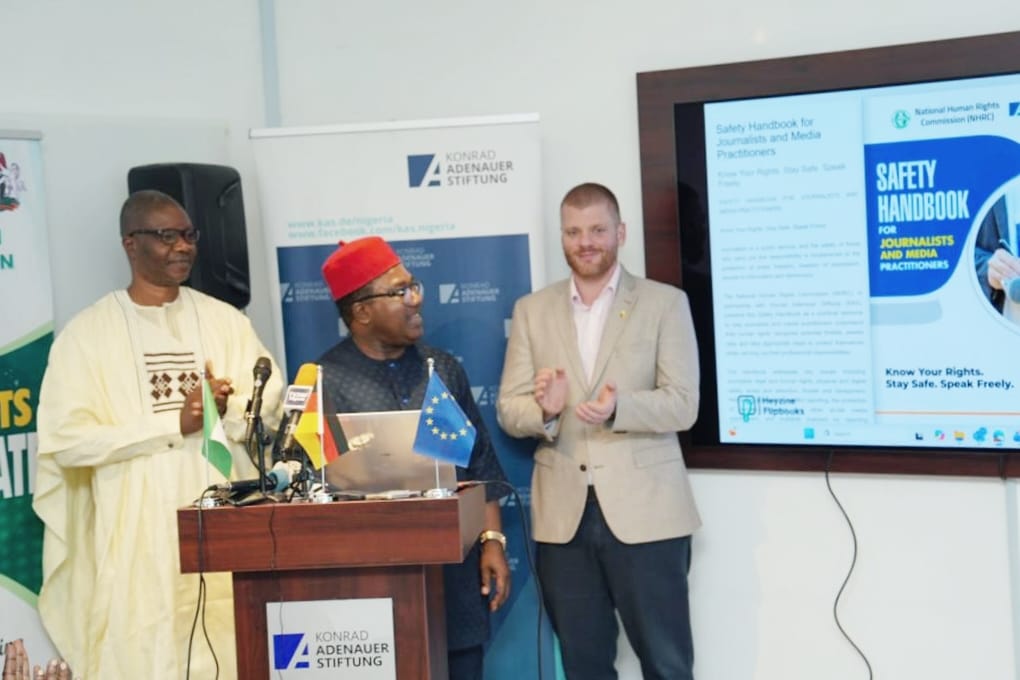
The National Human Rights Commission (NHRC) and the Konrad-Adenauer-Stiftung (KAS) have unveiled a safety handbook for journalists and media practitioners to strengthen protection of media professionals and promote responsible reporting ahead of Nigeria’s 2027 general elections.
The handbook was launched at a joint breakfast meeting for journalists in Abuja, which examined the duties, rights and responsibilities of media practitioners reporting elections in conflict-prone areas.
The engagement, themed “Reporting Elections and the Protection of Democratic Participation in Conflict-Prone Areas: The Duties, Rights and Responsibilities of Journalists,” underscored the importance of safe, accurate, ethical and responsible journalism in protecting democratic participation, particularly in the build-up to the 2027 elections.
Speaking at the event, the Country Representative of KAS, Moritz Sprenker, described the safety of journalists as a fundamental pillar of democracy, stressing that the protection of media professionals should not be treated as a concern exclusive to the journalism profession.
He said professional journalism remained critical to separating verified information from rumours, misinformation and manipulation, particularly during periods of political tension, violence and conflict.
“The rights, protection, and safety of journalists are therefore not concerns of the media profession alone. They are questions concerning democracy itself,” Sprenker stated.
He, however, emphasised that press freedom must be exercised alongside professional responsibility, noting that journalists covering conflict-prone environments must carefully consider the implications of their reports, images and information on the safety of individuals and communities.
According to him, the handbook brings together two fundamental principles of journalism — the freedom to report and the right of journalists to carry out their professional duties safely and responsibly.
The Executive Secretary of the NHRC, Tony Ojukwu, OFR, SAN, reaffirmed that journalists’ safety was indispensable to democracy, credible elections and the protection of fundamental human rights.
Ojukwu said journalists’ rights to life, dignity, personal liberty, freedom of expression and press freedom were guaranteed under Sections 33, 34, 35, 39 and 22 of the 1999 Constitution of Nigeria, as amended.
He described the handbook as a practical guide intended to equip media practitioners with knowledge of their rights, preventive safety measures and appropriate responses to threats, intimidation and attacks encountered in the course of their professional responsibilities.
The NHRC boss urged journalists, media proprietors and security agencies to adopt and utilise the handbook, stressing the need for collective efforts to create a safer environment for journalism and strengthen respect for human rights.
Delivering the keynote address, Jide Ojo urged journalists to uphold the highest standards of accuracy, fairness, professionalism and ethical conduct, noting that press freedom must be accompanied by accountability and responsible public communication.
He commended the NHRC for producing the handbook, describing it as a timely and valuable resource, particularly for journalists covering sensitive assignments and beats where they are exposed to heightened security risks.
Participants at the meeting welcomed the initiative and pledged to uphold professional and responsible reporting, while commending the NHRC and KAS for providing practical guidance to help media practitioners navigate the risks associated with their work.
The NHRC and KAS reaffirmed their commitment to sustained collaboration towards credible elections, peaceful democratic participation, accountability and the protection of journalists, insisting that no media practitioner should face attacks, intimidation or threats for performing legitimate professional duties.
2027 Elections: NHRC, KAS Unveil Safety Handbook for Journalists
News
ISLAMIC STATE MILITANTS KILL 32 NIGER GUARDSMEN IN SANAM CAMP ATTACK, 22 OTHERS CRITICALLY INJURED
ISLAMIC STATE MILITANTS KILL 32 NIGER GUARDSMEN IN SANAM CAMP ATTACK, 22 OTHERS CRITICALLY INJURED
By: Zagazola Makama
At least 32 soldiers of the Nigerien National Guard have been killed and 22 others, including three civilians, critically injured following an attack by Islamic State in the Sahel (IS-Sahel) militants on a military camp in Sanam, Tillabéri Region of Niger Republic.
A military source told sources that the attack occurred in the early hours of Thursday, Nov. 26, 2026, during the morning flag-raising ceremony, when the guardsmen were assembled for the parade.
The source said the assailants launched a surprise assault on the camp, overwhelmed the troops and subsequently took full control of the military facility.
The attackers reportedly carted away two military vehicles, weapons and ammunition before withdrawing from the area.
They also reportedly proceeded to the residence of the traditional Islamic leader, the Sheikh of Sanam, but could not find him as he was away on a trip at the time of the attack.
The attackers reportedly carted away two military vehicles, weapons and ammunition before withdrawing from the area.
They also reportedly proceeded to the residence of the traditional Islamic leader, the Sheikh of Sanam, but could not find him as he was away on a trip at the time of the attack.
The casualty figure provided by the military source is significantly higher than the official account released by Niger’s Ministry of National Defence.
In a provisional statement broadcast on state television, the ministry reported that 13 National Guard personnel were killed and 20 others injured, some of them critically.
The ministry also claimed that troops neutralised several attackers and destroyed their logistical infrastructure during the engagement.
Meanwhile, later the same day, another military unit belonging to the Paratroopers Company was reportedly attacked along the Gothèye-Dargol axis.
As of Friday morning, no official casualty figure had been established for the second incident.
The Sanam attack came barely two days after another deadly ambush in Baroua, Diffa Region, where 11 Nigerien soldiers were killed in an attack attributed to Boko Haram terrorists.
With the two incidents, at least 43 military personnel have reportedly been killed across the two operational fronts within one week, according to field casualty assessments.
The significant discrepancy between the military source’s account and the official casualty figures has raised fresh concerns over transparency in reporting military losses and the true scale of casualties suffered by Nigerien security forces.
ISLAMIC STATE MILITANTS KILL 32 NIGER GUARDSMEN IN SANAM CAMP ATTACK, 22 OTHERS CRITICALLY INJURED
News
Scores Killed in Tafi Gana Attack as November Bloodshed Deepens Amid Tit-for-Tat Violence Between Fulani Herders and Local Militias in Plateau
Scores Killed in Tafi Gana Attack as November Bloodshed Deepens Amid Tit-for-Tat Violence Between Fulani Herders and Local Militias in Plateau
By: Zagazola Makama
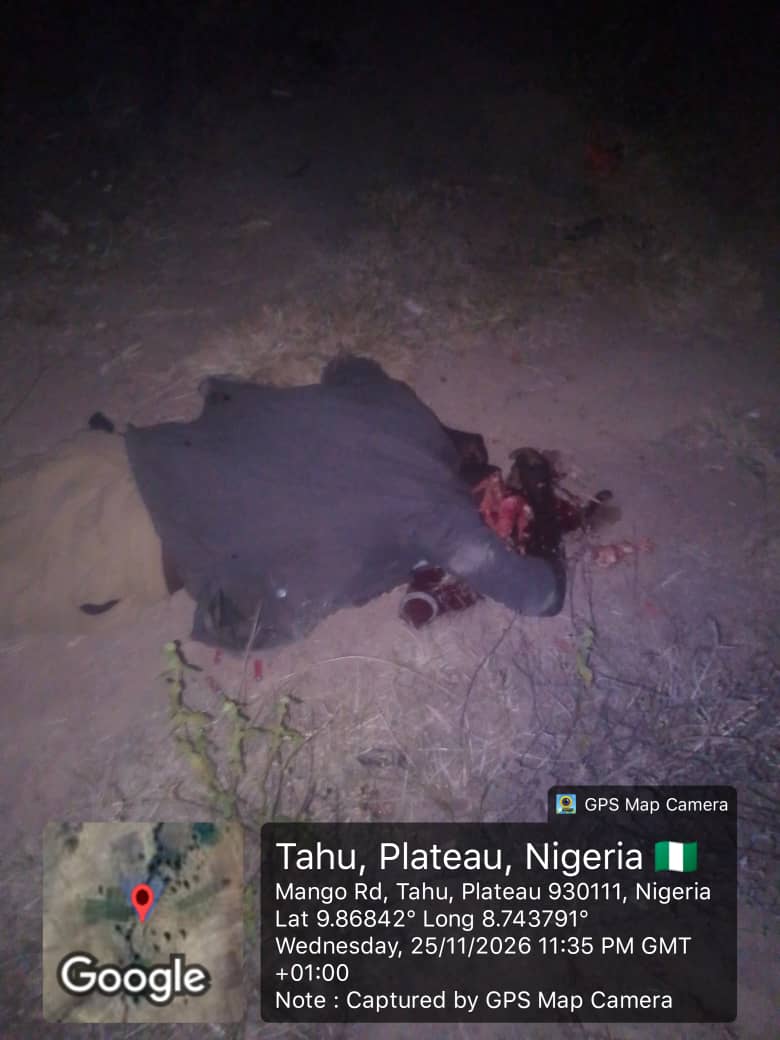
Suspected Fulani Bandits have killed scores of residents and injured three others in a midnight attack on Tafi Gana community in Bassa Local Government Area of Plateau State, in the latest incident in an escalating cycle of violence involving Fulani pastoralists, local militia groups and farming communities.
The attack occurred at about 12:10 a.m. on Thursday, November 26, when armed men reportedly stormed the community and opened sporadic fire on residents.
Security sources told Zagazola Makama that troops of Sector 3, Operation Enduring Peace (OPEP), deployed at DTV, swiftly responded to reports of the shooting.
On arrival, the troops discovered that seven residents had initially been killed, while three others sustained gunshot injuries. Some locals including youth leaders later reported that the numbers of death had risen to 17.
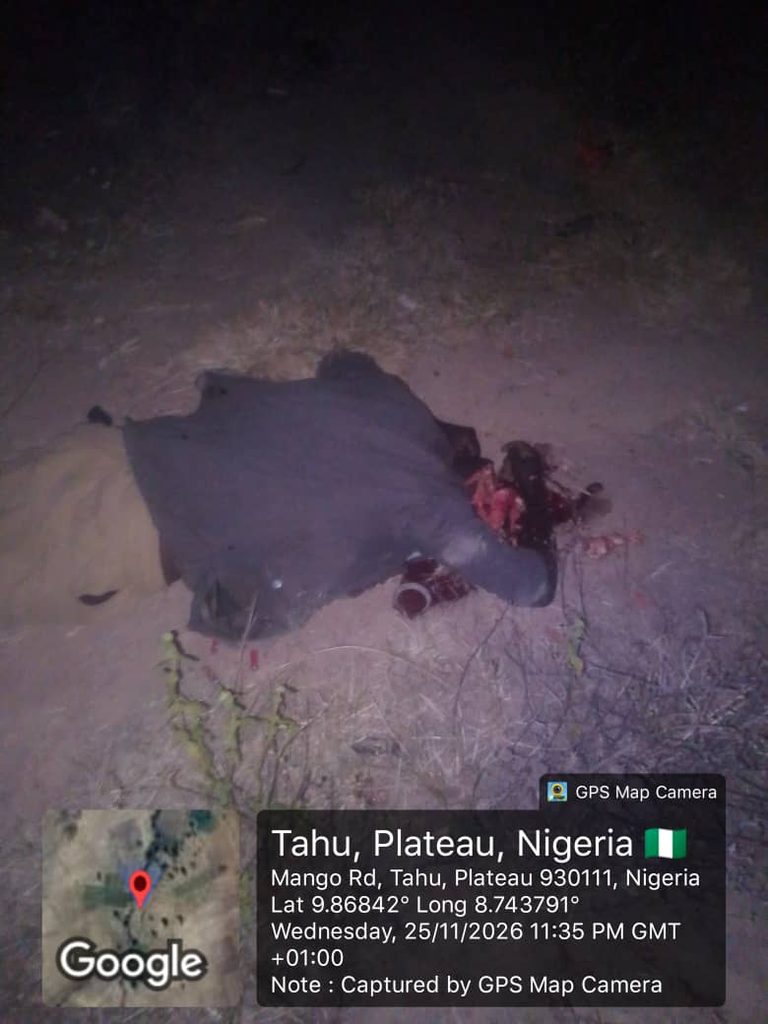
The injured victims were evacuated to the 3 Division Military Hospital for treatment, while troops dominated the area with offensive operations and launched a manhunt for the fleeing attackers.
The attack represents another dangerous escalation in a month that has witnessed repeated killings of herders and farmers, attacks on Fulani settlements, cattle rustling, destruction of livestock, farmland disputes and reprisal attacks across several local government areas of Plateau State.
A review of reported security incidents between November 3 and 26 shows that neither side has been spared from the violence.
November 3 – Rachas, Barkin Ladi, An 18-year-old vigilante member, Divine Dung Davou, was killed during a midnight attack on Rachas village in Heipang District of Barkin Ladi LGA. The killing was among the first reported deadly incidents in the November wave of violence.
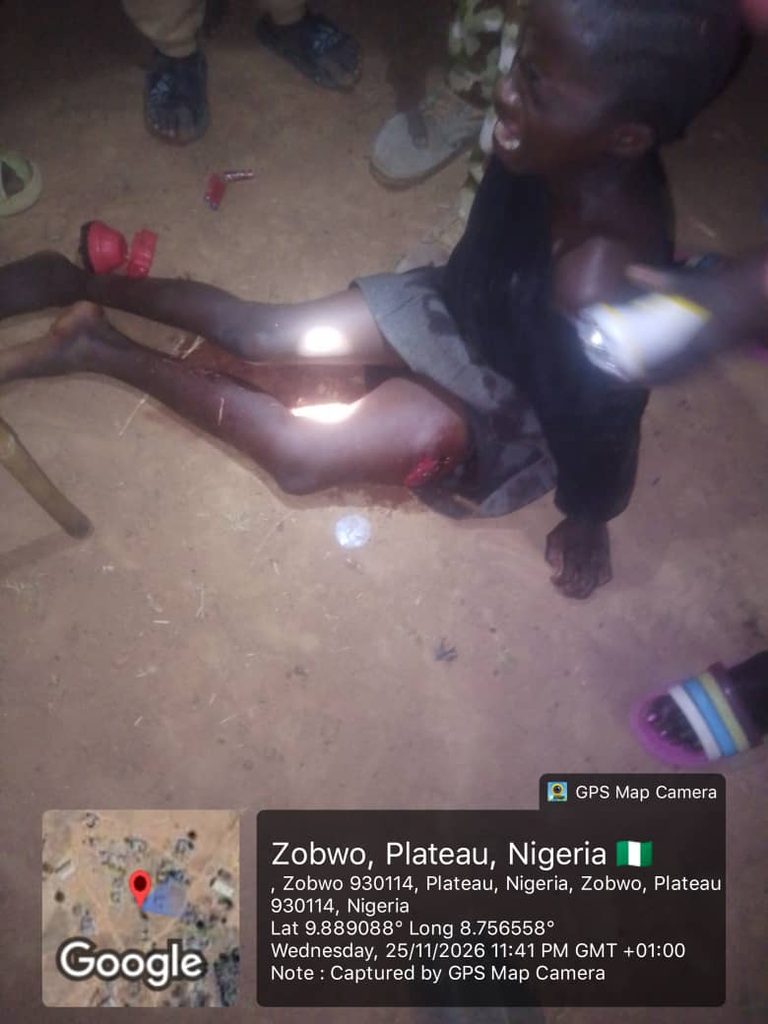
November 5 in Tafawa, Riyom Two Fulani herders were reportedly killed by Berom Militia in an attack around Tafawa community in Riyom LGA, while several cattle were also killed.
November 9 in Bel, Barkin Ladi, Gunmen suspected to be Fulani, attacked Bel village in Sho community, Barkin Ladi LGA, killing a soldier and three farmers. Several other people sustained injuries. The attack further heightened insecurity in the area.
In November 10, in Jol, Riyom, At least three miners were killed when gunmen attacked a mining site in Jol community, Riyom LGA. It was suspected that the fulani armed group carried out the attack as the incident formed part of the wider wave of violence recorded across Riyom and neighbouring communities.
November 10–11 in Ruga Kimba, Barkin Ladi, Suspected Berom militiamen reportedly attempted to attack Ruga Kimba Fulani settlement in Sho community, Barkin Ladi LGA.
Troops of OPEP intervened, forcing the attackers to flee and rescuing a gunshot victim.
Same day, November 11 at Akawu village in Riyom LGA, suspected Berom militia members reportedly attacked a herd of 44 cattle at Akawu, near Tanjol community in Jol Ward, Riyom LGA.
The incident left six cattle dead, three slaughtered and eight injured. The attack further aggravated tensions over the safety of livestock belonging to Fulani pastoralists.
Two days after, November 13 in Fawo community in Bokko, an attack was reported at Fawo village in Mbar District, Bokkos LGA, where a farmer was injured. Troops rescued the injured farmer and arrested a suspect in connection with the incident.
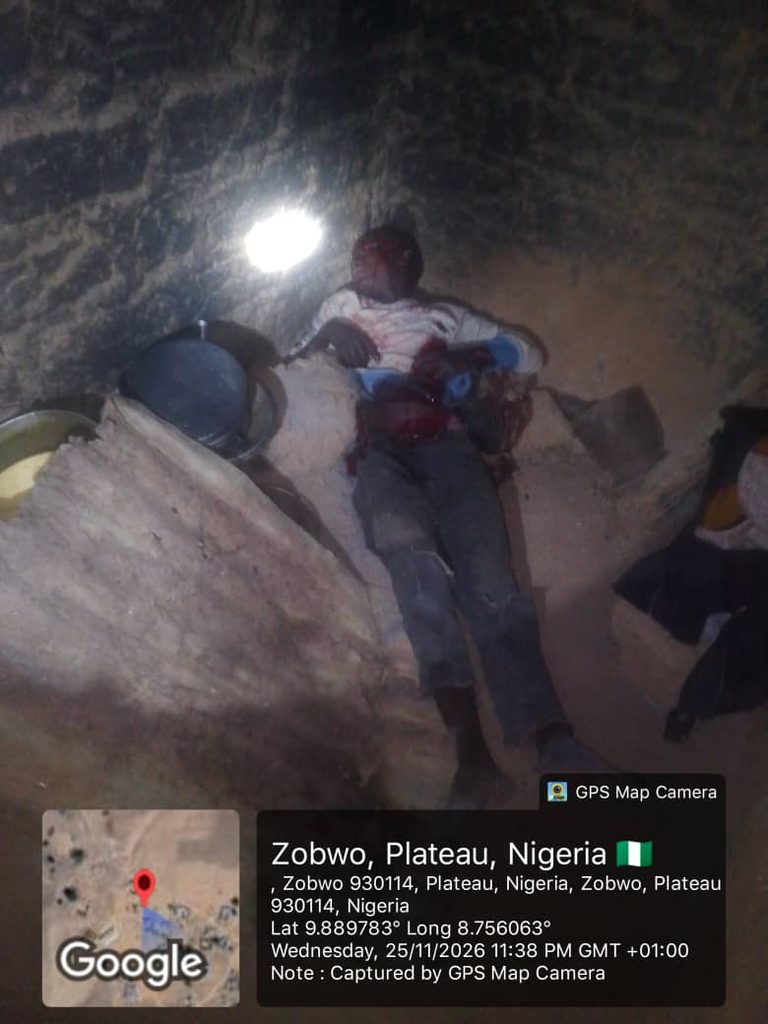
November 13 in Bassa farmland dispute, troops recovered a motorcycle allegedly abandoned by herders who fled after his cattle destroyed tomato crops belonging to a local farmer in Bassa LGA.
November 13–14 in Sho and Tafawa villages,
at least two herders and two farmers were reportedly killed in separate attacks around Sho community in Barkin Ladi and Tafawa in Riyom.
The killings demonstrated how violence was increasingly affecting both pastoral and farming communities.
November 15–16 – Zuwakal, Mangu
Suspected armed Fulani bandits launched a deadly attack on Zuwakal village in Jipal District of Mangu LGA. The attack occurred at about 11:45 p.m. on November 15, leaving at least eight residents dead, several houses burnt and 18 cattle rustled. Troops of Sector 8, OPEP, responded and recovered eight bodies, including men, women and children. The attackers reportedly escaped through Jibial towards Nasarawa State.
November 15 in Bong, Qua’an Pan
Plateau local militiamen attacked fulani community in Bong in Doemak District of Qua’an Pan LGA, burning seven houses. The attack prompted the local government chairman to impose a dusk-to-dawn curfew in the affected district to prevent further violence.
In November 16, at Sambak, Sho and Jol, further attacks were reported in Sambak community, Hoss District of Riyom, and Sho community in Barkin Ladi. In Sambak, 42-year-old Dauda John Davou was killed, while 79-year-old Ishaku Pam Vwos was killed in Sho.
Fulani bandits also attacked Jol community, but local vigilantes reportedly responded and prevented further casualties.
On the same day, Joshua Doro Dafwel was shot in Jol, while Ina Arin was killed in an ambush by fulani armed men as he and his friend, Abok Gyang, were returning to Dorong village. Gyang reportedly escaped.
November 19 saw another incidents in Jebbu Miango, Bassa as troops intercepted 30 cattle allegedly involved in the destruction of farmland at Jebbu Miango. The herders reportedly fled upon sighting the troops, who moved the livestock to a safe location pending further action.
In November 20 at Maraban Kantoma in Barkin Ladi, a Fulani herder, identified as Alhaji Wada Haruna, 45, was reportedly shot dead while attending Juma’at prayers around Maraban Kantoma in Barkin Ladi. MACBAN’s Plateau chairman, Ibrahim Yusuf Babayo, alleged that suspected Berom militia members were responsible.
November 20, at Telengpat in Mangu, troops intervened after cattle allegedly destroyed guinea corn farmland at Telengpat community in Mangu LGA. The soldiers intercepted 45 cows and six rams grazing on the farmland without their herders in sight. Fulani leaders were contacted to identify the owners and facilitate an amicable resolution.
November 20 at Maraban Kantoma, Barkin Ladi
Another incident involving the Fulani community was reported following the killing of Alhaji Wada Abdullahi by Berom Militiamen. The Fulani coalition subsequently alleged that more than five houses were burnt in the community during subsequent security activities, an allegation requiring an independent investigation.
In November 21 at Mangu/Qua’an Pan border,
Four Fulani herders were reportedly killed when local militiamen invaded a pastoral settlement around the Mangu-Qua’an Pan border.
More than 100 cattle were reportedly rustled.
The incident was disclosed by the Coalition of Fulani Registered Organisations and confirmed by the Plateau MACBAN chairman.
In November 22 at Katul in Mangu, suspected Mwaghavul militiamen attacked Fulani settlements in Katul, Jipal District, Mangu LGA, killing a 30-year-old herder, Abdulmumini Waje.
The attackers reportedly rustled his 27 cattle.
Another herder, Yakubu Ahmadu, 37, narrowly escaped but lost 80 cattle and 40 sheep.
The combined losses amounted to 107 cattle and 40 sheep.
In November 22 at Maket in Qua’an Pan, again Suspected local militia members attacked Maket community in Kwa District, Qua’an Pan LGA, killing two people, injuring another and burning three houses. Two cows were also reportedly killed. Troops of Sector 9, OPEP, responded and launched a manhunt for the attackers.
In November 22–23 – Fusa Fursum, Jos East
Suspected local militia members attacked Fulani Ruga in Fusa Fursum District of Jos East LGA, killing an 18-year-old herder, Musa Bappa.
The attackers reportedly escaped with an unspecified number of cattle. Troops, local hunters and vigilantes subsequently launched search operations around Kio and Ribung villages.
In November 23–24 in Ranwienku, Jebbu Miango, Bassa, a 17-year-old herder, Abubakar Iliyasu, was reportedly killed in an alleged attack by Irigwe militia at Ranwienku, Jebbu Miango.
At least 26 cattle were reportedly killed, while more than 100 others were rustled towards Kwall.
Another herder was reported missing, prompting security personnel to launch search operations.
In November 25 – Tenti, Bokkos, suspected Berom militia members reportedly attacked a herder identified as Alhaji Musa on the outskirts of Tenti village, stealing 24 cattle. Troops of Sector 5, OPEP, launched search operations alongside the affected herder to recover the livestock.
In November 25 in Rakum village in Barkin Ladi
Suspected Berom militiamen reportedly shot dead a cow belonging to a herdsman, Alhaji Auwal Tayo. The incident added to growing complaints by pastoralists over attacks on their livestock.
November 25, in Zerenvi, Bassa Troops of OPEP launched efforts to track down suspected herders following the destruction of farm crops in Zerenvi village. The incident further illustrated the continuing friction over grazing and farming activities.
In November 26, at Tafi Gana, Bassa,
The latest attack occurred at Tafi Gana community, where suspected Fulani militias scores of residents and injured three others.
Troops of Sector 3, OPEP, responded and launched offensive operations and a manhunt for the attackers.
The Coalition of Fulani Registered Organisations in Plateau State, at a press conference in Jos on November 22, alleged that at least 95 Fulani people had been killed or injured between April and November 2026. The coalition also claimed that approximately 1,240 cattle had been rustled, shot or killed, while more than 22 houses belonging to Fulani communities had been burnt or demolished.
It identified Bassa, Jos South, Jos East, Riyom, Barkin Ladi, Bokkos and Mangu as locations where the alleged incidents occurred.
The coalition called on President Bola Tinubu to establish an independent investigative panel to investigate the killings, cattle rustling and destruction of property.
The November incidents reveal a disturbing pattern in Plateau State. On one side, Fulani pastoralists have reported the killings of their members, attacks on settlements, slaughter of cattle and large-scale livestock rustling
On the other, farming communities have suffered deadly attacks attributed to suspected armed Fulani groups, including the November 15 attack on Zuwakal, where eight people were killed and houses burnt.
The attacks on farmers, miners, herders, vigilantes and livestock have created an increasingly volatile environment in which criminal incidents risk triggering further reprisals.
The latest Tafi Gana killings therefore come at a particularly sensitive moment, with communities already grieving their dead and security agencies struggling to prevent further escalation.
While the circumstances and motive behind the November 26 attack are still being investigated, the authorities must ensure that perpetrators of attacks on both Fulani pastoralists and farming communities are identified and prosecuted.
Collective punishment, ethnic profiling and retaliatory killings will only deepen the crisis.
Zagazola observation: Plateau cannot achieve lasting peace through selective condemnation of violence. The killing of a farmer must attract the same urgency as the killing of a herder. The slaughter of cattle and destruction of farms must be treated as serious security and economic crimes. Every victim deserves justice, irrespective of ethnic identity or occupation.
Scores Killed in Tafi Gana Attack as November Bloodshed Deepens Amid Tit-for-Tat Violence Between Fulani Herders and Local Militias in Plateau

2027 Elections: NHRC, KAS Unveil Safety Handbook for Journalists

ISLAMIC STATE MILITANTS KILL 32 NIGER GUARDSMEN IN SANAM CAMP ATTACK, 22 OTHERS CRITICALLY INJURED

PLATEAU’S BLOODSHED AND THE HYPOCRISY OF SELECTIVE OUTRAGE – NO COMMUNITY IS ABOVE THE LAW

Roger Federer’s Shock as DNA Results Reveal Myla and Charlene Are Not His Biological Children

THE PLIGHT OF FARIDA

FAILED COUP IN BURKINA FASO: HOW TRAORÉ NARROWLY ESCAPED ASSASSINATION PLOT AMID FOREIGN INTERFERENCE CLAIMS
-
 News3 years ago
Roger Federer’s Shock as DNA Results Reveal Myla and Charlene Are Not His Biological Children
-
Opinions5 years ago
THE PLIGHT OF FARIDA
-
 News2 years ago
FAILED COUP IN BURKINA FASO: HOW TRAORÉ NARROWLY ESCAPED ASSASSINATION PLOT AMID FOREIGN INTERFERENCE CLAIMS
-
 Opinions5 years ago
POLICE CHARGE ROOMS, A MINTING PRESS
-

 News3 years ago
EYN: Rev. Billi, Distortion of History, and The Living Tamarind Tree
-

 ACADEMICS3 years ago
A History of Biu” (2015) and The Lingering Bura-Pabir Question (1)
-

 Columns3 years ago
Army University Biu: There is certain interest, but certainly not from Borno.
-

 Politics1 year ago
2027: Why Hon. Midala Balami Must Go, as Youths in Hawul and Asikira/Uba Federal Constituency Reject ₦500,000 as Sallah Gift
