
News
Political turmoil in Madagascar, Cameroon underscores rising threat to democracy in Africa

Political turmoil in Madagascar, Cameroon underscores rising threat to democracy in Africa
By: Zagazola Makama
The recent coup in Madagascar and the disputed presidential election in Cameroon have once again drawn global attention to the growing fragility of democracy across Africa, amid worsening governance crises, corruption, and insecurity.
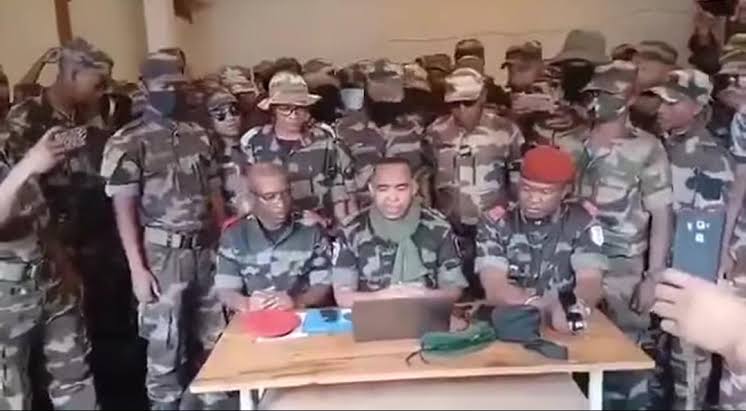
In Madagascar, soldiers of the elite Corps d’Administration des Personnel et des Services des Armées Terrestres (CAPSAT) on Oct. 11 staged a coup in the capital, Antananarivo, toppling President Andry Rajoelina’s government after weeks of military defections and anti-government protests.
The mutiny, led by Colonel Michael Randriannirina, followed mounting grievances over corruption, poor governance, and the lack of essential public services such as electricity and potable water. CAPSAT had previously played a decisive role in the 2009 coup that first brought Rajoelina to power.
Reports indicate that the president fled the country aboard a French military plane and has since released a statement claiming he remains the legitimate leader of Madagascar.
In the aftermath, the country’s top court ordered the junta to organize elections within 60 days. However, the new military leadership has announced plans to remain in power for two years before holding fresh polls, a move that has heightened tensions and uncertainty.
The international community has reacted cautiously. The African Union and Western governments have called for restraint and the immediate restoration of constitutional order. France, the former colonial power, has suspended all flights to Madagascar, while the United States advised its citizens to shelter in place. The United Nations has also expressed deep concern, urging respect for democracy and human rights.
Meanwhile, in Cameroon, political tension has escalated following the Oct. 12 presidential election, in which President Paul Biya, 92, sought an eighth term in office.
The main opposition candidate has declared victory and urged Biya to concede defeat “in the interest of truth and democracy.” However, the government has cautioned that only the Constitutional Council has the authority to announce official results.
Minister of Territorial Administration Paul Atanga Nji warned that any unauthorized declaration of results would amount to treason.
The election, observers say, has been marred by reports of irregularities, vote-buying, and intimidation. The ruling Cameroon People’s Democratic Movement (RDPC) continues to dominate the political landscape, having won all 70 senatorial seats in the March 2025 elections.
The opposition has accused the government of manipulating the electoral process, while insecurity persists in the Anglophone regions, where government forces and separatists continue to clash. The ongoing conflict has led to widespread displacement, restricted civil society activity, and human rights violations.
Analysts say the unfolding crises in Madagascar and Cameroon underscore a broader continental challenge, the steady erosion of democratic norms and resurgence of military interventions in Africa.
“The lack of a unified and firm response to coups has emboldened would-be coup leaders across the continent,” one regional security analyst told Zagazola.
Madagascar now joins a growing list of African nations under military rule, including Niger, Mali, Burkina Faso, Guinea, Chad, and Sudan. Experts warn that this trend threatens to undo decades of democratic progress and could destabilize already fragile regions.
“The combination of corruption, bad governance, and economic hardship has created a fertile ground for military intervention,” another observer noted, adding that militaries often justify coups as efforts to “restore stability” but tend to prolong transitions indefinitely.
External influences, including geopolitical rivalries and inconsistent responses from international organizations, have further complicated efforts to safeguard democratic governance.
The twin crises in Madagascar and Cameroon highlight the urgent need for African leaders to strengthen governance systems, promote accountability, and improve service delivery to regain public trust.
Failure to address these underlying issues, experts warn, could trigger further unrest, protests, or even coups in other parts of the continent.
“The future of democracy in countries like Madagascar and Cameroon hangs in the balance,” an African Union diplomat told Zagazola. “Without decisive leadership, these nations risk sliding deeper into instability.”
The African Union, regional blocs, and international partners are now under pressure to take coordinated action to deter future coups and support credible democratic transitions.
Africa’s path to stability depends on transparent governance, respect for the rule of law, and inclusive development, the true foundations of peace and democratic resilience.
Political turmoil in Madagascar, Cameroon underscores rising threat to democracy in Africa


Suspected Fulani Bandits Kill 19-Year-Old, Injure Two in Plateau Attack
By Zagazola Makama
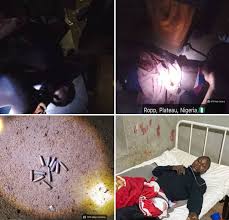
Suspected Fulani Bandits have killed a 19-year-old woman and injured two others in an attack at Gana Ropp village in Barkin Ladi Local Government Area of Plateau State.
Credible security sources told Zagazola Makama that the incident occurred at about 10:45 p.m. on Aug. 14, when troops of Sector 4, Operation ENDURING PEACE (OPEP), responded to a distress report of an attack in the community.
The troops arrived at the location and found that the assailants had shot dead Miss Asamau Saleh, 19.
Two other victims, identified as Aminu Saleh, 26, and Stephen Monday, 28, sustained gunshot wounds during the attack.
The injured victims were evacuated by the troops and taken to the Barkin Ladi General Hospital for medical attention.
Security personnel have commenced a manhunt for the attackers, while efforts are ongoing to establish the circumstances surrounding the incident and identify those responsible.
The latest attack illustrates the continued security challenges in parts of Plateau State, resulting from farmers and herders crises, where security forces have sustained operations to protect vulnerable communities and prevent further attacks.
Suspected Fulani Bandits Kill 19-Year-Old, Injure Two in Plateau Attack
News
Zagazola Media Hails Army for Reinstating Zamfara Cadet Cleared of Indigene Certificate Allegation
Zagazola Media Hails Army for Reinstating Zamfara Cadet Cleared of Indigene Certificate Allegation
By: Zagazola Makama
The Nigerian Army has reinstated Habila Ezra, a Direct Short Service Course cadet who was withdrawn from training over allegations that he submitted a forged Zamfara State certificate of indigeneship.
Credible sources informed Zagazola Makama that Habila has returned to the training institution and resumed military training following a review of his case by the Army authorities.
Investigations into the matter exonerated Habila Ezra of all the allegations and confirmed that the certificate of indigeneship he submitted was genuine.
The findings established that he is a Hausa indigene of Salankawa Ward in Bungudu Local Government Area of Zamfara State.
Family and community records identified him as a son of the late Ezra Mohammed Dawa, a member of the larger Dawa family in Bungudu. His mother, Indo Mohammed Bawa, was also identified as an indigene of Tsafe Local Government Area of the state.
He attended primary and secondary schools in Zamfara State.
He later proceeded to the Nigerian Army University, Biu, in Borno State, where he graduated with a degree in cybersecurity. He subsequently completed his National Youth Service Corps programme.
At the time he applied for and was selected to join the Direct Short Service Course, Habila was pursuing postgraduate studies in cybercrime at the Nigerian Defence Academy.
Zagazola Makama further gathered that suspicions about Habila’s identity arose following protests reportedly made by some unsuccessful candidates in March 2026. The matter later resurfaced in July, months after he had made significant progress in his training.
The candidates allegedly argued that the names “Ezra” and “Habila” were not associated with indigenous people of Zamfara State. Sources said the objections appeared to question, on religious grounds, the existence and indigene status of Christian communities in the state.
Subsequent investigations and verification by the relevant authorities, however, confirmed Habila’s identity, family background and ancestral ties to Zamfara State.
The investigations found no evidence that he forged the certificate or knowingly presented a false document during screening for the Army’s 2026 Direct Short Service Course.
Sources said an error during the initial verification of the certificate further compounded the controversy. Additional checks established that the document was genuinely issued by Bungudu Local Government Area.
Following the findings, the Army authorities reviewed the circumstances surrounding Habila’s withdrawal and directed him to return to training.
The Zagazola Makama Media Network commended the Nigerian Army for reviewing the case and reinstating the cadet, describing the decision as a demonstration of fairness, justice and institutional accountability.
The network also praised the Army authorities for acting on the findings of the investigation and ensuring that Habila’s military ambition was not derailed by allegations found to be unsubstantiated.
Habila has since resumed training, bringing an end to the controversy surrounding his admission into the military programme.
As a matter of principle and conviction, the Zagazola Makama Media Network reaffirmed its commitment to exposing injustices arising from religious and ethnic extremism, profiling, stereotyping and harmful generalisations. It also pledged to challenge practices that shield individuals whose actions undermine justice and societal progress.
Zagazola Media Hails Army for Reinstating Zamfara Cadet Cleared of Indigene Certificate Allegation
Girl Child Education Paramount To Nation Building, First Lady Emphasises
** *Commissions renovated High School for Girls in Lagos
By: Our Reporter
The First Lady of Nigeria, Senator Oluremi Tinubu @SenRemiTinubu, has commissioned the renovated Alternative High School for Girls in Agboju, Amuwo-Odofin local government area of Lagos State, insisting that education for the girl child is paramount to nation building.
The school, established in 2007 during the tenure of President Bola Ahmed Tinubu as governor of Lagos State, was created to provide girls whose education had been interrupted by early pregnancy and other socio-economic challenges with an opportunity to return to school, complete their secondary education and acquire vocational skills.
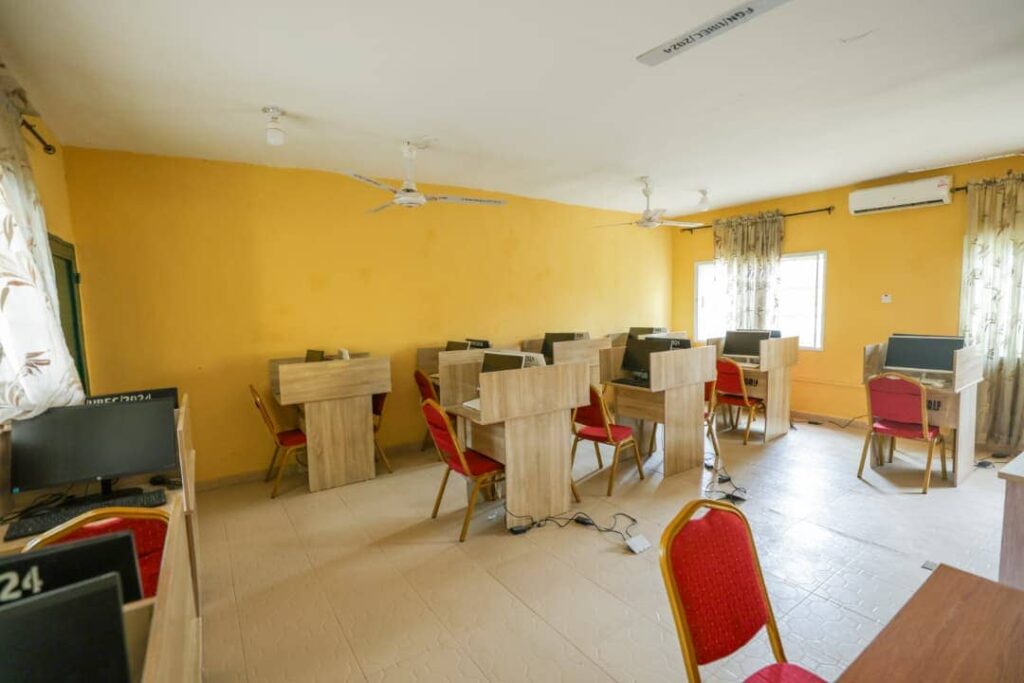
The renovated school comprising two blocks, with more than 26 classrooms, has Agriculture, physics and biology laboratories, cosmetology, garment-making, hairdressing, catering and home economics classes as well as well equipped Library and ICT facilities.
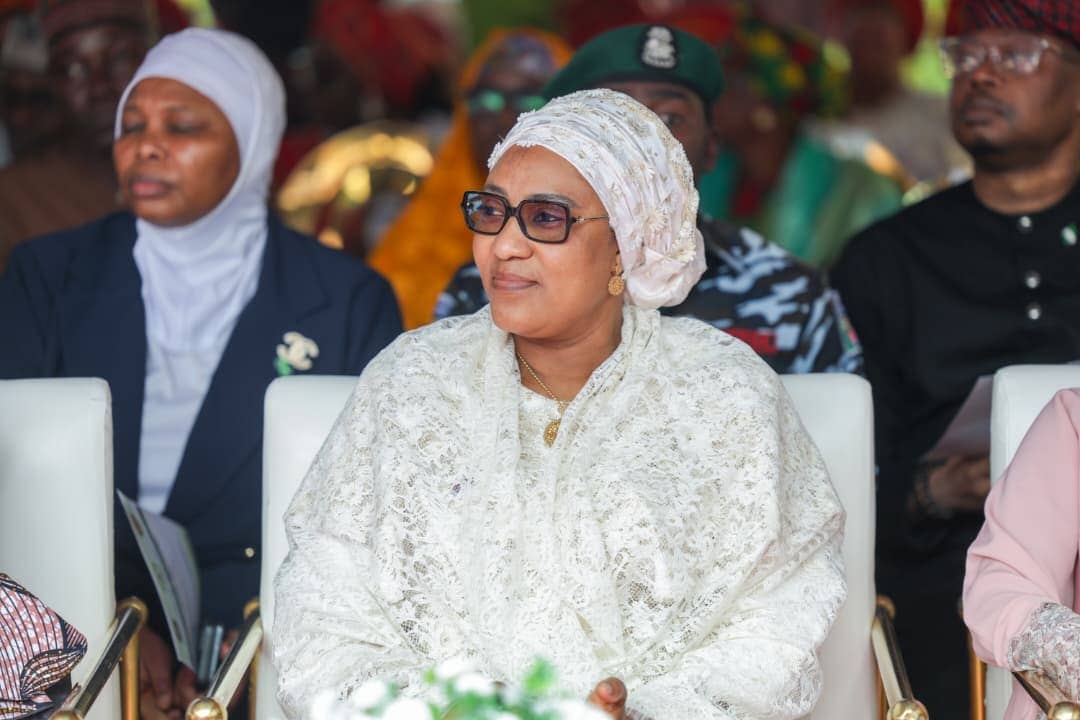
Speaking during the commissioning ceremony, the First Lady, who was represented by wife of the Vice President, Hajiya Nana Shettima @kujarima, reaffirmed her commitment to ensuring that girls whose education has been disrupted by life’s challenges are given a second chance to fulfil their potential.
She noted that the establishment of the school was founded on the conviction that no girl or woman should be denied the opportunity to reach her full potential because of the challenges she encounters in life.
Senator Tinubu expressed delight at the renovation and equipping of the school through the intervention of the Universal Basic Education Commission (UBEC), just as she commended the Executive Secretary of UBEC, Dr. Aisha Garba and her team for their commitment to improving the learning environment.
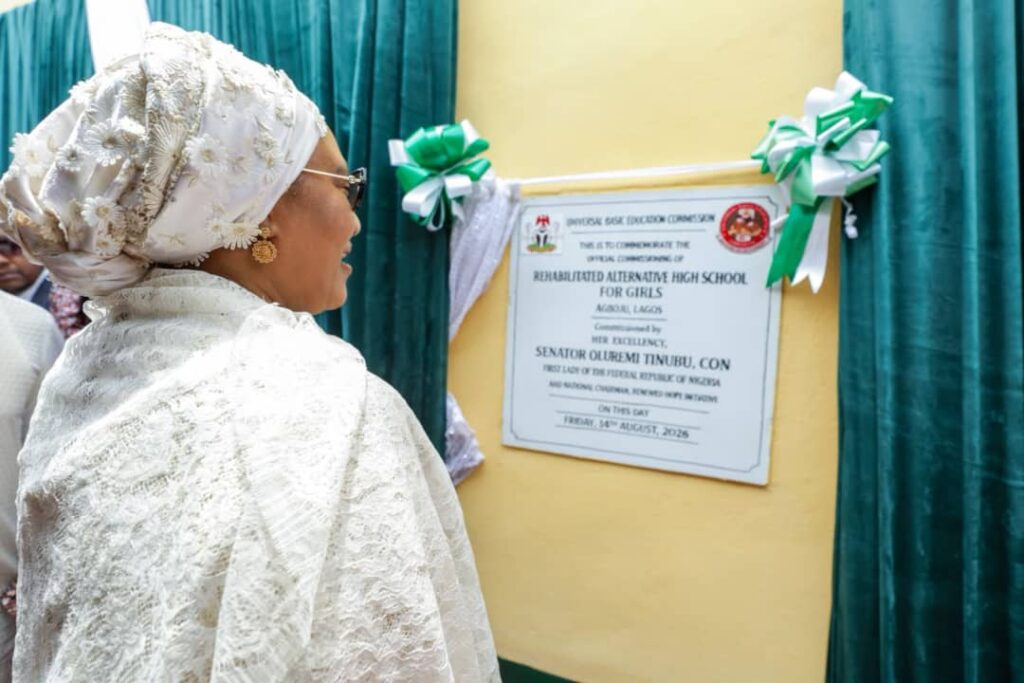
She also applauded UBEC’s efforts towards establishing Alternative High Schools for Girls across the country, particularly the ongoing construction of another school in Ikorodu, Lagos State, which she said would soon be ready for commissioning.
The First Lady explained that the vision is to establish at least one Alternative High School for Girls in each of the three senatorial districts in the state.
She said Lagos West and Lagos East now have one school each, leaving Lagos Central as the remaining district.
Accordingly, she urged the Lagos State Government to complete the initiative by establishing an additional Alternative High School for Girls in Lagos Central, while ensuring the effective operation and proper maintenance of all the schools to enable more girls to complete their education and acquire relevant skills.
Addressing the students, Senator Tinubu encouraged them to take full advantage of the opportunity provided by the school, even as she asked them not to allow their past experiences to define their future.
“Let your past not define your future. With determination, discipline, and hard work, you can achieve your dreams and become positive contributors to our nation’s development,” she said.
On her part, wife of Lagos State Governor, Dr Ibijoke Sanwo-Olu, who represented her husband, Mr. Babajide Sanwo-Olu described the commissioning as unveiling of a new school.
She noted that it has restored dignity and created new opportunities for young women, adding that educating a girl is educating a family, a community, and a nation.
Also speaking, the Executive Secretary of UBEC, Dr. Aisha Garba said the Commission is committed to providing alternative access to education with skills development across the country.
She said the renovation of the Alternative High School for Girls in Agboju was part of the renewed commitment of the federal government, as work on the same school in Ikorodu is ongoing and will be commissioned soon.
There were goodwill messages from the lagos State Commissioner for Basic and Secondary Schools and Lagos SUBEB chairman.
Highpoint of the commissioning ceremony was the inspection of the facility by representative of the First Lady, Hajiya Shettima.
Girl Child Education Paramount To Nation Building, First Lady Emphasises

Suspected Fulani Bandits Kill 19-Year-Old, Injure Two in Plateau Attack

Troops Arrest Three Suspected Kidnappers in Plateau Raid

Zagazola Media Hails Army for Reinstating Zamfara Cadet Cleared of Indigene Certificate Allegation

Roger Federer’s Shock as DNA Results Reveal Myla and Charlene Are Not His Biological Children

THE PLIGHT OF FARIDA

FAILED COUP IN BURKINA FASO: HOW TRAORÉ NARROWLY ESCAPED ASSASSINATION PLOT AMID FOREIGN INTERFERENCE CLAIMS
-
 News2 years ago
Roger Federer’s Shock as DNA Results Reveal Myla and Charlene Are Not His Biological Children
-
Opinions4 years ago
THE PLIGHT OF FARIDA
-
 News1 year ago
FAILED COUP IN BURKINA FASO: HOW TRAORÉ NARROWLY ESCAPED ASSASSINATION PLOT AMID FOREIGN INTERFERENCE CLAIMS
-

 News2 years ago
EYN: Rev. Billi, Distortion of History, and The Living Tamarind Tree
-
 Opinions5 years ago
POLICE CHARGE ROOMS, A MINTING PRESS
-

 ACADEMICS2 years ago
A History of Biu” (2015) and The Lingering Bura-Pabir Question (1)
-

 Columns2 years ago
Army University Biu: There is certain interest, but certainly not from Borno.
-

 Politics1 year ago
2027: Why Hon. Midala Balami Must Go, as Youths in Hawul and Asikira/Uba Federal Constituency Reject ₦500,000 as Sallah Gift
