
National News
Presidency Orders Projects for Flood Management, Resuscitation of Shrinking Lake Chad

Presidency Orders Projects for Flood Management, Resuscitation of Shrinking Lake Chad
… Fuel Subsidy Removal Saves 42,800 Tons of Carbon Dioxide Emissions Daily- VP
By: Michael Mike
The Presidency has directed the National Council on Climate Change to immediately develop a Comprehensive Climate Change Adaptation Project for Flood Management in Nigeria, and find a way to resuscitating the shrinking Lake Chad.
This is even as the Vice President, Senator Kashim Shettima revealed that the removal of oil subsidy has led to 30% reduction in daily fuel consumption, amounting to about 20 million litres, which is equivalent to an estimated daily saving of 42,800 tons of carbon dioxide (CO2e) emissions.
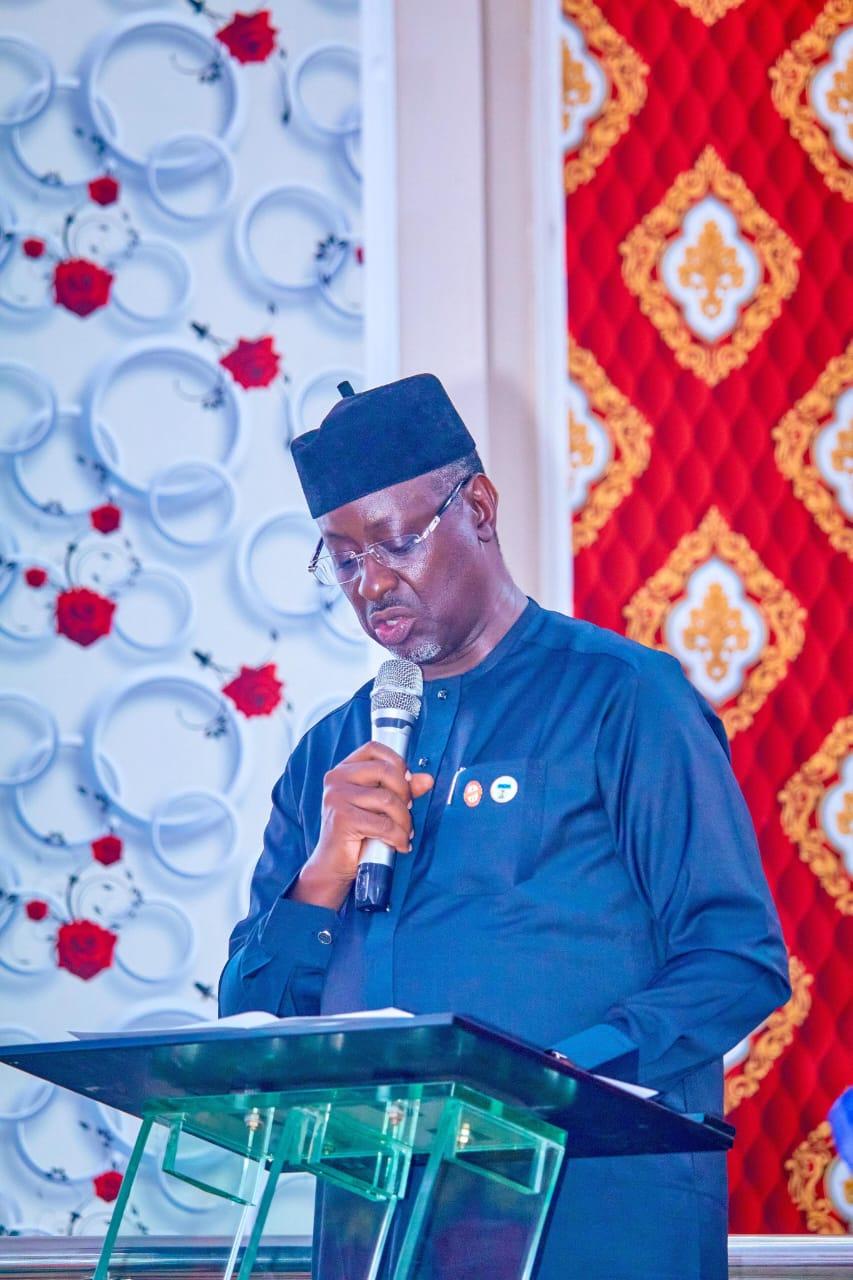
Speaking at a one-day workshop on unpacking the outcome of 58th Sessions of the Subsidiary Bodies of the United Nations Framework Convention on Climate Change, the Vice President, Senator Kashim Shettima lamented that climate change is perhaps the biggest challenge facing humanity today, noting that even as a developing nation in the global south, Nigeria is gravely impacted by the negative effects of climate change.
The Vice President who was represented by the Deputy Chief of Staff, Senator Ibrahim Hassan, said: “For instance, Nigeria is ranked as one of the ten most vulnerable countries to the impacts of climate change in the world. This is despite our negligible contribution to overall global carbon emissions responsible for climate change. In fact, Africa as a whole, accounts for less than 4% of total global carbon emissions.
“For me and a lot of the people that come from the North Eastern part of Nigeria, we bear the scars of climate change effects and have had to live with its impacts, such as drought and desertification, disruption of rainfall patterns, leading to sandstorms, severe floods, destruction of farmlands, infrastructure and human settlements. These and many more occur in other parts of the country too.”
He added that: “We are all living witnesses to ravaging floods of last year (2022) which held the country to a standstill for days. The World Bank’s Global Rapid post-disaster Damage Estimation (GRADE) assessment put the total direct economic damage to infrastructure be about US$7 billion. This is equivalent to 1.6% of Nigeria’s estimated 2021 (GDP), not including loss of over 600 lives. For Nigeria, that was climate change at its worst.
“Consequently, and in order to avert future occurrences of such severe floods, the National Council on Climate Change is hereby directed to develop a Comprehensive Climate Change Adaptation Project for Flood Management in Nigeria. The Project should include resuscitation of the Lake Chad Basin.”
The Vice President said: “The plan for decarbonizing our energy systems highlights the key role that natural gas will play in transitioning our economy across sectors. The data and evidence show that Nigeria can continue to use gas until 2040 without detracting from the goals of the Paris agreement. Nevertheless, we are rapidly advancing the development and deployment of renewables through various programs such as the $550million Nigeria Electrification Project (NEP) supported by the World Bank which is promoting the use of solar mini-grid and solar home systems across Nigeria. There is also the Nigeria Sovereign Investment Authority(NSIA) managed project jointly financed by Kano State and the Federal Government, which completed a 10MW solar plant, the largest in the country.”
He said: “Another intervention is the Energizing Education Programme, implemented by the Rural Electrification Agency which is delivering clean energy to Federal Universities and Teaching Hospitals across the country. Furthermore, government is also subsidizing clean energy for rural women through the Rural Women Energy Security(RUWES) project and Rural Energy Access Project (REAP). Other schemes include the Clean Energy Transportation Scheme (CETS) and National Clean Cooking Scheme (NCCS) which promote the deployment of CNG powered buses in major Nigerian cities and clean cooking in communities and boarding schools respectively.”
He noted that: “At the onset of this administration, H. E. President Bola Ahmed Tinubu, GCFR, took the bold step of bring to an end petrol subsidy. Preliminary analysis conducted by the National Council on Climate Change on the co-benefits of fuel subsidy removal indicate that there has been about 30% reduction in daily fuel consumption, amounting to about 20 million liters, equivalent to an estimated daily saving of 42,800 tons of carbon dioxide (CO2e) emissions. When projected over a period of one year, it amounts to over 15 million tons of CO2e saved, representing about 40% GHG reduction from the baseline projection of 45 million metric tons of total GHG CO2eq by 2030. This places Nigeria on course to achieving our NDC targets ahead of time.”
The Vice President disclosed that: “Our vision and expectations for COP 28 will include increased climate action on many fronts, particularly increased and available climate finance. We note with concern, the lack of progress on the mobilization of the $100 billion meant for adaptation financing by 2020 pledged by western countries since 2009 at COP15. The Loss and Damage agreement which provided hope for many low-income countries bearing the brunt of climate change, must be finalized in Dubai; Just Energy Transition where we expect discussions to focus incentivizing and enabling emerging economies to transit sustainably in accordance to their national priorities, capacities, and based on greater financial support must also be finalized, taking cognizance of the need to include more favourable terms for developing countries, along with technology transfer.
“Our intention is to lead the ECOWAS sub region by example, leveraging on our accomplishments in championing the cause for regional climate actions at every international forum held over the years. The 2023 Africa Climate Week and Africa Climate Summit, both holding next month in Nairobi, Kenya, will provide platforms to reiterate the call for continued partnership, unity, cooperation and genuine collective efforts towards tackling the challenges of climate change. Our shared destiny as a global community is ultimately dependent on the successes we are able to achieve together.”
The Director General of the National Council on Climate Change, Salisu Dahiru said the workshop is very important in order for stakeholders to put head together to plan strategies for the 2023 UN Climate Change Conference which will be holding from 30 November to 12 December 2023 in Dubai, United Arab Emirates (UAE).
Presidency Orders Projects for Flood Management, Resuscitation of Shrinking Lake Chad


Tinubu Flags Off Dikwa–Gamboru Ngala, Bama–Banki Road Projects
..:Describes Zulum Best Performing Governor
…Zulum Hails Tinubu’s Commitment to Borno Recovery Process
By: Our Reporter
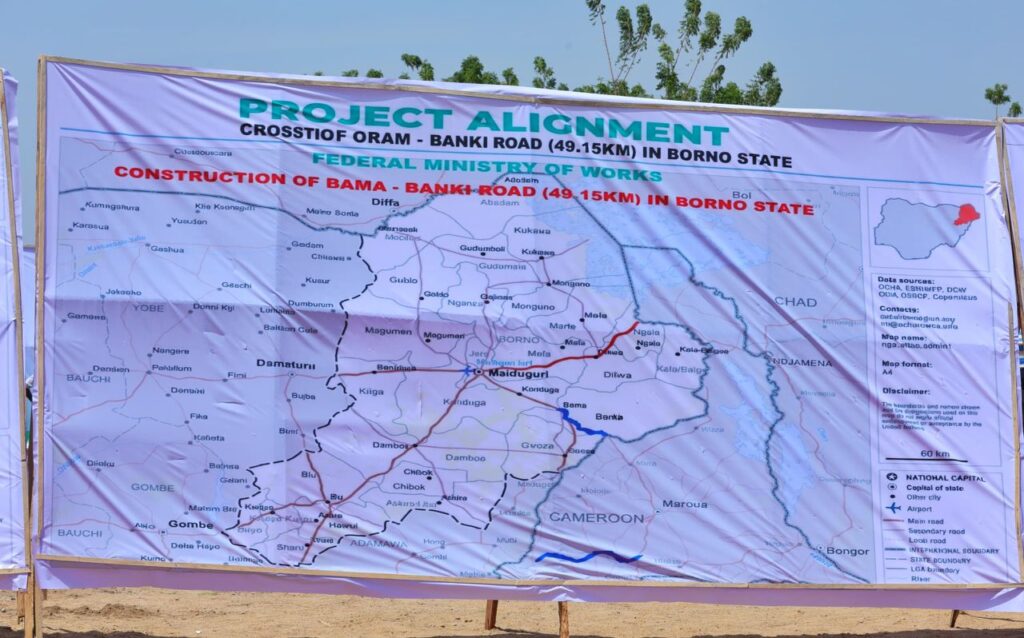
President Bola Ahmed Tinubu on Saturday flagged off the construction of the 49.55-kilometre Dikwa–Gamboru Ngala Road and the 49.15-kilometre Bama–Banki Road, describing the strategic highways as critical to economic growth, regional integration, and national security.
The two road projects, regarded as economic lifelines of the North-East, serve as key gateways to neighbouring African countries, which will bolster cross-border trade, facilitate the movement of agricultural produce, and strengthen security operations in a region recovering from over a decade of insurgency.
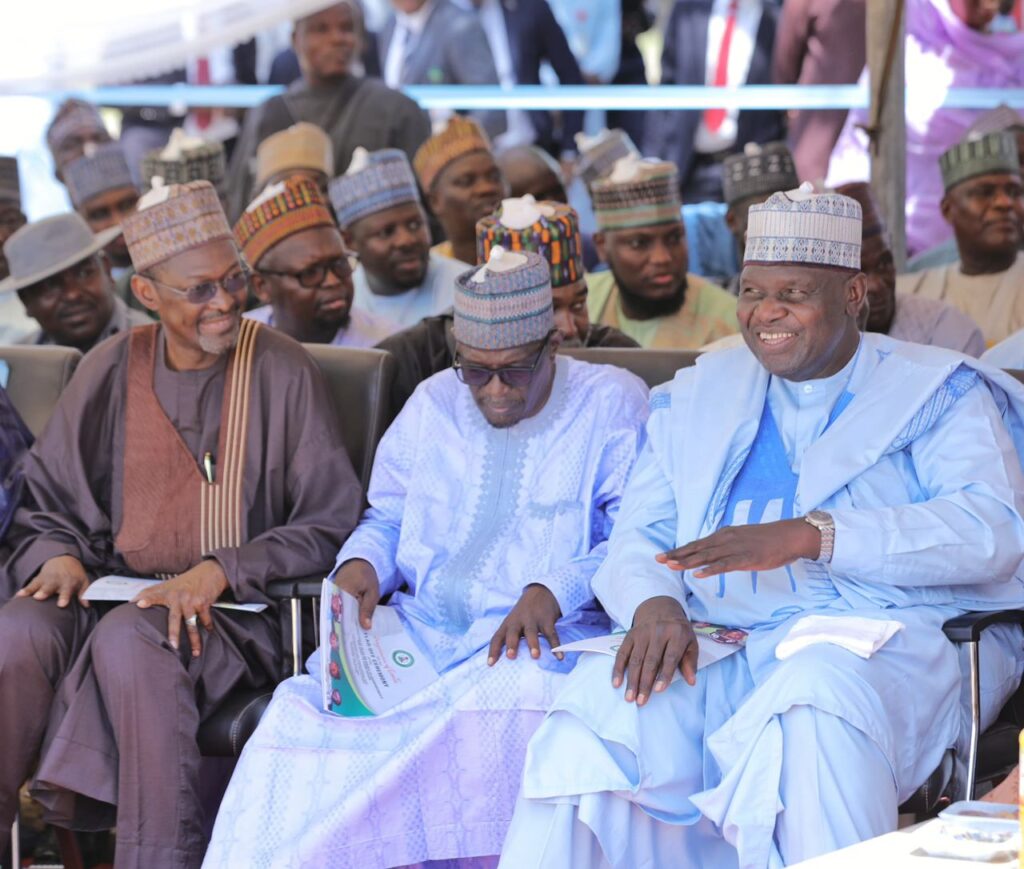
The groundbreaking ceremony was held along the Maiduguri–Gamboru Ngala Road, where President Tinubu was represented by Vice President Senator Kashim Shettima.
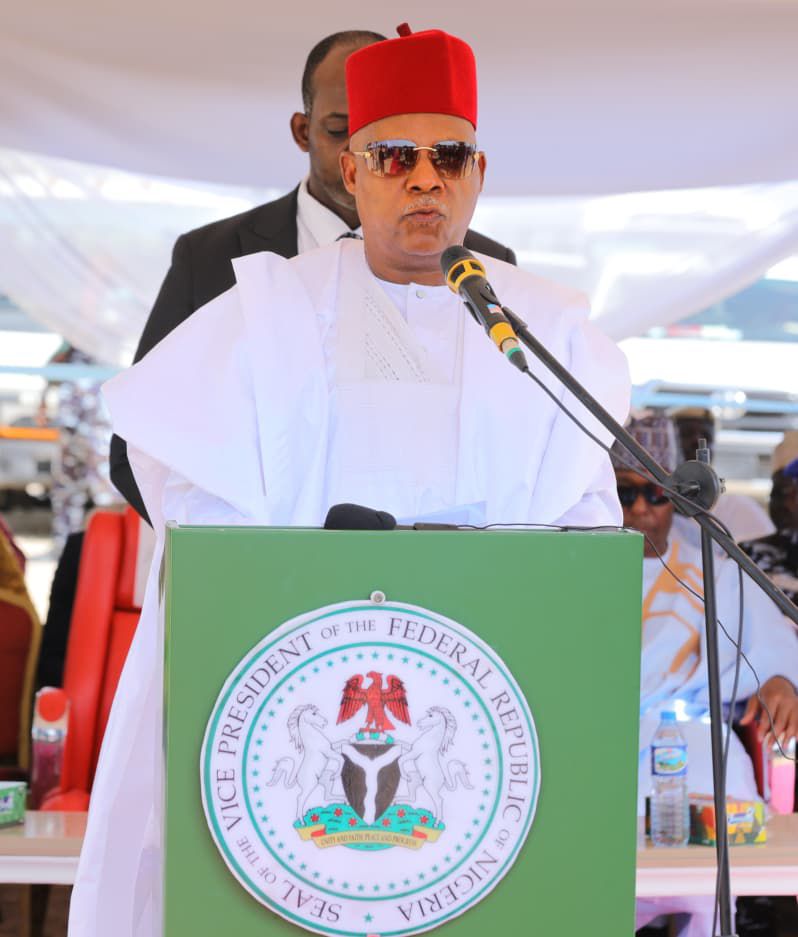
The Vice President said the rehabilitation of the roads would improve connectivity and deliver on the administration’s commitment to infrastructure development across the country.
“His Excellency, President Bola Ahmed Tinubu, GCFR, has made infrastructure a central priority. This is what Mr. President promised Nigerians, and I’m here today to affirm our readiness to redeem the promise and to convey his goodwill and gratitude for the support you have shown us,” Shettima said.
“The Bama–Banki Corridor carries special strategic weight. It is a top route of agriculture, movement, and national security. The Dikwa–Gamboru Ngala Road belongs to the same vision of reconnecting communities and restoring economic confidence across Borno State.”
The Vice President also commended Borno State Governor, Professor Babagana Umara Zulum, for prioritising infrastructure and maintaining a strong partnership with the Federal Government.
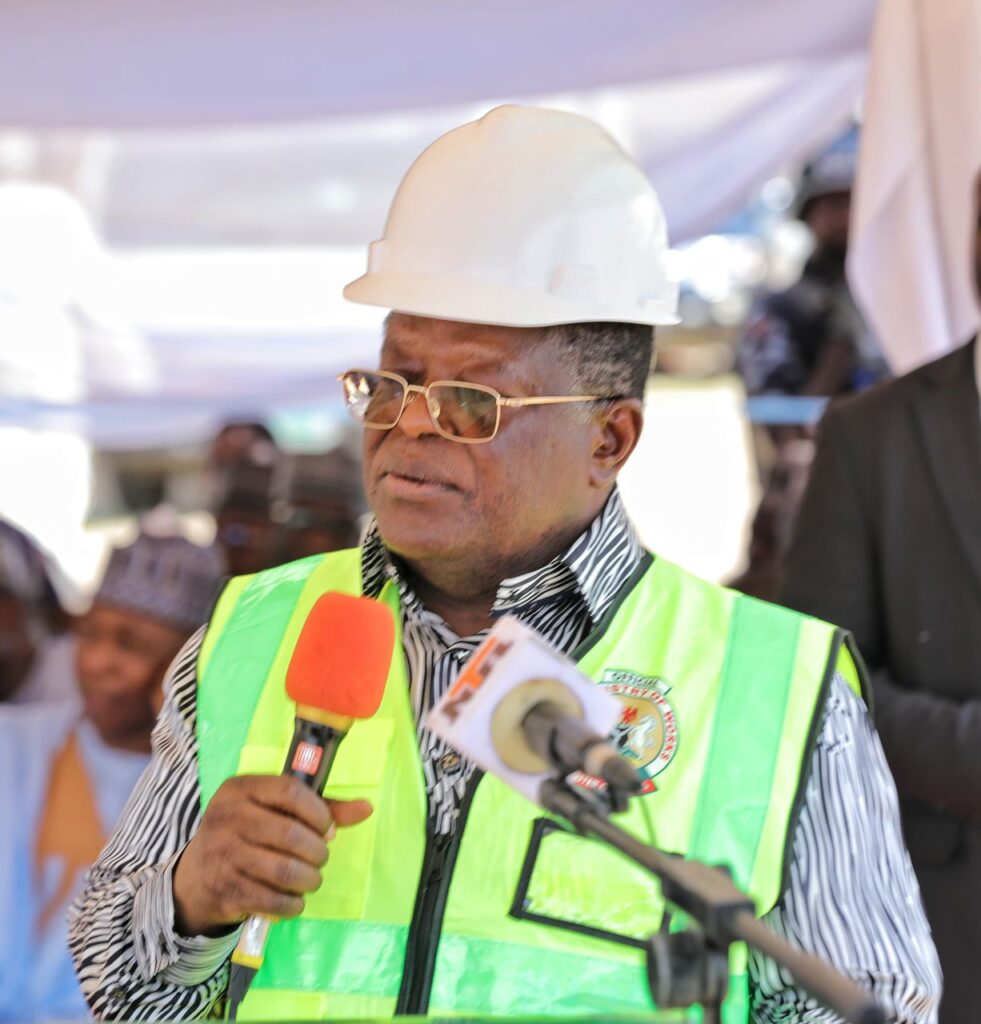
“The partnership between the Federal Government and Borno State shows what becomes possible when public institutions are united by the urgency of service. Certainly, Your Excellency, Professor Babagana Umara Zulum, you are one of the best-performing governors in the federation,” the Vice President stated.
Governor Zulum expressed appreciation to President Tinubu for approving the road projects and other critical interventions in Borno State.
“The successful commencement of this project reflects the strong partnership between the Federal Government and the Borno State Government. We deeply appreciate and remain eternally grateful to the President of the Federal Republic of Nigeria, President Bola Ahmed Tinubu, GCFR, for his unwavering commitment to the development, peace, and security of the North East and Nigeria as a whole,” Zulum remarked.
“Borno State Government recognizes that infrastructure remains a critical foundation for development. Since assuming office, our administration has prioritized the rehabilitation and construction of roads, schools, hospitals, water facilities, and other critical infrastructure as part of our commitment to improving the lives of our citizens,” he added.
Governor Zulum also pledged the state’s political support for President Tinubu in the next presidential election.
“I want to assure the President and indeed the Vice President that, Insha Allah, come January 2027, the people of Borno State will overwhelmingly vote him into office.”
The governor equally praised Vice President Shettima for his sustained support towards the reconstruction and development of Borno State.
“Your Excellency, your personal interest in the reconstruction and development of our state continues to inspire confidence among our people. We sincerely appreciate your leadership and steadfast commitment.”
Zulum also acknowledged the humanitarian contributions of Alhaji Aliko Dangote, particularly through the Aliko Dangote Foundation, during the state’s recovery from insurgency and the 2024 flood disaster.
He recalled the construction of Dangote Village, the donation of ₦1.5 billion to the National Emergency Management Agency (NEMA), ₦1 billion to the Borno State Government following the 2024 flood, and the distribution of relief materials to internally displaced persons.
“Through the Aliko Dangote Foundation, thousands of displaced persons received food and non-food items. Essentially, in 2017, he donated 106 trucks of food to IDPs. Alhaji Aliko Dangote has also donated ₦1.5 billion to NEMA to support flood victims in Borno State in the year 2024.”
Governor Zulum assured that the road projects would be closely monitored to ensure value for money and strict compliance with quality standards. He also appealed to the Minister of Works to grant the Borno State Government a waiver to regulate the activities of heavy-duty truck drivers using the roads.
Earlier, the Minister of Works, Senator David Umahi, disclosed that the projects would be executed in two phases and expressed confidence that construction would be completed within six months.
The ceremony was attended by the Borno State Deputy Governor, Hon. Umar Usman Kadafur; APC Deputy National Chairman (North), Hon. Ali Bukar Dalori; senators; members of the House of Representatives; the Shehu of Borno, represented by the Shehu of Dikwa; ministers; members of the Borno State House of Assembly; APC leaders; the Secretary to the State Government; the Head of Service; the Acting Chief of Staff; commissioners; heads of government agencies; and other dignitaries.
Tinubu Flags Off Dikwa–Gamboru Ngala, Bama–Banki Road Projects
National News
PEBEC Targets Seamless Digital Government as 98% of MDAs Meet Business Reform Standards
PEBEC Targets Seamless Digital Government as 98% of MDAs Meet Business Reform Standards
By: Michael Mike
The Director-General of the Presidential Enabling Business Environment Council, Zahrah Mustapha Audu, has unveiled plans to integrate digital platforms across federal Ministries, Departments and Agencies (MDAs) to eliminate duplication, reduce regulatory bottlenecks and create a seamless experience for businesses, following significant gains in public sector service delivery reforms.
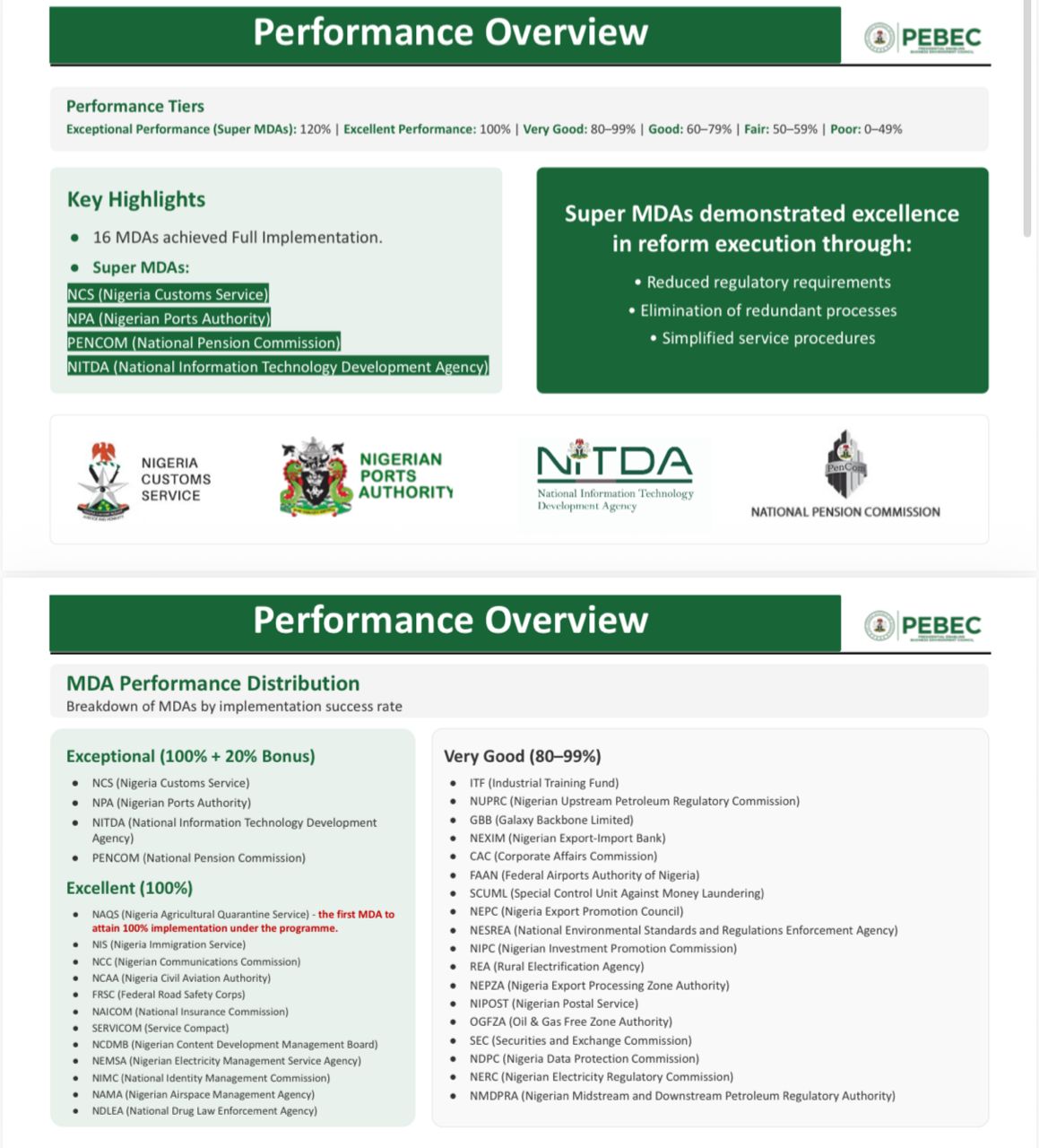
Audu disclosed that 98 per cent of the 69 MDAs monitored by the council now meet prescribed responsiveness standards after a targeted reform programme designed to improve compliance with the Business Facilitation Act.
Speaking during an interaction with journalists in Abuja, she said PEBEC’s next phase of reforms would focus on ensuring government agencies no longer operate in isolation but are digitally connected to enable secure information sharing and faster service delivery.
According to her, while many agencies have digitised their operations, businesses still face unnecessary delays because they are repeatedly required to submit the same information to different regulators.
She cited the National Identification Number (NIN) as an example, noting that agencies should no longer demand documents containing information already available on government databases.
“Our objective is to create an environment where businesses provide information once, and relevant government agencies can securely access it instead of making investors repeat the same process multiple times,” she said.
Audu explained that the reforms are part of PEBEC’s broader mandate to eliminate bureaucratic obstacles, simplify regulatory processes and position Nigeria as a preferred investment destination.
Rather than adopting a confrontational approach, she said the council works collaboratively with government institutions to resolve operational challenges.
“PEBEC is not a name-and-shame organisation. We identify gaps and provide technical support to help agencies improve their services,” she said.
She revealed that the council recently concluded a 90-day Business Environment Enhancement Accelerator Programme, during which reform champions embedded across 69 MDAs worked with PEBEC to strengthen compliance with the Business Facilitation Act.
The initiative, she said, resulted in 98 per cent of the agencies meeting service delivery timelines and responding promptly to enquiries from businesses and members of the public.
Audu noted that the council is now shifting attention from basic compliance to competitiveness, with the goal of making Nigeria a more business-friendly destination than neighbouring economies such as Ghana, Benin Republic and Kenya before benchmarking against leading global performers.
As part of efforts to simplify business regulation, she said PEBEC reviewed licensing procedures and documentation requirements across several agencies to eliminate obsolete and repetitive processes that increase the cost and time of doing business.
She also identified top-performing agencies during the council’s assessment, commending the Nigeria Customs Service for fully complying with reform requirements while reducing cargo clearance timelines and simplifying import and export procedures.
Other agencies recognised for exceeding compliance expectations include the Nigerian Ports Authority, the National Information Technology Development Agency and the National Pension Commission, all of which introduced additional customer-focused reforms beyond the minimum standards.
Audu stressed that the assessment was not intended to rank agencies but to institutionalise reforms capable of improving the experience of businesses dealing with government institutions.
She warned that inefficiency in a single government office can undermine investor confidence in the entire country.
“If someone has a bad experience with one government agency, they do not separate that agency from the government. They simply conclude that Nigeria is not working,” she said.
To sustain the reforms, Audu disclosed that PEBEC will continue its quarterly mystery-shopping exercise, under which officials anonymously access government services to independently assess service quality from the perspective of ordinary users.
She added that the council also operates live performance trackers that allow agencies and the public to monitor compliance levels and identify areas requiring improvement.
According to her, the 2026 Business Facilitation Act Compliance Report is expected to be released in November after the completion of the annual assessment.
She said PEBEC’s long-term goal is to entrench a public service culture built on transparency, efficiency and accountability while creating a fully integrated digital government that makes regulatory compliance faster, easier and more predictable for businesses and investors.
PEBEC Targets Seamless Digital Government as 98% of MDAs Meet Business Reform Standards
National News
ECOWAS Hands Nigeria Assistive Devices, Unveils Regional Push for Disability Inclusion
ECOWAS Hands Nigeria Assistive Devices, Unveils Regional Push for Disability Inclusion
By: Michael Mike
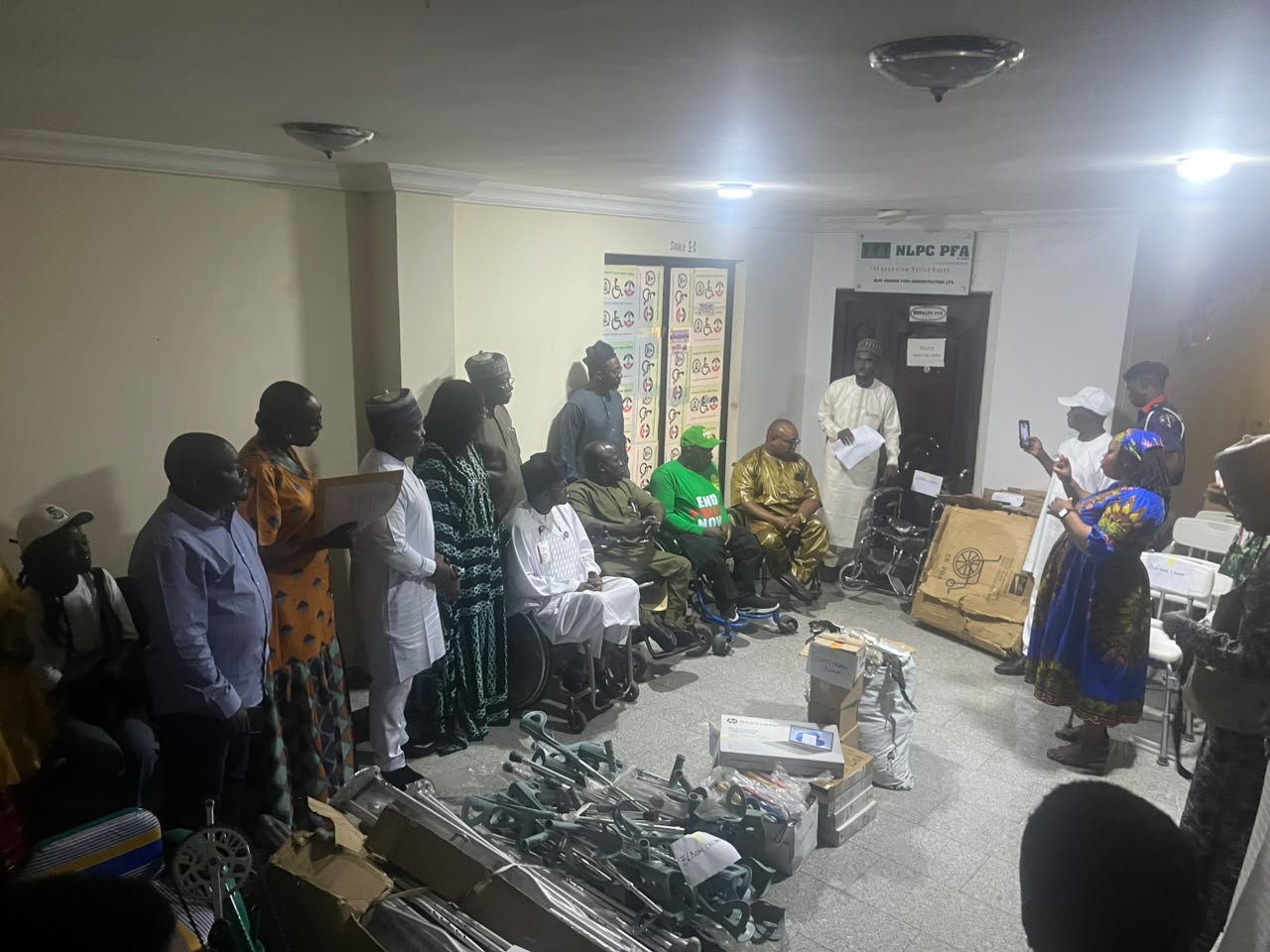
The Economic Community of West African States (ECOWAS) has intensified efforts to advance disability inclusion across the region with the formal handover of assistive devices to children with disabilities in Nigeria, unveiling a broader strategy aimed at expanding access to assistive technology, promoting local production and strengthening national systems for disability support.
The intervention, implemented under the ECOWAS Regional Programme for the Provision of Assistive Devices to Children with Disabilities in West Africa, marks Nigeria’s participation in the first phase of the initiative alongside Togo after nearly two years of planning and implementation.
Speaking at the handover ceremony in Abuja, the Executive Secretary of the National Commission for Persons with Disabilities (NCPWD), Chief Ayuba Gufwan, described the occasion as one of the happiest moments of his life, saying it represented far more than the distribution of equipment.
According to him, assistive devices restore dignity, independence and opportunity to persons with disabilities by enabling them to participate fully in education, employment and community life.
“There is ability in disability,” he said. “No matter the severity of a person’s disability, with the right environment and appropriate assistive devices, everyone can contribute meaningfully to humanity.”
Gufwan noted that while an estimated nine out of every 10 persons with disabilities require one form of assistive technology or another, the overwhelming majority still lack access, leaving millions excluded from education, healthcare, employment and independent living.
He said Nigeria alone has more than 26 million persons with disabilities requiring assistive technology, with demand for quality, affordable and appropriate devices far exceeding available supply.
“Behind these statistics are children who cannot attend school because they lack mobility devices, adults excluded from employment because they do not have access to appropriate technology, and families struggling to access rehabilitation services,” he said.
The Executive Secretary announced that the Commission has established a dedicated Assistive Devices and Technology Unit to coordinate national efforts, improve service delivery and deepen collaboration with development partners.
He also disclosed that the Commission, working with the Federal Ministry of Health and Social Welfare and international partners, has developed key policy instruments including the Nigerian Priority Assistive Products List, an investment case for assistive technology and a National Assistive Technology Scale-up Plan designed to expand access across the country.
Gufwan stressed that an assistive device achieves its purpose only when it matches the functional needs of the individual, adding that the new framework would ensure coordinated assessment, procurement and delivery of appropriate devices.
While commending ECOWAS for selecting Nigeria as one of the first beneficiaries of the regional programme, he urged governments, development partners, healthcare professionals, civil society organisations and the private sector to deepen collaboration towards sustainable access to assistive technology.
He also advocated the establishment of local manufacturing and assembly plants for assistive devices, arguing that domestic production would reduce dependence on imports, lower costs, improve availability, stimulate innovation and create jobs.
Representing the Minister of Humanitarian Affairs and Poverty Reduction, Dr. Barnard Doro, the Senior Technical Adviser to the Minister on Humanitarian Affairs reaffirmed the Federal Government’s commitment to protecting the rights and welfare of persons with disabilities.
The representative described the donation as more than a humanitarian intervention, saying it aligns with the ministry’s integrated approach that combines humanitarian response with poverty reduction and social protection.
He said persons with disabilities often face barriers not because of their conditions but because society fails to provide the support and opportunities they require.
“This ceremony is more than a formal exchange of items. These assistive devices represent dignity restored, independence regained and doors reopened,” he said.
He commended ECOWAS for demonstrating regional solidarity through the initiative and urged the National Commission for Persons with Disabilities to ensure transparent and equitable distribution of the devices to those most in need.
Development partners were also encouraged to increase investments in disability inclusion while expanding support for assistive technology programmes across Nigeria.
Earlier, ECOWAS Commissioner for Human Development and Social Affairs, Professor Fatou Sow Sarr, represented by officials of the Commission, said the programme was initiated following a regional disability inclusion study conducted in 2024 which revealed severe shortages in access to assistive technology across West Africa.
The findings, she said, showed that children with disabilities remain among the most vulnerable populations in the region, prompting ECOWAS to prioritise interventions targeted at improving mobility, communication, learning and participation.
According to the Commission, about 240 million children worldwide live with disabilities, while approximately 15 per cent of children aged between zero and 17 years in West and Central Africa have one form of disability.
Officials explained that despite the global need for assistive technology, access remains extremely limited, particularly in low-income countries where affordability, inadequate services and weak policy implementation continue to exclude millions.
ECOWAS said its regional programme aligns with Vision 2050, which seeks to build “a fully integrated community of peoples living in a peaceful and prosperous region, supported by strong institutions, respect for fundamental rights and inclusive, sustainable development.”
The Commission also said the initiative is anchored on the United Nations Convention on the Rights of Persons with Disabilities, which recognises accessibility as a fundamental human right.
Providing an overview of the programme, ECOWAS officials said Nigeria and Togo were selected as the first beneficiaries after extensive consultations with governments and organisations of persons with disabilities.
The programme has since expanded to additional member states, although implementation remains at different stages because of procurement and logistics processes.
ECOWAS disclosed that future priorities include strengthening disability data collection to support evidence-based policymaking, promoting local production of assistive technology through strategic partnerships, and expanding the regional programme to more member states.
Officials said disability inclusion has become a central pillar of ECOWAS’ development agenda, reflecting a shift from a traditional focus on trade and free movement towards a more people-centred model of regional integration.
The Commission emphasised that improving access to assistive technology contributes directly to the Sustainable Development Goals by reducing inequalities and ensuring that no child is left behind.
Beneficiaries and their families were encouraged to use the devices responsibly while healthcare professionals, teachers and caregivers were urged to provide continuous support, maintenance and follow-up to maximise their impact.
For both ECOWAS and Nigeria, the ceremony signalled more than the distribution of mobility aids and other equipment. It reflected a growing regional commitment to ensuring that disability is no longer a barrier to education, employment, participation or opportunity, while laying the foundation for a more inclusive West Africa where assistive technology is available, affordable and accessible to everyone who needs it.
ECOWAS Hands Nigeria Assistive Devices, Unveils Regional Push for Disability Inclusion

Nigeria Condemns Killing of Two Citizens in South Africa, Warns All Options Remain Open

Troops Repel Terrorist Attack on Forward Operating Base in Zamfara

Six Villagers Killed as Terrorists Attack Sokoto Community, Rustle Livestock

Roger Federer’s Shock as DNA Results Reveal Myla and Charlene Are Not His Biological Children

THE PLIGHT OF FARIDA

FAILED COUP IN BURKINA FASO: HOW TRAORÉ NARROWLY ESCAPED ASSASSINATION PLOT AMID FOREIGN INTERFERENCE CLAIMS
-
 News2 years ago
Roger Federer’s Shock as DNA Results Reveal Myla and Charlene Are Not His Biological Children
-
Opinions4 years ago
THE PLIGHT OF FARIDA
-
 News1 year ago
FAILED COUP IN BURKINA FASO: HOW TRAORÉ NARROWLY ESCAPED ASSASSINATION PLOT AMID FOREIGN INTERFERENCE CLAIMS
-

 News2 years ago
EYN: Rev. Billi, Distortion of History, and The Living Tamarind Tree
-
 Opinions5 years ago
POLICE CHARGE ROOMS, A MINTING PRESS
-

 ACADEMICS2 years ago
A History of Biu” (2015) and The Lingering Bura-Pabir Question (1)
-

 Columns2 years ago
Army University Biu: There is certain interest, but certainly not from Borno.
-

 Politics1 year ago
2027: Why Hon. Midala Balami Must Go, as Youths in Hawul and Asikira/Uba Federal Constituency Reject ₦500,000 as Sallah Gift
