
News
President Tinubu Pledges Support, Charges Judiciary To Intensify Anti-Corruption Fight

President Tinubu Pledges Support, Charges Judiciary To Intensify Anti-Corruption Fight
** As EFCC records 7,000 convictions, recovers ₦500bn in 2 years
By: Our Reporter
President Bola Ahmed Tinubu has charged the Nigerian judiciary to remain steadfast, impartial, and incorruptible in dispensing justice, warning that the breakdown of any society begins when those entrusted with interpreting its laws become compromised.
He said his administration is committed to improving the welfare and working conditions of judicial officers, noting that recent remuneration reviews were part of a broader effort to strengthen judicial independence.
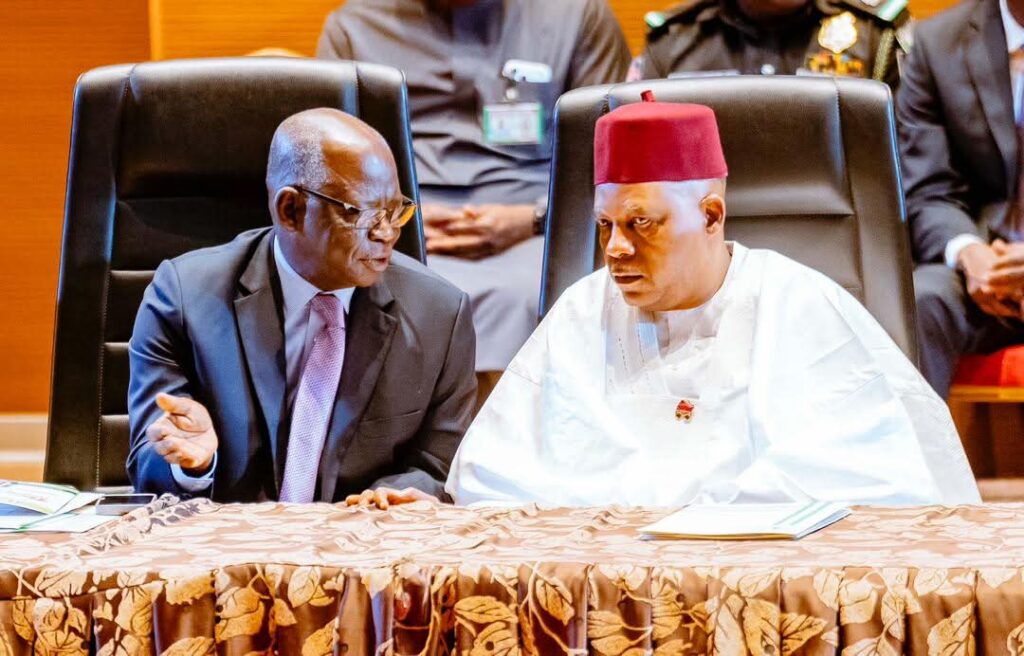
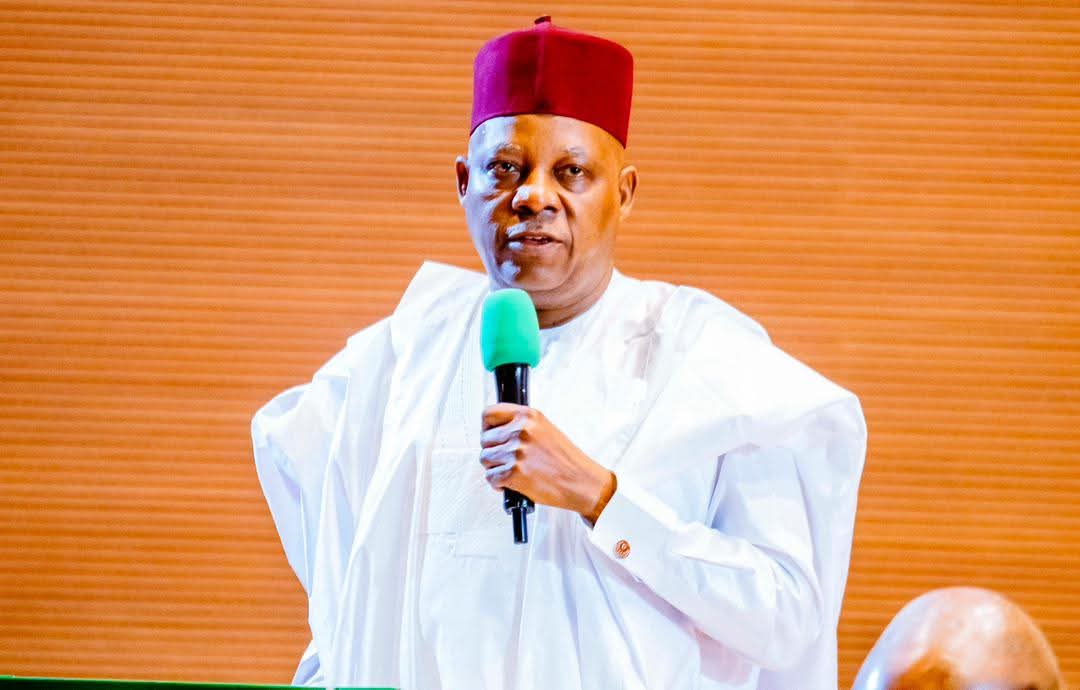
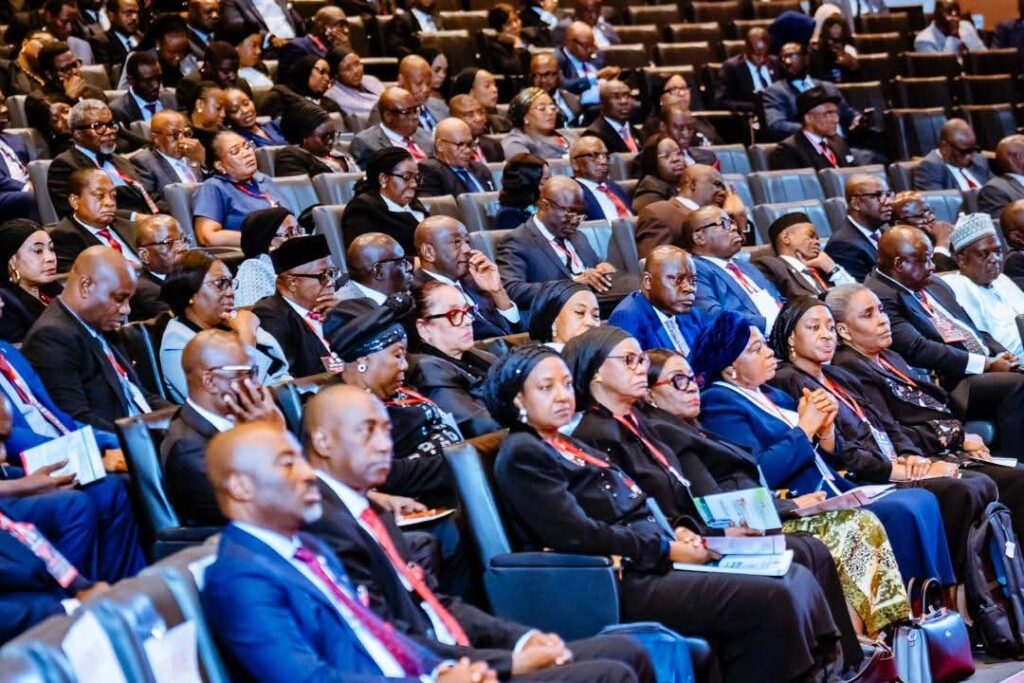
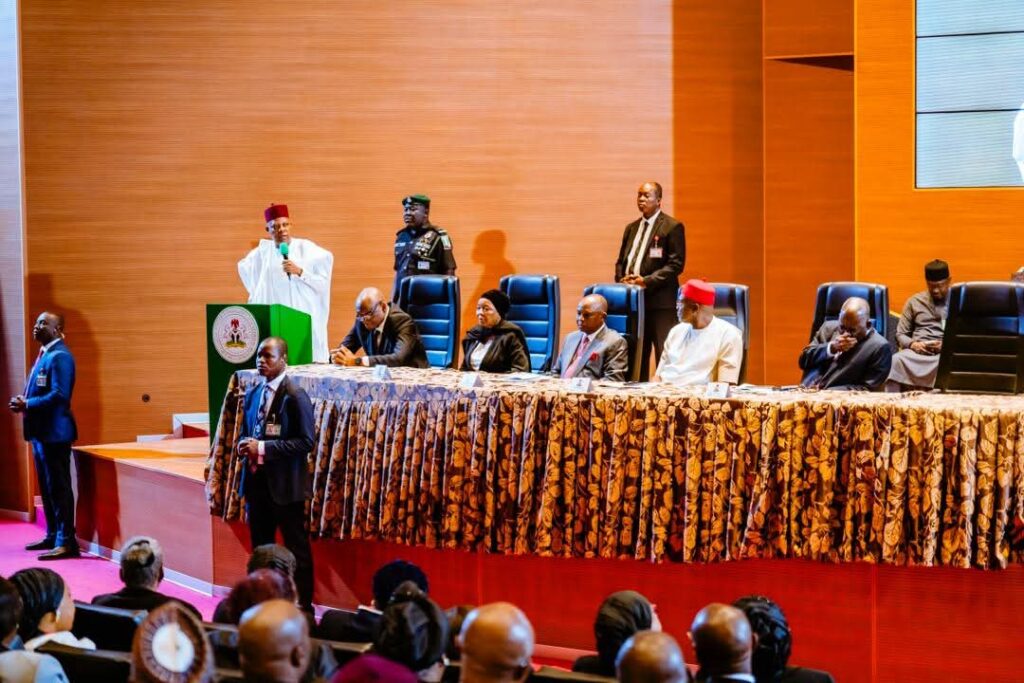
Speaking on Monday when he declared open the Economic and Financial Crimes Commission (EFCC) and National Judicial Institute (NJI) Workshop for Justices and Judges in Abuja, President Tinubu, who was represented by his deputy, Vice President Kashim Shettima, said the moral foundation of the Nigerian nation rests squarely on the integrity of its judicial system.
“We draw our moral distinction as a people from the judiciary, and we owe it the reverence and autonomy to remain the last sanctuary of our collective conscience,” President Tinubu said.
The President addressed growing public concerns about delayed adjudication in high-profile corruption cases while cybercrime matters are resolved more swiftly.
“The theme of this year’s workshop, Enhancing Justice in the Fight Against Economic and Financial Crimes, will resonate amongst many in this audience, coming at a time when conversation in the fight against corruption evokes anger over delayed adjudication of high-profile matters while cases involving cybercrime masterminds are determined with dispatch.
“There is also a certain level of consternation over decisions of courts in serious corruption matters that engender feelings that society is being left with the wrong end of the stick,” he said.
However, President Tinubu defended his administration’s non-interference approach, stating: “There is no person or group who can accuse this administration of shielding political actors on account of their affiliation to this government or the political party. We have allowed both the judiciary and the anti-graft agencies to exercise their constitutional and statutory powers.”
The President highlighted achievements in the anti-corruption drive, revealing that the EFCC “has recorded over seven thousand convictions in the first two years of my administration and recovered assets in excess of five hundred billion naira.”
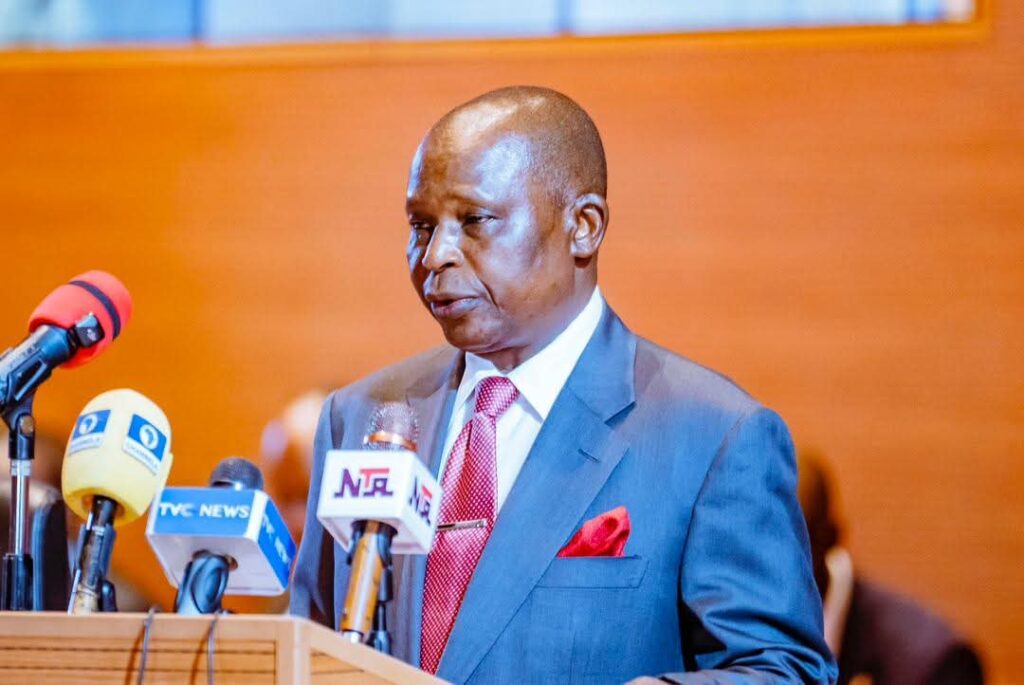
He added that the recovered proceeds are being channelled into social investment programmes, including the Students Loan and Consumer Credit Schemes.
Addressing the technological challenges facing the judiciary, President Tinubu noted the evolution from simple email evidence to complex blockchain analysis in financial crime cases.
“How does one do justice in a cryptocurrency fraud case except one is grounded in such matters? Learning and relearning is no longer a buzz phrase but an essential undertaking for continued relevance in this digital age,” he said.
The President reminded judicial officers that corruption affects everyone equally: “Your vantage position on the Bench does not insulate you from the consequences of corruption. There are no special roads, hospitals, or communities for judges.
“A Nigeria free of corruption is possible if we all commit to doing what is right in our respective spheres of influence,” President Tinubu said.
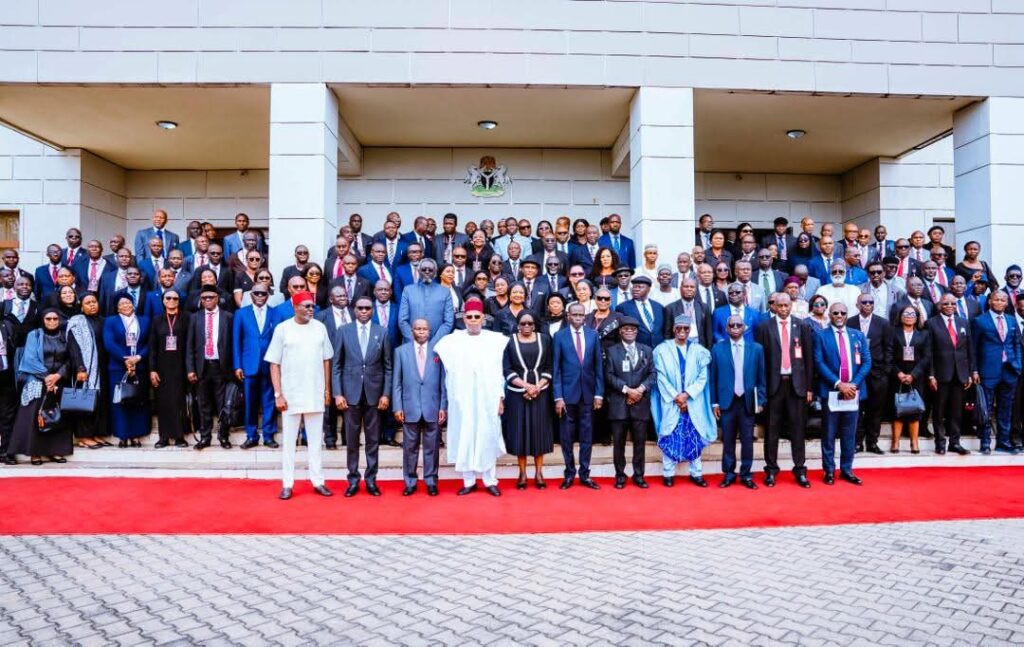
For her part, the Chief Justice of Nigeria (CJN) and Chairman of the Board of Governors of the National Judicial Institute (NJI), Hon. Justice Kudirat Kekere-Ekun, maintained that the decisions of judicial officers have a profound impact on the growth and stability of Nigeria.
She charged judicial officers to be deliberate in applying the relevant constitutional tools at their disposal while exercising firm control over proceedings.
She emphasized that the strength of the judiciary lies in the trust reposed in judges by the Nigerian people, urging them to ensure that justice is neither delayed nor partial.
The Senate President, Godswill Akpabio, represented by the Chief Whip of the Senate, Mohammed Monguno, stressed that while corruption is an enemy of the state, the fight against it requires action from the legislature, a vigilant citizenry, and a courageous judiciary.
He assured that the National Assembly will continue to play its part in equipping law enforcement agencies to combat crime so that corruption finds no place to hide in Nigeria.
The Administrator of the NJI, B.A. Adejumo, stated that the gathering has become a significant milestone over the years in the quest to fight corruption, adding that “no nation can develop without tackling corruption.”
He called for continued collaboration between the EFCC, the judiciary, and the Institute to ensure that judicial officers remain abreast of the latest developments in the justice sector.
The Chairman of the EFCC, Ola Olukoyede, SAN, disclosed that the landmark decision of the Supreme Court, which upheld the Commission’s anti-corruption mandate, has further strengthened anti-corruption institutions.
“The record of 4,111 convictions and humongous asset recoveries could not have been achieved by a lazy or ineffective judiciary,” he added.
President Tinubu Pledges Support, Charges Judiciary To Intensify Anti-Corruption Fight



Troops intercept 11 youths with donkeys during patrol in Borno
By: Zagazola Makama
Troops of 68 Battalion have intercepted 11 youths during a routine patrol in Mallam Fatori area of Abadam Local Government Area of Borno State.

Security sources said the interception occurred along the Bulagana–Cheisa axis on April 2 during ongoing clearance operations in the area.
According to the sources, the individuals were found moving in the area with 12 donkeys when they were stopped and briefly interrogated by troops.
The sources added that the youths were later handed over, alongside the animals, to relevant authorities in a neighbouring country for further necessary action.
The military said the patrol was part of sustained efforts to maintain security dominance and prevent exploitation of border communities by criminal elements.
Troops intercept 11 youths with donkeys during patrol in Borno
Troops recover ammunition, logistics items in Kwara patrol operation
By: Zagazola Makama
Troops of the Nigerian Army under the 22 Brigade have recovered ammunition and other logistics items during a fighting patrol in Ifelodun Local Government Area of Kwara State.
A security source disclosed that the operation was conducted at about 4:00 p.m. on April 2 at Daban Lema, where troops of the brigade, operating from the Patrol Base, encountered signs of suspected terrorist activities in a deserted location.
According to the source, the troops immediately carried out exploitation of the area, leading to the recovery of four rounds of 7.62mm special ammunition and one empty PKT ammunition belt link.
Other items recovered include four mobile phones, two head warmers, two small solar panels, and assorted repair tools believed to have been used by the suspected terrorists.
The source added that the recovery indicates the presence and movement of suspected criminal elements within the area, noting that troops have intensified surveillance and patrols to deny them freedom of action.
Troops recover ammunition, logistics items in Kwara patrol operation
Troops foil attack by Criminal Youths, rescue victims, arrest suspects in plateau
By: Zagazola Makama
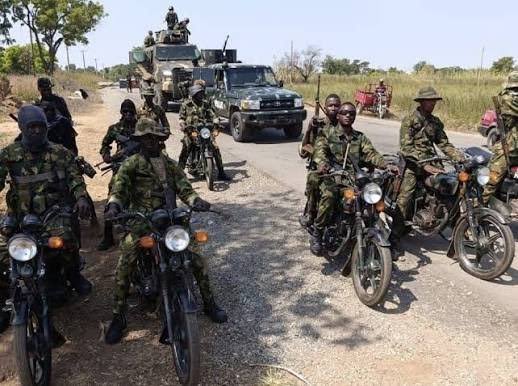
Troops of Sector 1, Operation Enduring Peace (OPEP), have foiled an attack on residents at Dutse Uku in Jos North Local Government Area of Plateau State.
A security source said the troops responded swiftly to a report of sporadic gunshots in the area at about 11:50 p.m. on April 2.
According to the source, upon arrival at the scene, the suspected criminals fled, abandoning their operation due to the prompt intervention of the troops.
He said the troops rescued two victims who sustained gunshot wounds during the incident and immediately evacuated them to a hospital for medical attention.
The source further disclosed that two suspects, dressed in black attire, were arrested at the scene.
Items recovered from the suspects include a cutlass and a knife.
He added that the suspects are currently in military custody and undergoing preliminary investigation, while efforts are ongoing to track down other fleeing members of the group.
Zagazola report that despite heightened security, there has been report of pocket of attacks in some communities.
The source reassured residents of the military’s commitment to protecting lives and property and urged the public to continue providing timely information to security agencies.
Troops foil attack by Criminal Youths, rescue victims, arrest suspects in plateau

Troops intercept suspected Boko Haram logistics convoy conveying 13 persons in Borno

Troops intercept 11 youths with donkeys during patrol in Borno

Troops, CJTF arrest three suspected Boko Haram logistics suppliers in Borno

Roger Federer’s Shock as DNA Results Reveal Myla and Charlene Are Not His Biological Children

THE PLIGHT OF FARIDA

FAILED COUP IN BURKINA FASO: HOW TRAORÉ NARROWLY ESCAPED ASSASSINATION PLOT AMID FOREIGN INTERFERENCE CLAIMS
-
 News2 years ago
Roger Federer’s Shock as DNA Results Reveal Myla and Charlene Are Not His Biological Children
-
Opinions4 years ago
THE PLIGHT OF FARIDA
-
 News12 months ago
FAILED COUP IN BURKINA FASO: HOW TRAORÉ NARROWLY ESCAPED ASSASSINATION PLOT AMID FOREIGN INTERFERENCE CLAIMS
-

 News2 years ago
EYN: Rev. Billi, Distortion of History, and The Living Tamarind Tree
-
 Opinions4 years ago
POLICE CHARGE ROOMS, A MINTING PRESS
-

 ACADEMICS2 years ago
A History of Biu” (2015) and The Lingering Bura-Pabir Question (1)
-

 Columns2 years ago
Army University Biu: There is certain interest, but certainly not from Borno.
-

 Opinions2 years ago
Tinubu,Shettima: The epidemic of economic, insecurity in Nigeria
