
National News
President Tinubu Remains Committed to Girl-Child Education, Says VP Shettima

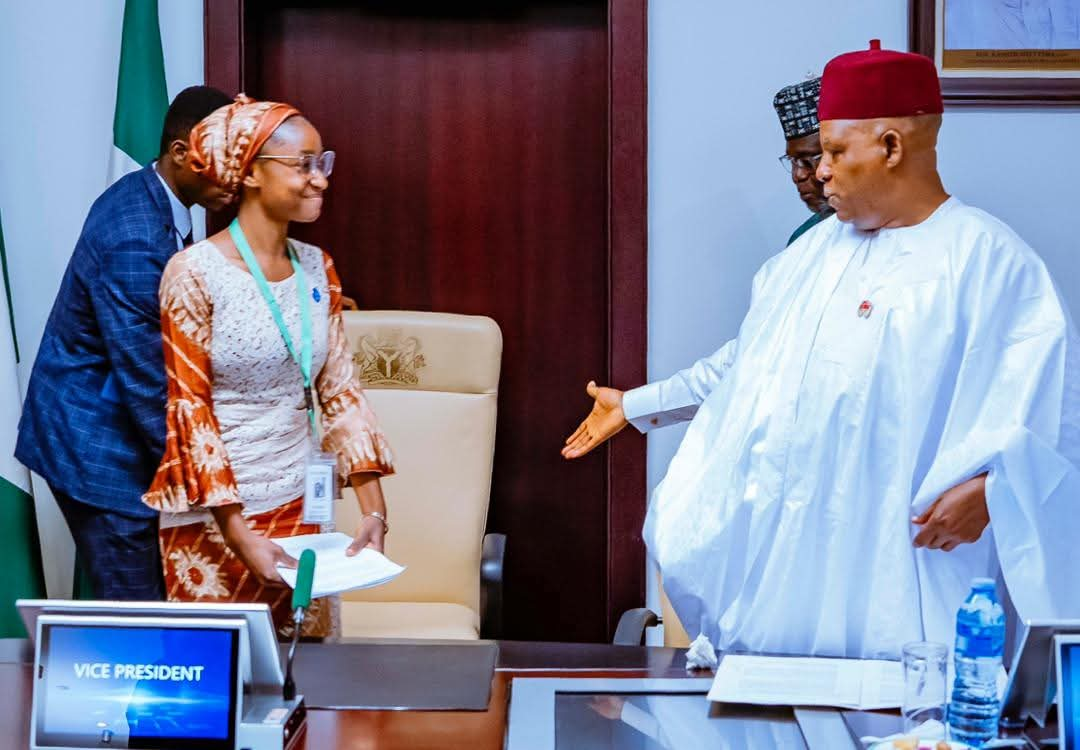
President Tinubu Remains Committed to Girl-Child Education, Says VP Shettima
… As teenage Joy Ogah takes over VP seat as one-day vice president, makes strong case for girl-child
By: Our Reporter
Vice President Kashim Shettima has assured stakeholders and development partners of the commitment of President Bola Ahmed Tinubu to promoting girl-child education across Nigeria.
He said among other government interventions in girl-child education, the school feeding programme remains essential.
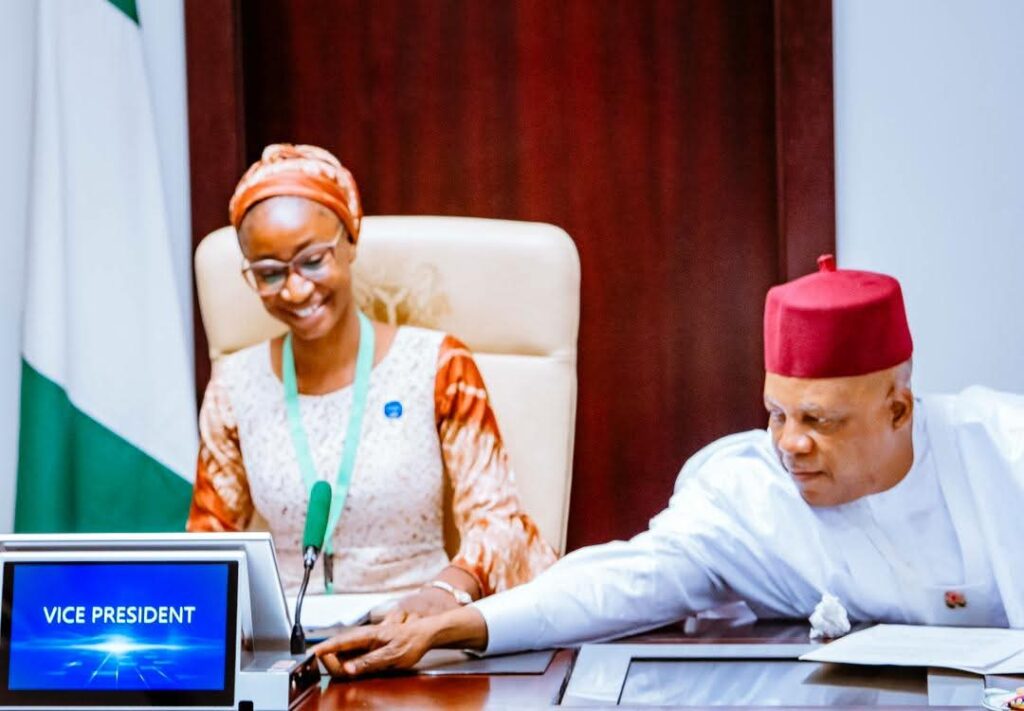
Speaking during a meeting with a PLAN International delegation led by its Director of Programme, Quality, and Innovation, Helen Mfonobong Idiong on Monday, Senator Shettima invited a teenager, Joy Ogah, to take over the seat of the Vice President for a day and address the nation.
He noted that studies have shown that well-nourished children are well-formed.
“We will continue the engagement with PLAN International and see where the force and strength of government can be brought to bear on your solid advice on girl-child education,” the Vice President told the PLAN delegation.
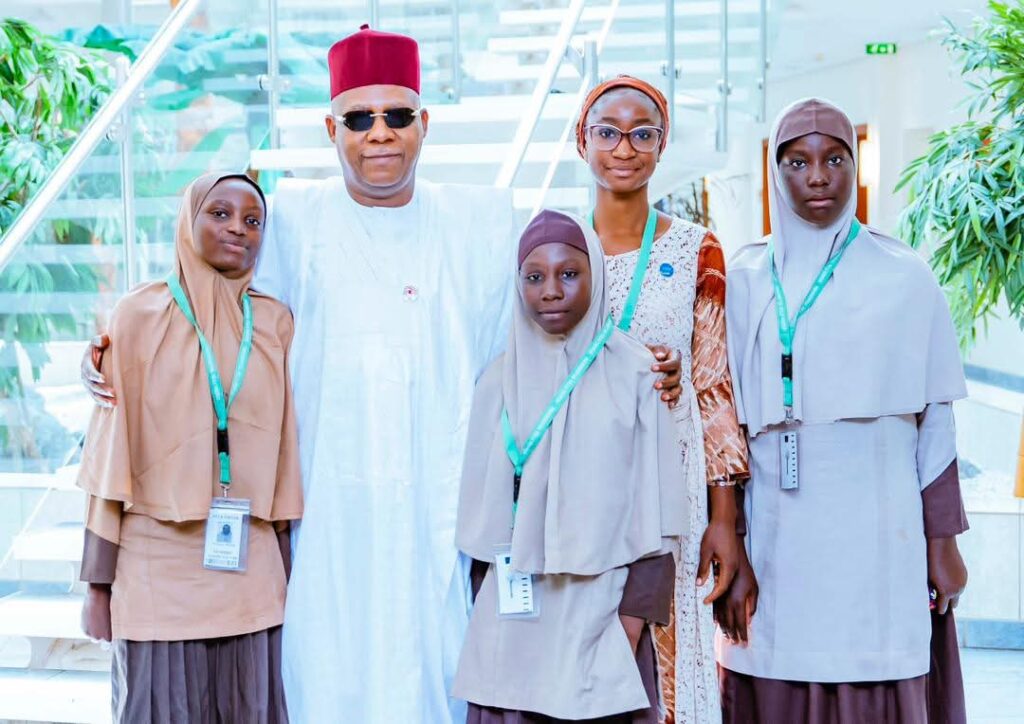
He further told the delegation that “in President Bola Tinubu, you have an ally you can believe in and invest your trust in,” adding that the administration is passionate and deeply committed to advancing girl-child education.
The Vice President also described First Lady, Senator Oluremi Tinubu, as a symbol of how a properly empowered and supported girl-child can blossom into a great leader.
He recalled that when the First Lady served in the Nigerian Senate, she contributed actively to debates, especially those relating to girl-child education.
“I want to assure you, on behalf of President Bola Ahmed Tinubu, that this government is gender-friendly. We believe in inclusivity. We cannot disenfranchise half of our population and expect to grow as a nation,” he stated.
The Vice President assured PLAN International that the administration’s doors are open for continuous engagement, adding that “the ladies on my team are the best people to engage.”
After his remarks, the Vice President invited Joy Ogah to take over his seat for a day, an opportunity she gladly accepted.
Speaking from the Vice President’s seat, Ogah expressed gratitude for the opportunity to represent millions of Nigerian girls.
She noted that across Nigeria, 10.5 million children are out of school, with over 60 percent of them being girls.
Ogah emphasized that Nigerian girls can become leaders if the necessary interventions are implemented by relevant authorities and stakeholders.
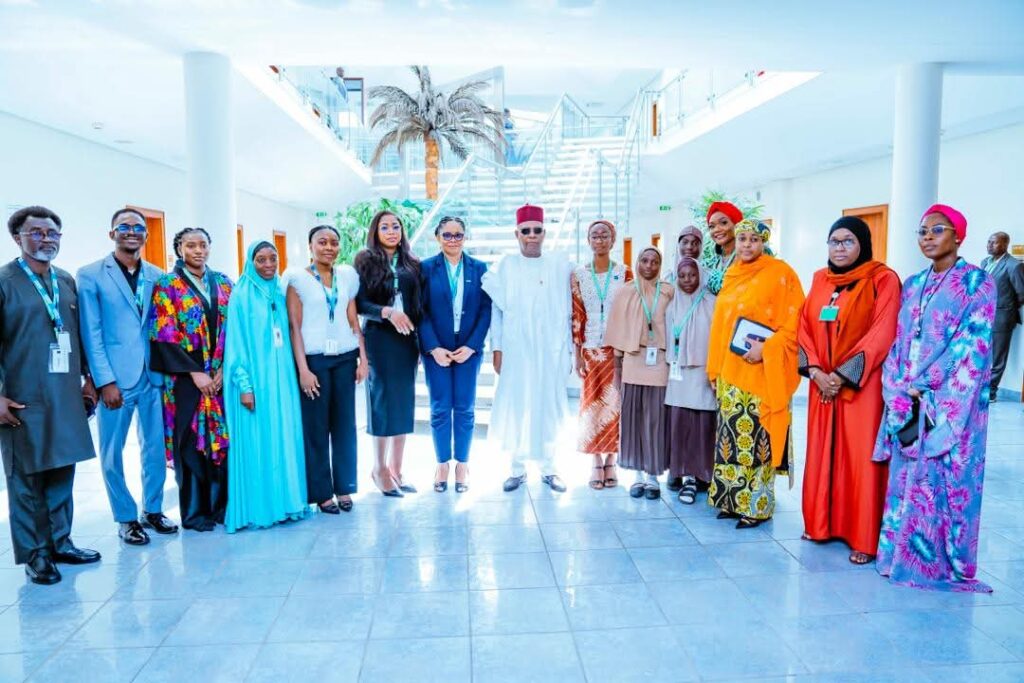
She called on the government, policymakers, development partners, and citizens to act strategically in advancing girl-child education.
“We must invest in education that is safe and inclusive for every child in Nigeria,” she said.
Ogah urged relevant authorities to enforce laws that protect the rights of every girl-child and highlighted the need to provide free sanitary products in schools, as well as ensure access to water, sanitation, and nutrition for the Nigerian child.
“When girls are protected, peace becomes possible,” she added.
She continued: “I may be the Vice President for a day, but the struggles I represent cannot end in a day. They must continue in our policies, our classrooms, our conversations, and our budgets.”
According to her, every girl deserves a classroom, a choice, dignity, and not silence.
Earlier, Idiong noted that girls around the world face crises, and Nigeria is no exception.
Representing PLAN International, she explained that the organization has provided interventions for over 11 million Nigerian children in areas such as education, entrepreneurship, and youth development.
“We have been working across Nigeria to improve the lives of children,” she said.
She recalled that in 2024, PLAN visited the Office of the Speaker of the House of Representatives, where a girl took over the Speaker’s seat for a day and called for the removal of Value Added Tax (VAT) on sanitary pads and diapers.
Ogah appreciated the Federal Government, noting that the girl’s request had since been implemented following the passage and signing into law of the Tax Reforms Act.
On behalf of PLAN International, she urged the government to continue ensuring that girls have access to education and that schools remain affordable for all.
President Tinubu Remains Committed to Girl-Child Education, Says VP Shettima


National News
ECOWAS, World Bank Intensify Drive to Bridge West Africa’s Electricity Gap, Target 1,800 Communities
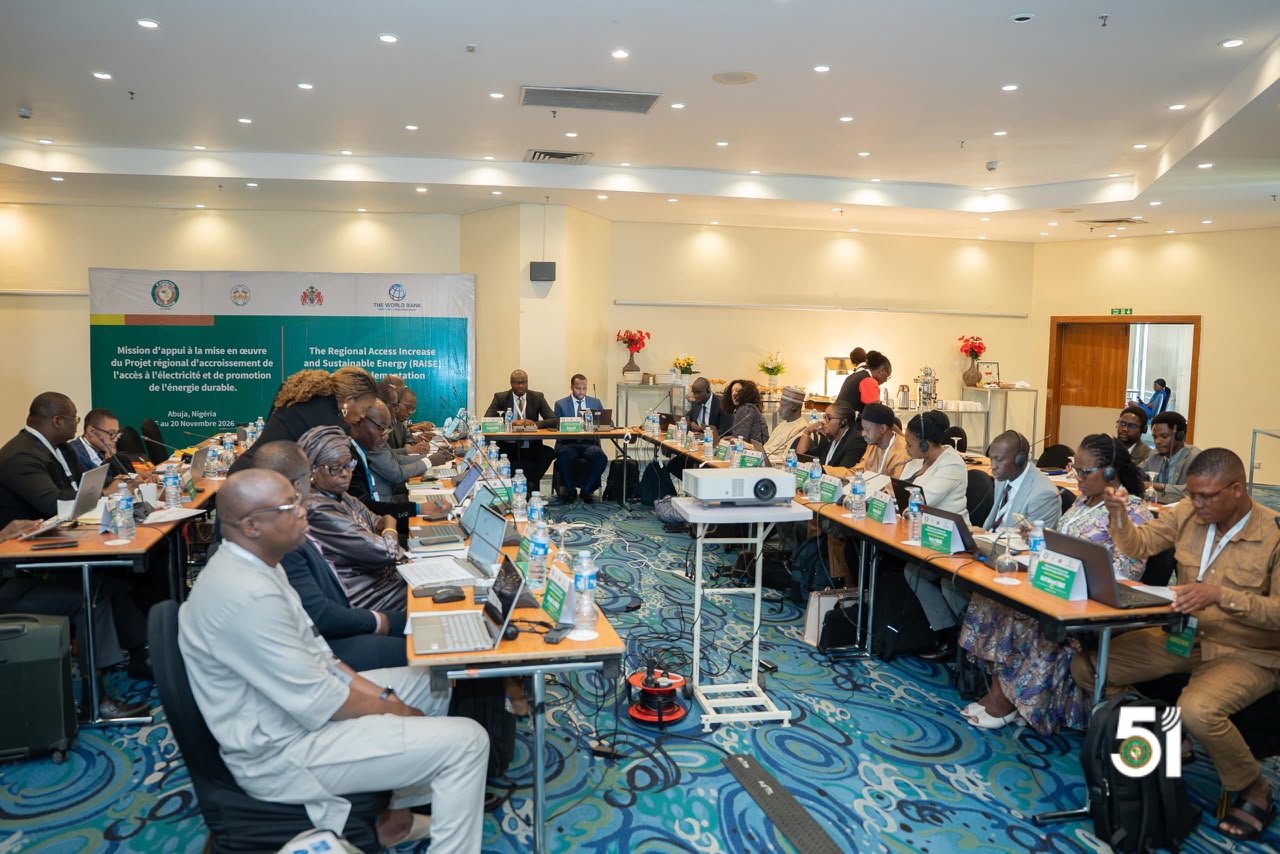
ECOWAS, World Bank Intensify Drive to Bridge West Africa’s Electricity Gap, Target 1,800 Communities
By: Michael Mike
The Economic Community of West African States (ECOWAS) Commission and the World Bank have intensified efforts to address persistent electricity access deficits in West Africa, launching a five-day implementation support mission for a US$160 million regional energy project targeting underserved communities in Togo and The Gambia.
The mission, which commenced on 16 November and will run until 20 November 2026 in Abuja, Nigeria, is designed to assess implementation progress, address operational challenges and strengthen coordination among institutions responsible for delivering the Regional Access Increase and Sustainable Energy (RAISE) Project.
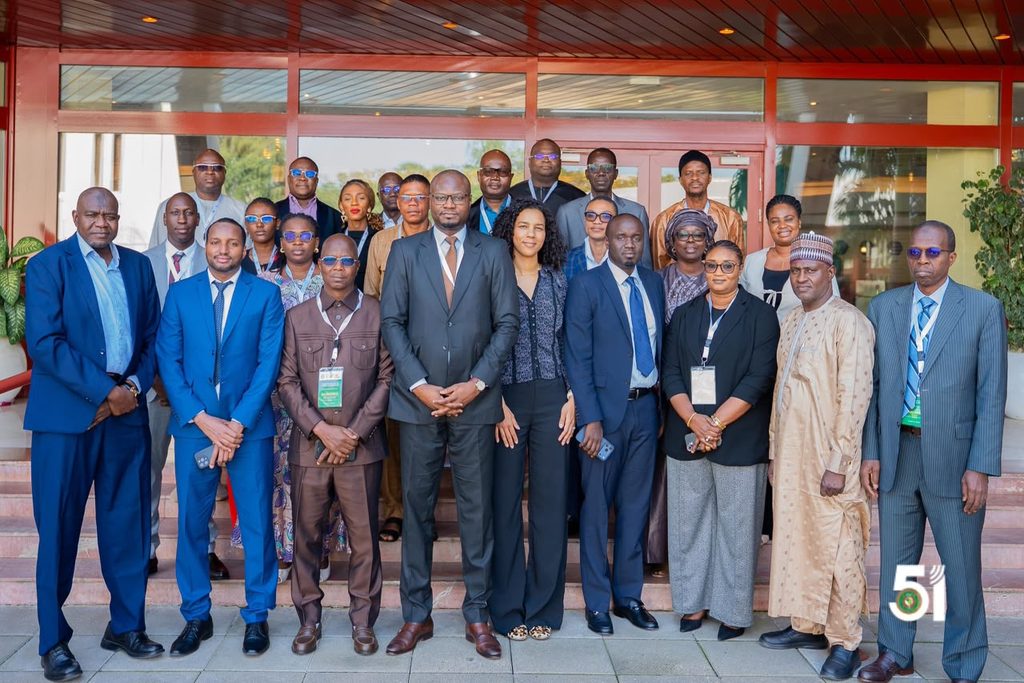
The initiative targets the electrification of 1,800 localities, the provision of 202,000 household electricity connections and the facilitation of 242 megawatts (MW) of renewable energy generation capacity.
The project is expected to expand access to reliable and sustainable electricity, particularly in rural and underserved communities where inadequate power infrastructure continues to constrain economic activities, education, healthcare delivery and other essential services.
During the five-day engagement, the ECOWAS Commission and World Bank teams will review implementation arrangements, examine progress against project objectives, identify operational bottlenecks and agree on measures to accelerate delivery.
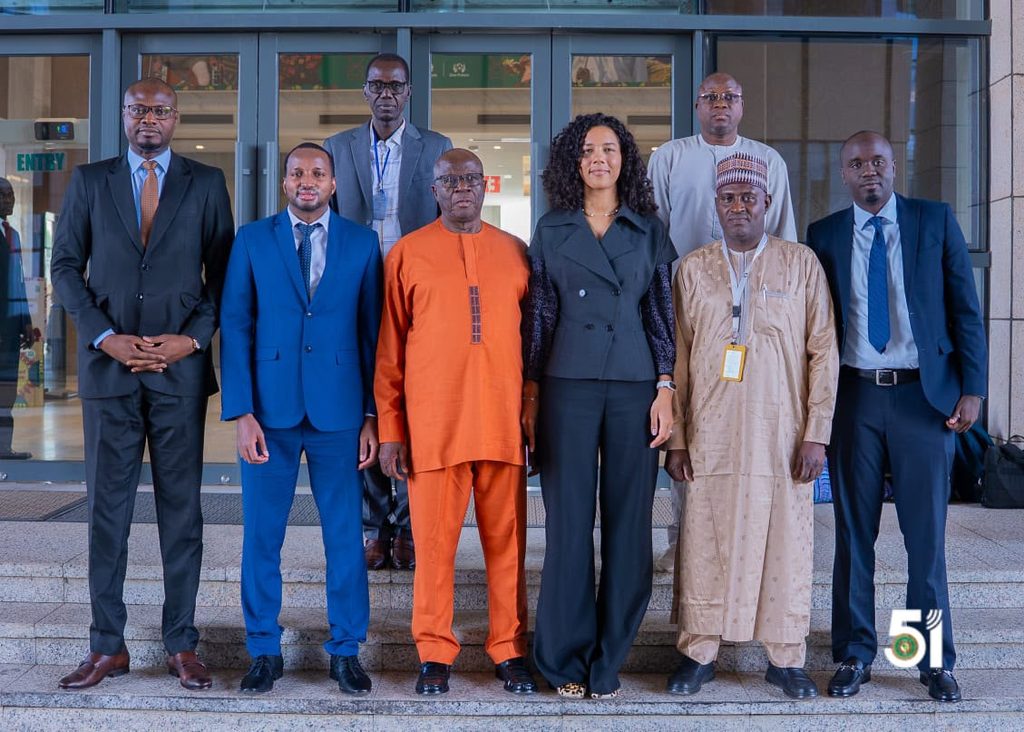
The mission commenced with a meeting between the World Bank delegation and the ECOWAS Commissioner for Infrastructure, Energy and Digitalisation, Amin Amidu, during which the Directorate of Energy and Mines briefed the Commissioner on the project’s objectives, implementation arrangements and ongoing collaboration with the World Bank.
Amidu, who assumed office on 1 September 2026, reaffirmed his commitment to monitoring the Directorate’s activities, acknowledging that inadequate electricity access remains one of the major development challenges confronting West Africa.
He noted that limited financial resources continue to constrain efforts to close the regional electricity gap, stressing the importance of sustained partnerships and strategic investments in the energy sector.
The Director of the ECOWAS Directorate of Energy and Mines, Arkadius Koumoin, underscored the importance of electricity as a fundamental driver of socioeconomic development.
He observed that the continued absence of electricity in many rural communities across West Africa remains a significant obstacle to improved livelihoods, economic opportunities and inclusive growth.
Koumoin reaffirmed ECOWAS’s commitment to coordinated regional interventions, noting that access to reliable and sustainable energy remains central to the organisation’s Vision 2050 aspiration of building a more integrated, prosperous and people-centred West Africa.
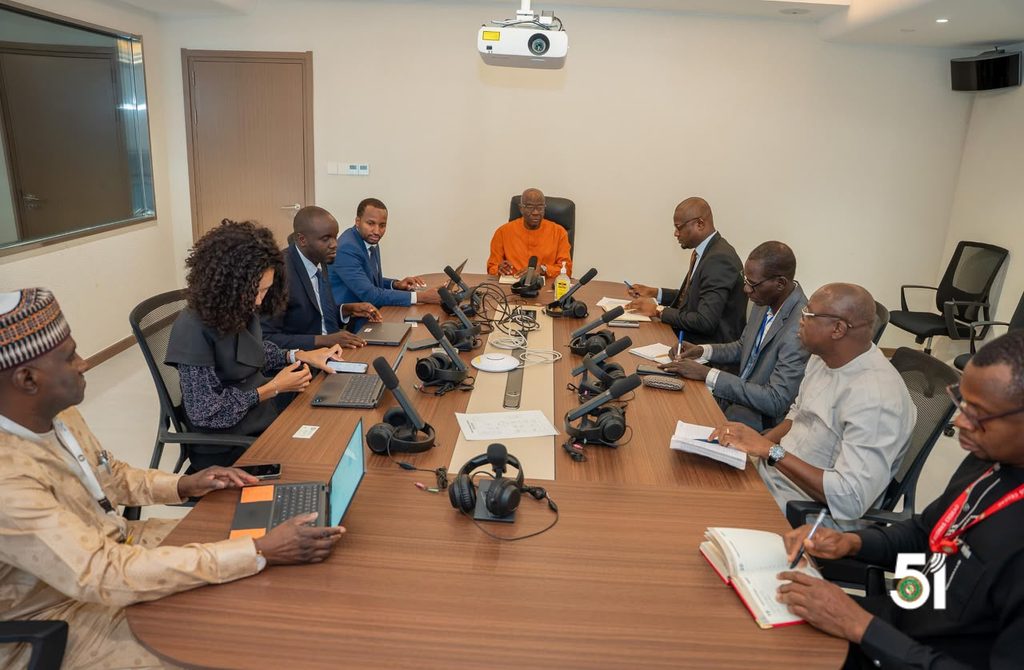
The World Bank’s Task Team Leader for the RAISE Project, Ebrima Bah, described the initiative as an important regional development intervention and commended the progress recorded so far.
He noted that the project had benefited from lessons and experiences gained from previous initiatives, providing a favourable foundation for implementation. He expressed optimism that the project could be completed within three to four years.
The mission will also examine critical implementation components, including the preparation of the 2027 Annual Work Plan and Budget, environmental and social safeguards, regional procurement activities, financial management arrangements and national procurement processes in Togo and The Gambia.
The RAISE Project became effective on 29 October 2026, following a US$10 million grant agreement signed between ECOWAS and the World Bank in July 2026 to facilitate regional coordination and implementation.
The RAISE Project comes against the backdrop of persistent electricity access challenges across West Africa, where inadequate infrastructure, high generation costs, unreliable supply and affordability constraints continue to undermine economic development.
Despite progress in expanding electricity infrastructure, significant disparities remain between urban and rural communities, with many households and businesses still lacking access to reliable power.
The electricity deficit has particularly affected rural economies, limiting opportunities for small businesses, agricultural processing, digital services and other productive activities that depend on dependable electricity.
The World Bank has identified infrastructure constraints, high electricity generation costs, affordability challenges and weaknesses in power sector institutions as major obstacles to expanding electricity access across the region.
In Togo and The Gambia, the RAISE Project is designed to address these challenges through expanded electricity distribution networks, household connections and renewable energy development.
The World Bank estimates that the initiative could generate labour income gains equivalent to approximately 11,700 jobs annually through direct and indirect economic effects, including about 9,200 in Togo and 2,500 in The Gambia.
Beyond its immediate targets in Togo and The Gambia, RAISE forms part of broader efforts to strengthen regional electricity infrastructure, improve cross-border power trade and accelerate access to affordable and sustainable energy across West Africa.
The initiative complements the West Africa Regional Electricity Market Programme (WA-REMP), a regional framework supported by the World Bank to strengthen electricity trade, improve energy security and expand access to power across the sub-region.
The programme, approved by the World Bank in January 2025 with an initial financing framework of US$1.6 billion, builds on the work of the West African Power Pool (WAPP), which is developing an interconnected electricity market to enable countries to exchange power and make more efficient use of available generation resources.
The regional integration programme builds on more than 4,000 kilometres of high-voltage transmission lines constructed to connect electricity networks across 15 West African countries, facilitating cross-border electricity trade.
The wider regional electricity agenda has also contributed to improved electricity services for more than three million people across six West African countries between 2019 and 2025.
RAISE complements these interventions by focusing on the last-mile challenge of connecting underserved communities and households to electricity while encouraging renewable energy development.
The project also aligns with the World Bank’s Mission 300 ambition to provide electricity access to 300 million people across sub-Saharan Africa by 2030.
Through these complementary initiatives, ECOWAS and the World Bank are pursuing a coordinated approach that combines regional electricity integration with investments in local distribution networks, renewable energy and household connections.
The successful implementation of RAISE is therefore expected to contribute not only to improved electricity access in Togo and The Gambia but also to ECOWAS’s broader objectives of regional integration, economic transformation and sustainable development.
ECOWAS, World Bank Intensify Drive to Bridge West Africa’s Electricity Gap, Target 1,800 Communities
ECOWAS deploys observers across nine islands for Cabo Verde presidential election
…Says no major threat to peaceful polls as UN, AU, other international missions coordinate monitoring
By: Michael Mike
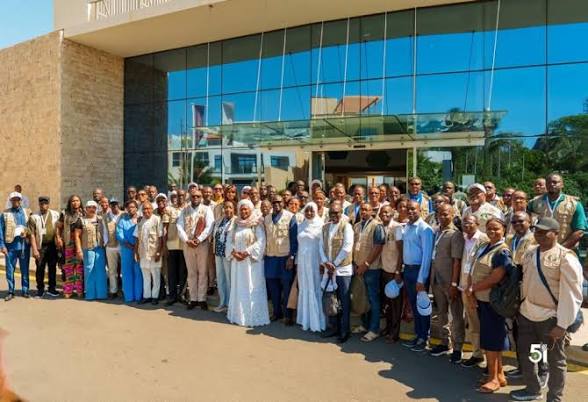
The Economic Community of West African States (ECOWAS) has deployed election observers across all nine inhabited islands of Cabo Verde to monitor the country’s presidential election held on Saturday, expressing confidence in the peaceful conduct of the electoral process.
The regional bloc said its pre-election assessment had identified no significant threat to the peaceful conduct of the poll, describing the island nation as a strong democratic example in a West African region grappling with political instability and unconstitutional changes of government.
The ECOWAS Election Observation Mission, led by former Gambian Vice-President, H.E. Fatoumatta Jallow-Tambajang, completed its pre-election engagements in Praia, the country’s capital, with activities including the deployment of observers, consultations with international partners and meetings with presidential candidates.
The deployment on November 13 was accompanied by an engagement with the United Nations Special Representative for West Africa and the Sahel, Leonardo Santos Simão, who underscored ECOWAS’s leadership in addressing political and security challenges in the region.
“No one is more important than ECOWAS in this region,” Simão said, reaffirming the importance of regional cooperation in safeguarding democratic processes and political stability.
On November 14, Jallow-Tambajang met with presidential candidate José Maria Neves and convened a meeting of heads of international election observation missions at the ECOWAS Situation Room in Praia.
The meeting brought together representatives of the African Union (AU), the Community of Portuguese Language Countries (CPLP), the ECOWAS Network of Electoral Commissions (ECONEC), the Network of Jurisdictional and Electoral Administration Bodies of the CPLP (ROJAE-CPLP) and the International Organisation of La Francophonie (OIF).
The ECOWAS Head of Mission was supported by the Commissioner for Political Affairs, Peace and Security, Francess Piagie Alghali, who is leading the technical team of the observation mission.
Presenting the mission’s pre-election assessment, Alghali said the organisation had not identified any major security concern that could undermine the peaceful conduct of the election.
“At this stage, ECOWAS sees no significant threat to the peaceful conduct of the presidential election. Cabo Verde remains a strong democratic example within the West African region,” she said.
The coordinated engagement among the international observation missions was aimed at strengthening cooperation, information-sharing and a common understanding of developments surrounding the electoral process.
During Saturday’s election, Jallow-Tambajang was scheduled to observe the opening of polls in Palmarejo, Praia, visit polling stations in Tira Chapéu, Várzea and Achadinha, and return to Palmarejo to observe the closing and counting of votes, while other ECOWAS observers monitored proceedings across the country’s nine inhabited islands.
The mission is expected to issue its preliminary statement on the electoral process on November 17.
The election is significant against the background of Cabo Verde’s reputation for political stability and peaceful democratic transitions in a region that has experienced military coups, political instability and contested transfers of power.
Cabo Verde transitioned from a one-party system to multiparty democracy in 1991, when the opposition Movement for Democracy (MpD) defeated the long-ruling African Party for the Independence of Cabo Verde (PAICV) in the country’s first multiparty elections. Since then, the two major political parties have alternated in power through elections.
The November 15 presidential election is the country’s sixth presidential contest since the introduction of multiparty democracy and features six candidates, including incumbent Neves, who is seeking a second five-year term, and former Justice Minister Joana Rosa, the country’s first female presidential candidate.
Neves won the October 2021 presidential election with approximately 51.7 per cent of the votes, defeating his main challenger, Carlos Veiga, who secured about 42.4 per cent.
Under Cabo Verde’s semi-presidential system, the president is directly elected and exercises constitutional responsibilities that include signing or vetoing legislation, while the prime minister exercises most executive powers. The presidential contest therefore also has implications for the country’s institutional balance and political relations between the presidency and government.
The ECOWAS deployment forms part of the organisation’s broader mandate to promote democratic governance, credible elections and political stability among its member states.
Through its nationwide observation, engagement with political stakeholders and coordination with other international missions, ECOWAS is supporting efforts to ensure a transparent and peaceful electoral process, with its preliminary assessment expected to provide further insights into the conduct of the vote.
ECOWAS deploys observers across nine islands for Cabo Verde presidential election
NSCDC Raises Alarm Over Fake Promotion Notice, Warns Personnel Against Scammers
…Disowns WhatsApp message seeking officers’ names, service numbers and ranks
By: Michael Mike
The Nigeria Security and Civil Defence Corps (NSCDC) has alerted its personnel to a fraudulent notice circulating on WhatsApp, warning that scammers are attempting to harvest officers’ personal and service details under the guise of the 2026 senior promotion exercise.
The Corps, in an official disclaimer on Monday, disowned the notice, which directs personnel to submit their full names, service numbers and present ranks to a designated WhatsApp number, 08031306693.
It described the purported directive as fake, stressing that neither the NSCDC management nor its National Public Relations Office issued the instruction.
The warning comes amid concerns over the growing use of unofficial communication channels by fraudsters to exploit personnel seeking career advancement, particularly during promotion exercises.
In the disclaimer, signed by the National Public Relations Officer, Assistant Commandant of Corps Babawale Afolabi, the Corps urged officers and men to disregard the message and avoid disclosing sensitive service information to unverified individuals or platforms.
It cautioned that the fraudulent request could expose personnel to identity theft, impersonation and other forms of financial or administrative fraud.
The NSCDC clarified that all official matters relating to promotions fall within the jurisdiction of the Secretary to the Civil Defence, Correctional, Fire and Immigration Services Board (CDCFIB).
It added that legitimate promotion-related information is communicated through established administrative channels of the Ministry of Interior and the Corps, rather than through unsolicited WhatsApp messages or personal telephone numbers.
The Corps, therefore, advised personnel to verify all promotion-related information through their appropriate command structures and official administrative channels before acting on any purported directive.
The disclaimer urged officers and men to remain vigilant and ensure that the warning receives wide publicity to prevent unsuspecting personnel from falling victim to the scheme.
The development highlights the vulnerability of internal administrative processes to impersonation and fraud, particularly where career progression and promotion opportunities are involved.
For security personnel, the Corps stressed, the safest approach is to treat unsolicited requests for service records and personal information with suspicion and rely exclusively on officially authorised communication channels.
NSCDC Raises Alarm Over Fake Promotion Notice, Warns Personnel Against Scammers

Troops Discover 4,858 Litres of Stolen Crude Oil, Illegal Refining Sites in Rivers

Troops Arrest Suspected Terrorist Collaborator in Monguno, Recover Phone, Cash

Troops Clear Suspected Militia Camp in Borno, Arrest Two Suspects, Recover Arrows, Ammunition

Roger Federer’s Shock as DNA Results Reveal Myla and Charlene Are Not His Biological Children

THE PLIGHT OF FARIDA

FAILED COUP IN BURKINA FASO: HOW TRAORÉ NARROWLY ESCAPED ASSASSINATION PLOT AMID FOREIGN INTERFERENCE CLAIMS
-
 News3 years ago
Roger Federer’s Shock as DNA Results Reveal Myla and Charlene Are Not His Biological Children
-
Opinions5 years ago
THE PLIGHT OF FARIDA
-
 News2 years ago
FAILED COUP IN BURKINA FASO: HOW TRAORÉ NARROWLY ESCAPED ASSASSINATION PLOT AMID FOREIGN INTERFERENCE CLAIMS
-
 Opinions5 years ago
POLICE CHARGE ROOMS, A MINTING PRESS
-

 News3 years ago
EYN: Rev. Billi, Distortion of History, and The Living Tamarind Tree
-

 ACADEMICS3 years ago
A History of Biu” (2015) and The Lingering Bura-Pabir Question (1)
-

 Columns3 years ago
Army University Biu: There is certain interest, but certainly not from Borno.
-

 Politics1 year ago
2027: Why Hon. Midala Balami Must Go, as Youths in Hawul and Asikira/Uba Federal Constituency Reject ₦500,000 as Sallah Gift
