Education
Professor Ahmed Ahidjo: A New Medical Elder Rises at Nile University

Professor Ahmed Ahidjo: A New Medical Elder Rises at Nile University
By: Dr. James Bwala
The medical profession is built not only on scientific knowledge, technical skill, and clinical experience, but also on mentorship, leadership, service, and the willingness to inspire future generations. It is against this background that Professor Ahmed Ahidjo’s recognition as a medical elder by Nile University of Nigeria is both appropriate and significant. His career reflects the highest ideals of medical practice and academic excellence. As a former chief medical director of the University of Maiduguri Teaching Hospital, the first professor of interventional radiology, and a distinguished teacher and mentor, Professor Ahidjo represents the kind of medical leader whose contributions deserve national recognition.
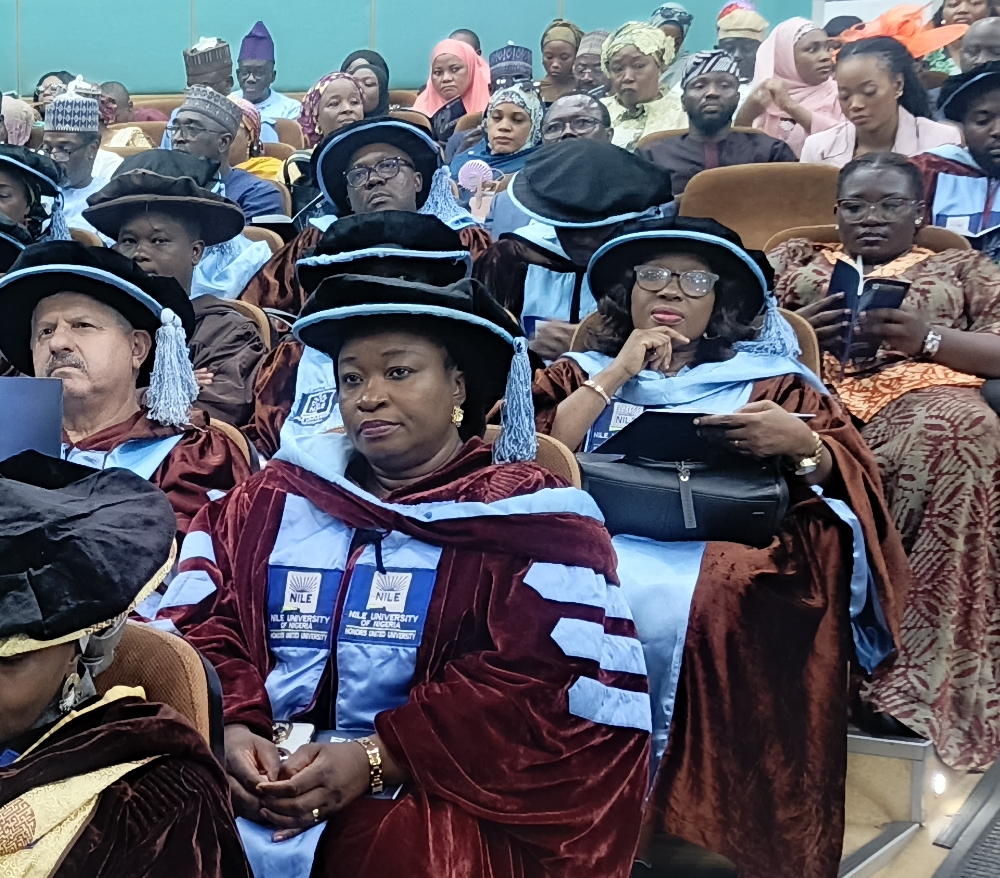
His presence as guest speaker at the 5th Attestation Ceremony of the 75 MBBS Class of 2025/2026 gave the occasion a deeper meaning. The ceremony was not merely a formal event marking the professional transition of medical students. It was also an opportunity for the students to encounter a model of what their careers could become if they combined discipline, knowledge, leadership, and compassion. By conferring on him the title of Medical Elder, Nile University acknowledged not only Professor Ahidjo’s past achievements but also his continuing relevance to the future of medicine in Nigeria.


Professor Ahidjo’s professional record is compelling. During his tenure as Chief Medical Director of the University of Maiduguri Teaching Hospital, he led a remarkable expansion of the institution from approximately 600 beds to more than 1,600 beds. This achievement was not simply a matter of increasing physical capacity. It represented an expansion of access to healthcare, an improvement in institutional ambition, and a demonstration of what purposeful leadership can achieve even in a challenging healthcare environment.
READ ALSO: https://newsng.ng/2027-no-sacred-cows-atikus-record-must-face-scrutiny/
A hospital’s development requires more than administrative authority. It demands strategic planning, effective resource management, staff motivation, infrastructure development, and a clear understanding of the needs of the surrounding population. Expanding a teaching hospital to such a scale requires the ability to coordinate medical personnel, administrators, government institutions, academic bodies, and patients. Professor Ahidjo’s achievement therefore illustrates a rare combination of clinical knowledge and institutional leadership.
The growth of the University of Maiduguri Teaching Hospital under his leadership also highlights the importance of strong public medical institutions. Teaching hospitals are not only treatment centers; they are also places of learning, research, professional training, and innovation. Their strength determines the quality of doctors, nurses, radiographers, pharmacists, and other health professionals produced for the country. By strengthening the hospital’s capacity, Professor Ahidjo contributed not only to the immediate needs of patients but also to the education and training of future healthcare professionals.


His achievements have earned him numerous honors, reflecting the respect of his colleagues, students, institutions, and the wider medical community. However, the most meaningful aspect of these honors is what they represent: years of dedication to medicine, education, leadership, and public service. Recognition is important when it brings attention to a life that has made a difference in the lives of others. In Professor Ahidjo’s case, his honors are evidence of sustained contribution rather than isolated success.
READ ALSO: https://newsng.ng/2027-no-sacred-cows-atikus-record-must-face-scrutiny/
His recognition at Nile University was particularly fitting because the university is committed to producing competent and socially responsible professionals. Medical education must go beyond memorising facts or passing examinations. It must prepare students to address complex health problems, communicate effectively with patients, adapt to technological change, and serve society with integrity. The presence of an accomplished physician such as Professor Ahidjo reinforced this broader purpose of medical education.
During his address, Professor Ahidjo commended the vice chancellor of Nile University of Nigeria, Professor Dilli Dogo, for the mentorship he provided while they were students at the medical college of the University of Maiduguri. This aspect of the speech held particular significance, as it illustrated that professional success seldom occurs in isolation. Behind many accomplished physicians are teachers who provided guidance, encouragement, discipline, and intellectual direction.

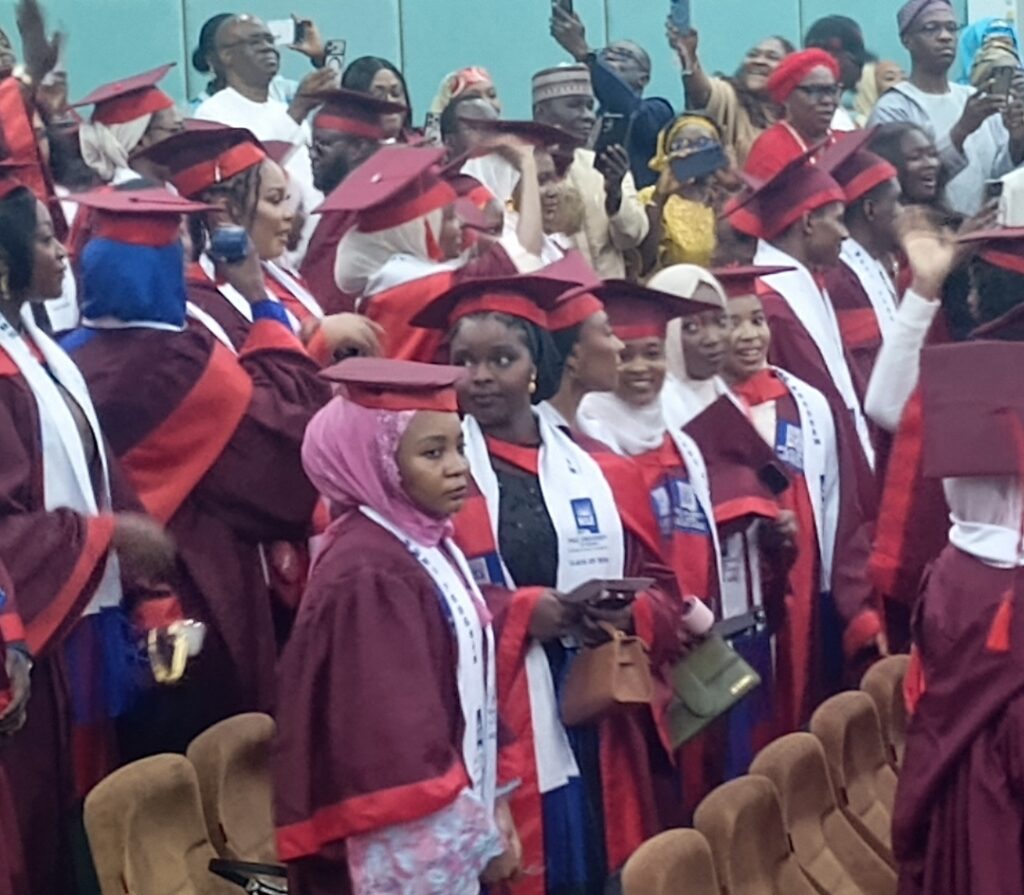
Mentorship is one of the most powerful traditions in medicine. Medical students require more than textbooks and lectures. They need experienced professionals who can help them understand the responsibilities of the profession and guide them through its difficulties. A mentor helps students develop confidence without arrogance, ambition without selfishness, and technical competence without losing compassion. Professor Dogo’s influence on Professor Ahidjo and his colleagues shows how one generation of medical educators can shape the next.
READ ALSO: https://newsng.ng/2027-no-sacred-cows-atikus-record-must-face-scrutiny/
By publicly acknowledging Professor Dogo’s mentorship, Professor Ahidjo also offered an important lesson to the graduating students. They should not regard their education as the result of their efforts alone. Their progress has been supported by lecturers, clinical supervisors, parents, colleagues, administrators, and the wider society. Gratitude, humility, and a willingness to support others are essential qualities in medical professionals.
Professor Ahidjo’s lecture also addressed an area that is often misunderstood: the distinction between radiology and radiography. Although the terms are closely related, they refer to different areas of professional practice. Radiography generally involves the use of imaging equipment to produce diagnostic images, including X-rays, computed tomography scans, and other forms of medical imaging. Radiographers are trained to operate imaging equipment, position patients appropriately, ensure image quality, and maintain radiation safety.


Radiology, on the other hand, is a medical specialty concerned with interpreting medical images and using imaging techniques to diagnose and sometimes treat diseases. Radiologists are medical doctors who undergo specialized training in the interpretation of images and, in some cases, in performing image-guided procedures. Clarifying this distinction is important because misunderstandings about professional roles can affect public perception, teamwork, and the quality of healthcare delivery.
READ ALSO: https://newsng.ng/2027-no-sacred-cows-atikus-record-must-face-scrutiny/
Modern medicine depends heavily on collaboration among different professionals. Radiologists, radiographers, nurses, surgeons, physicians, laboratory scientists, and other specialists must work together to provide accurate diagnosis and effective treatment. When each professional role is properly understood and respected, the healthcare system becomes more efficient. Professor Ahidjo’s explanation therefore went beyond technical definitions; it promoted a clearer understanding of how different professionals contribute to patient care.
A particularly significant part of his presentation was his discussion of interventional radiology. As the first professor of interventional radiology, Professor Ahidjo is exceptionally qualified to explain the importance of this specialized field. Interventional radiology involves the use of medical imaging to guide minimally invasive procedures for diagnosing and treating diseases. Instead of relying solely on open surgery, specialists can often reach affected parts of the body through small punctures, catheters, needles, or other instruments.


His comparison of interventional radiology to plumbing work offered a simple and effective way of explaining the specialty. Just as a plumber clears a blockage in a pipe without replacing the entire system, an interventional radiologist can treat a blockage in an artery without performing extensive surgery. Through imaging guidance, the physician can identify the problem, navigate to the affected area, and restore blood flow or deliver treatment with minimal disruption to the patient’s body.
READ ALSO: https://newsng.ng/2027-no-sacred-cows-atikus-record-must-face-scrutiny/
This approach can reduce pain, shorten hospital stays, lower the risk of complications, and allow patients to recover more quickly. Procedures that once required major operations may now be performed through minimally invasive techniques. These advances are especially important in cardiovascular care, cancer treatment, stroke management, vascular disease, and several other medical conditions.

The development of interventional radiology demonstrates how medical practice continues to evolve through the combination of science, technology, and clinical expertise. It also shows why medical education must remain dynamic. Future doctors cannot depend only on traditional methods of diagnosis and treatment. They must understand emerging technologies and be prepared to collaborate across disciplines. Institutions such as Nile University have an important responsibility to expose students to these developments and encourage them to participate in research and innovation.
Professor Ahidjo’s presentation was persuasive because it connected advanced medicine with simple explanations that students and members of the audience could understand. A medical expert’s ability to communicate complex ideas clearly is as important as technical knowledge itself. Doctors must explain diagnoses, treatment options, risks, and procedures to patients who may have little medical background. Clear communication promotes trust, improves compliance, and helps patients make informed decisions.
READ ALSO: https://newsng.ng/2027-no-sacred-cows-atikus-record-must-face-scrutiny/
The conferment of the title Medical Elder on Professor Ahmed Ahidjo should therefore be understood as more than a ceremonial honor. It is a recognition of a life dedicated to strengthening medicine in Nigeria. It celebrates his contributions as a physician, professor, administrator, mentor, and pioneer of interventional radiology. It also places upon him the symbolic responsibility of continuing to guide and inspire younger professionals.
At the same time, the honor reflects well on Nile University of Nigeria and its leadership under Professor Dilli Dogo. Universities should recognize individuals whose work advances their academic and professional communities. By honouring Professor Ahidjo, the institution has affirmed the value of experience, service, innovation, and mentorship. It has also sent a message to its medical students that professional success should be measured not only by personal achievement but also by the positive impact one makes on patients, institutions, and society.

The MBBS Class of 2025/2026 is fortunate to have received its professional inspiration from such a distinguished figure. Their attestation marks the beginning of a demanding journey. They will face difficult decisions, long hours, emotional pressure, and the constant need to update their knowledge. Yet Professor Ahidjo’s career demonstrates that challenges can be transformed into opportunities for service and institutional growth.
READ ALSO: https://newsng.ng/2027-no-sacred-cows-atikus-record-must-face-scrutiny/
As these new set doctors progress in their careers, they should remember the central lessons of the occasion: leadership must be accompanied by service; knowledge must be joined with humility; innovation must respond to human needs; and success becomes more meaningful when it is used to lift others. They should also appreciate the value of mentorship and, in time, become mentors to those who follow them.
Professor Ahmed Ahidjo is deserving of his place as a new medical elder at Nile University of Nigeria. His record of transforming the University of Maiduguri Teaching Hospital, his pioneering contribution to interventional radiology, his academic achievements, and his commitment to mentorship all establish him as an exceptional medical leader.
* James Bwala, PhD, writes from Abuja.
Professor Ahmed Ahidjo: A New Medical Elder Rises at Nile University