
Features/Analysis
Re: Africa Intelligence’s “Tinubu still struggling to organise foreign ministry, one year after election”; Rebuffing the Falsehood Peddled by Africa Intelligence Article about the Minister of Foreign Affairs and the Ministry

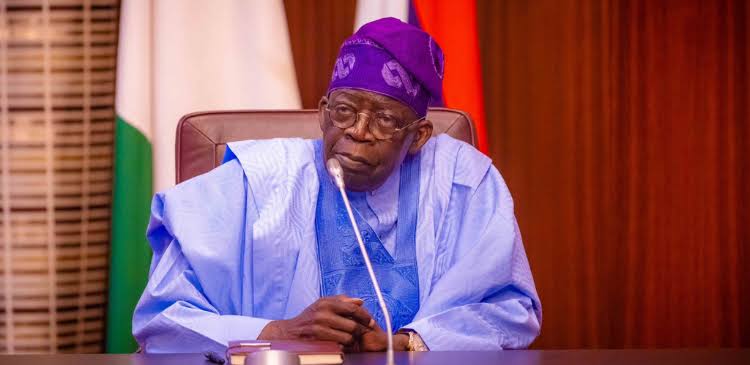
Re: Africa Intelligence’s “Tinubu still struggling to organise foreign ministry, one year after election”; Rebuffing the Falsehood Peddled by Africa Intelligence Article about the Minister of Foreign Affairs and the Ministry
By: John Okeyson
One of the fundamental principles of a true journalistic enterprise is objectivity and the propagation of truth based on research facts and data which enables the dissemination of concrete information to the public. The representation of facts is not only necessary but strengthens the democratic process in any society as it enables citizens to become aware of the true picture of things thereby eschewing falsehood and unfounded sentiments.
However, when a reputable media platform like Africa Intelligence jettisons the ethics of the journalistic profession to propagate assumptions and incorrect, it not only demeans the profession but questions the integrity of the media profession. It is for this reason that this reason that it is expedient to set the record straight with records to the allegations raised, particularly concerning the person and ability of the Honourable Minister of Foreign Affairs, Ambassador Yusuf Maitama Tuggar.
Firstly, the article by Africa Intelligence commences by raising a false alarm regarding the state of affairs in the Ministry of Foreign Affairs, which is a clear pointer to the fact that the writer of the article had no objectivity in mind while writing the diatribe against the Minister and Ministry. The opening of the article reads; “Understaffed, a minister frequently absent from his home country, ambassadors recalled to Abuja… Nigeria’s foreign ministry is in disarray, even though the president has been chair of ECOWAS since last July.”
This statement is a clear testament to the unholy motive of the writer of the article as in one sentence it discredits and raises a false alarm by insinuating that the Ministry of Foreign Affairs has not been under a capable leadership since the administration of President Tinubu Administration by declaring that the “Nigeria’s foreign ministry is in disarray”, the writer also states albeit authoritatively that “a minister frequently absent from his home country” implying that the Minister of Foreign Affairs Ambassador Tuggar has not been attending to his obligation not being around to oversee the affairs of the ministry. This portrayal is a careless display of lack of professionalism and dubious intentions on the part of the writer of the article, Africa Intelligence.
It is disingenuous for any follower of the activities of the Ministry of Foreign Affairs to suggest that the ministry is in disarray given the proactive disposition of the Minister who has been extremely active since he assumed office in August 2023.
Ambassador Tuggar upon assumption of office did not shy away from the ECOWAS crisis he met on the ground, he swiftly engaged in diplomacy to contain the multiple effects of the crisis that threatened ECOWAS’ existence by continually advocating for a diplomatic solution to the impasse rather than the military intervention earlier declared by ECOWAS before he assumed office. Until the recent allegation of sexual harassment against the former Permanent Secretary of the Ministry, the Minister maintained cordial working relations ensuring that the programmes and activities of the Ministry went on as statutorily mandated by the ethics that foregrounds the operations of the Ministry.
There has never been untoward news about any crisis in the Ministry, the erstwhile Permanent Secretary Dr. Adamu Ibrahim Lamuwa discharged his role as the Permanent Secretary in the absence of the Minister even representing the Ministry on behalf of the Ministry while the Minister was attending to other official matters. It is therefore unfounded that Africa Intelligence would write that the Ministry has been in disarray.
There is no single piece of evidence advanced to back up such an outrageous claim by African Intelligence.
Secondly, the article alleges that foreign diplomats in Abuja have remained confused as a result of the absence of the Minister to attend to his official engagement with them. This is farther from the truth. The Minister has been very much available to receive and engage with diplomats in Nigeria since he assumed office in 2023.
Last year, he held a reception in honour of members of the diplomatic community where he formally met with the diplomatic community in Nigeria at the Ministry’s headquarters in Abuja. Ever since, he has received and welcomed diplomats from around the world and when he is away on official visits, the Permanent Secretary took charge in discharging these responsibilities as contained in the various news reports obtainable in the Nigerian media.
Thus, it is false to suggest that the diplomats are confused with regards to their engagement in the country. A simple Google search would have averted this obvious misinformation by the writers of the article.
The Minister has been actively involved his duties both at home and away representing Nigeria at critical global events as it were. In 2024, the Minister has hosted the Secretary of State of the United States of America in Nigeria as he has done to other foreign envoys since assumption of office, thus, it beggars belief that anyone would suggest that the Ministers has not been living up to the responsibilities of his office as Minister of Foreign Affairs.
The Ministry of Foreign Affairs is overseen by the Minister and the Permanent Secretary and since assumption of office, Ambassador Tuggar has pursued a collaborative system of administration where the Permanent Secretary takes full charge when the Minister is away on official duties. To suggest a gap in the administration of the Ministry is to insinuate that the Ministry has not structure and is not guided by ethics.
This is preposterous to say least that anyone would think that the Ministry suffers because the Minister is away on official duties outside the countries. It betrays a clear lack of research and information on the part of Africa Intelligence. It is appalling to think that Google is just a click away to verify the operations of the Ministry.
The Permanent Secretary is the statutory authority that provides oversight in the absence of the Minister and this status quo has not changed since the Minister assumed office.
The article also alleges that the Ministry suffers once the Minister is away on official duties because of the absence of a Secretary of State.
One might then ask what the role of the Permanent Secretary to the Ministry if the activities of the Ministry would be halted because of the absence of the Minister the Ministry will function even without the presence of the Minister like it did before the Minister was appointed. Equally, the article insinuates that the “Tuggar is reputed to be less easy to get hold of than is predecessor, Geoffrey Onyeama, thereby suggesting that the Minister is inaccessible and a difficult leader.
This is a blatant fallacy invented by the writers of the article to paint Ambassador Tuggar as a difficult and inaccessible leader, almost suggesting him to be some sort of a dictator. This is clearly a manifest display of bias and hate towards a man they have not taken their time to understand.
It is sad that the noble profession of journalism has been reduced to a market place enterprise where people write without facts and recourse to the damage that they cause to the subjects of their vile vituperations often guised as social commentary. The sheer comparison of Ambassador Tuggar to Onyeama explains the insincerity of the writers of the article. It is not only a shame but a disregard for the noble profession of journalism.
The article also suggests that the acting Permanent Secretary of the Ministry, Ambassador Ben Okoyen is new therefore does not have the capacity to handle the affairs of the Ministry.
This is an indirectly attempt to discredit the rich credentials of Amb. Okoyen who is a season diplomat and civil servant versed in the affairs of Nigeria’s foreign and diplomatic relations. His recent elevation to the position of acting Permanent Secretary of the Ministry does not mean that he is incapable or inexperience of discharging the affairs of the Ministry as the sponsors of the article want us to believe.
He remains an astute civil servant and diplomat versed in the affairs of Nigeria’s foreign relations. But for people bent on casting aspersions they would go to any length to paint anyone not in their paycheck as incapable of discharging their responsibilities as the tone of this insidious diatribe clearly suggests.
In conclusion, the article also states that Nigerian embassies abroad have been left without concrete leadership as a result of the recall of former ambassadors without stating the fact that these embassies have been under the direction of chargés d’affaires who are not only seasoned diplomats but who have the experience to oversee the affairs these embassies pending the appointment of ambassadors.
The article suggests chargés d’affaires lack the requisite knowledge to hold forth the mantle of leadership pending the appointment of new ambassadors but that is not the case in actuality as it is a common practice for nations around the world to send representatives pending the appointment of ambassadors to such places and the appointed individuals play central roles in maintaining and addressing the issues of their nations until the time when ambassadors are sent to take over from them. The administration of President Bola Ahmed Tinubu has been transparent in its dealings ensuring that citizens are able to follow and appreciate the dynamics of governance, therefore to suggest otherwise is to belittle the realities that have led to the delay in appointing new ambassadors which neither the Ministry nor the Federal Government have shied away from addressing.
Perhaps what is most unprofessional in Africa Intelligence is the fact that there is no single sentence or paragraph that lay claims to having contact the authorities at the Ministry of Foreign Affairs of all the supposed issues they raised in their article.
This invariably suggest a deliberate attempt to malign and discredit the persona and office of the Minister of Foreign Affairs whereas the Ambassador has been one of the most proactive and result-driven Minister under the President Bola Ahmed Tinubu administration.
John Okeyson: A Public Affairs Analyst writes from Lugbe in Abuja.
Re: Africa Intelligence’s “Tinubu still struggling to organise foreign ministry, one year after election”; Rebuffing the Falsehood Peddled by Africa Intelligence Article about the Minister of Foreign Affairs and the Ministry


Features/Analysis
IFAD: When Kyari speaks of President Tinubu’s continued support for agriculture and food security in Nigeria

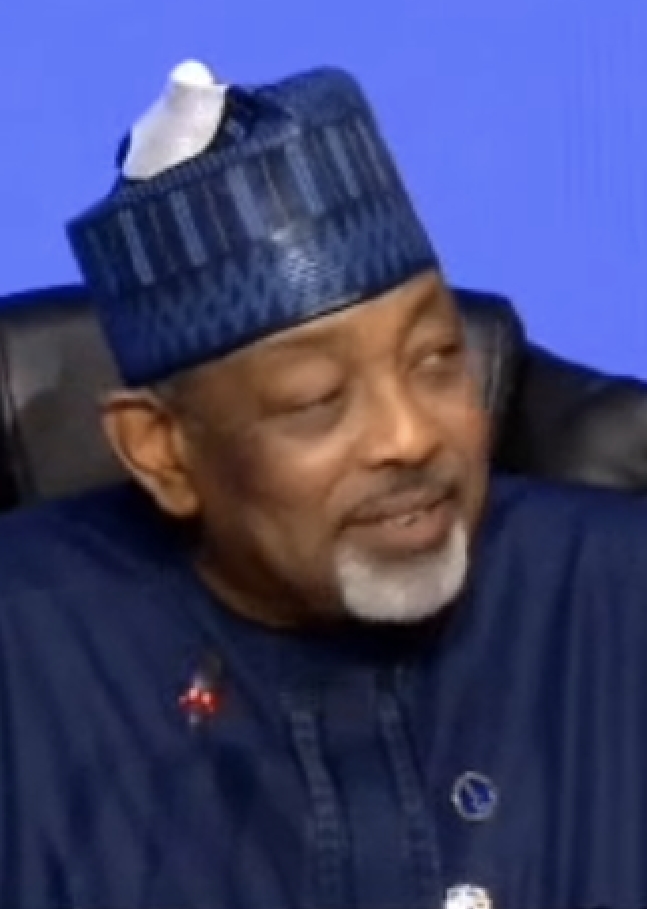
IFAD: When Kyari speaks of President Tinubu’s continued support for agriculture and food security in Nigeria
By: Dr. James Bwala
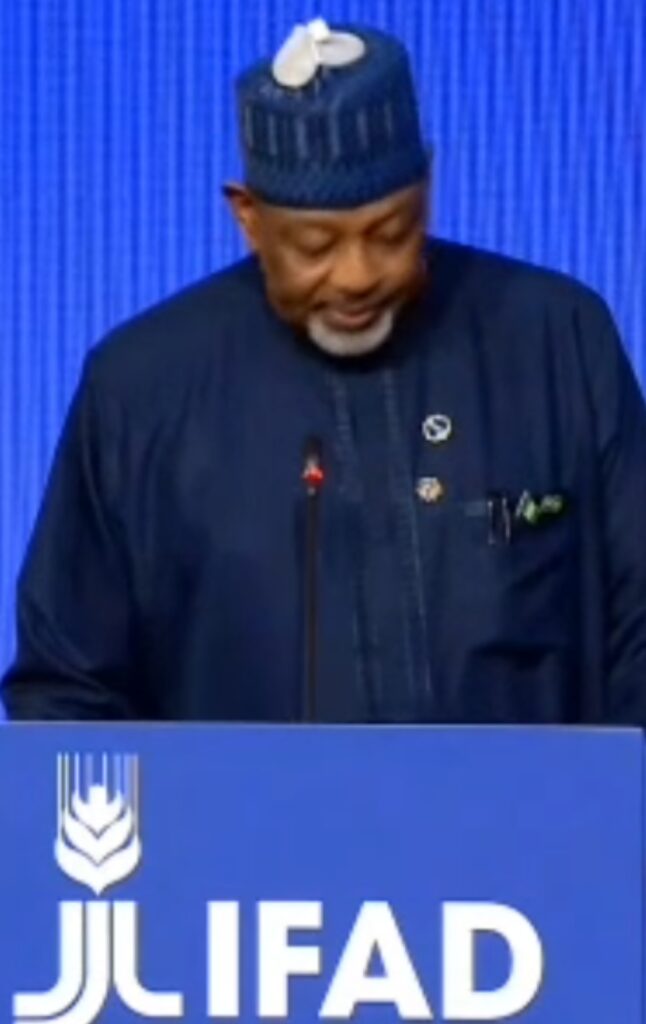
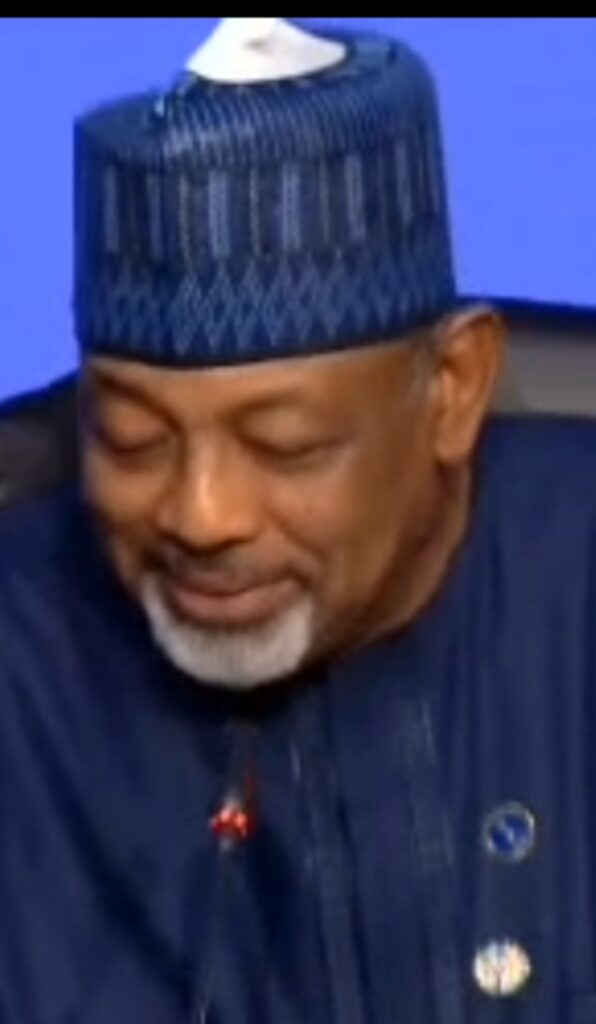
At the 49th session of the International Fund for Agricultural Development (IFAD), Nigeria’s Honorable Minister of Agriculture and Food Security, Senator Abubakar Kyari, delivered a powerful closing statement that underscored the crucial role of agriculture in Nigeria’s socioeconomic landscape. His remarks not only highlighted the ongoing support from President Bola Ahmed Tinubu but also made a persuasive case for the importance of an unwavering commitment to food security and agricultural transformation. Indeed, Kyari’s endorsement of President Tinubu’s agricultural policies reflects a broader vision for Nigeria’s development and why such support is vital for both national prosperity and global food security.
Senator Kyari opened his statement with a note of gratitude for being elected as the chairperson of IFAD, an organization that plays a pivotal role in enhancing food security and agricultural development across the globe. This acknowledgment was not just a formality—it set the tone for what would follow. While expressing appreciation for President Tinubu’s steadfast dedication to agriculture, Kyari positioned the Nigerian leadership as progressive and forward-thinking in a time when the world grapples with pressing issues of food scarcity, climate change, and economic instability.
READ ALSO: https://newsng.ng/confidence-hope-for-nigerias-agriculture-president-tinubus-message-to-sen-kyari/
Sen. Kyari said the importance of food security cannot be overstated. Noting that it is the bedrock of societal stability and economic growth. Indeed, in Nigeria, a country that relies heavily on agriculture, it is imperative that government leaders prioritize initiatives that bolster food production and ensure that every citizen has access to nutritious food. Senator Kyari emphasized that President Tinubu’s policies are oriented towards achieving this goal, which speaks volumes about the administration’s commitment to addressing the needs of the population. When leaders demonstrate a resolute focus on agricultural reforms, they ignite hope and inspire confidence among the citizens, particularly in rural areas where livelihoods largely depend on farming.
Sen. Kyari articulated a vision for agricultural transformation that extends beyond mere rhetoric; it encompasses actionable frameworks and policies aimed at improving productivity, supporting farmers, and building sustainable supply chains. The senator’s acknowledgment of rural communities—specifically mentioning both women and men—reflects an understanding of the integral role that gender equity plays in agricultural development. While he includes both demographics in his remarks, Kyari reinforces the notion that empowering women farmers and entrepreneurs is essential for achieving comprehensive food security. Indeed, studies consistently show that when women have equal access to resources, education, and decision-making processes in agriculture, communities thrive.
It is worth noting that the transformative efforts in agriculture are not solely a domestic issue but resonate on a global scale. As nations confront interconnected challenges like food insecurity, climate change, and geopolitical tensions, cooperative engagement becomes paramount. Senator Kyari’s emphasis on Nigeria’s constructive participation in global food security governance illustrates the need for countries to collaborate and share best practices to create resilient agricultural systems. Kyari noted that in a world where food supplies can be disrupted by unpredictable climate patterns and trade conflicts, having strong national policies in place can support international stability.
He states that President Tinubu’s administration is entering a phase marked by increased investment in agricultural infrastructure, research and development, and farmer support programs. His statement serves to reinforce this narrative and catalyze further discussions around resource allocation for agriculture. For instance, improving irrigation systems, providing better access to credit, and enhancing extension services are critical steps that can transform the sector. These initiatives not only secure food sources but also stimulate economic growth through job creation and increased agricultural exports.
READ ALSO: https://newsng.ng/confidence-hope-for-nigerias-agriculture-president-tinubus-message-to-sen-kyari/
Sen. Kyari’s leadership at the IFAD sends a message of Nigeria’s readiness to collaborate with other countries in tackling shared challenges. As global food demands rise, the ability to contribute to and shape international dialogues on agriculture becomes vital. Nigeria stands at a crucial intersection, where its actions can influence broader trends in agricultural policy and food security efforts worldwide. The senator’s humility, expressed in acknowledging his responsibilities toward rural communities, hints at a collaborative spirit that prioritizes dialogue and partnership over isolationism.
In discussing the support from President Tinubu, Kyari highlighted that such endorsement is not just symbolic; it translates into real changes on the ground. The current administration recognizes that modernizing agriculture requires holistic approaches that integrate technology, sustainability, and community engagement. This includes investing in agricultural research institutions, promoting innovative farming techniques, and harnessing technology to enhance yield and efficiency.
READ ALSO: https://newsng.ng/confidence-hope-for-nigerias-agriculture-president-tinubus-message-to-sen-kyari/
As the global community looks toward sustainable development goals, Nigeria’s agricultural agenda must align with these aspirations. The zero hunger goal, for example, emphasizes that food should be available, accessible, and nutritious for all individuals. Kyari’s reiteration of President Tinubu’s support for agriculture thus positions Nigeria as a proactive partner in the global mission to eradicate hunger. This vision must be backed by strategic planning and effective implementation to ensure that the promises made resonate in the lives of Nigerians, especially those in the most vulnerable communities.
The minister’s remarks signify an essential reorientation towards climate-smart agriculture. As the effects of climate change become increasingly evident, traditional farming practices may no longer suffice. Therefore, adopting strategies that promote resilience—such as diversifying crops, utilizing drought-resistant seeds, and implementing sustainable land management practices—is crucial. Sen. Kyari’s acceptance of the chairmanship at IFAD reflects an understanding of these complexities, establishing a platform where Nigeria can advocate for adaptive measures suited to its unique environment.
Indeed, Senator Abubakar Kyari’s address at the 49th session of IFAD effectively conveyed the significance of President Bola Ahmed Tinubu’s support for agricultural initiatives in Nigeria. This backing is not merely political; it represents a strategic thrust towards addressing food security, supporting rural livelihoods, and participating actively in global conversations about agriculture.
READ ALSO: https://newsng.ng/confidence-hope-for-nigerias-agriculture-president-tinubus-message-to-sen-kyari/
As Nigeria navigates its path toward agricultural transformation, the leadership’s commitment paves the way for sustainable development that uplifts communities, empowers individuals, and ultimately contributes to a more secure and stable global food system. With collaborative efforts at the national and international levels, Nigeria has the potential to emerge as a key player in shaping the future of agriculture and food security, fostering a safer and more equitable world for all.
* James Bwala, PhD, writes from Abuja.
IFAD: When Kyari speaks of President Tinubu’s continued support for agriculture and food security in Nigeria
Features/Analysis
Nigeria’s Minister of Agriculture and Food Security, Sen. Abubakar Kyari: A Strategic Leadership for Global Agricultural Governance
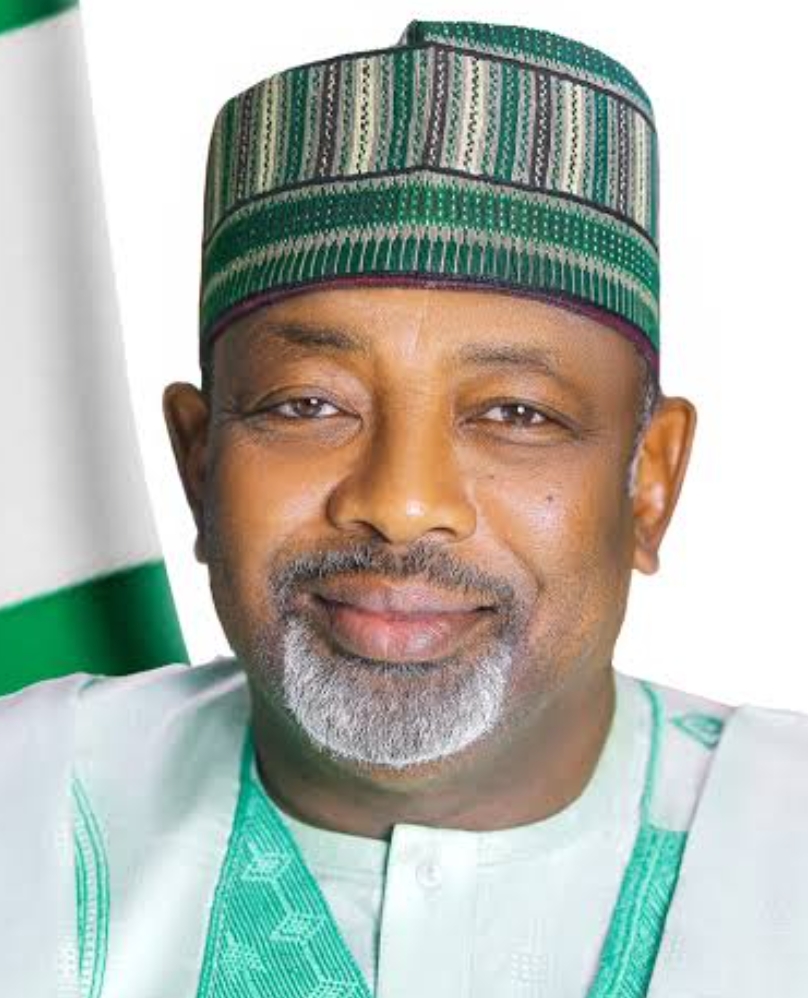
Nigeria’s Minister of Agriculture and Food Security, Sen. Abubakar Kyari: A Strategic Leadership for Global Agricultural Governance
By: Dr. James Bwala
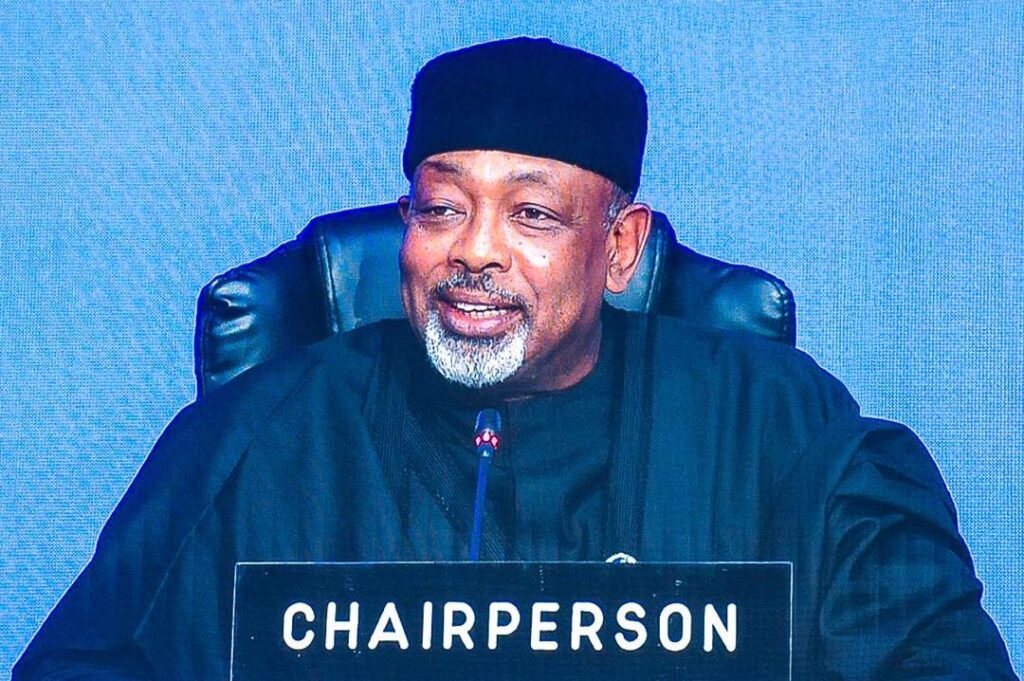
On February 10, 2026, during the 49th Session of the International Fund for Agricultural Development (IFAD) Governing Council Meeting in Rome, Italy, Nigeria’s Minister of Agriculture and Food Security, Sen. Abubakar Kyari, CON, ascended to the prestigious role of Chairperson of the Governing Council of IFAD. This appointment marks a significant moment not only in Sen. Kyari’s career but also symbolically represents Nigeria’s emerging prominence on the global agricultural stage. His election can be interpreted as a reflection of both personal merit and broader geopolitical shifts within agricultural governance, particularly concerning food security and rural poverty alleviation.
The International Fund for Agricultural Development, a specialized agency of the United Nations, is dedicated to eradicating rural poverty and strengthening food systems worldwide through targeted investments and partnerships. With the world grappling with unprecedented challenges such as climate change, economic instability, conflict, and demographic shifts, the need for effective leadership in agricultural governance has never been more urgent. Sen. Kyari’s previous experience as vice chair of the governing council positions him uniquely to leverage his understanding of IFAD’s operational framework to foster innovative solutions that address these pressing issues.
READ ALSO: https://newsng.ng/distinguished-senator-abubakar-kyari-a-leader-in-his-season/
Sen. Kyari, upon accepting his new responsibility, expressed a commitment to lead with humility, fairness, inclusiveness, and strategic foresight. He emphasized the importance of consensus-building and maintaining the integrity of IFAD. This foundational philosophy is pivotal, especially in a time when global agricultural policies are often polarized and contentious. His approach underscores that effective leadership must prioritize collaboration over division, which is essential for developing comprehensive strategies tailored to tackle the multifaceted challenges facing the agricultural sector today.
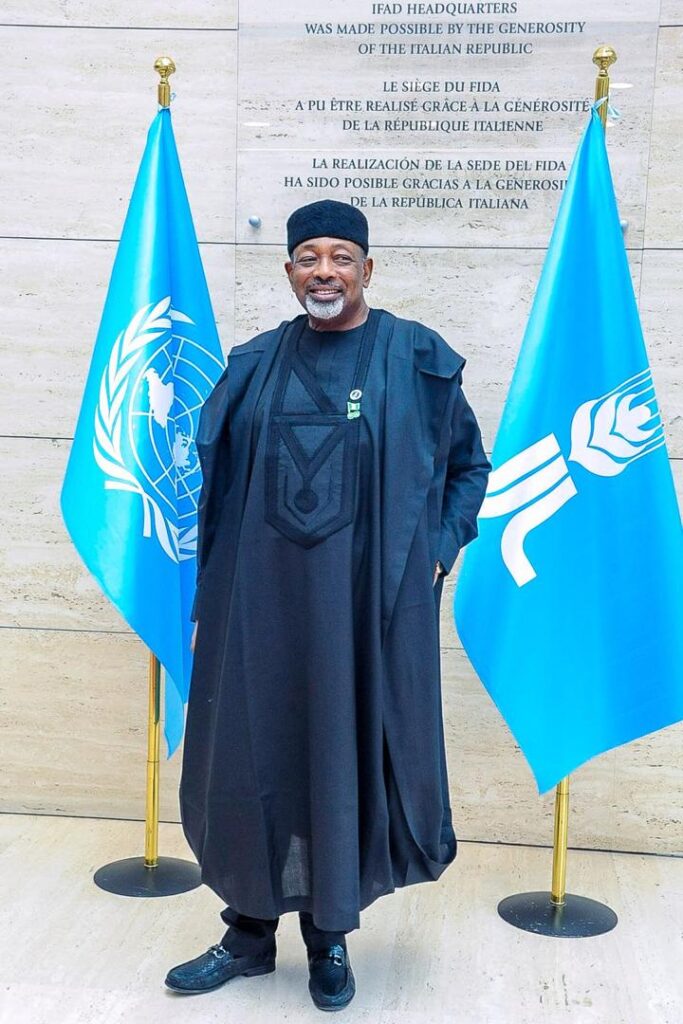
The minister acknowledged the backing of key figures within Nigeria’s agricultural hierarchy, including the Minister of State for Agriculture and Food Security, Sen. Dr. Aliyu Sabi Abdullahi, CON, and the Permanent Secretary, Engr. Dr. Marcus Olaniyi Ogunbiyi, FNSE. Such collaborative leadership is vital for advancing Nigeria’s agenda on food security, aligning with President Bola Ahmed Tinubu’s Renewed Hope Agenda. This agenda not only emphasizes agricultural transformation but also seeks to strengthen domestic reforms that enhance Nigeria’s position in global food security governance. Consequently, Sen. Kyari’s election as chairperson is an endorsement of Nigeria’s ongoing efforts to elevate its voice in critical international dialogues about food systems and sustainability.
In the current climate of adversity—characterized by climate variability, fluctuating market prices, and geopolitical tensions—the appointment of an African leader to such a significant role at IFAD is both timely and necessary. Sen. Kyari’s election reflects a growing recognition of Africa’s capacity to lead conversations on agricultural governance, especially given the continent’s unique challenges and opportunities. His leadership could pave the way for innovative, region-specific solutions that prioritize resilience and inclusivity, addressing not just food security but also the economic empowerment of rural communities.
READ ALSO: https://newsng.ng/distinguished-senator-abubakar-kyari-a-leader-in-his-season/
As Senator Abubakar Kyari begins his tenure, he faces the dual challenge and opportunity of steering the IFAD towards policies that are both policy-driven and impact-focused. The imperative for responsive agricultural policies has never been more pronounced, particularly in light of the COVID-19 pandemic, which unmasked vulnerabilities in food systems worldwide. Approaches that champion inclusive growth opportunities for marginalized populations can work harmoniously with sustainable development goals, creating a blueprint for a robust agricultural future.
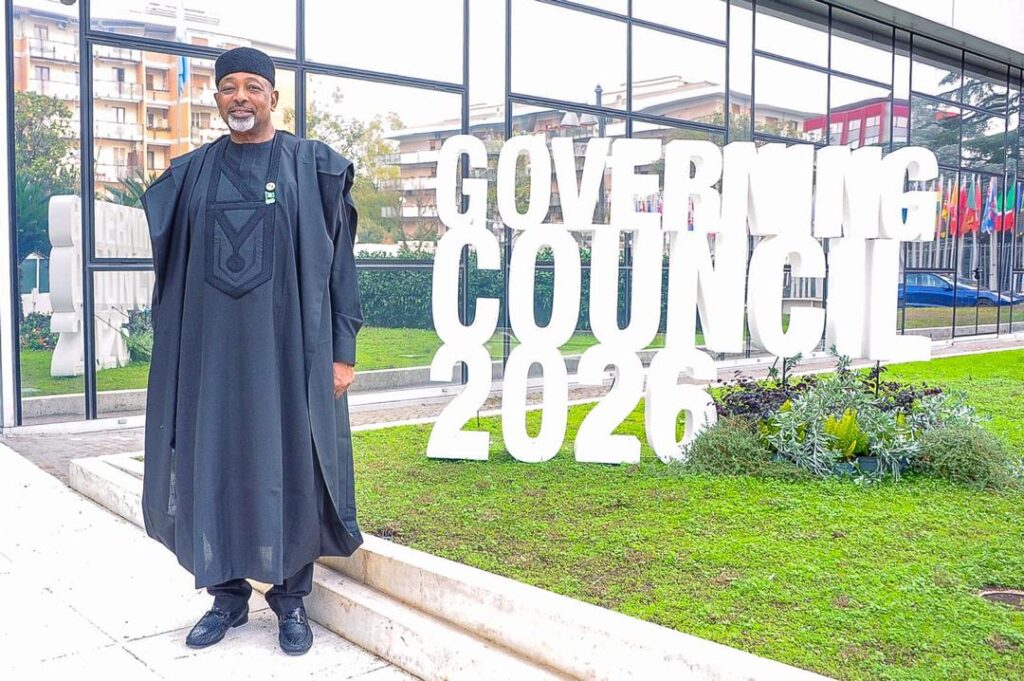
The newly elected Chairperson has asserted his intention to work diligently with Member States to advance rural transformation and global food security. This vision aligns impeccably with the creation of resilient agricultural systems capable of withstanding shocks, ensuring continuity in food supply chains, and safeguarding against the adverse effects of changing climatic conditions. His commitment to fostering forward-thinking policies, underpinned by research and innovation, will undoubtedly inspire stakeholders to collaborate in developing initiatives that bolster agricultural productivity, empower farmers, and ultimately contribute to poverty reduction.
Additionally, it is essential to focus on the long-term implications of Sen. Kyari’s role at IFAD on Nigeria and the broader African continent. His election could catalyze increased investment and attention towards African agricultural practices, empowering local farmers and enhancing agricultural research and development. By championing initiatives that embrace technology and innovation, such as smart agriculture and sustainable practices, this leadership can usher in a new era for African agriculture—one that is resilient, competitive, and recognized on the global stage.
The integration of environmentally sustainable practices into agricultural initiatives will be another crucial area of focus for Senator Abubakar Kyari. Climate change presents a formidable challenge to food security, and agricultural policies must evolve to mitigate these risks. The introduction of agro-ecological practices, investment in renewable energies within the agricultural sector, and promoting biodiversity could become central tenets of his strategy. By prioritizing sustainability, Senator Kyari can lead IFAD into a future where agricultural productivity does not compromise the health of ecosystems or the livelihoods of future generations.
Furthermore, the current global economic climate, marked by unpredictability, necessitates a profound reevaluation of traditional agricultural practices. The volatility caused by internal conflicts, trade disputes, and supply chain disruptions demands agile and adaptive strategies. Under Senator Abubakar Kyari’s guidance, IFAD can pivot towards building frameworks that enhance food sovereignty, engage local communities in decision-making processes, and promote regional cooperation among member states. Such efforts are critical in developing agricultural sectors that are self-sufficient and resilient to external shocks.
Senator Abubakar Kyari’s presence at the helm of IFAD serves as a beacon of hope for millions affected by rural poverty. His leadership promises to amplify the voices of those often overlooked in agricultural discussions—smallholder farmers, women, and youth—ensuring their needs and aspirations are prioritized in policy frameworks. Inclusion is not just a moral imperative; it is fundamental to crafting policies that yield tangible results and foster sustainable development.
READ ALSO: https://newsng.ng/distinguished-senator-abubakar-kyari-a-leader-in-his-season/
Indeed, Senator Abubakar Kyari’s election as Chairperson of the Governing Council of IFAD presents a watershed moment for Nigeria and Africa at large. His leadership embodies a strategic shift towards inclusive and sustainable agricultural governance amidst evolving global challenges. With a commitment to fairness, consensus-building, and visionary policy-making, Senator Kyari stands poised to steer IFAD toward impactful initiatives that address the pressing realities of food security and rural transformation. As Nigeria continues to assert itself on the global stage, Kyari’s tenure represents an opportunity not only for national progress but also for redefining agricultural pathways across the African continent and beyond.
* James Bwala, PhD, writes from Abuja.
Nigeria’s Minister of Agriculture and Food Security, Sen. Abubakar Kyari: A Strategic Leadership for Global Agricultural Governance
Features/Analysis
Of failed security due to twisted intelligence, harassment of journalists by agents of the state and my expectations for the next 70 years of the NUJ
Of failed security due to twisted intelligence, harassment of journalists by agents of the state and my expectations for the next 70 years of the NUJ
By: Bodunrin Kayode
Of a truth I have too many expectations about the future of journalism in Nigeria. The future to me is like a pregnant woman heavy with just a baby yet looking as if she will give birth to triplets. If colleagues mean well like I do, they will never be comfortable with a lot of things happening to our dear profession in this year of our Lord 2025. We will not even accept the blame of the media being complicit with the lingering insurgency and banditry in the land. This is because journalists can only report but can’t do anything beyond reporting and writing of terse editorials to urge people in authority to account. That is the letter of the Nigerian constitution. It is the obvious failure of actionable intelligence by those who claim to be working for the national interest that is responsible for the lingering security Challenges Nigeria is going through now. It is equally the failure of the nation’s political leadership to act usually when the iron is very hot.
Sadly also, most of those in political authority hardly have time to read and educate themselves about the difference between right and wrong. Even when writers of conscience waste their time to educate and inform them.They bother mostly about how to arrange the next contract to enable them divert the commonwealth of the nation to their pockets. Later they use our stolen billions to further entrench themselves in power. Often times setting dangerous examples for willing security operatives in the Intel services to learn to soil their hands by enriching themselves and compromising their sacred patriotic stands. That is the vicious circle that goes around and comes around according to the boss of the Economic and Financial Crimes Commission (EFCC) Ola Olukoyede. The media has never been the villain and will never be in this vicious circle as some people want to paint us. Even though the conventional media has its challenges like dealing with the flawed orientation of some of our itel gathering people, it is still part of the greater Nigerian society full of ostentation, perverseness and vainglory.
Matters arising within national interest and the security sector of Nigeria
Think about this premise of truth as it concerns the grim situation of our security in the federation. How many times have the media based on intelligence exposed sponsors of terror in the land? Did the government do anything about it? Who are those advising the central government to stand down instead of punishing these wrong doers? Some label the Nigerian journalist as lazy when it comes to reportage of insecurity, can he do anything beyond reporting and advocacy? I doubt because journalists don’t have guns like the agents of state to forcefully arrest wrong doers for prosecution. Or do they want us to bring down our security operatives like the military before the eyes of right thinking people in the world? Have we not called for the establishment of state police for sub nationals to bypass some of these insecurity challenges? What is delaying the Governors after approval of same in their forum? Have we not called for restructuring of the federation yet nobody is listening? Do the Oligarchy behind behind the power mask really want restructuring? Are they willing to decentralize security for the state to participate in true federalism and separation of powers? Is someone afraid that if states have their Police, insurgents and foreign bandits can no longer be used to destabilize the state? These are the many plethora of questions that demand answers in the eyes of right thinking people we reporters relate with.
The media is also a protector of national interest, never the enemy of the state
Too many blames have been placed on the doorstep of the Nigerian media for so called inability to play the constitutional role of the 4th estate of the realm yet few individuals seem to understand that certain agencies have placed the media at the sidelines as the enemy of the state. They don’t seem to like the high level of independence given to the Nigerian media because some have been trained by agents of the dark period of military which explains their strange orientations. Some are just lame ducks brought in by god fathers making them just empty cans lacking the capacity to act based on the training they were supposed to have received. The Directorate of State security services (DSS) is one agency that these politicians use their loot to fix useless cronies into the system who turn out to be nitwits unable to face the reality of our times. Some of them join such an intelligence based organization simply to use the weapons attached to intimidate and cow people they insultingly called “bloody civilians”. And by making such mistakes, they fall into easy traps set up by politicians against them like those who lost their lives a couple of years ago when they wrongfully went after a mystic called Baba Lakyo around Nasarawa Egon council area of Nasarawa state. My emphasis of wrongfully is made in the sense that the sitting Governor then business man Umaru Almakura had a personal beef with the mystic Baba and his “Ombatse group” and used the federal operatives to settle unnecessary scores. The rest is history as many widows have been produced from that mistake which cost many lives. They would have used their understanding of national interest to navigate through the impasse instead of going headlong into the den of a mystic. Sadly, 70 policemen and 10 state operatives perished unnecessarily. That should serve as a case study in their regular update conferences on how superior wisdom is sometimes more profitable than force or power in the management of state security issues. There is no shame in using wisdom to avoid unnecessary confrontations for instance.
Flawed orientation of contemporary agents of state who have been told journalists are enemies and desperate need for synergy
I sat in a recent workshop by the human rights commission where the rights of refugees and IDP’s were being refreshed and in the process of individual introduction, and an obviously very green operative of state refused to introduce himself properly like others in the hall. From his looks and timidity in his persona, he was clearly within the lowest rank in his service. Possibly not more than the equivalent of a constable in the Federal police. When asked why by the trainer, name withheld, a doctor of Law, he said bluntly, “I don’t want the journalist present in the hall to know my name or who I am”. Literally meaning that others can know him but journalists who should be his partner in progress should not know him. Imagine the faulty and sick orientation. The innuendo here is that the journalist is obviously the enemy of state instead of his partner in the protection of the national interest.
The trainer, a senior advocate of Nigeria (SAN) was livid with rage and warned the state coordinator not to allow green brats like the fellow attend such functions again. “The next time you are inviting anyone from the Intel services, ensure that whoever is coming here is from the management cadre. Is that clear” he posited.
Not the fault of badly oriented Intel brats like him
I felt sympathy for the young man in suite because he was virtually vomiting what was taught to him in their training school. I can almost visualize the mantra; ” The media is a vital enemy of state because of their disrespect for the status quo” he had laid barely on the table. I also imagine how those directed by Yusuf Bichi when he held sway as the boss would be thinking now. There would be so much bitter bile in their mindset against the journalism profession. This is because Bichi belongs to the old guard of the Nigerian Security Organization (NSO). And we all know the orientation of the then NSO, a very repressive organization. Umaru Shinkafi took over as DG in 1979 and virtually created an agency with a similar orientation with the repressive colonial police he had joined in 1959. But thanks to former head of state Ibrahim Babangida (IBB), we now have what is a bit close to a secret service. While there are fine officers within their organization who know how to give actionable Intel to political authorities to end some of these security challenges, we still have charlatans unfit to wear their uniforms or black suits. These unfit operatives who use force more than intelligence abound in many state commands and I think the management should start fishing them out and showing them the door. They are the permanent haters of journalists believing that young operatives should never drop their guards for us not to talk about mutual trust because of our ability to bring down rouge people in authority who do wrong. The truth is that the media does not deliberately go out to embarrass or bring down anyone in authority. The press has never been the enemy of the state. We are harbingers of the truth which to us is sacrosanct.
Journalism is a public service profession aimed at protecting the people and the national interest. Our duty is to inform, educate, and hold power accountable for all their actions and inactions. We respect constituted authorities like other professionals of state but we do not owe our allegiances to those who are supposed to be accountable to the people. We are permanently for the generality of the people who are our bosses. We are the fourth estate and our duty is not necessarily to serve as mouthpieces of authority but to ensure that the common and oppressed pepper and tomatoes seller is not trampled upon with arrogant force and impunity that can make them cry. To criminalise this duty is to criminalise truth itself. We have our own bad eggs from the pool of the rotten Nigerian society but they are very few and the NUJ and other arms know how to deal with them. They always pay the prices attached to their rebellion against the truth.
The Constitutional role of the media, relationship with DSS and the national interest
But come to think about it, the Nigerian Constitution supports the media’s effective functioning primarily through Section 22 (Obligation of the mass media) and Section 39 (Right to freedom of expression and the press). Section 22 outlines the media’s duty to hold the government accountable. Section 39 however guarantees the right to freedom of expression, including the right to receive and share information and to operate media outlets, with a note on government licensing for broadcast media. Section 39 is a fundamental right under Chapter IV and is key to the media’s legal operational freedom. The Freedom of Information Act (FOIA) of 2011 also supports the media by improving access to public records. If we have all these instruments of operation, how then can anyone declare the media as the enemy of state? Is it because the journalist owes his allegiance only to the people and nobody else? Why is the journalist so much in the so called “bloody civilian” list of “badly trained” operatives of the state who have marked us as enemies? Is the Nigerian Union of Journalists (NUJ) worried about this? What are we doing about laying the foundation to correct excesses like these in the next 70 years? If we do almost similar jobs, of protecting the national interest and our people, why then does some of the state service operatives so hate journalists as to put some colleagues on watch list sometimes up to 20 years? When I learnt that a senior colleague I had admired so much as a cub reporter was just removed from the watch list of the state operatives after two decades, I marveled at the mere thought of putting the revered Lanre Arogundade on such a witch craft manipulation list. A highly committed professional who has served humanity for as long as I have known him. But thank God people like Adeola Ajayi are far better than old guards like Yusuf Bichi who was brought in to wrongly redefine what we all know as national interest. It was during Bichi’s tenure that a lot of unthinkable things happened yet life went on. Bandits and insurgents paraded all over the savannah and life went on. It made some of us worry if we were in the same country and what their own definition of national interest was. He was so inept that he could not help his people internally in terms of welfare rather he was trampling on them. No wonder there was a tumultuous celebration at the national headquarters of the state service when Bichi was dropped. An impeccable source hinted me that most of the rotten eggs flushed out by the state service recently were beneficiaries of Bichi’s wrong orientation and misguided understanding of patriotism. Some came in before Bichi but it was worthwhile that 115 operatives were flushed out from the system. “And don’t be surprised more will soon be thrown out for the same nasty reasons if the godfather syndrome of recruitment continues instead of merit ” said my source.
COCIN Church and the reason for friction with operatives and arbitrary arrest of journalists by State operatives.
The recent embarrassment of the President of the church of Christ in nations (cocin) in Jos shows how deep seated the hatred some of them have for journalists. Imagine a scenario in which the President was yet to take off from Abuja to attend a funeral in Jos. While preparing for the service, the President of the church Rev. Amos Mohzo was stopped from getting into the head quarters church to prepare for the funeral. He assumed the position after being elected in November 2021 so that should not be a strange detail for even a non Christian operative to keep upstairs. They should know who he is. But how on earth an operative of state will be so myopic that he or she can not spot such an important figure is scary. Let’s pretend as if this is not part of their training. How do you guard VIPs without being able to spot them on the field? Christian Association of Nigeria (CAN), Jamatu Nasir Islam (JNI), Sultan of Sokoto, powerful church leaders like Catholic Bishops and even the Imam of the national mosque. How do they guard such people without knowing them? It looks so absurd that even green horned operatives will not know such important people. The COCIN boss his deputy and assistant secretary wanted to access the church to prepare for the funeral of the mother of the All Progressive Congress (APC) national chair Prof. Nentawe Yilwatda ahead only to be told that they are not allowed into their official property. While the subordinates of Dr Mohzo were trying to educate these people that they were actually stopping the landlord of the building from going in an argument ensued and that was what the JFM reporters were said to have been recording. Sadly, that was what triggered the arrest of the reporters. To me that was equally the height of arrogance and impunity from small brats who still take instructions from middle cadre officers against a giant public official of no mean repute. They were so so wrong in their actions and needed to be told so. From what I can figure out from my binoculars, something has to be done about the fundamental flaws in the doctrine of these organizations quickly before they start shooting people on the streets of Nigeria in the name of killing enemies like reporters. If that is not corrected this pathetic wickedness will continue with impunity. Why? This is because it is often said in Africa that no matter how you wash a leopard it cannot drop it’s black spots. Equally, no matter how you wash the black hand of a monkey, it can never change to white even for those who eat monkey meat. “No matter how clean you wash am, na black e be.” That is the sad reality among even some of those who rank above the Assistant director’s level. What happened in that church was completely wrong and sources told us that the DG of DSS was miffed by it and rightly directed a query to be issued to those green horns for wrong doings and warnings to them not to smear the image of their organizations again. This was how the management of JFM radio station reacted with a final release to the wrong doing of the operatives of the state in Jos recently:
OFFICIAL STATEMENT BY THE MANAGEMENT OF JAY 101.9 FM JOS ON THE ARBITRARY ARREST AND DETENTION OF OUR JOURNALISTS BY THE DEPARTMENT OF STATE SERVICES IN JOS
Gentlemen of the Press,
Further to our earlier statement regarding the arrest of our staff, Ruth Marcus and Keshia Jang, who were assigned to cover the burial rites of the late mother of the APC National Chairman, Prof. Nentawe Yilwatda Goshwe, at the COCIN headquarters Church, we wish to inform you that they have been released. Upon confirming that the DSS was holding them, frantic efforts were made to secure their release. Although our efforts were initially rebuffed, they were eventually released. This event has once again prompted us to draw attention to the disturbing issues of press freedom violations, human rights abuses, and the erosion of the rule of law by security agencies. We want to reiterate that as professionals, our staff did what journalists are trained and ethically mandated to do: they documented an incident on video for public record and accountability.
We call on the DSS to note that:
- Their actions in abducting and detaining them are illegal, undemocratic, and unacceptable. They represent a blatant violation of the fundamental rights to freedom of the press, freedom of expression, and personal liberty as enshrined in the Constitution of the Federal Republic of Nigeria and various international conventions to which our nation is a signatory.
- The press is not an enemy of the state. Journalism is a public service profession. Our duty is to inform, educate, and hold power accountable, not to serve as mouthpieces of authority. To criminalise this duty is to criminalise truth itself.
- The DSS must act with civility and restraint. We remind the agency that this nation is under civilian rule, not military dictatorship. Security agencies exist to protect citizens, not to intimidate or abduct them. Power must always be exercised within the bounds of the law and in accordance with respect for democratic norms.
- This pattern of intimidation and repression must stop. It sends a chilling message to journalists that telling the truth may lead to persecution. Such conduct undermines the very fabric of democracy and fosters a climate of fear and impunity. We reaffirm that Jay 101.9 FM will not be intimidated or silenced. Our commitment to truth, objectivity, and the democratic ideal remains unwavering. To those who wield power, we remind you that the freedom of the press is the life blood of democracy. When journalists are silenced, democracy dies in darkness. We call on all citizens, the media fraternity, and the international community to stand in solidarity with us in demanding respect for the rule of law, freedom of the press, and for journalists to carry out their statutory duties without fear or hindrance, as well as respect for human rights.Thank you. Signed, Clinton Garuba.
I am happy that the President of the NUJ Comrade Alhassan reacted to the release of the two journalists later. The journalists are seen as the ones who put the operatives in trouble by fishing out what they were supposed to see that they failed to see and alert their superiors about it. So mark them as enemies quickly. Arrant nonsense.
These operatives who see us as permanent enemies, visit our homes when we are not around to fix bugs to listen to all our discussions will never stop seeing the fourth estate as enemies. In 2025 they still bug lines of reporters to know what we are doing at every given time. And sadly they put some of us on watch list illegally for being outspoken as if it is a sin to be outspoken or straight jacket. The most insulting of all the assaults against us is using colleagues closest to us to record and send same to them in the name of protection. The way they placed one of our own Lanre Arogundade on watch list for over 20 years for doing nothing against them.
After 70 years of practice in this country we are still being labeled as “enemies of the state” because we cause the state to account for all their atrocious tendencies against the people. From the President of the NUJ Comrade Alhassan to the rest of us they have always classified as enemies. No one is spared because your teeth is whiter than the other or due to the sound of your name. Some of them are quite pleasant and respectful when we encounter them on the field but a sizable number of them are wired for a phantom republic they will never see in their lifetime. They are extremely distrustful of themselves and others and this is why the government has not been making progress in securing the country. They don’t even trust themselves not to talk of the citizenry. No wonder whenever they come to Maiduguri, they psychologically disarm their own colleagues on ground and take charge of the security architecture because we are all seen as perceived insurgents for leaving our states far away to agree to serve humanity here. Well if they have enemies within we don’t. Only God knows how the next 70 years of the NUJ will be. But I tell you we will make progress by Gods grace.
Bodunrin Kayode, a journalist wrote from maiduguri.
Of failed security due to twisted intelligence, harassment of journalists by agents of the state and my expectations for the next 70 years of the NUJ

US Tightens Sanctions on Cuba, Targets Tourism Ministry in Fresh Pressure Campaign

CDHR Condemns Fresh U.S. Sanctions on Cuba, Urges Humanitarian-First Approach

Troops Foil Militia Attack on Plateau Community, Deploy Ambush Along Escape Routes

Roger Federer’s Shock as DNA Results Reveal Myla and Charlene Are Not His Biological Children

THE PLIGHT OF FARIDA

FAILED COUP IN BURKINA FASO: HOW TRAORÉ NARROWLY ESCAPED ASSASSINATION PLOT AMID FOREIGN INTERFERENCE CLAIMS
-
 News2 years ago
Roger Federer’s Shock as DNA Results Reveal Myla and Charlene Are Not His Biological Children
-
Opinions4 years ago
THE PLIGHT OF FARIDA
-
 News1 year ago
FAILED COUP IN BURKINA FASO: HOW TRAORÉ NARROWLY ESCAPED ASSASSINATION PLOT AMID FOREIGN INTERFERENCE CLAIMS
-

 News2 years ago
EYN: Rev. Billi, Distortion of History, and The Living Tamarind Tree
-
 Opinions5 years ago
POLICE CHARGE ROOMS, A MINTING PRESS
-

 ACADEMICS2 years ago
A History of Biu” (2015) and The Lingering Bura-Pabir Question (1)
-

 Columns2 years ago
Army University Biu: There is certain interest, but certainly not from Borno.
-

 Politics1 year ago
2027: Why Hon. Midala Balami Must Go, as Youths in Hawul and Asikira/Uba Federal Constituency Reject ₦500,000 as Sallah Gift
