
News
RE: ENDING THE AFFRONT TO THE RULE OF LAW : A RESPONSE To COLLINS NWEKE

RE: ENDING THE AFFRONT TO THE RULE OF LAW : A RESPONSE To COLLINS NWEKE
By Magnus Agu magnusagu85@gmai.com
Reading through the public letter by Collins Nweke, purportedly addressed to the new Chairman, House Committee on Diaspora Affairs I thought it would be something new, something different, something more intelligent.
But it was all still same of the same I won’t bore you with a long treatise I think Collins Nweke already did that .So let me go straight to the points that I want to focus on in the write-up
- The issue of Nido ( Nigerians in diaspora organization )Collins Nweke has taken us through the history of the formation of Nido I don’t have any problem with his historical background
NIDO, an initiative of President Olusegun Obasanjo many years ago was set up to have all Diaspora groups under one umbrella. Unfortunately, the purpose was not achieved due to in-fighting, and quarrels, that subsequently saw even original, serious-minded members of the group exiting Nido , thanks to the sit tight and clandestine nature of its inaugural leaders like Collins Nweke and few of his cohorts.
Stories are replete of many Nigerians abroad who were recommended to join the organization but left disappointed and wondered how they would function in an organization that had different factions, had lots of hidden and selfish agendas by its so called leaders at that time . They were confused as they had to deal with these fears so they , like many others, saw no focus and so opted out . So Collins Nweke, a founding father of Nido should be ashamed of the general state of affairs of Nido , particularly the clandestine Nido Worldwide and Nido Continental , which he and just a handful of his like , treacherously hold on to as their cash cow. It’s either his way or no way
Now . Don’t get me wrong There are various branches of NIDO doing well in some countries Take for instance NIDO Sierra Leone. NIDO Sierra Leone has taken up a project to build a hospital in Sierra Leone for Nigerians in Sierra Leone. Nido Europe ( representing the whole of Europe led by Bashir Obasekola ) Nido Qatar, Nido South Korea , Nido Sweden, and some other Nido chapters in some countries are doing well in their various chapters and must be commended , along with other diaspora groups and associations and individuals making Nigeria proud
It must be noted that some countries don’t have any organization called NIDO. For instance, South Africa has NICASA, and Nusa , Australia has an Association of Nigerians in Australia, and Ethiopia has an organization called NISE. I could go on and on, In America there is NAPAC , an association that has supported Nigerians contesting various elections in America, and today about 14 Nigerians in America have won their elections In America with the support of NAPAC . In Canada alone there are about 51 diaspora organizations and none of which is called Nido. Canada is peculiar because one of Collins Nweke´s Colleagues registered Nido in his own name In other words he owns Nido. Story for another day . We all know that there are professional associations like ANPA, NAPPSA, MANSAG, NNCA, NCBN, NNC,and several other professional and socio cultural groups . Canuk in the UK represents almost over 100 associations while existing along Nido UK South Zumunta is also a very strong and purposeful diaspora group . So would it not be easier if all these associations are under one umbrella as former President Olusegun Obasanjo envisaged ?Noble intention But these genuine objectives failed over the years because people like Collins Nweke remained selfish and self-centered. They could not keep Nido as one I mean how can an association that is fragmented bring others on board, for instance, NidoAfrica shamelessly has at least 2 factions, fighting over what ? Nido America has more than a faction, There are some Nido groups in some countries in Asia and the Middle East , existing along side other very active and purposeful groups .
Nido does not exist anywhere in Australia and many other countries around the world
As noble as the objective of having all Nigerian diaspora groups under one umbrella is , it has not worked.
So what NIDO needs to do is put its own house in order and rebrand, talk to all these associations, and see if they can bring them together under one room, But my fears are it is too late now because of people like Colin’s Nweke and and his cohorts , who after 25 years , feel that they must hold on to Nido and hold 17million Nigerians in the diaspora to ransom through what Nweke calls Nido Worldwide and Nido Continental. These are bodies created by him and his gang made up of former Chairmen of Nido whom they constituted with the aim of remaining in charge of these associations for life. Mr Chairman put yourself in this situation Imagine former chairmen and members of the house committee of diaspora constituting themselves into associations of former committee members and taking decisions for you as a serving parliamentarian and chairman of committee ?What Collins Nweke is thus asking you to do is to take these guys , who have been former chairmen of Nido , as the alpha and omega of all 17 million Nigerians in Diaspora ? Chairman, does that make sense to you ?
Nweke is talking about rule of law . What moral right does a man who was an executive of Nido since the days of President Obasanjo , but refuses to let go , through what he calls Nido worldwide ?
I think Collins Nweke , beyond giving empty foreign policy analysis on tv sometimes, needs a job . Mr Chairman, you can help him get a job , please
Collins Nweke and his Nido worldwide and Nido Continental ( whatever it means ) has remained a nuisance and a distraction from genuine diaspora issues affecting Nigerians all over the world
Mr. Chairman sir I challenge you to ask Collins Nweke to give you just 500 genuine names of his members world wide !
Colllins Nweke`s piece titled “ Ending the Affront to the Rule of Law “ is ironic because , as expressly stated above ,if there is any affront to the rule of law that should be ended ,it should be that of Colllins Nweke and his inconsequential microscopic minority gang who want to be perpetual rulers, We in the Diaspora will continue to resist and reject them
Now , we have our own Commission , Nidcom , to relate with .And in this age of technology, getting data of registered groups and associations and bringing them together to work for the progress of our country is easier . And we can see that Nidcom is doing just that
As for the issue of the NiDCOM Board, it is an Administrative structure to be set up by Mr President, so it is an administrative matter. NiDCOM Board is not the only Board that has not been constituted and it will be constituted., hopefully soon However, we must commend the Diaspora Commission for bringing the Diaspora phenomenon to the front burner and you can see it’s been doing well despite all the challenges as well as little or no funding. They have taken the issue of diaspora seriously and put Nigerian issues on the front burner and we do appreciate this. Is the Commission perfect? No, but we have to help in building and strengthening this organization. Diaspora is a part of our foreign policy in Nigeria and if you look at the diaspora policy, it is well crafted if it is properly implemented we would even do better than other countries have done all over the world.
Nweke’s obsession, as in other issues with him , is self serving . He desperately had hoped to be chairman or worse case , member of the board , especially if another party had won elections , not the APC
Well, dreams do come true . I wish him well
And on the issue of Diaspora voting, Collins Nweke and his gang are not even sincere about this. A few years back they said, oh, they will mobilize 1,000,000 people on Diaspora voting and they could not even mobilize one person
So therefore he is not in a position to talk about diaspora voting, Diaspora voting has been an issue that has been championed by people at home and in the diaspora. There is already a bill in the Senate to amend the constitution to make diaspora voting a reality and what we want from you Mr Chairman is to join in our voices to make this a reality.
In his write-up, Collins Nweke asked you a pertinent question , which he termed “ the elephant in the room”He asked “ what do you want to be remembered for.” I pose the same question right back to you
What do you want to be remembered for ?
A selfless , patriotic parliamentarian or
a religious, tribal bigot that will give in to selfish manipulations? ( By the way Mr Chairman I know you are a member of the Labour Party to which people like Collins Nweke belong to ) So do you want to be remembered as a selfless parliamentarian who put the issues of diaspora selflessly Irrespective of tribe , political affiliations ?Or one who will join the clarion call for all Nigerians at home and abroad to join hands to build Nigeria together
The ball is in your court !.
RE: ENDING THE AFFRONT TO THE RULE OF LAW : A RESPONSE To COLLINS NWEKE


NHRC TASKS TEACHERS ON HUMAN RIGHTS PROTECTION IN SCHOOLS
By: Michael Mike
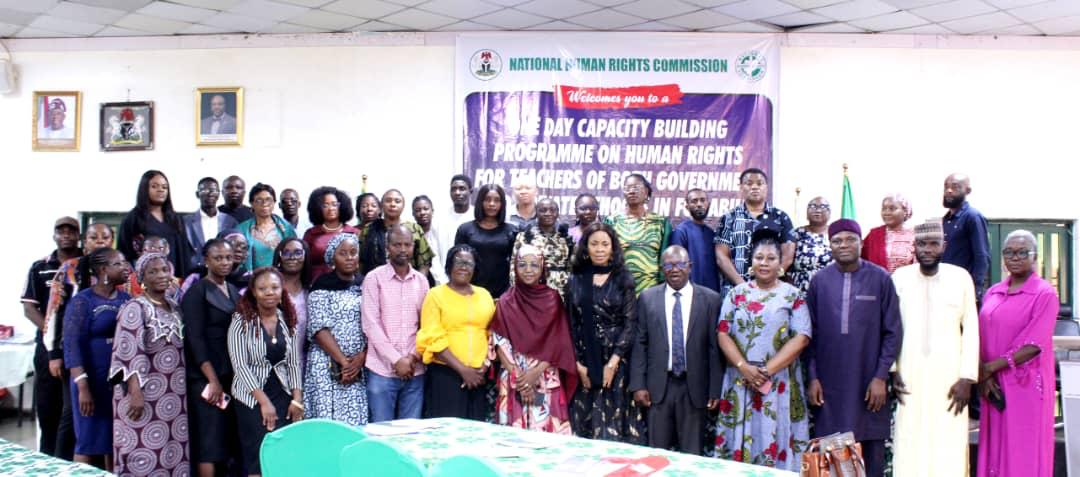
The National Human Rights Commission (NHRC) has charged teachers to take a leading role in promoting human rights in schools, warning that educating children on dignity, equality, tolerance and respect for others is critical to building a peaceful and just society.
The commission said Civic Education teachers and guidance counsellors must go beyond classroom instruction to equip students with the knowledge and confidence to recognise violations, reject discrimination and violence, and speak out against abuses of their rights.
The Director of Legal Services and Enforcement of the NHRC, Mrs. Rabi Anwar, gave the charge while representing the Executive Secretary of the commission, Chief Tony Ojukwu, at a human rights capacity-building workshop for Civic Education and Guidance and Counselling teachers in the Federal Capital Territory, Abuja.
Anwar described teachers as critical stakeholders in shaping the values, attitudes and conduct of the next generation of Nigerians, noting that their influence places them in a strategic position to nurture responsible citizens who understand both their rights and obligations.
She said the training was designed to strengthen teachers’ understanding of human rights principles and equip them with practical skills to integrate human rights education into classroom teaching, counselling, school management and extracurricular activities.
According to her, the knowledge acquired should translate into safer, more inclusive and peaceful learning environments where every child is treated with dignity and afforded equal opportunities to participate in school life.
She stressed that effective human rights education could not be achieved by teachers alone, but required sustained collaboration among school administrators, government institutions, parents, civil society organisations and other stakeholders.
The workshop featured sessions on the foundations of human rights, the responsibilities of Civic Education teachers in promoting active citizenship, and the role of guidance counsellors in preventing and responding to violations affecting pupils.
A human rights education expert, Mr. Saka Azimazi, Esq., who facilitated one of the sessions, examined the historical development of human rights and the principles underpinning justice, dignity and respect for human life.
He traced key milestones in the evolution of human rights, from ancient legal codes and the Magna Carta to Enlightenment philosophy, the American and French declarations, and the 1948 Universal Declaration of Human Rights.
Azimazi also explored the relationship between human rights, religion, morality and culture, including the debate between universal human rights principles and cultural relativism.
The session highlighted the historical and philosophical foundations of the rights framework, providing teachers with a basis for explaining human rights concepts to students in ways relevant to their everyday experiences.
Another human rights education expert, Mrs. Ifeoma Nwakanma, urged Civic Education teachers to create classrooms where students could express their views freely, participate in school activities and understand their rights and responsibilities without fear of intimidation or discrimination.
She encouraged teachers to promote student councils and peer education initiatives as practical avenues for nurturing participation, responsibility and respect for differing opinions among pupils.
Nwakanma maintained that schools should provide environments in which every child feels safe to contribute, regardless of background or personal circumstances, adding that meaningful participation was essential to developing active and responsible citizens.
In a related session, a guidance counsellor, Mrs. Henrietta Okechukwu, emphasised the importance of counsellors in protecting students from abuse and other forms of rights violations.
She said counsellors had a responsibility to prevent and identify violations early, provide appropriate support and ensure referrals where necessary in cases involving bullying, discrimination, violence, abuse, online harm and mental health distress.
Okechukwu urged counsellors to apply child-protection and education principles when handling school-related challenges, stressing the need to ensure that students’ rights were respected throughout the process.
She also underscored the importance of appropriate responses to complaints and concerns raised by students, particularly where their safety, dignity and well-being might be threatened.
The workshop reinforced the need to make human rights education an integral part of school life rather than treating it solely as a theoretical subject.
By equipping teachers and counsellors to identify violations, encourage participation and promote respect for human dignity, the NHRC seeks to strengthen the role of schools in preventing abuse and nurturing a generation better informed about human rights and civic responsibilities.
NHRC TASKS TEACHERS ON HUMAN RIGHTS PROTECTION IN SCHOOLS
US Hails NDLEA Over Four Mexican-Linked Meth Lab Busts, Marwa Seeks More Support
By: Michael Mike
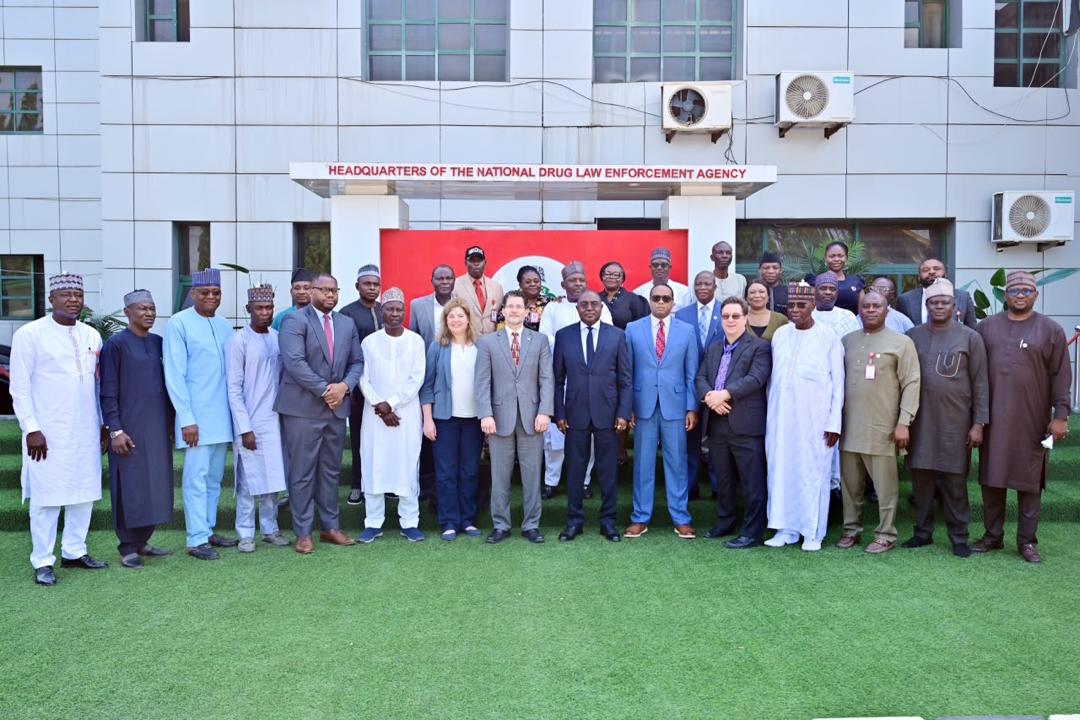
The United States has commended the National Drug Law Enforcement Agency (NDLEA) for dismantling four clandestine methamphetamine laboratories linked to Mexican drug cartels in Nigeria, describing the operations as a major contribution to the fight against transnational organised crime and the protection of communities across both countries.
The commendation came as the NDLEA Chairman/Chief Executive, Brig. Gen. Buba Marwa (rtd), called on Washington to sustain, and if possible increase, its support for the agency, warning that any reduction in assistance could create dangerous gaps that drug trafficking networks and terrorist groups would exploit.
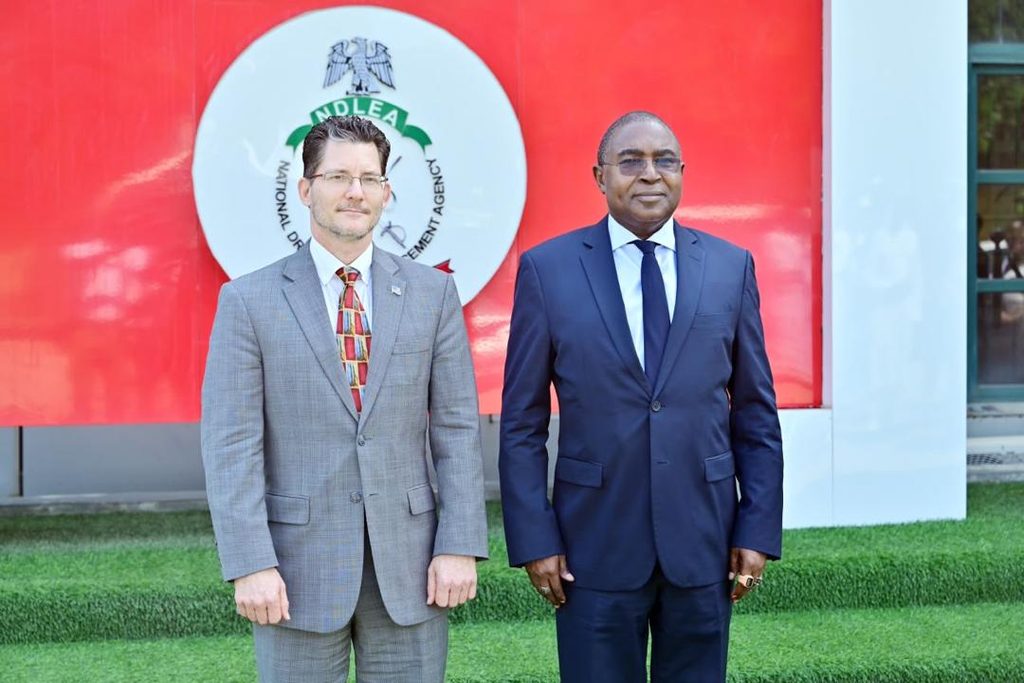
The United States Deputy Assistant Secretary of State for International Narcotics and Law Enforcement Affairs (INL) for Africa and the Middle East, Michael Gonzales, gave the commendation on Tuesday during a visit to the NDLEA national headquarters in Abuja.
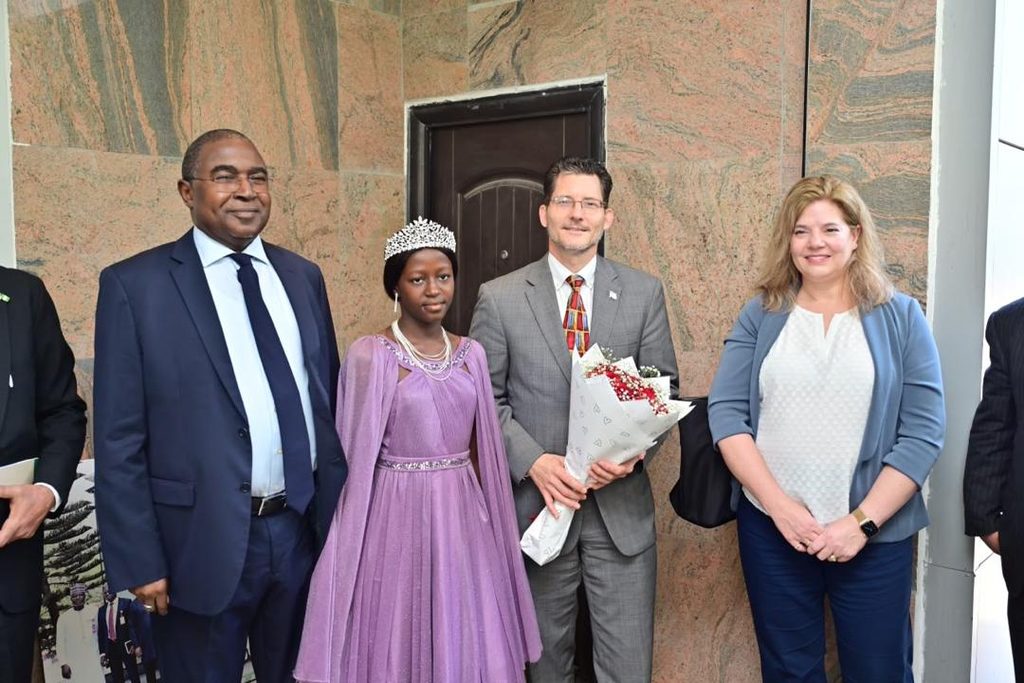
Gonzales, who assumed office four months ago, said Nigeria was the obvious first country to visit because of its position as an African economic powerhouse and the operational achievements of the NDLEA.
He said the agency’s record, combined with the longstanding partnership between the two countries, made it imperative for him to see its operations firsthand.
“When I was thinking where does it make the most sense to visit first, Nigeria was a clear answer,” Gonzales said, citing the country’s leadership role on the continent and the “impressive wins” delivered by the NDLEA and its inter-agency partners.
“I wanted to see firsthand where the magic happens, as we say in the United States,” he added.
Gonzales identified the four methamphetamine laboratory discoveries recorded by the NDLEA this year as evidence of the agency’s operational competence, particularly its intelligence-led investigations, inter-agency coordination, cross-border cooperation and effective prosecution of offenders.
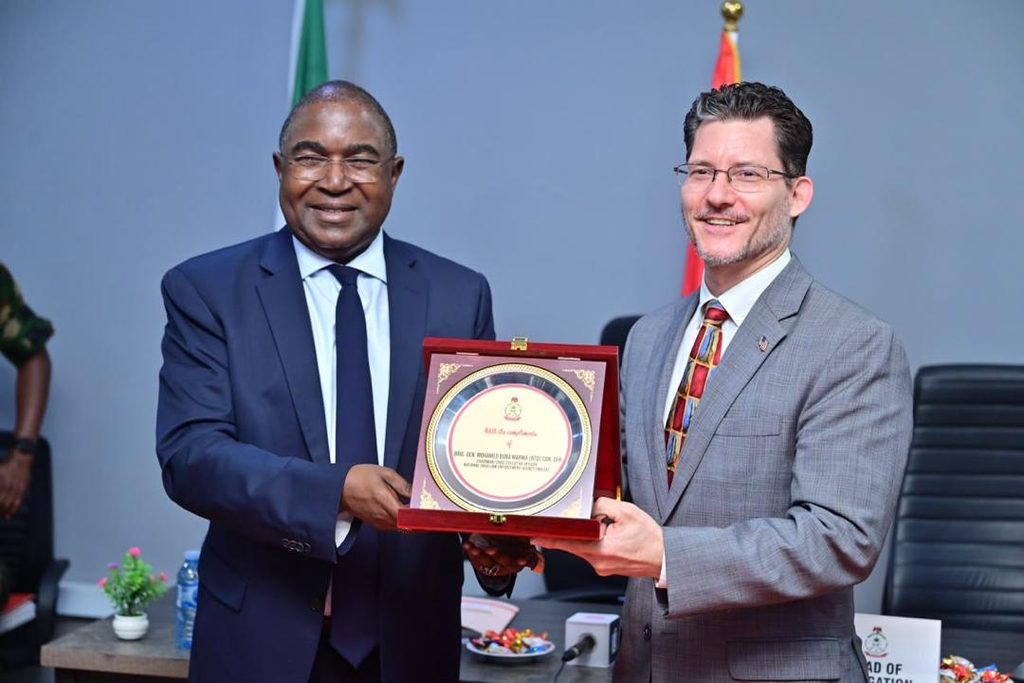
He stressed that the international nature of the illicit drug trade required countries to work together, noting that narcotics remained one of the foreign policy issues with the most direct consequences for American families and communities.
According to him, the work of the INL and the NDLEA “fundamentally delivers for the Nigerian people, for the American people.”
The American official also warned that pressure on drug cartels in the Western Hemisphere could redirect trafficking routes towards Africa, making Nigeria’s counter-narcotics operations increasingly important to international security.
He likened the displacement of trafficking flows to “squeezing a balloon”, explaining that intensified enforcement in one region could push criminal networks to seek alternative routes through Africa to Europe and other parts of the world.
Gonzales called for sustained action against transnational criminal organisations, including efforts to disrupt the financial networks that fund their operations, as traffickers increasingly shift from plant-based substances to synthetic drugs that are often more difficult to detect and potentially more lethal.
Marwa, in his response, said the four laboratories linked to Mexican cartels uncovered in Nigeria demonstrated the scale of the threat and the need for stronger international cooperation.
He disclosed that NDLEA operatives had dismantled what he described as the largest clandestine methamphetamine laboratory ever discovered in Nigeria, located in a forest in Ijebu East, Ogun State, where three Mexican methamphetamine experts and their Nigerian collaborators were arrested.
According to him, illicit substances valued at more than $360 million were recovered from the facility.
Barely four weeks later, the agency raided another industrial-scale laboratory at Tapa Village in neighbouring Oyo State, arresting a Mexican methamphetamine expert and four Nigerian collaborators.
Marwa said two additional facilities were subsequently dismantled in Enugu and Ebonyi states, in the South-East, with all four operations linked to Mexican cartels.
“These were not isolated incidents. They show a deliberate attempt to turn Nigeria into a manufacturing hub,” he said.
The NDLEA chairman warned that the cartel operations were not intended merely to supply the Nigerian market but could establish a West African production and trafficking corridor for shipping industrial quantities of methamphetamine to Europe, Asia and the United States.
He argued that intensified pressure on cartel trafficking routes into America had increased the incentive for criminal organisations to develop alternative supply channels.
“Every meth-producing laboratory that we shut down is a supply line that never reaches an American street, and every cartel operative we arrest is one fewer in the pipeline,” Marwa said.
He described the NDLEA’s forensic chemists, investigators and tactical teams as effectively providing “forward defence” for communities in the United States.
Beyond drug trafficking, Marwa said the operations highlighted the growing convergence of narcotics, illegal arms trafficking and terrorism, warning that the proceeds of drug sales could finance weapons purchases and sustain armed groups.
“Crime has no borders, and neither does the threat. The drugs we seize, the arms we intercept and the terrorist financing we trace are not separate problems,” he said.
“When we seize narcotics and illicit weapons in the same operations and along the same routes, we are looking at the convergence of crime. Drug money buys guns, guns sustain armed groups, and armed groups sustain terrorism.”
He added that security threats in the Sahel and the Lake Chad Basin could not be contained within those areas, just as illicit goods trafficked through West Africa could reach destinations far beyond the region.
Marwa said the partnership with the United States, through INL’s institutional assistance and cooperation with the US Drug Enforcement Administration, had strengthened the NDLEA’s capacity in forensic and chemical analysis, professional training, financial-crime investigations and equipment maintenance.
He attributed part of the agency’s operational gains over the past five years to the support, saying the NDLEA had arrested 96,157 drug offenders, including 250 drug barons, seized more than 15.8 million kilogrammes of assorted illicit drugs and secured the conviction of 16,691 traffickers, including major drug kingpins.
The figures, he said, underscored the scale of the agency’s campaign and the importance of maintaining the capabilities needed to investigate and prosecute increasingly sophisticated criminal networks.
Marwa warned that withdrawing or reducing American assistance could undermine these gains at a time when cartels were attempting to expand their operations into Nigeria.
He therefore urged Gonzales to convey to the US government the need to preserve the existing level of support and consider increasing it to meet emerging threats.
“INL support, as is, should be maintained if not increased,” he said.
The NDLEA chairman maintained that criminal networks were already cooperating across national boundaries and that governments could not afford to respond in isolation.
His appeal places renewed emphasis on the strategic importance of US-Nigeria counter-narcotics cooperation as Nigerian authorities confront attempts by international cartels to establish industrial-scale synthetic drug production facilities within the country.
For both countries, the challenge extends beyond intercepting consignments and arresting suspects to dismantling the production infrastructure, financial channels and international networks that sustain the illicit trade.
US Hails NDLEA Over Four Mexican-Linked Meth Lab Busts, Marwa Seeks More Support
Nigerien Forces Capture Two Suspected Bandits, Seize Heavy Weapons, Starlink in Bilma
By: Zagazola Makama
Nigerien security forces have captured two suspected armed bandits and seized a vehicle, heavy weapons, ammunition and communication equipment following a pursuit in the southwestern outskirts of Bilma.
According to a security report dated Oct. 19, 2026, the operation followed the continued pursuit of a vehicle occupied by suspected bandits by a departmental patrol.
The report said the chase extended into a sandy area dotted with dunes in the southwestern part of Bilma, where the suspects’ vehicle became stuck.
The occupants reportedly abandoned the vehicle, identified as a V6, and attempted to take positions on the surrounding dunes.
The patrol, upon sighting the abandoned vehicle and the suspects’ movements, engaged them in a firefight.
The report said the security forces, through coordinated action, successfully neutralised the threat and captured two suspects.
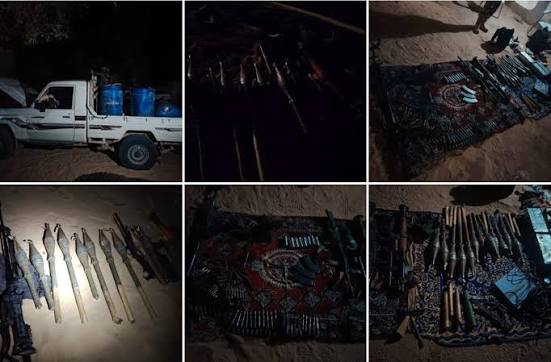
The vehicle, bearing Chadian registration number T10-14908, was recovered alongside a substantial arsenal of weapons and military equipment.
Items seized included one 12.7mm machine gun with its serial number erased, one RPG-7 launcher, one Kougar launcher, one AK-103 rifle with three empty magazines, 12 RPG-7 rounds, including two unserviceable rounds, and eight Kougar grenades.
The forces also recovered 60 rounds of 12.7mm ammunition, 64 rounds of FM80 ammunition, four sealed ammunition boxes, 12 RPG-7 charges, a spare FM80 barrel and a pair of RPG-7 binoculars, according to the report.
Other items recovered included a Starlink satellite communication device, three Motorola radios, an Android mobile phone, an analogue telephone, a power bank, a compressor and a pressure controller.
The military-related items seized also included two military uniforms, an AK-47 magazine pouch, a Chadian Army red beret and an adjudant’s rank insignia.
Additional items recovered were a wristwatch, a microphone and two travel bags.
The report identified the suspects as Ahmad Djiti, born around 1998 in Massaroufa, Chad, and Oumar Mahamad, born around 1991 in the same locality.
Djiti was described in the report as a Chadian national and serving Chadian military personnel, while Mahamad was identified as a Chadian rebel allegedly affiliated with the Front pour l’Alternance et la Concorde au Tchad (FACT).
The report stated that the two men were married and had children.
The relevant authorities have been notified, while investigations are ongoing to establish the circumstances surrounding the suspects’ activities, the origin of the seized weapons and equipment, and their possible links to other armed groups operating in the region.
Nigerien Forces Capture Two Suspected Bandits, Seize Heavy Weapons, Starlink in Bilma

NHRC TASKS TEACHERS ON HUMAN RIGHTS PROTECTION IN SCHOOLS

US Hails NDLEA Over Four Mexican-Linked Meth Lab Busts, Marwa Seeks More Support

Nigerien Forces Capture Two Suspected Bandits, Seize Heavy Weapons, Starlink in Bilma

Roger Federer’s Shock as DNA Results Reveal Myla and Charlene Are Not His Biological Children

THE PLIGHT OF FARIDA

FAILED COUP IN BURKINA FASO: HOW TRAORÉ NARROWLY ESCAPED ASSASSINATION PLOT AMID FOREIGN INTERFERENCE CLAIMS
-
 News3 years ago
Roger Federer’s Shock as DNA Results Reveal Myla and Charlene Are Not His Biological Children
-
Opinions5 years ago
THE PLIGHT OF FARIDA
-
 News2 years ago
FAILED COUP IN BURKINA FASO: HOW TRAORÉ NARROWLY ESCAPED ASSASSINATION PLOT AMID FOREIGN INTERFERENCE CLAIMS
-
 Opinions5 years ago
POLICE CHARGE ROOMS, A MINTING PRESS
-

 News3 years ago
EYN: Rev. Billi, Distortion of History, and The Living Tamarind Tree
-

 ACADEMICS3 years ago
A History of Biu” (2015) and The Lingering Bura-Pabir Question (1)
-

 Columns3 years ago
Army University Biu: There is certain interest, but certainly not from Borno.
-

 Politics1 year ago
2027: Why Hon. Midala Balami Must Go, as Youths in Hawul and Asikira/Uba Federal Constituency Reject ₦500,000 as Sallah Gift
