
News
RE: ENDING THE AFFRONT TO THE RULE OF LAW : A RESPONSE To COLLINS NWEKE

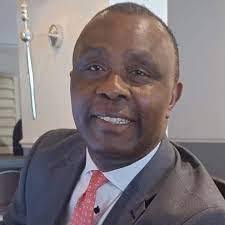
RE: ENDING THE AFFRONT TO THE RULE OF LAW : A RESPONSE To COLLINS NWEKE
By Magnus Agu magnusagu85@gmai.com
Reading through the public letter by Collins Nweke, purportedly addressed to the new Chairman, House Committee on Diaspora Affairs I thought it would be something new, something different, something more intelligent.
But it was all still same of the same I won’t bore you with a long treatise I think Collins Nweke already did that .So let me go straight to the points that I want to focus on in the write-up
- The issue of Nido ( Nigerians in diaspora organization )Collins Nweke has taken us through the history of the formation of Nido I don’t have any problem with his historical background
NIDO, an initiative of President Olusegun Obasanjo many years ago was set up to have all Diaspora groups under one umbrella. Unfortunately, the purpose was not achieved due to in-fighting, and quarrels, that subsequently saw even original, serious-minded members of the group exiting Nido , thanks to the sit tight and clandestine nature of its inaugural leaders like Collins Nweke and few of his cohorts.
Stories are replete of many Nigerians abroad who were recommended to join the organization but left disappointed and wondered how they would function in an organization that had different factions, had lots of hidden and selfish agendas by its so called leaders at that time . They were confused as they had to deal with these fears so they , like many others, saw no focus and so opted out . So Collins Nweke, a founding father of Nido should be ashamed of the general state of affairs of Nido , particularly the clandestine Nido Worldwide and Nido Continental , which he and just a handful of his like , treacherously hold on to as their cash cow. It’s either his way or no way
Now . Don’t get me wrong There are various branches of NIDO doing well in some countries Take for instance NIDO Sierra Leone. NIDO Sierra Leone has taken up a project to build a hospital in Sierra Leone for Nigerians in Sierra Leone. Nido Europe ( representing the whole of Europe led by Bashir Obasekola ) Nido Qatar, Nido South Korea , Nido Sweden, and some other Nido chapters in some countries are doing well in their various chapters and must be commended , along with other diaspora groups and associations and individuals making Nigeria proud
It must be noted that some countries don’t have any organization called NIDO. For instance, South Africa has NICASA, and Nusa , Australia has an Association of Nigerians in Australia, and Ethiopia has an organization called NISE. I could go on and on, In America there is NAPAC , an association that has supported Nigerians contesting various elections in America, and today about 14 Nigerians in America have won their elections In America with the support of NAPAC . In Canada alone there are about 51 diaspora organizations and none of which is called Nido. Canada is peculiar because one of Collins Nweke´s Colleagues registered Nido in his own name In other words he owns Nido. Story for another day . We all know that there are professional associations like ANPA, NAPPSA, MANSAG, NNCA, NCBN, NNC,and several other professional and socio cultural groups . Canuk in the UK represents almost over 100 associations while existing along Nido UK South Zumunta is also a very strong and purposeful diaspora group . So would it not be easier if all these associations are under one umbrella as former President Olusegun Obasanjo envisaged ?Noble intention But these genuine objectives failed over the years because people like Collins Nweke remained selfish and self-centered. They could not keep Nido as one I mean how can an association that is fragmented bring others on board, for instance, NidoAfrica shamelessly has at least 2 factions, fighting over what ? Nido America has more than a faction, There are some Nido groups in some countries in Asia and the Middle East , existing along side other very active and purposeful groups .
Nido does not exist anywhere in Australia and many other countries around the world
As noble as the objective of having all Nigerian diaspora groups under one umbrella is , it has not worked.
So what NIDO needs to do is put its own house in order and rebrand, talk to all these associations, and see if they can bring them together under one room, But my fears are it is too late now because of people like Colin’s Nweke and and his cohorts , who after 25 years , feel that they must hold on to Nido and hold 17million Nigerians in the diaspora to ransom through what Nweke calls Nido Worldwide and Nido Continental. These are bodies created by him and his gang made up of former Chairmen of Nido whom they constituted with the aim of remaining in charge of these associations for life. Mr Chairman put yourself in this situation Imagine former chairmen and members of the house committee of diaspora constituting themselves into associations of former committee members and taking decisions for you as a serving parliamentarian and chairman of committee ?What Collins Nweke is thus asking you to do is to take these guys , who have been former chairmen of Nido , as the alpha and omega of all 17 million Nigerians in Diaspora ? Chairman, does that make sense to you ?
Nweke is talking about rule of law . What moral right does a man who was an executive of Nido since the days of President Obasanjo , but refuses to let go , through what he calls Nido worldwide ?
I think Collins Nweke , beyond giving empty foreign policy analysis on tv sometimes, needs a job . Mr Chairman, you can help him get a job , please
Collins Nweke and his Nido worldwide and Nido Continental ( whatever it means ) has remained a nuisance and a distraction from genuine diaspora issues affecting Nigerians all over the world
Mr. Chairman sir I challenge you to ask Collins Nweke to give you just 500 genuine names of his members world wide !
Colllins Nweke`s piece titled “ Ending the Affront to the Rule of Law “ is ironic because , as expressly stated above ,if there is any affront to the rule of law that should be ended ,it should be that of Colllins Nweke and his inconsequential microscopic minority gang who want to be perpetual rulers, We in the Diaspora will continue to resist and reject them
Now , we have our own Commission , Nidcom , to relate with .And in this age of technology, getting data of registered groups and associations and bringing them together to work for the progress of our country is easier . And we can see that Nidcom is doing just that
As for the issue of the NiDCOM Board, it is an Administrative structure to be set up by Mr President, so it is an administrative matter. NiDCOM Board is not the only Board that has not been constituted and it will be constituted., hopefully soon However, we must commend the Diaspora Commission for bringing the Diaspora phenomenon to the front burner and you can see it’s been doing well despite all the challenges as well as little or no funding. They have taken the issue of diaspora seriously and put Nigerian issues on the front burner and we do appreciate this. Is the Commission perfect? No, but we have to help in building and strengthening this organization. Diaspora is a part of our foreign policy in Nigeria and if you look at the diaspora policy, it is well crafted if it is properly implemented we would even do better than other countries have done all over the world.
Nweke’s obsession, as in other issues with him , is self serving . He desperately had hoped to be chairman or worse case , member of the board , especially if another party had won elections , not the APC
Well, dreams do come true . I wish him well
And on the issue of Diaspora voting, Collins Nweke and his gang are not even sincere about this. A few years back they said, oh, they will mobilize 1,000,000 people on Diaspora voting and they could not even mobilize one person
So therefore he is not in a position to talk about diaspora voting, Diaspora voting has been an issue that has been championed by people at home and in the diaspora. There is already a bill in the Senate to amend the constitution to make diaspora voting a reality and what we want from you Mr Chairman is to join in our voices to make this a reality.
In his write-up, Collins Nweke asked you a pertinent question , which he termed “ the elephant in the room”He asked “ what do you want to be remembered for.” I pose the same question right back to you
What do you want to be remembered for ?
A selfless , patriotic parliamentarian or
a religious, tribal bigot that will give in to selfish manipulations? ( By the way Mr Chairman I know you are a member of the Labour Party to which people like Collins Nweke belong to ) So do you want to be remembered as a selfless parliamentarian who put the issues of diaspora selflessly Irrespective of tribe , political affiliations ?Or one who will join the clarion call for all Nigerians at home and abroad to join hands to build Nigeria together
The ball is in your court !.
RE: ENDING THE AFFRONT TO THE RULE OF LAW : A RESPONSE To COLLINS NWEKE


News
NIS Raises Alarm Over Human Trafficking, Travel Fraud, Says Border Controls Alone Cannot Stop Irregular Migration
NIS Raises Alarm Over Human Trafficking, Travel Fraud, Says Border Controls Alone Cannot Stop Irregular Migration
By: Michael Mike
The Nigeria Immigration Service (NIS) has warned that misinformation, false promises and inadequate access to reliable migration information are exposing Nigerians to human trafficking, migrant smuggling and travel fraud, declaring that border controls alone cannot address the growing challenges of irregular migration.
The Service called for coordinated action by government agencies, security institutions, development partners, community leaders, civil society organisations and the media to close information gaps and ensure that prospective migrants can make informed decisions about travelling abroad.
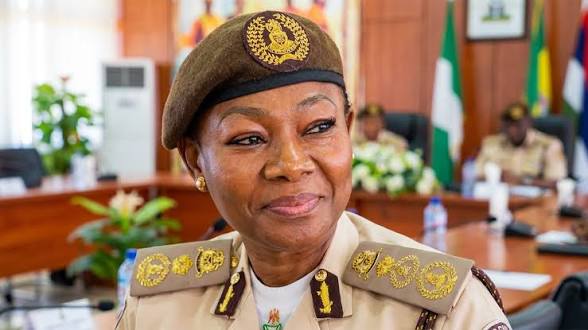
The Comptroller-General of the NIS, Kemi Nandap, gave the warning in a speech delivered by the Deputy Comptroller-General in charge of Visa and Residency Directorate, Franca Nwanneka, at a Stakeholder Sensitisation and Engagement Seminar in Abuja on Wednesday.
The seminar was themed, “Bridging the Information Gap: Promoting Informed, Safe and Regular Migration.”
Nandap said although people migrated in pursuit of education, employment, safety and better opportunities, decisions influenced by misinformation, deceptive promises and limited awareness of lawful migration pathways could expose them to serious risks and devastating consequences.
“Human trafficking, migrant smuggling, travel fraud, and irregular migration highlight the risk of inadequate information and intelligence sharing among operational stakeholders,” she said.
The Comptroller-General stressed that tackling the problem required more than enforcement at the nation’s borders, insisting that prospective migrants must have access to accurate, timely and reliable information before making decisions that could affect their safety and future.
“Preventing these risks requires more than border control. It begins with equipping prospective migrants with accurate, timely, and reliable information to make informed decisions and pursue safe, lawful migration pathways,” she said.
The warning places public awareness and access to trustworthy information at the centre of Nigeria’s migration management efforts, with the Service seeking stronger collaboration among institutions responsible for border security, migration governance and public sensitisation.
Nandap said the NIS was strengthening its operational capacity through institutional reforms, modern border management technologies, intelligence gathering and improved service delivery.
She cited the recent deployment of the border control and immigration management system and other technology-driven platforms as part of efforts to build a modern, responsive and intelligence-led immigration service.
However, she acknowledged that technology and stronger border controls could not independently resolve the factors driving irregular migration.
“Nevertheless, we recognise that even the most sophisticated border management systems cannot on their own address the underlying factors that encourage irregular migration,” she said.
The Comptroller-General therefore urged stakeholders to move beyond discussions and adopt coordinated, practical measures to counter misinformation and ensure that reliable migration information reaches communities, particularly those most vulnerable to exploitation.
She specifically called on government agencies, security institutions, development partners, traditional and community leaders, civil society organisations, educational institutions, transport operators and the media to take greater responsibility for public sensitisation.
“Migration sensitisation is a shared responsibility that cannot be left to the Nigeria Immigration Service alone,” she said.
According to her, the seminar was designed to help stakeholders examine existing approaches, identify institutional gaps and explore how innovation, community participation and inter-agency cooperation could improve migration management.
She expressed confidence that the presentations, roundtable discussions and technical sessions would generate practical recommendations towards a safer and more coordinated migration management system.
The NIS chief also commended partner institutions, development partners, resource persons and participants for their contributions to strengthening migration governance in Nigeria.
Also speaking at the seminar, the International Organization for Migration (IOM) reaffirmed its commitment to strengthening its partnership with the NIS to promote regular migration and address migration-related challenges.
Nnenna Onuoha, Senior Programme Associate of IOM Nigeria, who represented the organisation’s Chief of Mission, Sharon Dimanche, said the partnership between the two institutions had continued to grow stronger and produce tangible results.
“The relationship and the partnership between IOM and NIS have been and have continued to grow stronger and have produced tangible results,” Onuoha said.
She described the engagement as an opportunity for stakeholders to deliberate on how collective action could make regular migration more accessible and commonplace in Nigeria.
Onuoha conveyed Dimanche’s goodwill to the participants and expressed the IOM’s hope that the discussions would lead to fruitful deliberations and actionable outcomes.
The collaboration reflects a shared emphasis on stakeholder engagement and better-informed migration decisions, with the NIS focusing on its statutory responsibilities for immigration control and migration management and the IOM supporting cooperation on migration-related issues.
The challenge ahead, however, is to translate the commitments made at the seminar into sustained public education, improved access to reliable migration information and effective coordination among relevant institutions.
For the NIS, the objective is to ensure that prospective migrants can distinguish legitimate migration opportunities from deceptive offers and understand the lawful pathways available to them before embarking on potentially dangerous journeys.
The seminar brought together representatives of security and law enforcement agencies, regional and international organisations, border management institutions, civil society groups, non-governmental organisations, community-based organisations, academic institutions and other stakeholders.
Nwanneka formally declared the seminar open on behalf of Nandap, expressing the Service’s expectation that the deliberations would advance a safer, smarter and more coordinated migration management system in Nigeria.
NIS Raises Alarm Over Human Trafficking, Travel Fraud, Says Border Controls Alone Cannot Stop Irregular Migration
Plateau Indigenous Youths Defend DSS, Demand Probe of Alleged Security Leaks
By: Michael Mike
Indigenous youth organisations in Plateau State have defended the Department of State Services (DSS), the Mobile Police Force and Operation Rainbow against allegations of bias and misconduct, urging the Federal Government to sustain joint security operations and investigate claims of compromise within the security architecture.
The coalition accused groups representing Fulani interests of using petitions and social media campaigns to discredit security agencies following operations against armed militants in the state.
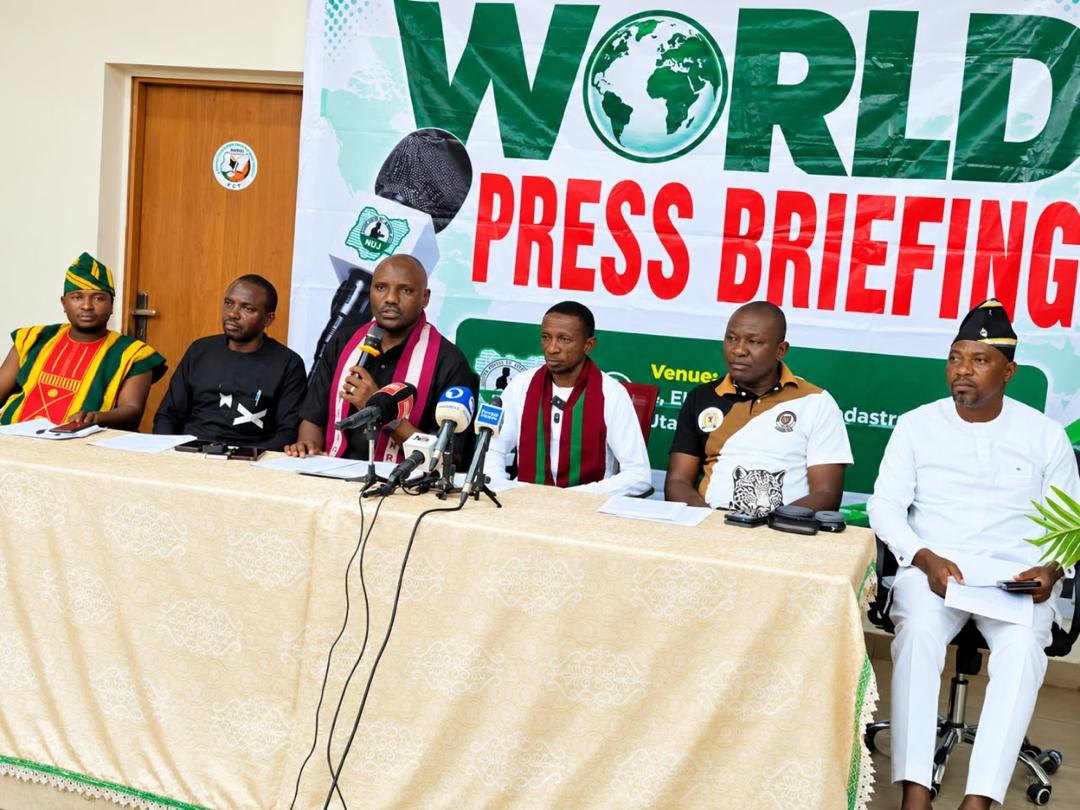
Addressing a press conference at the Nigeria Union of Journalists (NUJ), FCT Council, on Wednesday, the President of the Berom Youths Moulder-Association and Coordinator of Indigenous Youth Nationalities, Northern Zone, Dalyop Solomon Mwantiri, said the allegations risked undermining ongoing efforts to restore peace to violence-ravaged communities.
The coalition’s position followed a petition dated October 5, 2026, reportedly signed by Mujahid Abdullahi on behalf of the Plateau chapters of the Miyetti Allah Cattle Breeders Association of Nigeria (MACBAN), Gan Allah Fulani Development Association of Nigeria (GAFDAN), Fulbe Youth Development Association (FUYODA) and other organisations.
The petitioners allegedly accused the DSS of discriminatory operations against Fulani communities and blamed the agency for killings, abductions, cattle rustling and the poisoning and shooting of cattle.
A video circulated on Facebook and other social media platforms reportedly made similar allegations while portraying the Nigerian Army as the only security agency working in the interest of peace in Plateau.
But the indigenous youth coalition dismissed the claims as an attempt to distort the security situation and pressure authorities into undermining operations against armed groups.
Mwantiri said the campaigns appeared designed to intimidate the Plateau State Director of the DSS, Paul Damian; discredit the operations of the DSS, Mobile Police Force and Operation Rainbow; disrupt joint operations involving local security volunteers; discourage intelligence sharing; and portray the Army as the only effective security agency in the state.
The coalition maintained that the joint operations had exposed what it described as a pattern of armed militants attacking and occupying communities while cattle were allegedly grazed alongside them.
It claimed that at least 152 hamlets, villages and communities had suffered attacks, although it did not provide supporting documentation for the figure at the briefing.
The youth leaders also rejected allegations that Damian and the DSS were involved in killings and cattle rustling. They argued that cattle intercepted while grazing on farmlands were being held pending the identification of their owners and the alleged perpetrators.
To reinforce their argument, the coalition cited several attacks on security personnel and communities, which it attributed to Fulani militants.
It alleged that a newly deployed DSS base at Nding Sesut, Fan District, in Barkin Ladi Local Government Area, was attacked on June 1, 2026.
The group also cited an August 23 attack on Tanjol and Tarai villages in Jol community, alleging that more than 400 militants assaulted the settlements, ambushed and killed two DSS officers, seized their rifles and retreated towards Rankum in the Mahanga area of Riyom Local Government Area.
It further alleged that Mobile Police Force personnel were killed in attacks on Dares and Kwi villages in Bokkos and Riyom local government areas about two weeks before the briefing.
The coalition also claimed that the Operations Officer of Operation Rainbow, DSP David Babale, was ambushed and killed near a military checkpoint around Rakok village, on the outskirts of Barkin Ladi, while similar incidents had occurred at Kantoma and Alohgom in Mangu Local Government Area.
The allegations were not independently verified at the briefing, and the petitioning organisations’ responses were not included in the coalition’s presentation.
In a further allegation, the youth leaders claimed that sponsors of the armed groups were raising N20 million to finance media campaigns, court cases and petitions aimed at frustrating the security crackdown.
They called on the Federal Government to investigate the alleged funding and any suspected attempts to compromise security operations, including allegations of unprofessional conduct and collusion involving some Army personnel.
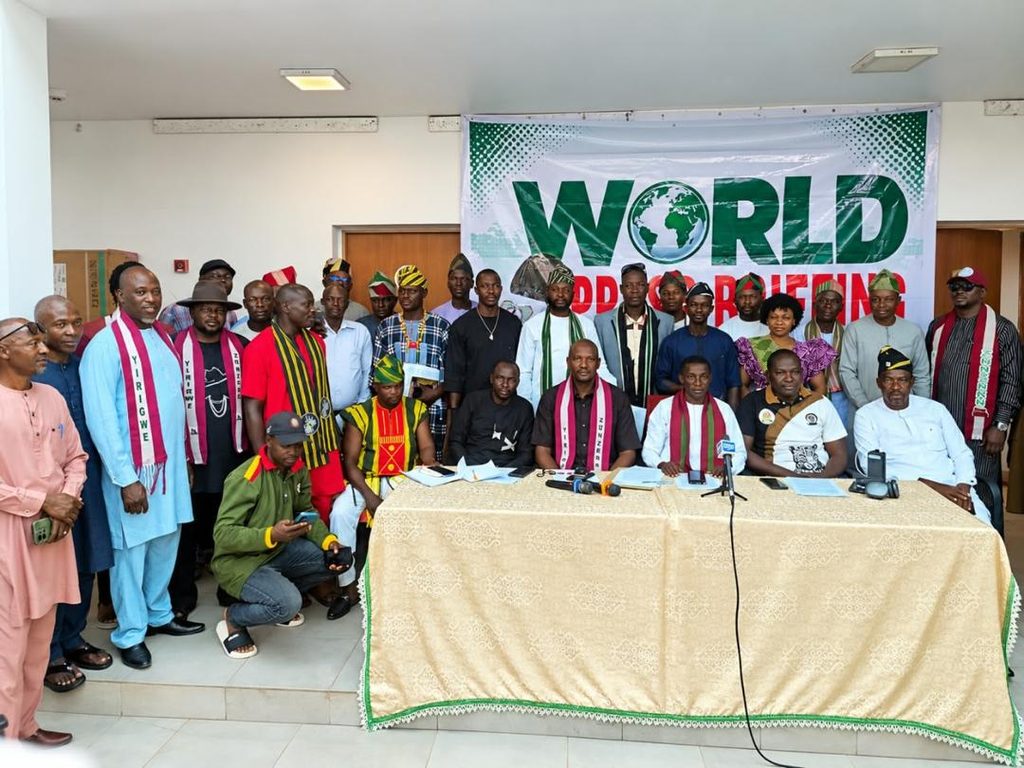
The coalition, which comprises youth organisations representing Afizere, Anaguta, Atakar, Atten, Bache, Berom, Gamai, Irigwe, Kunlere, Mushere, Mwaghavul, Ron, Pan, Tarok and other ethnic groups, warned against withdrawing the DSS, Mobile Police Force and Operation Rainbow from Plateau State.
It argued that removing the agencies while attacks and displacement persisted could weaken ongoing operations and embolden armed groups.
The youth leaders appealed to President Bola Tinubu and other Federal Government authorities not to be swayed by allegations they considered politically motivated, while insisting that genuine complaints against security personnel should be investigated.
“We smell a rat,” the coalition said, describing the petition and video as “ploys and strategies of distraction”.
It urged authorities to encourage cooperation among security agencies rather than allow public disputes to undermine intelligence sharing and joint operations.
The statement was jointly signed by Amb. Ezekiel Peter Bini, President of the Irigwe Youths Movement and Chairman of the Coalition; Mwantiri; Amb. Miri Timnan Nyantau, President of the Tarok Progressive Youths Association and Coordinator, Southern Zone; and Jonathan Kyesmang Yusuf, President of the Mwaghavul Youth Movement and Coordinator, Central Zone.
The dispute underscores the competing allegations surrounding the security response to persistent violence in Plateau State, where attacks on communities and security personnel have intensified calls for accountability, effective intelligence coordination and a sustainable approach to civilian protection.
While the coalition maintained that the security agencies should be allowed to continue their operations, the allegations against both security personnel and the groups involved require independent investigation to establish the facts and ensure that accountability is not sacrificed in the pursuit of peace.
Plateau Indigenous Youths Defend DSS, Demand Probe of Alleged Security Leaks
Farmers, Fulani Herders Agree on Compensation for Farmland Destruction in Plateau
By: Zagazola Makama
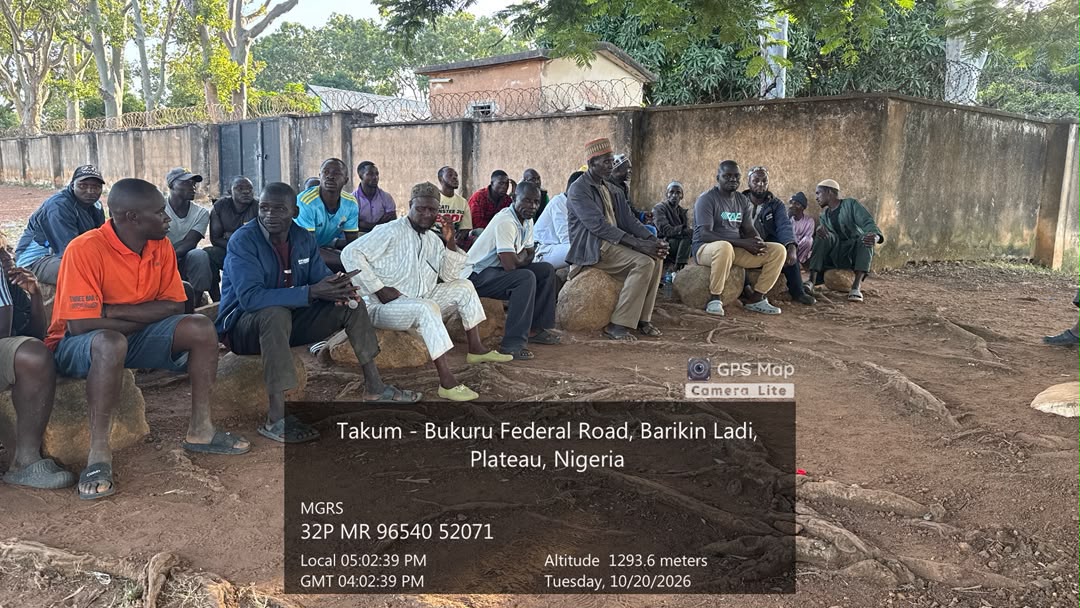
Farmers and Fulani cattle owners in Marit, Lajam and Dorowa communities in Plateau State have reached separate agreements on compensation for farmland destruction following consultations and assessments involving the affected parties.
Security sources said the agreements were reached during a meeting held on Oct. 20, 2026, to address grievances arising from farmland destruction and prevent further disputes between farming and herding communities.
Under the agreement, farm owners in Marit reached a settlement with Fulani cattle owners for ₦1 million, to be paid on Oct. 28, 2026, as compensation for the damaged farmland.
In Lajam, farm owners, following an assessment conducted with Fulani herders, agreed to accept ₦200,000 in compensation, with payment scheduled for Oct. 23, 2026.
The report added that the affected farmer in Dorowa requested only ₦27,000 to cover his wife’s hospital bills.
The farmer reportedly made no additional financial demand because his farm produce had already been harvested.
The engagements were aimed at resolving disputes arising from farmland destruction through dialogue and mutually agreed compensation, while preventing tensions from escalating between the affected communities.
Meanwhile, troops are continuing patrols across the general area with patrol leaders to prevent the establishment of unauthorised migrant camps and avert further incidents of farmland destruction, according to the report.
The security presence is expected to reinforce compliance with the agreements and encourage peaceful coexistence between farmers and herders.
Authorities have continued to urge both communities to resolve disputes through dialogue and established channels, warning against actions that could undermine peace and security in the area.
Farmers, Fulani Herders Agree on Compensation for Farmland Destruction in Plateau

Ebola: WAHO Steps Up Regional Surveillance After Abuja Case

Cable Theft: NSCDC Uncovers Alleged Buyer Network, Arrests Four in Abuja

2027: APC Deploys Diaspora Network to Fight Anti-Tinubu Narratives, Mobilise Re-election Support

Roger Federer’s Shock as DNA Results Reveal Myla and Charlene Are Not His Biological Children

THE PLIGHT OF FARIDA

FAILED COUP IN BURKINA FASO: HOW TRAORÉ NARROWLY ESCAPED ASSASSINATION PLOT AMID FOREIGN INTERFERENCE CLAIMS
-
 News3 years ago
Roger Federer’s Shock as DNA Results Reveal Myla and Charlene Are Not His Biological Children
-
Opinions5 years ago
THE PLIGHT OF FARIDA
-
 News2 years ago
FAILED COUP IN BURKINA FASO: HOW TRAORÉ NARROWLY ESCAPED ASSASSINATION PLOT AMID FOREIGN INTERFERENCE CLAIMS
-
 Opinions5 years ago
POLICE CHARGE ROOMS, A MINTING PRESS
-

 News3 years ago
EYN: Rev. Billi, Distortion of History, and The Living Tamarind Tree
-

 ACADEMICS3 years ago
A History of Biu” (2015) and The Lingering Bura-Pabir Question (1)
-

 Columns3 years ago
Army University Biu: There is certain interest, but certainly not from Borno.
-

 Politics1 year ago
2027: Why Hon. Midala Balami Must Go, as Youths in Hawul and Asikira/Uba Federal Constituency Reject ₦500,000 as Sallah Gift
