
News
The Role of Intelligence in the Nigeria-US Joint Counter-Terrorism Operations That Neutralized Top ISWAP Commander, Fighters

The Role of Intelligence in the Nigeria-US Joint Counter-Terrorism Operations That Neutralized Top ISWAP Commander, Fighters
By Augustine Aminu
On Friday, May 16, 2026, the world was jolted by news of the killing of top commander of the Islamic State’s West Africa Province (ISWAP), Abour Mainok and several other fighters. Also known as Abu Bilal al-Minuki, and considered the second-in-command of ISIL (ISIS) globally, the top terrorist commander was reportedly killed during a joint Nigeria-U.S. Counter Terrorism operation in Metele, Borno State.
Ever since the elimination of al-Minuki, considered one of the biggest blows in recent times to terrorists in the world over, torrents of encomium have been pouring in for the Nigeria -U. S. joint terrorism operations.
Posting on his Truth Social handle, U. S. President Donald Trump, wrote, “Brave American forces and the Armed Forces of Nigeria flawlessly executed a meticulously planned and very complex mission to eliminate the most active terrorist in the world from the battlefield,”
Al-Minuki, added President Trump, “thought he could hide in Africa, but little did he know we had sources who kept us informed on what he was doing.”
On his part, President Bola Tinubu stated that both countries had “recorded a significant example of effective collaboration in the fight against terrorism”.
Early assessments indicate that al-Minuki, along with “several of his lieutenants,” were killed during a strike on his compound in Metele, Borno State,” Tinubu said.
“Nigeria appreciates this partnership with the United States in advancing our shared security objectives,” he added. “I extend my sincere gratitude to President Trump for his leadership and unwavering support in this effort,” he added.
A few days after President Trump praised Nigerian Intelligence services for helping to hunt down Abu-Bilal al-Minuki, a man he described as “the most active terrorist in the world,” US Air Force General, Dagvin R.M. Anderson, Commander of U.S. Africa Command, also spoke glowingly of Nigeria’s Intelligence services.
Remarked Anderson, “The Nigerians have been instrumental throughout the last several months, developing the target, helping us with the Intelligence and providing support. So, it could not have been done by our own Forces. We needed to do that in conjunction with them.”
Security sources who analyzed President Trump’s terse statement, alongside that of the to head of AFRICOM, General Anderson, were quick to point out that the “sources” who kept the United States and Nigerian Armed Forces informed of the movements of al-Minuki and his fighters, may be none other than Nigeria’s Intelligence agencies: the Department of State Services (DSS), the Nigerian Intelligence Agency (NIA), and Defence Intelligence Agency (DIA).
Interestingly, six days before al-Minuki’s elimination, something crucial to the fight against terrorism happened in one North central town, well over 1,100 kilometres away from Metele, Borno State, where al-Minuki and over 175 of his fighters would meet their Waterloo.
Just as DSS, NIA and DIA operatives were helping US and Nigerian troops monitor the movement of Al-Minuki and his fighters around the Lake Chad region, a set of DSS operatives covertly captured a notorious leader of one of ISWAP’s critical cell in Nigeria . His name is Abdulrahman Ozovieh Muhammad alias Abu Ghozi.
Abu Ghozi, security sources believe, masterminded the December 2020 attack on a military checkpoint in Okene, killing two naval personnel and carting away their weapons.
Additionally, Abu Ghozi is believed to have masterminded the 11th March, 2021 bank robbery at Okuku, in Oda-Atin LGA of Osun State; carried out several attacks on police formations in Okene, Okehi and Adavi LGAs. He didn’t spare security checkpoints along Okene-Auchi, Okene –Kabba and Okene-Ajaokuta roads.
Also believed to be behind several kidnaps, including the October 2025 kidnap of a Chinese national in Okpella, Edo State, during which eight personnel of the Nigerian Security and Civil Defence Corps (NSCDC) were killed, is Abu Ghozi.
In January, 2026, his group reportedly attacked and burnt down the house of the Chief Priest at Uhodo area of Okehi LGA. Members of his suspected terrorist group were, before his arrest by the DSS, reportedly set to attack detention facilities in Kainji and Abuja, to release detained members of their group.
Security sources believe that Abu Ghozi’s capture by DSS officers may have greatly helped the Nigerian Intelligence Services (DSS, NIA and DIA) gather further Intelligence that was ultimately used to nail al-Minuki and his fighters six days later in faraway Metele, Borno State.
No doubt, Nigeria’s Intelligence community and their military counterpart again proved very invaluable to the recent successes in the global fight against terrorism, and helped position Nigeria as a very trusted ally in the fight against terrorism.
For the first time since Nigeria began fighting terrorism circa 2010, the country has now fully turned the heat on terrorists, smoking them.out on a daily basis.. The recent successes recorded shows that with our Armed Forces increasingly relying on the intelligence supplied by the DSS, NIA and DIA, Nigeria will sooner than later overcome her security challenges.
Aminu has been online editor of several newspapers, and lives in Abuja


News
“Identity Cannot Become a Death Sentence, Crime Must Be Treated as Crime, Not Ethnicity” MACBAN Warns Against Collective Blame in Plateau
“Identity Cannot Become a Death Sentence, Crime Must Be Treated as Crime, Not Ethnicity” MACBAN Warns Against Collective Blame in Plateau
By: Zagazola Makama
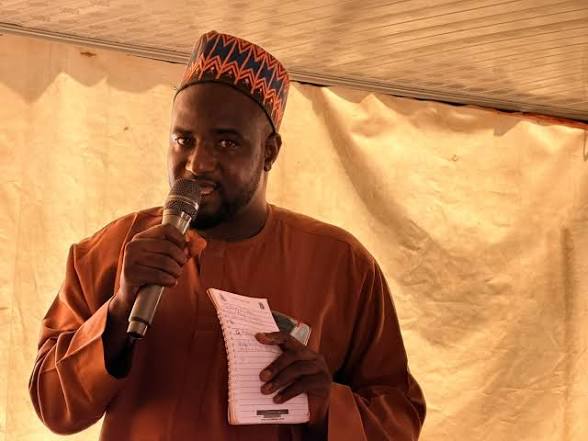
The Assistant Youth Leader of Miyetti Allah Cattle Breeders Association of Nigeria (MACBAN), Barkin Ladi branch, Idris Saidu Adamu, has identified collective blame, civilian vigilantism, identity-based killings, social-media incitement and what he described as unequal treatment of displaced communities as major factors sustaining violence in Plateau State.
Adamu made the submission during an interaction with journalists in Plateau State, where he argued that lasting peace would remain difficult unless government and communities stopped treating criminality as a crime belonging to a particular ethnic or religious group.
He said the presence of criminals in every community should make investigation, evidence and due process the basis for determining responsibility for crimes.
“We are having criminals in all parts. Every tribe, every religion has criminals.”
According to him, one of the most dangerous developments in the Plateau crisis is the practice of civilians taking the law into their own hands whenever an incident occurs.
Adamu alleged that while the Fulani community generally accepts the prosecution of suspects arrested for crimes, there have been instances where community members from other groups have protested against the arrest or prosecution of suspects from their communities.
“As far as the Fulani community in Plateau State is concerned, we have never protested the arrest of any criminal that was. In fact, we want the law to take its course on any criminal that is caught.”
He added: “But on the contrary, in the part of the natives and other tribes, when a criminal is caught, they will come out and protest that such a criminal should not be prosecuted.”
Adamu said such behaviour creates an environment in which criminal suspects can become protected by communal identity, while victims and security agencies are placed under additional pressure.
‘If suspect is not caught, it must be Fulani’
The MACBAN youth leader also accused sections of the population of prematurely attributing crimes to Fulani people whenever the actual perpetrators are not immediately identified.
“If there is any ordinary incident that happens, be it a kidnapping, be it a robbery, anything, any criminality that everyone is capable of doing, if the suspect or the criminal is not caught, the final conclusion to the negative crimes is that it must have been committed by a Fulani.”
He said such assumptions can transform an ordinary criminal investigation into an ethnic confrontation.
Adamu cited Mushere as an example, recalling the kidnapping of the father of former Plateau State Governor Joshua Dariye.
He claimed that the initial suspicion at the time was that Fulani people were responsible, but that subsequent investigations, according to his account, pointed to individuals from the same community as the victim.
“The first thing they did that time was that it was Fulani that kidnapped him. But investigations later revealed that it was his close ally, his tribesman, that kidnapped him under the leadership of one Jethro Bassey.”
That historical claim was presented by Adamu as an illustration of the danger of assigning ethnic responsibility before investigations are completed.
May 2025 Mushere violence
Adamu also referred to the violence that followed the killing of a pastor in the Mushere area in May 2025, arguing that accusations against Fulani residents should have been subjected to investigation before retaliatory action was taken.
Contemporary reports from May 2025 documented the killing of Pastor Mimang Lekyil in Kwakas-Mushere and subsequent violence, including the reported burning of Fulani structures by youths, followed by further killings in Mbor and surrounding communities. Accounts of responsibility for the attacks differed, underscoring the complexity of the sequence of events.
Adamu said: “Instead of them to just let the allegation and fall back and allow security agencies to investigate, they came out and protested it. They began to pull in first that Fulani houses and they burn houses. They killed people on the 27th of May 2025.”
He alleged that Fulani residents were subsequently forced out of Mushere Central and neighbouring areas.
“So they chased all Fulani people out of Mushere central and all other neighboring areas in Mushere city.”
He argued that the incident demonstrated how an allegation, when converted into communal action without investigation, could produce a cycle of retaliation and further displacement.
Adamu further alleged that women confronted security personnel during the violence, some soldiers were wounded, and their houses were burnt while people were inside.
‘Identity cannot become a death sentence’
The MACBAN Youth Leader said another dimension of the crisis was the targeting of passengers travelling on public transportation simply because of their ethnic or religious identity.
“Passengers, people who are in public transit, that are moving from one place to another, they don’t even know what is happening where. They will be singled out of public bus and killed on highway because of their identity.”
He described this as unacceptable, arguing that an individual’s ethnicity or religion cannot constitute evidence of criminal involvement. “That one too must be stopped.”
This, perhaps more than any other issue, goes to the heart of Plateau’s security challenge: when identity becomes a substitute for evidence, ordinary criminality can rapidly become communal violence.
A kidnapper, robber or killer should be identified through investigation, intelligence and evidence. The failure to immediately identify a suspect cannot legitimately become proof against an entire ethnic group.
Social media and the escalation of violence
Adamu also raised concerns over social-media activity by individuals he described as influential figures who allegedly use their platforms to encourage retaliation and violence.
“You will see people that are supposed to be leaders, people that are supposed to take responsibility for this trend, they will come out and gather people and record it and put on social media.”
He alleged that some messages amount to direct calls for attacks. “They are calling for anarchy in this land.”
According to him, repeated public calls for violence should attract the attention of law-enforcement agencies.
“If one Fulani person will come out and do that on social media space, he will not stay more than 24 hours without being arrested.”
In addressing such allegations, however, the same principle of due process should apply: credible threats or incitement to violence should be investigated on the basis of evidence, while lawful expression should not itself be treated as a crime.
Political will and the question of displaced Fulani communities
Adamu said the deeper challenge was what he described as a lack of political will to apply peace and resettlement policies equally to all communities.
“That lack of political will, in fact, anything that we want to do, as far as we are doing it in order to have a lasting peace in this land, that political will must be there.”
He argued that government should not distinguish between displaced citizens on the basis of ethnicity or religion.
“You cannot be segregating among people who are supposed to be your subjects.”
He said some Fulani families who had lived for years in Plateau communities, owned houses and farmland, and established livelihoods had been forced to leave their homes during periods of violence.
“They are chased away. Some of them are now taking refuge in Bauchi, some are in other parts of Plateau.”
According to him, the question of their return has received insufficient attention.
“But this government has never talked about how to resettle the Fulani people back to where they were born and brought up.”
Adamu contrasted this with public calls for other displaced communities to return to their ancestral homes.
“But they are always saying that natives that have been displaced should go back to their houses.”
“Identity Cannot Become a Death Sentence, Crime Must Be Treated as Crime, Not Ethnicity” MACBAN Warns Against Collective Blame in Plateau
OPEC chief backs Trans-Saharan Gas Pipeline,linking Nigeria, Niger and Algeria
…Says project will boost energy security..
By: Zagazola Makama
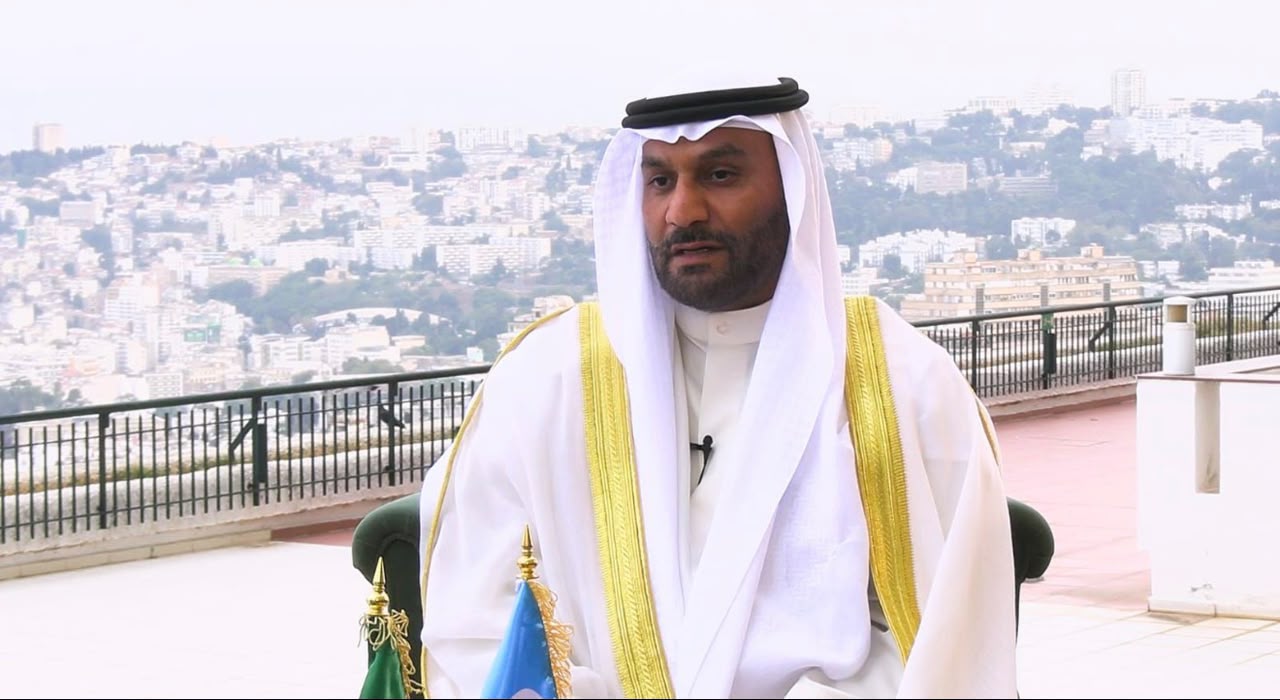
The Secretary General of the Organisation of the Petroleum Exporting Countries (OPEC), Mr Haitham Al-Ghais, has described the Trans-Saharan Gas Pipeline (TSGP), linking Nigeria, Niger and Algeria, as an “excellent project” capable of strengthening energy security in Europe and beyond.
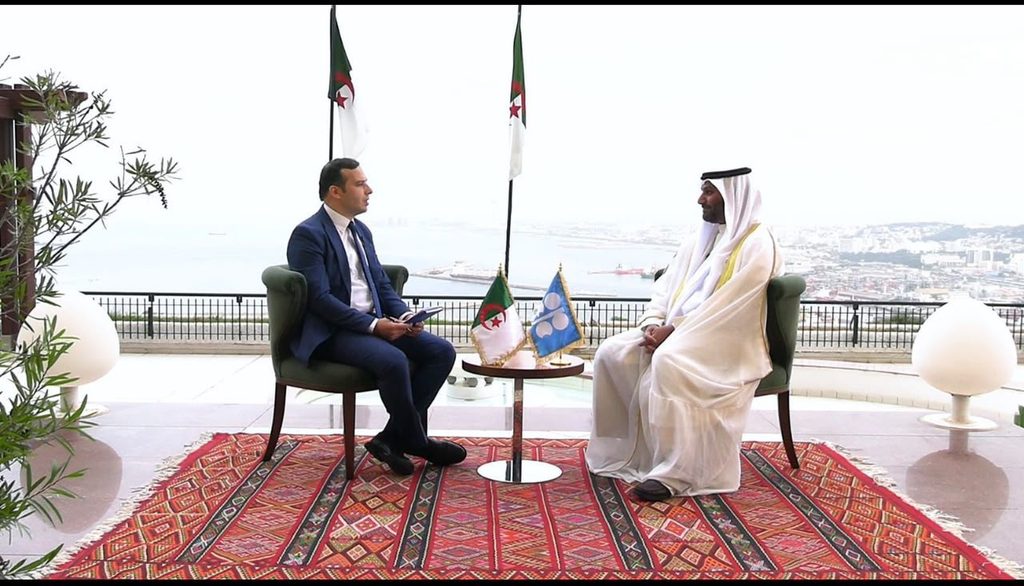
Al-Ghais made the remarks in an interview with Algerian television channel, Ennahar, where he highlighted the strategic importance of the long-planned gas infrastructure project to the energy sector and the wider economies of the three participating countries.
The OPEC Secretary General said the pipeline was consistent with efforts to strengthen the security and reliability of global energy supplies, particularly at a time when energy security remains a major concern for consuming countries.
He said the project would not only facilitate the movement of Nigerian natural gas towards Algeria and onward to European markets but could also generate significant economic opportunities along its route.
According to him, the development of the pipeline could create employment opportunities for young people in Nigeria, Niger and Algeria while supporting economic activity in communities and regions connected to the project.
Al-Ghais further commended Algeria’s role in advancing the initiative, describing the country’s efforts as part of a broader drive to promote regional and continental integration through strategic energy infrastructure.
He said the cooperation among Nigeria, Niger and Algeria demonstrated how economic diplomacy could be deployed to advance shared interests in Africa, particularly through projects capable of connecting energy-producing countries with international markets.
The Trans-Saharan Gas Pipeline is envisaged as a major regional gas infrastructure project designed to transport natural gas from Nigeria through Niger to Algeria, from where it could access existing pipeline networks linking North Africa with European markets.
Beyond its potential contribution to gas supply, the project has been associated with wider economic objectives, including infrastructure development, job creation, increased investment and stronger economic cooperation among the participating countries.
Al-Ghais expressed optimism that the project would progress to successful completion, saying its timely delivery would enable Nigeria, Niger and Algeria to begin benefiting from its expected economic and social opportunities.
He also expressed his best wishes for the swift success of the initiative, stressing the importance of translating the long-standing plans into tangible benefits for the countries and their populations.
The OPEC chief’s comments come as African energy-producing countries continue to explore ways of expanding gas infrastructure and securing new markets, while positioning natural gas as an important component of the continent’s energy and economic development strategy.
For Nigeria, the project could provide an additional avenue for monetising the country’s substantial natural gas resources, while deepening its energy partnership with Algeria and strengthening regional economic cooperation.
The project also highlights the growing importance of cross-border energy infrastructure in Africa, where inadequate transportation networks and limited investment have historically constrained the ability of resource-rich countries to fully exploit their energy potential.
OPEC chief backs Trans-Saharan Gas Pipeline,linking Nigeria, Niger and Algeria
OPEP brokers N1m settlement over farm destruction in Jos South
By: Zagazola Makama
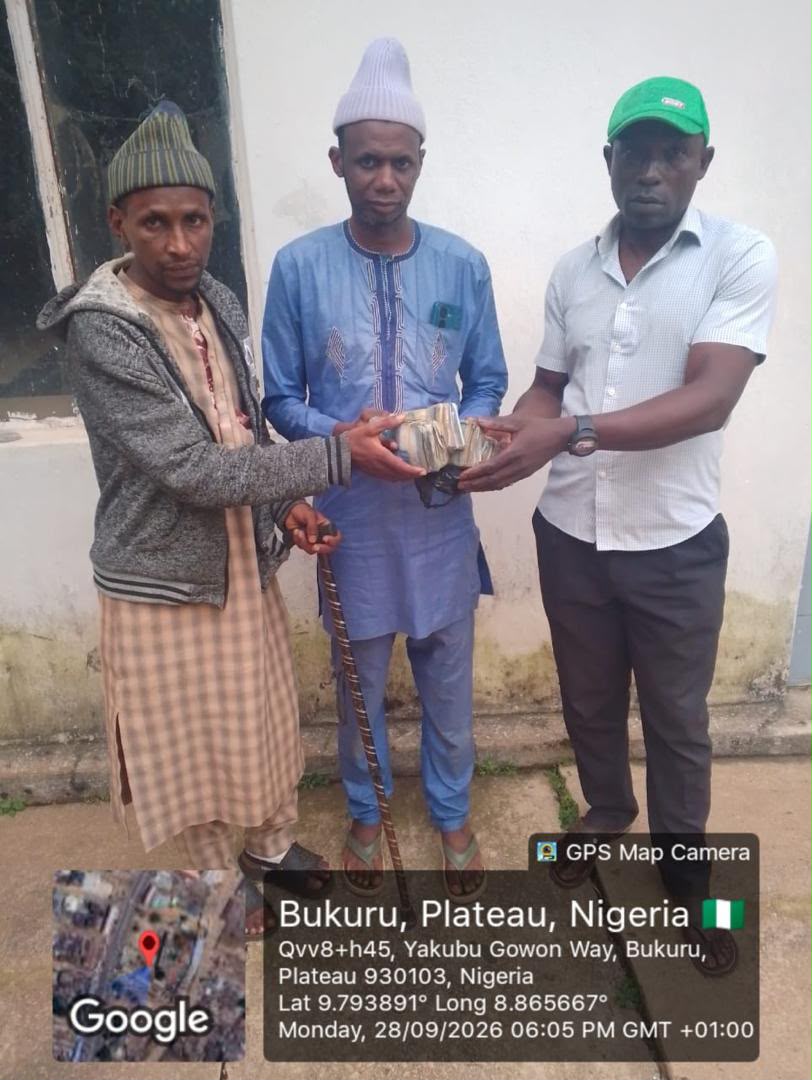
Jos — Troops of Operation Enduring Peace (OPEP) have brokered an amicable settlement between farmers and cattle owners following a reported case of farmland destruction at Gero Gyel District in Jos South Local Government Area of Plateau State.
The incident, which was reported on Sept. 28, involved six cattle intercepted while grazing on the affected farmland.
According to a situation report obtained by Zagazola, troops of Sector 6, OPEP, invited the parties for dialogue at about 3:30 p.m. on Sept. 29 in an effort to resolve the dispute peacefully.
The engagement resulted in an agreement that the cattle be released to their owner, Mr Yusuf Abubakar, through the Wakilin Ardo, Abdullahi Shuaibu.
The release followed an agreement on compensation for the reported farm damage, which was assessed at N1 million.
The report said N750,000 was paid to the representative of the farmers, Mr Ilya Solomon, while the remaining N250,000 was agreed to be paid on or before Oct. 12, 2026.
The intervention is part of ongoing efforts by security agencies and community stakeholders in Plateau State to prevent disputes involving farmers and herders from escalating into wider communal violence.
Zagazola understands that such mediation remains critical to maintaining peace and strengthening community confidence in security operations across the OPEP area of responsibility.
OPEP brokers N1m settlement over farm destruction in Jos South

“Identity Cannot Become a Death Sentence, Crime Must Be Treated as Crime, Not Ethnicity” MACBAN Warns Against Collective Blame in Plateau

2027: VP Shettima Rallies Northern Artists For President Tinubu’s Second Term

FG Declares October 1 Public Holiday as Nigeria Mark’s 66th Independence Anniversary

Roger Federer’s Shock as DNA Results Reveal Myla and Charlene Are Not His Biological Children

THE PLIGHT OF FARIDA

FAILED COUP IN BURKINA FASO: HOW TRAORÉ NARROWLY ESCAPED ASSASSINATION PLOT AMID FOREIGN INTERFERENCE CLAIMS
-
 News3 years ago
Roger Federer’s Shock as DNA Results Reveal Myla and Charlene Are Not His Biological Children
-
Opinions5 years ago
THE PLIGHT OF FARIDA
-
 News1 year ago
FAILED COUP IN BURKINA FASO: HOW TRAORÉ NARROWLY ESCAPED ASSASSINATION PLOT AMID FOREIGN INTERFERENCE CLAIMS
-

 News3 years ago
EYN: Rev. Billi, Distortion of History, and The Living Tamarind Tree
-
 Opinions5 years ago
POLICE CHARGE ROOMS, A MINTING PRESS
-

 ACADEMICS3 years ago
A History of Biu” (2015) and The Lingering Bura-Pabir Question (1)
-

 Columns3 years ago
Army University Biu: There is certain interest, but certainly not from Borno.
-

 Politics1 year ago
2027: Why Hon. Midala Balami Must Go, as Youths in Hawul and Asikira/Uba Federal Constituency Reject ₦500,000 as Sallah Gift
