
News
Reflection…DEVELOPMENT IN THE NORTH: WHAT WENT WRONG?

Reflection…DEVELOPMENT IN THE NORTH: WHAT WENT WRONG?
BY: YUSUF ADAMU
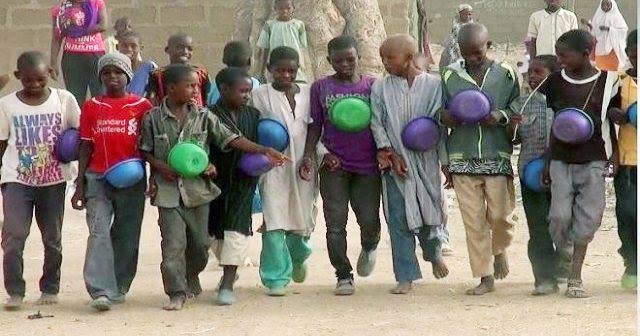
Growing up as an ‘almajiri’ boy in the early 60s, I was not subjected to the harsh condition being faced by many ‘almajiris’, I see today roaming the street in many northern states. I was living in my father’s house and only go to attend my Qur’anic School. The beauty of it all, ‘almajiris’, in those days, the ‘almajiri’ boy begs in the name of God (Ala’ro). Today, ‘almajiris’, no longer beg using the name of God. All they would say is, ‘we are hungry or we want money.
Recently, I was pondering on issues surrounding the backwardness of my dear North’. In every thing regarding development of this region, once great and mighty. While I was wondering on these issues, I was again confused following my brief chat with an ‘almajiri’ boy in between hours of my long day of worry over so many thing I could not give myself the answer that fetches any relief for me.
In my brief discussion with this lad, I ask him about his background and why at is aged, he was not living in his father’s house. His answers points to poverty, which is the only reasons an typical northerner can give in defense of his present circumstance. “I am from Katsina state, my father, Malam Garba Fori, is not working. My mother, is a petty trader – selling ‘Awara’.” He said.
Indeed, this pointed to nothing but poverty. But why are so many northern elites seemed relax with such an army of wanderers on every street in the north. Is it that, we have forgotten about our social responsibilities as a region?
After the Korean war, South Korea was one of the world’s poorest countries with only $64 per capita income. Economically, in the 1960s it lagged behind the Democratic Republic of the Congo (DRC) – currently holding
elections marred by violence . Since then the country’s fortunes have diverged spectacularly. South Korea now belongs to the rich man’s club, the OECD development assistance committee (DAC). The DRC has gone backwards since independence and, out of 187 countries, ranked bottom in the 2011 Human Development Index.
Thirty -five years ago, China’ s per capita income was only one- third of that of sub – Sahara Africa . Today , China is the world ‘ s largest manufacturing powerhouse : It produces nearly 50 percent of the world ‘ s major industrial goods , including crude steel (800 percent of the U .S . level and 50 percent of global supply ) , cement (60 percent of the world ‘ s production ) , coal ( 50 percent of the world ‘ s production ) , vehicles ( more than 25 percent of global supply ) and industrial patent applications ( about 150 percent of the U .S . level ) . China is also the world ‘ s largest producer of ships, high -speed trains , robots, tunnels , bridges , highways, chemical fibers , machine tools , computers , cellphones , etc.
China ‘ s industrial revolution , which started 35 years ago, is perhaps one of the most important economic and geopolitical phenomena since the original Industrial Revolution 250 years ago. The reason is simple : Less than 10 percent of the world ‘ s population is fully industrialized ; if China can successfully finish its industrialization, an additional 20 percent of the world ‘ s population will be entering modern times . Along the way , China is igniting new growth across Asia , Latin America, Africa and even the industrial West , thanks to the country ‘ s colossal demand for raw materials , energy , trade and capital flows .
China ‘ s rapid growth has puzzled many people, including economists .
Production of natural rubber is concentrated in a few developing countries, with Malaysia, Indonesia, Thailand, Sri Lanka and India accounting for a substantial volume of the world’s exports. Rubber is easily grown in hilly terrain, and has been successfully established in degraded deforested areas, leading to improved land use and a reduction of erosion, siltation and flooding. Productivity has been enormously increased through improved varieties (including better quality rootstocks) and innovations in agronomic practices, including exploitation methods (e.g. low intensity tapping with chemical stimulation to optimize productivity), advanced planting material and micro-tapping (to reduce immaturity period), and other innovations such as high intensity planting.
Palm oil production in Asia amounts to more than half of world production, with Malaysia, Indonesia and now Thailand accounting for the major share. Much progress has been made, particularly in Malaysia, in the addition of value to their products through further processing of palm oil into semi-finished and finished products. Oil palm is the most efficient producer of vegetable oils (500 percent better than soya beans), giving it greater resilience to adverse price changes.
There are prospects of even higher productivity now that improved varieties (clonal planting material) have been introduced, with a good possibility that oil quality characteristics will improve. Over the years there has been expansion of oil palm areas and intensification of downstream processing activities, largely with import substitution objectives.
Coconut is another major perennial oil crop in Asia, accounting for more than two-thirds of the world’s production. Major coconut producers are the Philippines, Indonesia, India, Malaysia and Sri Lanka. Coconut plantations in the region are characterized by low productivity, though efforts were made in the 1980s to improve productivity gains through the introduction of improved varieties (hybrid planting material), better use of inputs, and inter-cropping (including livestock).
In most countries, at present, marketing structures focus on oil extraction and by-product utilization. Considerable initiatives have been made to enhance productivity through improved input use, expansion of processing facilities and support of extension and research institutions.
After the Nigerian civil war, the Igbo’s were given stipend to start their lives all over, and today, the Igbo’s are the movers and shakers of the Nigeria’s economy. The north, in the 60s compare to all the countries mention above is greater. With purposeful leadership, the north is known for its farming and an upcoming revolution in agriculture, commerce and trade. However, so sad that, today, the north is reduce to a begged region. So, the question is, what went wrong?
Reflection…DEVELOPMENT IN THE NORTH: WHAT WENT WRONG?


Digital Identity Becomes New Battleground for Nigeria’s Economic Transformation — eTranzact
By: Michael Mike
Nigeria’s push to build a truly digital economy is increasingly being anchored on a less visible but critical infrastructure: the ability to securely identify every participant in the digital space.
This emerged in Abuja as eTranzact International Plc reaffirmed its commitment to strengthening Nigeria’s digital identity ecosystem, warning in effect that the country’s ambitions for digital finance, secure public services and wider economic inclusion depend on trusted identity infrastructure.
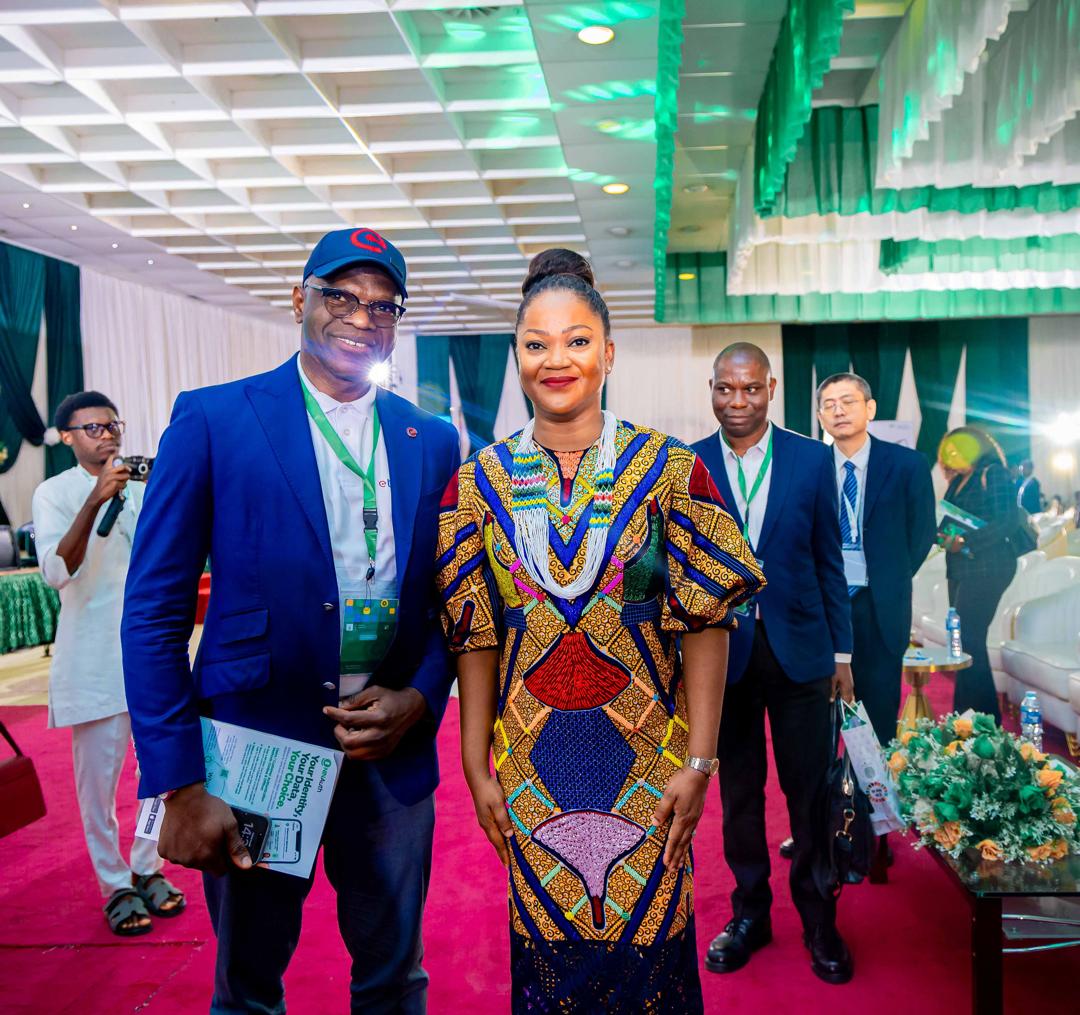
The financial technology company made the commitment at the 2026 International Identity Day celebration held at the State House Banquet Hall, Abuja, where government officials, technology companies, identity solution providers and private-sector stakeholders examined the role of digital public infrastructure in Nigeria’s economic transformation.
The event, themed “Nigeria’s Digital Public Ecosystem Powering Africa’s Digital Economy,” underscored the growing importance of digital identity beyond the traditional question of identification.
At a time when banking, payments, government interventions, credit, telecommunications and other essential services are increasingly moving online, the ability to establish that an individual is who they claim to be has become fundamental to participation in the digital economy.
A stronger identity ecosystem could make it easier for citizens to access financial services, government programmes and other technology-enabled services, while providing institutions with more reliable tools for verification, compliance and protection against identity-related fraud.
It could also help bridge gaps in financial inclusion by enabling more Nigerians to establish verifiable identities needed to access bank accounts, digital payment platforms, credit and other formal financial services.
It was against this backdrop that eTranzact, which works with the National Identity Management Commission (NIMC), renewed its commitment to supporting the country’s digital public infrastructure.
The Managing Director/Chief Executive Officer of eTranzact, Niyi Toluwalope, represented by the company’s Executive Director, Government Relations and Strategic Initiatives, Abubakar Achimugu, said the company’s participation demonstrated its commitment to public-sector partnerships and technology solutions capable of advancing Nigeria’s digital transformation.
The company’s position places digital identity within the broader conversation about the infrastructure required to make Nigeria’s digital economy work at scale.
Without dependable identity verification, digital services can face challenges involving fraud, duplication, exclusion and difficulties establishing the eligibility of users and beneficiaries.
Conversely, an identity system that is secure, interoperable and accessible can provide a common foundation upon which financial institutions, government agencies and technology companies can build services.
The issue is therefore no longer simply about issuing identity credentials. It increasingly concerns how those credentials can securely connect citizens to the wider digital ecosystem.
Stakeholders at the Abuja event consequently stressed the importance of collaboration between government and private-sector technology providers in developing an ecosystem capable of supporting Nigeria’s rapidly changing digital economy.
For financial technology companies such as eTranzact, the development has direct implications for the future of digital payments and financial services, where secure customer identification is central to transactions and regulatory compliance.
For government, a stronger digital identity architecture can support more efficient delivery of public services and interventions.
For citizens, it could determine how easily they participate in an economy in which an increasing number of everyday transactions and services are being delivered digitally.
The challenge, however, is ensuring that the expansion of digital identity does not create new barriers for people who are already underserved.
Stakeholders will therefore have to balance security and verification requirements with accessibility, interoperability and inclusion if Nigeria’s digital public infrastructure is to serve the entire population.
The discussions in Abuja thus highlighted a broader reality: Nigeria’s digital transformation will not be driven by applications and payment platforms alone.
Behind the visible digital economy must be an identity infrastructure capable of establishing trust between citizens, businesses and government.
As Nigeria seeks to deepen its digital transformation and strengthen its position in Africa’s technology economy, eTranzact said sustained public-private collaboration would remain critical to building the secure and inclusive digital ecosystem required to support that ambition.
Digital Identity Becomes New Battleground for Nigeria’s Economic Transformation — eTranzact
Troops arrest two suspects, recover suspected stolen goods in Plateau
By: Zagazola Makama
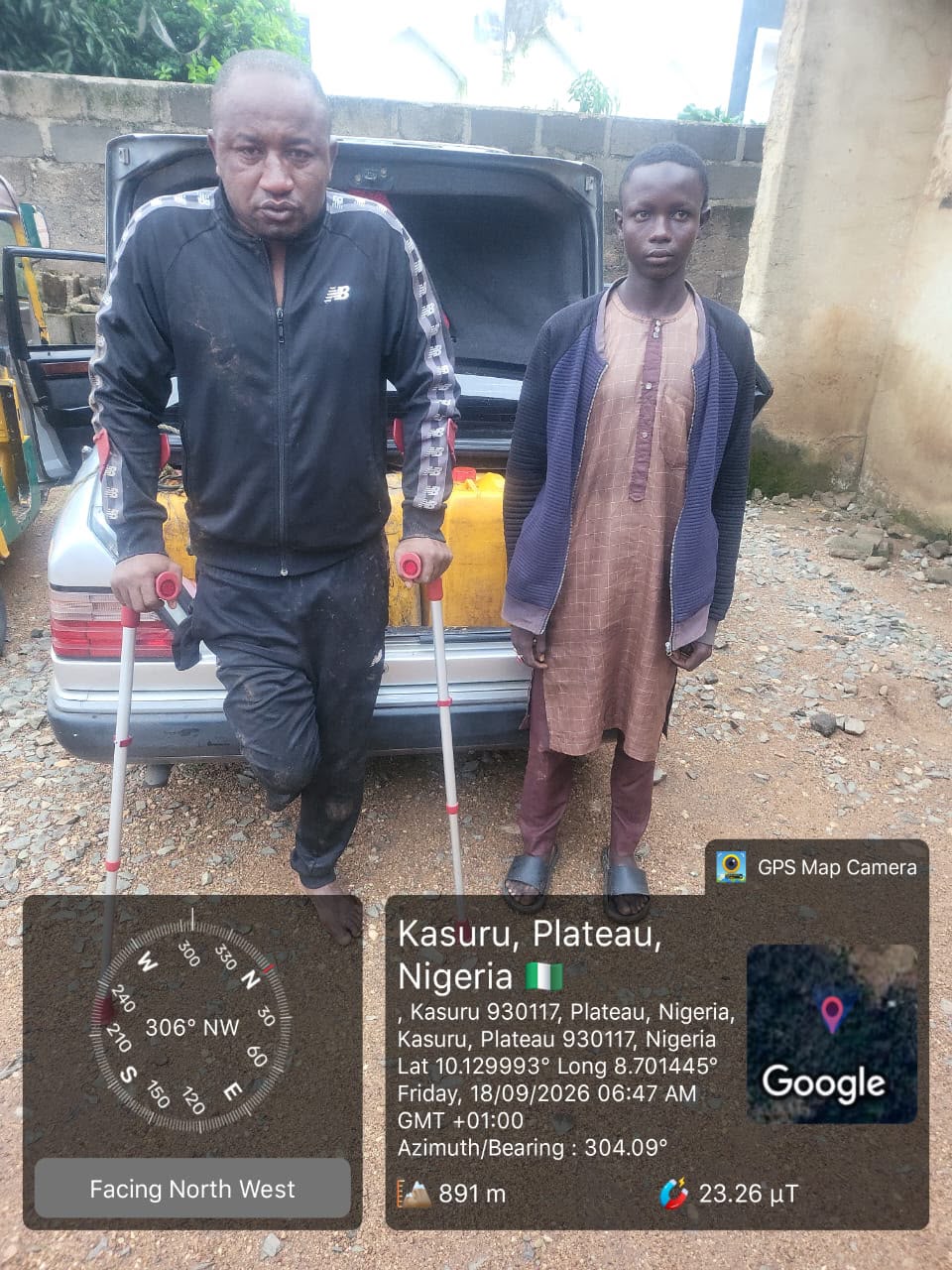
Troops of Sector 1, Operation Enduring Peace, have arrested two suspected criminals and recovered a vehicle loaded with suspected stolen items at Berger Junction, Mista-Ali, in Bassa Local Government Area of Plateau State.
The suspects were arrested at about 4:00 a.m. on September 18, 2026, following information about suspected criminals allegedly offloading stolen goods at the location.
The troops, acting on the report, swiftly mobilised to the area and arrested two suspects identified as Ibrahim Sulaiman, 33, and Ibrahim Husaini, 23.
The troops also recovered a Mercedes-Benz E220 vehicle allegedly loaded with suspected stolen items.
The recovered items included eight 25-litre containers of palm oil, four 4-litre containers of palm oil, two 50kg bags of rice, one 50kg bag of sugar, one carton of Maggi seasoning and an empty 25-litre jerrycan.
The suspects and recovered items were subsequently handed over to the Keystone Mista-Ali Outpost for further investigation and appropriate legal action.
Security sources said the arrest followed sustained intelligence gathering and patrol operations aimed at disrupting criminal activities and recovering stolen property in the area.
Troops arrest two suspects, recover suspected stolen goods in Plateau
GOC 3 Division engages Bokkos stakeholders over farmer-herder conflicts
By: Zagazola Makama
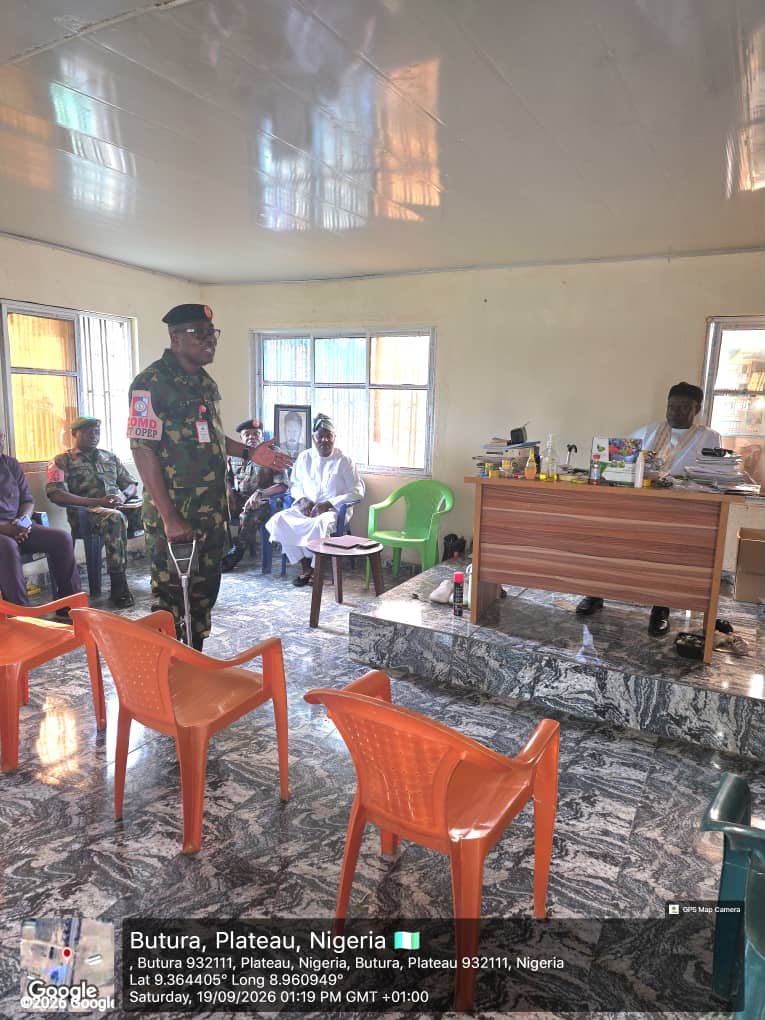
The General Officer Commanding 3 Division and Commander, Operation Enduring Peace, Maj. Gen. W.M. Dangana, has engaged district heads and other stakeholders in Bokkos Local Government Area of Plateau State as part of efforts to address recurring farmer-herder conflicts in the area.
Maj. Gen. Dangana arrived at the headquarters of Sector 5, Operation Enduring Peace, in Bokkos at about 1:00 p.m. on September 19, 2026, where he was received by the Sector Commander.
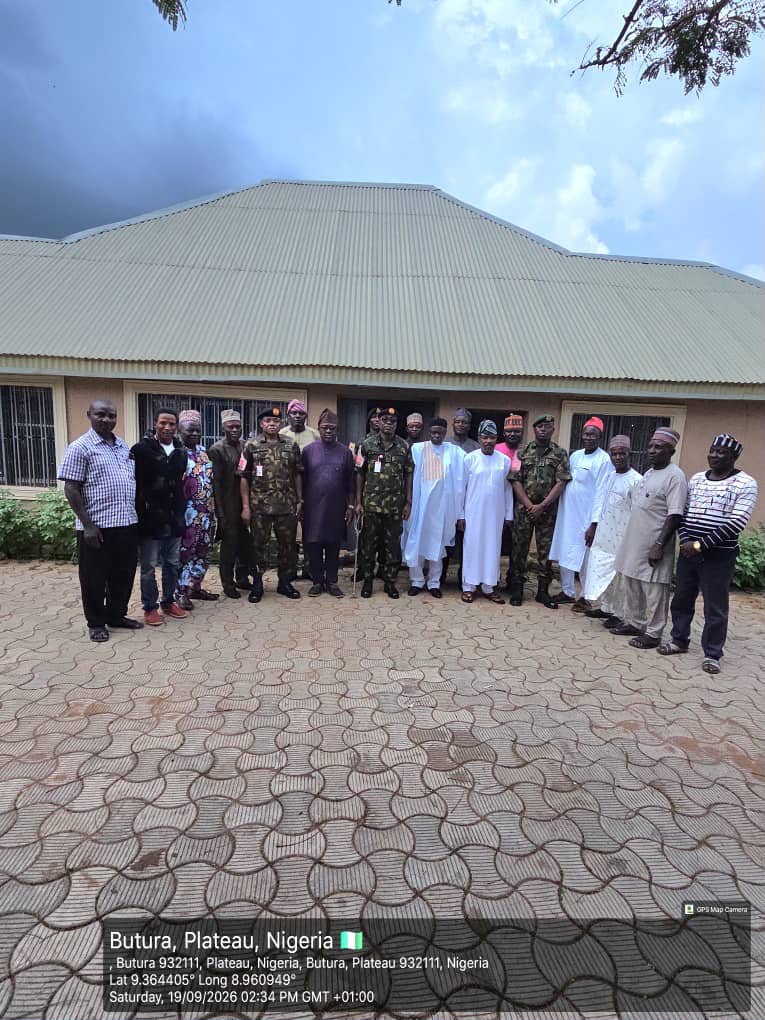
The GOC thereafter proceeded to the Palace of the Saf Bokkos, where he held an engagement meeting with district heads and other stakeholders from across the local government area.
The engagement formed part of ongoing non-kinetic efforts by the military and other stakeholders to address the underlying tensions between farming and herding communities and promote peaceful coexistence.
Discussions with traditional leaders and community stakeholders are expected to support the identification of local grievances, strengthen communication with security agencies and help prevent disputes from escalating into violence.
The engagement was conducted peacefully and without any incident.
GOC 3 Division engages Bokkos stakeholders over farmer-herder conflicts

Digital Identity Becomes New Battleground for Nigeria’s Economic Transformation — eTranzact

2027: Tinubu’s trip to America puts an end to the chatter about his supposed inability to enter the United States.

Troops arrest two suspects, recover suspected stolen goods in Plateau

Roger Federer’s Shock as DNA Results Reveal Myla and Charlene Are Not His Biological Children

THE PLIGHT OF FARIDA

FAILED COUP IN BURKINA FASO: HOW TRAORÉ NARROWLY ESCAPED ASSASSINATION PLOT AMID FOREIGN INTERFERENCE CLAIMS
-
 News3 years ago
Roger Federer’s Shock as DNA Results Reveal Myla and Charlene Are Not His Biological Children
-
Opinions5 years ago
THE PLIGHT OF FARIDA
-
 News1 year ago
FAILED COUP IN BURKINA FASO: HOW TRAORÉ NARROWLY ESCAPED ASSASSINATION PLOT AMID FOREIGN INTERFERENCE CLAIMS
-

 News3 years ago
EYN: Rev. Billi, Distortion of History, and The Living Tamarind Tree
-
 Opinions5 years ago
POLICE CHARGE ROOMS, A MINTING PRESS
-

 ACADEMICS3 years ago
A History of Biu” (2015) and The Lingering Bura-Pabir Question (1)
-

 Columns3 years ago
Army University Biu: There is certain interest, but certainly not from Borno.
-

 Politics1 year ago
2027: Why Hon. Midala Balami Must Go, as Youths in Hawul and Asikira/Uba Federal Constituency Reject ₦500,000 as Sallah Gift
